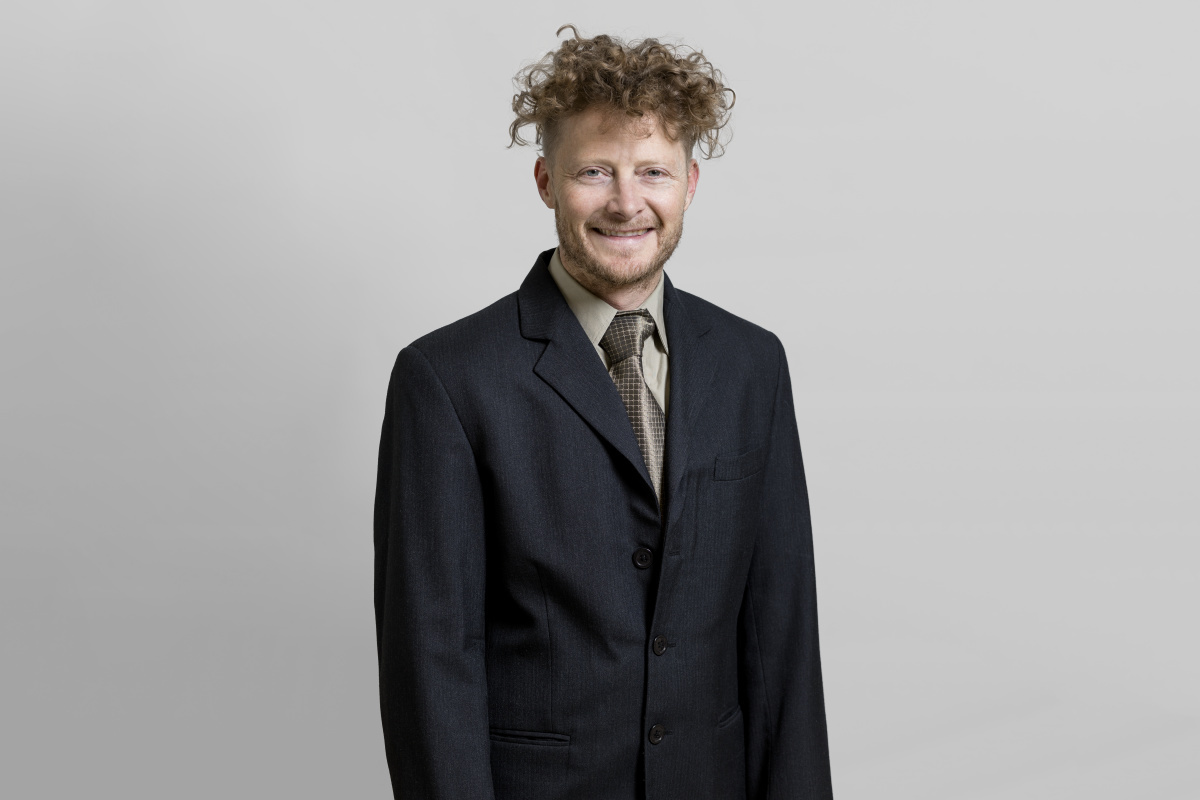
Matthew Toews is a researcher in the Department of Systems Engineering at École de technologie supérieure (ÉTS), with a focus on computer vision, medical image analysis, and machine learning . His work bridges theoretical advancements in image registration deep learning information theory biometric recognition with practical applications in healthcare and satellite imaging. Training: BASc (University of British Columbia) M.Eng & Ph.D. (McGill University) Postdoctoral Research (Harvard Medical School) Research interests include scale-invariant feature detection , AI in neuroimaging , and automated medical diagnostics . His publications demonstrate expertise in medical image segmentation , GAN-based ultrasound imaging , and neuroanatomical biomarkers . Recent trends in his peer-reviewed work span: decentralized machine learning via blockchain ultrasound-GAN fusion automated plagiocephaly diagnosis neuroimage fingerprinting 3D keypoint analysis information flow in CNNs He actively supervises graduate students in topics ranging from symmetry in neural networks to granular material analysis using Unity , with affiliations to the LIVIA and LIO-ÉTS laboratories. His research receives support from grants in health technology innovation and AI engineering .
Diego Borro is a Full Professor (Catedrático) in Computer Science and Artificial Intelligence at TECNUN, Technological Campus of the University of Navarra , where he has been part of the faculty since 2004. He is a leading researcher at CEIT since 2003, focusing on Robotics, Virtual/Augmented Reality, Computer Vision, and Artificial Intelligence. His academic credentials include a PhD in Computer Science (2003) and an MS in Computer Science (2000) from the University of Navarra and University of Basque Country respectively. His research spans from 3D tracking and haptics to industry 4.0 applications and medical robotics, with over 34 journal papers and 65 conference articles. He has supervised 14 doctoral theses and participated in 55+ research projects. His leadership roles include heading CEIT's Simulation Unit (2012-2016) and Vision and Robotics (V&R) research line (2016-2022), currently serving as main researcher at Intelligent Systems for Industry 4.0 group (SS4I4). Accredited as Full Professor (Catedrático) by ANECA (3 sexenios) Member of IEEE, ACM, and Eurographics societies Key projects: STEPbySTEP exoskeleton benchmark, WARM AR maintenance systems, and inner ear drug delivery research
Billur Barshan is a Professor in the Department of Electrical and Electronics Engineering at Bilkent University's Faculty of Engineering in Ankara, Turkey. She leads the Robotics and Sensing Research Laboratory and has established herself as a leading researcher in intelligent sensing, wearable technologies, and robotics. Dr. Barshan received her B.S. degrees in both Electrical Engineering and Physics from Boğaziçi University. She continued her education at Yale University, where she earned her M.S., M.Phil., and Ph.D. degrees in Electrical Engineering. After completing a post-doctoral fellowship at the University of Oxford's Robotics Research Group, she joined Bilkent University. Dr. Barshan's research focuses on intelligent sensing systems, particularly in the areas of wearable sensing, human activity recognition, fall detection, and multi-sensor data fusion. Her work bridges theoretical signal processing with practical applications in healthcare and robotics. She has developed innovative approaches for processing data from miniature sensors to recognize activities invariant to sensor placement and orientation, addressing key challenges in practical wearable systems. Her recent publications demonstrate a progression from fundamental sensor processing to sophisticated machine learning approaches, with emphasis on deep learning architectures for activity recognition, fall detection algorithms, and orientation-invariant classification. This work has significant implications for healthcare monitoring, particularly for elderly fall prevention. Dr. Barshan has received several prestigious awards: Nakamura Prize (1994) for outstanding paper at IEEE/RSJ International Conference on Intelligent Robots and Systems TÜBİTAK Incentive Award (1998) in Engineering METU Mustafa Parlar Foundation Research Incentive Award (1999) IEEE SIU Conference Best Paper Award (2001) She has successfully supervised numerous graduate students, many of whom have gone on to successful academic and industry careers. Her research has been supported by multiple TÜBİTAK grants, and she has contributed public datasets widely used by researchers worldwide, including the Daily and Sports Activities Dataset and Simulated Falls Dataset. She leads the Robotics and Sensing Research Laboratory at Bilkent University, focusing on intelligent sensing systems for robotics and human activity monitoring, with significant applications in healthcare, particularly for elderly fall detection and physical therapy monitoring.
Michele Tomaiuolo is an Associate Professor at the Department of Engineering and Architecture, University of Parma, Italy. He has been actively teaching undergraduate and graduate courses in computer science and engineering since at least 2014, with current teaching assignments for the 2025/2026 academic year. Dr. Tomaiuolo holds a Master's degree in Computer Engineering and a PhD in Information Technology, both from the University of Parma. His educational background has provided the foundation for his extensive career in academic research and teaching in the field of computer science. Professor Tomaiuolo's research spans several interconnected domains within computer science and information systems. His primary focus is on social media analysis and peer-to-peer social networks, with particular attention to security and trust management. His work also encompasses multi-agent systems, semantic web technologies, rule-based systems, and peer-to-peer networking architectures. More recently, his research has expanded into sentiment analysis applications for digital libraries and educational contexts, as well as fine-grained agent-based modeling for epidemiological simulations. His interdisciplinary approach bridges theoretical computer science with practical applications in information systems and social computing. An analysis of Professor Tomaiuolo's recent publications (2020-2024) reveals several key trends in his research. There is a strong emphasis on social network analysis, particularly in the context of sentiment analysis and user behavior. His work frequently employs agent-based modeling techniques to address complex problems ranging from pandemic spread prediction to digital library user experience. The integration of artificial intelligence methods with traditional computer science approaches is evident across his publications, with applications spanning digital libraries, educational technology, and social media platforms. His research demonstrates a consistent focus on practical implementations of theoretical concepts, often addressing real-world challenges through computational solutions. Professor Tomaiuolo has participated in various research projects, including the EU-funded @lis TechNet, Agentcities, Collaborator, and Comma projects, and the nationally funded Anemone project. These collaborative efforts have provided the foundation for much of his published research. His teaching portfolio is extensive, covering fundamental computer science concepts, object-oriented programming, software engineering, computer networks, mobile code, and security. Current courses for the 2025/2026 academic year include Fundamentals of Computer Science, Computer Science and Programming Laboratory, and Paradigms and Languages for Data Analysis across various engineering programs. Professor Tomaiuolo is actively involved in the academic community, serving as a reference professor and tutor for undergraduate engineering programs at the University of Parma. His work with the CSBNO Consortium demonstrates his commitment to applying computational methods to enhance library services and user experiences.
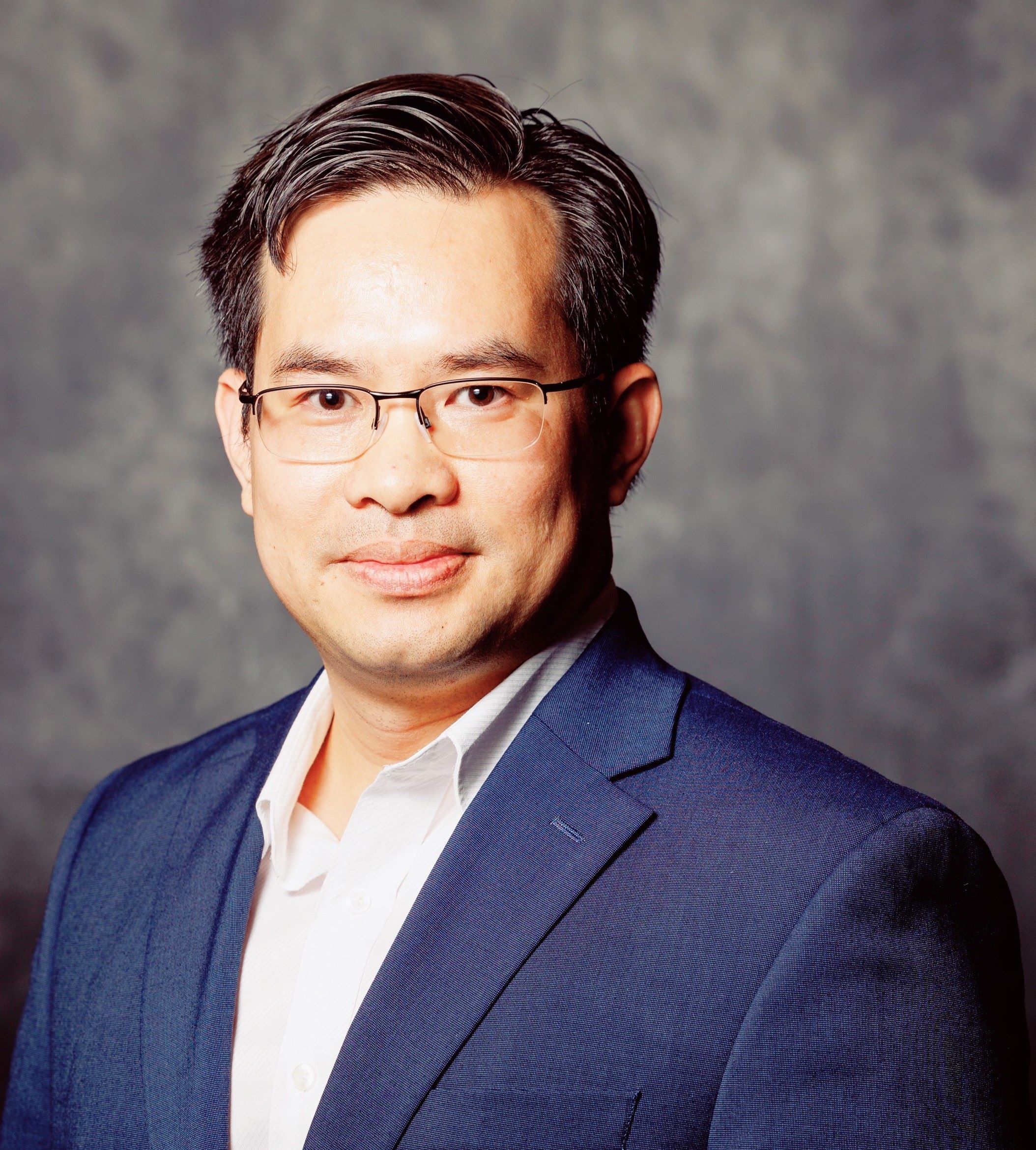
Hieu P. Nguyen is an Associate Professor in the Department of Electrical & Computer Engineering at Texas Tech University's Whitacre College of Engineering. He directs the Wide/Ultrawide Bandgap Semiconductors Laboratory, focusing on cutting-edge semiconductor research and development. Dr. Nguyen earned his PhD in Electrical Engineering from McGill University (2012), MS in Electrical Engineering from Ajou University (2009), and BS in Physics from Vietnam National University (2005). His academic journey reflects a strong foundation in both physics and electrical engineering, which informs his interdisciplinary research approach. His research spans wide/ultrawide bandgap semiconductors with particular emphasis on epitaxial growth, fabrication, and characterization of oxide and nitride semiconductors. He investigates nanostructured photonics including LEDs, laser diodes, waveguides, and photodetectors, with applications in flexible electronics, micro-displays, and AR/VR technologies. His work also addresses surface/air/water disinfection, quantum photonics, and III-nitride/oxide-based memory devices and transistors. Analysis of his recent publications reveals a strong focus on gallium oxide (β-Ga 2 O 3 ) and III-nitride semiconductor systems, with significant contributions to HEMT technology, UV LEDs, and nanowire-based optoelectronic devices. His research demonstrates consistent innovation in device architecture and performance enhancement. Dr. Nguyen teaches several key courses including ECE 4362/5362 Modern Optics, ECE 3311 Electronics, ECE 4381 VLSI Processing, and ECE 5381 Introduction to Semiconductor Processing, bridging his research expertise with classroom instruction. His laboratory is equipped with advanced facilities including Molecular Beam Epitaxy (MBE) Systems, Metal Organic Chemical Vapor Deposition (MOCVD), Microwave Plasma Chemical Vapor Deposition (MPCVD) Systems, and comprehensive optical/electrical characterization tools, enabling comprehensive materials research and device development.
Vanessa Salomao de Santiago is an Industry Fellow at the Gas and Energy Transition Research Centre within the School of Chemical Engineering at The University of Queensland. Her work bridges petroleum engineering and sustainable energy transition through advanced reservoir characterization and stimulation techniques for coal seam gas extraction. Her educational background includes: PhD in Chemical Engineering from The University of Queensland (2022), with thesis titled Stress-dependent flow behaviour in coal seam gas reservoirs: Implications for gas production and reservoir stimulation Dr. Salomao de Santiago's research centers on optimizing coal seam gas recovery through innovative engineering approaches. Key focus areas include: Experimental Rock Mechanics : Investigating flow properties in layered coal-rock analogues under stress conditions Hydraulic Fracturing Innovation : Developing graded particle injection and micro-proppant technologies for enhanced well productivity Reservoir Simulation : Modeling commingled gas production from multiple coal seams with economic analysis Her work addresses critical challenges in Australia's Bowen Basin while contributing to broader energy transition goals. Analysis of her 2019-2022 publications reveals concentrated efforts on hydraulic fracturing optimization for coal seam gas reservoirs. Key trends include experimental validation of flow properties, economic modeling of stimulation techniques, and field applications in Australian basins. Her research spans petroleum engineering, geomechanics, and chemical engineering, with increasing emphasis on practical implementation and environmental considerations. No scientific awards are documented in the available information. As an Industry Fellow, Dr. Salomao de Santiago maintains strong industry partnerships through the Gas and Energy Transition Research Centre, though specific grant details aren't provided. Her collaborative publications indicate active engagement with multi-institutional research teams. No formal PhD or Master's students are listed in current records. She contributes to the Gas and Energy Transition Research Centre's mission of advancing sustainable gas technologies through interdisciplinary work on decarbonisation, energy security, and environmental stewardship in the gas industry.
Dr. Pieter Bons serves as a Senior Lecturer at the Faculty of Technology, Hogeschool van Amsterdam, where he teaches Applied Mathematics and Data Science. His academic work spans urban analytics, smart charging systems, and geospatial modeling, with significant contributions to electric vehicle infrastructure and climate adaptation research. His research focuses on applying data science to urban challenges, particularly in smart charging for electric vehicles and neighborhood typology classification . Bons specializes in extracting actionable insights from complex urban datasets while addressing critical issues like data bias, quality, and privacy. His work bridges theoretical data science with practical urban applications, notably through projects like the Rijkswaterstaat charging infrastructure study and nationwide neighborhood typology mapping. Recent publications reveal a clear trajectory from fundamental physics (2010-2017) to applied urban analytics (2020-present), with current work emphasizing energy grid optimization through smart charging AI-driven climate adaptation tools geospatial analysis for urban planning His fingerprint analysis highlights strong connections to Smart Charging (95%), Public Charging Stations (36%), and Electric Vehicles (54%). Award highlights: HvA onderzoeksprijs 2021 for collaborative urban research Nominatie KennisDC Parel 2023 for innovation in zero-emission infrastructure Bons actively enhances data literacy across the faculty through educational initiatives like Data Studio, integrating students into real-world research cases. His activities include stakeholder presentations for Rijkswaterstaat, knowledge clips on neighborhood typologies, and academic talks on walkability and zero-emission corridors. He contributes to datasets like the Wijktypologie Buurtniveau 2023, supporting national climate adaptation efforts. His work occurs at the intersection of urban planning, energy systems, and AI, with current projects focusing on balancing urban energy grids through flexible EV charging and developing nationwide neighborhood classification systems for climate resilience.
Estanislao Pujades Garnes is a postdoctoral researcher at the Computational Hydrosystems Department of the Helmholtz Centre for Environmental Research - UFZ in Leipzig, Germany. He holds a PhD in Hydrogeology from the Technical University of Catalonia (2013) and has worked at the University of Liège (Belgium) and the Spanish National Research Council (CSIC). Research Focus Groundwater dynamics in underground structures Numerical modeling of coupled hydrological processes Geo-energy systems (Underground Pumped Storage Hydropower) Hydrochemical evolution in aquifers Urban infrastructure-groundwater interactions Scientific Contributions 15+ peer-reviewed publications (2017-2022) on groundwater modeling, UPSH efficiency, and contaminant transport Key presentations at EGU, AGU, IAH, and International Nitrogen Workshop conferences Supervised PhD and Master's students in hydrogeological research Awards Marie Curie BEIPD-COFUND Postdoctoral Fellowship (2014-2016) FI-DGR PhD Fellowship (Catalonia Government, 2010-2013)
Dr. Elvis Okoffo is a Research Fellow at the Queensland Alliance for Environmental Health Sciences (QAEHS) within the Faculty of Health, Medicine and Behavioural Sciences at The University of Queensland, Australia. His research is centered on developing innovative analytical methods to characterize and monitor environmental and human exposures associated with plastics. His educational background includes a Bachelor (Honours) from University for Development Studies, a Masters (Research) from University of Ghana, and a Doctor of Philosophy from The University of Queensland completed in 2021. Dr. Okoffo has pioneered novel sampling approaches and analytical techniques for the rapid screening and monitoring of various types of plastics, including microplastics, nanoplastics, and biodegradable plastics in environmental samples such as drinking water, wastewater, biosolids, seafood, marine water and sediments, compost, food, and road dust. His research leverages cutting-edge technologies including pressurised liquid extraction, ultrafiltration, and pyrolysis gas chromatography coupled to mass spectrometry. Analysis of his recent publications reveals a strong focus on methodological development for plastic quantification, environmental fate studies across diverse matrices (water, sediments, biota), and investigations into plastic sources and pathways. His work bridges analytical chemistry, environmental science, and public health, with particular emphasis on developing robust, standardized methods for plastic detection and quantification. Dr. Okoffo is actively involved in research supervision, currently serving as Associate Advisor for six PhD students working on various aspects of plastic pollution analysis and mitigation. His research is supported by multiple grants including projects funded by Central Queensland University, Minderoo Foundation Limited, and the Australian Academy of Science. He leads research within the Queensland Alliance for Environmental Health Sciences, collaborating with multidisciplinary teams to address plastic pollution challenges through innovative analytical approaches and environmental monitoring strategies.
Richard Wilkinson serves as Professor of Statistics in the School of Mathematical Sciences at the University of Nottingham since September 2020, following prior appointments as Senior Lecturer (2015-2020) and Professor of Statistics (from 2018) at the University of Sheffield, and Lecturer at Nottingham (2009-2015). He earned his Mathematics education at the University of Cambridge (1999-2008), completing a PhD under Professor Simon Tavaré focused on Bayesian inference of primate divergence times. During 2003-2004, he taught A-Level physics during a gap year. His research centers on developing statistical methodologies for complex scientific problems involving computer simulators, emphasizing collaborative tool-building with scientists to maximize data extraction. Core interests include Statistical Methodology , Bayesian Inference , Uncertainty Quantification , and Computational Statistics , driven by applications in simulator-based scientific analysis. Wilkinson held an RCUK-funded postdoctoral position (2008-2009) on the "Managing Uncertainty in Complex Models" project supervised by Jeremy Oakley and Tony O’Hagan, establishing his expertise in statistical modeling for scientific systems. His career demonstrates sustained focus on methodological innovation through interdisciplinary collaboration.
Dr. Mitko Aleksandrov serves as a Casual Academic and Research Associate at the University of New South Wales (UNSW), working with Geospatial Research Innovations and Development (GRID) within the School of Built Environment under the Faculty of Arts, Design & Architecture. With specialized expertise in geospatial information systems and three-dimensional modeling, Dr. Aleksandrov contributes to cutting-edge research in indoor navigation, spatial analysis, and building information modeling applications for urban planning and safety. Dr. Aleksandrov holds a Master's degree in GIS (Geographic Information Systems), though specific details about his educational institutions and timeline are not provided in the available information. His academic background has positioned him at the forefront of geospatial research with practical applications in built environments. Specializing in three-dimensional modeling and navigation systems for indoor environments, Dr. Aleksandrov's research spans geospatial analysis, building information modeling, and spatial data structures. His work focuses on evacuation planning, crowd simulation, and hazard detection through voxel-based representations of 3D spaces, visibility analysis, and the integration of BIM with geospatial data. His research bridges computer science, civil engineering, and urban design to create innovative solutions for complex spatial problems in built environments, particularly addressing safety and navigation challenges in complex buildings. Dr. Aleksandrov's publication record demonstrates a clear progression from foundational research on voxelization algorithms toward practical applications in evacuation planning and pedestrian safety. His recent work shows increasing interdisciplinary collaboration, integrating computer vision techniques with geospatial analysis to address urban challenges. He has made significant contributions to indoor navigation systems, 3D modeling for evacuation scenarios, and the application of voxel-based representations in building information modeling, with publications appearing in high-impact journals across geospatial science, computer science, and civil engineering domains. While specific awards are not mentioned in the available information, Dr. Aleksandrov's research impact is evidenced by his consistent publication record in reputable journals including Transactions in GIS, Journal of Spatial Science, and ISPRS Annals. His work has contributed to advancing methodologies in 3D geoinformation and spatial analysis for practical urban applications. Dr. Aleksandrov actively collaborates with researchers across UNSW and internationally, particularly with Sisi Zlatanova, Jennifer Barton, and other members of the geospatial research community. His publications indicate involvement in significant research projects, potentially including the CRC-LCL project referenced in his 2020 work. While specific student supervision details aren't provided, his research program suggests engagement with graduate students in the geospatial and built environment fields. Working with Geospatial Research Innovations and Development (GRID) at UNSW, Dr. Aleksandrov is part of a dynamic research team focused on advancing geospatial technologies for urban applications. His involvement in organizing academic conferences such as the 3D Geoinfo Conference and GEOINFORMATION for DISASTER MANAGEMENT demonstrates his leadership within the research community. His work with voxel-based modeling in UNITY3D suggests engagement with visualization technologies that bridge academic research and practical applications in urban planning and emergency response.
Julie Hlavacek-Larrondo is an Associate Professor at the Department of Physics, Université de Montréal, and holds the Canada Research Chair in Observational Black Hole Astrophysics (2014-2025). As a leading figure in astrophysics, she investigates supermassive black holes' role in galaxy evolution, combining X-ray , radio , and machine learning techniques to study their feedback mechanisms in galaxy clusters. PhD in Astrophysics from University of Cambridge (2012) Co-founded Parité Sciences to promote gender diversity in physics Research Interests: Her work focuses on: Supermassive black holes' impact on host galaxies Multiwavelength observations (X-ray, radio, optical) Machine learning applications in astrophysics Cosmic reionization and early universe structures AGN feedback dynamics in galaxy clusters Scientific Leadership: She has secured observing time on flagship telescopes like Chandra , Hubble , and Very Large Array . Her recent 2025 publications highlight: Extreme black hole outflows in quasars Multi-phase gas analysis in high-redshift clusters Machine learning-driven cluster characterization Awards: 2024 FRQNT Rising Star Award 2024 Herzberg Medal (Canadian Association of Physicists) 2018 Royal Society College Membership 2017 Acfas Discovery Audience Award She has directed 10+ PhD/MSc theses , including projects on: Black hole mass measurement via gravitational lensing Radio observations of galaxy clusters High-resolution optical filament analysis Machine learning for cool core clusters
Adriana Birlutiu is a Lecturer in the Computer Science Department at 1 December 1918 University of Alba Iulia , Romania. Her expertise lies in machine learning, computer vision, bioinformatics, and transfer learning, with a recent focus on porcelain-industry optimisation. Education Ph.D., Radboud University Nijmegen, Netherlands (2011) M.Sc., Babeș-Bolyai University of Cluj-Napoca & University of Lorraine (Erasmus), 2005 B.Sc., Babeș-Bolyai University of Cluj-Napoca, 2004 Research Interests Adriana's research spans machine learning , deep learning , computer vision , and bioinformatics . She has contributed to preference learning, domain adaptation, protein–protein interaction prediction, and automated quality control in porcelain manufacturing. Her recent projects integrate deep neural networks with industrial computer-vision systems to detect defects and recognise characters on ceramic surfaces. Publication Trends Across 15 recent publications (2010-2019), Adriana has consistently explored transfer learning , multi-task learning , and Bayesian methods . Articles cluster around two major axes: biomedical applications (protein networks, cancer relapse prediction, respiratory-motion modelling for radiotherapy) and industrial AI (porcelain defect detection, character recognition). The work shows a clear evolution from theoretical machine-learning foundations to practical, domain-specific implementations. Grants & Projects SIVAP (2016-2018): Intelligent ML & computer-vision system for porcelain manufacturing optimisation, UEFISCDI PN-III-P2-2.1-BG-2016-0333. CMRCC (2017-2018): Computational Models for Reproducing Ceramics Colors, UEFISCDI PN-III-P2-2.1-PED-2016-1835. Student Supervision & Mentoring Adriana has supervised more than 25 undergraduate and master’s theses. Her students have won multiple awards at national conferences such as In-Extenso and SCCSS-IEECC , covering topics from automated defect detection to web applications for academic scheduling. Teaching Responsibilities She teaches courses including Machine Learning , Mathematical Software , Fundamental Algorithms , Object-Oriented Databases , and Modelling and Simulation at both undergraduate and master levels.
Günther Eibl is a Senior Researcher and Lecturer at the Center for Secure Energy Informatics within the Salzburg University of Applied Sciences . His academic responsibilities include teaching and research in data-driven energy informatics. Education : MSc in Mathematics, MSc in Physics (plasma physics simulation), PhD in Machine Learning (multiclass boosting) Research Interests Privacy Analyses : Investigating information extraction from smart grid load profiles using machine learning and statistical methods. Privacy-Enhancing Technologies : Initially focused on homomorphic encryption, masking, differential privacy, and wavelet analysis for data aggregation; now expanding into privacy-preserving tariff design and formal verification of protocols. Teaching • Bachelor’s: Applied Mathematics (first two semesters) • Master’s: Applied Statistics (semester 2), Data Mining (semester 3) Publications Comprehensive list: Google Scholar Core research: CSE Papers
Marcel Mauri is a researcher in the field of Business Informatics at Goethe University Frankfurt. His work focuses on agile workflow management, business process management, case-based reasoning, cloud computing and knowledge management. He has been actively involved in research projects like EVER and WFCF that investigate methods for transferring workflows between domains and managing cloud-based workflow systems. Research Interests Marcel's research interests center around: Agile workflow management and business process management Case-based reasoning and knowledge extraction from processes Cloud computing and resource management in distributed systems Recent Publications His recent publications show a strong focus on autonomous mobility systems and cloud management. He has published extensively on: Integration of BDI agents with traffic simulation tools Workflow transfer learning between domains Experience management approaches for cloud task placement Projects Marcel has been involved in several research projects: Project EVER - Extraction and Processing of Procedural Experience Knowledge in Workflows WFCF - Workflow Cloud Framework for process-oriented case-based reasoning CAKE - Collaborative Agile Knowledge Engine for workflow management