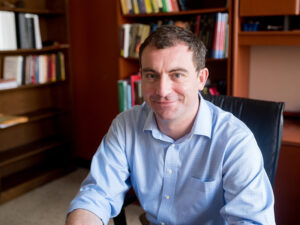
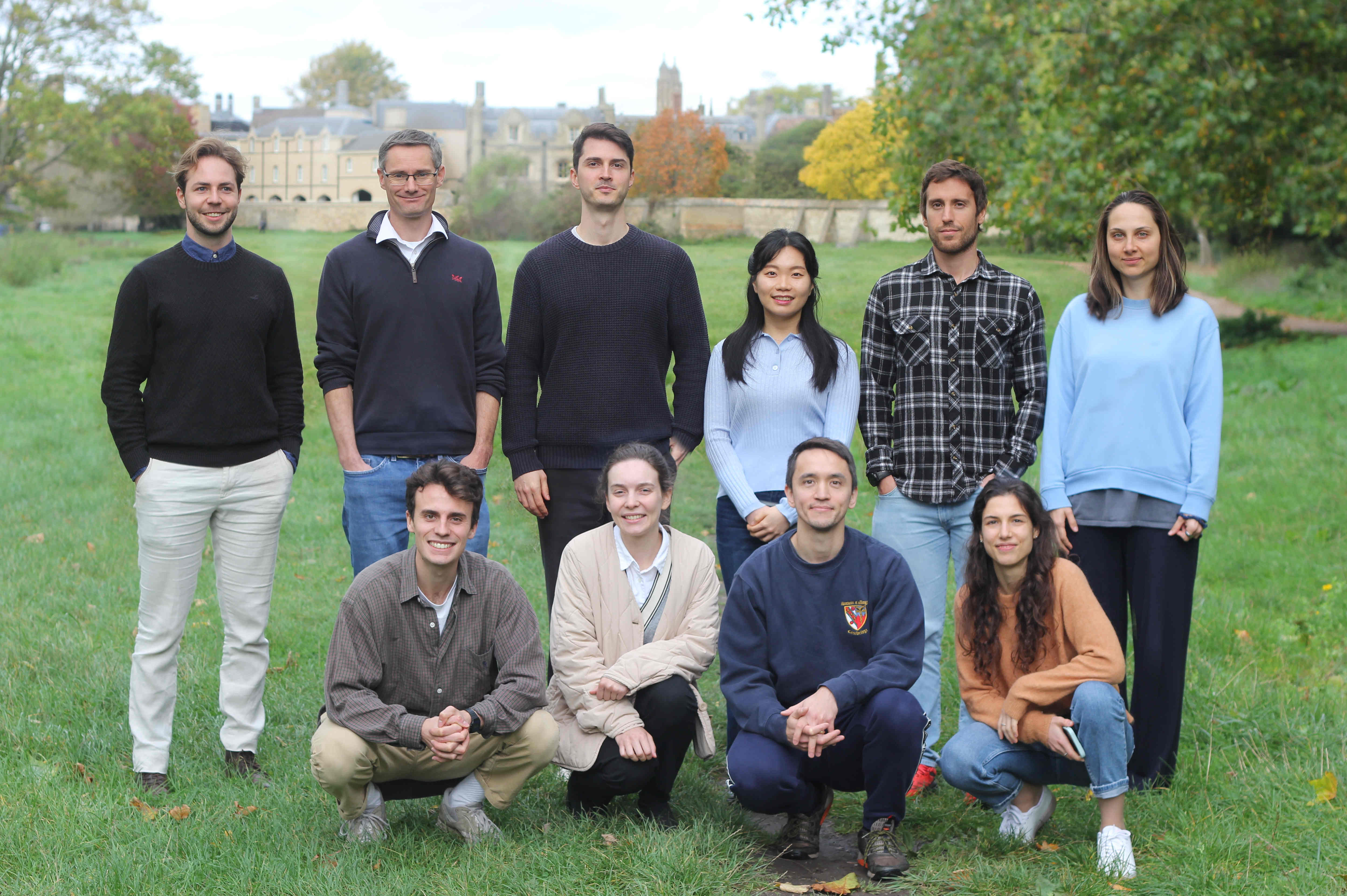
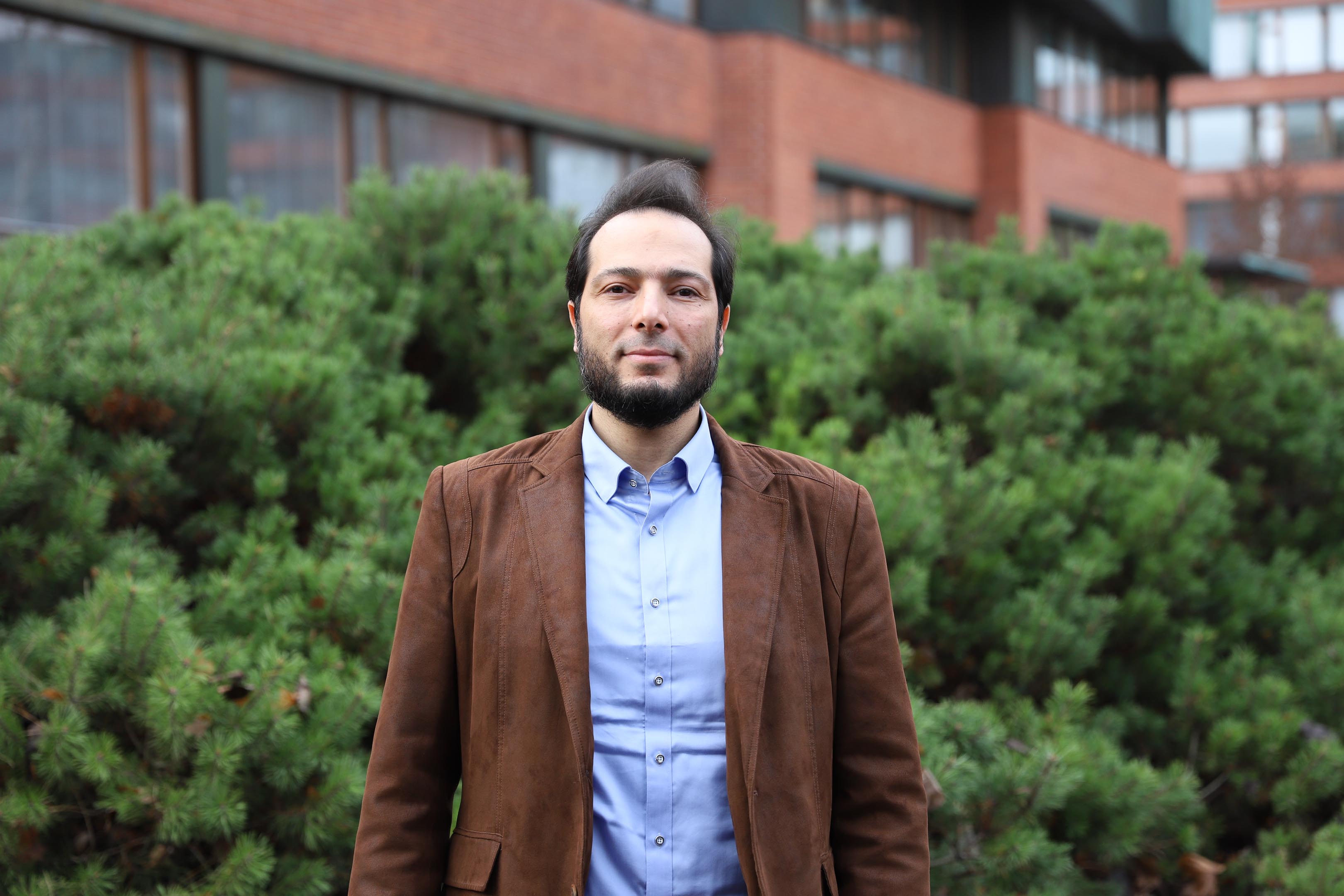
Dr Henry Moss is a Researcher at the Department of Applied Mathematics and Theoretical Physics within the School of Physical Sciences at the University of Cambridge. His work focuses on machine learning applications in climate modeling, Bayesian optimization, and Gaussian processes, bridging computational mathematics with environmental science and chemistry. His research interests include: Bayesian optimization for environmental and chemical systems Reinforcement learning in climate modeling Gaussian processes for molecular property prediction High-throughput machine learning in scientific domains Interpretable AI for coastal flooding prediction Hybrid ML-physics modeling Dr Moss's publications highlight his contributions to federated learning for climate models, sparse Gaussian process techniques, and multi-objective optimization frameworks. These works span applications in weather prediction, chemical engineering, and oceanography. Email: hwm26@cam.ac.uk
Colin Jones is an Associate Professor at the École Polytechnique Fédérale de Lausanne (EPFL) in the Automatic Control Laboratory, School of Engineering. He earned his BASc and MASc in Electrical Engineering and Mathematics from the University of British Columbia (1994-2002) and a PhD in Control Theory from the University of Cambridge (2002-2005). Prior to EPFL, he was an assistant professor there and a senior researcher at ETH Zürich. Current role: Director of the Robotics, Control, and Intelligent Systems Doctoral Program at EPFL Research focus: Optimization-based and model predictive control (MPC) for renewable energy systems, green energy management, and data-driven control methods His recent work (2023-2025) spans high-speed predictive control , smart grid optimization , and physically consistent neural networks , with applications to buildings, hovercrafts, and power systems. He has secured an ERC Starting Grant for his research on optimal control of building networks. Publications include over 200 papers in journals like Automatica , IEEE Transactions , and Energy and Buildings . Notable article trends include distributed optimization , data privacy in energy systems , and nonlinear MPC for autonomous vehicles . Scientific Awards : ERC Starting Grant for optimal control of building networks Advising : Supervises 10 current PhD students and has advised 19 past PhD students, including Alessandretti Andrea and Diwale Sanket Sanjay. Grants and projects emphasize smart energy systems , predictive demand response , and nonlinear control .
Professor Scott Sisson is Director of the UNSW Data Science Hub (uDASH) and Professor of Statistics and Data Science at the University of New South Wales, School of Mathematics and Statistics. His research focuses on computational statistics, particularly solving 'intractable' statistical problems through Bayesian methods, big data techniques, simulation algorithms, and extreme value theory with environmental applications. Education includes a PhD in Statistics from Bristol University (2002), MSc in Environmental Statistics from Lancaster University (1997), and BSc in Mathematics and Statistics from Lancaster University (1996). Research interests span: Bayesian statistics and uncertainty quantification Big data analytics and scalable algorithms Machine learning integration with statistical methods Extreme value modeling for climate/environment Computational techniques for intractable problems Recent publications (2022-2025) demonstrate strong emphasis on Bayesian computation, spatiotemporal modeling, and interdisciplinary applications in materials science, oncology, quantum computing, transportation policy, and ecology. Methodological innovations include likelihood-free inference, modular Bayesian analyses, and symbolic data modeling. Awards and honors: 2020 Service Award (Statistical Society of Australia) 2017 ARC Future Fellowship 2015 G. N. Alexander Medal (Engineers Australia) 2011 Moran Medal (Australian Academy of Science) 2010 J.G. Russell Award (Australian Academy of Science) 2010 Queen Elizabeth II Research Fellowship As Director of uDASH, he leads data science initiatives across UNSW. He maintains sustained ARC funding and supervises students in computational statistics, Bayesian methods, extreme value theory, and machine learning. Professional service includes editorial roles for Statistics and Computing and past presidency of Statistical Society of Australia.
Michael Baldea is an Associate Professor in the Department of Chemical Engineering at the University of Texas at Austin . He holds a Ph.D. in Chemical Engineering from the University of Minnesota (2006), with prior degrees from 'Babeş-Bolyai' University in Romania (M.Sc. 2001, Diploma 2000). His research group develops theoretical and computational methods for Process and Energy Systems Engineering , focusing on integrated decision-making, performance optimization, and process intensification with industrial validation. Education: Ph.D., Chemical Engineering, University of Minnesota (2006) M.Sc., Interface Process Engineering, 'Babeş-Bolyai' University (2001) Diploma, Chemical Engineering, 'Babeş-Bolyai' University (2000) Research Thrusts: Integrated decision-making in chemical/energy supply chains Process performance monitoring and optimization Process integration and intensification Key applications include grid-responsive chemical plants, intensified distillation/column designs, and renewable energy integration for building systems. Scientific Awards: Frank A. Liddell, Jr. Fellowship NSF CAREER Award (2015-2020) Moncrief Grand Challenges Faculty Award (2014) AIChE Outstanding Young Researcher Award (2017) Implementation : His group has translated research into commercial tools through partnerships with industrial test beds and is working to integrate methods into commercial simulators. They explore predictive approaches for building energy management and strategic capital investment analysis in next-generation energy systems.
Mark Gales is Professor of Information Engineering at the University of Cambridge and an Official Fellow at Emmanuel College. He is currently on sabbatical leave for the 2024/25 academic year. Prior to his academic career, he worked as a consultant at Roke Manor Research Ltd, developing radar systems, before transitioning to speech and language processing. PhD in 'Model-Based Techniques for Robust Speech Recognition' (University of Cambridge, 1995) BA in Electrical and Information Sciences (University of Cambridge, 1988) His research focuses on speech and language processing , particularly in automated language assessment and low-resource speech technology . He leads the Automated Language Teaching and Assessment (ALTA) Institute , which collaborates with Cambridge University Press & Assessment (CUP&A) to develop commercial tools like Linguaskill and Speak & Improve . These platforms provide automated spoken/written assessment for millions of users globally. Recent publications highlight his work in LLM-driven speech processing , including adversarial attacks on foundation models, end-to-end spoken error correction, and uncertainty estimation frameworks. His team's research spans multilingual capabilities, with deployments in languages ranging from Dholuo to Tok Pisin . Awards : IEEE Fellow, ISCA Fellow Leadership : Fellows' Steward at Emmanuel College Mark has contributed extensively to Hidden Markov Model (HMM) applications in speech recognition, which underpinned early automatic speech systems. His work now bridges LLM-based language assessment with cross-lingual transfer learning and robustness testing for real-world deployments.
Andrew M. Stuart is a Professor at the California Institute of Technology's Division of Engineering and Applied Science. His research bridges computational mathematics, machine learning, and physical modeling, focusing on inverse problems, partial differential equations, and multiscale systems. He has pioneered methodologies integrating Gaussian processes, Kalman inversion, and neural operators for scientific computing. His recent publications highlight innovations in competitive protein dimerization networks, nonlinear Bayesian inference, and operator learning. Articles span applications in materials science, geophysics, and biochemical signal processing, emphasizing data-driven discovery of differential equations and scalable algorithms for high-dimensional problems. Stuart's work addresses challenges in structural error modeling, uncertainty quantification, and graph-based learning, with implications for climate modeling and dynamical systems. Despite extensive contributions, the scraped data does not specify students, awards, or contact details.
Dr. Iason Sideris is affiliated with ETH Zürich's Department of Neue Fertigungstechnologien (New Manufacturing Technologies), holding a Researcher position within the Professorship for Advanced Manufacturing. His work focuses on advancing additive manufacturing techniques, particularly in path planning optimization, temperature control, and material processing. He contributes to fields like Direct Energy Deposition, Wire-Arc Additive Manufacturing (WAAM), and data-driven finite volume methods. Key Research Areas: Additive Manufacturing, Thermal Modeling, Process Optimization, Materials Science Recent research emphasizes scalable path planning for temperature uniformity in AM processes, with publications addressing challenges in WAAM thermal management and real-time simulation methods. His work combines computational modeling with experimental validation to enhance manufacturing efficiency and material properties.
Professor Haijiang Li is a Chair in BIM for Smart Engineering at Cardiff University's School of Engineering. His roles include leading the Computational Mechanics and Engineering AI Research Group, directing the BIM for Smart Engineering Centre, and overseeing the BIM MSc programme. He holds editorial roles for journals like Construction Innovation and Automation in Construction , and chairs the European Group of Intelligent Computing in Engineering (EG-ICE). Research focuses on smart computational engineering platforms integrating BIM, AI, and big data for sustainable infrastructure. Key areas include digital twins, disaster management, and resilient urban systems. He has secured £40M in research funding, including £9M as PI, and led over 70 research staff and students. Prof. Li is a Standards Committee Technical Executive at buildingSMART, driving international BIM standards. His work includes co-authoring a book on BIM standards across China, the US, and the UK. Awards include Fellowships from the British Computer Society (FBCS) and the Higher Education Academy (FHEA). His research outputs span over 250 publications, covering topics like AI-driven bridge maintenance, ontology-based decision-making, and energy-efficient urban systems. Collaborations with industry and global partners emphasize practical applications of BIM and smart technologies.
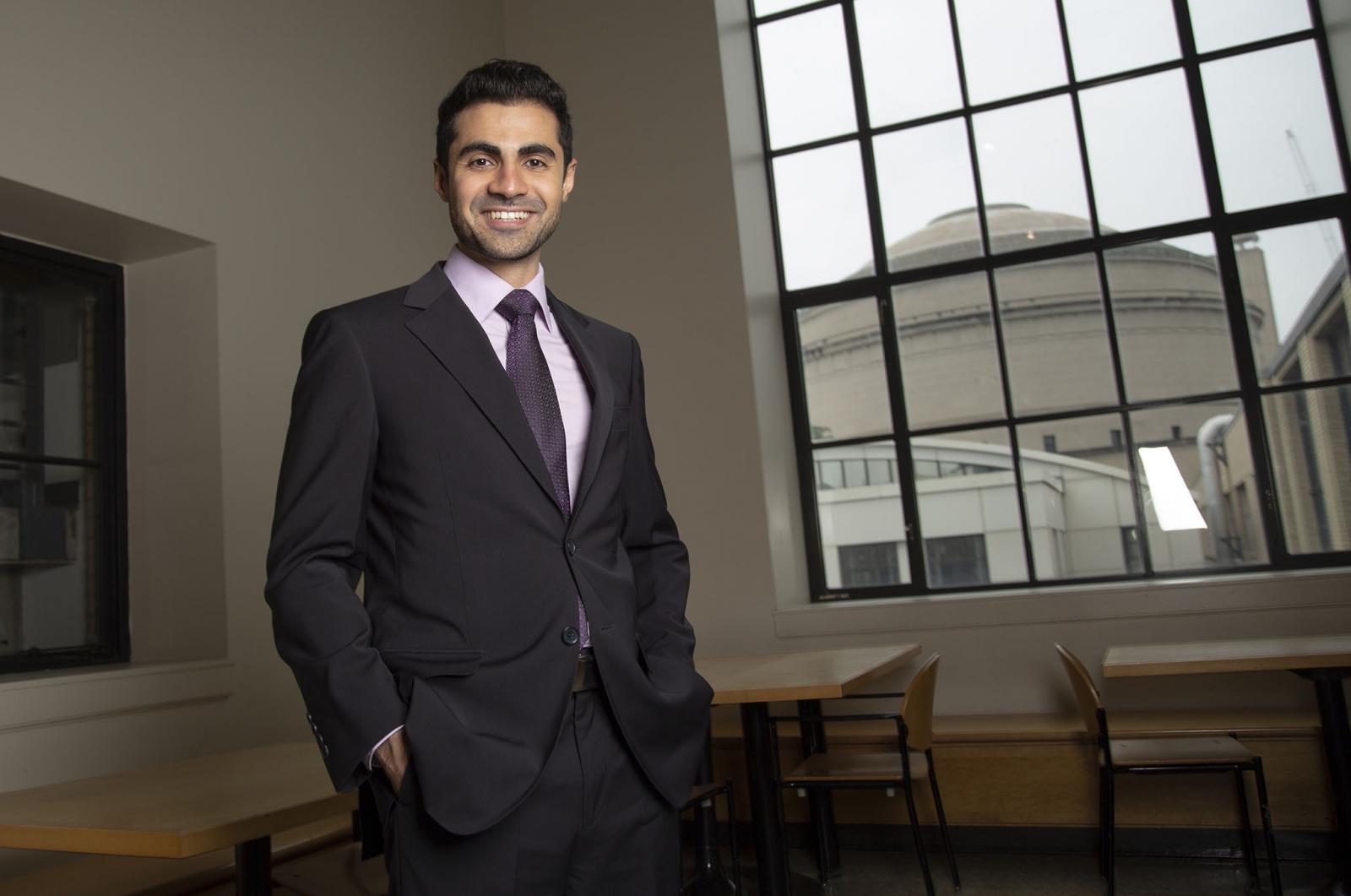
Navid Azizan is the Alfred H. (1929) and Jean M. Hayes Career Development Assistant Professor at Massachusetts Institute of Technology (MIT), holding dual appointments in the Department of Mechanical Engineering (in Control, Instrumentation & Robotics) and the Schwarzman College of Computing's Institute for Data, Systems & Society (IDSS). He is also a Principal Investigator in the Laboratory for Information & Decision Systems (LIDS), and a faculty member of the MIT Statistics and Data Science Center, the Center for Computational Science and Engineering, and the Operations Research Center. Dr. Azizan received his PhD in Computing and Mathematical Sciences from the California Institute of Technology (Caltech) in 2020, his MSc in Electrical Engineering from the University of Southern California in 2015, and his BSc in Electrical Engineering with a minor in Physics from Sharif University of Technology in 2013. Prior to joining MIT, he completed a postdoc at Stanford University's Autonomous Systems Laboratory and was a research scientist intern at Google DeepMind. His research spans the intersection of machine learning, systems and control, mathematical optimization, and network science. Dr. Azizan's work focuses on developing principled learning and optimization algorithms for reliable intelligent systems, with applications to autonomy and sociotechnical systems. His research has significant implications for creating trustworthy AI systems that can operate effectively in complex, uncertain environments. Dr. Azizan's recent publications demonstrate a strong focus on uncertainty quantification, reliable AI systems, constrained optimization, and control-oriented learning. His work bridges theoretical foundations with practical applications, particularly in autonomous systems where safety and reliability are paramount. His research group has made notable contributions to areas including neural network verification, multi-agent reinforcement learning, and adaptive inference techniques for large language models, with several papers featured on MIT News and selected for oral presentations at top conferences. Alfred H. (1929) and Jean M. Hayes Career Development Professorship (2025-present) Frank E. Perkins Award for Excellence in Graduate Advising (2025) List of Outstanding Academic Leaders in Data from the CDO Magazine (2024, 2023) Amazon Science Hub Research Award (2023) Outstanding UROP Faculty Mentor (2023) Esther and Harold E. Edgerton (1927) Career Development Chair (2022-2025) Information Theory and Applications (ITA) Gold Graduation Award (2020) Dr. Azizan has been recognized for his excellence in graduate advising, receiving the Frank E. Perkins Award for Excellence in Graduate Advising in 2025. During the pandemic, he founded and co-organized the 'Control meets Learning' virtual seminar series, connecting researchers across disciplines. His work has attracted significant research funding from industry partners including Google, Amazon, and MathWorks, supporting both fundamental research and practical applications in reliable intelligent systems. The Azizan Lab at MIT brings together researchers from mechanical engineering, computer science, and applied mathematics to tackle challenges at the intersection of learning and control. The lab emphasizes both theoretical foundations and practical implementations, with a particular focus on developing algorithms that provide guarantees of performance and safety. Current research directions include uncertainty quantification in AI systems, constrained optimization for neural networks, and control-oriented learning for autonomous systems, with applications spanning robotics, transportation, and complex sociotechnical systems.
Prof. Eleni Chatzi is a Full Professor and Chair of Structural Mechanics at ETH Zurich's Department of Civil, Environmental and Geomatic Engineering. She holds a PhD from Columbia University (2010) and has held roles from Assistant to Full Professor at ETH since 2010. Her research focuses on intelligent structural monitoring and data-driven asset management, emphasizing nonlinear dynamics and sensor integration. Affiliations : Institute of Structural Engineering, European Academy of Wind Energy (EAWE President), Swiss Community for Computational Methods (SWICCOMAS Chair) Research interests include Structural Health Monitoring (SHM), system identification, and advanced simulation tools. She pioneered work on data-driven diagnostics and self-aware infrastructure, supported by grants like the ERC Starting Grant (2015). Awards include the 2020 Walter L. Huber Prize and 2024 SHM Person of the Year Award. Her work spans wind energy infrastructure, metamaterials for vibration control, and AI-driven structural analytics. Over 600 publications and 200k+ citations highlight her impact. She teaches computational science and structural dynamics in ETH's programs and collaborates globally on sustainable infrastructure projects.
Richard E. Turner is a Professor of Machine Learning at the University of Cambridge's Department of Engineering and Research Lead for AI for Weather Prediction at the Alan Turing Institute. He serves as Cambridge Lead for the EPSRC Probabilistic AI Hub and previously held roles including Visiting Researcher at Microsoft Research, Co-Director of the AI4ER CDT, and Course Director for the Machine Learning and Machine Intelligence MPhil program. Current research focuses on probabilistic machine learning fundamentals, environmental prediction (weather/climate), and spatio-temporal modeling combining deep learning with Bayesian methods Supervised 26 PhD students (13 graduated) and 7 research assistants/associates Secured over £30M in research funding from EPSRC, Microsoft, Toyota, Google, DeepMind, Amazon, and Improbable Featured in BBC Radio 5 Live's The Naked Scientist, BBC World Service's Click, and Wired Magazine His recent publications demonstrate expertise in diffusion models for PDE simulations, Gaussian Processes for environmental applications, and Bayesian methods for spatio-temporal forecasting. Key trends include climate modeling using ML, neural PDE solvers, and scalable probabilistic inference. Awards : Cambridge Students' Union Teaching Award for Lecturing; supervised Qualcomm Innovation Fellowship winner Collaborations : Microsoft Research (AI4Science), Alan Turing Institute, EPSRC Probabilistic AI Hub Turner leads the Turner Group within Cambridge's Machine Learning Group, focusing on uncertainty-aware ML for scientific applications. Current research assistants work on topics like meta-learning, Bayesian inference, and climate science applications.
Mohamed Noureldin is an Assistant Professor at the Department of Civil Engineering, Aalto University , Finland, with prior academic roles at Sungkyunkwan University, South Korea (2015–2022). His expertise lies in integrating Artificial Intelligence (AI) with Structural Health Monitoring (SHM) , Structural Digital Twin , Predictive Maintenance , and Seismic Retrofitting . Research Focus : AI-powered sustainable structural design, smart retrofitting, predictive maintenance, structural material innovation, and next-generation performance-based seismic/wind design. Industrial Experience : 20+ years in offshore/onshore structural engineering (Hyundai Heavy Industries, Samsung Engineering, Arab-Swiss Engineering Company, Zuhair Fayez Partnership). Teaching : Courses in structural analysis, seismic design, dynamics, and reinforced concrete at Aalto and Sungkyunkwan Universities. Laboratory : Leads the Structural Design AI Lab (SDAI), focusing on AI-driven resilient infrastructure. Contact : mohamed.noureldin@aalto.fi , +358504544861. His publications explore cutting-edge applications of AI, ML, and DL in seismic retrofitting, structural durability, soil stabilization, and hybrid damping systems. Collaborative work emphasizes life-cycle cost assessment and augmented reality for predictive maintenance.
Christian Wolf is an Assistant Professor at the Massachusetts Institute of Technology (MIT) Department of Economics and a Faculty Research Fellow at the National Bureau of Economic Research (NBER). His work bridges macroeconomics, monetary economics, and econometric methodology. Research Interests: Wolf specializes in macroeconomics and monetary policy , with a focus on econometric techniques like structural vector autoregressions (VARs) and local projections . His research explores policy counterfactuals, heterogeneous-agent models, and fiscal-monetary interactions. Recent Publications: His work spans topics such as equivalence between fiscal and monetary tools in HANK models, robust identification in VARs, and the interplay between inequality and macroeconomic dynamics. Articles appear in journals like Econometrica , Journal of Political Economy , and American Economic Review . Awards: Faculty Research Fellow, NBER Contact: ckwolf@mit.edu | Office: E52-554, MIT
Phuong H. Nguyen is an Associate Professor at the Department of Electrical Engineering at Eindhoven University of Technology (TU/e). He leads the digital Power & Energy Systems (digi-PES) lab, focusing on smart energy systems, distributed control, and IoT integration for future energy grids. His research addresses energy transition challenges, including microgrid optimization, flexibility markets, and data-driven grid management. Nguyen holds a PhD from TU/e (2010) and has held visiting researcher positions at Clemson University. His work contributes to UN SDG goals related to affordable and clean energy. Education: Bachelor's in Electrical Engineering, Hanoi University of Science and Technology (2002) Master's in Electrical Engineering, Asian Institute of Technology (2004) PhD in Electrical Engineering, TU/e (2010) Key Research Areas: Smart Grids and Cyber-Physical Systems Distributed Energy Resource Management Local Energy Markets and Flexibility Provision IoT and Big Data in Energy Systems Awards & Recognition: Best Paper Award SEST 2020 Projects & Grants: REACT-D: Reactive Power Management (Project Manager) Al-driven Applications to Smarten Power System Operation (Project Lead) UNIversity Campus as a Self-Regulated Network (Co-Manager) Labs & Teams: The digi-PES lab develops cyber-physical tools for energy transition, including microgrid simulations, flexibility markets, and grid resilience strategies.
Charles Rahal is an Associate Professor in Data Science and Informatics at the University of Oxford, with additional affiliations as an Associate Member of Nuffield College and Researcher at the Gradel Institute, New College. He serves as a Co-Investigator at the ESRC Centre for Care and sits on the Steering Group of Reproducible Research Oxford. His academic career includes previous roles as a Senior Departmental Research Lecturer at the Leverhulme Centre for Demographic Science and a British Academy Postdoctoral Fellow. Dr. Rahal completed his PhD in 2016 and has established himself as a prominent social science methodologist and applied social data scientist with expertise in high-dimensional econometrics. His research spans multiple domains, focusing particularly on unique Big Data origination processes and their relationship to social inequality, mobility, and stratification. He is deeply engaged in machine learning methods, civic technology, spatial and time series econometrics, model uncertainty, and scientometrics. His recent publications reveal a strong trend toward computational social science, with significant contributions to understanding prediction limits, pandemic impacts, healthcare systems, and environmental sustainability. The articles demonstrate his interdisciplinary approach, bridging traditional social science with cutting-edge computational methods, particularly in the analysis of large-scale datasets and development of novel metrics like the InterModel Vigorish for model comparison. Dr. Rahal is actively involved in teaching and mentoring, co-convening courses in Demographic Analysis, Life Course Research, and the Oxford Partner site of the Summer Institute in Computational Social Sciences. He has developed workshops on machine learning, command line interfaces, and LaTeX, reflecting his commitment to methodological training in social science. He leads the Metrics and Models lab and maintains several open-source projects including the GWAS Diversity Monitor and RobustiPy. His editorial roles include Associate Editor-in-Chief at the Journal of Social Computing and Associate Editor at ACM Transactions on Social Computing, highlighting his influence in shaping computational social science methodology.