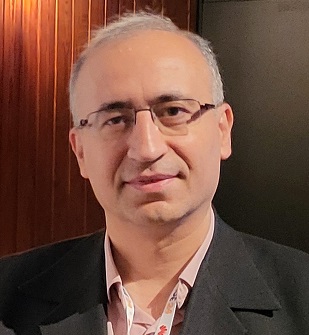
Dr. Bharanidharan Shanmugam is an Associate Professor in Information Technology at Charles Darwin University's Faculty of Science and Technology. He specializes in cybersecurity, IoT security, and cyber risk management in microgrids. His research focuses on addressing real-world challenges in IoT, smart grids, and medical devices to enhance community impact. **Research Interests:** - IoT Security - Cyber Risk Assessment in Microgrids - Network and Information Security - Applied Cybersecurity Solutions - Blockchain and Privacy-Preserving Technologies **Key Projects (2019–2025):** - Cyber Territory Skills Hub (2023–2025) - Renewable Energy Microgrid Hub (2021–2024) - Blockchain-Based Digital Identity (2019–2020) **Publications:** Focuses on IoT security frameworks, intrusion detection systems, and AI-driven cybersecurity solutions. Recent works include studies on smart grid load forecasting, medical IoT threat detection, and water leakage detection using machine learning. **Grants & Supervision:** Principal Investigator on multiple ARC-funded projects. Supervises PhD students in DevSecOps and IoT security. Active in organizing workshops on digital awareness for indigenous communities.
Prof. Rocco OLIVETO is a Full Professor at the University of Molise, affiliated with the School of Biosciences and Territory. His research spans software engineering, artificial intelligence, cybersecurity, and healthcare technology. He focuses on empirical studies of developer practices, AI-driven code analysis, vulnerability detection in smart contracts, and human-centric computing. His work also addresses challenges in game development, mobile app optimization, and wearable health monitoring systems. Notable research areas include code readability assessment, machine learning applications in healthcare diagnostics, and the effectiveness of AI tools like GitHub Copilot. He has contributed to projects like QualAI (continuous quality improvement for AI systems) and 2Vita-B (cognitive and physical rehabilitation systems). His empirical studies often bridge academic research with real-world developer workflows, emphasizing practical applicability. Prof. Oliveto's recent work explores topics such as automated gameplay analysis for game debugging, detection of engagement issues in video games, and robust methods for identifying security vulnerabilities. He has also investigated Dockerfile quality, developer frustration metrics, and the ethical implications of AI in administrative document simplification.
Jack Mostow is a Research Professor affiliated with the Human-Computer Interaction Institute at Carnegie Mellon University. His work focuses on educational technology, artificial intelligence, and natural language processing. He is renowned for developing Project LISTEN's automated reading tutor that listens to children's oral reading, integrating speech recognition and machine learning to improve literacy. His research addresses challenges in child literacy, automated assessment, and the application of AI in education. Key contributions include advancing speech recognition accuracy for children’s voices, designing adaptive tutoring systems, and exploring EEG and visual features to gauge learning states. He has contributed to global education initiatives, such as the XPRIZE field study, and developed tools for iterative improvement of intelligent tutoring systems. His work emphasizes scalable educational technologies for under-resourced regions and data-driven approaches to enhance learning outcomes. Mostow’s publications span over two decades, addressing topics like reinforcement learning for instructional policies, semi-supervised affect perception, and difficulty-controllable question generation. His research bridges AI, education, and human-computer interaction, aiming to create systems that adapt to learners’ needs while advancing computational methods for educational analytics.
Tero Päivärinta is a Professor at the University of Oulu, Faculty of Information Technology and Electrical Engineering. His work focuses on software engineering, digital ecosystems, and cybersecurity. He specializes in empirical studies of software systems, digital twins, and autonomous driving technologies. His research explores hybrid intelligence systems, data-centric decision-making, and governance of collective ambidexterity in digital initiatives. Education: PhD holder with extensive experience in academic and industry collaborations. Key research domains include cyber-physical systems, DevSecOps automation, and IT governance in public sectors. He co-leads projects such as the NUVE Lab’s vehicle testing frameworks and contributes to initiatives like the Software-Defined Vehicle project. Research highlights include advancing knowledge graphs for manufacturing, cybersecurity compliance in DevOps pipelines, and evaluating data-driven decisions. His articles emphasize interoperability challenges, adaptive systems design, and sustainable digital transformation in public utilities. Professional contributions include organizing the TKTP Annual Symposium and co-editing volumes celebrating academic peers like Markku Oivo. His work bridges theoretical software engineering with practical applications in mobility, governance, and industrial systems.
Karim ZKIK is an Associate Professor of Cyber Security and Information Systems at ESAIP Graduate School of Engineering, Angers, France. Previously, he served as an Assistant Professor at the International University of Rabat (UIR), Morocco. His roles include Educational Manager of the Cyber Security track, Head of the Cybersecurity Innovation Hub, and committee member for ABET certification and curriculum design. He actively contributes to academic service, organizing conferences such as the International Conference on Cryptology, Coding Theory, and Cyber Security (I4CS 2022), and serves as a Guest Editor for Computers and Industrial Engineering . His research focuses on cybersecurity for connected systems, blockchain technologies, AI-driven security solutions, and cyber resilience in industrial control systems. Recent work explores integrating blockchain and machine learning for threat detection, secure IoT networks, and supply chain resilience. Key contributions include frameworks for cyber resilience in retail and airlines, blockchain-based crowdfunding security, and SDN-based attack mitigation. ZKIK holds a Habilitation (2024) and PhD in Cyber Security from Université d’Angers and Mohamed V University, Rabat. He holds over 20 certifications from EC-Council, IBM, and Cisco. His work bridges theoretical research and industry applications, addressing challenges in smart environments, industrial systems, and sustainable supply chains.
Theocharis Kyriacou is a Reader in Computer Science at Keele University, School of Computer Science and Mathematics. He holds roles as Director of Education and Programme Director for undergraduate and postgraduate Computer Science programmes since 2018. Educated at the University of Sheffield (BEng, 2000) and University of Plymouth (PhD in Computer Science, 2004), his research focuses on Data Science and Machine Learning applied to healthcare, robotics, education, and sports science. He has led a 3-year Knowledge Transfer Partnership (KTP) with Bentley Motors and supports local SMEs through consultancy. His work spans academic research collaborations across disciplines and organizational roles in curriculum development. Research interests include machine learning applications in cardiology (predicting cardiovascular risks), wearable electronics for neurological conditions, and educational technology for curriculum design. He has published widely in journals like International Journal of Cardiology and BMJ Open Sport and Exercise Medicine , with a focus on interdisciplinary problem-solving. Awards and recognitions are not explicitly listed, but his contributions include impactful collaborations with medical institutions and industry partners. Advising and grants include guiding students in KTP projects and securing funding for robotics and healthcare-related research. He has developed new academic programmes in computer science apprenticeships and cross-school initiatives. His involvement in labs/teams includes collaborations with Keele’s pharmacy, sports science, and medicine departments, as well as international partners.
Pedro Fonseca is an Assistant Professor at the Department of Computer Science, Purdue University. He leads the Reliable and Secure Systems Lab, focusing on building reliable and secure core software systems such as operating systems, hypervisors, and distributed systems. His research has been recognized with awards including the NSF CAREER Award and Google Faculty Research Awards. Before Purdue, he completed a postdoc at the University of Washington, working with Arvind Krishnamurthy, Hank Levy, and Xi Wang. He earned his PhD from MPI-SWS and the University of Saarland under Rodrigo Rodrigues. His academic contributions span over 30 peer-reviewed publications in top-tier conferences like SOSP, OSDI, EuroSys, and ASPLOS. He teaches courses including CS503 (Operating Systems), CS592 (Reliable and Secure Systems), and CS408 (Software Testing). He actively serves on program committees for major systems conferences including SOSP, OSDI, EuroSys, and ASPLOS.
Bettina Kemme is a faculty member at McGill University in Montreal, Canada. Her research focuses on database systems , distributed computing , and cloud data management . She has made significant contributions to database replication, consistency models, and middleware frameworks for scalable applications. Research Themes : Database replication, distributed systems, cloud computing, and software engineering. Notable Collaborations : Jörg Kienzle, Joseph Vinish D'silva, Yunjia Zheng, and Marta Patiño-Martínez. Publications span critical areas such as graph database view management, transactional recovery in key-value stores, and latency-aware publish/subscribe systems. Her work is published in venues like VLDB , ICDE , Middleware , and SRDS .
Abbas Heydarnoori is an Assistant Professor in the Department of Computer Science at Bowling Green State University (USA) since 2022, and previously held a faculty position at Sharif University of Technology (Iran) from 2012 to 2022. He earned his Ph.D. in Computer Science from the University of Waterloo (Canada, 2009), and M.Sc. and B.Sc. in Software Engineering from Sharif University of Technology (2001 and 1999). His research focuses on AI-driven software engineering (AI4SE/SE4AI), leveraging data science and AI to address challenges like fault localization, bug prediction, and code comprehension. He analyzes software repositories (e.g., GitHub, Stack Overflow) to improve developer productivity and software quality. He has contributed to tools like CrowdSummarizer and ExceptionTracer, and his work spans topics such as microservices architecture, API usage analysis, and code summarization. Teaching includes graduate/undergraduate courses on AI for Software Engineering, Database Systems, and Software Engineering. His service roles include editorial board membership at Science of Computer Programming , and PC membership in conferences like MSR, SANER, and FSE. His research group actively publishes on automated code analysis, documentation generation, and developer productivity tools, with a focus on empirical and data-driven approaches.
Eilif B. MULLER is a Professor in the Department of Neurosciences at Université de Montréal, Principal Investigator of the Architectures of Biological Learning Lab (ABL-Lab) at CHU Sainte-Justine Research Center, and Associate Faculty at Mila (Quebec AI Institute). His work bridges neuroscience and artificial intelligence, focusing on understanding how sensory perception is learned in the neocortex through biophysical simulations and deep learning models. He holds affiliations with IVADO (Institute for Data Valorization) and contributes to strategic initiatives like the UNIQUE Québec Center. His research integrates empirical neurophysiology with computational models, exploring dendritic processing and synaptic plasticity to inform both biological understanding and AI advancements. Teaches NSC-6044 and NSC-6045 (Neuroscience Colloquia) at Université de Montréal. Leads projects on neocortical learning mechanisms and their implications for neurodevelopmental disorders. Recipient of grants from CRSNG (Natural Sciences and Engineering Research Council), FRSQ (Health Research Fund), and institutional funding. Publications span topics in computational neuroscience, neural network modeling, and interdisciplinary AI-neuroscience research. Collaborates extensively across institutions to advance large-scale brain simulations and data-driven models.
Talal Shaikh is an Associate Professor at Heriot-Watt University's School of Mathematical and Computer Sciences in Dubai. He serves as Director of Undergraduate Studies and Programme Director for BSc Computer Science, BSc CS (AI), and MSc Software Engineering. With a decade of industry experience as a Chief Information Officer and Software Engineer, he bridges practical insights with academic research. Research Interests: Pervasive Computing, IoT/M2M, AI/ML, WiFi Sensing for Healthcare, Financial Machine Learning, Educational Technology Awards: Teaching Excellence Awards (2017/18), Fellow of the Higher Education Academy (FHEA), multiple Learning and Teaching Oscars (2016, 2017, 2018) His work spans Ubiquitous Computing and IoT , focusing on sensor networks and WiFi-based sensing for healthcare. In Artificial Intelligence , he applies ML to robotics, financial analytics, and educational innovation. Recent articles analyze Reinforcement Learning , Emotion Recognition , and WiFi Sensing applications. His teaching emphasizes student-centric learning, with over 100 supervised dissertations achieving distinctions. Collaborations include international conferences and interdisciplinary research in smart environments and adaptive systems.
Adlen Ksentini is a Professor at EURECOM, a leading graduate school and research center in Sophia Antipolis, France, specializing in digital science and communication systems. His extensive research focuses on next-generation mobile networks (5G/6G), network management, and the integration of artificial intelligence with telecommunications infrastructure. Dr. Ksentini actively contributes to major EU research initiatives including 6G-BRICKS and AC3, serving as a key researcher and project leader in the development of future network architectures. Dr. Ksentini's research interests center around network slicing, intent-based networking, edge computing, and the application of machine learning to network management problems. His work bridges theoretical advancements with practical implementations in 5G/6G systems, with particular emphasis on zero-touch network management, energy efficiency optimization, quality of service assurance, and the integration of large language models with network operations. His research has significantly contributed to the development of O-RAN (Open Radio Access Network) frameworks and the evolution of network automation. His recent publication trends reveal a strategic shift toward AI-native network architectures, with increasing focus on integrating large language models (LLMs) with network management systems. His work demonstrates a clear progression from traditional network management approaches to more autonomous, AI-powered systems capable of intent-based configuration, self-optimization, and predictive maintenance. The publications show strong emphasis on practical implementations within the 6G research ecosystem, addressing critical challenges in network slicing, resource allocation, and energy efficiency. As a research supervisor, Dr. Ksentini mentors several PhD students including Abdelkader Mekrache, Karim Boutiba, Bouziane Brik, and Houda Hafi, who frequently appear as co-authors on his publications. His research is primarily funded through major EU research projects such as 6G-BRICKS (Building Reusable Testbed Infrastructures for Cloud-to-Device Breakthrough Technologies) and AC3 (which focuses on Cloud Edge Continuum). Dr. Ksentini is actively involved with the 6G-BRICKS project consortium and the AC3 project team, where he contributes to developing next-generation network architectures that integrate communication, computing, and sensing capabilities. His work within these projects focuses on creating reusable testbed infrastructures and addressing security and trust management challenges in the cloud-edge continuum.
Alva L. Couch is an Associate Professor at Tufts University's School of Engineering, Department of Computer Science, with a career spanning over 30 years. His work bridges network/system administration, autonomic computing, and hydrologic data science, focusing on scalable solutions for data management and automated system administration. Education: Ph.D. in Mathematics (1988), B.S. in Architecture (1978), and B.A. in Bassoon/Contrabassoon Performance (1978). Research Interests His research centers on: Network and System Administration: Tools like SLINK, Maelstrom, and Babble for dependency analysis, cloud migration, and policy enforcement. Geo-informatics: MEDFORD metadata language and HydroShare platform for hydrologic data curation and discovery. Autonomic Computing: Promise theory, convergent operators, and closure models for self-managing systems. Recent Work Trends His 2024-2018 publications emphasize: Cloud-based hydrologic data management (AnVILMEDFORD, HydroShare) Metadata standards for interdisciplinary research Machine learning for system administration Agent-based resource sharing models Scientific Awards Liebner Teaching Award (1996) Seymour Simches Advising Award (2017) Best Paper Awards: LISA 1996, AIMS 2008, LISA 2001 LISA 2000 Best Student Paper (with Michael Gilfix) Contributions He developed key software like Peep (network auralization) and Slink (configuration management), supported by NSF grants and industry partnerships. His work with CUAHSI's Water Data Center shapes national hydrologic data infrastructure. He also advocates for science education and privacy in computing.
Anja Feldmann is Director at the Max Planck Institute for Informatics in Saarbrücken and Professor of Internet Network Architectures at Technische Universität Berlin (since 2006). Previously she held a full professorship at Technische Universität München (2002–2006) and conducted research at AT&T Labs Research , Saarland University , and Carnegie Mellon University , where she earned her Ph.D. in 1995. Education Ph.D. in Computer Science, Carnegie Mellon University, 1995 M.Sc. in Computer Science, Carnegie Mellon University, 1991 Diplom in Computer Science, Universität Paderborn, 1990 Research Interests Anja Feldmann’s research centers on measurement-driven understanding of the Internet. She tackles challenges such as software-defined networking , cloud-network interactions , performance debugging , and traffic characterization . A growing focus is the privacy and security of networked systems, evidenced by recent studies on online tracking, DNS security, and disinformation ecosystems. Her group designs scalable measurement platforms that combine passive and active monitoring , programmable data planes , and machine-learning analytics to dissect phenomena ranging from terabit-scale traffic to covert tracking on illegal streaming sites. Recent Publication Themes The 2021-2025 publications reveal a methodological evolution toward large-scale, longitudinal measurement . Topics include: Impact of global events (COVID-19, CrowdStrike outage) on Internet traffic Cross-country tracking ecosystems and privacy leaks DNS root and routing plane stability and security ML-driven real-time monitoring at terabit speeds Disinformation campaigns on encrypted messaging platforms Scientific Awards Gottfried Wilhelm Leibniz Prize (2011) – Germany’s highest research honor Berliner Wissenschaftspreis (2011) Elected Member of the German National Academy of Sciences Leopoldina (2009) Advising & Grants While individual student names are not listed, Prof. Feldmann leads a vibrant team at MPI-INF’s Internet Architecture department. She has supervised numerous doctoral candidates and post-doctoral researchers whose work is reflected in the co-authored papers. Funding sources include the German Research Foundation (DFG) via the Leibniz Prize and EU Horizon projects, although explicit grant numbers are not provided in the source material. Labs & Teams She heads the Internet Architecture department at MPI-INF, located at the Saarland Informatics Campus . The department operates state-of-the-art measurement infrastructure—including programmable switches, honeynets, and global vantage points—to support empirical network science.
Giuliano Casale is a Professor in the Department of Computing at Imperial College London, leading the Quality of Service Research Lab (QORE). His research focuses on performance assurance, resource management, and fault-tolerance in distributed systems. He teaches courses on Probability and Statistics and Scheduling and Resource Allocation at undergraduate and Master’s levels. Casale’s work spans cloud computing, edge AI, and machine learning applications in system modeling. Key contributions include methodologies for performance engineering, anomaly detection, and automated resource management in large-scale systems. He actively participates in international conferences, delivering keynote speeches on topics such as performance evaluation and AI-driven systems. His research integrates queueing theory, machine learning, and generative models to address challenges in distributed software systems. Casale also engages in service activities like PhD admissions tutoring and collaborates on projects involving resilience planning and cloud service optimization. His lab, QORE, emphasizes practical solutions for real-world distributed systems, including edge federations and serverless architectures. Casale’s work bridges theoretical performance analysis with industrial applications, contributing to advancements in both academia and industry.