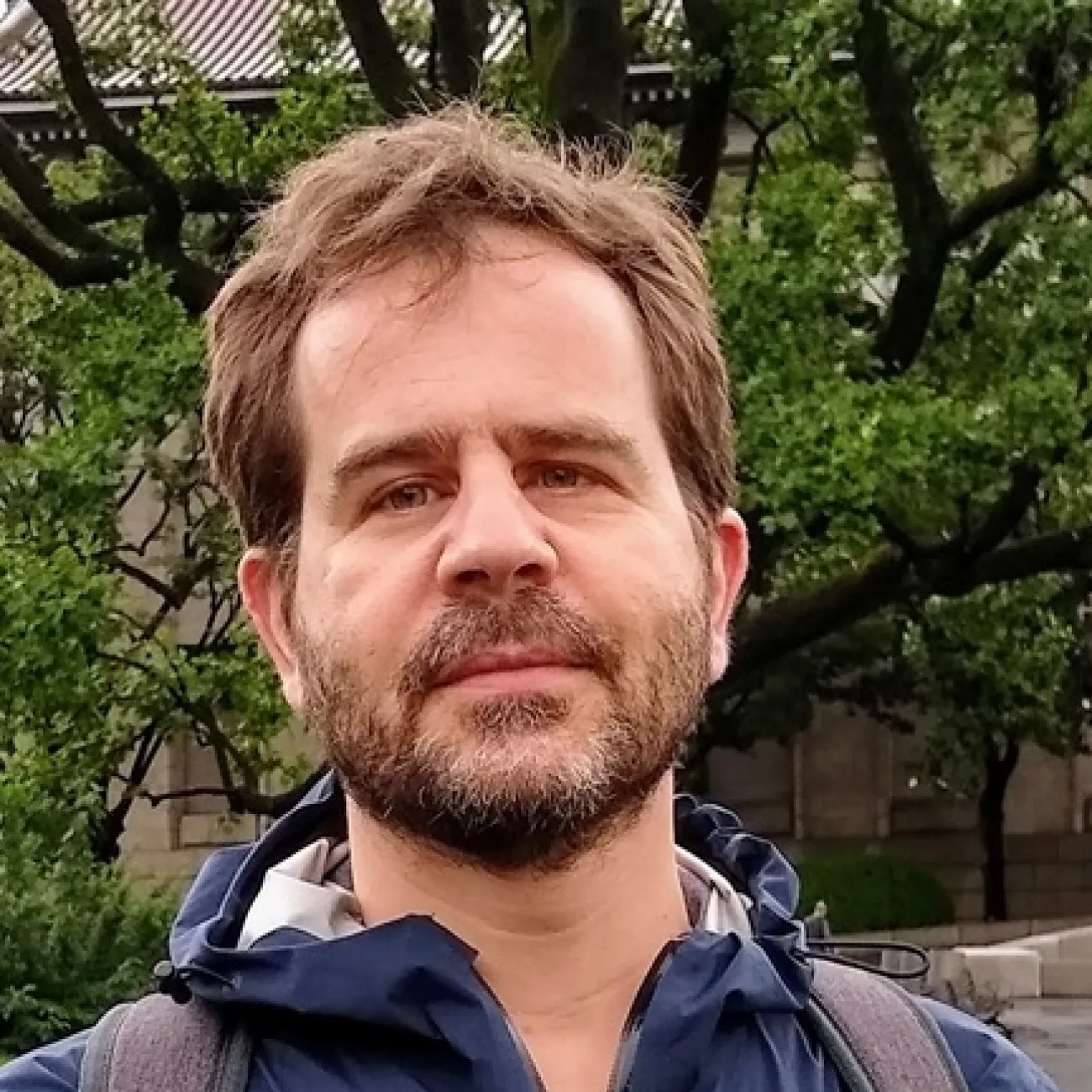
Dr. Andrea Lecchini Visintini is an Associate Professor at the School of Electronics and Computer Science , University of Southampton. He specializes in systems modelling and control with applications in aerospace engineering and biomedical domains, utilizing Monte Carlo methods for stochastic optimization. Cyber-Physical Systems Research Group Institute for Life Sciences Research Focus: His work bridges computational methods with practical applications in: Neurovascular coupling and brain tissue pulsation analysis Advanced control strategies for aerospace systems Stochastic optimization in machine learning and fault detection Medical imaging and diagnostic protocol development Publication Trends: Recent work emphasizes interdisciplinary approaches combining computational neuroscience with engineering, focusing on brain hemodynamics, MIMO system control, and data augmentation techniques for imbalanced datasets. Supervision: Currently supervising PhD student Xuankun Cai in Computer Science.
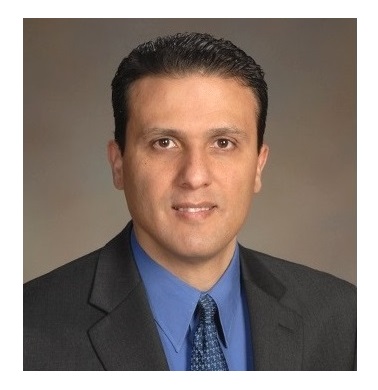
Dr. Wahab Hamou-Lhadj is a Professor and Chair at the Department of Electrical and Computer Engineering , Concordia University, and an Affiliate Researcher at NASA JPL, Caltech . He leads research in Artificial Intelligence for IT Operations (AIOps) , Software Observability , and Model-Driven Engineering , focusing on improving the reliability of digital systems in AI-driven environments.
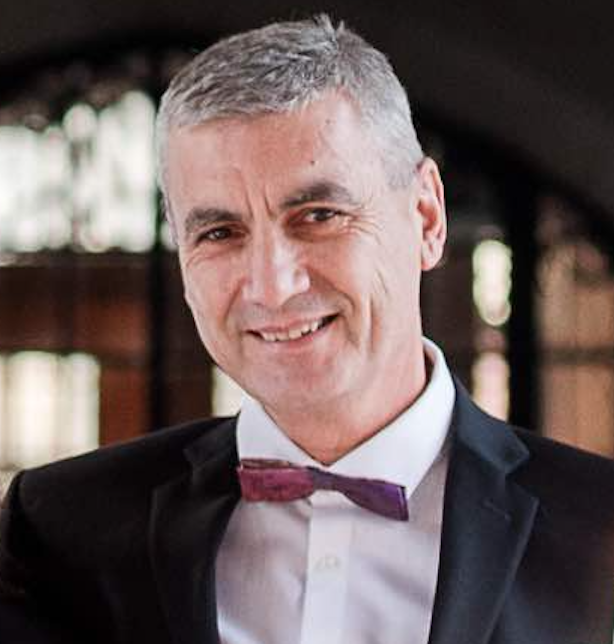
About Marin Litoiu is a Professor at York University, holding dual affiliations in the Department of Electrical Engineering and Computer Science at the Lassonde School of Engineering and the School of Information Technology in the Faculty of Liberal Arts and Professional Studies. He is a Fellow of the Canadian Academy of Engineering and a recipient of the 2020 IBM Faculty of the Year Award. His research focuses on cloud computing, self-adaptive systems, DevOps, IoT, and machine learning-driven performance engineering. Research & Awards Litoiu leads the Dependable Internet-of-Things Applications (DITA) program, funded by NSERC, and co-founded Bitnobi Inc., acquired by Myant. His notable awards include the CASCON 2019 Most Influential Paper Award and Best Paper Awards at multiple conferences. His work emphasizes practical applications of adaptive systems, cybersecurity, and smart infrastructure integration. Grants & Projects NSERC CREATE Program: $1.65M for the DITA program (2018) York Innovation, TIAP, NSERC, and OCI-funded Bitnobi incubation Leadership in multiple CASCON workshops on cloud computing and AIOps Labs & Teams Litoiu’s lab has produced impactful startups like Bitnobi and pioneered research in self-driving systems, edge computing, and AI-driven operations. His team collaborates with industry partners like IBM and explores cutting-edge topics such as LLMs in performance optimization and fault detection.
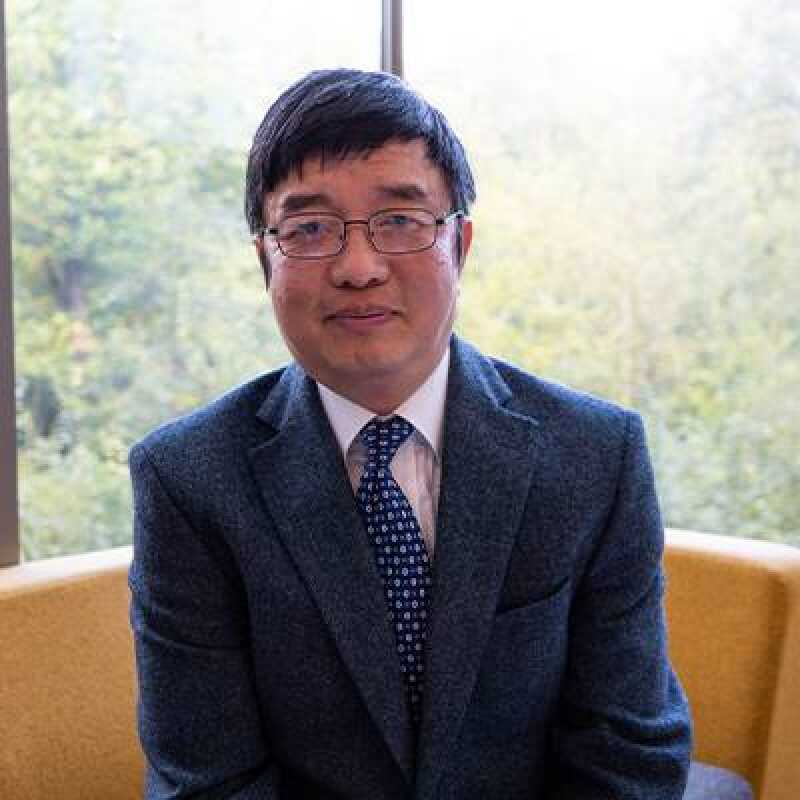
Professor Shaomin Wu is a faculty member at the University of Kent's Kent Business School, where he holds the academic rank of Professor of Business/Applied Statistics. He earned an MSc and PhD in applied statistics and has extensive industry experience, including a five-and-a-half-year stint at a global manufacturer in Shanghai before moving to the UK in 2001. He has held roles as a postdoctoral researcher and lecturer before joining Cranfield University and later the University of Kent. His research focuses on recurrent event data analysis, machine learning, and reliability mathematics, with funding from the EPSRC and ESRC. His research projects include managing risk in warranty servicing policies, smart data analytics for local government, and sustainable supply chain demand forecasting. He teaches modules such as risk analysis, reliability engineering, and machine learning. Currently supervising PhD students in time series forecasting, explainable AI, and recurrent event data analysis, he also serves as a co-chair of international conferences, editorial board member, and external examiner for doctoral degrees. Notably, he ranks among the top 2% of global scientists by Stanford University. His work integrates machine learning with business analytics, resilience engineering, and environmental sustainability. Key contributions include IoT-driven resilience methodologies for smart grids and unmanned systems, as well as frameworks for corporate carbon disclosure and maintenance optimization under uncertainty.
Lars Nordström is a Professor at the Division of Electric Power and Energy Systems within KTH Royal Institute of Technology, Stockholm, Sweden. His work bridges control systems , communication networks , and power systems , with a focus on future architectures, functionality, and quality aspects of ICT for power grid operations. He has led initiatives such as the Swedish Centre of Electric Power Engineering and served as Thematic Leader for Smartgrids in KIC InnoEnergy. In 2014, he was a Visiting Professor at Washington State University. Education : Ph.D., MSc.EE Nordström's research explores the intersection of smart grids , machine learning , and cybersecurity for power systems. Key areas include: Wide-Area Monitoring and Control (WAMC) systems Decentralized control strategies for DC microgrids Impedance modeling using neural networks Data-driven methods for islanding detection ICT reliability and protocol design for grid operations His recent publications emphasize machine learning applications in power systems, including LSTM networks for EV charging management, graph attention networks for stability monitoring, and digital twin approaches for cyber-attack mitigation. These works span disciplines such as Smart Grids, Power Electronics, and Data Science. Scientific Recognitions : Senior Member, IEEE Senior Member, CIRED Senior Member, Cigre Past Chairman, Swedish IEC TC57 Mirror Committee Nordström actively teaches and examines graduate courses like Communication and Control in Electric Power Systems and Computer Applications and Machine Learning in Electric Power Systems . His work influences industry practices through collaborations on digital substations, energy market analysis, and resilience strategies.
Dr. Marcel Dettling is a Group Lead in Data Analysis and Statistics at the ZHAW School of Engineering , focusing on predictive analytics, applied statistics, and complex data analysis. He also serves as a Lecturer at ETH Zurich , teaching advanced statistical methods. Education : PhD in Mathematics (2000-2004), ETH Zurich Postdoc in Applied Statistics (2004-2006), Johns Hopkins University His research spans predictive analytics (regression, classification, time series), data mining, and applications in health economics, transportation safety, social sciences , and business analytics . Recent work includes pharmaceutical cost group analysis for Swiss healthcare and predictive maintenance for marine vessels. Selected publications highlight his expertise in flight trajectory modeling , deep learning error mitigation , and statistical frameworks for rehabilitation finance . His projects address diverse fields like crowdworking in nursing, energy optimization for shipping, and customer behavior prediction.
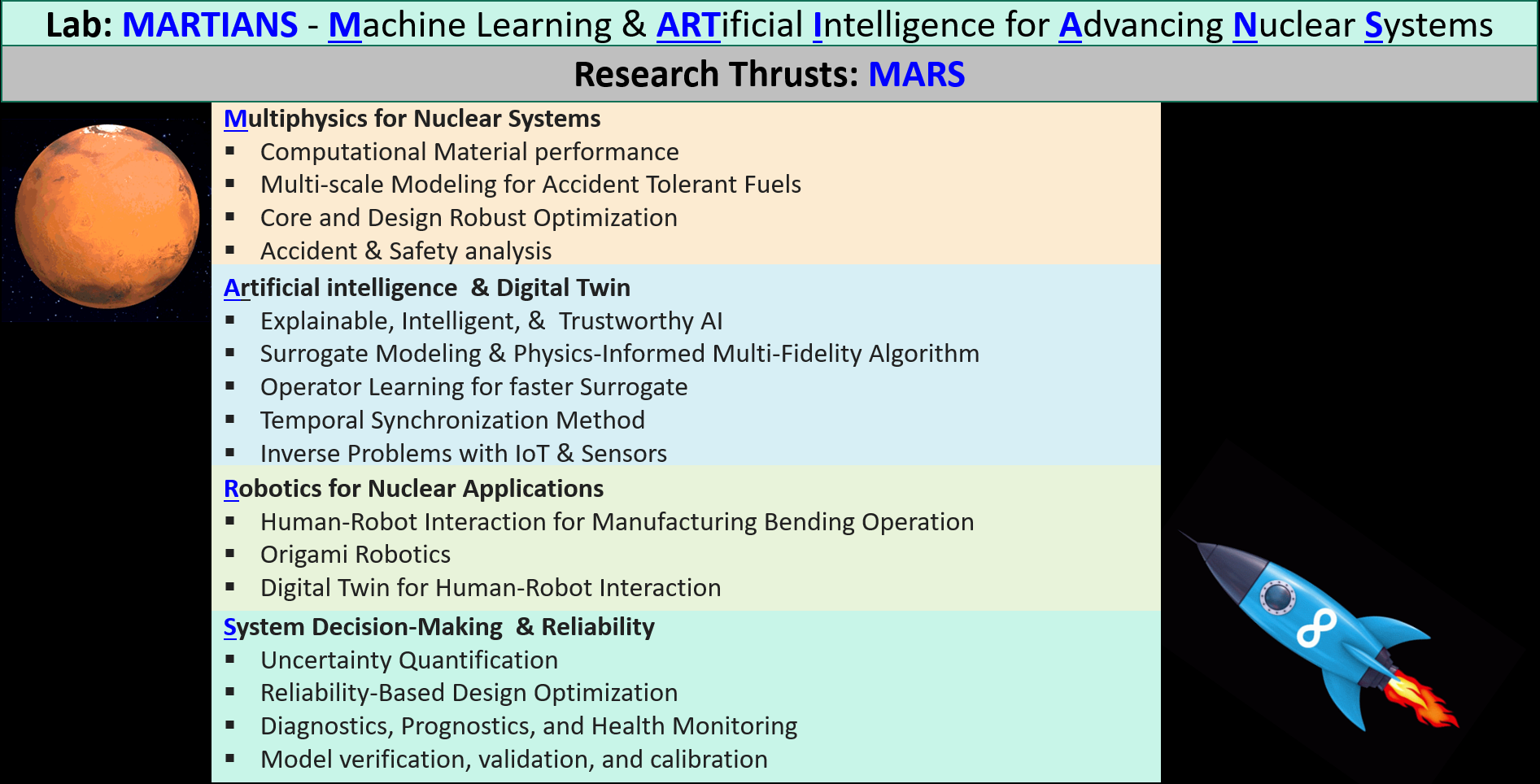
Syed Bahauddin Alam is an Assistant Professor at the University of Illinois Urbana-Champaign (UIUC) in the Nuclear, Plasma & Radiological Engineering department. He holds appointments in the Grainger College of Engineering and the National Center for Supercomputing Applications (NCSA). His research focuses on AI-driven digital twins, uncertainty quantification, and cybersecurity for nuclear systems. Education: B.Sc. in Electrical and Electronics Engineering, Bangladesh University of Engineering and Technology (BUET), 2011 MPhil in Nuclear Energy, University of Cambridge, 2013 PhD in Nuclear Engineering, University of Cambridge, 2018 Research Interests: AI and Digital Twins for Nuclear Energy Multiscale Modeling with Uncertainty Quantification Cybersecurity for Nuclear Systems Sensors and Instrumentation for Reactor Monitoring His work emphasizes explainable AI (XAI), physics-informed machine learning, and robust design optimization. Key contributions include AI-powered digital twins for nuclear systems, which received global media coverage and top 5% Altmetric scores. Awards & Honors: 2025 Dean’s Award for Excellence in Research (UIUC) 2024 Illinois Innovation Award Finalist 2022-2021 Outstanding Teaching Award (Missouri S&T) 2017 Cambridge Philosophical Society Research Studentship Award Grants & Funding: $700,000 U.S. Nuclear Regulatory Commission (NRC) Distinguished Faculty Development Award (2024) $2 million DOE grant for nuclear fuel storage solutions (2023) $500,000 NRC R&D Grant (2024) Labs & Teams: Leads the MARTIANS Lab (Machine Learning and ARTificial Intelligence for Advancing Nuclear Systems), focusing on hybrid data-physics-driven AI and explainable machine learning for nuclear engineering challenges.
Dr. Kaibo Liu is the Grainger STAR Professor in the Department of Industrial and Systems Engineering at the University of Wisconsin-Madison and serves as Associate Director of the UW-Madison IoT Systems Research Center. He earned his B.S. from the Hong Kong University of Science and Technology (2009), and M.S. and Ph.D. from Georgia Tech (2011/2013). His research focuses on system informatics, big data analytics, and data fusion for process modeling, monitoring, and decision-making. He has been funded by NSF, ONR, DOE, and industry partners. Notable awards include the 2024 Hromi Medal (ASQ), 2021 IISE Technical Innovation Award, and multiple early-career recognitions. Recent work emphasizes real-time cyber-physical security, reinforcement learning for data streams, and Bayesian methods for prognosis. He edits IEEE Transactions on Automation Science and Engineering and IISE Transactions on Data Science.
Guang Tian, Ph.D. , is an Assistant Professor of City and Metropolitan Planning at the University of Utah and a faculty member at the Scientific Computing and Imaging Institute . His research bridges land use-transportation planning , travel behavior , and urban data science , with a focus on sustainability , climate adaptation , and equitable transit-oriented development . He previously founded the Center for Equitable Transit-Oriented Communities at the University of New Orleans as an Associate Professor. Education : Ph.D. in City & Metropolitan Planning (University of Utah, 2016) Professional Affiliations : Faculty, Scientific Computing and Imaging Institute (2025–present) His research leverages machine learning and GIS to analyze VMT reduction , active transportation , and the built environment’s impact on mobility . Key findings include the superior performance of random forest models over traditional methods in predicting mode choice and the role of polycentric urban structures in reducing auto dependency. Scientific Awards : Rising Scholar Award (2024, Association of Collegiate Schools of Planning) Grants include funding from the US Department of Transportation for equitable transit communities and multiple Louisiana Transportation Research Center projects on VMT modeling, rail infrastructure, and truck parking efficiency. His teaching centers on GIS applications in urban planning and transportation analysis.
Juergen Schmidhuber is Associate Professor at the Faculty of Informatics of Università della Svizzera italiana and a leading researcher at the Dalle Molle Institute for Artificial Intelligence (IDSIA USI-SUPSI). He is also Chief Scientist at NNAISENSE, a company dedicated to building practical general-purpose AI. His work has profoundly influenced modern artificial intelligence, particularly through the development of Long Short-Term Memory (LSTM) networks in 1991, now deployed across billions of devices for speech recognition, machine translation, and virtual assistants. His research interests span Artificial Intelligence, Deep Learning, Recurrent Neural Networks, Universal AI, Meta-Learning, Algorithmic Information Theory, Artificial Curiosity, Robotics , and Low-Complexity Art . He has pioneered mathematically rigorous frameworks for self-improving AI systems and formal theories of creativity and beauty. His work bridges theoretical foundations with real-world applications in computer vision, natural language processing, and autonomous robotics. The recent articles reflect a consistent trajectory of innovation, combining deep theoretical insights with scalable machine learning architectures. His publications emphasize sequence modeling, universal learning, intrinsic motivation, and computational creativity , demonstrating both foundational contributions and industrial impact. From LSTM to Goedel machines, his work consistently targets the long-term goal of self-improving general AI. Scientific Awards: Numerous awards in AI and machine learning (specific names not listed) Schmidhuber leads a research group at IDSIA, where he mentors students and researchers in advancing the frontiers of AI. His lab has secured significant recognition and industrial collaboration, though specific grants are not detailed. He promotes the 'New AI'—general, sound, and relevant to physics—and continues to explore the convergence of intelligence, computation, and the universe. Labs and Teams: Dalle Molle Institute for Artificial Intelligence (IDSIA USI-SUPSI) NNAISENSE (as Chief Scientist)
Prof. Ivan Cole is an Adjunct Professor at RMIT University's School of Engineering, specializing in rapid materials discovery for corrosion protection, nanostructures, and additive manufacturing. His work integrates computational modeling with high-throughput experimentation, focusing on corrosion inhibitors, biocompatible surfaces, and additive manufacturing process optimization. With over 30 years of experience across academia and industry (including leadership roles at CSIRO and Centro-Svilluppo Materiali), he leads the Rapid Discovery & Fabrication Team (RDF) to advance these research areas. Research Interests: Corrosion science, microbially induced corrosion (MIC), additive manufacturing surfaces, nanostructure sensing, multiscale modeling, and green materials discovery. His team addresses challenges in corrosion protection, biomedical implants, and environmental remediation through innovative methodologies. Awards: 2019 Australian Corrosion Medal 2016 CSIRO Lifetime Achievement Award 2013 Best Paper in NACE Corrosion Supervision & Projects: Active in mentoring PhD/Master’s students across corrosion inhibition, additive manufacturing, and nanostructure design. Notable projects include developing quorum sensing inhibitors for biofilm control, in-situ monitoring for metal AM, and eco-friendly corrosion inhibitors. Labs & Collaborations: Leads the Rapid Discovery & Fabrication Team and collaborates with industry partners to translate research into practical solutions for materials durability and sustainability.
James Carroll is a Professor in the Department of Electronic & Electrical Engineering (EEE) at the University of Strathclyde, where he also serves as Director and Principal Investigator of the Wind and Marine Energy Systems and Structures CDT (2019–2027) and the Strathclyde lead for the EnerHy Wind and Hydrogen CDT (2024–2032). He is Co-Lead of the Wind Energy and Control (WEC) Group, one of the largest university-based wind energy research groups in the UK, comprising 8 academics and over 35 researchers. His research interests are centered on wind energy systems, with a focus on: Novel wind turbine concept development Wind turbine reliability and maintenance modeling Cost of energy and O&M cost modeling Drive train selection impact on reliability Condition monitoring and failure prediction of wind turbine components Data-driven machine learning and physical modeling for remaining useful life prediction SCADA and vibration data analytics The recent articles highlight a consistent trend in offshore and onshore wind energy innovation, with strong emphasis on predictive maintenance, cost reduction, digital twins, and novel turbine design. His work bridges engineering, data science, and sustainability, contributing significantly to renewable energy advancement. Scientific recognition includes: 2nd Place, Future Energy Competition (2019) James Carroll has been actively involved in major research projects, including EPSRC-funded CDTs and industry collaborations, focusing on hydrogen integration, digital twins for powertrains, and offshore wind maintenance optimization. He has also contributed to professional activities such as keynote speaking at the Wind Energy Science Conference 2019 and participation in EPSRC scoping workshops. He supervises research students and leads a dynamic team within the WEC Group, driving innovation in wind and marine energy systems. His research group, the Wind Energy and Control (WEC) Group, is a leading UK academic team in wind energy, fostering interdisciplinary collaboration and training the next generation of energy engineers through doctoral training programs.
Mohammad Hamdaqa is an Associate Professor in the Department of Computer Engineering and Software Engineering at Polytechnique Montréal, where he leads the Laboratory of Software and Emerging Technologies. His academic journey includes a Ph.D. in Electrical and Computer Engineering from the University of Waterloo (2016), a Master's in Electrical and Computer Engineering from Concordia University, an MBA from the New York Institute of Technology, and a Bachelor's in Computer Engineering from Jordan University of Science and Technology. His research focuses on the intersection of software engineering and emerging technologies, particularly examining how software engineering approaches can be adapted for complex new platforms like cloud computing and blockchain. His work spans model-driven software engineering, cloud application architecture, smart contract development, and infrastructure as code. He investigates both how traditional software engineering practices can evolve to address the challenges of modern distributed systems and how emerging technologies can transform software development processes themselves. Analysis of his recent publications reveals a strong emphasis on blockchain technologies (particularly smart contracts), cloud-native applications, and the application of AI to software engineering tasks. His work shows a consistent thread of empirical research combined with practical tool development, with increasing focus on sustainability aspects of software systems in recent years. Much of his research bridges theoretical foundations with practical implementation concerns. Professor Hamdaqa serves as a thesis supervisor for multiple graduate students, with recent completed Master's theses focusing on smart contract auditing, prompt engineering for OCL generation, model-driven epidemiology, and security practices in infrastructure as code. He actively recruits students for research projects in his laboratory. He is a member of both the IEEE Computer Society and the Association for Computing Machinery (ACM), has served on program committees for major software engineering conferences, and is on the editorial board of Service Transaction on Internet of Thing. His laboratory, the Laboratory of Software and Emerging Technologies, serves as the hub for his research activities in blockchain, cloud computing, and model-driven engineering.
Dr. Vikas Srivastava is an Associate Professor of Engineering and Director of the Graduate Program in Biomedical Engineering at Brown University's School of Engineering. His research focuses on solid mechanics, continuum biomechanics, and cell mechanics, with applications in materials under extreme environments and biomedical science. He leads the Srivastava Lab for Solid Mechanics and Biomechanics, which integrates computational models with experimental techniques to address interdisciplinary challenges. Dr. Srivastava holds a Ph.D. in Mechanical Engineering from MIT (2010) and previously held senior roles at ExxonMobil, including leadership in materials mechanics and deepwater drilling engineering. His academic career at Brown began in 2018, during which he has directed over 15 graduate students and secured notable funding. His research interests span mechanobiology, hydrogel-based drug delivery systems, AI-driven predictive modeling, and biomaterial innovations for cancer therapies. He has pioneered physics-informed neural networks for material characterization and developed novel hydrogels to enhance chemotherapy efficacy. Recent articles highlight advancements in polymer fracture modeling, machine learning for non-destructive evaluation, and predictive epidemiological modeling for pandemics. Dr. Srivastava has received the Dean’s Award in Bioengineering and was promoted to tenured Associate Professor in 2023. He actively mentors students through grants like the NSF Graduate Research Fellowship and leads initiatives in biomedical technology translation. The Srivastava Lab collaborates extensively across engineering, biology, and medicine to advance translational research in materials science and clinical applications.
Ye Zhisheng is the Dean’s Chair and Associate Professor in the Department of Industrial Systems Engineering & Management at the National University of Singapore (NUS). His research focuses on reliability engineering, inventory control, emergency response systems, and statistical modeling. He holds a PhD in Industrial and Systems Engineering from NUS, along with a BEng in Material Science and Engineering and a BEco in Economics from Tsinghua University. His work emphasizes practical applications in mission-critical systems, predictive maintenance, and data-driven decision-making. Current research initiatives include optimal maintenance policies for manufacturing systems, degradation analysis of bearings, and federated learning approaches for battery lifecycle prediction. He has pioneered methods for integrating physics-informed neural networks into prognostics and health management (PHM) systems. Key technical contributions span advanced statistical methodologies like sieve estimation for survival data, phase-type distributions modeling, and condition-based maintenance optimization. His interdisciplinary approach bridges operations research, mechanical engineering, and computer science to address complex reliability challenges. Recent projects include resilient consensus-based power grid management and contamination source identification frameworks. Notable collaborations involve developing intelligent cross-domain fault diagnosis systems using transformer networks and advancing the Internet of Federated Things (IoFT) for distributed data analytics. His work has been applied in aerospace, telecommunication infrastructure, and medical emergency response systems.