Professor Peter Herrmann is affiliated with the Norwegian University of Science and Technology (NTNU) , Faculty of Information Technology and Electrical Engineering, Department of Information Security and Communication Technology. He leads research in Intelligent Transport Systems (ITS) , model-based engineering , and trust management , with a focus on distributed systems and cyber-physical systems. Collaborations : Statens Vegvesen, Jernbaneverket, Telenor, RMIT University, University of Oslo Key Projects : IoT-STOP, MobiTrack, SIMS, Arctis, EuroNF, ISIS, iTrust His Reactive Blocks tool enables formal specification and verification of networked systems, while BeSpaceD specializes in spatiotemporal analysis. Students under his supervision include Ergys Puka (dead spot mitigation), Magnus Oplenskedal (machine learning localization), and Zeeshan Ali Khan (trust-based intrusion detection). Scientific awards include two best paper awards for collaborative work with RMIT University. His research spans formal methods, security of distributed components, and energy-efficient IoT systems, with over 20 years of contributions from TLA extensions to commercialization of BitReactive .
Margreth Grotle is a Professor at OsloMet – Oslo Metropolitan University, affiliated with the Faculty of Health Sciences and the Department of Rehabilitation Science and Health Technology. Her work focuses on musculoskeletal health, pain management, and clinical prediction models. She leads research projects addressing chronic pain in adolescents, personalized healthcare for spinal disorders, and decision-making processes in spine surgery. Notable projects include the HEYoung intervention study (adolescent pain management) and the AID-Spine initiative (AI-driven healthcare). Her research emphasizes translational studies on musculoskeletal conditions, including modifiable risk factors for healthcare costs, motivational interviewing for return-to-work outcomes, and the societal impact of persistent pain in young adults. She collaborates with interdisciplinary teams and has published extensively in journals like BMC Musculoskeletal Disorders and JAMA Network Open . Key research themes include predictive modeling for musculoskeletal outcomes, healthcare system optimization, and patient-centered interventions. Current projects address barriers to education/employment for pain-affected youth and the role of artificial intelligence in spinal care.
Professor Houxiang Zhang holds a faculty position at the Norwegian University of Science and Technology (NTNU), serving as a Professor in Mechatronics and Deputy Research Leader (Nestleder forskning) at the Department of Ocean Operations and Civil Engineering within the Faculty of Engineering. He joined NTNU in 2011 after completing a Habilitation in Informatics at the University of Hamburg (2011). His research focuses on biological robotics, modular robotics, virtual prototyping, and maritime mechatronics, with over 300 publications and multiple best-paper awards. Academic memberships include the Academy of the Royal Norwegian Society of Sciences and Letters (DKNVS), Norwegian Academy of Technological Sciences (NTVA), and IEEE Senior Member. He has led significant projects such as the EU Horizon-RIA Project "Robotic Safe Adaptation in Unprecedented Situations" and the NFR Research Infrastructure Program "The Digital Ocean Space-Møre Ocean Lab." Research interests span marine automation, AI applications, and hybrid modeling. Notable achievements include pioneering work in digital twin technology for maritime systems and contributions to offshore mechatronics. His lab, the Intelligent Systems Lab, focuses on integrating advanced technologies for marine operations and automation. Recent awards include the 2024 Best Paper Award from IEEE RAS and multiple finalist recognitions at robotics and automation conferences. Current research emphasizes autonomous ship systems, environmental modeling, and data-driven decision support for maritime safety and efficiency.
Francesco Goia is a Professor at the Norwegian University of Science and Technology (NTNU), Department of Architecture and Technology, Faculty of Architecture and Design. He holds a Ph.D. in Energetics (Polytechnic University of Turin) and a co-joint Ph.D. in Architecture (NTNU). His research focuses on energy-efficient buildings, particularly the dynamic behavior of building envelopes and renewable energy integration. He has authored over 90 publications and contributed to IEA Annex/Task groups and COST actions. His expertise includes thermal analysis, HVAC systems, daylighting, and building physics simulations. Current projects involve advanced façade systems, adaptive building envelopes, and occupant-centric data streams for energy management. He collaborates internationally, with affiliations in Italy and Norway. Research highlights include experimental studies on double-skin façades, PV-integrated shading systems, and low-energy neighborhood energy management. Awards and recognitions from peer-reviewed journals and international conferences are notable, though specific awards are not listed.
Martin Føre is an Associate Professor at the Department of Engineering Cybernetics, NTNU. His work focuses on aquaculture robotics, sensor technologies for underwater applications, and mathematical modeling for fisheries and aquaculture industries. He holds a Master's (2006) and PhD (2011) from NTNU's Department of Engineering Cybernetics. His research emphasizes autonomous systems, precision farming, and digital twin technologies in marine environments. Education: M.Sc. & PhD in Engineering Cybernetics from NTNU (2006, 2011) His research interests include underwater robotics, bio-inspired motion planning, and real-time monitoring systems for fish farms. Key contributions include adaptive path planning algorithms for UUVs, sensor networks for fish welfare assessment, and digital twin integration in aquaculture. He has published extensively on topics like net pen dynamics, obstacle avoidance, and autonomous farm management. Publications highlight advancements in robotics for aquaculture, such as 3D motion planning for autonomous vehicles and real-time structural monitoring of net cages. His work bridges engineering, biology, and data science to enhance sustainable aquaculture practices. Major contributions include the development of acoustic telemetry systems for fish behavior analysis and IoT-based solutions for farm optimization. Collaborative projects with industry and academia focus on improving fish welfare, operational efficiency, and environmental sustainability in marine farming.
Ole Morten Aamo is a Professor in the Department of Engineering Cybernetics at NTNU. His research focuses on advanced control systems for complex engineering problems, particularly in drilling engineering and hyperbolic partial differential equations (PDEs). He holds a prominent position within the field of adaptive control, nonlinear systems, and fluid dynamics. His work often addresses challenges in offshore drilling, including vibration control, leak detection, and real-time data-driven decision-making. He employs cutting-edge methodologies like physics-informed neural networks and backstepping control designs. Key contributions include models for percussive drilling, distributed damping systems for reducing stick-slip vibrations, and adaptive control strategies for hyperbolic PDE systems. Recent publications highlight advancements in fault diagnosis for drilling operations, boundary control of hyperbolic systems, and the integration of machine learning for lithology classification. His interdisciplinary approach bridges theoretical control systems with practical applications in energy and mining sectors. He has supervised numerous PhD and master’s students, including Haavard Holta, Nils Christian Aars Wilhelmsen, and Mia Olea Vettestad. His research groups collaborate with industry partners to translate theoretical innovations into deployable solutions for drilling automation and process safety. Notable projects include the development of real-time kick/loss detection systems and the design of decentralized damping subs for drilling rigs. His work is frequently published in top-tier journals like Automatica , IEEE Transactions on Automatic Control , and SPE Journal .
Damiano Varagnolo is a Professor at the Department of Engineering Cybernetics, Norwegian University of Science and Technology (NTNU). His research focuses on control systems, robotics, energy systems, and data-driven methodologies. He has collaborated extensively on projects involving underwater vehicles, renewable energy optimization, and biomedical engineering applications. Key contributions include advancements in formation control algorithms for autonomous underwater vehicles (AUVs), adaptive control strategies for underactuated systems, and data synthesis techniques for tabular datasets. Varagnolo has published widely in top-tier journals such as IEEE Transactions on Control Systems Technology and IEEE Transactions on Power Systems. His work often integrates machine learning with classical control theory to address challenges in robotics, energy systems, and human-machine interaction. Notable projects include experimental validation of consensus protocols in networked systems and the development of energy expenditure estimation models for wheelchair users. He actively engages in educational initiatives, such as the 'Santa has Everything under Control' Advent calendar, aimed at demystifying control theory concepts for broader audiences. His interdisciplinary approach bridges mechanical engineering, computer science, and applied mathematics, with applications ranging from offshore wind energy optimization to autonomous navigation systems.
Laurent Georges is a Professor at the Department of Energy and Process Engineering, Faculty of Engineering, Norwegian University of Science and Technology (NTNU). He leads research in Building Performance Simulation (BPS), energy-efficient HVAC systems, and heat pump integration in buildings. His work focuses on zero-emission neighborhoods, energy flexibility, and data-driven modeling. Research projects include leadership in the ZEN research center (www.fmezen.no), the OPPTRE project on HVAC for house renovations, and the SusWoodStoves initiative. He also contributes to high-resolution CFD modeling for indoor airflow. Teaching responsibilities include courses on Building Performance Simulation and Heat Pumps for Buildings. He has advised multiple PhD students and co-supervised international projects. Professional memberships include the Nordic Chapter of IBPSA and NORVAC Foundation. Advising and grants highlight his role in supervising over 8 PhD students and managing interdisciplinary projects like ChiNoZEN (heat pump design) and ZEN's energy flexibility initiatives. His lab work involves predictive control systems and building energy optimization.
Prof. Sebastien Nicolas Gros is the Head of the Department of Engineering Cybernetics at NTNU. His research focuses on safe Reinforcement Learning, Data-Driven Model Predictive Control (MPC), and energy systems optimization. He collaborates with major industries like Equinor, DNV, Kongsberg, and CorPower Ocean, alongside academic partners such as SINTEF. He supervises 6 PhD students and co-supervises projects in artificial pancreas systems, multi-rotor wind turbine control, and industrial applications with Volvo. His work emphasizes AI-driven solutions for energy management in buildings, domestic battery systems, and indoor farming. Notable projects include MAIDOM (smart home energy control) and wave energy converter optimization with CorPower Ocean. He actively engages students through MSc projects involving data-driven control, smart home integration, and hydroponics automation. Prof. Gros leads a research group addressing interdisciplinary challenges in energy transition and cybernetic systems. His expertise spans numerical optimization, renewable energy integration, and industrial control systems.
Laurent Georges is a Professor at the Department of Energy and Process Technology, Faculty of Engineering Science, Norwegian University of Science and Technology (NTNU). He specializes in Building Performance Simulation (BPS), HVAC systems, heat pumps, zero emission buildings, and energy flexibility. His research integrates computational fluid dynamics (CFD) and data-driven modeling to address energy efficiency and sustainability challenges. Key projects include leading Work Package 3 on 'responsive and energy efficient buildings' in the FME ZEN (Zero Emission Neighbourhoods in Smart Cities) and investigating heat pump systems in the ChiNoZEN and OPPTRE projects. He is President of IBPSA-Nordic and a member of NORVAC Foundation. Research trends focus on energy flexibility, thermal storage, and AI-driven control strategies for buildings. Recent work emphasizes hybrid energy systems, CFD for airflow simulation, and optimal control frameworks for demand response. Advising includes 5 PhD students (as main supervisor) and 4 co-supervised, with notable alumni like Vegard Heide and Elyas Larkermani. His work spans 60+ publications since 2017, addressing topics from wood stove integration to model predictive control. Labs/teams: Active in FME ZEN, collaborating with DTU and SINTEF on energy systems, thermal storage, and building performance. Development of Python tools like pymodconn bridges academic research with industrial applications.
Shen Yin is currently the DNV Endowed Professor at the Department of Mechanical and Industrial Engineering, Faculty of Engineering, Norwegian University of Science and Technology (NTNU). He holds a Dr.-Ing. and MSc from the University of Duisburg-Essen, Germany. IEEE Fellow Member of Norwegian Academy of Technological Sciences Research Focus: His work centers on fault diagnosis, prognosis, and fault-tolerant control systems, combining system theory with machine learning and data-driven approaches for industrial applications. Key areas include: Cyber-physical systems reliability AI/DT assurance in safety-critical environments Predictive maintenance optimization Health monitoring in medical technology Sustainable energy system control Editorial Leadership: Co-Editor-in-Chief of IEEE Transactions on Industrial Informatics, with extensive associate editor roles across 9 IEEE journals since 2014. Guest editor for Proceedings of the IEEE and multiple specialized conferences. Professional Service: Vice Chair of IEEE Reliability Society Fellow Evaluation Committee (2025), Administrative Committee member of IEEE Industrial Electronics Society (2024-2026). Founded IEEE Industrial Electronics Society Technical Committee on Data-Driven Control and Monitoring.
Miroslav Bachinski is an Associate Professor at the Department of Information and Media Studies, University of Bergen. His research focuses on Human-Computer Interaction (HCI), with specialties in AI-driven tools, healthcare technology, and biomechanical modeling. He is affiliated with the Emerging Media Research Group and the Human-Computer Interaction (HCI) Research Group. Key research areas include: AI applications in dementia care (e.g., adaptive voice assistants, wearable integration) Biomechanical simulation for ergonomic interface design VR/AR interaction techniques and validation Human-AI collaboration frameworks Recent work highlights trends in: Scoping reviews of dementia care technologies Automated biomechanical testing in VR Emotion-aware voice assistant design Interdisciplinary workshop methodologies for AI tool development His contributions bridge technical innovation with user-centered design, emphasizing ethical considerations and participatory approaches in healthcare technology. He actively contributes to conferences like NordiCHI and NOKOBIT.
Eleni Kelasidi is a Professor in Field Robotics at the Department of Mechanical and Industrial Engineering, Norwegian University of Science and Technology (NTNU), and holds a part-time position as Senior Research Scientist and Head of SINTEF ACE-RoboticLab at SINTEF Ocean. She leads interdisciplinary research bridging robotics and aquaculture, with a focus on autonomous systems operating in dynamic environments. Her education includes: MSc in Electrical and Computer Engineering (University of Patras, 2009) PhD in Engineering Cybernetics (NTNU, 2015) Kelasidi's research explores nonlinear control, hydrodynamic modeling of swimming robots, robotic vision, and autonomous navigation. She pioneered robotic applications in aquaculture, establishing the first dedicated robotics lab for this domain. Her work addresses energy efficiency, obstacle avoidance, and real-time decision-making for underwater systems. Her recent publications emphasize adaptive path planning, aquaculture robotics, and robust autonomy in uncertain environments, reflecting a trend toward AI-integrated underwater operations and industry-driven solutions. Awards and recognitions: FRIPRO-Young Researcher Talent (2020) SINTEF’s Outstanding Research Award (2024) She leads multiple projects including FRIPRO-Young Researcher Talent and EU initiatives, and founded the Autonomous and Robotic Aquaculture Systems Lab (SINTEF ACE-RoboticLab). Kelasidi collaborates with MIT, ETH Zurich, and industry partners to advance robotic solutions for aquaculture, focusing on net pen inspection, biofouling prevention, and precision fish farming.
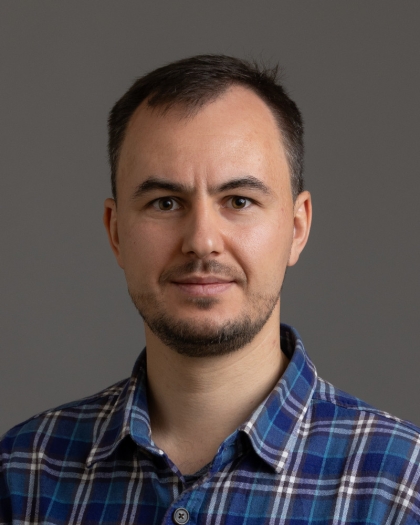
Ulysse Teller Masao Côté-Allard is an Associate Professor in the Department of Informatics at the University of Oslo, Faculty of Mathematics and Natural Sciences. He is affiliated with the Section for Autonomous Systems and Sensor Technologies and actively contributes to the INtroducing personalized TReatment Of Mental health problems using Adaptive Technology (INTROMAT) project. Institution: University of Oslo School: Faculty of Mathematics and Natural Sciences Department: Department of Informatics Section: Autonomous Systems and Sensor Technologies Email: utmcote-allard@its.uio.no, u.t.m.cote-allard@its.uio.no His primary research interests lie at the intersection of artificial intelligence and biomedical applications, with a strong emphasis on machine learning, deep learning, reinforcement learning, and human-computer interaction. His work focuses on developing intelligent systems for healthcare, particularly in myoelectric control for prosthetics, gesture recognition using wearable sensors, and digital mental health solutions for conditions like bipolar disorder. He investigates how multimodal physiological signals (EMG, PPG, IMU) can be leveraged to enhance human-robot interaction and enable early detection of mood changes. The trends in his recent publications (2020–2025) reveal a consistent focus on adaptive and intelligent systems for rehabilitation and mental health. His work spans biomedical signal processing, assistive robotics, affective computing, and AI-driven health monitoring. He frequently employs deep learning and reinforcement learning techniques to build resilient, context-aware systems that improve human-machine collaboration in clinical and assistive contexts. While no specific scientific awards are mentioned in the provided text, his extensive publication record in top-tier journals such as IEEE Transactions on Neural Systems and Rehabilitation Engineering, IEEE Access, Sensors, and Bipolar Disorders highlights significant scholarly contributions. He is actively involved in advising and research leadership, particularly within the INTROMAT project, which aims to personalize mental health treatment through adaptive technology. His collaborative work includes numerous co-authored publications with researchers across institutions, indicating strong interdisciplinary engagement and grant-funded research activities. Ulysse Teller Masao Côté-Allard is a key contributor to research teams focused on autonomous systems, sensor technologies, and digital mental health. He is involved in the INtROMAT project, which integrates AI and wearable sensing to advance personalized mental healthcare.
Slaven Conevski is an Adjunct Associate Professor at the Department of Civil and Environmental Engineering at the Norwegian University of Science and Technology (NTNU) . He is affiliated with the Norwegian Hydraulic Laboratory (Norsk hydroteknisk laboratorium) in Valgrinda, where he focuses on advanced hydroacoustic techniques for sediment transport monitoring. His research intersects Hydraulic Engineering , Hydroacoustics , and River Dynamics , with a strong emphasis on sediment transport mechanisms in fluvial environments. His work leverages tools such as Acoustic Doppler Current Profilers (ADCPs) , image velocimetry , and ANN-based modeling to quantify bedload and suspended sediment dynamics, particularly in sand-bed rivers and under hydropower-induced flow conditions. Key Research Areas : Hydroacoustic Sediment Monitoring Bedload Transport Quantification Glacial Flood Mitigation Hydropower-Flow Interaction Acoustic Signal Analysis Recent Publication Trends : 2023: Structural mitigation for glacial floods 2023: ADCP backscatter signal analysis 2023: Hydropower propeller impacts on flow 2022: Image processing for bedload 2020: Bistatic vs. monostatic ADCP configurations Teaching & Outreach : Courses: TVM5125 - Hydraulic Design Presentations at IAHR, EGU, and RiverFlow conferences Labs & Teams : Collaborates with the Norwegian Hydraulic Laboratory Research teams in Italy, Austria, Canada, and Germany Fieldwork in the Oder River and laboratory experiments in flumes

%20/ulusse-/ulysse-cote-allard.jpg)