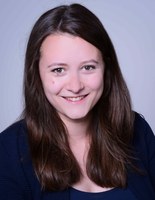
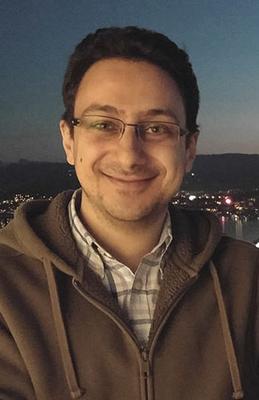
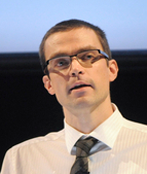
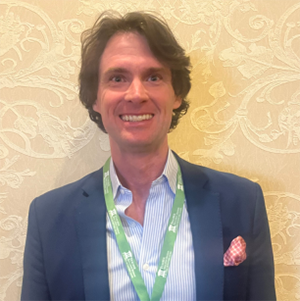
Kristin Litteck is a postdoctoral researcher at the Leibniz Institute for Science and Mathematics Education (IPN) in Kiel, Germany. She earned her PhD in 2024 and holds degrees in Mathematics and English education from Kiel University. Focuses on acquisition of mathematical concepts (derivative/integral) Investigates prior knowledge effects at upper secondary transition Explores intercultural differences in mathematics instruction Develops AI applications for mathematics education Active in the LPA – Learning Progression Analytics and MiO – Mathematik in der Oberstufe projects, her work bridges cognitive theory and educational practice. She serves on the IPN ethics committee since 2025 and has contributed to PME and GDM conference proceedings.
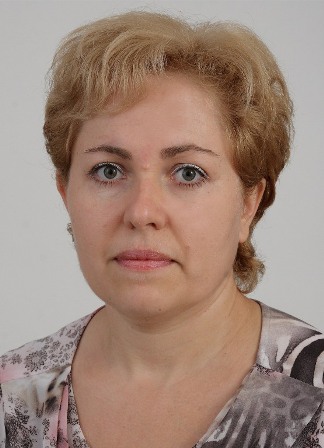
Fatme Yuseinova Rashidova is a Senior Lecturer at the Technical University - Gabrovo , affiliated with the College of Engineering and the Department of Automation, Information and Control Technology . Her work bridges computer science , educational technology , and systems engineering . Research Focus: Automated scheduling, distance learning platforms, cybersecurity in Industry 4.0, and AI applications in education. Publications: 29 scientific works, including a 2025 textbook on internet-based systems and recent papers on timetabling optimization, SWOT analysis in education, and AI challenges. Projects: Participated in 14 research initiatives, including electronic voting systems, smart medicine dispensers, and cybersecurity frameworks for industrial environments. Contributions: Developed centralized timetabling systems, virtual admission environments, and online testing platforms. Her projects emphasize reducing administrative burdens, improving accuracy in educational processes, and enhancing student satisfaction.
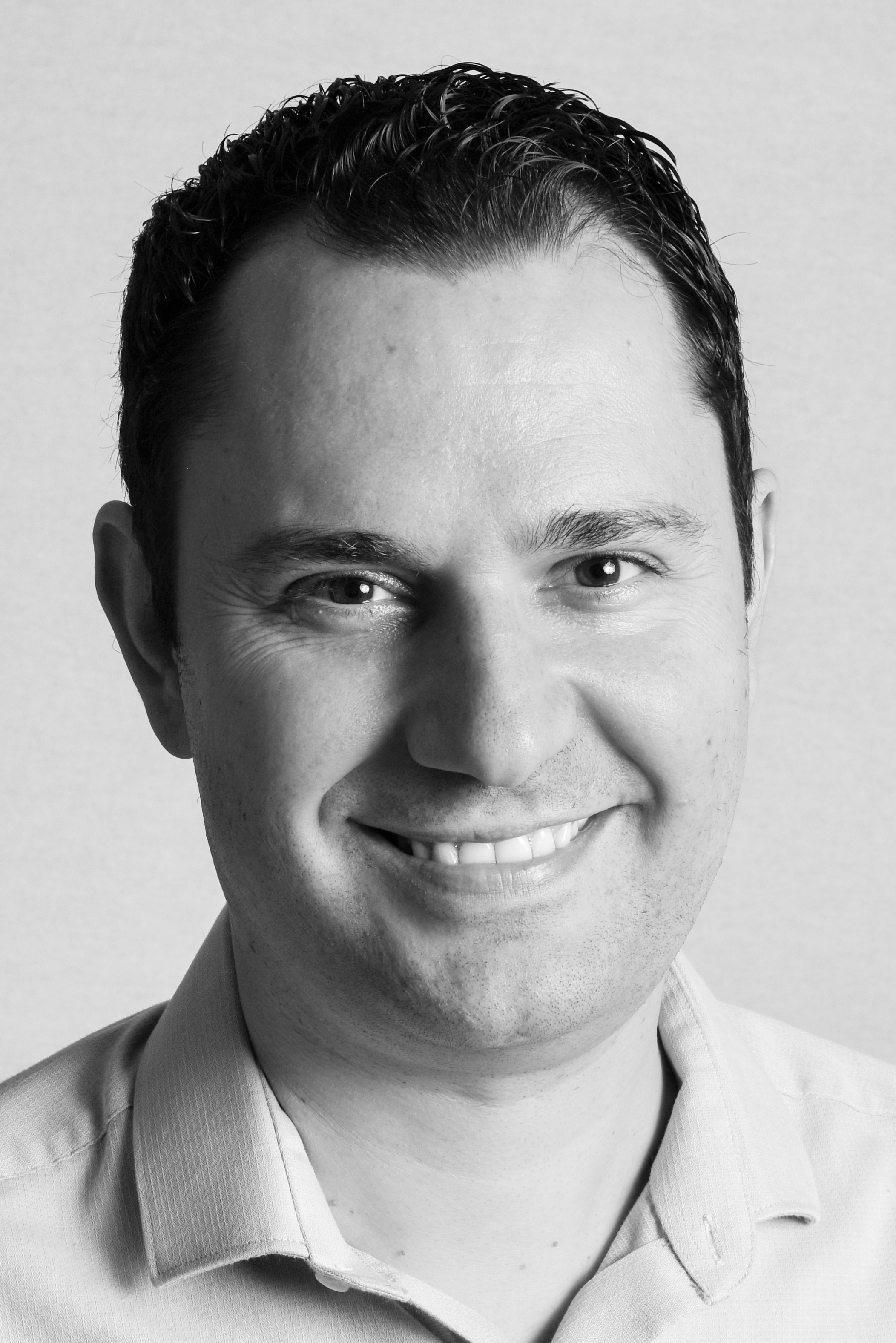
Theodore Kypraios is a Professor of Statistics at the School of Mathematical Sciences, University of Nottingham, United Kingdom. He serves as Course Director for the MSc in Statistics and MSc in Statistics with Machine Learning programmes, and as Head of the Statistics and Probability Section. Kypraios joined the University of Nottingham in September 2006 as a Research Fellow and was appointed as Lecturer in 2008. His research focuses on developing novel statistical methodology for Bayesian inference and model selection for high-dimensional complex data, with particular emphasis on stochastic epidemic models and infectious disease outbreak data. Kypraios has made significant contributions to Bayesian nonparametric methods, as evidenced by his PNAS publication on heterogeneously mixing infectious disease models which enables more data-driven approaches to understanding transmission mechanisms without strict parametric assumptions. Kypraios has been actively involved with the Royal Statistical Society, serving as Chair of the Computational Statistics and Machine Learning Section until December 2020, and currently sits on the Academic Advisory Group committee. He has presented his work at major conferences including the International Symposium for Bayesian Analysis and the Bayesian Inference for Stochastic Processes Workshop. As an educator, Kypraios has taught Statistical Inference and Data Analysis and Modelling modules at Nottingham, and has been an instructor for the 'MCMC II for Infectious Diseases' module at the Summer Institute in Statistics and Modeling in Infectious Diseases since 2010. His teaching emphasizes both classical and Bayesian approaches to statistical inference with applications to real-world problems. He has supervised PhD students including Dr. Rowland Seymour, whose thesis work formed the basis of the PNAS publication. His research has practical implications for understanding disease transmission mechanisms, as demonstrated by his analysis of the 2001 UK foot and mouth disease outbreak, and contributes to the development of more effective disease control strategies.
Jes Frellsen is an Associate Professor at the Department of Applied Mathematics and Computer Science (DTU) since 2016. Previously, he held academic positions at the IT University of Copenhagen (2016-2019), postdoctoral roles at University of Cambridge (2013-2016) and University of Copenhagen (2011-2013). Education: PhD in Bioinformatics (2011), University of Copenhagen MSc in Bioinformatics (2007), University of Copenhagen BSc in Mathematics and Computer Science (2005), University of Copenhagen EAP Exchange at University of California, Santa Cruz (2004-2005) Research Focus Jes Frellsen specializes in statistical machine learning , particularly generative AI and deep generative models with applications in bioinformatics . His work integrates Bayesian inference , directional statistics , and Markov chain Monte Carlo methods to address challenges in macromolecular structure prediction and missing data imputation . Recent efforts explore uncertainty quantification in image segmentation and generative modeling for materials science. Advising & Collaborations He actively supervises PhD students and postdoctoral researchers in projects spanning news recommendation systems , medical imaging , and 3D structure generation . Collaborations include work with Zoubin Ghahramani (Cambridge) and Thomas Hamelryck (Copenhagen), with contributions to protein structure prediction and statistical methods in structural bioinformatics .
Jessica A. Wachter is the Dr. Bruce I. Jacobs Professor in Quantitative Finance at the Wharton School of the University of Pennsylvania . She is a leading scholar in asset pricing and behavioral finance, with significant contributions to understanding rare events and investor memory in financial decision-making. PhD in Business Economics and AB in Mathematics from Harvard University Editor of Review of Financial Studies Former Chief Economist and Director of DERA at SEC (2021-2025) Published in top journals: Journal of Finance , Journal of Financial Economics , Quarterly Journal of Economics Her research explores asset pricing anomalies through Bayesian learning, correlation neglect, and representativeness heuristics. Recent work examines superstitious investors, sovereign default risk, and experience-driven behavioral biases in trading decisions. Key research themes: Stochastic disaster risk modeling Experience-based investor behavior Time-varying equity premiums Dynamic asset pricing Human capital risk Memory effects in economic decisions She has served on editorial boards of major finance journals and held academic positions at Wharton (2003-present) and NYU Stern School of Business.
Stefan Decker is a full University Professor (Universitätsprofessor) at RWTH Aachen University, Germany, where he heads the Chair of Information Systems and Databases (Informatik 5) within the Faculty of Mathematics, Computer Science and Natural Sciences. He is actively involved in teaching, research, and the supervision of numerous ongoing and completed doctoral, master’s, and bachelor theses. Education & Academic Background Doctorate (Dr. rer. pol.) – field of Information Systems or related (exact institution/year not stated in text). Appointed as University Professor and Chair of Information Systems and Databases at RWTH Aachen University. Research Interests Prof. Decker’s work lies at the intersection of databases, knowledge graphs, semantic web technologies, data science, and cybersecurity . He investigates architectures and algorithms for large-scale, privacy-preserving, decentralized data analytics , develops ontology-driven information systems , and explores the use of large language models (LLMs) for educational technology, anomaly detection, and incident-response playbooks. Additional focal areas include smart energy systems, mixed-reality learning environments, FAIR data principles, and federated machine learning . Scientific Contributions & Trends His recent publications (2022-2025) demonstrate a clear trend toward explainable AI, LLM-enhanced systems, secure data spaces, and semantic interoperability . Key contributions include novel anomaly-detection frameworks for encrypted power-grid communications, knowledge-graph-driven chatbots for higher-education support, and methodological advances in decentralized analytics and FAIR data sharing. These works are disseminated in top-tier venues such as AAAI, IEEE ISGT Europe, ESWC, IDEAL, and various Springer LNCS and IEEE Transactions. Supervision & Grants Doctoral Theses Advised: A. T. Neumann – “Chatbots as professional companions in large-scale community information systems” (2024) S. M. Welten – “Methods for practical data sharing and decentralized analytics” (2025) Master’s Theses Co-Advised: A. R. Küsters – “Object-centric process constraints using variable bindings” (2025) Additionally supervising more than 30 ongoing bachelor, master, and doctoral projects covering topics such as LLM-driven cybersecurity playbooks, knowledge-graph construction for German law, privacy-preserving analytics in smart grids, and mixed-reality learning agents. Principal investigator or senior researcher in large collaborative projects including NFDI4DS, WestAI, champI4.0ns and several EU/national initiatives on sovereign data spaces and AI services. Labs & Teams Prof. Decker leads the Information Systems & Databases (DBIS) Research Group . The group operates well-equipped laboratories for knowledge-graph engineering, mixed-reality applications, privacy-enhancing technologies, and secure distributed analytics . Current team size exceeds 30 researchers including PhD candidates, postdocs, and scientific programmers, supported by national and EU funding streams.
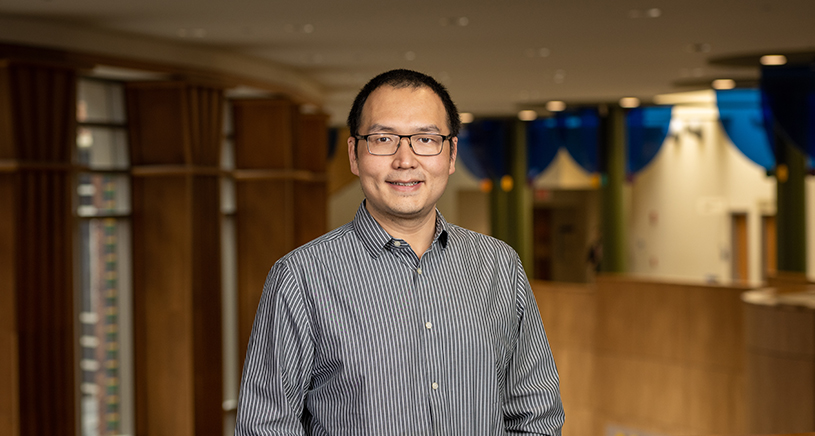
Jian Kang is a Professor and Associate Chair for Research at the University of Michigan School of Public Health , specializing in Biostatistics . His work focuses on developing advanced statistical methods for large-scale biomedical data , with applications to precision medicine , neuroimaging , and genomics . Education: PhD in Biostatistics, University of Michigan (2011) MS in Mathematics (Statistics), Tsinghua University (2007) BS in Statistics, Beijing Normal University (2005) Research Interests include Bayesian nonparametric methods , deep learning for medical imaging , ultra-high-dimensional variable selection , and graphical models for network inference . His 2025-2023 publications demonstrate expertise in Bayesian hierarchical modeling , spatial statistics , and machine learning for healthcare . Scientific Awards : Michigan SPH Excellence in Research Award (2025) ICSA President's Citation Award (2024) Statistics in Biopharmaceutical Research Best Paper (2023) Best Paper in Biometrics by IBS Member (2022) Fellow, American Statistical Association (2021) Grants include NSF-IIS (2021-2025) for BCI statistical learning , NIGMS (2020-2022) for metabolomics biomarker selection , NIDA (2020-2025) for imaging data analysis , and NIMH (2014-2025) for multidimensional neuroimaging methods . Labs and Teams develop Bayesian computational tools for neuroimaging and spatial transcriptomics , collaborating with institutions like Emory University and University of North Carolina.
Mustafa Onur is the McMan Professor and Chair of Petroleum Engineering at The University of Tulsa, where he directs the TU Petroleum Reservoir Exploitation Projects (TUPREP). He holds a Ph.D. and M.S. in Petroleum Engineering from The University of Tulsa and a B.S. from Middle East Technical University. Previously, he held professorships at Istanbul Technical University and Universiti Teknologi Petronas (Malaysia), including a Schlumberger Chair position. Research Focus: Dr. Onur specializes in inverse problem theory, mathematical optimization, and data science applied to reservoir management, geothermal systems, and uncertainty quantification. His work integrates machine learning with traditional reservoir engineering to solve complex problems in energy extraction and carbon sequestration. Publication Trends (2024-2025): His 15 most recent articles emphasize deep learning-based reservoir surrogates, CO₂ storage optimization, geothermal energy extraction, and constrained production optimization. Key innovations include Embed-to-Control frameworks, physics-driven interwell simulators, and stochastic optimization algorithms for uncertainty management in subsurface systems. Awards & Recognition: 2010 SPE Formation Evaluation Award 2014 SPE Distinguished Member 2018 SPE Reservoir Description and Dynamics Award Leadership: As TUPREP director, he leads advanced research in reservoir exploitation, focusing on practical applications of AI and optimization in petroleum and geothermal engineering. He serves as Associate Editor for SPE Journal and Journal of Petroleum Science and Engineering .
Angelos Georghiou is an Assistant Professor at the University of Cyprus and holds an affiliation with the Desautels Faculty of Management at McGill University . His research bridges game theory, optimization, and risk modeling, with applications in insurance and decision science. Primary Affiliation : University of Cyprus Secondary Affiliation : Desautels Faculty of Management, McGill University Research Focus : Georghiou specializes in derivative-free optimization , entropic risk estimation , and multistage stochastic programming , particularly in mitigating tail risks in insurance and developing robust data-driven prescriptive models. His work emphasizes algorithmic solutions for complex decision-making under uncertainty. Entropic Risk Estimation Regret Minimization Stochastic Optimization Machine Learning Applications Scientific Recognition : 2022 Esdras-Minville Prize (HEC Montréal) for risk-averse regret minimization research
Professor Scott Anthony Sisson is a leading academic at the University of New South Wales (UNSW) , holding the position of Professor of Statistics and Data Science in the School of Mathematics and Statistics . He serves as Director of the UNSW Data Science Hub (uDASH) and Deputy Director of the UNSW AI Institute (UNSW.ai) . Previously, he was Deputy Director of the Australian Centre of Excellence for Mathematical and Statistical Frontiers (ACEMS) and held leadership roles in the Australasian Society of Bayesian Analysis and Statistical Society of Australia . PhD in Statistics (Bristol University, 2002) MSc in Environmental Statistics and Systems (Lancaster University, 1997) BSc in Mathematics and Statistics (Lancaster University, 1996) His research focuses on computational statistics and Bayesian inference , with expertise in machine learning , extreme value theory , and high-dimensional data analysis . He develops simulation-based algorithms for complex statistical problems and applies these to diverse scientific challenges like seagrass decline, urban flood modeling, and drug delivery systems. His recent work spans quantum computing for statistics, graphon modeling, and synthetic likelihood methods. Scientific awards include: 2024 Fellow of the International Society of Bayesian Analysis 2023 Fellow of the Institute of Mathematical Statistics 2017 ARC Future Fellowship 2010 Queen Elizabeth II Research Fellowship 2006 John Yu Fellowship His advising team has mentored students in statistical modeling, Bayesian computation, and applied data science. Grants from the Australian Research Council and industry collaborations support his research in government and scientific applications. He contributes as Associate Editor for Journal of Computational and Graphical Statistics and Statistics and Computing .
Dr. Nicholas S. Bell is an Assistant Professor in the Department of Special Education at the University of Connecticut. His research and teaching focus on disrupting educational injustices through anti-racist practices, culturally relevant pedagogy, and advanced quantitative methods. Spencer Foundation Racial Equity Grant Spencer Foundation Conference Grant Dr. Bell’s research spans four key areas: anti-racist special education policies, culturally relevant STEM teaching for students with/without disabilities, special education teacher preparation, and the application of QuantCrit in educational research. His methodological approach combines qualitative, mixed-method, and advanced statistical models like structural equation modeling. Recent publications highlight his work on racialized resegregation in special education, equity-focused teacher training, and culturally responsive STEM instruction. Dr. Bell mentors PhD students and secures grants to advance racial equity in education.
Professor Subrahmanya Sastry Challa is affiliated with the Department of Mathematics at Indian Institute of Technology Hyderabad. His academic journey includes a PhD from IIT Kanpur under Prof. P. C. Das, an M.Sc(Tech) from JNT University, and a B.Sc from Hindu College, Machilipatnam. Research Focus: He specializes in Wavelets and Sparse Optimization Theory Frame Theory and Data-driven Learning Methods Applications in Medical Imaging and Signal Processing His recent work explores sparsity-driven optimization techniques with applications in tomography, ECG signal recovery, and machine learning algorithms. Publications & Collaborations: He has contributed to advancements in compressive sensing, inverse problems, and numerical linear algebra through collaborations with researchers like Dr. Phanindra Jampana and Dr. Praveen Pradhan. Key journals include IEEE Transactions on Signal Processing , Inverse Problems , and Neurocomputing . Teaching: Courses taught include Wavelets & Applications, Compressive Sensing, Numerical Linear Algebra, and Mathematics Behind Machine Learning, emphasizing both theoretical and applied aspects. Administrative Roles: Served as Associate HoD/HoD (2010-2014), Chief Vigilance Officer (2015-2019), and participated in policy-drafting committees during IIT Hyderabad's formative years.
Dr Francesca Pianosi is an Associate Professor in Water & Environmental Engineering at the University of Bristol 's School of Civil, Aerospace and Design Engineering. She contributes to the Cabot Institute for the Environment and leads research on data analysis, mathematical modelling, and uncertainty quantification for hydrology and water engineering. Specialises in simulation and optimisation methods for water resource management Focuses on uncertainty propagation in natural hazard models Developed the open-source SAFE Toolbox for sensitivity analysis Research Trends Her recent publications (2023-2025) demonstrate expertise in: Groundwater flow and recharge in data-scarce regions Digital Twin applications for watershed management Climate change impact on landslides and droughts Multi-objective optimisation for reservoir operations Integration of machine learning with hydrological models Scientific Awards Arne Richter Award for Outstanding Young Scientists (2015) Best Research Oriented Paper - Journal of Water Resources Planning and Management (2024) Early Career Research Excellence (ECRE) award (2014) Francesca leads the Water Management and Adaptation based on Watershed Digital Twins project (2024-2027) and contributes to the USARIS project on uncertainty quantification for infrastructure systems (2023-2025).
Harutyun Ishkhanovich Avetisyan is a Professor and Head of the Basic Department "System Programming" at the Faculty of Computer Science of the National Research University Higher School of Economics (HSE). He began his tenure at HSE in 2017 and brings 30 years of scientific and teaching experience to his role. Additionally, he serves as the Director of the Institute for System Programming of the Russian Academy of Sciences (ISP RAS), a position he has held since 2015. Avetisyan holds numerous prestigious academic distinctions, including being elected as an Academician of the Russian Academy of Sciences in 2019 and as a Corresponding Member in 2016. He earned his Doctor of Physical and Mathematical Sciences degree in 2012 and was awarded the academic title of Associate Professor in 2009. His educational background includes a specialty in "Applied Mathematics" from Yerevan State University (1993). His research focuses on three main areas: analysis and transformation of programs, software security, and parallel and distributed computing technologies. These interests are reflected in his extensive publication record and leadership in major research initiatives. His work bridges theoretical computer science with practical applications in cloud computing, secure data storage, and high-performance computing systems. Avetisyan's scholarly contributions demonstrate a consistent focus on system programming challenges, particularly in the areas of code analysis, optimization, and security. His recent publications indicate a growing interest in cloud computing paradigms, smart city infrastructure, and energy-efficient computing solutions. His research has significant implications for both academic theory and industrial applications in software development. Among his notable recognitions, Avetisyan was awarded the medal of the Order "For Merit to the Fatherland" 2nd degree in 2021 for his significant contributions to science and dedicated service. He also serves on the editorial boards of several prestigious journals including "Programming" (since 2015) and "Proceedings of the Institute for System Programming of the RAS" (since 2010). Throughout his career, Avetisyan has led and participated in numerous research grants funded by the Ministry of Education and the Russian Foundation for Basic Research. His professional trajectory shows steady progression from postgraduate studies (1997-2000) to research fellow (2000-2002), deputy director of ISP RAS (2002-2015), and ultimately director of the institute (2015-present). At HSE, Avetisyan teaches courses in parallel programming and mentor seminars for master's students in Software Engineering. His teaching philosophy emphasizes the integration of cutting-edge research with practical software development skills, preparing students for careers at the forefront of computer science.
Carlo Fezzi is an Associate Professor at the Department of Economics and Management, University of Trento. His research focuses on econometrics, environmental economics, and climate change impacts, particularly in policy design and integrated modeling. Teaches Applied Econometrics and Econometrics for Behavioral and Applied Economics and Mathematics programs. Leads workshops in the Market Analysis Laboratory (G3-2), emphasizing data-driven market understanding. Fezzi’s research integrates econometric methods with environmental policy, addressing biodiversity, climate adaptation, and energy economics. Recent work explores land use optimization under climate change, electricity demand forecasting, and coral reef valuation. His publications span topics like carbon trading, agro-environmental modeling, and non-market valuation techniques. Fezzi’s 15 most recent articles highlight trends in econometric applications to environmental challenges, including climate policy, energy demand modeling, and biodiversity conservation. His methodologies combine linear/nonlinear models, neural networks, and spatial analysis to address global issues like food security, carbon emissions, and ecosystem resilience.