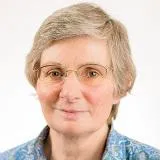
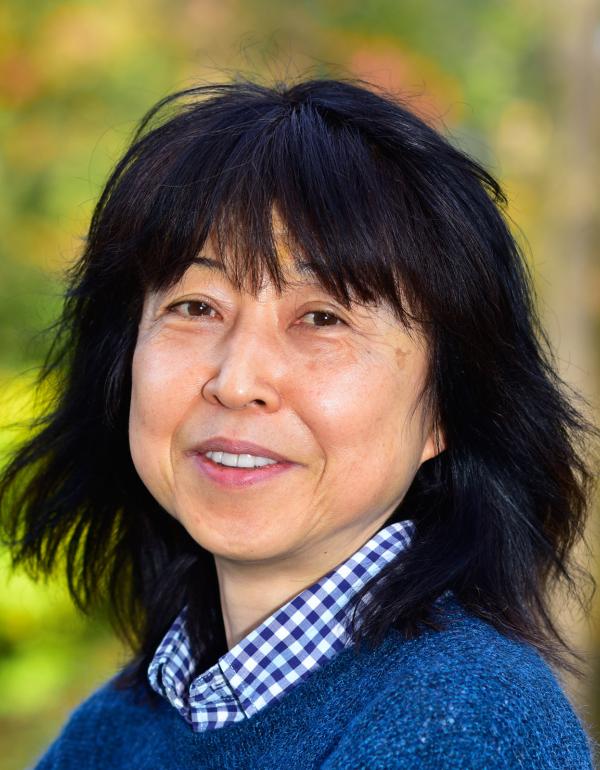
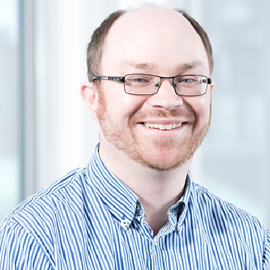
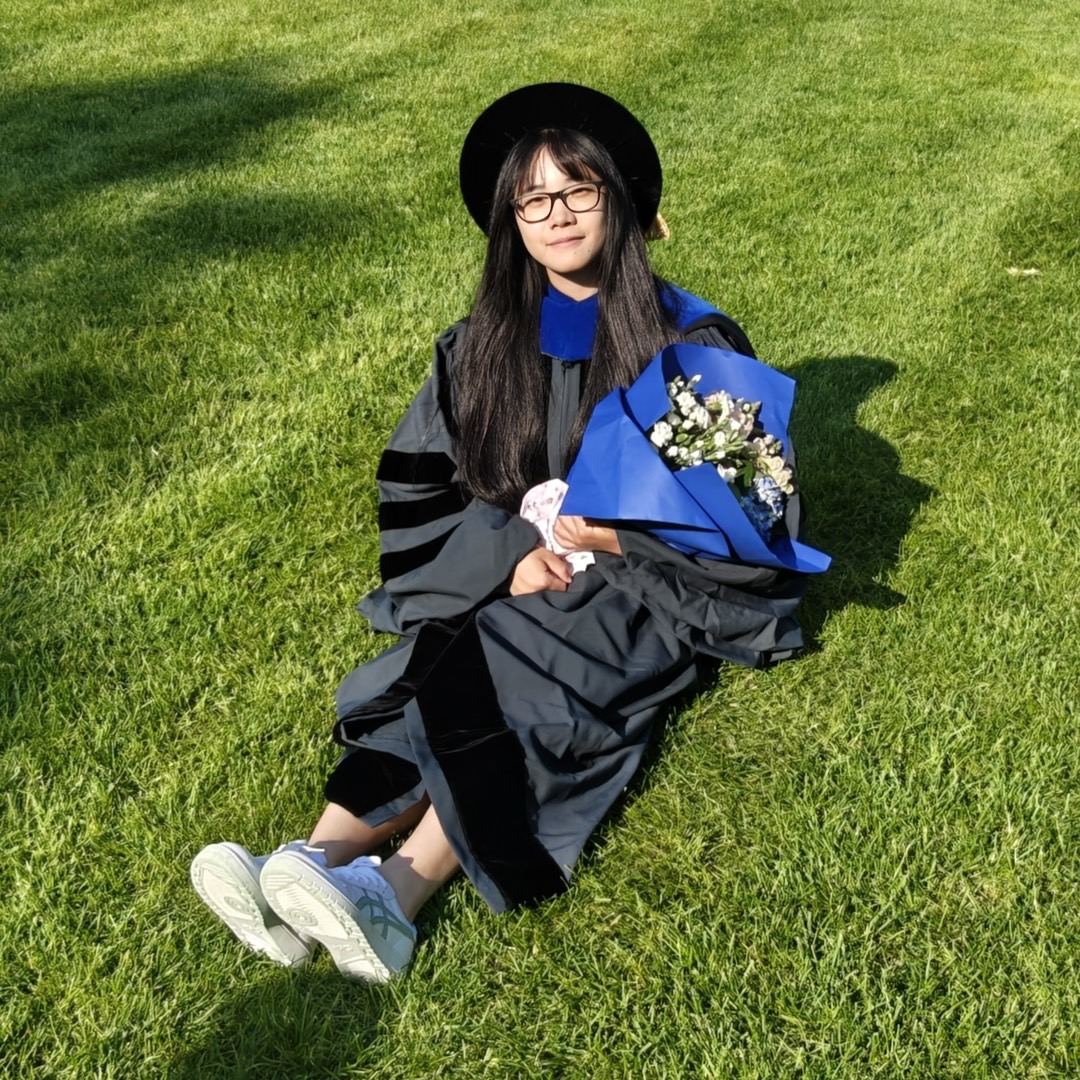
Dr Mary Webb is a Reader in IT in Education at King's College London's School of Education, Communication & Society, affiliated with the Centre for Research in Education in Science, Technology, Engineering & Mathematics (CRESTEM). Her research focuses on AI and machine learning in education, computer science pedagogy, digital technologies in science education, and formative assessment. She has over 150 publications and collaborates internationally through IFIP committees and the Informatics For All Coalition. Key awards include election to IFIP Technical Committee 3 (2001) and Working Group 3.3 (2005). Her teaching includes MA STEM Education and coordinating 'Digital Technologies and Education' modules. Current PhD students research topics like AI in ESL learning, collaborative online learning, and immersive technologies. Webb leads projects such as STEMINO (computational thinking practices) and 3D learning with haptic technologies. Her work emphasizes equitable technology integration, teacher training, and curriculum development in global education contexts.
P. Michael (Mike) Kosro is a Professor at Oregon State University, specializing in coastal oceanography and physical oceanography. His work focuses on shelf/deep-sea exchange processes, eastern boundary currents, and the application of remote sensing and ocean acoustics to study ocean circulation. He holds a BA in Physics from the University of California, Santa Cruz (1973) and a PhD in Physical Oceanography from Scripps Institution of Oceanography (1985). Education: BA, UC Santa Cruz (Physics, 1973); PhD, Scripps Institution of Oceanography (1985) His research interests include coastal eddies, poleward undercurrents, and the use of HF radar for surface current mapping. He has contributed to major projects such as GLOBEC (Global Ocean Ecosystems Dynamics) and COAST (Coastal Ocean Advances in Shelf Transport). His work integrates observational data with numerical models to understand coastal circulation dynamics and their environmental impacts. Publications span over 40 years, addressing topics like mesoscale currents, El Niño effects, and the role of physical oceanographic processes in species distribution (e.g., invasive European green crab). His recent work emphasizes long-term data integration and interdisciplinary collaboration in ocean observing systems. Dr. Kosro’s research also explores the interplay between oceanography and marine ecosystems, including carbon transport and biogeochemical cycles. He collaborates with international teams to advance regional ocean observing networks, as seen in studies of the Northeast Pacific.
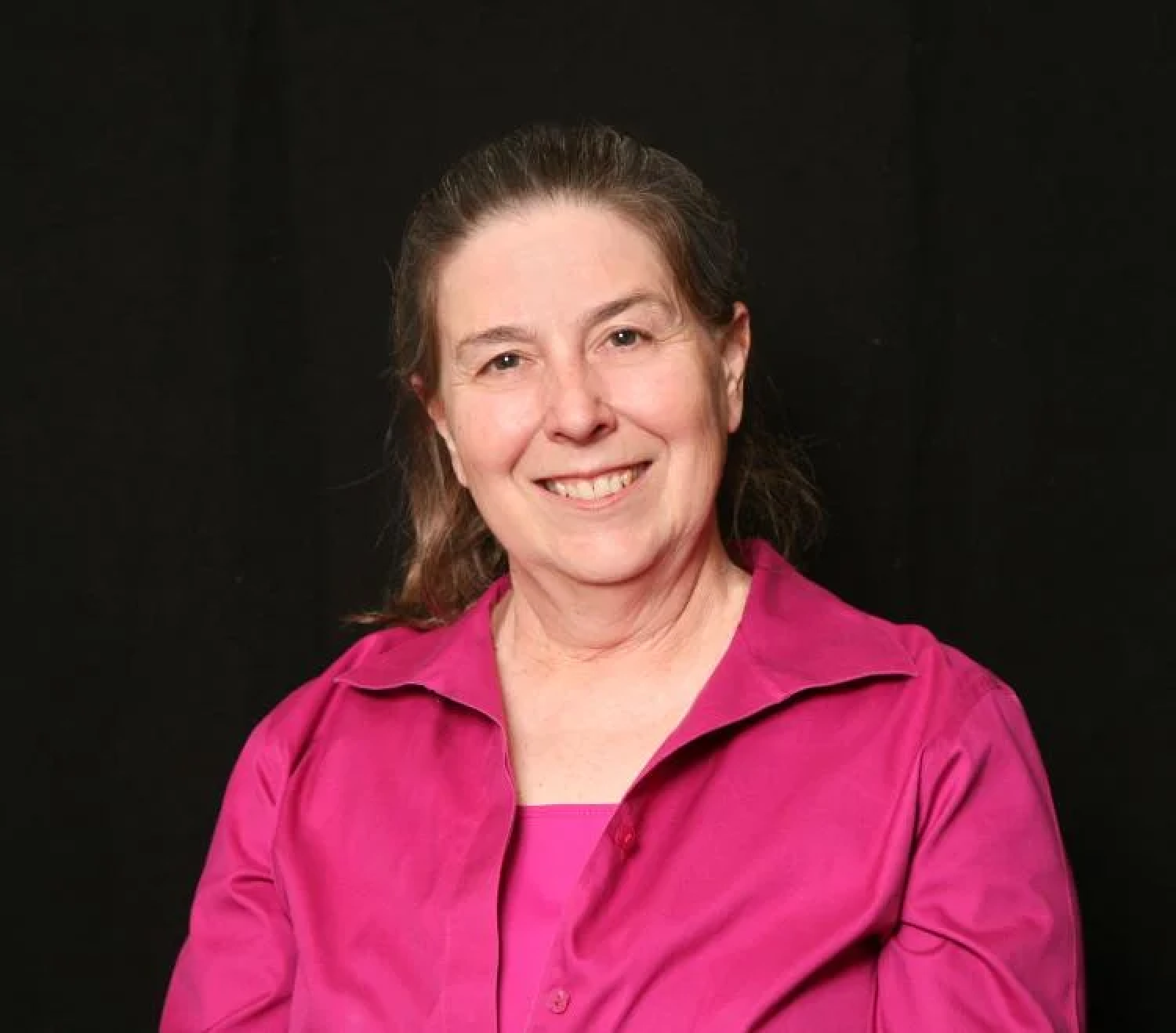
Tamara Sumner is a Professor at the Institute of Cognitive Science , University of Colorado. Her research focuses on leveraging AI and educational technology to improve teaching practices, particularly in STEM education, and fostering equitable learning opportunities. She co-leads the Institute for Student-AI Teaming (iSAT), reimagining AI's role in education. Her work emphasizes classroom discourse analysis, teacher professional development, and rural STEM pathways. Key research areas include: AI tools for automating feedback on teacher-student interactions Equity-focused learning analytics and visualizations Rural youth engagement in STEM through community partnerships Integration of computational thinking and sensor technologies in K-12 curricula Her recent articles highlight advancements in automated discourse analysis, equity-driven tools like the SEET system, and AI-augmented tutoring models. She has contributed to grants such as the BIGDATA: IA initiative (2018) and co-designed programs like DaSH Home for remote learning. Her work bridges research and practice, involving educators and communities in co-design processes. Current initiatives aim to address systemic inequities through technology, such as visual learning analytics for classroom reflection and STEM career pathways for underserved rural populations.
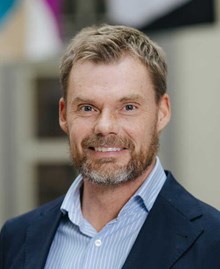
Line Katrine Harder Clemmensen is an Associate Professor at the Department of Applied Mathematics and Computer Science, Technical University of Denmark (DTU), affiliated with the DTU Microbes Initiative. She holds a Ph.D. from DTU's IMM (2006–2009) and previously served as Principal Data Scientist at the Maersk Group (2016–2017). Her research focuses on machine learning, statistical modeling, deep learning, and sparse methods, applied to environmental, biological, industrial, and financial domains. Notable projects include hydroacoustic modeling in aquaculture systems, AI-driven sea safety, and bio-based sustainability modeling. Her recent work addresses topics like parent-child interaction patterns in OCD, Alzheimer’s treatment via spectral flicker, and genomic studies on social trust. She supervises multiple PhD students, including those exploring Raman spectroscopy applications and contamination detection in drug products. Language skills include Danish, English, Spanish, French, and Portuguese.
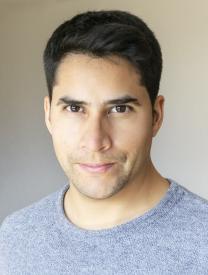
Hugo N. Ulloa is an Assistant Professor in the Department of Earth & Environmental at the University of Pennsylvania School of Arts & Sciences . His research focuses on geophysical and environmental fluid dynamics, particularly transport and mixing processes in natural waters such as lakes and coastal seas. He integrates theory, numerical modeling, laboratory experiments, and field observations to develop mathematical models explaining aquatic environment dynamics. Education: Ph.D. (2015): Fluid Dynamics, Universidad de Chile Civil Engineer Diploma (2011), Universidad de Chile B.Sc. Engineering Sciences & Geophysics (2010), Universidad de Chile Research Interests: Study of mechanically and buoyancy-driven flows in rotating/stratified environments, confinement effects on fluid dynamics, suspended/dissolved tracer behavior, and thermal siphon dynamics in stratified basins. His work emphasizes practical applications to climate change impacts on waterbodies and cryospheric systems. Teaching: Hydrology (EESC 4630/5630) Environmental Fluid Dynamics (4360/6360) Independent Study: Geophysical/Environmental Fluid Dynamics Affiliations: Regular member of AGU, EGU, IAHR, and EUROMECH. Key Research Themes: Thermal convection in ice-covered lakes, buoyancy-driven flows in superconfined systems, and hydrodynamic interactions in aquatic ecosystems. His computational models address both fundamental physics and real-world environmental challenges.
Dr. Guven Demirel is a Reader in Supply Chain Management at Queen Mary University of London's School of Business and Management, specializing in interdisciplinary research on complex systems. He holds a PhD in Physics from the Max Planck Institute and has prior roles as a Lecturer at the University of Essex and Research Fellow at the University of Nottingham. His research focuses on supply network dynamics, sustainability, innovation, and food waste reduction, employing methods from network science, operations research, and game theory. He is a Fellow of the Higher Education Academy and supervises doctoral research on topics such as vaccine supply chain coordination, digital innovation in logistics, and closed-loop battery supply chains. Current students include Ayomide Thompson-Ajayi, Mariam Saad Salib, Milad Asadpour, and Saeide Jamshidpour Poshtahani. Key research themes include supply chain resilience (e.g., food loss mitigation via 'ugly veg' supply chains), blockchain applications in finance, and bifurcation analysis for network instabilities. His work bridges operations research with natural science methodologies. Awards: Fellow of the Higher Education Academy Centers: Member of the Centre for Globalisation Research (CGR)
Dr. Kaie Maennel is a Lecturer at the School of Computer and Mathematical Sciences, part of the Faculty of Sciences, Engineering and Technology at the University of Adelaide. Her research focuses on Human Aspects of Cyber Security, including Cyber Awareness and Hygiene, Serious Games (Cyber Defence Exercises), and Learning Analytics in Cyber Training. She also investigates Usable Security, Information Security Culture, and Cybersecurity Risk Management. With over 20 years of corporate experience in Audit and Assurance at Deloitte, she holds professional certifications: ACCA, CIA, and Estonian CPA. Her research interests emphasize bridging cybersecurity education with practical applications, leveraging experiential learning and advanced analytics. She actively participates in high-profile cybersecurity initiatives like the NATO CCDCOE’s Locked Shields workshop, contributing to exercise design and assessment frameworks. Dr. Maennel is eligible to supervise Masters and PhD students as a Co-Supervisor, focusing on cybersecurity education, exercise methodologies, and human-centric security strategies. She prioritizes interdisciplinary approaches and real-world impact through collaborations with industry and academic partners. Her work spans cyber defense exercise ontology development, cultural adaptation of cybersecurity programs, and leveraging behavioral genetics insights. Recent trends in her publications highlight the integration of AI into cybersecurity training and the critical role of human factors in mitigating cyber risks.
Rickard Sandberg is an **Associate Professor** and **Center Director** at the **Department of Entrepreneurship, Innovation and Technology** at the **Stockholm School of Economics (SSE)**. His work bridges econometrics, statistics, and business analytics with a focus on time series analysis, machine learning applications, and sustainability measurement. **Research Interests**: Machine Learning, Deep Learning, Data Analytics, Predictive Analytics, Forecasting, Nonlinear Time Series Modelling, Structural Economic Modelling, Econometrics, and Measuring Sustainability. His research emphasizes theoretical advancements in statistical methods and their practical application in economic and business contexts. **Key Contributions**: His publications explore unit root testing in nonlinear models, ESG rating challenges, and the impact of energy policies. Notable works include analyzing Scandinavian unemployment trends, cartel damage calculations, and Nordic companies' data-driven transformations. His 2023 paper on ESG ratings proposes solutions for consistency in ambiguous evaluation systems. **Teaching & Outreach**: Teaches advanced econometric time series courses (e.g., MSc 5314) and actively engages in international academic collaborations through presentations in Japan and Brazil. His work on AI for sustainability highlights interdisciplinary outreach efforts. **Labs/Teams**: Leads research initiatives within SSE’s Department, focusing on entrepreneurship and innovation through data and economic modeling frameworks.
Emily Bouck is a Professor and Associate Dean for Research at the College of Education, Michigan State University. Her research focuses on mathematics education for students with disabilities and at-risk populations, emphasizing response to intervention (RtI), virtual manipulatives, and technology integration. She holds a Ph.D. from Michigan State University. Her work addresses instructional strategies for students with disabilities, including virtual manipulatives, non-immersive VR, and evidence-based practices in math interventions. Key areas include life skills development, transition planning for students with intellectual disabilities, and online education post-pandemic. Bouck’s research spans elementary to secondary levels and explores topics like fraction instruction, algebra support, and computational fluency through games and technology. Bouck advocates for inclusive education practices and has contributed to systematic reviews on math interventions for autism spectrum disorder (ASD) and intellectual disabilities. Her studies often compare virtual and concrete manipulatives, emphasizing accessibility and generalization of skills. Recent work highlights the use of video modeling, schema-based instruction, and collaborative teacher leadership in special education settings. Her role as Associate Dean for Research underscores her commitment to advancing research in special education policies, transition services, and technology-driven solutions for students with extensive support needs.
Dr. Kayo Ide is an Associate Professor at the University of Maryland's Department of Atmospheric and Oceanic Science, within the College of Computer, Mathematical, and Natural Sciences. Her research focuses on dynamics of atmosphere and oceans, with expertise in data assimilation, scientific prediction, transport/mixing processes, and climate variability. She contributes to NOAA's operational systems and collaborates with teams like the UFS Coastal Applications Team. Her work emphasizes integrating advanced observational technologies (e.g., satellite data from CrIS, Aeolus) into numerical weather prediction and ocean modeling frameworks. Key projects include optimizing data assimilation algorithms, evaluating new sensor constellations (e.g., CubeSats), and improving forecast initialization techniques. Dr. Ide also develops software tools like the System for Analysis of Wind Collocations (SAWC) to intercompare multi-platform wind observations. Publications highlight innovations in satellite data utilization, ensemble-based methods, and the impact of novel observing systems on operational forecasting. Her research bridges computational methods, environmental science, and applied meteorology, addressing challenges in global climate monitoring and predictive modeling.
Efthymios N. Karatzas serves as an Assistant Professor in the Department of Mathematics at Aristotle University of Thessaloniki, Faculty of Sciences, within the Computer Science and Numerical Analysis Section. He maintains an active research profile in computational mathematics with strong institutional affiliations including collaborations with SISSA mathLab and FORTH Institute of Applied and Computational Mathematics. His academic credentials include: PhD in Mathematics, National Technical University of Athens (2015) Master's in Applied Mathematical Sciences – Computational Mathematics, NTUA (2009) Master's in Applied Mathematics, University of Patras (2001) Bachelor's in Mathematics (Computational Mathematics), University of Patras (1999) Dr. Karatzas' research program centers on advanced numerical techniques for partial differential equations , with pioneering work in reduced order modeling , embedded boundary methods , and optimal control systems . His expertise spans computational fluid dynamics, uncertainty quantification, and biomechanical applications, characterized by methodological innovation in handling geometrically complex domains through cut finite element approaches and shifted boundary formulations. Analysis of his 15 most recent publications reveals a cohesive research trajectory focused on developing efficient numerical frameworks for parametrized PDE systems. His work consistently bridges theoretical rigor with practical implementation, particularly in advancing reduced basis methods for fluid-structure interaction and biological modeling, demonstrating significant contributions to computational mathematics through high-impact journal publications. No major scientific awards are documented in the available sources. Dr. Karatzas demonstrates research leadership through project management roles including Scientific Manager for the ELIDEK project at NTUA (2019-2021) and Project Manager for the European Social Fund HEaD initiative at SISSA (2017-2019). His grant administration experience encompasses coordinating interdisciplinary teams and securing external funding for computational mathematics research. He maintains active collaborations with the SISSA mathLab in Trieste (particularly with Prof. Gianluigi Rozza's group) and the FORTH Institute in Crete, participating in international workshops including the Reduced Order Methods in CFD Summer School (2019) and SIAM UQ conferences. His research network spans computational mathematics groups across Europe with emphasis on advancing numerical methodologies for real-world engineering and biological applications.
James McLaughlin is a Professor of Physics at Northumbria University, specializing in solar physics and magnetohydrodynamics. He holds a PhD from the University of St Andrews and previously worked at NASA Goddard Space Flight Center and the University of St Andrews as a Research Fellow. His research focuses on magnetic reconnection, solar coronal dynamics, and MHD wave behavior. He leads the Solar and Space Physics Group and secured a £1.29M STFC grant (2023–2026). McLaughlin supervises PhD students exploring oscillatory reconnection dynamics and has authored over 50 peer-reviewed papers. He is a Fellow of the Royal Astronomical Society and a Member of the Institute of Physics. Education: MSci (Mathematics & Physics), Durham University, 2002 PhD (Applied Mathematics & Solar Physics), University of St Andrews, 2002–2006 Research Interests: Magnetic reconnection mechanisms, solar flare dynamics, coronal heating, MHD wave propagation, and plasma diagnostics in extreme astrophysical environments. His work bridges theoretical modeling, numerical simulations, and observational data from instruments like SDO/AIA and DKIST. Recent Projects: STFC Consolidated Grant: Solar and Space Physics Group (£1.29M, 2023–2026) Awards: Fellow of the Royal Astronomical Society (2002) Member of the Institute of Physics (1998) Advising & Grants: Supervises PhD students Ryan Smith and Jordan Talbot. His research explores oscillatory reconnection’s role in generating solar waves and energy release. He collaborates internationally on space physics missions and heliophysics studies.
Benjamin Lev is a Professor in the Department of Decision Sciences and Management Information Systems (DS&MIS) at the LeBow College of Business, Drexel University. He previously served as Trustee Professor (2014–2021) and Department Head (2009–2014) at Drexel. His academic leadership extends to prior roles as Professor, Department Head, and Dean at the University of Michigan-Dearborn (1990–2009), Professor and Department Head at Worcester Polytechnic Institute (1987–1990), and Professor and Department Head at Temple University (1970–1987). He has held short appointments at institutions in China and the U.S., including the Wharton School and Tel Aviv University. Lev’s research spans Operations Research, Management Science, and Decision Sciences , with expertise in mathematical programming, operations planning, inventory control, supply chain management, and optimization under uncertainty. His recent work focuses on applications in disaster management, sustainable supply chains, AI in operations, water resource allocation, and emergency logistics. He has published over 150 journal articles and authored or edited 18 books, with a strong emphasis on real-world problem-solving using quantitative methods. The trends in his recent publications (2022–2025) reflect a focus on complex optimization under uncertainty , particularly in humanitarian logistics, environmental sustainability, and digital commerce. His work frequently employs advanced methodologies such as bi-level programming, stochastic optimization, fuzzy logic, and data envelopment analysis (DEA), often applied to critical societal challenges like disaster response, air pollution, and resource scarcity. Lev is an INFORMS Fellow (2003) and has received several honors, including the 2023 Top Cited Article award in Naval Research Logistics and the 2023 First Prize from the Jiangxi Province Social Science Outstanding Achievement Award. His editorial leadership is most notably demonstrated by his 23-year tenure as Editor-in-Chief (2002–2025) of OMEGA – The International Journal of Management Science , one of the premier journals in the field. He has advised numerous scholars and presented his work globally, particularly on his experience as EiC of OMEGA . He has been actively involved in academic collaborations, especially in China, serving on advisory boards and as an external reviewer for institutions like Sichuan University. He has also received significant grant funding from the U.S. National Institutes of Health, U.S. Public Health Service, and U.S. Air Force for research in medical information systems and operations research applications. Lev has been instrumental in organizing major international conferences and has served on the editorial boards of over 20 journals, including Interfaces, IIE Transactions, OR Journal, and Financial Innovation . His role as Vice President of TIMS and INFORMS further underscores his leadership in the global operations research community.
Professor Dino Sejdinovic is a faculty member in the School of Computer and Mathematical Sciences at the University of Adelaide, part of the Faculty of Sciences, Engineering and Technology. Previously, he held positions as Lecturer and Associate Professor at the University of Oxford's Department of Statistics (2014–2022). His academic qualifications include a PhD in Electrical and Electronic Engineering from the University of Bristol (2009) and a Diplom in Mathematics and Theoretical Computer Science from the University of Sarajevo (2006). His research focuses on the intersection of statistical methodology and machine learning, encompassing large-scale nonparametric methods, robust machine learning, multiresolution data fusion, and measures of dependence. He has contributed to kernel methods, Bayesian inference, causal discovery, and applications in climate science, quantum computing, and social science data analysis. Education: PhD in Electrical and Electronic Engineering, University of Bristol (2009) Diplom in Mathematics and Theoretical Computer Science, University of Sarajevo (2006) Sejdinovic's work emphasizes bridging theoretical foundations with practical applications, such as cloud type classification using vision transformers and machine learning-driven quantum device optimization. His recent publications explore topics like kernel-based causal inference, Bayesian neural networks, and uncertainty quantification in statistical models. Advising and grants: Eligible to supervise Masters and PhD students in machine learning and statistics, though specific grants or student advisees are not explicitly listed in the provided texts.
Luyang Zhao is an incoming tenure-track Assistant Professor in the Department of Electrical and Computer Engineering at Clemson University (starting August 2025). He earned his PhD in Computer Science and double undergraduate degrees in Computer Science and Mathematics from Dartmouth College and the University of Minnesota respectively. Academic Affiliation : Clemson University (Assistant Professor) Education : PhD in Computer Science (Dartmouth College), BS in Computer Science & Mathematics (University of Minnesota) His research focuses on Robotics , particularly soft robotics, modular systems, and bio-inspired designs. Key areas include: Large Language Models for robotic design automation Modular tensegrity systems for self-assembling structures Swarm coordination strategies Multi-environment adaptability (land/aquatic/aerial) Simulation tool integration for design optimization Recent publications highlight his work on SoftSnap modular platforms, LLM-driven swarm intelligence, and bioinspired dolphin robots. He received the Neukom Outstanding Graduate Research Prize for his contributions. Industry Experience : Research internships at Amazon Robotics and TuSimple Mentorship : Advised 6+ graduate/undergraduate researchers Open-Source Contributions : Developed SoftSnap platform for rapid prototyping Academic Service : Workshop co-organization (IROS 2023), peer reviewing (RA-L, ICRA, IROS, RoboSoft, BioRob)