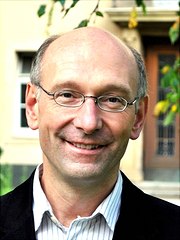
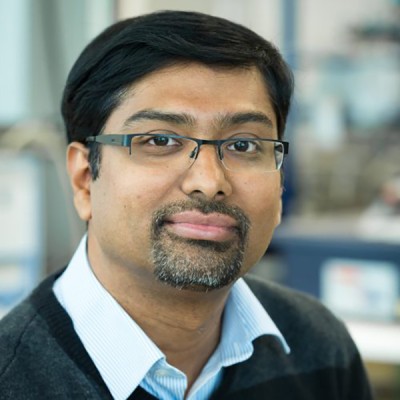
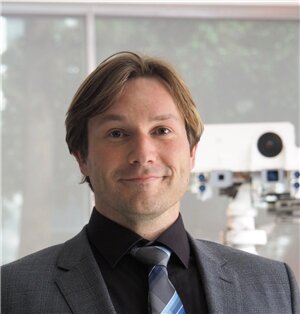
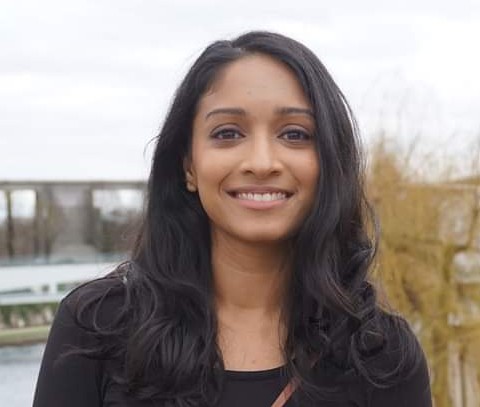
Prof. Dr. Wolfgang Hillert is a leading physicist at the University of Hamburg , serving as the Bjørn-Wiik Professor for Accelerator Physics since 2016. Affiliated with the Institute of Experimental Physics under the Faculty of Mathematics, Informatics and Natural Sciences, he specializes in Accelerator Physics , Superconducting Accelerator Technology , and Free-Electron Lasers (FEL) . His work focuses on polarized electron beams, SRF cavity optimization, and gravitational wave detection methods. Education: Physics degree from University of Bonn (1987), Promotion in Atmospheric Physics (1992), Habilitation in Physics (2001) Leadership Roles: Head of Accelerator Physics Group (2016–present), Managing Director of Institute of Experimental Physics (2019–2021) Research Trends: His recent work spans superconducting RF cavities for gravitational wave detectors ( 2025 ), resonant slow extraction in electron boosters, and atomic layer deposition of superconducting thin films. Publications highlight advancements in beam dynamics , cryogenic systems , and terahertz generation . Teaching & Outreach: He has lectured on Accelerator Physics since 2002 and engaged in public science communication, including talks on Physics of Music (2005–2021) and teacher training programs at DESY. Labs & Collaborations: Leads the Accelerator Physics Group at DESY, collaborates on projects like XFELO and BGO-OD beamline , and contributes to international schools (CAS) and symposia.
Bhushan Gopaluni is a Professor in the Department of Chemical and Biological Engineering at the University of British Columbia, where he also serves as Associate Dean for Education and Professional Development in the Faculty of Applied Science. He holds associate faculty positions in multiple interdisciplinary institutes including the Institute of Applied Mathematics, Institute for Computing, Information and Cognitive Systems, Pulp and Paper Center, and Clean Energy Research Center. He previously held the Elizabeth and Leslie Gould Teaching Professorship from 2014 to 2017. Education: Ph.D. in Chemical Engineering, University of Alberta (2003) Bachelor of Technology in Chemical Engineering, Indian Institute of Technology, Madras (1997) Research Interests: Professor Gopaluni's research spans several critical areas at the intersection of chemical engineering, machine learning, and process control. His primary focus includes the development of advanced process control strategies using reinforcement learning and machine learning techniques. He has made significant contributions to battery technology research, particularly in capacity estimation and remaining useful life prediction for lithium-ion batteries. His work also encompasses sustainable energy systems, industrial process monitoring, fault diagnosis, and the application of digital twin technology in chemical processes. His research methodology emphasizes the integration of data-driven approaches with fundamental process understanding, leading to practical solutions for complex industrial challenges. This includes the development of interpretable machine learning models for industrial applications, real-time optimization strategies, and advanced monitoring systems for process industries. Publications and Research Impact: Professor Gopaluni's recent publications demonstrate a strong focus on cutting-edge applications of machine learning in chemical engineering. His work prominently features battery technology and energy systems, with multiple papers addressing lithium-ion battery capacity estimation and management. He has also contributed significantly to process control applications, including drilling process monitoring, greenhouse gas reduction in marine transport, and renewable carbon tracking in biofuel processing. His research extends to advanced computational methods including deep learning, reinforcement learning, and causal discovery in industrial processes. Awards and Recognition: Killam Teaching Prize (University of British Columbia) Dean's Service Medal (University of British Columbia) D.G. Fisher Award in Process Control (Canadian Society for Chemical Engineers) Elizabeth and Leslie Gould Teaching Professor (2014-2017) Professional Service and Editorial Roles: Professor Gopaluni currently serves as Associate Editor for three prestigious journals: Journal of Process Control, The Journal of Franklin Institute, and Results in Control and Optimization. His service to the academic community extends through his role as Associate Dean for Education and Professional Development, where he oversees educational initiatives across the Faculty of Applied Science. Industry Experience: From 2003 to 2005, Professor Gopaluni worked as an engineering consultant at Matrikon Inc. (now Honeywell Process Solutions), where he designed and commissioned multivariable controllers for British Columbia's pulp and paper industry and implemented controller performance monitoring projects across oil & gas and chemical industries.
Dr. Shabnam Sadeghi Esfahlani is an Associate Professor in Robotics at the School of Engineering and the Built Environment, Anglia Ruskin University , where she serves as Deputy Leader of the BORI research group and leads the Automation & Robotics MSc program. Her interdisciplinary expertise spans mechatronics, artificial intelligence, virtual reality, and serious games , with a focus on applications for rehabilitation, medical training, and autonomous systems . As a Chartered Engineer and Senior Fellow of the Higher Education Academy , she has secured significant funding from Innovate UK, Horizon 2020, and GCRF , with grants exceeding £3 million. Education PhD in Mechanical Engineering, Anglia Ruskin University BSc (First Class) in Statistics & Mathematical Science, Shahid Beheshty University Her research integrates AI with robotics for societal impact, exemplified by the open-source SROBO ground robot and projects like Rehabgame and the Assistive Feeding Robot . She has published over 45 peer-reviewed articles and contributes to academic communities as a journal guest editor and conference organizer . Key collaborations include IET, IMechE, and the Nuffield Foundation as a mentor for young students. Scientific Awards & Recognitions: Chartered Engineer (CEng), Engineering Council UK Senior Fellow (SFHEA), Higher Education Academy Student-Voted 'Made a Difference Award' (2018) Post-Graduate Certificate in Higher Education
Matias D. Cattaneo is a Professor in the Department of Operations Research and Financial Engineering at Princeton University , with affiliated roles in the School of Public and International Affairs , Economics Department , Latin American Studies Program , Data-Driven Social Science , AI at Princeton , and Center for Statistics and Machine Learning . He serves as an Amazon Scholar and collaborates with global organizations. Education : Ph.D. in Economics (2008) and M.A. in Statistics (2005) from UC Berkeley, Master in Economics (2003) from Universidad Torcuato Di Tella, Licentiate in Economics (2000) from Universidad de Buenos Aires. Research focuses on interdisciplinary challenges in social, behavioral, and biomedical sciences, combining econometrics, statistics, data science, and causal inference. His methodological work includes regression discontinuity designs, synthetic control methods, and local polynomial estimation, with applications to decision-making under uncertainty. Scientific recognition : Elected Fellow of the American Statistical Association Elected Fellow of the Institute of Mathematical Statistics Elected Fellow of the International Association for Applied Econometrics Elected Member of the International Statistical Institute Software contributions include R packages rdhte , scpi , and lpcde , freely available on GitHub. His GitHub activity includes 344 contributions in the last year, with active repositories on regression discontinuity and synthetic control methods.
Dr. Jaswinder Lota is a Reader in Engineering at the University of East London , School of Architecture, Computing and Engineering, Department of Engineering & Construction. He is also a Visiting Academic at University College London’s Department of Electronic and Electrical Engineering, and a Chartered Engineer with extensive industry and academic experience. Education: BSc BEng MEng PGCert HE PhD Research Interests: Dr. Lota specializes in signal processing, circuits and systems, wireless communication, and their applications in radar systems (weather/military), low-power sustainable networks beyond 5G/6G (robotics, automation, healthcare), and electronic technologies for hydrogen propulsion. His work integrates AI-driven channel modeling and impulsive noise analysis. Scientific Awards: IEEE CAS Society Certificate of Appreciation (2019) Grants and Collaborations: He has secured significant funding, including a £2.5K International Research Collaboration Award (2016), £2.5K Research Internship Award (2015), £76K Impact Grant (2014), and a £7M MoD-funded project (1999-2004). Collaborators include UCL and NYU. Leadership: Dr. Lota leads the Smart Cities Research group at UEL and contributed to the REF 2021 submission. He has served as Associate Editor for IEEE TCAS I and Guest Editor for multiple IEEE journals.
Siegfried Eggl is an Assistant Professor in the Department of Aerospace Engineering at the University of Illinois at Urbana-Champaign , with additional affiliations as an Affiliate Faculty in the Department of Astronomy (2022–present) and the National Center for Supercomputing Applications (NCSA) (2021–present). His research bridges astrodynamics, planetary defense, and celestial navigation, focusing on spacecraft trajectory optimization, asteroid deflection, and autonomous navigation systems. Education: B.S., Astrophysics, University of Vienna (2005) M.S., Astrophysics, University of Vienna (2008) M.S., Computational Physics, University of Vienna (2009) Ph.D., Astrophysics, University of Vienna (2013) Research Interests: Eggl investigates astrodynamics for planetary defense, including momentum transfer in asteroid impacts (e.g., NASA’s DART mission). He develops algorithms for celestial navigation using variable stars and studies space domain awareness to address satellite constellation interference. His work also explores dynamical systems in binary star environments and computation/data-driven approaches to orbital mechanics. Recent Publications highlight advancements in planetary defense simulations , celestial navigation algorithms , and asteroid impact dynamics . Topics include state transition matrix computation , ejecta momentum analysis , and binary asteroid system modeling . Scientific Awards: LSST Architect Award (2021) Space Foundation 2023 Space Achievement Award (DART Team) AIAA Award for Engineering Excellence (DART Team, 2023) Asteroid 2000 GT167 named 'Eggl' (2023) 2024 Engineering Council Outstanding Advisors Best paper award at AIAA Guidance, Navigation, and Control Conference (2024) Eggl contributes to professional societies such as the AIAA , American Astronomical Society (Division on Dynamical Astronomy) , and International Astronomical Union , where he co-leads the Centre for the Protection of the Dark and Quiet Sky. His APEX research group at UIUC focuses on planetary defense and astrodynamics.
Dr. Alireza Ahmadian Fard Fini is an Associate Professor at the University of Technology Sydney within the Faculty of Design and Society. With over 23 years of experience in the construction industry, his work bridges professional practice, teaching, and research, focusing on construction automation and workforce management . His research aims to enhance construction productivity through digital technologies and personalized workforce solutions. Education: PhD, University of New South Wales, Australia MEng, University of Calgary, Canada MSc, Iran University of Science and Technology, Iran BSc, Shiraz University, Iran Dr. Fini’s research spans construction automation (off-site processes, digital integration) and workforce management (skill development, safety). His recent publications highlight deep learning applications for progress monitoring, drone technology in material handling, and sustainable practices in timber construction. Collaborative projects with industry partners emphasize data analytics and cloud-based deployment for practical outcomes. Scientific grants include the CRC-P Industrialization of Nail-Laminated Timber , Beverly Homes’ Industrialization of Dowel Laminated Timber , and Edwards Scholarship for prefabricated timber systems . His teaching portfolio includes Design Team Management , Site Establishment , and Time Management at UTS. Future work will focus on standardizing timber panel stability , expanding UAV applications , and aligning mental health research with policy frameworks.
Dr. Sahani Pathiraja is a Lecturer (tenure track assistant professor) at UNSW Sydney , specializing in Data Science . Her research bridges mathematical and statistical foundations with practical applications in environmental and biomedical sciences. Research Focus : Sequential Bayesian inference, Monte Carlo methods, stochastic analysis of non-linear filtering, uncertainty quantification, and real-time parameter estimation. Current Projects : Co-investigator in the ARC Industrial Transformation Training Centre: Data Analytics for Resources and Environment (DARE) and the Next Generation Graduate Program (NGGP) in Sports Data Science and AI . Research Supervision : Dr. Pathiraja supervises PhD students in areas including: Bayesian inference Stochastic differential equations Data assimilation Non-linear filtering Scientific Collaborations : Her work intersects with environmental science, biomedical applications, and machine learning. Projects include stochastic hydrology, SDEs, and operator learning for environmental systems. Contact Information : Email: s.pathiraja@unsw.edu.au Phone: +61 2 8065 0836 Office: Room 2070, Level 2, The Red Centre, UNSW Sydney
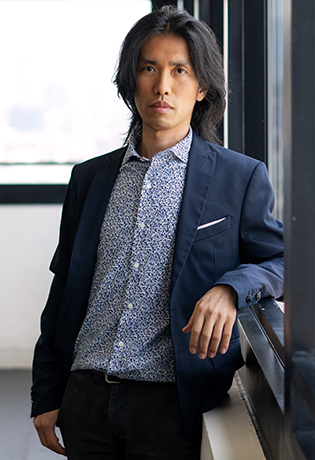
Ryo Ikeshiro is an Assistant Professor at the School of Creative Media, City University of Hong Kong, and co-director of the spatial audio art/research unit SoundLab. His work bridges sound art, computational creativity, and cultural studies through immersive installations, algorithmic audio-visual systems, and sonification techniques. PhD in Creative Practice (Goldsmiths, University of London) MPhil in Music (University of Cambridge) BMus (King's College London) Ikeshiro's research interrogates the materiality of sound through: Multichannel Ambisonics and directional audio Neural network-driven temporal dislocation Sonification of climate data and historical soundscapes Machine learning for artistic interpretation Interplay of identity and technology East Asian ideophonic traditions His 2010-2024 publications and installations reveal cross-disciplinary engagement with: Fractal mathematics in audiovisual art Algorithmic composition systems Interactive installation technologies Sonic cartography Historical memory in sound Collaborative research frameworks SoundLab, which he co-directs, develops spatial audio research at the intersection of: Technical innovation Cultural representation Experimental pedagogy Public engagement International artistic exchange Practice-based research
Tyler Cody is an Associate Professor of Data Science at the University of Virginia School of Data Science and a member of the National Security Data and Policy Institute. His research bridges systems engineering and artificial intelligence through abstract systems theory. Education: Ph.D. in Systems Engineering, University of Virginia B.S. in Systems Engineering, University of Virginia (minors: Computer Science, Applied Mathematics) Dr. Cody's research centers on systems theory as a meta-theory for learning, with applications in machine prognostics, telecommunications, computer networks, fraud detection, and computer vision. He investigates phenomena in learning processes, focusing on change and reuse, lifecycles, and iterated games. His recent publications (2024-2025) reveal a strong trend in applying systems theory to machine learning assurance and cyber security. Key areas include reinforcement learning for cyber operations, combinatorial methods for testing ML systems, and outcome-based engineering for AI. His work also addresses ethical implications and architectural design of learning systems. Scientific Awards: No awards listed in the provided information. No details were provided regarding student advising or research grants. Dr. Cody contributes to the National Security Data and Policy Institute, where his expertise supports data-driven approaches to national security challenges through systems-theoretic frameworks.
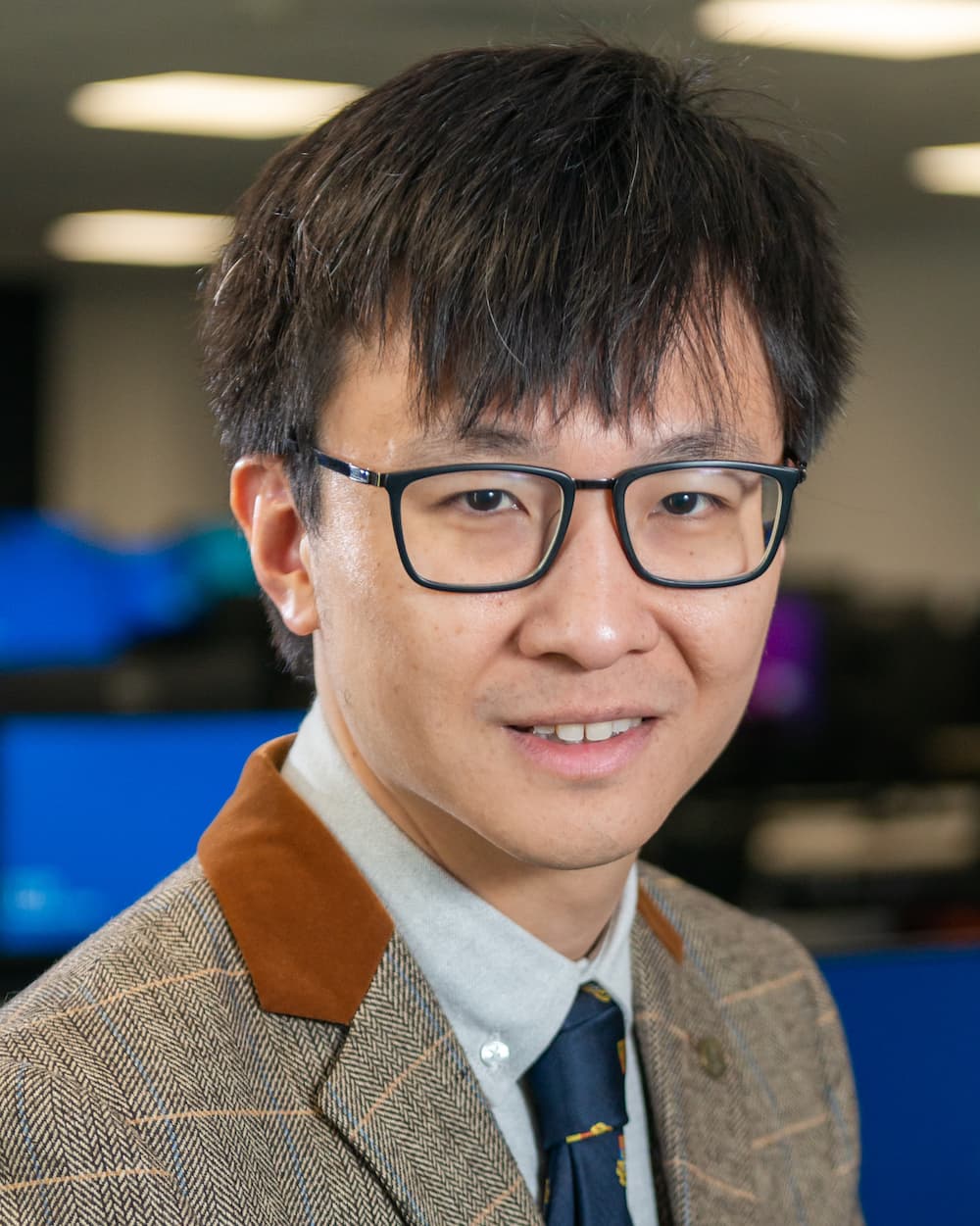
Kenneth Wertheim is a Lecturer in the Data Science AI and Modelling Centre (DAIM) at the University of Hull, part of the Faculty of Science and Engineering. They hold a PhD in bioengineering from the University of Southampton and have held roles at the University of Nebraska-Lincoln and the EU-funded PRIMAGE project. Their research focuses on systems biology, computational oncology, and applied artificial intelligence. Education: MEng in Chemical Engineering (Imperial College London), MS in Chemical Engineering (Columbia University), and PhD in Bioengineering (University of Southampton). Notable international experiences include internships in Argentina and Hong Kong, and an exchange year in Australia. Research emphasizes mathematical modelling of biological systems, particularly neuroblastoma and immune responses. Recent work includes developing therapeutic strategies for childhood cancers and AI-driven facial recognition systems. Key achievements include the 2020 Mensa Foundation award for a virtual immune system project impacting over 140,000 global members. Active in advocacy and yoga instruction, they teach courses in artificial intelligence, data science, and numerical methods. Supervises projects and collaborates on interdisciplinary initiatives like the PRIMAGE oncology research consortium.
Dr. Pedro Mediano is a Lecturer in Computing at Imperial College London's Department of Computing (Faculty of Engineering). His research focuses on complex systems, information theory, and their applications in neuroscience, artificial intelligence, and cognitive science. He is affiliated with the Artificial Intelligence Network and leads interdisciplinary projects exploring synergistic interactions in brain dynamics, psychedelic neurodynamics, and causal emergence. Key research areas include quantifying high-order interactions in complex systems, developing information-theoretic tools for analyzing neural data, and modeling consciousness through integrated information theory. Mediano has pioneered frameworks like the Shannon invariants for scalable information decomposition and developed software tools such as THOI for analyzing higher-order interactions. Recent work examines how psychedelics alter brain entropy, the role of metastability in cognitive processes, and the computational principles underlying causal emergence in machine learning models. His studies integrate mathematical rigor with empirical neuroscience, bridging theoretical and applied domains. Mediano has collaborated on whole-brain models of psychedelic-induced neural complexity and explored the interplay between oxygen metabolism and brain evolution. He holds affiliations with Imperial's AI Network and regularly publishes in top journals across computational neuroscience and complexity science. Current projects include developing open-source tools for information decomposition and investigating the neural correlates of consciousness under altered states.
Leonora Kaldaras is an Assistant Professor in the Department of Curriculum & Instruction at Texas Tech University College of Education. Her research focuses on equitable personalized learning, AI-driven assessment systems, and cognitive development in STEM education. She holds a dual Ph.D. in Curriculum, Instruction and Teacher Education and Measurement and Quantitative Methods from Michigan State University (2020) and has worked with Nobel laureate Carl Wieman on AI-guided feedback tools. Education: Dual Ph.D. (2020), Michigan State University Science Education Certificate, BGSU B.S. in Chemistry (2009), BGSU Research Interests: Personalizing learning through technology, equity in blended/personalized learning, and fostering knowledge transfer via self-guided strategies. She specializes in NGSS-aligned assessments and AI-enhanced feedback systems for STEM education. Article Trends: Her recent work (2023-2025) emphasizes AI-driven assessment design, NGSS-aligned learning progressions, and cognitive frameworks for math-science integration. Earlier publications (2012-2016) focus on biophysics but transitioned to education post-2020. Scientific Awards: New and Noteworthy Invited Symposium by American Chemical Society Top Downloaded Article (JRST, 2019) Top Cited Article (JRST, 2021-2022) Grants: NSF DrK-12 Co-PI (2022-2026) for AI feedback systems in NGSS classrooms. Labs & Collaborations: Formerly at Stanford University Graduate School of Education and University of Colorado Boulder PhET Interactive Simulations Project, working closely with Nobel laureate Dr. Carl Wieman.
Egil Øvrelid is an Associate Professor at the Department of Informatics (IFI), University of Oslo, affiliated with the Digital Innovation (DIN) research group. His work focuses on digital infrastructures, healthcare IT systems, and sociotechnical interplay in organizational innovation. He explores topics such as digital transformation, process innovation, and platform ecosystems in healthcare and higher education contexts. His research emphasizes the alignment of digital strategies with organizational practices, particularly in large-scale infrastructures. Key areas include lightweight IT solutions for process innovation, architectural transformation in incumbent organizations, and governance mechanisms in collaborative platforms. He has contributed to frameworks like 'dual digitalization' and 'adaptive mirroring' in healthcare IT architectures. Notable projects include the TSD platform for sensitive data research and studies on national digital ecosystems like Norway’s one-citizen-one-health-record initiative. His work bridges theory and practice, often collaborating with healthcare and educational institutions to address real-world challenges in digital innovation. Research Groups: Digital Innovation (DIN) Key Themes: Sociotechnical systems, digital transformation, healthcare IT, process innovation, platform ecosystems
Luis Amaral is Professor of Engineering Sciences and Applied Mathematics at Northwestern University, specializing in complex systems, network science, and computational biology. Research uses data-driven approaches to study biological, social, and technological systems. Amaral co-directs the Northwestern Institute on Complex Systems (NICO). Recent work (2024) includes machine learning models for pneumonia prognosis using EHR data. Honors include Keck Distinguished Young Scholar award, HHMI Early Career Scientist, and fellowships in APS, AAAS, and AIMBE. Mentored 25+ graduate students and 20+ postdocs.