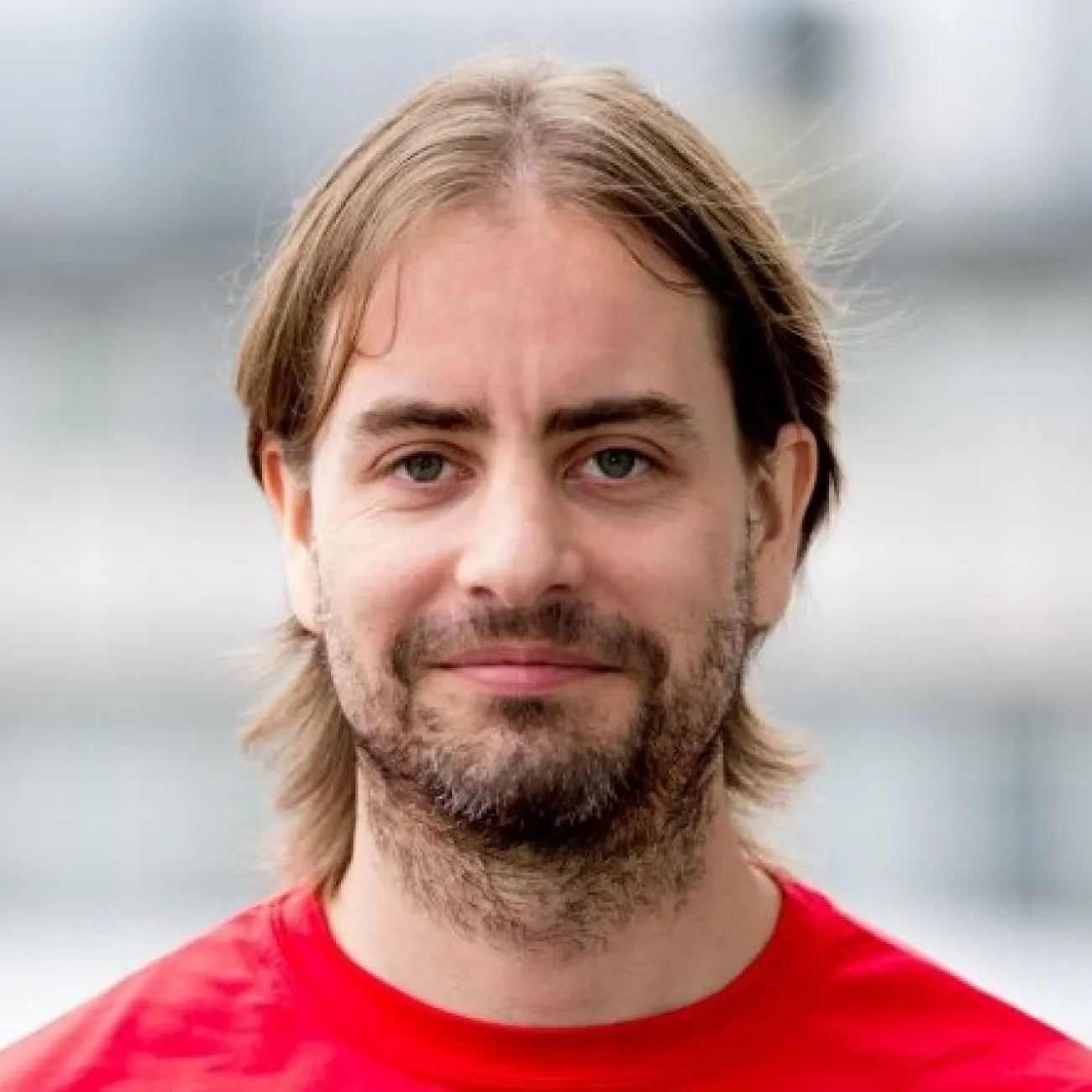
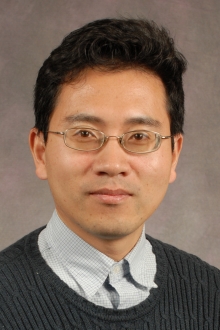
Yu Xiao is an Associate Professor at the Department of Information and Communications Engineering, Aalto University, specializing in edge computing, extended reality (XR), wearable computing, and crowdsensing. Their research contributes to the UN Sustainable Development Goals, particularly in education and technology innovation. Active in mobile cloud computing and decentralized systems Principal Investigator in EU-funded projects (EMIL, TUTL) Expert in 5G networks, autonomous systems, and human activity recognition Yu Xiao's work spans interdisciplinary domains, including healthcare (cardiovascular resuscitation devices) and urban mobility (autonomous vehicle interactions). They have received multiple awards, including Best Paper Awards and Nokia Foundation Scholarships. Focus on low-latency communication and multiagent reinforcement learning Developed frameworks like FediLive for decentralized social networks Contributed to 128+ publications and software tools Recent collaborations include institutions like Pontificia Universidad Católica de Chile and participation in IEEE committees. Their research integrates blockchain for secure IoT communication and advanced AR applications.
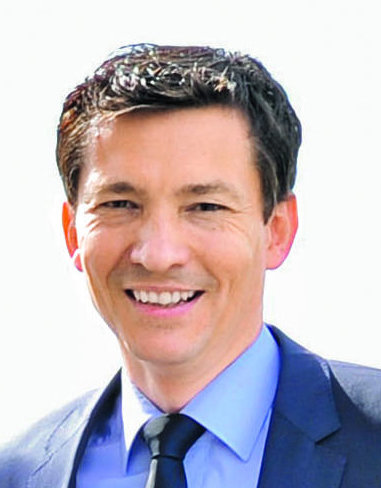
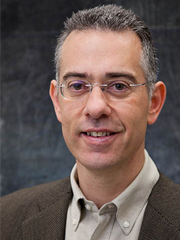
Professor David Thomas holds the position of Professor in Computer Engineering at the University of Southampton's Electronics and Computer Science Department. His research focuses on the intersection of software and hardware, particularly leveraging FPGAs for novel digital architectures and event-driven computing. He has a notable academic trajectory, having previously served as a Lecturer and Senior Lecturer at Imperial College London before joining Southampton in 2021. Dr. Thomas is actively involved in supervising PhD students and contributes to interdisciplinary research projects funded by the EPSRC, such as the SONNETS initiative exploring scalable event-triggered systems. Education: BSc in Computer Science (Imperial College London), PhD in Digital Architectures (Imperial College London). Postdoctoral roles included Research Associate and Research Fellow at Imperial's Department of Computing. Research Interests: Event-driven computing, FPGA-based systems, high-level synthesis, and high-performance computing. His work emphasizes practical implementations of theoretical models, such as custom processors and application-specific accelerators. Current projects include optimizing random number generation for FPGAs and exploring meta-programming techniques for hardware design. Advising and Grants: Supervises multiple PhD students in areas like neuromorphic computing and algorithm optimization. Active in securing funding for distributed system architectures and FPGA-based solutions. Labs/Teams: Member of the Cyber Physical Systems research group. Collaborates with interdisciplinary teams on projects like POETS (Partially Ordered Event-Triggered Systems) for large-scale parallel computing.
Dr. Shirley Coleman is a distinguished Professor at Newcastle University Business School, specializing in the application of statistical methods to business and industrial problems. With over two decades of academic contributions, she has established herself as a leading expert in statistics, data science, and quality management within industrial contexts. Her research interests span several interconnected domains: Statistics, Data Science, Business Analytics, Quality Management, Six Sigma methodologies, Kansei Engineering (which integrates emotional design with product development), Industrial Statistics, Design of Experiments, Predictive Maintenance, and Customer Lifetime Value analysis. Coleman's work consistently bridges theoretical statistical concepts with practical business applications across diverse sectors including healthcare, manufacturing, facilities management, and digital marketing. Analysis of her recent publications reveals a strong focus on the evolving role of statistics in the digital age, particularly examining how statistical expertise contributes to AI development, Industry 4.0 initiatives, and data-driven business transformation. Her work demonstrates increasing emphasis on customer analytics, predictive maintenance modeling, and the strategic implementation of data science in small and medium enterprises. Coleman's publications frequently address methodological challenges while maintaining strong practical relevance for industry practitioners. Throughout her career, Coleman has been actively involved with the European Network for Business and Industrial Statistics (ENBIS), contributing to the development and dissemination of statistical methods in business contexts. Her collaborative approach is evident in numerous co-authored publications across disciplines, demonstrating her ability to work effectively with researchers from diverse fields including engineering, healthcare, and business management. Her advisory work appears focused on helping organizations implement statistical thinking in business processes, with particular attention to small and medium enterprises seeking to leverage data analytics for competitive advantage. Though specific grant information isn't detailed in the available publications, her extensive industry-focused research suggests significant engagement with practical business problems and industry partnerships. Dr. Coleman has made substantial contributions to the field through her leadership in professional organizations, particularly ENBIS, where she has helped shape the discourse around industrial statistics and their business applications. Her work on Kansei Engineering demonstrates innovative approaches to integrating human factors with statistical methods for product development.
Stefan Vandewalle is a full professor at the Department of Computer Science, Faculty of Engineering Sciences, KU Leuven. His research focuses on numerical analysis, applied mathematics, and computational methods for stochastic differential equations, wind energy modeling, and uncertainty quantification. Department Chair, KU Leuven Member, Subdivision Numerical Analysis and Applied Mathematics Member, iSi Health Institute Observer, Faculty Council of Sciences Chair, Department Council for Computer Science His recent work explores multiscale modeling, Monte Carlo methods, and data assimilation techniques. Projects include micro-macro Parareal algorithms, wind turbine aeroelasticity, and turbulent flow reconstruction for wind farms. He supervises PhD candidates and collaborates on interdisciplinary studies involving structural mechanics and renewable energy systems. Publications highlight advancements in parallel-in-time methods, stochastic optimization for tokamak reactors, and DNS-based control of turbulent flows. Key keywords: Multiscale numerical methods Uncertainty quantification Wind energy simulation Monte Carlo algorithms PDE-constrained optimization Stochastic differential equations He contributes to academic governance as a member of extended faculty boards and evaluation committees.
Harald C. Gall is a Professor of Software Engineering and Dean of the Faculty of Business, Economics, and Informatics at the University of Zurich (UZH). He leads the Software Evolution and Architecture Lab, focusing on software evolution analysis, mining software repositories, and cloud-based software engineering. His research emphasizes improving software development productivity through data-driven insights. He has held visiting positions at Microsoft Research and the University of Washington. Education: PhD (Dr. techn.) and Master's (Dipl.-Ing.) in Informatics from TU Vienna Research Interests: Software evolution, mining software archives, cloud-based tools, developer productivity, and empirical software engineering. Notable contributions include the Evolizer , ChangeDistiller , and SOFAS systems. Key Contributions: Established the Mining Software Repositories (MSR) research area, program chair for ICSE 2011 and ESEC/FSE 2005, associate editor of leading journals like Empirical Software Engineering and IEEE Software. Awards: Most Influential Paper Award, Test of Time Award, and multiple Best Paper Awards. Recognized for contributions to SE research methodologies and tool development. Professional Activities: ACM SIGSOFT awards chair, board member of Informatics Europe, and executive committee member of CHOOSE (Swiss SIG for OO Systems). Labs/Teams: Director of the Software Evolution and Architecture Lab at UZH, leading projects like SURF-MobileAppsData (SNSF-funded) and DevCloud (Hasler Foundation).
Magnus Boman is a Professor of AI and Health at the Department of Medicine, Solna, Karolinska Institutet (KI), where he leads the AI@KI initiative to support researchers in AI integration. He is affiliated with the Chronic Inflammatory Disease Epidemiology research group under Johan Askling. His research focuses on AI applications in precision medicine, multimodal prediction, ethical norms in AI systems, energy-efficient computing, and quantum sensor data interpretation. Research Interests: Artificial Intelligence in healthcare and precision medicine Multimodal data analysis for disease prediction and treatment Machine learning for clinical decision support systems Ethical and societal implications of AI Grants: Swedish Research Council: Improving breast cancer histology image classification (2024-2026) Scalable Federated Learning (2022-2025) Ai in sustainable cities (VINNOVA, 2019) Advising & Students: Supervised over 50 PhD and Master's students across KI, KTH, and Stockholm University, focusing on AI applications in healthcare, machine learning, and computational epidemiology. Notable projects include predictive modeling for mental health outcomes and variant filtering in genetic data. Labs & Teams: Leads AI@KI, fostering AI adoption in medical research. Collaborates with the Johan Askling group on epidemiology and chronic disease studies.
YING-TSONG LIN is an Acting Professor at the Scripps Institution of Oceanography (SIO), UC San Diego. His research focuses on applied ocean sciences, autonomous ocean platforms, internal waves, ocean acoustics, and instrumentation. He leads projects like the New England Shelf Break Acoustics (NESBA) experiment, emphasizing real-time acoustic modeling and environmental interactions. Research interests include 3D acoustic propagation modeling, ocean mixing dynamics, and seabed characterization. His work integrates high-performance computing and distributed sensor networks for oceanographic studies. Recent studies address underwater explosions, renewable energy impacts, and vessel localization using acoustic coherence. Publications emphasize advancements in hydroacoustic modeling, seabed inversion techniques, and environmental asymmetry effects. His contributions span interdisciplinary areas like bioacoustics and seismic-to-acoustic wave conversions. Labs/Teams: Involved with SIO's Acoustics and Oceanography research groups, focusing on autonomous platforms and global observing systems.
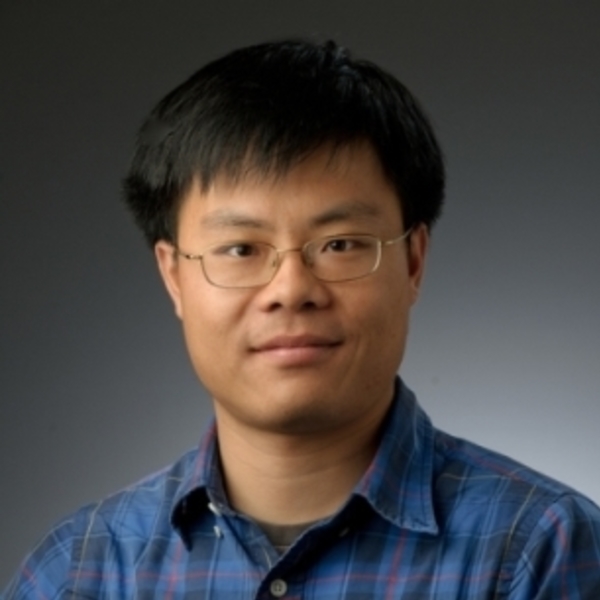
Jun Li is a Full Professor in the Department of Applied and Computational Mathematics and Statistics at the University of Notre Dame's College of Science. He specializes in developing statistical and computational methods for big data, with a focus on interdisciplinary applications in bioinformatics, machine learning, and data mining. His career includes tenure as an Assistant Professor (2012–2017) and promotion to Associate Professor (2017) before becoming Full Professor (2020). Dr. Li holds a Ph.D. in Statistics from Stanford University (2012), supervised by Robert Tibshirani, and earlier degrees from Tsinghua University: a B.E. in Automation (2004) and an M.S. in Pattern Recognition and Intelligent Systems (2007). Research Interests : Dr. Li’s work centers on advancing computational frameworks for handling large-scale datasets, integrating statistical rigor with algorithmic innovation. Recent themes include AI-driven code improvement, ethical LLM applications in HCI, and GUI automation. His methodologies emphasize human-AI collaboration and transparency in algorithmic systems. Publications : His 2025 work explores LLM vulnerabilities in GUI agents, AI-assisted education tools like GLITTER, and ethical challenges in HCI research. Earlier studies (2024–2023) address topics such as natural language database queries, privacy-preserving app promotion analysis, and multimodal task learning. Lab/Teams : Affiliated with Notre Dame’s computational statistics research groups, focusing on interdisciplinary projects bridging statistics, computer science, and applied mathematics. His work often involves collaborations with industry and academic partners to translate theoretical advancements into practical applications.
Dr. Zhigang Peng is a Professor in the School of Earth & Atmospheric Sciences at Georgia Institute of Technology, part of the College of Sciences. His research focuses on seismicity dynamics, fault zone imaging, and data science applications in geophysics. He holds a Ph.D. in Geological Sciences from the University of Southern California (2004), an M.S. in Electrical Engineering (2002), and a B.S. in Geophysics from the University of Science and Technology of China (1998). Dr. Peng’s work spans seismological studies of earthquake triggering mechanisms, fault zone structures, and deep-focus earthquakes. He has pioneered dense seismic array techniques to image fault systems and employs machine learning for event detection and phase picking. His recent projects include analyzing the 2023 Kahramanmaraş earthquake sequence in Türkiye and the 2024 Noto earthquake in Japan. He leads initiatives like the Center for Collective Impact in Earthquake Science (C-CIES), promoting inclusive scientific collaboration. Research Highlights: Fault zone imaging, dynamic triggering, AI-driven seismology Labs: ES&T 2235 (Seismology Lab), ES&T 2256 (Office) His awards include the 2002 AGU Outstanding Student Paper Award. He actively contributes to earthquake hazard assessment, nuclear explosion monitoring, and volcano-seismic interactions, with over 150 peer-reviewed publications.
Dr. Saiedeh Razavi is an Associate Professor and the inaugural Chair in Heavy Construction at McMaster University's Department of Civil Engineering, directing the McMaster Institute for Transportation and Logistics (MITL). She holds a multidisciplinary background with degrees in Computer Engineering (B.Sc., Sharif University), Artificial Intelligence (M.Sc., Iran), and Civil Engineering (Ph.D., Waterloo). Her research focuses on smart infrastructure, connected mobility, and construction safety, funded by NSERC and the Ontario Ministry of Transportation. Key areas include transforming construction management through AI, autonomous vehicles, and smart work zones. Education: B.Sc. (Sharif), M.Sc. (Iran), Ph.D. (Waterloo) Research Interests: Smart cities, connected vehicle systems, data fusion, risk analysis, and sustainable logistics Leadership Roles: Director of MITL, Associate Chair (Research), and lead of national/international multidisciplinary projects Her work bridges academia, government, and industry to enhance mobility and safety. Notable grants include NSERC funding for transformative transportation systems. Awards include teaching excellence and innovation in team-based projects. Grants & Projects: NSERC, Ontario Ministry of Transportation, and industry collaborations Labs/Teams: MITL, CPS-based construction safety initiatives, and autonomous vehicle research groups
Julie Yujie Chen is an Assistant Professor at the Institute of Communication, Culture, Information, and Technology (ICCIT) at the University of Toronto Mississauga, with a graduate appointment at the Faculty of Information. She holds a PhD in American Studies from the University of Maryland, College Park, and previously served as a Lecturer at the University of Leicester's School of Media, Communication, and Sociology. Her research focuses on the intersection of culture, digital technologies, and economic structures in shaping work experiences, particularly in China's platform economy. Key areas include ride-hailing and food-delivery sectors, worker resistance in digital capitalism, and the sociocultural impacts of platforms like WeChat. She is the lead author of *Super-sticky WeChat and Chinese Society* (2018), the first academic work analyzing WeChat's societal and political influence. Research interests: Digital labour, platform capitalism, AI-driven work, global labour patterns, and socio-technological change. Current supervision: Hiu-Fung Chung and Mathew Iantorno. Her recent work examines platform labour dynamics, national employment policies in China, and comparative studies of global digital economies. Articles often explore themes like worker agency, algorithmic management, and socio-technical resistance strategies.
Stavros G. Vougioukas is a Professor and Vice Chair in the Department of Biological and Agricultural Engineering at the University of California, Davis. His research focuses on agricultural robotics, mechanization, and automation for specialty crops, with particular emphasis on robotic harvesting systems and precision agriculture technologies. He leads initiatives in developing actuator systems, perception, and control mechanisms to optimize crop management. Key areas of expertise include robotic fruit harvesting, autonomous vehicle navigation in orchards, and site-specific pest management strategies. His work integrates mechanical engineering principles with advanced automation to address labor shortages and improve agricultural efficiency. Recent projects emphasize data-driven solutions for yield estimation, worker activity analysis, and economic viability of robotic systems. Academic contributions span over 50 peer-reviewed publications (2023-2025), with a focus on robotic orchard platforms, crop transport systems, and sensor-based automation. Notable innovations include vacuum suction end-effectors for fruit harvesting and GNSS-free navigation systems for autonomous vehicles. He also explores sustainable agricultural machinery through techno-economic analyses of electric/hybrid tractors. Current research bridges robotics and agricultural economics, addressing labor cost optimization and precision irrigation. His lab collaborates with industry partners to translate prototypes into field-ready solutions, emphasizing practical applications for specialty crop production systems.
Dr. Richard Gault is a Lecturer in the School of Electronics, Electrical Engineering and Computer Science at Queen's University Belfast. His research focuses on computer vision and deep learning applied to microscopy data, particularly in medicine, health, and life sciences. He leads a team developing novel methods for medical image analysis, including histopathology and digital pathology, with applications in cancer diagnosis and environmental science. He is actively involved in teaching, having received Excellence in Teaching awards from Queen's University Belfast in 2019 and 2022. His work bridges computational intelligence and healthcare, with notable contributions to AI-driven diagnostics, stain normalization in histopathology, and multimodal data fusion. Dr. Gault's research interests include ensemble learning, fuzzy systems, and generative models like diffusion networks. He supervises multiple PhD students and has mentored graduates now working in machine learning engineering and postdoctoral research. His team’s achievements include awards such as the 2023 Best Oral Presentation at the Pan Ireland Ophthalmology Day and a 2021 Best Paper Award from his school. Key contributions include the LymphoSight AI application for detecting lymphoid structures and HistoClean , open-source software for improving CNN development in histopathology. He has been recognized as a Senior Member of IEEE and a Fellow of the Higher Education Academy. His work is supported by grants such as the R5131ECI project on 3D quantifier approximation via 2D video analysis (2019–2025). He actively engages in academic activities, including conference organization and PhD external examinations across Europe.
Mor Armony is the Vice Dean for Faculty and Research, Harvey Golub Professor of Business Leadership, and Professor of Technology, Operations & Statistics at the Leonard N. Stern School of Business, New York University. She has been a key faculty member since 1999 and is a leading researcher in stochastic modeling and service operations. Ph.D. in Operations Research, Stanford University (1999) M.S. in Operations Research, Stanford University (1997) M.S. in Statistics, Hebrew University of Jerusalem (1996) B.S. in Mathematics and Statistics, Hebrew University of Jerusalem (1993) Her research focuses on large-scale service systems, particularly in healthcare and contact centers. She investigates patient flow in hospitals, optimization of customer experience, and control of stochastic processing systems using advanced queueing models and operations research techniques. Her work bridges theoretical rigor with practical applications in service operations management. The recent articles reflect a strong trend toward integrating behavioral aspects into operations models, such as customer impatience, strategic patient behavior, and the impact of online reviews on physician demand. Her research spans healthcare operations, call center optimization, and dynamic routing in heterogeneous systems, consistently published in top journals like Management Science , Operations Research , and Production and Operations Management . Scientific recognition includes being named the Harvey Golub Professor of Business Leadership, a distinguished title at NYU Stern. Harvey Golub Professor of Business Leadership She actively advises research projects and collaborates with scholars on topics including staffing, routing, and capacity management. Her work has been supported by ongoing academic engagement and publication, with recent projects addressing appointment scheduling with no-shows, strategic capacity withholding, and co-sourcing in call centers. She leads research in data-driven queueing science applied to hospital operations and is involved in empirical studies on digital health platforms. Her research group, the Operations Management Group at Stern, focuses on developing analytical models for complex service systems. She contributes to interdisciplinary efforts in healthcare operations and collaborates with medical researchers on improving critical care delivery and outpatient scheduling.
Sebastian Pokutta is a Professor at Technische Universität Berlin, Vice President at the Zuse Institute Berlin (ZIB), and Chair of the Cluster of Excellence MATH+ and MODAL. His research lies at the intersection of Artificial Intelligence, Optimization, and Machine Learning, with applications in sustainability, quantum computing, and mathematical discovery. Research Interests: Development of novel optimization algorithms, particularly Frank-Wolfe and Conditional Gradient methods. Integration of machine learning with decision-making and combinatorial optimization. AI for Science (AI4Science), including applications in quantum mechanics and ecology. AI and creativity, human-AI co-creativity, and social science modeling using multi-agent LLMs. His recent publications (2025) demonstrate a strong focus on scalable optimization, interpretability, and algorithmic foundations. The work spans theoretical advances in convergence analysis, practical implementations in Julia (FrankWolfe.jl), and real-world deployments in biomass estimation and quantum certification. Scientific Awards: Gödel Prize (2023) STOC Test of Time Award (2022) Science Prize of the Association for Pediatric Orthopedics (2025) Google Research Awards (2021, 2020) NSF CAREER Award (2015) He advises a vibrant research group, with former students and postdocs securing faculty positions at institutions like Inria, Carlos III University, and James Madison University. His group has received funding from Google, DFG, and Math+, and he leads major collaborative efforts such as the Thematic Einstein Semester on Mathematical Optimization for Machine Learning. Labs and Teams: Interactive Optimization and Learning Lab at TU Berlin and ZIB. Leadership in MODAL and MATH+ research clusters, fostering interdisciplinary collaboration in mathematical optimization and AI.