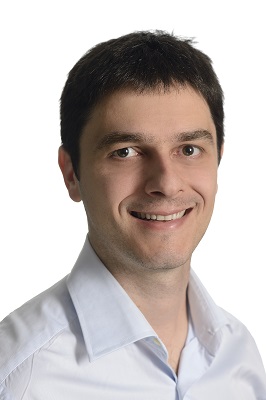
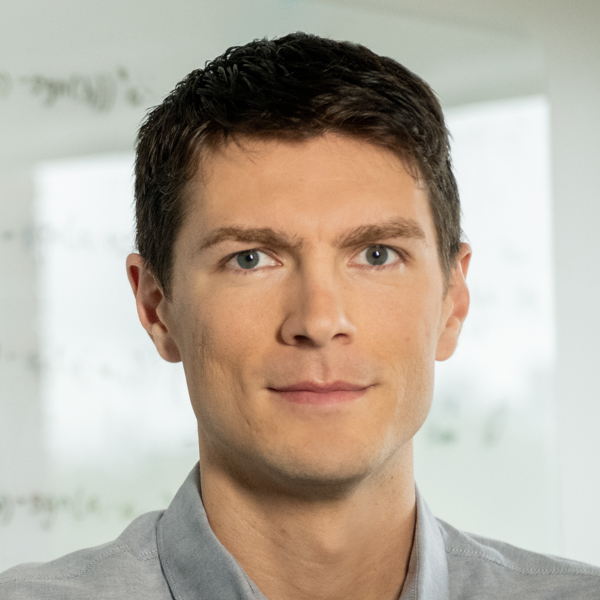
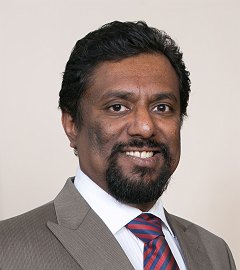
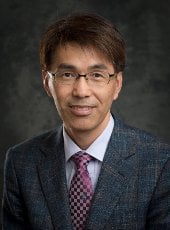
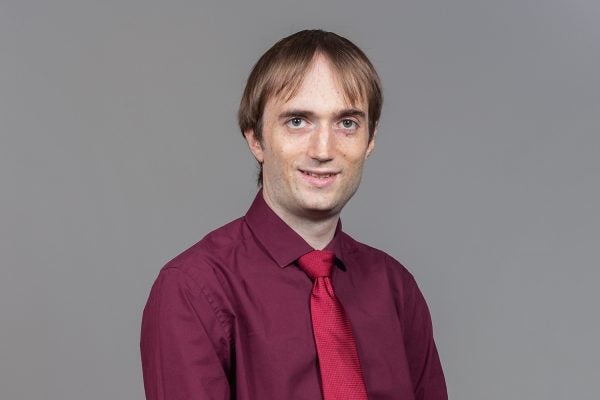
Ming-Jun Lai is a Professor in the Department of Mathematics at the University of Georgia. His career spans decades, focusing on multivariate splines, sparse solutions of linear systems, wavelet theory, and their applications in numerical analysis and machine learning. Education: Lai received his Ph.D. from Texas A&M University and completed postdoctoral training at the University of Utah. He has supervised 22 Ph.D. students and two current Ph.D. candidates. Multivariate Splines: Applied to scattered data fitting, numerical PDE solutions, image enhancement, and surface design. Sparse Solutions: Used in compressed sensing, low-rank matrix recovery, and graph clustering. Wavelet Theory: Construction of biorthogonal and tight wavelet frames for image edge detection. Optimal Transport: Numerical solutions for Monge-Ampère equations. Research Trends (2025–2023): Recent work includes interpolating space curves with geometric continuity, spherical spline smoothing, and applications in machine learning, particularly graph clustering and optimal control in biological systems. Scientific Awards: UGA Research Medal (2002) McCay Award (2013) Advisees: Lai has mentored 24 Ph.D. students, including Zhaiming Shen (2024), Jinsil Lee (2023), and current students Valerio Palamra and Ye Tian. Laboratory & Collaborations: He collaborates with institutions like Georgia Tech, UCLA, and Zhejiang University, applying splines in aerospace engineering and biomedical imaging.
Torgeir Welo is a Professor at the Department of Mechanical and Industrial Engineering , Norwegian University of Science and Technology (NTNU) . He specializes in metal forming , particularly aluminum alloy structures , with a focus on plastic bending behavior , dimensional stability , and 3D forming technologies . His research also encompasses Lean Product Development , emphasizing knowledge reuse and maximizing customer value in automotive and aerospace applications. Key Research Areas : Metal Forming, Aluminum Processing, Springback Control, Lean Development, Additive Manufacturing, Material Substitution Teaching : Courses on Aluminum Technology , Metal Forming Analysis , and Machine Element Design Publications (15 most recent): Focus on springback monitoring , charge weld evolution , flexible forming , machine learning applications , and circular economy frameworks in metal manufacturing.
Dr. Giang Tran is an Associate Professor in the Department of Applied Mathematics at the University of Waterloo, where she leads research in sparse modeling and computational mathematics. She holds a PhD from UCLA and previously served as a Bing Instructor at the University of Texas at Austin. Her research explores sparse optimization techniques with applications in medical imaging, dynamical systems, and data science. Recent publications focus on developing novel algorithms for sparse random feature expansions and dynamical system identification. She mentors numerous graduate and undergraduate researchers through projects on neural networks, transformers, and epidemic forecasting. Awards include the NSERC Discovery Grant and SIAM Student Paper Prize. Dr. Tran teaches advanced courses in numerical methods and functional analysis, contributing to curriculum development in computational mathematics.
Martin Holler is a Professor at the Institute of Mathematics and Scientific Computing at the University of Graz, Austria, where he leads the research group Applied Mathematics and Machine Learning . His work bridges theoretical mathematics with practical applications in imaging and machine learning. Research Focus: His primary research areas include the mathematics of data science, variational methods in imaging, dynamic and multi-modality inverse problems, and biomedical imaging. He has made significant contributions to model-based regularization techniques, particularly with Total Generalized Variation (TGV) approaches for image and video reconstruction. Publication Trends: Over the past decade, Holler's research has evolved from traditional variational methods for image reconstruction toward increasingly sophisticated machine learning approaches. His recent work (2021-2023) focuses on integrating deep learning with variational methods, particularly for motion separation in medical imaging and learning-informed parameter identification in partial differential equations. His publications demonstrate a consistent thread of applying rigorous mathematical frameworks to solve practical problems in medical imaging and computer vision. Mathematics of data science and machine learning Generative models in machine learning Variational methods in imaging Dynamic and multi-modality inverse problems Model-based regularization Biomedical imaging Image and video decompression Technical Leadership: Holler has developed several open-source software packages implementing advanced reconstruction algorithms, particularly for multi-modal imaging problems. His GitHub repositories show active maintenance and development of these tools, which have been cited in the medical imaging community.
Andrea Costamagna is a researcher affiliated with the École Polytechnique Fédérale de Lausanne (EPFL), working within the School of Computer and Communication Sciences and the Department of Communication Systems. His research focuses on logic synthesis, digital circuit design, and the intersection of machine learning with hardware implementation. His work includes optimizing digital circuits using techniques like resynthesis, resubstitution, and decomposition, with applications in FPGA design and low-power systems. Recent publications explore symmetry-based synthesis, glitch-aware power minimization, and the use of resistive switching devices in machine learning hardware. His research also extends to quantum physics modeling with deep learning.
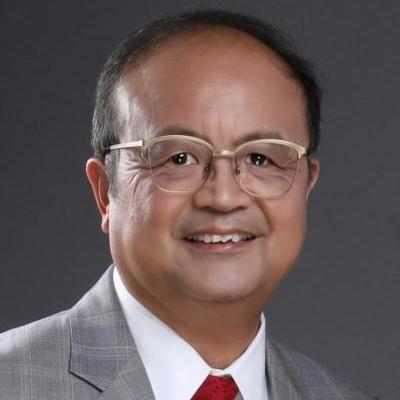
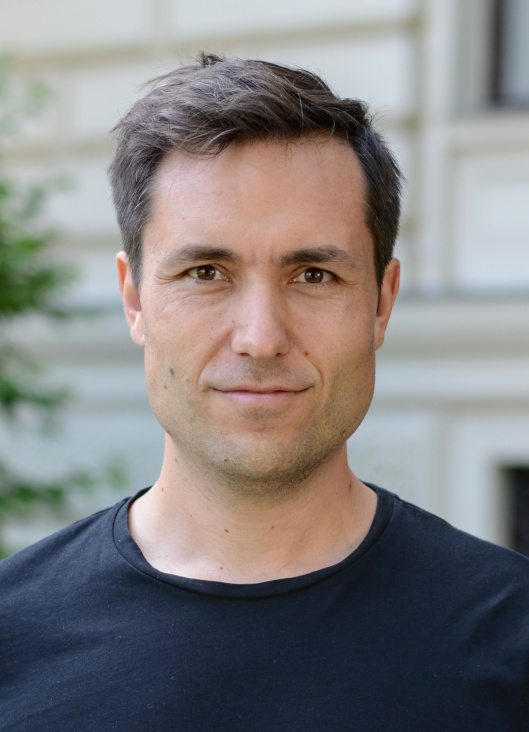
Professor Garry Tew serves as the founding Director of the Institute for Health and Care Improvement and holds the position of Professor of Clinical Exercise Science at York St John University's School of Science, Technology and Health. As a BASES Accredited Sport and Exercise Scientist, he leads interdisciplinary research initiatives focused on improving community health through evidence-based practices. He also serves as the Academic Lead of Scarborough Coastal Health and Care Research Collaborative (SHARC), a partnership with York and Scarborough Teaching Hospitals NHS Foundation Trust. Professor Tew's research program centers on the role of physical activity and exercise in preventing, managing, and treating long-term health conditions. He is internationally recognized for his pioneering work on exercise interventions for intermittent claudication and exercise-based prehabilitation to enhance surgical readiness. His research spans mental health contexts, inflammatory bowel disease, peripheral artery disease, and multimorbidity in older adults, with a particular focus on developing accessible interventions for diverse patient populations. His extensive publication record demonstrates significant contributions across multiple health domains, with recent work emphasizing co-produced physical activity programs for severe mental illness, chair-based yoga for older adults with multiple conditions, and digital health coaching for surgical preparation. These publications reflect a consistent trajectory toward developing practical, evidence-based exercise interventions that can be implemented in real-world healthcare settings. Professor Tew actively contributes to the research community as a member of the East Midlands Nottingham One Research Ethics Committee and serves on the Selection Committee for the NIHR Doctoral Fellowship Programme. He regularly reviews grant applications for major funding bodies including the National Institute for Health and Care Research, Medical Research Council, and British Heart Foundation. His teaching expertise encompasses research methods and exercise physiology at both undergraduate and postgraduate levels. He also conducts specialized workshops for staff and postgraduate research students on research-related topics, demonstrating his commitment to developing the next generation of researchers in health and care disciplines.
Agostino Capponi is a Professor of Industrial Engineering and Operations Research at Columbia University, affiliated with Columbia Engineering and the Data Science Institute (DSI). He holds academic fellowships at the Luohan Academy (Alibaba Group) and the Fintech@Cornell Center. His research focuses on systemic risk, financial technology, blockchain economics, and machine learning applications in finance. He has authored a best-selling book on machine learning in financial markets and received prestigious awards including the NSF CAREER Award and the JP Morgan AI Faculty Research Award. Education: Master's and PhD in Computer Science and Applied & Computational Mathematics from Caltech (2006-2009). Professional roles include Editor of Management Science , co-editor of Mathematics and Financial Economics , and leadership positions in the Bachelier Finance Society and INFORMS Finance Section. His research has been funded by NSF, DARPA, J.P. Morgan, Ethereum Foundation, and others. Research interests span blockchain governance, decentralized finance protocols, and systemic risk mitigation in financial networks. Notable contributions include work on liquidity risk, crypto-economic systems, and causal inference in financial modeling. Media coverage includes American Banker, Vox, and Chicago Booth Review. He holds a patent in military network tracking and served as a visiting scholar at the Federal Reserve Bank of New York.
Paul E. Hand is an Associate Professor in the Department of Mathematics and Computer Science at Northeastern University, affiliated with the College of Science and Khoury College of Computer Sciences. He holds a Ph.D. in Mathematics from New York University (2009) and specializes in signal recovery, deep learning, and optimization. His research focuses on developing mathematical frameworks for inverse problems, phase retrieval, and generative models with provable guarantees. He has taught advanced courses in machine learning, algorithms, and deep learning at Northeastern and Rice University. Education: Ph.D. in Mathematics, New York University (2009); M.S. and B.S. in Mathematics, not explicitly stated but inferred from academic trajectory. Research Interests: Applied mathematics, compressed sensing, deep learning, phase retrieval, signal recovery, and optimization. His work bridges theory and practice, addressing challenges in imaging, robustness, and generative modeling. Grants: NSF CAREER Grant DMS-1848087 (2018). Outreach: Directed STEM summer camps at Rice University (2017) and developed LeadingLesson , a platform for multivariable calculus problem-solving resources. Teaching: Courses include Machine Learning (CS 6140), Deep Learning (CS 7150), Algorithms (CS 3000), and Analysis at Northeastern and Rice. He emphasizes rigorous proof techniques and pedagogical innovation. Labs/Teams: Collaborates with researchers in computational mathematics, computer vision, and machine learning. Active in authoring peer-reviewed papers and reviewing for top conferences (NeurIPS, ICML, ECCV).
Ramana Vinjamuri is an Associate Professor in the Department of Computer Science and Electrical Engineering at the University of Maryland, Baltimore County (UMBC). He holds a secondary appointment as Visiting Professor at the Indian Institute of Technology, Hyderabad, India. His academic journey includes a Ph.D. in Electrical Engineering from the University of Pittsburgh (2008), M.S. in Bioinstrumentation from Villanova University (2004), and B.Tech. in Electrical and Electronics Engineering from Kakatiya University (2002). Dr. Vinjamuri's research focuses on Brain-Machine Interfaces (BMIs) for upper-limb prostheses control , neuroprosthetics and exoskeletons , machine learning in motor control , and neurophysiological signal processing . His work extends synergy-based models to control 37-dimensional hand movements, addresses human-robot interaction through emotionally intelligent systems, and develops neurotechnologies for substance use disorder using wearable sensors and AI. NSF CAREER Award (2019) NSF IUCRC BRAIN Center Planning Grant (2020) Harvey N Davis Distinguished Teaching Assistant Professor Award (2018) His publications demonstrate expertise in EEG and EMG signal analysis , deep learning for motor decoding , synergy modeling , and humanoid robot control . The Vinjamuri Lab at UMBC involves graduate, undergraduate, and high school researchers, with international collaborations in India and the US.
Ratnak SOK is an Associate Professor at Waseda University, specializing in thermal engineering, electrified vehicles, and internal combustion engine research. His work spans transportation electrification , CFD modeling , waste heat recovery , and low-carbon/e-fuel ICEs with aftertreatment systems. Doctor of Engineering (2015, Waseda University) MSME (2011, Institut Teknologi Bandung) Diplôme d'Ingénieur (2009, Institut de Technologie du Cambodge) DUT (2006, Institut de Technologie du Cambodge) His research focuses on xEV thermal management , internal combustion engine efficiency , and thermoelectric waste heat recovery , supported by 44 peer-reviewed papers and 340 Scopus citations. Recent work integrates machine learning and CFD simulations for combustion control and battery modeling. Scientific accolades include: Young Investigator Award (2025 Japan Society of Automotive Engineers) SAE International Journal editorial board member Chair, 2025 ASME Rail Transportation Symposium His academic leadership extends to organizing technical sessions at IEEE, SAE, and FISITA conferences.
Robert Nowak holds dual distinguished professorships as the Keith and Jane Morgan Nosbusch Professor in Electrical and Computer Engineering and the Grace Wahba Professor of Data Science at the University of Wisconsin–Madison. Based at the Discovery Building (330 N Orchard Street), he leads interdisciplinary research at the Wisconsin Institute for Discovery, bridging engineering with data science applications. His academic foundation includes: BS, MS, and PhD from the University of Wisconsin–Madison Post-doctoral Fellowship at Rice University Nowak's research program spans artificial intelligence, machine learning, and optimization with dual emphases on AI-driven health applications and systems optimization. His work integrates theoretical rigor with practical implementations, particularly in large language model fine-tuning, active learning frameworks, and neural network theory. Recent publications demonstrate strong focus on improving model efficiency, humor comprehension in AI systems, and theoretical bounds for retrieval-augmented generation. Analysis of his 15 most recent publications reveals dominant trends in large language model advancement (particularly humor understanding and task diversity), theoretical neural network analysis (including sparse architectures and multi-task learning), and novel active learning methodologies for open-world scenarios. His work consistently bridges theoretical machine learning with real-world applications in health and recommendation systems. While specific named awards aren't documented in the source material, his appointment to two endowed chairs (Nosbusch and Wahba professorships) represents exceptional institutional recognition of his scholarly impact. Nowak advises graduate students in the Electrical and Computer Engineering department and secures significant research funding, including NSF grants such as CIF: Small: Advanced Understanding and Applications of Deep Learning. His group operates within the collaborative ecosystem of the Wisconsin Institute for Discovery, fostering cross-disciplinary projects that integrate AI with health sciences and engineering systems. Current projects indicate strong momentum in human-AI collaboration frameworks and optimization of language model training pipelines.
Professor Saman Amarasinghe is a full Professor in the Department of Electrical Engineering and Computer Science (EECS) at the Massachusetts Institute of Technology (MIT), and Principal Investigator at MIT's Computer Science and Artificial Intelligence Laboratory (CSAIL). He leads the Commit compiler research group, which focuses on programming languages and compilers that maximize application performance on modern computing platforms. His work spans multiple academic departments and research centers, with strong affiliations to both MIT's School of Engineering and CSAIL. Professor Amarasinghe's research interests center around high-performance domain-specific languages and compiler technology . His work combines language design with sophisticated compilation techniques to deliver unprecedented performance for targeted application domains. His research spans multiple areas including image processing (Halide), sparse tensor algebra (TACO), graph analytics (GraphIt), stream computations (StreamIt), and bioinformatics (Seq). A significant thread throughout his work is the application of machine learning for compiler optimizations, from Meta optimization in 2003 to the OpenTuner autotuner framework. Analysis of Professor Amarasinghe's recent publications reveals a strong focus on sparse computing , compiler vectorization , and domain-specific language implementation . His work consistently bridges theoretical compiler concepts with practical performance gains across diverse application domains. The progression from earlier work on StreamIt and Halide to more recent projects like GraphIt and TACO shows an evolution toward more specialized, high-performance DSLs targeting specific computational patterns. His 2020-2025 publications particularly emphasize sparse tensor operations, GPU acceleration, and machine learning integration with compiler technology. ACM Fellow (2019) Professor Amarasinghe has made significant contributions to academic entrepreneurship and student development. He founded Determina, Inc. (acquired by VMware) based on security research from his MIT lab and co-founded Lanka Internet Services, Ltd., Sri Lanka's first ISP. As faculty director of MIT Global Startup Labs, his programs across 17 countries have helped create over 20 successful startups. His teaching includes the popular Performance Engineering of Software Systems (6.172) course with Professor Charles Leiserson, as well as innovative project-based courses like the Open Source Software Project Lab and Bring Your Own Software Project Lab. His educational approach emphasizes hands-on experience with compiler and language design concepts. Professor Amarasinghe leads the Commit compiler research group at MIT CSAIL, which has produced numerous influential domain-specific languages and compilers including Halide, TACO, Simit, StreamIt, and GraphIt. The lab maintains strong industry connections through projects like OpenTuner and Determina, and collaborates with researchers worldwide on compiler technology. The group's work spans both theoretical compiler research and practical implementation, with a consistent focus on bridging the performance gap between high-level programming abstractions and hardware capabilities.
Dr. Youngchul Ra is an Associate Professor in the Department of Mechanical and Aerospace Engineering at Michigan Technological University. He holds a PhD from MIT (1999) and degrees from Seoul National University. His expertise includes computational fluid dynamics (CFD), combustion modeling, chemical kinetics, and alternative fuel research. His work focuses on advanced combustion strategies like Gasoline Compression Ignition (GCI), engine CFD code development, and high-performance computing. Education: PhD in Mechanical Engineering, Massachusetts Institute of Technology (1999) Masters and Bachelors in Mechanical Engineering, Seoul National University Research Interests: Developing multi-component fuel models for real-world applications Optimizing six-stroke GCI engines with advanced valve technologies Reducing emissions via combustion control and injection strategies Parallel computing techniques for large-scale engine simulations Recent work emphasizes oxygenated fuels in GCI engines and parametric studies of combustion efficiency. His CFD models are validated against experimental data for accuracy. His research has led to advancements in low-temperature combustion and emission reduction without explicit awards listed. He collaborates on engine design optimization and fuel formulation projects.
Jonathan Scarlett is an Associate Professor jointly appointed in the Department of Computer Science, Department of Mathematics, and Institute of Data Science at the National University of Singapore (NUS). He also serves as Assistant Dean (Graduate Studies) in the School of Computing. His research focuses on information theory, machine learning, and high-dimensional statistics, with applications to optimization, group testing, and statistical inference. Education: Ph.D. (Information Engineering), University of Cambridge (2014) B.Eng. (Electrical Engineering) and B.Sci. (Computer Science), University of Melbourne (2010) Research Interests: Algorithmic foundations of machine learning and statistical estimation Information-theoretic limits and adaptive algorithms Applications in group testing, compressed sensing, and DNA storage Robust optimization under uncertainty and adversarial settings His work bridges theoretical guarantees with practical algorithm design, emphasizing scalable solutions for high-dimensional problems. Key Achievements: Recipient of Singapore NRF Fellowship (2018) and NUS Presidential Young Professorship Listed in MIT Technology Review's 'Innovators Under 35' Asia Pacific (2021) Over 100 publications in top venues like ICML, NeurIPS, and IEEE Transactions Advising & Grants: Supervised multiple PhD students in areas like Bayesian optimization, group testing, and compressed sensing Lead researcher on projects supported by NRF and NUS grants Developed novel frameworks for safe Bayesian optimization and robust bandit algorithms Labs & Collaborations: Active in the Information Theory and Statistical Learning Group at NUS, collaborating with global institutions like EPFL and MIT on data science challenges.
Dr. Jiaojiao Jiang is a Senior Lecturer in the School of Computer Science and Engineering at the University of New South Wales (UNSW). She holds a Ph.D. from Deakin University (Melbourne, Australia) and has published over 45 articles with 1,100+ citations. Her research focuses on AI-driven cybersecurity solutions, particularly misinformation detection and modeling information propagation dynamics. She is affiliated with UNSW's Sydney campus and can be contacted at jiaojiao.jiang@unsw.edu.au . Education: Ph.D., Deakin University, 2010s Research Interests: Artificial Intelligence applications in cybersecurity Misinformation detection and network analysis Machine learning for network security Data privacy in IoT systems Publications span topics like fake news detection via graph neural networks, multiplex network robustness, and cyber threat intelligence frameworks. Her work bridges theoretical network science with practical cybersecurity challenges.

/prod01/yorksjacuk/media/content-assets/staff-profile-images/garry_tew-2.jpg)