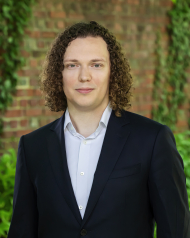
Prof. Ingmar Posner is a leading figure in applied artificial intelligence at the University of Oxford, where he serves as Principal Investigator for the Applied Artificial Intelligence Lab (A2I) and founding Director of the Oxford Robotics Institute. His work focuses on enabling robots to operate effectively in complex real-world environments through experience-driven learning. Key research areas: robot learning, scene interpretation, data-efficient learning, and transfer learning Applications in manipulation, autonomous driving, logistics, and space exploration His team has produced groundbreaking work in world models, sim-to-real transfer, and constraint-based manipulation systems (e.g., COMBO-Grasp). Notable contributions include the TWIST distillation framework and foundational research in tactile data generation (TactGen). He has received multiple best paper awards at top robotics venues. Publications reveal evolving research themes: 2025 work emphasizes language-conditioned learning (Lumos) and multi-agent decision-making, while 2024 focused on diffusion models for locomotion and differentiable simulators. Earlier work spans from urban scene analysis to physically plausible scene synthesis (RELATE).
Peter Henderson is an Assistant Professor at Princeton University with joint appointments in the Department of Computer Science and the School of Public and International Affairs. He is affiliated with the Center for Information Technology Policy (CITP), Princeton Language and Intelligence Initiative (PLI), Center for Statistics and Machine Learning (CSML), and Program in Law & Public Policy (PLAW). J.D./Ph.D., Stanford University, 2023 M.Sc., McGill University and Montréal Institute for Learning Algorithms Henderson's research focuses on the critical intersection of artificial intelligence and law, with particular emphasis on AI safety, methods to improve reasoning in foundation models, interdisciplinary approaches to law and AI, and AI governance. His work spans language-grounded reinforcement learning, alignment techniques, strategic decision-making in legal contexts, and public interest artificial intelligence. He investigates how legal frameworks can guide the development of AI systems that benefit society while addressing potential harms. Henderson's recent publications reveal a strong trajectory toward addressing the safety, governance, and legal implications of foundation models. His work combines rigorous technical AI research with deep legal analysis, particularly examining how intellectual property law interacts with AI development, regulatory pathways that balance innovation with harm prevention, and the role of law in shaping responsible AI deployment. A significant thread throughout his research is the development of better evaluation methodologies for AI systems, especially in critical domains like law. SEAS Excellence in Teaching Award (2025) Henderson leads the Princeton Law+Language, AI, & Society (POLARIS) Lab, where he advises students and researchers working at the intersection of AI and legal studies. His research has been supported through collaborations with government agencies, including work with the IRS on audit selection algorithms. His findings have informed practical applications in government efficiency and equity, as well as legal system improvements. Henderson runs the POLARIS Lab at Princeton, which focuses on developing AI systems that work for the public interest, particularly in legal contexts. His team develops sequential decision-making systems for government efficiency, foundation models capable of reasoning about law, and improved safety evaluation frameworks for AI systems. The lab maintains strong connections with legal practitioners and policymakers to ensure research has real-world impact.
Nils Fleischhacker is an Assistant Professor for Cryptography at Ruhr University Bochum, where he leads the Theoretical Cryptography group within the Faculty of Computer Science. His research focuses on foundational aspects of cryptography with particular emphasis on zero-knowledge proofs, digital signatures, and secure computation. Prior to joining Ruhr University, he held postdoctoral positions at Johns Hopkins University and Carnegie Mellon University. Dr. Fleischhacker received his PhD in Computer Science from Saarland University in February 2017, advised by Dominique Schröder. During his doctoral studies, he was a research intern at Microsoft Research with Chris Brzuska and a research visitor at the University of Maryland, College Park with Jonathan Katz and Dana Dachman-Soled. His research spans theoretical cryptography with significant contributions to zero-knowledge proofs, multi-signature schemes, property-preserving hash functions, and security proofs for cryptographic primitives. Fleischhacker's work often addresses fundamental questions about the limits and possibilities of cryptographic constructions, with particular attention to black-box separations and lower bounds. His recent publications demonstrate a strong focus on lattice-based cryptography and post-quantum secure protocols. Fleischhacker's publications over the past five years reveal a consistent research trajectory focused on improving the efficiency and security of cryptographic primitives, with particular emphasis on signature schemes, zero-knowledge protocols, and secure computation frameworks. His work frequently appears in top-tier cryptography venues including CRYPTO, EUROCRYPT, and CCS. Dr. Fleischhacker actively mentors PhD students, with numerous successful graduations spanning from 2010 to 2024. His former PhD students include Önder Askin (2024), Floyd Zweydinger (2023), and Lars Schlieper (2022), among others. His research is supported through various academic channels and collaborations. He is affiliated with several prominent research organizations including the Horst Görtz Institute (HGI) for Information Security, the DFG Excellence Cluster CASA, the EU Marie Curie Network QSI, and the International Association for Cryptologic Research (IACR). These affiliations provide a strong institutional framework for his theoretical cryptography research.
Pieter Abbeel is a Professor in the Department of Electrical Engineering and Computer Sciences (EECS) at the University of California, Berkeley. He leads the Berkeley Robot Learning Lab and co-directs the Berkeley Artificial Intelligence Research (BAIR) Lab. His work focuses on advancing AI and robotics through deep reinforcement learning, imitation learning, and unsupervised learning, with applications in automation, healthcare, and education. Abbeel's research also explores the societal implications of AI and its potential to revolutionize other scientific and engineering fields. Education: Ph.D. in Computer Science, Stanford University (2008) M.S. in Electrical Engineering, KU Leuven, Belgium (2000) Research Interests: Robotics, AI, Machine Learning, Reinforcement Learning, Autonomous Systems, and Applications in Surgery, Manufacturing, and Education. Recent Article Trends: Focus on multimodal learning, robot manipulation, protein structure prediction, and scalable AI systems. Key areas include sim-to-real transfer, embodied AI, and foundation models for decision-making. Awards & Honors: IEEE Kiyo Tomiyasu Award (2022) ACM Prize in Computing (2021) IEEE Fellow (2018) MIT Tech Review TR35 (2011) Advising & Grants: Advises startups and has received grants from NSF, DARPA, and industry partnerships. Notable students include those advancing robotics, reinforcement learning, and bioAI. Labs & Initiatives: Berkeley Robot Learning Lab, BAIR Lab, and collaborations with the Center for Human-Compatible AI (CHAI). Founded companies include Gradescope, Covariant, and Berkeley Open Arms.
Dr Andrew Rhead is a Senior Lecturer in the Department of Mechanical Engineering at the University of Bath, specializing in aerospace composites and damage tolerance analysis. His research focuses on impact damage detection, failure mechanism modeling, and Non-Destructive Evaluation (NDE) techniques for composite structures. MSci in Mathematical Sciences (Dynamical Systems) - University of Bristol (2006) PhD in Composite Damage Tolerance - University of Bath (2009) His work develops computationally efficient analytical models for compression after impact (CAI) strength prediction in composite laminates, surpassing traditional finite element methods. Key projects include hydrogen storage systems for aircraft, cryogenic composite testing, and steered fiber manufacturing optimization. Active in 10 projects including ASPIRE and HyFIVE Collaborates with Airbus, GKN Aerospace, and EPSRC Research trends show emphasis on sustainable aviation materials, structural battery integration, and advanced testing methodologies. Current affiliations include the Institute for Mathematical Innovation (IMI) and Centre for Integrated Materials, Processes & Structures (IMPS).
Dr. Jurgen Becque is an Associate Professor in Structural Engineering at the University of Cambridge's Department of Engineering. He specializes in cold-formed steel structures, stainless steel structural behavior, and stability analysis, with a focus on local-overall buckling interaction and innovative design methodologies. His work bridges experimental investigations with computational modeling and machine learning applications. Research Interests: Cold-formed steel structural systems Stainless steel column stability Local and overall buckling interaction Mechanics-based design optimization Machine learning for structural behavior prediction Recent publications demonstrate expertise in cross-sectional stability, connection mechanics, and composite systems like UHPC-confined stainless steel columns. His work addresses both monotonic and cyclic loading scenarios, contributing to Eurocode 3 design standards.
Georgia Gkioxari is an Assistant Professor in the Division of Computing and Mathematical Sciences at Caltech , with a part-time affiliation at Meta AI . Her work focuses on extending visual perception models through advanced 2D and 3D representation learning, spatial reasoning, and generative models. Education: Not explicitly mentioned in the text Research interests span 3D perception , spatial reasoning , and vision-language integration , with projects like Visual Agentic AI for Spatial Reasoning and Token-by-Token Multimodal Alignment . Her publications emphasize 3D object detection , reconstruction , and generative modeling techniques including diffusion models and transformers . Scientific recognition includes the Meta LLM Evaluation Research Grant , Okawa Research Grant , Google Faculty Scholar Award 2024 , and Amazon Research Award . She teaches courses like Large Language & Vision Models (EE/CS 148) and Learning & 3D (CS 101) at Caltech. Labs & Teams: Leads Glab with members including Ilona Demler, Ziqi Ma, and Damiano Marsili
Teruko Mitamura is a prominent researcher at Carnegie Mellon University with over three decades of contributions to natural language processing, computational linguistics, and artificial intelligence. Her work spans from foundational research in event representation to advanced applications in multimodal systems and question answering. Her research interests focus on event detection and understanding, question answering systems, information retrieval, and multimodal processing. She has made significant contributions to event coreference resolution, timeline construction, and cross-document event analysis, developing methodologies that have become standard in the field. Her work often bridges theoretical advances with practical applications, particularly in complex information environments requiring deep semantic understanding. Natural Language Processing : Specializing in event extraction, coreference resolution, and narrative understanding with over 179 publications Question Answering Systems : Developing advanced techniques for complex question answering, particularly through NTCIR QA Lab and PoliInfo tasks Multimodal Processing : Integrating textual, visual, and temporal information for richer understanding in systems like ProMQA Evaluation Methodologies : Creating robust frameworks for assessing NLP systems through TAC KBP Event Tracks Her recent publication trends show a strong focus on leveraging large language models for event understanding, multimodal question answering, and timeline construction. She has expanded her research into specialized domains including patent analysis and novelty examination, demonstrating the breadth of her research impact across academic and practical applications. Active participant in major NLP conferences including ACL, EMNLP, NAACL, and AAAI with consistent publications Long-standing collaborator with researchers at CMU's Language Technologies Institute including Eduard H. Hovy and Eric Nyberg Contributor to shared tasks that have shaped research directions in event processing and question answering Organizer of multiple NTCIR QA Lab tasks focused on political information question answering Dr. Mitamura has mentored numerous researchers who have gone on to make their own contributions to the field, as evidenced by her extensive co-authorship network and the progression of her former students and collaborators into faculty and research positions. Her work continues to evolve with the field while maintaining her focus on deep semantic understanding of events and narratives.
Dr. Amin Sakzad is an Associate Professor in the Department of Software Systems & Cybersecurity at Monash University's Faculty of Information Technology. His research focuses on lattice-based cryptography, wireless communications, and post-quantum security protocols. He holds a PhD in Applied Mathematics from Amirkabir University of Technology (2011) and has held academic roles at Carleton University and Monash since 2012. Dr. Sakzad’s expertise spans lattice coding theory, MIMO systems, and privacy-preserving technologies for genomic databases and blockchain applications. He leads multiple ARC-funded projects, including work on secure databases (SRDBMS) and post-quantum cryptographic primitives for FinTech and energy sectors. His research has been recognized through awards such as the FIT Dean’s Award for Teaching Excellence (2021). Key collaborations include projects on blockchain security (CollinStar Lab), genomic data privacy, and energy market cybersecurity. His work addresses UN SDGs through contributions to quality education (SDG 4) and industry innovation (SDG 9). Recent publications highlight advancements in lattice-based cryptography (e.g., CRYSTALS-Kyber variants), privacy-preserving energy trading, and secure blockchain protocols like FPPW watchtower systems. His research bridges theoretical cryptography with practical implementations in embedded systems and 5G telecommunications. Grants: 16 active/completed projects including $1.2M in ARC funding Advising: Supervising PhD projects on lattice applications in post-quantum crypto and blockchain Labs: Core member of Monash’s Software Defined Telecommunications (SDT) Lab and CollinStar Lab
Dr. Vincent Fortuin is a tenure-track Assistant Professor at the Technical University of Munich (TUM) and a research group leader at Helmholtz AI in Munich. He leads the Efficient Learning and Probabilistic Inference for Science (ELPIS) group and holds multiple prestigious fellowships including the Branco Weiss Fellowship. His academic affiliations include the TUM School of Computation, Information and Technology, the Konrad Zuse School of Excellence in Reliable AI, and the Munich Center for Machine Learning. Dr. Fortuin earned his BSc in Molecular Life Sciences from the University of Hamburg (2012-2015), followed by an MSc in Computational Biology and Bioinformatics from ETH Zürich (2015-2017), where he received the ETH Excellence Scholarship and the Willi Studer Prize. He completed his PhD in Machine Learning at ETH Zürich (2017-2021) under the supervision of Gunnar Rätsch and Andreas Krause, supported by a Swiss Data Science Center PhD Fellowship. Prior to joining TUM, he was a Research Fellow at St. John's College, University of Cambridge (2022-2023). His research focuses on the intersection of Bayesian statistics and deep learning, specifically developing methods for more robust, data-efficient AI systems with reliable uncertainty estimates. His work addresses critical limitations in standard deep learning approaches, particularly their tendency to be overconfident in predictions and require large datasets for training. He investigates better priors and more efficient inference techniques for Bayesian deep learning, deep generative modeling, meta-learning, and PAC-Bayesian theory, with applications in scientific and biomedical domains. Dr. Fortuin's recent publications demonstrate a consistent focus on improving uncertainty quantification in deep learning systems, with increasing emphasis on practical applications in scientific contexts. His work spans from theoretical foundations of Bayesian deep learning to practical implementations in protein design, materials science, and medical applications. A notable trend is his exploration of how to make Bayesian methods more scalable and applicable to modern large-scale AI systems while maintaining theoretical guarantees. Branco Weiss Fellowship (2023) St John's College Research Fellowship (2022) Swiss National Science Foundation Postdoc.Mobility Fellowship (2022) Swiss Data Science Center PhD Fellowship (2018) ETH Excellence Scholarship (2015) Willi Studer Award (2018) Dr. Fortuin actively supervises PhD and Master's students through his ELPIS research group at Helmholtz AI. He serves as a regular reviewer and area chair for major machine learning conferences and is an action editor for TMLR. He co-organizes the Symposium on Advances in Approximate Bayesian Inference (AABI) and the ICBINB initiative, demonstrating his commitment to advancing the field through community building. His research group receives funding from multiple sources including Helmholtz AI, the Branco Weiss Fellowship, and collaborations with international institutions. Dr. Fortuin leads the Efficient Learning and Probabilistic Inference for Science (ELPIS) group at Helmholtz AI, which focuses on fundamental machine learning research motivated by real-world scientific problems. The group collaborates extensively with researchers across Helmholtz centers and international institutions, particularly in biomedical applications where reliable uncertainty estimates are crucial.
Massimo Mischi is a Full Professor at the Faculty of Electrical Engineering of the Eindhoven University of Technology (TU/e) and chairs the Signal Processing Systems (SPS) Division , the largest division at TU/e with over 250 researchers. He founded the Biomedical Diagnostics (BM/d) Lab in 2012, which now includes 180 researchers and clinical/industrial advisors, focusing on biomedical signal processing for diagnostics and monitoring.
Professor Peter F. Driessen is a faculty member in the Department of Electrical and Computer Engineering at the University of Victoria, with a cross-appointment in the School of Music. He holds a BSc and PhD from the University of Victoria and is a Professional Engineer (PEng). His research focuses on communication systems, signal processing, control, and interdisciplinary projects in computer music and wireless technologies. Key areas include audio/video signal processing, radio propagation, sound recording, and multimedia systems. He leads the University of Victoria Propagation Laboratory, which explores radio wave propagation and Amateur radio integration with engineering education. His work spans theoretical research and applied projects like ECOSat satellite systems, software-defined radio (SDR), and innovative musical instruments such as the Radio Drum. He supervises undergraduate and graduate projects in these domains through ELEC 499 courses. Notable contributions include the APEGBC Editorial Board Award for Best Paper (2002) and patents in wireless networking and signal processing. His teaching includes courses in signal analysis and electromagnetics, and he collaborates on interdisciplinary programs like the Music/Computer Science degree. Education: BSc in Electrical Engineering, University of Victoria PhD in Electrical Engineering, University of Victoria Research Interests: Audio and video signal processing for music and media Software-defined radio and Amateur radio technologies Satellite communication and ground station development Gesture-based interfaces and musical instrument design Error mitigation in streaming audio/video Optical and microwave-photonic systems Labs & Collaborations: Propagation Laboratory (radio wave research) UVic Experimental Radio Group (Amateur radio club) UVic Satellite Design Team (ECOSat projects) UVic Centre for Aerospace Research Grants & Awards: APEGBC Editorial Board Award (2002) Multiple US patents in wireless systems and signal processing
Nam Sung Kim is the W. J. "Jerry" Sanders III-Advanced Micro Devices Inc. Endowed Chair and holds a Professorship in Electrical and Computer Engineering at the University of Illinois. He is also affiliated with the Siebel School of Computing and Data Science, Coordinated Science Lab, and National Center for Supercomputing Applications (NCSA). His research focuses on computer architecture, memory systems, chiplet integration, and hardware security. Key areas include energy-efficient computing, processing-in-memory (PIM), and mitigating hardware vulnerabilities like rowhammer attacks. Kim has received prestigious awards including IEEE Fellow (2016), MICRO Hall of Fame (2018), NAI Fellow (2023), and NSF CAREER Award (2015). His work spans publications in top venues like ASPLOS and IEEE journals, addressing topics such as CXL-based memory systems, DRAM module optimization, and GPU architecture improvements. Collaborations emphasize interdisciplinary research in hardware-software co-design and emerging technologies. His labs and teams at Coordinated Science Lab and NCSA drive innovations in scalable computing, near-memory processing, and cloud infrastructure for AI workloads. Ongoing projects include developing resilient memory hierarchies and accelerating large-scale machine learning models through novel architecture designs.
Dr. Kevin Kochersberger is an Associate Professor in the Department of Mechanical Engineering at Virginia Tech , with a career spanning academic research, technical innovation, and educational leadership. His work focuses on autonomous aerial systems , robotic control , and applied aerodynamics , particularly through the Uncrewed Systems Laboratory . Kochersberger's research has pioneered UAV-based radiation detection , 3D terrain mapping , and low-resource drone applications , including establishing the African Drone and Data Academy in Malawi . Education: Ph.D., Mechanical Engineering, Virginia Tech (1994) M.S., Mechanical Engineering, Virginia Tech (1984) B.S., Mechanical Engineering, Virginia Tech (1983) A.S., Engineering Science, Jamestown Community College (1981) Kochersberger's publications demonstrate expertise in UAV path planning , smart material actuation , and radiation source localization , with over $9M in research funding. His scientific awards include AIAA Associate Fellow (2009) and Aviation Week Aerospace Laureate (2003). Notable projects involve helicopter-deployable robotic systems and urban canyon navigation without GPS. Recent articles highlight BVLOS drone simulators , 2.5D terrain mapping , and autonomous negative obstacle traversal , reflecting his focus on real-time adaptive control and heterogeneous robotic systems . He teaches Drone Technology and Flight Operations and Advanced Design Projects , emphasizing student-driven innovation and industry collaboration .
Dr Nga Wun (Doris) Li is a Senior Lecturer at the University of Technology Sydney (UTS) within the Faculty of Design, Architecture and Building, Department of Fashion and Textiles. She leads research in seamless knitting technology, smart textiles, and sustainable fashion innovation. PhD in Fashion & Textile Design (HK PolyU, 2021) BA (Hons) in Fashion & Textiles (HK PolyU, 2012) Certifications in Wholegarment Machine (Shima Seiki, Japan) and Higher Education Pedagogy (UTS) Her research focuses on functional garments, knitting technology, and bio-informed textile design. Key projects include smart socks for DVT prevention , one-size sports bras , and buoyant swimwear for children . She combines knitting with machine learning and 3D printing for material innovation. Recent publications highlight her work on compression textiles (2025), wearable glucose sensors (2025), and knitted metasurfaces for acoustic comfort (2024). She has secured AU$52,000+ in grants across 5 funded projects. Fashion Design Award (Jeanswest, China) Outstanding Presentation & Research Paper Awards (2024) Dr Li supervises PhD and MPhil students in smart textiles and sustainable design while coordinating machine knitting courses. She collaborates with AiDLab (Hong Kong) and Powerhouse Museum (Australia).