Matti Minkkinen is a Docent at the Turku School of Economics (University of Turku) and a Postdoctoral Researcher in Information Systems Science at the Department of Management and Entrepreneurship. His work bridges futures studies with ethics, privacy, and socio-technical systems in digital transformation. Recent roles focus on responsible AI governance and foresight methodologies. University: University of Turku School: Turku School of Economics Department: Department of Management and Entrepreneurship His research explores how digital technologies reshape organizational practices, emphasizing Futures Consciousness as a human capacity. Key themes include responsible AI , privacy protection , and causal layered analysis in scenario planning. Publications highlight ethical governance frameworks and EU policy debates. Recent articles address generative AI ethics , ML system integration , and AI auditing across journals like Communications of the Association for Information Systems and Information and Management . Topics cluster around socio-technical systems, digital ethics, and institutional adaptation to AI. Teaching and editorial roles include co-curating student research collections at Finland Futures Research Centre. No explicit scientific awards are listed, but his work contributes to foresight theory and practice.
Crystal Bae is an Assistant Professor of Geographic Information Science at the University of Chicago’s Center for Spatial Data Science since 2021. She earned her Ph.D. in Geography from the University of California, Santa Barbara, and completed a postdoctoral fellowship under Somayeh Dodge in the MOVE Lab, focusing on geographic visualization and spatial cognition. Research Interests: spatial cognition, wayfinding, geovisualization, travel behavior, and urban built environments. Teaching Roles: Courses include Spatial Cognition, Introduction to GIS, Cartographic Design, and Social Science Inquiry at UChicago; Urban Geography and Human Geography at UCSB. Scientific Awards: Certificate in College and University Teaching (CCUT), UCSB Excellence in Teaching Award, and recognition for innovative GIS lab design in ArcUser. Her work examines how individuals and groups cognitively process spatial environments through static and animated visualizations, collaborative navigation, and urban neighborhood boundaries. She has contributed to NSF-funded projects on movement ecology and spatial cognition, with publications in Movement Ecology, COSIT, and Built Environment. Crystal also co-hosts a jazz radio show, maintains a travel blog, and engages in bicycling adventures, reflecting her interdisciplinary approach to geography and personal connection to spatial experiences.
Rikker Dockum (he/him) is a Visiting Assistant Professor in the Linguistics Department at Swarthmore College. His research spans historical linguistics, phonetics, sociolinguistics, computational linguistics, and gender studies, with a focus on Kra-Dai languages, tonal systems, and ethical issues in language technology. Academic Rank: Visiting Assistant Professor University: Swarthmore College Research Focus: Historical linguistics, phonetics, sociolinguistics, computational linguistics, gender studies Contact: rdockum1@swarthmore.edu His recent work explores phonological generalizations from limited data, gender bias in language models and teaching, computational modeling of tone, and decolonizing historical linguistics. Articles highlight functional load dynamics, dialectal variation in Zhongjiang Chinese, and methodological advancements in language documentation. Key trends in his publications include interdisciplinary approaches to phonology, critical examination of sociolinguistic biases, and the application of computational tools to endangered languages. Notable collaborations involve studies of Tai-Khamti sound systems and syntactic borrowing between Khmer and Thai.
Hilde Moseby Berge serves as an Associate Professor in the Department of Sports Medicine at the Norwegian School of Sport Sciences. She is actively engaged in research and clinical work focused on sports medicine, particularly in the areas of sports cardiology and Para athlete health. Her contact information indicates ongoing institutional affiliation with direct lines for professional communication. Dr. Berge's research interests center on cardiovascular health in athletes, with particular emphasis on sudden cardiac arrest prevention, ECG interpretation in sports settings, and health monitoring systems for elite athletes. Her work spans both Olympic and Paralympic populations, with significant contributions to understanding injury and illness patterns among these athletes. She has developed expertise in periodic health evaluations and has led initiatives to improve cardiac emergency response in sports settings, particularly through projects like ParaFRISK and YoungParaFRISK. Analysis of her publication record reveals consistent focus on cardiovascular incidents in sports, particularly examining the limitations of cardiac screening programs and the prevalence of cardiac events even among athletes with previously negative screening results. Her more recent work has expanded to include comprehensive health monitoring systems for Paralympic athletes and community-based interventions to improve survival from cardiac events in sports settings. Her research bridges clinical practice with epidemiological investigation, contributing significantly to evidence-based approaches in sports medicine. Dr. Berge maintains active collaborations with key researchers in sports medicine including Kathrin Steffen, Benjamin Clarsen, and Roald Bahr. Her work has contributed to national health monitoring programs for Norwegian Olympic and Paralympic athletes, with longitudinal data collection spanning multiple Games cycles. She appears to be involved in practical implementation of health services during major sporting events, as indicated by her publications related to preparation for the Tokyo and Paris Games.
Dr. Abdessamad Bouabid is an Assistant Professor of Criminology at the Erasmus School of Law, Erasmus University of Rotterdam. His research focuses on the criminology of the Other , exploring how marginalized groups are criminalized through processes of othering, structural racism, ethnic profiling, and mass stigmatization. He employs qualitative methods, including ethnography, discourse analysis, and participant observation, to study youth crime and criminalization in multicultural urban contexts. University: Erasmus University of Rotterdam School: Erasmus School of Law Department: Criminology Academic Rank: Assistant Professor Email: bouabid@law.eur.nl Research Interests: The interplay between structural violence , moral panics , and youth criminalization in multicultural cities is central to his work. His studies examine: Everyday racism and ethnic profiling Social exclusion and stigmatization Media representation of Moroccan-Dutch communities Symbolic interactionist perspectives on identity Cultural criminology of marginalized groups Reflexive ethnographic methods Publications highlight themes like the criminalization of Moroccan-Dutch youth , airport profiling , and institutional violence in refugee shelters . His methodological contributions critique confirmation bias in qualitative analysis and emphasize thick jottings in ethnography. Recent peer-reviewed article analyzes societal reactions to riots in disadvantaged neighborhoods. Scientific Awards: Recipient of the Dutch Sociological Association award for best article (2023) for work on Moroccan-Dutch inclusion/exclusion dynamics.
Christian Koch is a Professor and Head of Section at the University of Southern Denmark (SDU) Civil and Architectural Engineering, Department of Technology and Innovation, where he leads research on construction industry dynamics, climate change mitigation, and digital transformation. His work bridges institutional theory with practical challenges in sustainable development and organizational innovation. SDU Climate Cluster EU SAND Project Participant Creative Construction Conference Chair Research interests include circular economy implementation, blockchain in construction logistics, lean construction methodologies, and AI applications for safety analysis. His studies focus on institutional entrepreneurship, interorganizational networks, and policy impacts on construction practices, particularly in Denmark and Sweden. Recent article trends analyze machine learning for accident report analysis, blockchain-enabled resource marketization, and climate-resilient infrastructure. Notable awards include the Taylor and Francis Best Theoretical Paper (2025), SCC Fast Track Award (2024), and CME Best Paper on Societal Challenges (2022). Scientific awards include: Taylor and Francis Best Theoretical Paper (2025) SCC Fast Track November 2024 CME Best Paper Transformative Impact (2022) Best Paper Creative Construction Conference (2025) He actively participates in public discourse through media engagements on construction safety, climate adaptation, and sustainable sand extraction for green transitions.
Özge Öner serves as Associate Professor in Spatial Economics and Real Estate at the University of Cambridge's Department of Land Economy and holds a Fellowship at Sidney Sussex College, where she additionally serves as Vice Master and Director of Studies. Her institutional affiliations extend to research fellowships at Stockholm's Institute of Retail Economics and Jönköping's Centre for Entrepreneurship and Spatial Economics (CEnSE). Her academic foundation includes a 2014 PhD in Economics with specialization in Urban and Regional Economics from Jönköping International Business School, complemented by doctoral research at the University of Illinois' Regional Economics Applications Laboratory (REAL). Prior academic appointments include Assistant Professor at Jönköping International Business School and Researcher at Stockholm's Research Institute of Industrial Economics (IFN). Research Interests: Öner's scholarly work critically examines migration dynamics, labor mobility patterns, micro-geographic segregation mechanisms, ethnic enclave formation, retail/service geography, urban amenity distribution, entrepreneurial geography, and political spatial organization. Her methodological approach heavily leverages geocoded register data and spatial econometric techniques to investigate how geographic context shapes economic behavior, with particular emphasis on Swedish and European urban systems. This interdisciplinary framework bridges spatial economics, economic geography, and migration studies through rigorous quantitative analysis of neighborhood-level phenomena. Publication Trends: Her recent output (2023-2025) demonstrates evolving focus toward infrastructure-impact analysis (tramway effects on commercial vitality), refugee labor market integration pathways, and micro-scale retail/ethnic enclave dynamics. Methodologically, she increasingly employs synthetic control approaches and granular geospatial data to isolate causal mechanisms in urban economic processes, while maintaining strong connections to policy-relevant questions about segregation, integration, and commercial geography. Scientific Awards: Handelsbanken Wallander postdoctoral scholarship (2015) Young Investigator Award in Italy (2018) Young Researcher Award in Sweden (2019) from the Swedish Entrepreneurship Forum Advising and Public Engagement: As Director of Studies at Sidney Sussex College, Öner oversees academic progression for undergraduate students. She actively translates research into public discourse through monthly columns in Svenska Dagbladet (The Swedish Daily News), where she analyzes contemporary socioeconomic issues through her spatial economics lens. While specific doctoral advisees aren't documented in source materials, her leadership roles indicate significant mentoring responsibilities. Research Networks: Öner maintains active collaboration through dual research fellowships: at Stockholm's Handelns Forskninginstitut (Institute of Retail Economics) where she examines commercial geography, and at Jönköping's CEnSE focusing on spatial entrepreneurship patterns. These positions facilitate cross-institutional research on retail dynamics, migration geography, and urban economic structures using Scandinavian longitudinal datasets.
Ioannis Iglezakis is an Associate Professor at the School of Law, Aristotle University of Thessaloniki (AUTH), specializing in the intersection of law and technology. His academic career spans over three decades with continuous contributions to informatics law, cyber law, data protection, and privacy law. At AUTH, he teaches courses including Law of Informatics, Computers and Law I (Cyberlaw I), Computers and Law II (Privacy and Security in the Information Society), Legal Aspects of Cybercrime, Internet-Law, and Law and Information Technology. Dr. Iglezakis earned his undergraduate degree in Law from AUTH in 1987, followed by a Magister Legum Europae from Hannover University in 1993. He completed his postgraduate studies in History, Philosophy and Sociology of Law at AUTH in 1990 and earned his PhD in Law from AUTH in 1999. His educational background combines Greek legal training with European legal perspectives. His research interests focus on the legal challenges posed by digital technologies, with particular emphasis on data protection, privacy law, cybercrime regulation, digital rights, and the application of GDPR in various contexts. He has published extensively on topics including the right to be forgotten, digital identity management, workplace surveillance in the digital age, hate speech online, and the legal implications of emerging technologies like blockchain and artificial intelligence. His work bridges theoretical legal analysis with practical applications in the rapidly evolving digital landscape. The trends in his publications reveal a consistent focus on the evolving relationship between law and technology, with increasing attention to GDPR implementation, health data protection, and the challenges of algorithmic decision-making. His work spans multiple disciplines including legal theory, privacy studies, cyber security, and digital governance, reflecting the interdisciplinary nature of modern informatics law. Dr. Iglezakis has supervised over 50 master's theses at AUTH, mentoring the next generation of legal scholars in areas including cloud computing contracts, personal data protection, social media law, intellectual property in digital environments, and cybercrime. His administrative roles have included membership on the European Educational Programs Committee (2011-2012) and the Legal Committee of AUTH (2013-2014). His research projects include the 2018-2019 study on 'Legal Issues of Mobile Applications Development, Distribution and Use,' the 2014 '6th International Conference on Informatics Law,' and the 2013-2015 Center of Excellence for Cybercrime for Education, Research and Training in Greece. These projects highlight his commitment to addressing practical legal challenges in the digital domain while contributing to academic discourse.
Mark C. Kruse is a Professor in the Department of Physics at Duke University, within Trinity College of Arts & Sciences. His research focuses on High-Energy Particle Physics, particularly the analysis of data collected by the ATLAS detector at the Large Hadron Collider (LHC). With the Higgs boson discovered by ATLAS and CMS collaborations in July 2012, his work now centers on discovering models beyond the Standard Model of particle physics. Dr. Kruse's educational background includes: Ph.D. in Physics from Purdue University (1996) M.S. in Physics from University of Auckland, New Zealand (1988) B.S. in Physics from University of Auckland, New Zealand (1986) Professor Kruse's research primarily investigates phenomena beyond the Standard Model of particle physics. His work with the ATLAS detector at the LHC focuses on Higgs boson properties, top quark physics, and searches for new particles and forces that could explain dark matter and other cosmic mysteries. He has been instrumental in analyzing data from proton-proton collisions at various energy levels to uncover potential deviations from established physics theories. His research group at Duke actively contributes to the international effort to understand fundamental particles and their interactions at the highest energy scales accessible to humanity. Analysis of Professor Kruse's recent publications reveals a strong focus on Higgs boson physics, top quark measurements, and searches for physics beyond the Standard Model. His work with the ATLAS collaboration spans multiple areas including precision measurements of known particles, searches for exotic decays, and investigations of quark-gluon plasma. The research demonstrates increasing sophistication in data analysis techniques as the LHC continues to deliver higher luminosity and energy collision data. Professor Kruse has received several notable awards and recognitions: Dean's Leadership Award from Duke University (April 2013) Sir Thomas Lyle Fellowship from University of Melbourne, Australia (2013) Bass Society of Fellows at Duke University (May 2012) Shared recognition for the Discovery of the Top Quark (July 2019) As a dedicated educator and mentor, Professor Kruse has advised numerous students through independent study courses (PHYSICS 493) and thesis projects (PHYSICS 495). He has secured substantial research funding including the REU Site for Undergraduate Research in Nuclear Particle Physics (2022-2027) and the Support and Maintenance for the ATLAS Transition Radiation Detector at CERN (2025-2027). His grants consistently support both graduate and undergraduate research opportunities, reflecting his commitment to training the next generation of physicists. Professor Kruse is a key member of the ATLAS collaboration at CERN, where he serves as the US ATLAS Transition Radiation Tracker Level 3 Manager. His research group at Duke University works closely with international collaborators on data analysis and detector operations. The team contributes significantly to the ongoing physics program at the LHC, particularly in areas related to Higgs boson characterization and searches for new physics phenomena.
Willis Lang is a Researcher at Microsoft , focusing on Database Systems , Cloud Computing , and Data Management . His work bridges academic research with industrial applications in cloud databases. Education: PhD in Computer Sciences - Databases (University of Wisconsin-Madison, 2012) MS in Computer Science and Engineering - Databases (University of Michigan, 2008) BMath in Honours Computer Science - Bioinformatics (University of Waterloo, 2006) Research Interests: Willis’s research spans Database Systems , Cloud Computing , and Energy Efficiency , with a focus on scalability, tenant management, and predictive provisioning. His work addresses real-world challenges in cloud database optimization, multi-tenancy, and power-aware systems. Recent Publications highlight trends in Cloud Database Efficiency , including auto-scaling, tenant placement, and energy-conscious cluster design. His contributions often involve collaboration with industry leaders like Microsoft and Jignesh M. Patel. Scientific Awards: Best Paper Award, DaMoN 2010 Best Presented Award, Midwest Database Research Symposium 2007 Service: Willis has served as a reviewer for conferences like SIGMOD, VLDB, and journals including VLDBJ and JPDC. His expertise is sought in cloud and database research communities.
Dr. Yuhan Jiang is an Assistant Professor in the Department of Built Environment at North Carolina A&T State University's College of Science and Technology. He serves as the Founding Director of the HUD Center of Excellence for Innovation in Affordable Housing and Sustainable Communities (CIAHSC). Dr. Jiang leads a multidisciplinary research team focused on integrating robotics, artificial intelligence, and Building Information Modeling in construction operations and infrastructure management. Ph.D. in Civil Engineering from Marquette University M.M. in Construction Management from Guangzhou University Additional Construction Management degree from Guangzhou University Dr. Jiang's research primarily focuses on artificial intelligence applications in architecture, engineering, construction, and operations (AECO). His work integrates robotics and remote sensing for data collection, computer vision and machine learning for data processing, and BIM, GIS, and AR/VR for data visualization. His research enables more efficient construction operations, building inspection, and infrastructure management. Additionally, he has extensive experience in community redevelopment planning and complex systems simulation, including investigating urban village formation mechanisms. Analysis of Dr. Jiang's recent publications reveals a strong focus on applying drone technology, computer vision, and deep learning to construction and infrastructure challenges. His work spans multiple domains including façade modeling, pavement evaluation, sidewalk inspection, earthwork calculation, and 3D reconstruction. A consistent theme across his research is the development of automated systems that improve efficiency, accuracy, and safety in construction and infrastructure management through AI and robotics. N.C. A&T and CoST Junior Faculty Teaching Excellence Award 2024-25 N.C. A&T and CoST Rookie Researcher of the Year Award 2024 ASCE Journal of Architectural Engineering Best Paper Award 2022 ASCE CI & CRC Joint Conference Best Paper Award 2024 AAAS HBCU Making and Innovation Showcase 1st Place 2024 CoST SciTech Week Innovation Challenge awards (2023-2025) N.C. A&T Provost's Faculty Fellow (2023 & 2024) Dr. Jiang has successfully secured over $4.5 million in research funding as PI or Co-PI, including a $2.5 million HUD Center of Excellence grant. He has mentored students who won 1st and 3rd place in the 2023 & 2024 Sci-Tech Week Innovation Challenge competitions and 1st place at the 2024 AAAS HBCU Making and Innovation Showcase. His funded projects span AI-driven BIM education tools, smart farming with robotics, drone-based façade modeling, and digital twin applications for infrastructure management. As Founding Director of the HUD Center of Excellence for Innovation in Affordable Housing and Sustainable Communities (CIAHSC), Dr. Jiang leads a multidisciplinary team focused on innovative approaches to affordable housing and sustainable community development. His lab work integrates drone technology, computer vision, and AI to create practical solutions for real-world construction and infrastructure challenges.
Arnab Nandi is a Professor in the Department of Computer Science & Engineering at The Ohio State University. His work bridges human interaction with data infrastructure, focusing on database systems, LLM-augmented analytics, and immersive query interfaces. Education: PhD in Computer Science & Engineering from the University of Michigan Leadership: Co-founder of OHI/O Hackathon Program and STEAM Factory interdisciplinary network Research spans human-in-the-loop data analytics , vibe querying (natural language + gestural interfaces), LLM integration into education, and climate response systems . Key projects include Omni (multimodal exploration), GestureDB , and Icarus (clinical pipelines). Recent publications analyze LLM-driven query stacks (HILDA 2025), video analytics (SIGMOD 2022), and data sunglasses for cognitive limits (HILDA 2025). Awards include NSF CAREER Google Faculty Research Award IEEE TCDE Early Career Award ACM Distinguished Member Advises students in database innovation , with alumni at Amazon, AWS, Roblox, and Meta. Teaches CSE 3241 (Database Systems), CSE 5889 (Software Startups), and CSE 5242 (Advanced Databases).
Niamh Nic Daeid is Professor of Forensic Science and Director of the Leverhulme Research Centre for Forensic Science (LRCFS) at the University of Dundee, leading the £15m Just Tech Institute for Innovation. She holds fellowships with the Royal Society of Edinburgh, Royal Society of Chemistry, and multiple forensic science bodies while serving on committees for INTERPOL, the International Criminal Court, and the United Nations. Her research focuses on forensic chemistry applications in prison drug analysis, explosives detection, and fire investigation. Recent work emphasizes science communication, particularly using comics to improve juror comprehension of forensic testimony. She leads major projects including Clarus (bias prevention in digital forensics) and the Smart Digital Forensic Advisor initiative. Nic Daeid's publications span forensic methodology development, from quantum dots for fingerprint detection to machine learning for footwear impression analysis. Her team's 2025 research includes prison drug studies using seized Scottish evidence and advanced cartridge case imaging techniques. European Network of Forensic Science Institutes Distinguished Forensic Scientist award (2018) Royal Society of Edinburgh Senior Medal for Public Engagement Peter Ganci Award for fire investigation services Gold Engage Watermark for Public Engagement (2019) Best Short Paper Award, International Conference on eXtended Reality (2022) She supervises 13 research students and early-career academics across forensic chemistry, digital forensics, and science communication projects. Current grants include the Leverhulme Trust's £10m LRCFS (2016-2026), UK government's Tay Cities Regional Deal funding, and Dundee City Council's VR/5G initiative. Her team maintains active collaborations with Scottish prisons, international forensic networks, and law enforcement agencies.
Ryozo Nagamune is a Professor in the Department of Mechanical Engineering within the Faculty of Applied Science at the University of British Columbia (UBC). His research focuses on control engineering with specific expertise in floating offshore wind turbines, integrated solar thermal systems, and metal additive manufacturing processes. He maintains active collaborations with NSERC, MITACS, and industry partners including Ascent Systems Technologies. Dr. Nagamune received his B.Sc. and M.Sc. degrees from Osaka University, followed by a Ph.D. from the Royal Institute of Technology in Stockholm, Sweden. His educational background laid the foundation for his expertise in control systems theory and applications. His primary research interests center on control engineering, with particular emphasis on the control of floating offshore wind turbines and wind farms, integrated solar thermal systems, directed energy deposition metal additive manufacturing processes, engine aftertreatment systems, and data-driven modeling and control of dynamical systems. His work addresses critical challenges in renewable energy, manufacturing, and automotive applications, focusing on optimization, robustness, and efficiency improvements. The research spans theoretical developments in control algorithms to practical implementation in real-world systems. Analysis of Dr. Nagamune's recent publications reveals a strong focus on floating offshore wind turbine control, which constitutes approximately 40% of his recent work. Another significant portion (30%) addresses automotive control systems, particularly selective catalytic reduction for emissions control. The remaining publications cover diverse applications including haptic interfaces, spacecraft control, and precision manufacturing systems. His research demonstrates a consistent pattern of applying advanced control methodologies to solve practical engineering problems across multiple domains. Dr. Nagamune leads the Control Engineering Laboratory at UBC (located in KAIS 3104) and actively seeks collaborations with industry partners, research clusters, and interdisciplinary teams. His research is supported by major funding agencies including NSERC and MITACS, as well as industry partnerships. He is available for supervision of graduate students and expresses interest in working with undergraduate students on research projects. Dr. Nagamune welcomes interdisciplinary research opportunities and is particularly interested in collaborations that bridge multiple engineering domains.
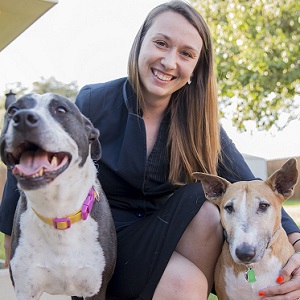
Alexandra Protopopova is an Associate Professor in the Applied Biology department at the Faculty of Land and Food Systems , University of British Columbia. She holds the NSERC/BC SPCA Industrial Research Chair in Animal Welfare and focuses on improving animal shelter practices and companion animal welfare. PhD in Behavior Analysis, University of Florida MS in Behavior Analysis, University of Florida BS in Pre-Veterinary and Animal Sciences, University of Massachusetts Amherst BS in Neuroscience, University of Massachusetts Amherst Her research explores companion animal behavior , shelter interventions , and human-animal relationships , with recent work on pet owner behavior during climate change, shelter stressors, and animal adoption strategies. Her publications span journals like Journal of Applied Animal Welfare Science and Behavioral Processes . Her awards include the NSERC/BC SPCA Industrial Research Chair . She supervises graduate student Lexis Ly (PhD in Applied Animal Biology) and collaborates on interdisciplinary research projects involving undergraduate students.