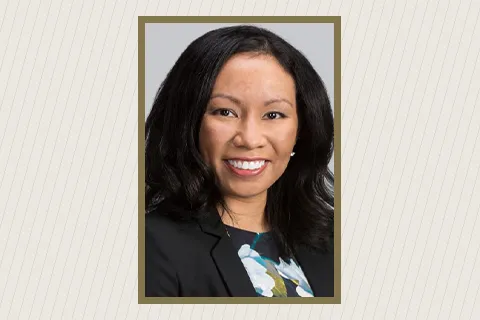
David Grover is an Associate Professor in the Department of Management & Technology, focusing on the intersection of technological innovation, environmental policy, and economic development. His research spans diverse topics including solar PV inequality, cognitive migration in innovation, electricity demand forecasting, and climate adaptation strategies. Current projects analyze inequality in technology adoption Learning progressions in pollution financing Employment impacts of energy investments Machine learning integration in forecasting Heatwave response in aging populations His publications demonstrate methodological rigor using econometric approaches like staggered difference-in-differences and quantile regression. While no formal education or awards data was found, his work addresses critical policy trade-offs in green growth and climate justice.
Elliott Gall serves as the David Wedge Vision Associate Professor in the Department of Mechanical and Materials Engineering within the Maseeh College of Engineering & Computer Science at Portland State University. He leads the Healthy Buildings Research Laboratory (HBRL), focusing on fundamental and applied research to understand and improve indoor air quality. Dr. Gall's research interests span multiple critical areas of environmental engineering and building science. His primary focus includes characterizing indoor sources of organic compounds, developing mitigation methods for reducing air pollution exposures during and after wildfires, and evaluating air cleaning technologies. He has pioneered research on indoor ozone chemistry, for which he received the prestigious 2018 Yaglou Award from the International Society of Indoor Air Quality and Climate. His work bridges indoor and outdoor air quality issues, with growing attention to the health implications of indoor air pollutant exposures. Dr. Gall's research portfolio demonstrates consistent evolution toward real-time measurement technologies, particularly through his work with chemical ionization time-of-flight mass spectrometry. His recent publications reveal increasing focus on practical applications for wildfire smoke mitigation, including the development of low-cost air cleaning solutions like 'The Cocoon' that have received national recognition, including an EPA Phase II award. His scholarly output spans indoor chemistry, exposure assessment methodologies, building technology evaluation, and the intersection of climate change with indoor environmental quality. 2018 Yaglou Award from International Society of Indoor Air Quality and Climate (ISIAQ) for work on indoor ozone chemistry Phase II winner of the Cleaner Indoor Air During Wildfires Challenge from US EPA Dr. Gall's research has been supported by major funding agencies including the National Science Foundation, U.S. EPA, Alfred P. Sloan Foundation, ASHRAE, and the Oregon Department of Environmental Quality. He serves as Conference Vice President and Technical Program Director for Indoor Air 2024 and is authoring the Air Quality chapter for the 6th quadrennial National Climate Assessment. His Healthy Buildings Research Laboratory actively engages in field and laboratory studies addressing pressing air quality challenges, particularly those related to wildfire events and urban air pollution impacts on indoor environments.
Dr. Nicholas Cox is an Assistant Professor in the Department of Geography at Durham University, specializing in statistical applications within geography. His work spans exploratory data analysis, graphics, smoothing, probability distributions, circular statistics, and spatial analysis. Within geomorphology, hydrology, and climatology, his research covers morphometry, modeling of hillslope, glacial, and karstic forms, analysis of precipitation distributions, and temperature variations in the Durham University Observatory record. Dr. Cox's research interests focus on environmental statistics , geomorphology , the history and methodology of geography , and Stata statistical software . His work bridges the gap between theoretical statistics and practical geographical applications, with particular emphasis on data visualization, exploratory analysis, and distribution fitting. He has developed significant expertise in creating accessible statistical methods for geographers through software development and clear documentation. His publication record demonstrates a consistent focus on statistical methodology development, particularly for the Stata software environment. Over the years, his work has evolved from basic statistical programming to sophisticated visualization techniques and specialized analytical methods. Recent publications emphasize advanced graphical techniques, handling of temporal data, and innovative approaches to data representation. Chair of Stata London User Meetings (1997, 2000, 2002) Former Associate Editor of the Stata Technical Bulletin Executive Editor of the Stata Journal Book Review Editor of Earth Surface Processes and Landforms Associate Editor of the Journal of Statistical Software Dr. Cox is highly active in the Stata community as a prolific program writer, with many of his programs incorporated into official Stata releases (versions 6.0, 7.0, and 8.0). He is a frequent contributor to Statalist and has developed software in various statistical and mathematical languages including Stata, Awk, and J. His collaborative work includes joint editorial projects such as the History of the Study of Landforms, volume 4, and research on hard rock steep slopes on the Colorado Plateau. His methodological work supports substantial research in geomorphology, hydrology, and climatology, with applications ranging from debris-flow avulsion controls to glacier dynamics in Antarctica. Dr. Cox's approach emphasizes practical implementation of statistical methods that address real geographical challenges.
Nicu N. Goga is an external researcher at the University of Groningen's Faculty of Science and Engineering, specializing in computational methods with applications spanning transportation systems, robotics, and renewable energy. His work integrates advanced simulation techniques across multiple engineering disciplines to solve complex real-world problems. Dr. Goga's research demonstrates exceptional interdisciplinary breadth, with core expertise in computer simulation and molecular dynamics. He has pioneered adaptive route optimization solutions for commercial fleets, developed affordable humanoid robotics platforms like Miha, and engineered EEG-based brain-computer interfaces for consumer electronics. His molecular dynamics work focuses on photoelectrochemical water splitting for sustainable hydrogen production, directly contributing to UN Sustainable Development Goals in clean energy and industry innovation. Analysis of his 2021-2025 publications reveals a strategic evolution from fundamental computational chemistry toward applied engineering solutions. While maintaining molecular dynamics as a foundational methodology, his recent work increasingly targets transportation logistics and human-robot interaction, showcasing a deliberate shift toward high-impact applications in commercial and assistive technologies. Affiliated with the Molecular Dynamics research group at Groningen, Dr. Goga operates within a robust collaborative network evidenced by international co-authorship patterns. His technical fingerprint spans computer simulation engineering, model checking, multiscale modeling, and distributed systems architecture, reflecting a versatile computational toolkit applied across diverse problem domains.
Dr. Thomas Walther is an Associate Professor of Finance at the Utrecht School of Economics, Utrecht University. He previously served as Assistant Professor for Energy Finance at the University of St. Gallen and holds a Research Fellow position at the Faculty of Business and Economics, Technische Universität Dresden. Dr. Walther received his B.Sc. (2010) and M.Sc. (2013) in Industrial Engineering and Management and a PhD (2017) in Business & Economics from Technische Universität Dresden. His academic journey includes visiting researcher positions at International University HCMC and John von Neumann Institute. His research spans energy & commodity finance, climate finance, financial econometrics, and sustainable finance . Dr. Walther employs advanced quantitative methods including time series analysis and machine learning techniques to address pressing issues in risk management and market dynamics. His work integrates traditional financial theory with modern computational approaches to analyze complex market phenomena. His recent publications demonstrate a strong focus on sustainable finance applications, with increasing attention to climate risk, clean energy technologies, and explainable artificial intelligence in financial decision-making. The research shows a clear trajectory toward addressing sustainability challenges through rigorous financial analysis and innovative methodological approaches. AMFET Best Paper Award (2016) Best PhD Paper in Finance (2021) Campbell Watkins Energy Journal Best Paper Award (2022) Certificate of Appreciation (2016) Dr. Feldbausch-Förderpreis (2018) Dr. Walther serves as Associate Editor for Finance Research Letters since 2019 and was ranked among the top scientists in business administration under 40 years in Germany, Austria, and Switzerland in 2024. He initiated the European Sustainable Finance PhD Workshop in 2023 and co-founded the Dutch Sustainable Finance Network in 2024, demonstrating strong commitment to building academic communities around sustainable finance research. His technical expertise includes advanced programming skills in Matlab, R, and Python, which he applies to complex financial data analysis and modeling problems. His research network spans multiple countries and institutions, reflecting the international nature of his scholarly contributions.
Corie L. Cobb is a Professor in the Department of Mechanical Engineering at the University of Washington , holding adjunct appointments in Human Centered Design & Engineering and Chemical Engineering. She is affiliated with the Clean Energy Institute and the Molecular Engineering and Sciences Institute . Education : Ph.D. in Mechanical Engineering (University of California, Berkeley), M.S. in Mechanical Engineering (Stanford University), and B.S. in Product Design (Stanford University). Her research integrates additive manufacturing , engineered materials , and computational design to develop advanced fabrication processes for clean energy applications . Key focuses include 3D Lithium-ion batteries , high-strength materials , and adaptive manufacturing . Publications highlight trends in energy storage systems , acoustic material patterning , and 3D printing for functional materials. Her work bridges theoretical design with industrial-scale manufacturing innovations. Scientific Awards : DARPA Director's Fellowship (2021) 3M Non-Tenured Faculty Award (2019) National Academy of Inventors Fellow (2024) Washington State Academy of Sciences (2023) SiliconPV Best Paper Award (2015) She has advised Ph.D. graduates like Doris Hung and mentored ME students such as Sebastian Bustos-Nuno , with research funded by DOE , ARPA-E , and DARPA . Her Integrated Fabrication Lab explores additive manufacturing for energy systems.
Marta Streminska is a Researcher at Wageningen University & Research within the Businessunit Glastuinbouw (Greenhouse Horticulture Unit). Her work focuses on rootzone dynamics, biostimulants, and biological control in horticultural systems. She collaborates extensively with institutions like Wageningen Plant Research and contributes to projects targeting sustainable disease management in soilless and conventional cultivation systems.
Nicole A. Mathys is a Full Professor at the Institute of Economic Research, University of Neuchâtel, specializing in environmental, energy, transport, and territorial development economics. She teaches Environmental Economics at the Master's level and conducts research on economic sustainability, policy evaluation, and spatial dynamics. Her academic background includes: BA in Political Economy from the University of Neuchâtel (with Erasmus exchange at the University of East Anglia, UK) PhD in Economics from the University of Lausanne (2007), dissertation: "Five Essays in Trade and the Environment and Economic Geography" Professor Mathys' research centers on carbon taxation, waste management, transportation behavior, and energy transitions using empirical and spatial analysis methods. Her work connects economic activity with environmental outcomes, emphasizing Swiss policy contexts while contributing to global debates on trade and environment. Recent publications reveal a strong focus on transportation systems and energy transitions, analyzing travel behavior, carbon pricing mechanisms, and long-term scenarios for Swiss decarbonization. Key themes include policy instrument effectiveness, behavioral responses to environmental regulations, and spatial distribution of economic activities. Scientific awards: None mentioned in the provided text. She has led major research initiatives including the "Energy-Economy-Society" program at the Swiss Federal Office of Energy and currently coordinates research and innovation at the Federal Office for Spatial Development, bridging academic research with practical policy application. As head of the Bases section at the Swiss Federal Office for Spatial Development, she leads a team developing spatial development statistics and economic analyses, serving as the office's competence center for economic research and evaluation.
Agata Kliber , PhD, is an Associate Professor at the Department of Applied Mathematics , Institute of Informatics and Quantitative Economics , Poznań University of Economics and Business . Her work bridges Financial Economics and Econometrics , with a focus on cryptocurrency markets , energy economics , and financial risk management . Research Themes: Financial market volatility, sovereign risk dynamics, cryptocurrency hedging properties, oil price impacts on inflation and sustainable transport, and econometric modeling (GARCH, MIDAS, NARDL). Awards: No specific awards mentioned in available data. Collaborations: Regularly collaborates with Barbara Bedowska-Sojka's research group and international scholars like Pavel Rezac and Krzysztof Echaust. Recent Publications (2022-2025) analyze: Interdependencies between energy commodities and stock markets Asymmetric effects of oil prices on inflation expectations Safe-haven properties of cryptocurrencies during crises Volatility and liquidity forecasting models Impact of pandemics on sovereign risk and fintech-bank relationships Role of Bitcoin in crisis economies like Venezuela Her methodological expertise spans Bayesian inference , stochastic volatility , and multi-criteria decision-making frameworks . ResearchGate profile shows 94 publications and 25,489 reads , indicating significant scholarly engagement.
Dr. Fairouz Mustafa is a Lecturer in the Department of Accounting at the School of Accounting & Finance, University of Stirling. Her research focuses on interdisciplinary intersections between accounting, sustainability, and emerging technologies. Key affiliations: University of Stirling (Accounting & Finance) Academic rank: Lecturer Her work addresses critical themes in Sustainability , Environmental Taxation , and Artificial Intelligence Applications in accounting. Recent publications examine: Environmental impacts of Cryptocurrency Trading Foreign Direct Investment in Renewable Energy markets Integration of Digitalization with Sustainable Development Goals ERP Systems and supply chain agility in Jordan Corporate governance mechanisms via Risk Management frameworks Her research bridges traditional accounting principles with modern challenges in sustainability and technological innovation.
Juha Linnekoski is a Researcher at the School of Chemical Engineering, Aalto University (formerly Helsinki University of Technology). With a Doctoral degree in Engineering and Technology awarded in 1999, he has maintained an active research career spanning over two decades with 34 publications to his name. His research interests focus on chemical engineering applications for renewable resources, particularly in the areas of catalytic upgrading, tall oil processing, and biofuel production. His work contributes to UN Sustainable Development Goals related to clean energy and responsible consumption. Analysis of his publication history shows consistent research output with recent focus on fermentation processes for biofuel production (2021), hydrogen solubility in biomass derivatives (2017), and catalytic conversion of tall oil into valuable chemicals (2014-2015). His research demonstrates strong industry relevance with multiple patents issued in 2019-2022. Dr. Linnekoski has engaged in academic collaboration through visiting researcher positions at foreign institutions (1996-1997) and has presented his work at significant conferences including the Nordic Symposium on Catalysis and Reactive Separation Systems. His research has garnered substantial attention with citations across multiple publications and significant downloads of his work, indicating impact in the field of chemical engineering and renewable resource processing.
Raymond Desjardins is a Full Professor in the Department of Civil, Geological and Mining Engineering at Polytechnique Montréal , where he has worked since at least 1995. He holds a B.Sc.A. and M.Eng. from Polytechnique Montréal. Research Interests: His work focuses on water resources , quality , and pollution , with specific emphasis on drinking water treatment , distribution systems , disinfection processes , and biological filtration . His research explores the impacts of water chemistry on treatment efficacy, corrosion control , and microbial indicators in distribution networks. Notable Publications: His recent work includes studies on technical writing skills for engineers , carbon footprint of beef cattle , and water quality indicators . These publications span topics in environmental engineering , water treatment optimization , and public health risk assessment . Scientific Awards: 2013 Excellence in Teaching Award, Polytechnique Montréal Advising: He has supervised 4 Ph.D. students and 24 Master's students , focusing on projects related to water treatment , flocculation processes , and distribution system management . Notable advisees include B. Barbeau , S. N'Diongue , and C. Zoungrana .
Central Queensland University (CQUniversity Australia)Australia
Dr. Firew Beshah serves as an Academic Casual in the School of Business and Law at Central Queensland University, teaching management, business analytics, and economics courses since 2017 with active teaching commitments through HE Term 2-2025. He concurrently works as a Research Consultant at RMIT University since 2010, following a Postdoctoral Research Fellowship there (2010-2013). Education: PhD (2010) and MBA (Executive) (2016) from RMIT University, Melbourne, Australia MSc in Applied Economics from Kasetsart University, Bangkok, Thailand His research integrates Economics with Sustainable Business Development, focusing on Environmental Resource Management, Business Ethics, and Socioeconomic Sustainability. He examines ethical frameworks in business operations while analyzing resource allocation models within supply chain systems and domestic violence prevention contexts through cross-center collaborations. Awards: Educator of the year (2021) Award for MGMT20148 Strategic Solutions for Sustainable Organizations Accredited for supervising research in Applied Economics (3801), Commerce/Management (3599), and Environmental Management (4104), he actively seeks new candidates. His consultancy expertise spans Business Innovation, Data Analytics, and Multicultural Affairs management. Current affiliations include the Centre for Regional Economies and Supply Chains, Queensland Centre for Domestic and Family Violence Research, CREATE, and Clean Energy Academy where he contributes to sustainable business ecosystem projects.
William Rose is a Professor in the Department of Geological Engineering Sciences at Michigan Technological University, with 38 years of university teaching experience. He focuses on graduate education, atmospheric sciences, and metacognitive approaches to learning. Department: Geological Engineering Sciences Teaching Experience: 38 years Key Pedagogical Interests: Metacognition, Scientific Uncertainty Communication, Critical Thinking Development His research explores geoscience education strategies, emphasizing synthesis and evaluation in graduate learning. He advocates for using real-time data analysis in teaching, particularly through hurricane trajectory modeling to illustrate scientific uncertainty. This aligns with his work integrating climate change implications into meteorology instruction. William has contributed to educational modules on hurricanes, critical reading of geoscience literature, and tree-ring research applications. He actively participates in workshops addressing institutional change in STEM education and has developed the Making Academic Change Happen Workshop framework. Email: raman@mtu.edu Key Collaborations: CLEAN Teleconference, ASCN Network, Rose-Hulman LEAD program
Salih Serkan Artagan is an Associate Professor in the Department of Civil Engineering at Muğla Sıtkı Koçman University's Faculty of Engineering. His academic career spans transportation engineering with a specialized focus on railway infrastructure and non-destructive testing techniques. Dr. Artagan holds a Doctorate from University of Pardubice in Transportation Engineering, following Master's and Bachelor's degrees from Middle East Technical University in Civil Engineering. His research interests prominently feature Ground Penetrating Radar (GPR) applications in civil infrastructure assessment, particularly for railway systems. Dr. Artagan has developed expertise in concrete analysis, structural health monitoring, and transportation engineering. His work bridges theoretical research with practical applications in railway maintenance and infrastructure evaluation. Analysis of his recent publications reveals a strong focus on non-destructive testing methodologies, particularly GPR applications for railway ballast assessment and concrete structure evaluation. His research demonstrates consistent contributions to understanding material behaviors under various conditions, including thermal effects on concrete and bond-slip mechanics in reinforced structures. The interdisciplinary nature of his work connects civil engineering with geophysics and materials science. Dr. Artagan has been actively involved in significant research projects including the European Union-funded 'Development of Education Modules for Safety Critical Railway Operation Systems' (2020-2024) and the COST Action TU1208 on Civil Engineering Applications of Ground Penetrating Radar (2013-2017). These projects highlight his international collaboration and leadership in railway safety and non-destructive testing research. He teaches a comprehensive range of courses including Airport Design, Railway Engineering, Transportation Engineering, and Civil Engineering Design, reflecting his broad expertise across transportation infrastructure domains. His teaching portfolio demonstrates a strong connection between his research activities and educational responsibilities.