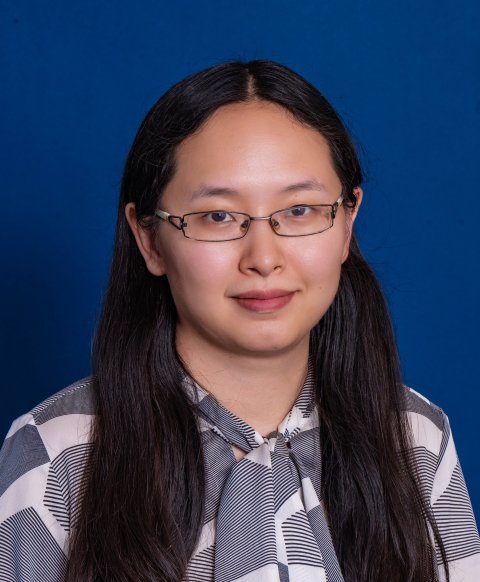
Cornelia Schneider is a Professor and Head of the Institute of Computer Science at the University of Applied Sciences Wiener Neustadt. She leads research in digital health and care technologies, focusing on applications like Augmented Reality, sensor data analysis, and social robotics for vulnerable populations. Her work emphasizes user-centered design and has been supported by projects funded by FFG and the Active Assisted Living Programme. Her research spans telemedicine infrastructure, elderly care robotics, and health monitoring systems. Notable projects include 24/7-Digital (2023-2026), Care about Care (2021-2023), and AgeWell (2019-2022). She has pioneered solutions like CARU cares and DigiCare training programs. Dr. Schneider has been recognized with the AAL Award (2014) and the tecnet | accent Innovation Award (2021). She coordinates interdisciplinary teams and actively participates in conferences like Health Informatics Meets Digital Health. Her lab collaborations include FOTEC and Salzburg Research, where she previously led the e-Health Competence Center until 2019.
Hamid Mansoor is an Assistant Professor in the Department of Computer Science at the University of Manitoba. He holds a PhD in Computer Science from Worcester Polytechnic Institute under Prof. Emmanuel Agu, and was part of the DARPA-funded WASH project. His research focuses on data visualization, digital health, and smartphone-based behavioral analysis. He previously served as a Postdoctoral Fellow at the VIXI Lab, University of Victoria, Canada, under Prof. Miguel Nacenta. Education: PhD in Computer Science, Worcester Polytechnic Institute Research Interests: Interactive data visualization frameworks for health monitoring Mobile and ubiquitous computing for behavioral analysis Smartphone-sensed human behavior and health informatics Visual representation of text-based and sensor data Publications highlight trends in visual analytics for healthcare, including tools like ARGUS and INPHOVIS for detecting bio-behavioral disruptions and smartphone-based phenotyping. His work integrates machine learning with visualization to address challenges in health data interpretation. Awards: Best short paper honorable mention (EuroVis 2020) His contributions span academic collaborations in health informatics and mobile computing, with a focus on bridging theory and practical applications in healthcare technology.
Matt Easterday is an Assistant Professor in the Learning Sciences Department at Northwestern University's School of Education and Social Policy, co-directing the Delta Lab. He holds a PhD in Human-Computer Interaction from Carnegie Mellon University (2010), preceded by an MS in the same field and a BA in Psychology and Mathematics from Reed College. His research focuses on technology-enhanced civic education, aiming to develop evidence-based tools that foster informed citizenship capable of addressing societal challenges like climate change and inequality. Core areas include deliberation systems, cognitive games for policy analysis, and platforms like The Loft and NextGenIL for collaborative civic innovation. Easterday's work emphasizes design research methodologies, bridging theory and practice through frameworks like the 'Design Risks Framework' and 'Research Slices.' His projects integrate iterative design, participatory governance, and scalable learning networks to address real-world policy problems. Awards: Siebel Scholar, Searle Center Fellow, Ver Steeg Advising Award Labs/Teams: Delta Lab (civic tech innovation), The Loft (online learning platform) He advocates for human-centered design in education, advancing tools like Critiki for formative feedback and StandUp for professional coaching in project-based learning.
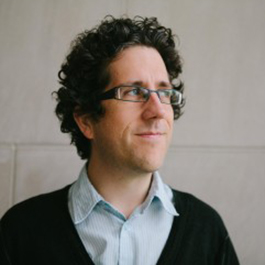
Dr. Lucy Hederman is an Associate Professor in Computer Science at Trinity College Dublin (TCD), affiliated with the O'Reilly Institute. Her research focuses on leveraging data and documents to support clinical decision-making, particularly in healthcare knowledge work. She has led interdisciplinary projects addressing data integration for rare diseases (e.g., ANCA-vasculitis, MND) and socio-technical challenges in adopting patient-generated health data (PGHD) into clinical practice. Dr. Hederman has secured over €xxxk in research funding and leads the Heterogeneity and Interoperability (H&I) challenge in the SFI-funded ADAPT 2 Centre. Her educational background includes advanced studies in computer science and healthcare informatics, though specific degree details are not explicitly stated in the text. She has supervised 4 PhDs, 2 research MScs, and co-supervised 6 PhDs, while currently mentoring 8 graduate students. Her career includes founding TCD spinouts PBOC and BIOLOGIT, which align with her research in health informatics and technology. Key research interests include: Interdisciplinary collaboration between clinicians, researchers, and technologists Data harmonization for multi-national clinical studies (e.g., FAIRVASC, Precision-ALS) Development of clinical decision support systems (CDSS) Design of mobile health (mHealth) tools for underserved populations Recent work emphasizes FAIR principles for healthcare data and socio-technical factors influencing PGHD adoption. She has contributed to over 70 peer-reviewed publications and actively participates in initiatives like the EU-funded TRANSFORM project and HRB Primary Care Research Centre. Dr. Hederman’s professional memberships include the Irish Computer Society, ACM, and Healthcare Informatics Society of Ireland. Her research has impacted healthcare practices in Ireland, with many MSc student projects influencing local health services.
Dr. Lisa Wang is a tenure-track Assistant Professor in the Department of Civil & Environmental Engineering at Old Dominion University (ODU). She holds a Ph.D. and Postdoctoral Fellowship in Structural Engineering from Colorado State University (CSU), with additional research at NIST’s Center for Risk-Based Community Resilience Planning. She is a licensed California Professional Engineer (PE) and has expertise in multidisciplinary community resilience assessment, mitigation strategies, and policy analysis. Her research focuses on integrating physical, socio-economic, and infrastructural systems to enhance disaster resilience in coastal and hazard-prone communities. Education: Ph.D. and Postdoc (CSU, 2022-2024), M.S. in Structural Engineering (University of Colorado Denver & Jilin University, 2015), B.S. in Civil Engineering (Jilin University, 2012). Professional licenses include CA PE #94251 and CO EIT #007558. Research Interests: Community resilience under multi-hazards (tornadoes, floods, climate change), resilience-based design of structural systems, data fusion across disciplines, and equitable decision-making for disaster resilience. Recent grants include $31k for AI-driven coastal resilience strategies and $10k for minimum building portfolio development. Grants & Awards: Principal Investigator (PI): Trustworthy AI in Coastal Resilience (ICAR, $31k), AI-Driven Building Portfolios (ODU PURS, $10k) Awards: O. H. Ammann Fellowship (ASCE), ICAR Travel Grant, AGU NSF Travel Grant, Jack E. Cermak Fellowship Labs & Teams: Wang Research Group and Structural Engineering Research Laboratory at ODU.
Prithvi Ravi Kantan is a full-time Researcher at Aalborg University's Department of Architecture, Design and Media Technology within The Technical Faculty of IT and Design. His work focuses on developing sound-based and multimodal feedback systems for motor rehabilitation, integrating principles from music technology and biomedical engineering. Education: PhD in Embodied Sonification Design (2021-2023) M.Sc. in Sound and Music Computing (2018-2020) B.E. in Electronics and Telecommunications (2009-2013) Research interests include real-time auditory feedback systems for neurological rehabilitation, user-centered design of clinical technologies, and the application of generative music in data sonification. He actively contributes to projects like HearWalk (2023-2027), exploring sound-facilitated motor learning in cerebral palsy patients. Notable achievements include winning the Danish Sound Day Research Pitch Battle (2023) and receiving the Best Student Paper Award at ICAD 2024. His work aligns with UN SDG 3 (Good Health) and SDG 4 (Quality Education). Teaching responsibilities include coordinating bachelor and master-level courses in PBL-based learning, emphasizing interdisciplinary approaches. He has supervised multiple student projects and contributed to over 39 publications since 2013.
Danny Poo Chiang Choon is a tenured Associate Professor at the School of Computing (SOC), National University of Singapore (NUS). As Curriculum Chair of the Department of Information Systems and Analytics, he plays a key role in designing and implementing Information Systems and Computer Science curriculum at NUS. Dr. Poo earned his BSc (Honours), MSc and PhD in Computation from the University of Manchester Institute of Science and Technology (UMIST), United Kingdom. His academic journey has established him as a leader in health informatics and information systems at NUS. His research spans multiple domains with strong focus on Healthcare Informatics , where he investigates mobile health interventions, health analytics, and systems for improving patient care. His work in Data Science & Business Analytics explores knowledge management, information sharing, and effective search strategies. In Intelligent Systems , he examines software engineering approaches, object-oriented systems, and knowledge classification frameworks. His recent publications demonstrate a clear trajectory toward mobile health applications, particularly in coronary heart disease prevention and diabetes management. Dr. Poo's work consistently bridges technical computing with practical healthcare applications, focusing on user-centered design and evidence-based interventions. His research shows strong interdisciplinary integration between computer science, healthcare systems, and behavioral science, with emphasis on practical implementation in Singapore's healthcare context. Dr. Poo has served in numerous leadership roles including as the founding Director of the Centre for Health Informatics at NUS (2012-2015) and as a member of the Steering Committee of the Asia Pacific Software Engineering Conference (APSEC) since 1994, serving as Vice-Chairman from 2003-2005. He has been invited to speak at international forums including the Japanese Government's "USA, Kyushu and Asia International Exchange Project" and as a keynote speaker at the 2009 Arabic Scripts Second Symposium in Abu Dhabi. His expertise is recognized through invitations to speak on knowledge management topics at conferences in Singapore. Dr. Poo has authored five books in the Information Technology area: "Enterprise JavaBeans for Students" (2014), "Object-Oriented Programming and Java" (1998, 2007), "Learn to Program Enterprise JavaBeans 3.0" (2009), "Learn to Program Java" (2009), and "Learn to Program Java User Interface".
Professor James Barlow is Co-Director of Imperial College London's Centre for Sectoral Economic Performance and holds a Professorship in the Department of Economics and Public Policy at the Imperial College Business School. He also serves as Academic Director for the MBA programme and Visiting Professor at Halmstad University (Sweden) and Honorary Professor at UCL Bartlett Real Estate Institute. His research focuses on structural challenges in healthcare innovation, housing, and construction sectors, with a particular emphasis on embedding innovations into healthcare systems. Barlow's education includes a background in geography and economics from the London School of Economics. He has held previous roles at the University of Westminster and Policy Studies Institute. His advisory work spans governments, healthcare organizations, and industries including medical technology and pharmaceuticals. He contributes to major initiatives like AGE-WELL (Canada) and the Industry Commons Foundation (Sweden). Research interests include healthcare innovation ecosystems, institutional logics, and frugal innovation. His recent book *Managing Innovation in Healthcare* synthesizes his work. He collaborates across disciplines, addressing challenges in telehealth, AI integration, and regulatory frameworks post-Brexit. Key affiliations include the Centre for Health Economics and Policy Innovation, Policy Innovation Research Unit (PIRU), and the NIHR Health Tech Research Centre. His work bridges academic research with practical policy and industry solutions, emphasizing scalable and sustainable business models.
Helena Webb is a Visiting Lecturer in the Department of Computer Science at the University of Oxford, where she contributes to research and teaching within the Human Centred Computing theme. Her work bridges social science and computer science, focusing on responsible innovation, AI ethics, and user interactions with digital technologies. PhD in Social Sciences, University of Nottingham Bachelor’s in Social and Political Sciences, University of Cambridge Former Senior Researcher, University of Oxford Department of Computer Science Researcher at Work, Interaction and Technology (WIT) Research Centre, King’s College London (2009–2014) Her research interests include human-computer interaction, algorithmic fairness, privacy in smart homes, and ethical design of social robots. She specializes in qualitative research methods and interdisciplinary collaboration to understand how technology shapes and is shaped by social practices. She has led and contributed to major projects such as Digital Wildfire , UnBias , ReEnTrust , and RoboTIPS , all focused on responsible governance and design of digital systems. Her recent publications span topics from algorithmic accountability to ethical black boxes in robotics, reflecting a strong trend toward integrating ethical considerations into the technical design of AI and interactive systems. These works emphasize participatory design, transparency, and societal impact. Scientific Awards and Recognition: Named one of the Brilliant Women working in AI Ethics She actively supervises and co-supervises students, contributes to ethics education, and is involved in outreach and diversity initiatives at Oxford. She has also served on the Departmental Equality and Diversity Committee and the Research Ethics Committee. Helena is a member of the advisory board for the ReEnTrust project and continues to develop the ethical hackathon model with colleagues. Her work exemplifies a deep commitment to interdisciplinary, socially responsible research in computing.
Professor Tavis Potts is a Personal Chair in Sustainable Development and Environmental Governance at the University of Aberdeen, affiliated with the Department of Geography and Environment within the School of Geosciences. He is actively engaged in research on just transitions, environmental justice, marine governance, and participatory planning. His research focuses on: Understanding just transitions and the social dimensions of climate and energy Marine resource governance and planning Participatory and community-based approaches to managing natural capital The political economy of environmental policy The blue economy and net zero transitions His recent publications highlight a strong trend toward policy-relevant research on just transitions, stakeholder engagement, and environmental governance. Articles and reports examine climate assemblies, community participation in net zero planning, nuclear decommissioning, and measuring equitable outcomes in transition processes. His work integrates social science perspectives with environmental policy, emphasizing democratic participation and equity. Key scientific contributions include commissioned reports for the Just Transition Commission and the Nuclear Decommissioning Authority, as well as peer-reviewed articles in journals such as Environmental Science & Policy and Marine Policy . He has led and contributed to projects funded by Interreg EU, NERC, British Council, and the World Bank. Professor Potts advises research students and leads the Just Transition Lab at Aberdeen. He holds external advisory roles with Aberdeen City Council’s Net Zero Delivery Unit and Aberdeenshire Council’s Climate Ready Aberdeenshire Board, demonstrating active engagement with policy and practice. He is affiliated with key research centers including the Centre for Marine and Coastal Zone Management and the Just Transition Lab, where he advances interdisciplinary work on sustainable futures and equitable environmental governance.
Emmanuel Saez is a Professor of Economics and Director of the Stone Center on Wealth and Income Inequality at the University of California, Berkeley , where he has been a leading figure in the Department of Economics within the College of Letters and Science. His research is foundational in the study of income and wealth inequality, optimal taxation, and empirical public policy. His academic journey began with a PhD from MIT in 1999. His work, particularly in collaboration with Thomas Piketty and Gabriel Zucman, has revolutionized how economists measure and understand economic inequality. He is best known for constructing long-term top income share series, which reveal the dramatic rise in U.S. inequality since the 1980s. His influential 2019 book, The Triumph of Injustice , co-authored with Gabriel Zucman, presents a compelling critique of the decline in U.S. progressive taxation and proposes bold policy reforms for the 21st century. Saez's recent research spans a wide range of topics including real-time inequality measurement, wealth tax enforcement, labor market dynamics for older workers, and macroeconomic models of unemployment. His publications, often appearing in top journals like the Quarterly Journal of Economics , American Economic Review , and Brookings Papers on Economic Activity , consistently focus on empirical analysis with direct policy relevance. His work shows a strong trend toward integrating macroeconomic models with distributional data and evaluating the real-world impact of fiscal and social policies. John Bates Clark Medal, American Economic Association, 2009 MacArthur 'Genius' Fellowship, 2010 Honorary degree from Harvard University, 2019 Saez is deeply involved in mentoring and advising, though specific student names are not listed in the provided texts. He has been instrumental in major data initiatives such as the World Inequality Database (WID.world) and Real-Time Inequality , which provide open-access, high-quality data on economic distribution. He has also secured significant research funding from foundations like the Bill & Melinda Gates Foundation, the Russell Sage Foundation, and the Alfred P. Sloan Foundation. He leads the Stone Center on Wealth and Income Inequality, fostering interdisciplinary research on economic disparity.
Patrick Phelan is a Professor and Associate Dean of Graduate Programs at the Ira A. Fulton Schools of Engineering, Arizona State University (ASU). He holds additional roles as a Senior Global Futures Scientist and Editor-in-Chief of Frontiers in Energy Efficiency . His research focuses on sustainable energy systems, thermal management, and energy efficiency, with notable contributions to solar energy, thermal transport processes, and industrial cooling technologies. Phelan has extensive administrative experience, including managing the U.S. Department of Energy’s Emerging Technologies Program and the National Science Foundation’s Thermal Transport Processes Program. Education: Postdoctoral Fellow, Tokyo Institute of Technology (1990–1992) Ph.D., Mechanical Engineering, University of California, Berkeley (1990) M.S., Mechanical Engineering, Massachusetts Institute of Technology (1987) B.S., Mechanical Engineering, Tulane University (1985) Research Interests: Thermal engineering and heat transfer Sustainable energy systems and cooling Energy efficiency in buildings and industry Thermogalvanic systems and advanced materials Decarbonization and community benefit strategies Professional Associations: Fellow, American Society of Mechanical Engineers (ASME) Member, American Society of Heating, Refrigerating and Air-Conditioning Engineers (ASHRAE) Current Activities: Leading the ASU Energy Efficiency Center Contributing to the Energy for Rural Arizona initiative Advancing agricultural cold chain efficiency Teaching courses on heat transfer and energy systems (e.g., MAE 589, MAE 576)
Retsef Levi is the J. Spencer Standish (1945) Professor of Operations Management at the MIT Sloan School of Management, affiliated with the MIT Operations Research Center. He co-directs the Leaders for Global Operations (LGO) Program. His work focuses on data-driven decision models for healthcare systems, supply chain optimization, and risk management. Levi holds a PhD in Operations Research from Cornell University and has led industry collaborations with major hospitals and organizations like the FDA and Walmart Foundation. Education: PhD in Operations Research, Cornell University, 2005 Bachelor’s in Mathematics, Tel-Aviv University, 2001 Research Interests: Levi’s research addresses complex decision-making under uncertainty in healthcare, supply chains, and logistics. Key areas include food safety analytics, risk-based sampling, and predictive modeling for zoonotic diseases. He designs algorithms for inventory control, appointment scheduling, and healthcare resource allocation. Articles Overview: Recent work spans AI-driven epidemiological models, supply chain cybersecurity, and agricultural market interventions. His articles emphasize practical applications of operations research in healthcare and public health. Awards: NSF Career Grant INFORMS Optimization Prize (2008) Wagner Prize (2013) Harold W. Kuhn Award (2016) Advising & Grants: Advised 10 PhD students and 34 master’s students. Led multi-million-dollar projects like the Walmart Foundation initiative for China’s food safety. Active in hospital process optimization and FDA risk management contracts. Labs & Teams: Runs MIT’s Food Supply Chain Analytics and Sensing Initiative, collaborating with global partners on predictive risk tools and healthcare analytics.
Bruce MacDowell Maggs is a Professor in the Department of Computer Science at Duke University and serves as Vice President of Research at Akamai Technologies. His career bridges academic research and industrial innovation in computer science, particularly in distributed systems and networking. Research Interests: His work spans computer networks , distributed systems , parallel algorithms , content delivery , and fault-tolerant computing . He has made significant contributions to network routing, load balancing, scalability of web applications, and energy efficiency in large-scale systems. His research often combines theoretical rigor with practical system design. The recent publications highlight a consistent focus on scalability , network performance , and security in internet-scale applications. Key themes include query caching , traffic modeling , resilient routing , and energy optimization , reflecting his deep involvement in the infrastructure of modern web services. No scientific awards are mentioned in the provided text. Advising and Teaching: He has advised numerous Ph.D. students, many of whom are now faculty or researchers at top institutions. His former students include Ramesh Sitaraman, Anja Feldmann, and Andrea Richa. He currently advises Anat Talmy at Duke. He has taught a wide range of courses at Duke, Carnegie Mellon, and MIT, including Computer Networks, Operating Systems, Algorithms, and Discrete Mathematics. Labs and Teams: While not explicitly named, his research is closely tied to systems and networking groups at Duke and his industrial work at Akamai, a leader in content delivery networks. His collaborations with Tom Leighton and others at Akamai suggest leadership in research teams developing foundational internet technologies.
Nelly V. Litvak is a Full Professor in Algorithms for Complex Networks at Eindhoven University of Technology (Mathematics and Computer Science). She works on mathematical methods and algorithms for complex networks (social networks, WWW) using random graph models. She joined TU/e as a part-time professor in 2017 after being an Associate Professor at the University of Twente since 2012. Affiliations: 4TU Applied Mathematics Institute, Data Science Center Eindhoven, CTIT Industry Partners: ABN-AMRO Bank, Philips Lighting, Thales Editorial Role: Managing Editor of Internet Mathematics Her research focuses on extracting value from network data across three areas: (1) Information extraction and prediction, (2) Mathematical analysis of network characteristics, and (3) Efficient algorithms for incomplete network data. Key topics include PageRank, HITS algorithm, random graphs, homophilic networks, and network epidemiology. Recent work (2022-2025) spans network growth mechanisms, fairness in ranking algorithms, educational pedagogy, and pandemic forecasting dashboards. She contributes to SDGs through data-driven approaches to societal challenges. Teaching activities include course development at TU/e and earlier institutions, with innovative methods for computer engineering students' statistical understanding.



/prod01/channel_3/media/tcd/scss/headshots/Lucy-Hederman-BW-1.jpg)