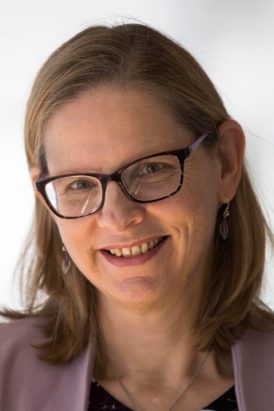
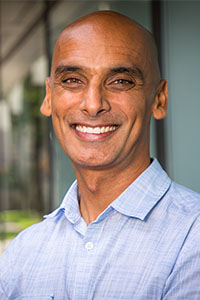
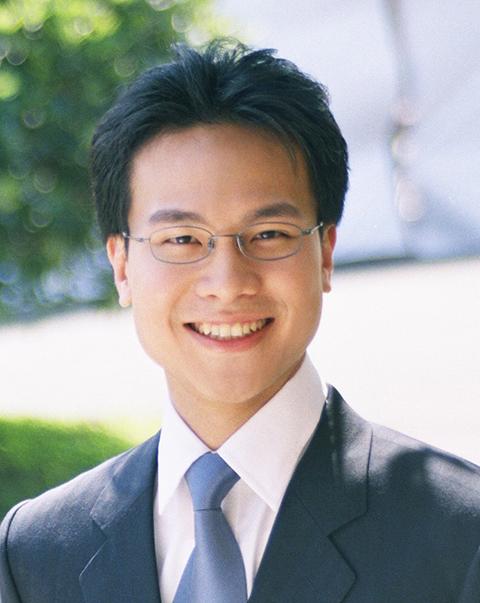
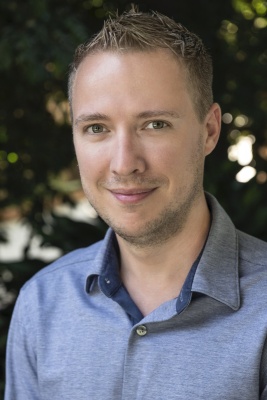
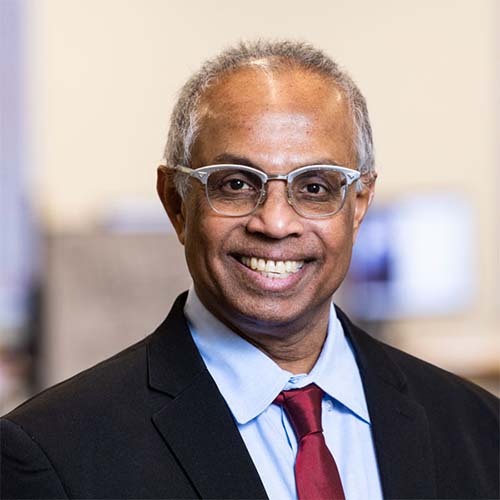
Prof. Dr.-Ing. Werner Lang serves as Vice President for Sustainable Transformation and holds the Chair of Energy Efficient and Sustainable Design and Building (ENPB) at the Technical University of Munich (TUM), within the TUM School of Engineering and Design. Previously, he was Professor of Sustainable Building and Director of the Center for Sustainable Development at the University of Texas School of Architecture in Austin (2008-2010). Lang also directs the Oskar von Miller Forum and is a partner at Lang Hugger Rampp GmbH Architekten in Munich. Lang's research focuses on developing strategies for buildings with positive environmental footprints through regenerative energy systems, renewable materials, and closed material cycles. His work emphasizes comprehensive life cycle analysis considering ecological, economic, and social aspects. Current research areas include climate-resilient urban neighborhoods, circular economy in construction, and sustainable building materials. The ENPB institute conducts numerous research projects such as Building Climate-Municipal, CircularFTmehrRAUM, and Urban Green Infrastructure. Lang's publications reveal a strong trend toward life cycle assessment, multi-criteria decision-making, and computational approaches for sustainable building design. His recent work integrates machine learning with building performance analysis and focuses on practical implementation of circular economy principles in urban contexts, with increasing emphasis on quantifying environmental benefits of urban green infrastructure. TUM Sustainability Award 2022 Doce et Delecta (Second Prize for Best Teaching), 2019 Bayerischer Energiepreis 2014 International Building Skin Tech Award (2008) Promotionspreis der TUM (2000) Lang leads the Institute of Energy-Efficient and Sustainable Design and Building with numerous research grants including projects like Building.Lab+, NAWAREUM, and ECO+. His team includes researchers working on topics ranging from urban mining to life cycle assessment tools. The institute maintains several products and startups including MoMeBo, Bilanzlabor, and EnergyML that translate research into practical applications for the building industry.
Shrirang Mare is an Assistant Professor in the Computer Science Department at Western Washington University (WWU), focusing on computer security and privacy with emphasis on usable security solutions for diverse user groups including low-literate individuals, the elderly, and cross-cultural populations. His research bridges human-computer interaction and cyber-physical systems to create accessible security mechanisms for emerging technologies. His educational background includes a PhD in Computer Science from Dartmouth College (2016), where his dissertation on seamless authentication for ubiquitous devices established his research trajectory. Dr. Mare's research interests encompass security and privacy, human-computer interaction, and cyber-physical systems, with specialized focus on security for low-literate users and developing regions. His work consistently addresses real-world applicability through field studies in countries like India and Pakistan, examining mobile payment systems, SMS fraud, and smart home privacy challenges. Analysis of his 15 most recent publications (2018-2024) reveals a dominant trend in wearable-based authentication systems (wristbands for desktops/smartphones) and privacy solutions for consumer IoT, particularly smart homes. His research uniquely combines technical security mechanisms with deep user-centered design principles, often targeting underserved populations in developing regions. No scientific awards or fellowships were mentioned in the provided documentation. Teaching responsibilities include Privacy Enhancing Technologies, Object Oriented Design, and Data Structures at WWU, with prior guest lectures at UC Berkeley and the University of Washington; no current advisees or grant funding details were specified. Dr. Mare operates within the Computer Science Department at WWU but no dedicated research lab or team structure was referenced in the source materials.
Nils Ole Tippenhauer is a faculty member at the CISPA Helmholtz Center for Information Security , leading the SCy-Phy research group . His academic journey includes an Assistant Professorship at the Singapore University of Technology and Design (SUTD) (2014–2018), a PhD in Computer Science from ETH Zurich (2012), and a Diploma in Computer Engineering from Hamburg University of Technology (2007). He also holds an exchange study year at the University of Waterloo (2004–2005) supported by a DAAD scholarship. Research Interests focus on practical systems security , particularly Security of Cyber-Physical Systems Industrial Control Systems (ICS) and Industrial IoT (IIoT) Physical-Layer Security and Wireless Security Privacy-Preserving Technologies (e.g., DP3T project) Embedded Systems Security Threat Detection & Defenses His work integrates both theoretical and applied approaches, addressing vulnerabilities in critical infrastructures like water systems and power grids. Recent Publications highlight trends in Anomaly detection evasion in industrial networks Microarchitectural side-channel defenses Localization techniques in cellular networks Security analysis of ICS protocols Data-driven vulnerability assessments for robotics Cyber-physical simulation for infrastructure security Scientific Awards include Best paper at DIMVA'23 Distinguished Paper at ACSAC 2022 Best paper at CPSIOTSEC 2022 Best paper at CPSS 2017 K-H Ditze Award for diploma thesis (2007) SG Mark Institution award (2016) Runner-Up at smart energy hackathon (2013) Advising and Grants feature PhD defenses of Daniele Antonioli and Hamid Reza Ghaeini (2022), co-organizing conferences like WiSec and CPSS , and leading projects such as the National Science Experiment (NSE) with 50,000 mobile sensors in Singapore. He also contributed to the DP3T project for privacy-preserving contact tracing. Labs and Teams include the SCy-Phy research group at CISPA and the development of testbeds like SWaT (Secure Water Treatment), WADI (Water Distribution), and EPIC (Electric Power and Industrial Control) at SUTD. These platforms enable hands-on security research in realistic industrial environments.
Erik Velldal is a Professor in the Language Technology Group (LTG) at the Section for Machine Learning , Department of Informatics, University of Oslo . With over 25 years of experience in machine learning and natural language processing (NLP), he leads the SANT project focused on sentiment analysis and contributes to major research initiatives including MediaFutures , NorwAI , and Integreat (Norwegian Center for AI Research). His work bridges linguistic theory and computational methods, emphasizing semantic modeling and uncertainty detection. Research interests include sentiment analysis , language modeling , event extraction , and machine learning applications to NLP. Recent publications address cross-domain sentiment classification , generative event analysis , and multilingual model adaptation . He co-developed the Norwegian Review Corpus (NoReC) and Norwegian Anaphora Resolution Corpus (NARC) , foundational resources for Norwegian NLP. His projects often involve collaboration with international institutions, reflected in publications at venues like ACL, COLING, and EMNLP. Current efforts focus on entity-level sentiment analysis , diagnostic datasets for Norwegian , and evaluating compositional generalization in language models. No public record of scientific awards or part-time appointments exists.
Phillip B. Gibbons is a Professor in both the Computer Science Department and Electrical & Computer Engineering Department at Carnegie Mellon University. He received his Ph.D. in Computer Science from the University of California at Berkeley in 1989 and has held research positions at AT&T Bell Laboratories, Lucent Bell Laboratories, and Intel Research Pittsburgh before joining CMU's faculty. His research spans parallel computing, distributed systems, databases, computer architecture, and machine learning. Gibbons' work bridges theory and systems, with publications in top-tier conferences including SOSP, OSDI, SIGMOD, VLDB, NeurIPS, and many others across computer science and engineering disciplines. His research has been supported by significant funding from NSF, Intel, and other organizations. Gibbons has made substantial contributions to streaming algorithms, parallel computing frameworks, distributed systems security, and large-scale machine learning systems. His work on data stream algorithms with Alon, Matias, and Szegedy has been particularly influential in the field. He has served in numerous leadership roles including Editor-in-Chief of ACM Transactions on Parallel Computing (2012-2018) and on the editorial boards of Journal of the ACM and IEEE Transactions on Cloud Computing. He has also been active on program committees for major conferences in systems, databases, and theory. IEEE Fellow (2014) - For contributions to parallel computing and databases ACM Fellow (2006) - For contributions to parallel computing, databases, and sensor networks Selected for Oral Presentation at NeurIPS '13 (only 20 selected out of 1420 submissions) Co-winner of the best paper award for NSDI '06 Gibbons has advised numerous students and mentored researchers who have gone on to make significant contributions in academia and industry. His research has been supported by major grants including the $15M Intel Science and Technology Center for Cloud Computing (2011-2015) where he served as Co-PI/Co-Director. He currently leads research projects on write-efficient algorithms, big learning systems, and visual cloud systems. His laboratory work focuses on bridging theoretical computer science with practical systems implementation, particularly in the areas of parallel and distributed computing. Current research directions include adapting algorithms for emerging memory technologies and optimizing machine learning systems for large-scale deployment.
Iona Cheng is a Professor in the Department of Epidemiology and Biostatistics at the University of California, San Francisco (UCSF), where she conducts groundbreaking research in cancer epidemiology. She serves as co-Investigator of the SEER Greater Bay Area Cancer Registry and is Principal Investigator of multiple NIH- and foundation-funded projects examining genetics, lifestyle factors, and neighborhood characteristics in relation to cancer risk. Dr. Cheng has developed an extensive research program focused on racial/ethnic differences in cancer risk and leads population-based cancer surveillance studies that document variations in cancer incidence and mortality patterns across diverse racial and ethnic groups. University of California, Davis, BS, 1990–1994, Physiology Yale University, MPH, 1999–2001, Chronic Disease Epidemiology University of Southern California, PhD, 2001–2005, Epidemiology University of California, San Francisco, Postdoc, 2006–2008, Genetic and Molecular Epidemiology Dr. Cheng's research spans multiple disciplines within cancer epidemiology, with particular emphasis on understanding how environmental exposures, genetic factors, and social determinants interact to influence cancer risk and outcomes across different racial and ethnic populations. Her work frequently examines the impact of air pollution, endocrine-disrupting chemicals, and neighborhood characteristics on cancer development and survival. She has made significant contributions to understanding cancer disparities among Asian American, Native Hawaiian, and Pacific Islander populations, bringing attention to the unique cancer risks and outcomes within these understudied groups. Her research often leverages the Multiethnic Cohort Study, one of the largest prospective studies of cancer incidence and mortality across diverse racial/ethnic populations. Analysis of Dr. Cheng's recent publications reveals a consistent focus on environmental and social determinants of cancer risk across multiple organ sites. Her work demonstrates a sophisticated integration of epidemiological methods with environmental exposure assessment, genetic analysis, and health disparities research. Many of her studies examine the intersection of environmental exposures and racial/ethnic disparities in cancer outcomes, particularly regarding breast cancer, lung cancer, and other malignancies. She has published extensively on the impact of air pollution on cancer risk and survival, as well as the effects of endocrine-disrupting chemicals like bisphenol A, parabens, and phthalates. American Association for Cancer Research Scholar-in-Training Award (2007) National Institutes of Health Loan Repayment Award (2007) National Institutes of Health Loan Repayment Renewal Award (2009) American Association for Cancer Research Faculty Scholar Award (2011) National Institutes of Health Loan Repayment Renewal Award (2011) National Institutes of Health Loan Repayment Renewal Award (2013) American Journal of Epidemiology/Society of Epidemiology Research Top 10 manuscripts (2014) Cancer Prevention Institute of California Mentoring Award (2015) American Society of Human Genetics Top poster As Principal Investigator of multiple NIH-funded projects, Dr. Cheng oversees substantial research grants focused on cancer epidemiology and health disparities. Her work often involves large interdisciplinary collaborations with researchers across multiple institutions, including the Multiethnic Cohort Study which follows over 200,000 participants from diverse racial/ethnic backgrounds. She has demonstrated leadership in mentoring junior researchers, particularly those from underrepresented backgrounds in science, as evidenced by her Cancer Prevention Institute of California Mentoring Award. Her research program integrates data from cancer registries, electronic health records, and geospatial information to provide comprehensive insights into cancer patterns and risk factors. Dr. Cheng's research is closely connected to the UCSF Helen Diller Family Comprehensive Cancer Center and leverages collaborations with Lawrence Berkeley National Laboratory, which provides advanced technological resources for cancer research. Her work benefits from access to extensive cohort data, sophisticated exposure assessment methods, and interdisciplinary expertise in genetics, environmental science, and computational biology available through these institutional partnerships. She frequently collaborates with researchers studying the genetic and environmental determinants of cancer across multiple organ systems, contributing to a more comprehensive understanding of cancer etiology and prevention strategies.
Hal S. Stern is Provost and Executive Vice Chancellor at the University of California, Irvine (UCI), and a Distinguished Professor in the Department of Statistics. He previously served as founding Chair of the Department of Statistics, Dean of the Donald Bren School of Information and Computer Sciences, and Vice Provost for Academic Planning at UCI. Earlier, he held faculty positions at Iowa State University and Harvard University. B.S. in Mathematics, Massachusetts Institute of Technology M.S. and Ph.D. in Statistics, Stanford University Stern is a leading expert in Bayesian statistical methods, with significant collaborative work in life sciences and social sciences. His current research focuses on forensic statistics (e.g., footwear impression and bloodstain pattern analysis), psychiatric studies of early-life adversity's impact on brain development, and statistical applications in sports analytics. He co-directs the NIST-funded Center for Statistics and Applications in Forensic Evidence and leads the Conte Center's NIMH-funded research on mental health vulnerabilities. His notable contributions include the third edition of Bayesian Data Analysis , which expanded computational methods and Bayesian nonparametric modeling, featuring STAN software. Stern has secured major grants from NIST and NIMH for interdisciplinary projects. Fellow, American Association for the Advancement of Science Fellow, American Statistical Association Fellow, Institute for Mathematical Statistics He has mentored graduate programs as Vice Provost for Graduate Education and contributed to UCI's academic strategy as Vice Provost for Academic Planning. Stern's leadership extends to directing centers that bridge statistics with forensic science and mental health research.
Nancy G. Love is the Borchardt and Glysson Collegiate Professor and JoAnn Silverstein Distinguished University Professor of Environmental Engineering at the University of Michigan, affiliated with the Department of Civil and Environmental Engineering and the African Studies Center. Her research focuses on water infrastructure, public health, and environmental systems, emphasizing interdisciplinary approaches to address challenges in both domestic and global contexts. Education: Ph.D. (1994) in Environmental Systems Engineering from Clemson University; MS (1986) and BS (1984) in Civil Engineering from the University of Illinois. Research interests include water quality, pathogen fate and transport, sustainable resource recovery (e.g., urine-derived fertilizers), and infrastructure resilience in shrinking cities. She leads the Love Research Group, which integrates chemical, biological, and computational methods to develop technologies for contaminant removal, resource recovery, and public health protection. Her work addresses pressing issues like drinking water equity in Detroit, Legionella outbreaks in Flint, and global sanitation in Ethiopia. She advocates for transdisciplinary collaboration and community-informed solutions to environmental challenges. Awards include prestigious professorships at the University of Michigan. She serves on editorial boards (e.g., ACS ES&T Engineering) and contributes to policy initiatives on water infrastructure and environmental justice. Labs/Teams: Love Research Group; Collaborations span academia, industry, and NGOs, including projects on urine diversion, sensor-mediated wastewater treatment, and civic engagement in infrastructure decisions.
Salil P. Vadhan is the Vicky Joseph Professor of Computer Science and Applied Mathematics at Harvard University's John A. Paulson School of Engineering and Applied Sciences (SEAS). He leads the Privacy Tools Project and co-leads the OpenDP open-source differential privacy initiative. His research focuses on computational complexity, cryptography, randomness in computation, and data privacy. He has taught courses such as CS 1200: Introduction to Algorithms and Their Limitations, and CS 229cr: Spectral Graph Theory in Computer Science. Vadhan holds editorial roles including Editor-in-Chief of Foundations and Trends in Theoretical Computer Science , and serves on steering committees for the Symposium on the Foundations of Responsible Computing (FORC) and the Theory of Cryptography Conference (TCC). Awarded the 2018 ACM Fellowship for contributions to theoretical computer science, he was also elected to the American Academy of Arts & Sciences in 2025. His professional activities include roles with the Harvard Center for Research on Computation and Society and the Electronic Colloquium on Computational Complexity.
Tzu-Chien Hsueh is an Assistant Professor in the Department of Electrical and Computer Engineering at the University of California, San Diego (UCSD), where he leads the Integrated Communication Circuits Lab. His research focuses on advanced CMOS and heterogeneous process technologies for high-speed, low-power communication systems, including transceiver design, silicon photonics, and data link optimization. He holds a B.S. and M.S. from National Taiwan University (1999-2001) and a Ph.D. from UCLA (2010). Before joining UCSD, he served as a Senior Research Scientist at Intel Labs (2010-2018), leading projects like 200Gb/s SerDes Links and 7nm CMOS Memory I/Os. He currently serves on the Technical Program Committee of IEEE CICC and IEEE SSCS mentoring programs. His honors include the IEEE JSSC Best Paper Award (2015) and multiple Intel recognitions. His lab emphasizes practical design innovations, theoretical analysis, and robust circuit implementations for applications in data centers, cloud computing, and broadband communication networks.
James Anderson is an Assistant Professor in the Department of Electrical Engineering at Columbia University, with affiliations to the Data Science Institute (DSI) and multiple research centers including the Computing Systems for Data-Driven Science and Foundations of Data Science. Prior to Columbia, he was a Senior Research Scientist at Caltech’s Computing + Mathematical Sciences division (2016–2019) and held a Junior Research Fellowship at the University of Oxford’s Department of Engineering Science (pre-2012). He earned his DPhil (PhD) in Engineering Science from Oxford in 2012. His research focuses on optimal/robust control theory, mathematical programming, data privacy, and cyber-physical systems, with applications in smart grids, systems biology, and power systems. Recent work emphasizes energy storage strategies, distributed control algorithms, and cybersecurity in critical infrastructure. His publications span advanced control methodologies (e.g., reinforcement learning for LQR problems), energy market dynamics, and resilient system designs. Notable contributions include frameworks for decision-focused energy storage arbitrage and defenses against false data attacks in power grids. He actively collaborates on federated learning approaches for distributed systems and has pioneered techniques for system-level synthesis in cyber-physical architectures. Anderson’s affiliations include the Data Science Institute (DSI) and specialized centers focused on data-driven science and energy systems. His work bridges theoretical control advancements with real-world applications in energy and healthcare.
Duminda Wijesekera serves as Professor in the Department of Cyber Security Engineering and Department of Computer Science at George Mason University, where he was inaugural chairman of the Cyber Security Engineering Department until December 2022. He concurrently held the position of visiting research scientist at the National Institute of Standards and Technology (NIST) from 2007-2022 and maintains status as a fellow at the Potomac Institute of Policy Studies. He leads the Mason Innovation Laboratory at Mason Square, driving translational research in cyber-physical security. His educational foundation includes: PhD in Computer Science, University of Minnesota (1997) PhD in Mathematical Logic, Cornell University (1990) BSc in Mathematics, University of Colombo Professor Wijesekera's research centers on cyber-physical system security , with pioneering work in Intelligent Transportation Systems spanning trains, aircraft, and connected vehicles. His digital forensics innovations establish frameworks for evidence-based scenario reconstruction and error management, while his formal methods research provides mathematical guarantees for safety-critical systems. Current projects address Next G-based edge services, digital twin vulnerability detection, and healthcare security architectures, consistently bridging theoretical rigor with real-world infrastructure protection. Analysis of his 2022-2025 publications reveals intense focus on autonomous vehicle security (38% of recent output), including traffic signal control optimization, ramming attack countermeasures, and CARLA-based scenario validation. Digital forensics using AI (20%) and secure manufacturing/edge computing (27%) constitute other major thrusts, demonstrating how formal verification and machine learning converge to solve complex cyber-physical security challenges across transportation, energy, and healthcare domains. His scientific recognition includes: CCI Impact Award (2022) for groundbreaking cyber-physical security contributions Fellowship at the Potomac Institute of Policy Studies for cybersecurity policy leadership Professor Wijesekera has secured substantial research funding through: NIST grants for health record security frameworks (2014-2015) US Department of Transportation projects on wireless frequency mapping for high-speed rail (2013-2014) Cyber Security Research Alliance funding for trust architectures in cyber-physical systems (2014) Commonwealth Cyber Initiative awards for autonomous vehicle security and energy-efficient manufacturing His industry partnerships with Honeywell and NIST ensure practical impact of theoretical research. The Mason Innovation Laboratory under his direction serves as an interdisciplinary hub for cyber-physical security, integrating researchers from computer science, electrical engineering, and policy studies to develop deployable solutions for transportation networks, power grids, and critical infrastructure protection.
Petteri Nurmi is a Professor of Computer Science at the University of Helsinki, affiliated with the Department of Computer Science and the Helsinki Institute of Sustainability Science (HELSUS). His research focuses on IoT systems, environmental monitoring, AI-driven solutions, and sustainable computing. He leads projects such as the NordForsk-funded initiative (2024-2028) and the Team Finland Knowledge programme (2024-2026), emphasizing large-scale IoT deployments and quantum computing integration. Key research interests include drone-based air quality monitoring, low-cost sensor networks, and AI applications in environmental science. Nurmi has published extensively in top venues like IEEE IoT Journal and ACM workshops. His work bridges technical innovation with societal challenges, such as urban pollution reduction and sustainable resource management. He supervises doctoral students in the Computer Science program and collaborates internationally on projects like underwater plastic detection (SEAGULL) and smart city infrastructure. Nurmi’s contributions to edge computing and pervasive sensing have been recognized through grants totaling over €2M. His lab develops tools for data-intensive systems, including thermal imaging for energy efficiency analysis and AI-driven sensor fusion frameworks.
Brian Calder is a Research Professor at the Center for Coastal and Ocean Mapping, University of New Hampshire, with a strong affiliation in Ocean Engineering and Earth Sciences. He holds a Ph.D. and M.S. in Image Analysis and Electronics Communications Engineering from Heriot-Watt University. His academic work is centered on advanced methods in seafloor characterization and hydrographic data processing. Ph.D., Image Analysis, Heriot-Watt University M.S., Electronics Communications Eng, Heriot-Watt University His research focuses on the development and application of computational techniques for seabed mapping, bathymetric uncertainty modeling, and autonomous ocean sensing. He integrates machine learning, signal processing, and remote sensing to improve the accuracy and reliability of marine geospatial data. His work supports navigation safety, coastal zone management, and deep-ocean exploration. Recent publications highlight trends in automated nautical chart generalization, trusted community bathymetry systems, and wireless ocean-of-things networks for volunteer data collection. His article portfolio reveals a strong emphasis on data quality, uncertainty quantification, and algorithmic innovation in hydrography and marine geodesy. Brian Calder has received multiple research grants, primarily from NOAA and the U.S. Navy, supporting projects such as IT support for NOAA personnel at UNH, development of bathymetric uncertainty models, and autonomous mapping using Saildrone technology. These grants reflect sustained funding and recognition in the field of hydrographic science. He teaches graduate courses including Seafloor Characterization , Seabed Mapping , and Doctoral Research , indicating active mentorship and academic leadership. His work is conducted within the Center for Coastal and Ocean Mapping, a leading institution in hydrographic research, where he collaborates extensively with experts like Yuri Rzhanov, Larry Mayer, and Christos Kastrisios.
Carlos Guestrin is the Fortinet Founders Professor of Computer Science at Stanford University and serves as Director of the Stanford AI Lab (SAIL) and Senior Fellow at the Institute for Human-Centered AI (HAI). He holds dual roles as Chief Scientist at Visual Layer and Virtue AI. His research focuses on machine learning methods, explainability, fairness, and ethics of AI, alongside systems for scalable AI deployment. Education details are not explicitly provided, but his work spans foundational contributions to machine learning systems (e.g., XGBoost) and explainable AI frameworks like Anchors and LIME. He emphasizes ethical AI through projects like CheckList for model testing and Model Equality Testing for API transparency. His scientific contributions include advancing optimization techniques (AdaScale SGD, TVM compiler) and ethical benchmarks for generative AI. He has been recognized as a Member of the National Academy of Engineering for his transformative impact on AI systems and their societal applications. Guestrin leads interdisciplinary initiatives at SAIL and HAI, fostering collaboration between technical innovation and human-centered design. His work bridges theory and practice, addressing challenges in healthcare (diabetes management systems) and AI security.