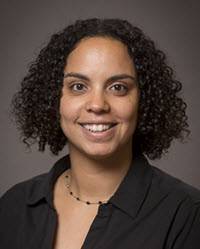
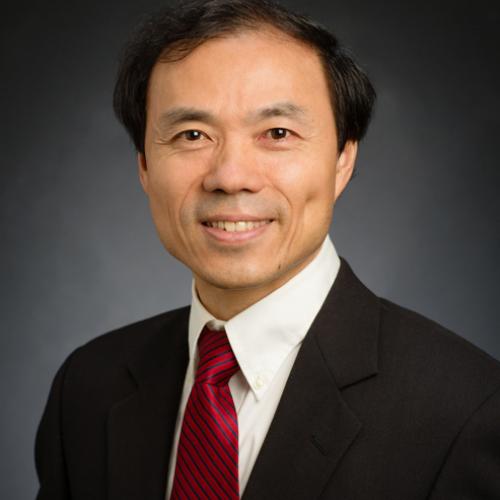
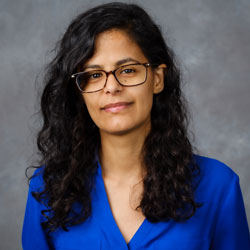
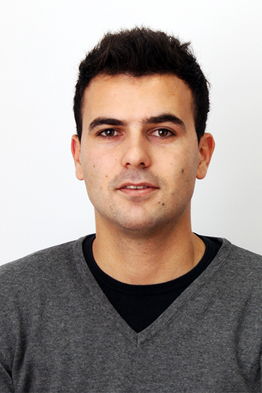
Bhuwan Dhingra is an Assistant Professor of Computer Science at Duke University's Trinity College of Arts & Sciences. He focuses on Natural Language Processing (NLP) , machine learning , and knowledge representation , with specific interests in question answering , robustness to adversarial inputs , and model calibration . 2020 : Ph.D. in Language Technologies from Carnegie Mellon University 2013 : Master's Thesis on Local Quadrature Reconstruction on Smooth Manifolds at IIT Kanpur His research includes temporal language models , adversarial robustness , and combating misinformation . He leads the ALTER-Math NSF-funded project (2024-2027) and collaborates on CC* Integration-Large (2025-2027) for distributed GPU systems. His 2025 work on adversarial perturbations and 2024 studies on table understanding in materials science highlight his focus on LLM reliability and structured data integration . Notable awards include the Amazon Research Award (2022), NSF Medium Grant (2022), and Google Research Gift (2021). He advises PhD students like Rich Stureborg and undergraduates such as Angikar Ghosal (now at Stanford PhD). Teaching graduate courses like Introduction to NLP and Advanced NLP , he emphasizes long-form QA and collaborative writing in NLP.
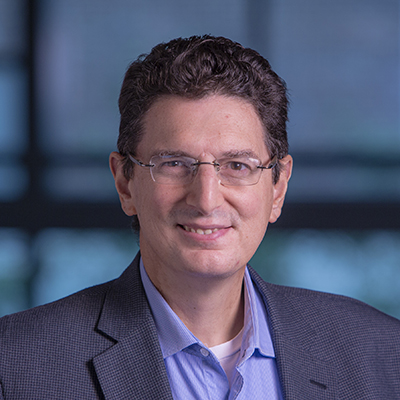
Prof. Hazım Kemal Ekenel is a faculty member at Istanbul Technical University , where he serves as a Professor in the Department of Computer Engineering since 2020. Previously, he held academic roles including Associate Professor (2014), Assistant Professor (2012-2014), and Lecturer (2011-2012) at the same institution, while also serving as a Research Assistant at Karlsruhe Institute of Technology (2004-2009). PhD in Computer Science, Karlsruhe Institute of Technology (2004) MSc in Electrical-Electronics Engineering, Boğaziçi University (2001) BSc in Electrical and Electronics Engineering, Boğaziçi University (1997-2001) His research focuses on Biometrics, Artificial Intelligence, Image Processing, and Computer Vision , with significant contributions to facial expression recognition, deep learning for face recognition, and medical imaging applications. Current projects include deepfake detection , AI-mediated virtual meetings , and super-resolution for consumer goods . Recent publications demonstrate expertise in audio-driven face generation , domain adaptation , and real-world image enhancement . He leads projects like "Deepfake Detection" (PI, 2025) and "Intraocular Pressure Measurement" (PI, 2023). Awards: Science Academy Young Scientists Award Program (BAGEP), 2018 Parlar Foundation Research Encouragement Award, 2018 Young Scientist Award, Science Heroes Association, 2017 He has secured grants for research on lighting effects in face recognition and AI applications in minimally invasive surgery. His work spans collaborations with international institutions and supervision of multidisciplinary projects.
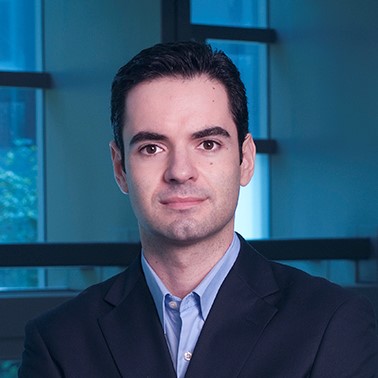
René Mayrhofer is a full Professor at the Institute of Networks and Security, Johannes Kepler University Linz, leading the LIT Secure and Correct Systems Lab. With over 137 research outputs and active leadership in projects like the Christian Doppler Laboratory for Private Digital Authentication (Digidow), he is a key figure in network security and privacy research. His research focuses on practical security solutions for real-world systems, particularly in digital identity management , Tor network security , and mobile device authentication . Recent work addresses critical challenges in Android security states, biometric systems, and trusted execution environments, emphasizing deployable privacy-preserving architectures for physical-world applications. Analysis of his 15 most recent publications reveals strong trends in empirical security evaluation (e.g., Android device security studies) and system hardening (e.g., attested builds and backdoor mitigation), with growing emphasis on supply chain security and decentralized identity frameworks. Professor Mayrhofer has supervised 12 students and currently manages 6 research projects, including the active Digital Shadows initiative (funded until 2025) and the Digidow laboratory (running through 2026). His grants include significant support from federal authorities and the Austrian Research Promotion Agency. As principal investigator of the LIT Secure and Correct Systems Lab, he drives interdisciplinary research in secure communication protocols, privacy-aware authentication, and verifiable computing systems, collaborating with industry partners on real-world deployment challenges.
Yen-I Lee is an Associate Professor and Co-Director of the Murrow Media Mind Lab at Washington State University's Edward R. Murrow College of Communication within the Department of Strategic Communication. Her academic journey began with a PhD from the University of Georgia's Grady College of Journalism and Mass Communication, establishing her expertise in health communication and media psychophysiology. Dr. Lee's educational background includes: Ph.D. from the Grady College of Journalism and Mass Communication at the University of Georgia Her research interests focus on the intersection of health communication, strategic communication, and media psychophysiology. She specializes in applying psychophysiological and neuroscience approaches to understand how emotional appeals, visuals, narratives, and technology affect health crisis and risk communication messages. Dr. Lee's work employs physiological indicators such as eye-tracking, EDA (electrodermal activity), heart rate, and facial EMG to investigate media processing and effects. Her teaching portfolio includes Health Communication, Crisis Communication, Public Management and Campaign Design, and Research Methods in both online and offline formats for undergraduate and graduate students. Analysis of Dr. Lee's recent publications reveals a clear trajectory toward integrating psychophysiological methods with strategic health communication. Her work increasingly examines how visual elements, emotional appeals, and narrative structures affect message processing in health crisis contexts, particularly regarding vaccine hesitancy, mental health awareness, and misinformation. The consistent application of eye-tracking and biometric measures demonstrates her commitment to advancing methodological rigor in communication effects research. As an educator, Dr. Lee is passionate about mentoring both undergraduate and graduate students through research experiences, employing client-based teaching structures that connect theoretical concepts to real-world problems in health, public relations, and crisis communication. Her laboratory work through the Murrow Media Mind Lab provides students with hands-on experience in psychophysiological measurement techniques. Dr. Lee co-directs the Murrow Media Mind Lab, which specializes in applying psychophysiological methods to communication research. The lab focuses on how brain processes affect media consumption and response, particularly in health communication contexts. Her international background (having grown up in Taiwan) informs her cross-cultural perspective on health communication challenges.
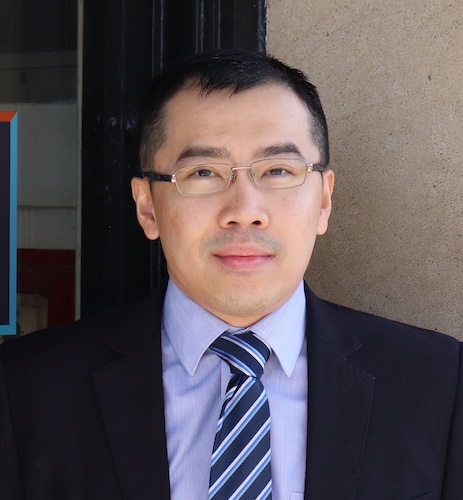
Ming Zhao is an Associate Professor at Arizona State University's School of Computing and Augmented Intelligence (SCAI) with additional affiliations at the School of Medicine and Advanced Medical Engineering (SOMME). He directs the NSF-funded Center for Accelerated Real Time Analytics (CARTA) and the Research Laboratory for Virtualized Infrastructures, Systems, & Applications (VISA), focusing on experimental computer systems research at the intersection of cloud/edge computing, big data, and machine learning. His educational background includes: Ph.D. in Electrical and Computer Engineering, University of Florida (2008) M.S. in Pattern Recognition and Intelligent Systems, Tsinghua University, China (2001) B.S. in Automation, Tsinghua University, China (1999) Dr. Zhao's research centers on experimental computer systems with emphasis on cloud/edge infrastructure , big-data/machine-learning systems , and high-performance computing . His work bridges systems research with biomedicine, neuroscience, transportation, and social sciences, generating both fundamental scientific contributions and practical industry impact. His publications exceed 90 peer-reviewed articles with over 3,200 citations, and his research outcomes have been adopted in production systems. Analysis of his 15 most recent publications reveals strong trends in storage systems innovation (particularly ZNS SSDs and hybrid memory), edge computing optimization (benchmarks, privacy-preserving techniques), and machine learning efficiency (quantization, knowledge distillation). His work consistently addresses real-world constraints while pushing theoretical boundaries in systems research. His scientific recognition includes: National Science Foundation CAREER award ASEE Air Force Summer Faculty Fellowship AWS Machine Learning Research Award VMware and Intel Faculty Awards Best Paper award at International Conference on Autonomic Computing Multiple university-level excellence awards As an educator and mentor, Dr. Zhao has created innovative courses in virtualization and cloud computing while revitalizing operating systems curriculum. He has mentored numerous doctoral, master's, undergraduate, and high-school students - with his PhD students receiving prestigious fellowships including McKnight Doctoral Fellowship and VMware Graduate Fellowship. His research is funded by National Science Foundation, Department of Homeland Security, Department of Defense, and industry partners through CARTA's collaborative model. His leadership extends to the VISA Research Lab which explores virtualization and autonomics for large-scale computing systems, and CARTA which unites ASU, Rutgers, UMBC, and University of Miami in industry-collaborative research on real-time analytics. Current projects focus on cloud computing, high-performance computing, big data systems, and storage optimization for diverse domain applications.
Dr. Ana Oprescu is a Visiting Professor at the Informatics Institute of the University of Amsterdam. Her research focuses on the intersection of software engineering, AI, energy efficiency, and data privacy, with particular emphasis on sustainable computing practices. University of Amsterdam, Faculty of Science Key Research Areas: Green software engineering for AI systems, energy-efficient code generation using Large Language Models, privacy-preserving machine learning techniques, and sustainable data processing methods. She actively explores trade-offs between energy consumption, data privacy, and algorithmic accuracy. Her recent publications demonstrate a strong focus on environmentally sustainable computing, with articles covering quantisation effects on AI energy consumption, k-anonymisation impacts on machine learning, and dynamic federated learning approaches. She has also contributed to educational initiatives in green software practices. Scientific Recognition: Recipient of VENI-2014 research grant Dr. Oprescu works at the intersection of software optimization, security, and sustainability, with a particular interest in microservice architectures, model-based testing, and energy-aware system design. She has published extensively on topics like energy-driven software engineering, code clone refactoring, and distributed tracing.
Karin Ardon-Dryer is an Associate Professor in the Department of Geosciences at Texas Tech University, where she leads the Aerosol Group focused on atmospheric measurement and simulation. Her work bridges atmospheric science, environmental health, and climate research with particular emphasis on dust storms and their impacts. Dr. Ardon-Dryer's educational background includes: B.A. in Geography and Environmental Development from Ben Gurion University (2003) M.S. in Geography and Environmental Development from Ben Gurion University (2006) Ph.D. in Geophysics, Atmospheric and Planetary Sciences and the Porter School of Environmental Studies from Tel Aviv University (2012) Postdoctoral Research Fellow in the Department of Earth, Atmospheric and Planetary Science at MIT (2012-2015) Postdoctoral Fellow in the Department of Systems Biology at Harvard Medical School, Harvard University (2015-2017) Her research focuses on the complex interactions between aerosols, clouds, and human health, with particular emphasis on dust storms. Dr. Ardon-Dryer's work combines field measurements with laboratory experiments to understand how atmospheric particles affect cloud formation, precipitation processes, and human health. She has developed the Aerosol Research Observation Station (AEROS) for comprehensive atmospheric monitoring. Her research spans multiple disciplines including atmospheric science, environmental health, and climate studies, with applications to public health policy and air quality management. Much of her recent work examines the health impacts of dust storms in West Texas and the reliability of dust event records. Analysis of Dr. Ardon-Dryer's recent publications reveals a strong focus on dust storm characterization, health impacts of atmospheric particles, and methodological improvements in dust event monitoring. Her work bridges atmospheric science with public health concerns, particularly regarding respiratory illnesses associated with dust exposure. She has made significant contributions to understanding particle size distributions during different types of dust events and their implications for air quality assessment. Her scientific contributions have been recognized through numerous invited talks at prestigious institutions including MIT, Harvard, NASA, and international universities. Her research has been supported by various funding sources that enable her team to conduct field studies and laboratory analyses. Dr. Ardon-Dryer actively mentors a diverse group of students at various academic levels, from high school to PhD candidates, across multiple disciplines including atmospheric science, biology, computer science, and environmental studies. Her lab, the Aerosol Group, maintains active collaborations with researchers across the United States and internationally. Her team operates the Aerosol Research Observation Station (AEROS) which provides continuous monitoring of atmospheric particles, contributing valuable data to the understanding of dust events and their impacts in West Texas and beyond.
Luís Nunes is an Associate Professor at Iscte – Instituto Universitário de Lisboa, Department of Information Science and Technology (ISTA), since 1997. He is an integrated researcher at ISTAR-Iscte, focusing on Computational Modeling of Systems . His academic journey includes a PhD in Computer Engineering (2006) from the University of Porto, a Master’s in Electrical and Computer Engineering (1997) from the Technical University of Lisbon, and a Computer Science degree (1993) from the University of Lisbon. Luís Nunes’ research spans Artificial Intelligence, Machine Learning, Data Science , and their applications in public administration, hotel revenue management, mobile security , and human activity recognition . His work addresses predictive modeling for booking cancellations, automated security testing of Android apps, and AI-driven public policy analysis. His recent publications emphasize predictive analytics in tourism , malware detection , and human behavior modeling . Projects like ISDAPPP (Principal Investigator) and AIH (Researcher) highlight his focus on AI for public policy and healthcare data standards. He mentors numerous PhD and Master’s students, including Clara Nunes Barrancos and Miguel Lopes Valadares. Luís Nunes actively contributes to teaching, offering courses such as Introduction to Machine Learning , Autonomous Agents , and Big Data in Public Policies . He has coordinated courses like Applied Artificial Intelligence Project at the Master’s level.
Manuel Ángel Serrano Martín is a Full Professor at the University of Castilla-La Mancha (UCLM) since 2025, affiliated with the Ciudad Real School of Computer Science and the Department of Information Technology and Systems . With over 25 years of experience, he transitioned from roles as a programmer and secondary school teacher (1998-2000) to academia, where he has served as lecturer and researcher since 2000. PhD in Computer Engineering (cum laude), UCLM (2004) Technical Engineer & Computer Engineer, UCLM Current full-time researcher in the Alarcos Research Group Research Focus: Pioneering work in data quality , software quality , and business intelligence since 2000. Recently expanded into quantum software engineering and cybersecurity , including frameworks like MARISMA for risk analysis and QuantumUnit for quantum software testing. His work spans Big Data , I8K data quality models , and blockchain integration in security systems. Academic Impact: Over 100 publications, 24 in ISI-JCR journals, with 2,291 Google Scholar citations (H-index: 24, i10-index: 40). Key projects include QUASIMODO (quality & security in data warehouses), SDGear , DQIoT , and Di4SPDS . Collaborations with companies like INDRA through projects ORIGIN and LPS-BIGGER . Awards & Grants: Recipient of the JNIC 2018 Best Article Award . Holds 3 six-year research periods from Spanish Ministry of Science. Directed 2 regional projects (including PAC08-0157-0668) and participated in 20+ national/regional and 3 international research initiatives. International Engagement: Completed predoctoral (2003, University of Montreal, Canada ) and postdoctoral (2021, University of Bari, Italy ) stays. Active in global software development and swarm intelligence frameworks.
George Pappas is the UPS Foundation Professor at the Department of Electrical and Systems Engineering, University of Pennsylvania, with secondary appointments in Computer and Information Sciences and Mechanical Engineering and Applied Mechanics. He serves as Associate Dean for Research and Innovation and Director of the Raj and Neera Singh Program in Artificial Intelligence. Primary Affiliation: Electrical and Systems Engineering Secondary Appointments: Computer and Information Sciences, Mechanical Engineering and Applied Mechanics Research Interests: Pappas specializes in control systems, robotics, autonomous systems, formal methods, and machine learning for safe and secure cyber-physical systems. His work bridges theoretical and applied domains in: Safe and Secure AI for Societal-Scale Systems Conformal Prediction and Risk Minimization Multi-Agent Coordination and Learning Formal Verification of AI-Enabled Systems Control Theory Applications in Robotics Emerging Data Science Methods Selected Scientific Awards: 2024: U.S. National Academy of Engineering 2023: Best Paper Award, ACM Transactions on Embedded Computing Systems 2021: EE Distinguished Alumni Award, UC Berkeley EECS 2020: IFAC Fellow 2020: Best Paper Award, IEEE ICASSP 2018: IEEE CSS Outstanding Paper Award 2017: IEEE ICRA Best Conference Paper 2017: Provost’s Award for Distinguished Ph.D. Teaching Advising and Grants: Pappas has mentored over fifty students and postdocs now at leading universities. His research is supported by projects like THEORINET, EnCORE, and IoT4Ag, focusing on interpretable networks, core data science methods, and precision agriculture technologies.
Victor Preciado is an Associate Professor at the University of Pennsylvania, holding appointments in the Departments of Electrical & Systems Engineering and Computer & Information Science . He is affiliated with the Warren Center for Network & Data Sciences , the PRECISE Center , and the Applied Math and Computational Science graduate group . His research bridges Network Science , Dynamical Systems , and Data Science , focusing on modeling, analysis, and control of complex networked systems. Ph.D. in Electrical Engineering and Computer Science from MIT (supervised by Prof. George Verghese) Visiting scholar at UC Berkeley, Santa Fe Institute, and Courant Institute (NYU) Postdoctoral researcher at GRASP Lab (working with Prof. Ali Jadbabaie) His research interests include epidemic modeling and control , socio-technical networks , network controllability , and data-driven optimization . Recent work explores contact-aware robotics and operator learning using attention mechanisms. His publications from 2022–2024 highlight advancements in robust control , epidemic tracking , and hypergraph neural networks , with applications in pandemic management , robotics , and temporal network analysis . Scientific awards include: 2024: IEEE Robotics and Automation Society Best Paper Award finalist (for Stabilization of Complementarity Systems ) 2022: IEEE Control Systems Magazine Best Paper Award (retrospectively for Analysis and Control of Epidemics ) 2017: National Science Foundation CAREER Award 2019: IEEE Transactions on Network Science and Engineering Best Paper Award runner-up He has served as Associate Editor for IEEE Transactions on Network Science and Engineering and IEEE Transactions on Control of Networked Systems , and as Guest Editor for special issues on pandemics and control of epidemics in journals like Annual Reviews in Control and SIAM Journal on Control and Optimization .
Grani Adiwena Hanasusanto is an Associate Professor in the Department of Industrial & Enterprise Systems Engineering at the University of Illinois Urbana-Champaign. His research focuses on robust optimization , stochastic programming , and fair machine learning , addressing decision-making under uncertainty in domains like transportation, healthcare, and energy systems. Recent work includes Finite-sample guarantees for robust system identification Scalable algorithms for neural network verification Fairness-aware policies for infectious disease mitigation NSF-funded projects on distributionally robust quadratic optimization for power systems Scientific contributions and recognition include Editorial board member of Operations Research Honoree on the List of Teachers Ranked as Excellent INFORMS Diversity, Equity, and Inclusion Ambassador His teaching portfolio includes courses on Optimization of Large Systems and Optimization Under Uncertainty at UIUC, previously taught at UT Austin. Advisees include PhD candidates exploring robust solution schemes for sequential decision-making, queue management, and classification problems.
ChengXiang Zhai is the Donald Biggar Willett Professor in Engineering at the University of Illinois at Urbana-Champaign , holding appointments in the Department of Computer Science , Carl R. Woese Institute for Genomic Biology , and the Department of Statistics . He leads research in intelligent information systems, with a focus on information retrieval, data mining, NLP, and machine learning. His TIMAN research group and DAIS explore applications in healthcare, education, and scientific discovery. He develops MOOCs on text retrieval and mining, and has published extensively on topics including LLM alignment, user simulation, and multimodal systems. Key Research Areas : Intelligent search engines, explainable AI, human-AI collaboration, biomedical informatics Recent Trends : LLM economics, knowledge overshadowing, just-in-time recommendation systems He has received the ACM Fellow title, SIGIR Salton Award , and multiple teaching honors including Rose Award and Graduate Mentoring Award . He serves as series editor for Springer Information Retrieval Book Series .
Dr. Sarra Alqahtani is an Associate Professor in the Computer Science Department at Wake Forest University. With a Ph.D. from the University of Tulsa (2015) and a two-year postdoc there, she focuses on safety and explainability in reinforcement learning (RL) and multi-agent RL (MARL), particularly for environmental applications. NSF CRII grant for safe MARL research NASA grant for drone navigation in Amazonian rainforests Her work addresses adversarial vulnerabilities in RL systems, develops robust safety policies, and combines local/global explanations to enhance AI interpretability. She applies these techniques to autonomous vehicle platoons, environmental monitoring, and illegal gold mining detection. Recent publications appear in top venues like AAMAS, IJCAI, and Nature. Research emphasizes transitioning MARL algorithms from simulations to real-world deployment while ensuring safety and reliability. Email: sarra-alqahtani@wfu.edu | Personal Site
Aleksandar Keleč is a Senior Lecturer at the Department of Computing and Informatics, Faculty of Electrical Engineering, University of Banja Luka. He has contributed to research in Android security, database systems, and automated database design tools. Senior Lecturer in Department of Computing and Informatics Specializes in mobile security, database optimization, and software engineering Active in international collaborations through conferences and projects Research Interests: His work focuses on enhancing security and privacy in mobile communications, particularly Android platform vulnerabilities and permissions systems. He has developed tools for database reverse engineering and visualization, and contributed to distributed computing infrastructure monitoring projects like VI-SEEM. His research spans practical applications in software testing automation, pseudorandom number generation analysis, and NoSQL database optimization. Key Article Trends: Recent publications emphasize secure communication protocols, multilingual database design systems, and Android security improvements. Technical work includes performance analysis of SQLite databases, MongoDB full-text search implementations, and testing automation frameworks.