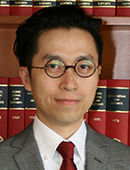
Dr. Dicky Tsang is an Associate Professor at the Faculty of Law , The Chinese University of Hong Kong. He holds degrees from Georgetown University (S.J.D.), Columbia University (LL.M., J.D.), University College London (LL.M.), and the University of Hong Kong (LL.B., PCLL). His practice experience includes corporate finance law at Linklaters and Shearman & Sterling across New York, London, Hong Kong, Beijing, and Shanghai. Admitted to practice in New York, England & Wales, and Hong Kong Research Interests : Dr. Tsang specializes in Private International Law and Company Law , focusing on cross-border corporate liability, veil-piercing, arbitration agreements, and FRAND litigation. His work bridges empirical legal analysis with comparative law frameworks. Publication Trends : His recent scholarship examines jurisdictional conflicts, enforcement of foreign judgments, and regulatory challenges in global corporate law. Publications span journals like Virginia Journal of International Law and Journal of Private International Law . Scientific Awards : Outstanding Research Impact Award 2022-23 CUHK Research Excellence Award 2019-2020 CUHK Teaching Excellence Award 2016-2017 Grants : He has led multiple RGC-funded projects, including empirical studies on China’s choice-of-law regime and foreign judgment enforcement. Collaborative grants explore corporate governance and legal education in Asia.
Prof. Diane DE SAINT AFFRIQUE is a full-time Professor at SKEMA Business School (France) since 2019, specializing in Business Law, Ethics, and Governance. She holds a Doctorat d'Etat en Droit (2002) from Université Paris 2 Panthéon-Assas, with additional qualifications from ESSEC Business School and other institutions. Her academic leadership roles include Head of the Contract Law Master program (2016–present), Head of the Law Department (2003–2014), and responsible for the Master in Business Law (2006–2016). Research Focus: Her work centers on corporate governance, sustainable finance, AI ethics in healthcare and business, and legal frameworks for responsible business practices (RSE). She explores tensions between regulatory compliance and corporate autonomy, with recent emphasis on duty of vigilance legislation and AI accountability. Key Contributions: Over 30+ publications include analyses of: Legal implications of AI in medicine and business Corporate social responsibility and judicialization trends Religious freedom in French workplaces Data sovereignty and AI governance Affiliations & Impact: She chairs the French Academy of Legal Studies and Business, serves on the Board of VITAMINE T, and advises institutions like IFSI Ambroise-Paré. Her work frequently bridges legal theory with practical business challenges, emphasizing interdisciplinary solutions for global governance issues.
Nicoline Frølich is Professor and Director of the Centre for Learning and Education (LINK) at the University of Oslo, Norway. She also holds part-time Professor II appointments at the Department of Government, University of Bergen and at NIFU – Nordic Institute for Studies in Innovation, Research and Education. Education 2002 – PhD in Comparative Politics, University of Bergen 1994 – Master in Comparative Politics, University of Bergen 1992 – Pedagogy, Norwegian School of Economics (NHH) 1989 – Master in Economics and Business Administration, Norwegian School of Economics (NHH) Research Interests Frølich’s research focuses on governance, management and organisation of higher education systems, institutional reforms, knowledge policies, and public administration. She employs institutional theory to examine how universities and colleges respond to policy pressures, merger processes, quality assurance mechanisms, and leadership communication during change. Recent Publication Trends Between 2018 and 2025 her work has concentrated on three interconnected themes: leadership and communication within university mergers, gendered career trajectories in academia, and the tension between quality assurance systems and institutional autonomy. Empirically, her studies draw on Nordic and European cases, combining survey data with qualitative analyses of policy enactment. Scientific & Professional Appointments 2023–present – Academic Chair, Circle U alliance 2023–present – Member, SIKT advisory board (Norway) 2021–present – Editorial board member, TEAM – Tertiary Education and Management 2021–2022 – Chair, EAIR – The European Higher Education Society 2019–present – Advisory Board member, UKÄ (Swedish Higher Education Authority) 2019–2021 – Co-Editor-in-Chief, TEAM – Tertiary Education and Management Research Groups & Projects Frølich leads the research group Knowledge, Learning and Governance: Studies in higher education and work (HEDWORK) and participates in the Policy, Bureaucracy, and Organization (PBO) group. She is currently directing the project Re-Structure , which investigates the effects of structural reforms on Norwegian higher education institutions.
Jan Skaloud serves as an Adjunct Professor at École Polytechnique Fédérale de Lausanne (EPFL), affiliated with the School of Architecture, Civil and Environmental Engineering (ENAC). He holds positions across multiple departments including SSIE (Institute of Earth Surface Dynamics), EDCE (Doctoral Program in Environmental Sciences and Engineering), and leads the Earth Sensing and Observation (ESO) Lab. His office is located at GC C2 397 in the EPFL campus in Lausanne, Switzerland. Dr. Skaloud's research expertise spans satellite positioning, inertial and integrated navigation systems, sensor orientation and calibration, attitude determination, mobile mapping, airborne laser scanning, and Kalman filtering techniques. His work bridges theoretical development with practical applications in UAV navigation, photogrammetry, and remote sensing. He teaches across three EPFL sections and two faculties, demonstrating his interdisciplinary approach to education. His publication record shows consistent contributions to the field, with recent work (2023-2025) focusing on vehicle dynamic model-based navigation for various UAV platforms, including delta-wing and fixed-wing drones. His research demonstrates a clear trajectory toward increasingly sophisticated navigation systems that integrate aerodynamic modeling with traditional sensor fusion approaches. This trend reflects the growing importance of model-based navigation in achieving higher precision and autonomy in UAV operations. 2021: Samuel Gamble Award for career contribution in photogrammetry & sensing (ISPRS) 2020: U.V. Helava Award for best paper in ISPRS Journal (2016-2019) 2017: Best Demo Award at IEEE International Workshop on Metrology & Aerospace 2014: Hansa Luftbild Award for best paper in PFG journal 2012: Karl Kraus Medal for best textbook in Photogrammetry 2009: GNSS Leader to Watch Innovation Award (GPS World) Dr. Skaloud has supervised numerous PhD students whose work focuses on advanced navigation systems, sensor calibration, and UAV applications. His research has received funding for projects involving direct georeferencing, mobile mapping systems, and UAV-based search and rescue operations. The ESO lab he directs serves as a hub for cutting-edge research in Earth observation technologies. The Earth Sensing and Observation Lab under Dr. Skaloud's direction brings together researchers working on navigation systems, sensor integration, and data processing techniques for geospatial applications. The lab maintains strong connections with industry partners and international research organizations, facilitating technology transfer and collaborative research projects.
Henry Hoffmann is a Professor and Liew Family Chair in the Department of Computer Science at the University of Chicago. His research focuses on self-aware computing systems that adapt to meet goals like power efficiency, performance, and security. He leads the SEEC project and has contributed to advancements in computer architecture, embedded systems, and quantum computing. Hoffmann received the PECASE (2019), DOE Early Career Award (2015), and was inducted into the Samsung Hall of Fame for discovering vulnerabilities in SmartTVs. He holds a PhD from MIT (2013) and has co-founded Config Dynamics (2019). His work bridges control theory, machine learning, and traditional computer systems to create adaptive solutions for modern computing challenges. Education: PhD in Electrical Engineering and Computer Science from MIT (2013), SM (2003), and B.S. (1999) with highest honors from UNC Chapel Hill. Professional experience includes roles at Tilera Corporation and MIT Lincoln Laboratory. Research Interests: Self-aware systems, adaptive resource management, quantum computing optimization, and cybersecurity. His SEEC framework enables systems to autonomously adapt to constraints like energy and performance. Recent work explores applying adaptive techniques to AI/ML models for energy-efficient inference and security. Awards: Over $19M in research funding, 100+ publications, and leadership roles in NSF Expedition EPiQC (quantum computing). Named Chair of UChicago CS Department (2023-2024). Labs/Teams: Systems Group, EPiQC (quantum computing), and CERES (unstoppable computing systems). Current students include Jerry Ding and Ryien Hosseini. Notable alumni include Yi Ding (now faculty at Purdue) and Nikita Mishra.
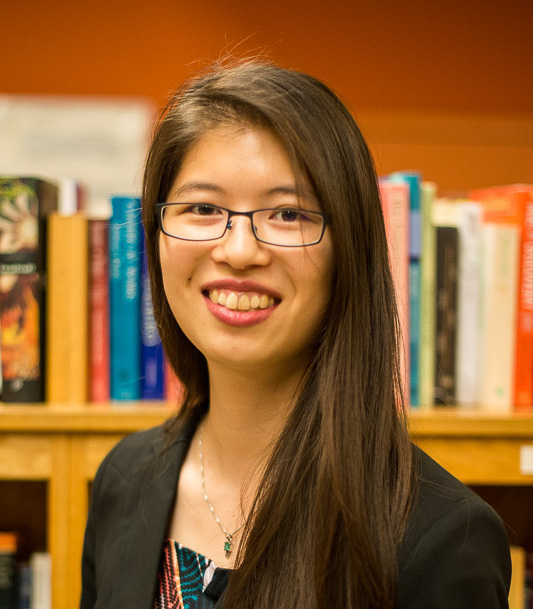
Cathy Wu is an Associate Professor at MIT, with affiliations in the Laboratory for Information and Decision Systems (LIDS), Department of Civil and Environmental Engineering (CEE), and Institute for Data, Systems, and Society (IDSS). Her research group focuses on integrating machine learning with model-based optimization to solve complex problems in transportation systems and cyber-physical systems. Academic Leadership: Class of 1954 Career Development Associate Professor (MIT) Research Grants: NSF CAREER Award, Amazon Robotics, Mathworks, MIT Mobility Initiative, US DOT, Microsoft Research, Cintra, Symbotic Research Interests : Wu's work bridges AI and engineering challenges in transportation. Key areas include: Hybrid ML/Model-based Optimization (large neighborhood search, branch-and-cut) Sustainable Mobility (Project Greenwave, eco-driving) Multi-Agent Coordination (warehouse automation, cooperative driving) Cyber-Professional Systems (generalization in RL, transfer learning) Recent work demonstrates significant advances in eco-driving (11-22% emissions reduction), large-scale multi-agent path finding (1000+ agents), and foundational RL methods for traffic control. Her group has produced 15+ major publications since 2015, with notable media coverage in Science, Wired, and NewScientist. Selected Scientific Awards NSF CAREER Award (2023) Ole Madsen Mentoring Award (2025) IEEE ITSS WiE/YP Fellowship (2024) Harold L. Hazen Teaching Award (2022) Her lab has advised 12+ graduate students and postdocs, including: Vindula Jayawardana (PhD '24, now at Anthropic) Sirui Li (PhD '25, now at Microsoft Research) Yining Ma (Postdoc, active researcher) Zhongxia Yan (PhD '24, now at Anthropic)
Timo Minssen is Professor of Law at the University of Copenhagen (UCPH) and the Founding Director of UCPH's Center for Advanced Studies in Bioscience Innovation Law (CeBIL). He also holds affiliations as an LML Research Affiliate at the University of Cambridge and an Inter-CeBIL Research Affiliate at Harvard Law School's Petrie-Flom Centre. With extensive expertise in Intellectual Property, Competition, and Regulatory Law, Minssen focuses on the legal aspects of emerging health and life science technologies, including genome editing, big data, artificial intelligence, and quantum technology. His educational background includes a German law degree (Staatsexamen) from Georg-August-University in Göttingen, and Swedish biotech & IPR related LL.M., LL.Lic., and LL.D. degrees from Lund University and Uppsala University. His PhD thesis on the patentability of biopharmaceutical technology in the US & Europe received the prestigious Swedish King Oscar award. 2024: TUM Global Visiting Professor, Technical University of Munich (Germany) 2016: Visiting Research Fellow, University of Cambridge (UK) 2014: Visiting Research Fellow, University of Oxford (UK) 2013-14: Visiting Scholar, Harvard Law School (US) 2012: LL.D. - Doctor of Laws (Swedish "juris doktor"), EU/US patent law, Lund University, Sweden Minssen's research spans AI & Big Data in Health & Life Sciences, Sustainable and responsible innovation & tech transfer, Pharmaceutical-, Life Science- & Biotech Law, Comparative European & US Patent Law, Intellectual Property Law & Open Innovation, and EU Competition- & US Antitrust Law. His work addresses legal issues throughout the lifecycle of health and life science products and processes, from R&D regulation to technology transfer and commercialization. His extensive publication record includes 7 books and over 200 articles and book chapters published in leading journals such as Science, Nature Biotechnology, JAMA, and Harvard Business Review. His research has been featured in The Economist, Financial Times, and other major media outlets. Minssen's recent work shows a strong focus on AI regulation, quantum technology law, and data governance in health contexts, reflecting the evolving landscape of technology and law. Scientific Awards and Recognition King Oscar award for best Jur. Dr. thesis (2014) Jorcks Fonds Forsknings Pris (Jorck's Foundation Research Prize) (2017) Awapatent Research Prize (2009) Max Planck Research Scholarship (2005) Visiting Scholar appointments at Harvard Law School, University of Oxford, and University of Cambridge Recipient of a Novo Nordisk Foundation Grant for a "Collaborative Research Program in Biomedical Innovation Law" (2018) As an advisor, Minssen serves international organizations including the WHO, WIPO, and EU Commission. He has supervised numerous PhD students in areas including pharmaceutical law, biotechnology patents, and antimicrobial resistance. His current research projects include the Novo Nordisk Foundation's International Collaborative Bioscience Innovation & Law (Inter-CeBIL) Programme (50 million DKK), CLASSICA: EU Horizon Project on AI-assisted surgery, and AI@Care: Law and Ethics and Algorithmic Bias in Healthcare. Minssen leads the Center for Advanced Studies in Bioscience Innovation Law (CeBIL), which serves as a hub for interdisciplinary research on the intersection of law, technology, and innovation in the health and life sciences. The center collaborates with institutions worldwide to address pressing legal challenges in emerging technologies.
Professor Dinusha Mendis is a leading academic in Intellectual Property and Innovation Law at Bournemouth University, where she serves as Director of the Centre for Intellectual Property Policy and Management (CIPPM). Her expertise bridges copyright law with emerging technologies like 3D printing, AI, blockchain, and the Metaverse, informed by extensive research and consultation with entities such as the European Parliament, UKIPO, and corporations like HP and Chanel. She holds a PhD from Edinburgh University and has authored seminal works on the intersection of technology and IP. BSc in Law from Aberdeen University LLM and PhD from Edinburgh University Called to the Bar of England and Wales Her research focuses on copyright challenges in immersive environments , AI-generated content regulation , and blockchain/NFTs . She led major studies for the European Commission and UKIPO , including the first peer-reviewed work on 3D printing and IP. Her 2019 co-edited book with Stanford and QUT scholars established foundational frameworks for additive manufacturing legal analysis. Recent publications highlight AI copyright disputes (2024 The Conversation ), NFT legal ambiguities (2022), and pandemic-era 3D printing (2020). Trends show increasing emphasis on decentralized IP systems and machine learning's impact on creative industries . Scientific Awards & Grants JSPS Visiting Professorship (2023) Daiwa Anglo-Japanese Foundation Grant (2024) EU Commission Research Funding (2020) AHRC Grant for 3D Jewellery Study (2017) As a PhD supervisor, she mentors researchers on AI copyright (Benjamin White), crypto-art (Bahar Dagli), and music creation law (Elizabeth Bailey). She contributes to global IP policy through the World Economic Forum's Metaverse Governance Team and EU IPR Enforcement Projects .
Dr. Shirley Coyle is an Assistant Professor in the School of Electronic Engineering at Dublin City University (DCU) and Programme Chair for the BSc Global Challenges. She holds a BEng in Electronic Engineering from DCU (2000) and a PhD in Biomedical Engineering from NUI Maynooth (2005). Her career includes roles as a Telecoms Engineer at Siemens, Research Fellow at the National Centre for Sensor Research, and Team Leader of Wearable Sensors in the INSIGHT Centre for Data Analytics. She also studied part-time at the Grafton Academy for Fashion Design and later founded a consultancy in wearable technologies. Her research focuses on smart garments, wearable sensors, and sustainable textiles, with applications in healthcare, sports performance, and S.T.E.A.M. integration. Key interests include developing wearable chemical sensors, energy-autonomous sensing systems, and IoT-enabled rehabilitation devices. She has pioneered work on wearable sensors for monitoring chronic diseases, athlete training, and home rehabilitation using VR. Dr. Coyle’s work spans interdisciplinary collaboration, combining biomedical engineering with textile design. Her contributions include innovations in electrospun textiles, self-powered sensors, and sensor integration with microfluidics. She has held leadership roles in DCU’s Governing Authority and promotes STEM education through design-focused initiatives.
Dr. Jiahong Chen is a Lecturer in Law at the University of Sheffield School of Law . His research focuses on the intersection of law and technology, particularly Data Protection Law , Cybersecurity Law , Law and AI , and Internet Regulation . He serves as Departmental EDI Director and Deputy LLM Programme Director. PhD, University of Edinburgh LLM, China University of Political Science and Law LLB, China University of Political Science and Law His research examines regulatory challenges in smart homes , large language models , and data ethics . Current projects include the ESRC-funded "The Internet of Tactical Engagement (IoTE)" and RAI UK's "Addressing Socio-technical Limitations of Large Language Models" . Publications span GDPR interpretation, health data regulation, and smart device accountability. He teaches modules on Information Technology Law , Data Privacy and Governance , and Consumer Law .
Alyssa Pierson is an Assistant Professor in the Department of Mechanical Engineering at Boston University, with affiliations in Robotics & Autonomous Systems and Systems Engineering. She leads the Collaborative Autonomy Group and serves as Chief Scientist at Ava Robotics. Her research focuses on trust, cooperation, and distributed control in multi-agent systems, emphasizing socially-compliant and autonomous robotic systems interacting in dynamic environments. Education: PhD in Mechanical Engineering, Boston University (2017) BS in Engineering, Harvey Mudd College Research Interests: Multi-agent systems, distributed robotics control, socially-compliant autonomous systems, and human-robot interaction. Her work addresses challenges in cooperative teaming, trust modeling, and safe navigation in complex environments. Key Awards: NSF Career Award (2023) MassRobotics Rising Star in Robotics Medal (2023) Clare Booth Luce Fellowship Grants & Projects: Recipient of NSF CAREER Award for 'Decentralized and Online Planning for Emergent Cooperation in Multi-Robot Teams'. Active in projects like heterogeneous teaming and privacy-aware trajectory planning. Labs & Affiliations: Principal Investigator of the Collaborative Autonomy Group. Affiliated with BU's Intelligent, Autonomous & Secure Systems division and the Hariri Institute for Computing.
Susan Robertson holds the Chair in Sociology of Education at the Faculty of Education, University of Cambridge, where she serves as Director of the Doctoral Programme and Editor-in-Chief of Globalisation, Societies and Education . She joined Cambridge in 2016 after academic appointments at the University of Auckland and University of Bristol, bringing over three decades of international expertise in critical education studies. Her educational foundation includes doctoral research in Sociology/Policy at the University of Calgary (1990), preceded by professional experience in the Research Division of Western Australia's Ministry of Education. This trajectory established her cross-sectoral perspective on education systems and policy implementation. Robertson's research critically examines state-education relationships through governance frameworks that determine educational equity and outcomes. She investigates how global and regional actors mediate the social contract between states and citizens, with particular focus on geopolitical shifts, OECD influence, and neoliberal transformations in higher education. Her work bridges sociology, political economy, and decolonial perspectives to address social justice imperatives in education. Analysis of her 2024-2026 publications reveals sustained engagement with higher education geopolitics, digital transformation challenges, and global governance mechanisms. Key thematic clusters include critiques of OECD-driven policy frameworks, analyses of ordinal citizenship in education systems, and examinations of how digitalization reshapes university missions while exacerbating existing inequalities. As Director of the Doctoral Programme, Robertson oversees comprehensive PhD training while convening the Culture, Politics and Global Justice research cluster that fosters interdisciplinary collaboration on transnational education challenges. Her service on the ESRC funding council positions her at the nexus of research strategy and resource allocation in UK social sciences. The Culture, Politics and Global Justice cluster under her leadership functions as a dynamic hub for critical scholarship, hosting regular seminars and collaborative projects that connect Cambridge researchers with global partners to address emergent issues in education governance and social transformation.
Jonas Tallberg is a Professor of Political Science at Stockholm University and Co-Director of the Stockholm Center on Global Governance . His research focuses on global governance, European Union politics, and legitimacy dynamics in international organizations. Primary Affiliation: Department of Political Science, Stockholm University Research Leadership: Directs DemCoop (European Research Council-funded) and GGAI (Marianne and Marcus Wallenberg Foundation-funded) Editorial Roles: Serves on editorial boards of International Organization , European Political Science Review , Cooperation and Conflict , and Political Research Exchange Key Research Areas: Legitimacy in Global Governance EU Institutional Dynamics Artificial Intelligence Governance International Organization Performance Transnational Actor Participation Comparative Global Governance Frameworks Publications Trends: Focus on legitimacy-building mechanisms in international institutions Analysis of EU decision-making and institutional design Emerging AI governance frameworks Methodological contributions to content analysis Comparative studies of democratic and autocratic regimes Performance indicators in international organizations Scientific Recognition: Wallenberg Scholar (2024) Friedrich Wilhelm Bessel Research Award (2012) Distinguished Mentor Award (2023) Multiple grants from European Research Council, Swedish Research Council, and Wallenberg Foundations Academic Leadership: Former Chair of SNS Democracy Council (2009-2011, 2023) Executive Committee of European Consortium for Political Research (2009-2015) Recipient of research grants from Riksbankens Jubileumsfond, Fulbright Commission, and other major institutions
Professor Sir Nigel Shadbolt is Principal of Jesus College Oxford and Professor of Computing Science at the University of Oxford. He is Chairman and Co-founder of the Open Data Institute which he established with Sir Tim Berners-Lee. His career spans multiple prestigious institutions including the University of Southampton and University of Nottingham, where he held leadership roles in AI research. He has served in significant government advisory positions including as Information Advisor to the UK Prime Minister and member of the Public Sector Transparency Board. Nigel Shadbolt earned his undergraduate degree in Philosophy and Psychology from the University of Newcastle (1st Class Honours, 1978) followed by a PhD in Artificial Intelligence from the University of Edinburgh. His academic journey includes positions as the Allan Standen Professor of Intelligent Systems at Nottingham and leadership of the Web and Internet Science Group at Southampton before joining Oxford. Shadbolt's research spans the interdisciplinary field of Web Science, which he helped originate, focusing on human-centered AI, social machines, open data, and ethical considerations in technology. His work examines how humans and computers integrate at web scale to create novel applications, with recent emphasis on children's digital autonomy and privacy. He has published over 500 articles exploring topics from cognitive psychology to computational neuroscience, Artificial Intelligence to the Semantic Web. His notable contributions include the development of data.gov.uk and leadership in establishing Oxford's Institute of Ethics in AI. His 2018 book 'The Digital Ape: how to live (in peace) with smart machines' has been described as a 'landmark book' in the field. Knighted in 2013 for services to science and engineering Fellow of The Royal Society (FRS) Fellow of the Royal Academy of Engineering (FREng) Fellow of the British Computer Society (FBCS) Technology Pioneer status by the Davos World Economic Forum UK national BT Flagship IT Award As an advisor, Shadbolt has supervised numerous PhD students who have gone on to positions at Google DeepMind, the World Bank, and other prestigious institutions. His research has been supported by multiple grants including SOCIAM, KOALA, and ReTiPS projects. He co-founded Garlik Ltd, which was acquired by Experian, demonstrating his commitment to translating research into practical applications that benefit society. Shadbolt leads the Web and Internet Science research group at Oxford, focusing on social machines - applications that succeed at web scale by integrating humans and computers in novel ways. His work on the KOALA Hero Toolkit and CHAITok system addresses critical challenges in children's data autonomy on social media platforms, reflecting his commitment to ethical technology design.
Joshua Aizenman is the Robert R. and Katheryn A. Dockson Chair in Economics and International Relations, and Professor of Economics and International Relations at the University of Southern California (USC), Dornsife College of Letters, Arts and Sciences. He joined USC in 2013 and holds a Research Associate position at the National Bureau of Economic Research (NBER). His research focuses on applying cost-benefit analysis to international economics, examining policies, institutions, and their impacts on economic performance, particularly in emerging markets. Key areas include commercial policies, crises management, capital controls, exchange rate regimes, and macroeconomic resilience. Previously, he held positions at UC Santa Cruz (Presidential Chair in Economics), Dartmouth (Champion Professor of International Economics), Hebrew University of Jerusalem, University of Chicago GSB, and University of Pennsylvania. He has served as Co-Editor for the Journal of International Money and Finance (2010–2021) and consults with institutions like the IMF, World Bank, and Federal Reserve Bank of San Francisco. His research highlights include analyzing the Mundell-Fleming Trilemma/Quadrilemma, fiscal-monetary policy interactions during crises, and the role of international reserves. Notable awards include the USC Endowed Chair since 2013. Recent work addresses post-pandemic economic challenges, central bank policies during crises, and resilience of emerging markets under global monetary cycles.