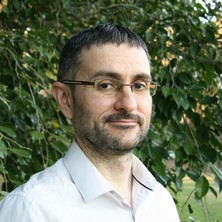
Alexandra FlynnView profile
Associate Professor
Professor Alexandra Flynn serves as Associate Professor at the Peter A. Allard School of Law, University of British Columbia, where she directs the Housing Research Collaborative. Her work bridges municipal governance, housing policy, and legal theory through CMHC and SSHRC-funded initiatives including the Housing Assessment Resource Tools (HART) project and Balanced Supply of Housing Node. Her academic credentials include a JD from Osgoode Hall Law School, LLM from Berkeley, and PhD from Osgoode Hall Law School. Prior to academia, she practiced banking law at Milbank Tweed in New York (receiving Legal Aid awards), Aboriginal Law at Ratcliff & Company in Vancouver, and held policy roles at Toronto City Hall. Flynn's research interrogates municipal law and housing justice through interdisciplinary lenses, examining Indigenous-municipal legal relationships, constitutional status of cities, and governance of precariously housed populations. Her socio-legal approach centers on property rights in public space , tent encampment human rights , and data-driven housing solutions , frequently engaging with urban geography and critical legal theory frameworks. Recent publications (2023-2025) reveal intensifying focus on housing crisis interventions, with 60% of her work addressing municipal housing tools, encampment governance, and constitutional urban reforms. Her scholarship increasingly integrates human rights frameworks with practical policy instruments, particularly through HART's community assessment methodology and Balanced Supply Node's land-use research. Flynn maintains active research collaborations with non-profit housing organizations and government agencies, securing significant funding from CMHC and SSHRC. Her policy engagement includes frequent media commentary on housing legislation and municipal governance reforms across Canadian jurisdictions. She leads the Housing Research Collaborative as an interdisciplinary hub connecting academic researchers with community housing providers, while maintaining affiliations with UBC's Centre for Feminist Legal Studies and Centre for Law and the Environment. Her work on pandemic-era tent encampments established new frameworks for analyzing municipal responses to homelessness through human rights lenses.