Kyle Moore is a Lecturer in Digital Media at Swinburne University of Technology's School of Social Sciences, Media, Film and Education. He holds a PhD in media and communications from the University of Sydney, focusing on games in urban environments. Current research: Mobile gaming distributions, location-based technology, augmented reality, and digital play cultures Teaching areas: Social media networks, media industries, and data communication Supervision: Available for PhD/Master's candidates in mobile technology and digital cultures His research explores intersections between location-based games and urban environments, examining how digital play shapes public space representation and access. Recent publications include analyses of Pokémon GO's haptic effects and Fortnite's cultural impact. Current grant: Supporting resilient HIV-positive community connections on digital platforms and technologies (2025-2026) at Swinburne University. Previously published in top-tier journals like Games and Culture , Convergence , and Media International Australia .
Chiara Natali is a PhD Student in Computer Science at University of Milan-Bicocca (2022-present) and a Visiting Research Fellow at the Dalle Molle Institute for Artificial Intelligence USI-SUPSI, supported by a Swiss Government Excellence Research Fellowship. She serves as a Lecturer for Interaction Design Lab and Human-Computer Interaction courses at University of Milano-Bicocca, and as a Tutor for Advanced Data Management and Decision Support Systems and Human-System Interaction courses across multiple Italian universities. Her educational background includes: MA in Politics, Philosophy and Public Affairs at University of Milan (2020-2022) Master's in Digital Communication Strategy at IED, Milan (2019-2020) BSc in International Politics and Government at Bocconi University, Milan (2016-2019) Natali's research centers on the complex relationship between humans and AI systems, with particular focus on Human-AI Interaction, Explainable AI (XAI), Ethical AI, and her signature concept of Frictional AI. She investigates the multidirectional effects of AI on human cognitive faculties, examining the tension between Augmentation and Deskilling. Her work explores how intentional design friction can serve as a debiasing strategy against Automation Bias, promoting more thoughtful human-AI collaboration while preserving human agency and critical thinking. Her publication record reveals a strong emphasis on practical applications of XAI in high-stakes domains like healthcare, with particular attention to medical decision-making processes. Her research consistently addresses the challenge of designing AI systems that support rather than replace human expertise, exploring how explanations impact accuracy in hybrid decision-making and how to measure technology dominance in AI-supported environments. Her significant contributions have been recognized with: Best Paper Award at the World Conference on Explainable Artificial Intelligence (2024) Best Doctoral Consortium Award at CEUR Workshop Proceedings (2023) Natali actively shapes her field through academic service, serving as PUBLICITY & PROCEEDINGS CHAIR for HHAI 2025 and organizing multiple workshops on Human-Centred Machine Learning, Algorithmic Authority, and Frictional AI. She also contributes to gender equality in STEM as a Science Ambassador for her institution's Gender Equality Plan and previously served as PhD co-representative at the Department Board. Her interdisciplinary approach extends into creative domains, where she is developing an Interactive AI Opera on 'The Garden of (Un)Earthly AI's' funded by the University of Edinburgh's Generative AI Laboratory, and has curated projects exploring Human-AI Music Co-Creation and live-coding music performances.
Ambuj K. Singh is a Professor in the Department of Computer Science at the University of California, Santa Barbara . With over 278 publications since 1987, his work spans graph neural networks, social network dynamics, and interdisciplinary applications in neuroimaging and cheminformatics. Key collaborations with researchers like Sourav Medya, Arlei Silva, and Francesco Bullo Contributions to network design, opinion dynamics, and interpretable AI His research integrates machine learning with graph theory , addressing problems in community detection , influence limitation , and explanation generation . Recent work focuses on counterfactual explainers and molecular graph analysis . He has contributed to venues like KDD, NeurIPS, WWW, and ICLR, often exploring temporal networks and polarized embeddings .
Jonny Holmström serves as Professor at Umeå University's Department of Informatics and directs the Swedish Center for Digital Innovation (SCDI), which he co-founded. He holds an additional affiliation as Professor at the Centre for Transdisciplinary AI, focusing on bridging theoretical research with practical AI applications across sectors including forestry, banking, and public services. His work appears in premier journals such as MIS Quarterly, Information Systems Journal, and Journal of Information Technology. His research centers on digital innovation, transformation, and entrepreneurship, examining how organizations navigate digital change through platform governance, AI integration, and entrepreneurial storytelling. Recent work investigates generative AI's impact on business model design, data work practices, and organizational transformation, emphasizing practical frameworks for managing digital transitions while addressing resistance and ethical considerations. Analysis of his 15 most recent publications (2024-2026) reveals a dominant focus on generative AI's organizational implications, particularly its role in reshaping platform governance, facilitating innovation through prompting, and transforming business models. Concurrent themes include digital platform evolution, data flow management in innovation networks, and citizen-centric digital government design, reflecting a consistent emphasis on practical implementation challenges in real-world contexts. Holmström leads significant research initiatives including a 28 MSEK program at Umeå University and the Kempe Foundation-funded SCDI AI Business Lab. His current project 'Using No-Code AI to Teach Machine Learning in Higher Education' (2024) aims to democratize AI education. He serves on editorial boards for CAIS, EJIS, Information and Organization, and JAIS, and heads the Swedish Center for Digital Innovation research group while participating in 'AI and society' collaborations. He founded and directs the Swedish Center for Digital Innovation (SCDI), which operates the SCDI AI Business Lab exploring practical AI applications for businesses. His work integrates with the Centre for Transdisciplinary AI to advance cross-sector AI implementation, particularly in public services and sustainable business models within the circular economy framework.
Anjala S. Krishen is a Professor and Chair of Marketing & International Business at the Lee Business School, University of Nevada, Las Vegas (UNLV). She serves as Interim Dean of the Lee Business School and was appointed as Associate Dean of Executive Education and Corporate Engagement in 2025. Her research bridges marketing, consumer behavior, and analytics, with a focus on decision-making in complex environments, e-marketing, and social networking. B.A., Anthropology, Rice University B.S., Electrical Engineering, Rice University M.B.A., Virginia Polytechnic Institute M.S., Marketing, Virginia Polytechnic Institute Ph.D., Marketing, Virginia Polytechnic Institute Her research explores heuristics in consumer decision-making, AI and data-driven marketing, sustainability, and the impact of social media on behavior. She has pioneered theories on oppositional frameworks in decision-making and the role of contrast in simplifying choices. Recent publications highlight trends in marketing analytics, AI-human collaboration, sustainable practices, and social media’s influence on consumption. These works span disciplines such as computer science, environmental studies, and psychology. Notable awards include: UNLV Foundation’s Distinguished Teaching Award (2015) Barrick Scholar Award (2016) Faculty Opportunity Awards (2014, 2016) Krishen teaches marketing research, consumer behavior, and internet marketing at both undergraduate and graduate levels. She has also delivered a TEDx talk on oppositional thinking in decision-making and is a marathoner with a Taekwondo black belt.
Dr. Jie Li is a dual-career academic and creative professional with a PhD in Industrial Design Engineering from Delft University of Technology. As an HCI/UX researcher in industry and Adjunct Professor at multiple institutions, she bridges academia and practice through work on Extended Reality (XR) , Human-AI interactions , and user experience evaluation . Her ACM Interactions column 'Bits to Bites' explores interdisciplinary research methodologies. Education: MSc in Industrial Design Engineering, Delft University of Technology PhD in Industrial Design Engineering, Delft University of Technology (2019) Her research spans social VR platforms , AI-augmented cognition , and privacy-preserving emotion detection , with recent publications analyzing LLM-assisted game design , harassment detection in VR , and XR's impact on remote collaboration . She has received Best Demo Awards (2020, 2022) and the ACM Best Paper Award (2018). Notable trends in her work include emerging immersive technologies (XR, 6DoF displays), human-AI collaboration frameworks , and cross-domain applications from medical VR clinics to cultural heritage experiences . Her advocacy for synthetic UX research and asynchronous co-creation tools reflects industry-academia hybrid innovation. Scientific Awards: Best Demo Award (2020, ACM TVX/IMX 2020) Best Demo Award (2022, ACM Multimedia) ACM Best Paper Award (2018, ACM TVX) While maintaining active roles in CHI conference committees and guest lecturing , Jie also operates a Delft-based creative cake design business , demonstrating her commitment to interdisciplinary exploration and 'slash career' balance between technical research and artistic practice.
Markus Lange-Hegermann serves as Professor of Mathematics and Data Science at Ostwestfalen-Lippe University of Applied Sciences (TH OWL) since 2018 and holds a board position at the Institute for Industrial Information Technology (inIT). His career bridges academic research and industrial applications, with expertise in translating machine learning theory into practical engineering solutions for automation and manufacturing sectors. His educational foundation includes a Diplom (Master equivalent) in Computer Mathematics from RWTH Aachen University (2004-2008) followed by a Dr. rer. nat. (PhD equivalent) in algorithmic differential algebra (2008-2014). Prior to academia, he gained industry experience at FEV GmbH as an R&D engineer (2014-2017) and P3 automotive GmbH as a Data Science Consultant (2017-2018). Lange-Hegermann's research centers on probabilistic machine learning with distinctive emphasis on physics-informed approaches. He develops Gaussian process methodologies that incorporate differential equations to model time dependencies, uncertainties, and physical constraints in industrial systems. His work enables robust data-based modeling and optimization for cyber-physical systems, with applications spanning predictive maintenance, process control, and quality assurance in manufacturing. Analysis of his 15 most recent publications (2024-2025) reveals consistent innovation in physics-integrated machine learning, particularly using Gaussian processes to solve partial differential equations and optimal control problems. The research demonstrates strong industrial applicability across domains including medical imaging, material science, automotive engineering, and brewing processes, with recurring themes of anomaly detection in time-series data and uncertainty-aware decision making. His scientific contributions have earned significant recognition: Forschungspreis TH OWL (2024) Top reviewer award at NeurIPS (2023) Outstanding reviewer award at NeurIPS (2021) Best poster award at Bosch AI CON (2019) Borchers Plakette for outstanding dissertation (2014) Springorum Denkmünze for outstanding diploma (2009) As chairman of the Data Science study program and vice chairman of undergraduate examination boards, Lange-Hegermann actively shapes academic curricula while supervising graduate theses. His governance roles include serving on professorship search committees at multiple institutions and contributing to examination regulations. He maintains active research funding through collaborations with industrial partners and reviews proposals for initiatives like It's OWL and 3IA Côte d’Azur. Lange-Hegermann leads the Mathematics and Data Sciences research group within inIT, fostering collaboration between theoretical machine learning and industrial automation. He co-founded AICOmmunityOWL and the Informatics Europe working group on Data Analysis and Reporting, while organizing machine learning reading groups and data science hackathons to bridge academic research with industrial problem-solving.
Dr. Xinqun Zhu is an Associate Professor at the University of Technology Sydney (UTS) in the School of Civil and Environmental Engineering . He has held academic positions at Western Sydney University (2016-2017), University of Western Australia (2005-2009), and University of Manchester (2001-2005). His research spans structural health monitoring, steel-concrete composite structures, physics-informed machine learning, and advanced sensor systems.
Dr. Kata Szita serves as an Assistant Professor of Multimedia at the School of Communications. Her expertise spans extended reality technologies, human-computer interaction, and the psychological impacts of virtual environments on human behavior and cognition. Her research delves deep into understanding how virtual and augmented reality experiences affect human-to-computer and human-to-human interactions. She investigates the cognitive and neural processes involved when users engage with virtual environments, particularly focusing on the use of avatars and XR-manipulated bodies. Her work also examines social behaviors in virtual spaces and the ethical dilemmas surrounding artificial digital agents and personal data collection in XR environments. Dr. Szita currently leads interdisciplinary and cross-sector research projects aimed at developing accessible and adaptive immersive technologies. Her collaborative efforts extend to studying cognitive processing of realism in mixed reality, virtual identities, and youth behavior in virtual environments. Her research approach combines theoretical frameworks with practical applications, contributing significantly to the understanding of immersive media experiences. Her extensive publication record from 2017-2025 demonstrates a consistent focus on emerging themes in XR research. The articles reveal an evolution from early smartphone-based viewing studies to sophisticated analyses of metaverse environments, presence measurement methodologies, and the psychological impacts of virtual identities. Her work bridges cognitive psychology, media studies, and technology development, establishing her as a leading voice in understanding human experience within digital and virtual contexts.
Eva Eriksson is an Associate Professor at Aarhus University, affiliated with the School of Communication and Culture and the Department of Digital Design and Information Studies. Her work bridges design, technology, and social values, focusing on participatory and human-centered approaches. Her research interests center on Human-Computer Interaction (HCI) , Participatory Design , and Design for Sustainability . She explores how co-design methods can empower youth, support children with learning differences like dyscalculia, and integrate more-than-human perspectives—considering non-human actors such as nature and technology—in design processes. Her work emphasizes ethical, inclusive, and reflective design practices. The recent publications highlight a strong trend in co-design with youth , XR and AR for education , sustainable technology , and methodological innovation in design research . These works span case studies, scoping reviews, and conceptual provocations, often published in top-tier venues like CHI and Interacting with Computers . Honourable Mention Award at CHI 2020 Honorable Mention, Design Space, CHI 2021 Most Cited Paper of 2021, International Journal of Child-Computer Interaction Eva Eriksson leads and contributes to externally funded research projects such as COMPILE (focused on dyscalculia and AR) and MOVA (on more-than-human values in design education), supported by the Independent Research Fund Denmark and Erasmus+. She supervises student projects and teaches courses such as Co-design and Bachelor Project . She also serves on international PhD examination and evaluation panels, demonstrating her active role in the global academic community. She is a core member of the Center for Computational Thinking & Design (CCTD) , a multidisciplinary research center at Aarhus University that fosters innovation in design, education, and technology.
Alvaro Fernandez Quilez is an Associate Professor in Artificial Intelligence at the Department of Electrical Engineering and Computer Science, Faculty of Science and Technology, University of Stavanger. He leads the Stavanger AI Laboratory (SAIL), fostering interdisciplinary AI research with a focus on healthcare and education applications. Research Interests: His work centers on responsible AI, emphasizing ethics, fairness, transparency, and uncertainty in AI systems. He applies deep learning and machine learning techniques to medical imaging, particularly in prostate cancer and neurodegenerative diseases like Alzheimer’s and Parkinson’s. His research integrates algorithmic innovation with clinical relevance, addressing challenges in data scarcity, bias, and model interpretability. The recent publications highlight a strong trend in developing and evaluating AI models for diagnostic support in radiology and neurology. Key themes include uncertainty quantification, self-supervised learning, synthetic data generation via GANs, and fairness analysis across gender and centers. The work spans from foundational AI methods to their clinical translation in multi-center studies. Teaching and Academic Leadership: He coordinates the course DAT105 - AI for everyone and has contributed as a guest lecturer in bioinformatics, technological foundations, and PhD ethics, particularly on AI and ethics. He is also enrolled in a PhD supervisory qualification program, underscoring his growing role in graduate education. Advising and Grants: While specific students and grants are not listed in the text, his leadership of SAIL and active publication record suggest involvement in research supervision and project funding. His collaborations span multiple institutions and disciplines, indicating strong team-based research efforts. Laboratories and Teams: He leads the Stavanger AI Laboratory (SAIL), which serves as the central hub for AI research at the University of Stavanger, promoting collaboration across departments and with external partners in healthcare and technology.
Simon Ruffieux is a Senior Researcher and Lecturer at the Department of Computer Science, University of Fribourg, and a member of the Human-IST Institute. He currently leads the HIP-Initiative (Human-IST x SwissPost Initiative) and coordinates academic projects related to Swiss Post. His academic roles include Lecturer and Senior Assistant , reflecting his active engagement in teaching and research. His research focuses on leveraging advanced technologies to support individuals, particularly those with special needs. Key areas include: Machine Learning and Data Science for urban systems (e.g., bike-sharing optimization) Human-Computer Interaction (HCI), especially gesture recognition and multimodal interfaces Augmented and Virtual Reality applications in rehabilitation and assistance Development of smart glasses for visually impaired users Physiological signal analysis for workload classification The 15 most recent publications reveal a strong trend in applying AI and data science to real-world challenges, particularly in assistive technologies and urban mobility. His work often involves interdisciplinary collaboration, integrating computer science with psychology, rehabilitation, and industrial applications. There is a consistent emphasis on user-centered design and real-world usability. Simon Ruffieux has not been mentioned as receiving specific scientific awards in the provided text. He has advised or collaborated with several researchers, including Nicolas Spycher, Samuel Torche, and Nicolas Ruffieux, on projects related to forecasting, AR, and gesture recognition. While no formal grant details are listed, his leadership of the HIP-Initiative suggests involvement in externally funded academic projects. His work is closely tied to the Human-IST Institute, where he contributes to interdisciplinary research in human-centered computing. He is actively involved in research teams focused on assistive technologies, gesture interaction, and data-driven urban solutions. The Human-IST Institute serves as the primary hub for his collaborative efforts, particularly through the HIP-Initiative with Swiss Post.
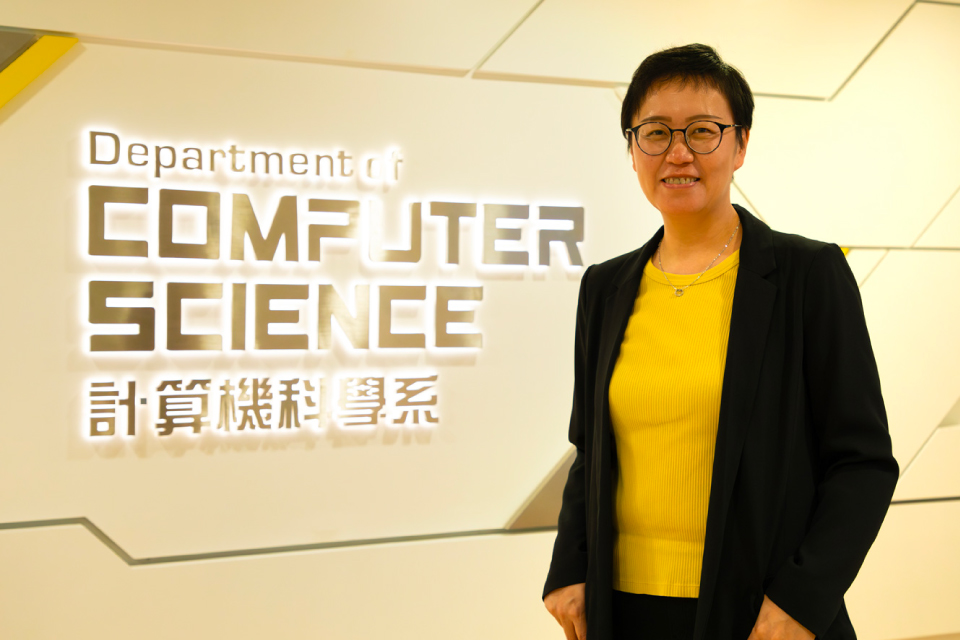
Professor Li Chen is a full Professor and Associate Head (Research) in the Department of Computer Science at Hong Kong Baptist University (HKBU), with an affiliate appointment at the Academy of Wellness and Human Development. She leads the Positive Intelligence Lab , focusing on intelligent technologies for human well-being. Her research spans conversational AI, explainable AI, recommender systems, and human-computer interaction. Education: PhD in Computer Science, Swiss Federal Institute of Technology in Lausanne (EPFL), Switzerland (Nominee for Best PhD Thesis Award) Master in Computer Software and Theory, Peking University, China Bachelor in Computer Science, Peking University, China Her research interests revolve around personalized conversational and explainable AI, with applications in entertainment, education, e-commerce, and mental well-being. She has published over 150 papers in top venues including ACM TOIS, IJHCS, CHI, SIGIR, AAAI, RecSys, and UMAP . Her work has been recognized with awards such as the RecSys Best Student Paper Award (2024), CHI Honourable Mention (2022), and multiple best paper awards at UMAP and UMUAI. The most recent publications reflect a strong trend toward fair, explainable, and user-centric recommender systems , with increasing integration of large language models , mental health applications , and conversational agents . Her research emphasizes user feedback, negative sampling techniques, and evaluation frameworks grounded in real user behavior. Scientific Awards & Recognition: President’s Award for Outstanding Performance in Teaching (Individual), HKBU (2024/25) President’s Award for Outstanding Performance in Research Supervision (2022/23) World’s Top 2% Most-Cited Scientists, Stanford University (2021–2024) ACM Senior Member (2015) RecSys’24 Best Student Paper Award CHI’22 Honourable Mention Award UMAP’20 Best Student Paper Award UMUAI 2018 Best Paper Award THE Awards Asia 2021 Excellence and Innovation in the Arts (Co-I) Professor Chen is actively involved in mentoring PhD and Master’s students such as Wanling Cai and Yuhan Zhao, who have co-authored award-winning papers. She has secured research funding through grants like the HKBU IRCMS Project. Her editorial leadership includes serving as Co-Editor-in-Chief of ACM Transactions on Recommender Systems (TORS) , Associate Editor for ACM TiiS , and Editorial Board Member for UMUAI . She has chaired major conferences including ACM RecSys’23 (General Co-Chair), RecSys’20 (Program Co-Chair), and UMAP’18 (Program Co-Chair). She leads the Positive Intelligence Lab , which conducts interdisciplinary research on AI for well-being. The lab has developed datasets like the Intent Annotation of Recommendation Dialogue (IARD) and focuses on user-centric AI design, mental health chatbots, and personalized recommendation interfaces.
Hariharan Subramonyam is an Assistant Professor (Research) at Stanford University's Graduate School of Education and Computer Science (by courtesy) . He serves as the Ram and Vijay Shriram Faculty Fellow at the Institute for Human-Centered AI (HAI) and is a core faculty member of Stanford HCI . His research bridges Human-Computer Interaction (HCI) and the Learning Sciences , focusing on augmenting human learning through AI via cognitively informed design practices, co-design with learners/educators, and transformative AI-enabled learning experiences. His work emphasizes ethical AI, responsible design, and human values in technology. He earned a PhD in Information from the University of Michigan under Eytan Adar. Current projects include Script&Shift (layered interfaces for LLM writing), AltCanvas (accessible image editing for BVI users), and CogGen (AI tutoring systems). His teaching includes EDUC 432: Designing Explorable Explanations and CS 448B: Data Visualization . Key Research Areas Cognitively Informed AI Systems Human-AI Collaborative Writing Accessible Generative AI Tools Ethical AI Frameworks Interactive Learning Environments Awards & Grants Best Paper Award (CHI 2025) Honorable Mention Award (CHI 2025) HAI Hoffman Yee Grant (2024) Cover Story in Interactions Magazine (2024) Collaborative Networks Co-organizing CHI 2025 Tools for Thought Workshop Contributor to UIST 2024 Dynamic Abstractions Workshop Advising PhD students across Stanford, Georgia Tech, and Duke Collaborations with institutions including University of Michigan, National University of Singapore, and Technical University Munich
Yan Zhang is a scientific leader at Meshcapade and a guest lecturer at ETH Zurich's Computer Vision and Learning Group (VLG). He previously served as a postdoctoral researcher at ETH Zurich (2020-2023) and research intern at Max Planck Institute for Intelligent Systems (2018-2020). His research focuses on generative human foundation models, human motion and behavior synthesis, 3D human perception, and applications in AR/VR, embodied AI, and interactive avatars. He has pioneered methods for scene-conditioned motion generation, contact-aware reconstruction, and egocentric interaction modeling. His recent publications (2025-2020) span Real-time motor models for avatars (PRIMAL, ICCV'25) Diffusion architectures for motion (RoHM, CVPR'24) Scene-population algorithms (Odysseus, CVPR'22) Physics-aware reconstruction (EgoHMR, ICCV'23) Whole-body grasping models (SAGA, ECCV'22) Multi-modal datasets (EgoBody, ECCV'22) Scientific recognition includes the Qualcomm Innovative Fellowship Europe 2023 . He organized workshops at CVPR'25, ECCV'24, and ECCV'22, and served on senior program committees (AAAI'26) and area chairs (CVPR'25). As co-supervisor, he mentored student projects on diffusion-based hand motion capture, 3D pose estimation, body-scene interaction, and mixed reality navigation at ETH Zurich (2020-2023). His work bridges computer vision, machine learning, and computer graphics to advance human-centric AI systems.