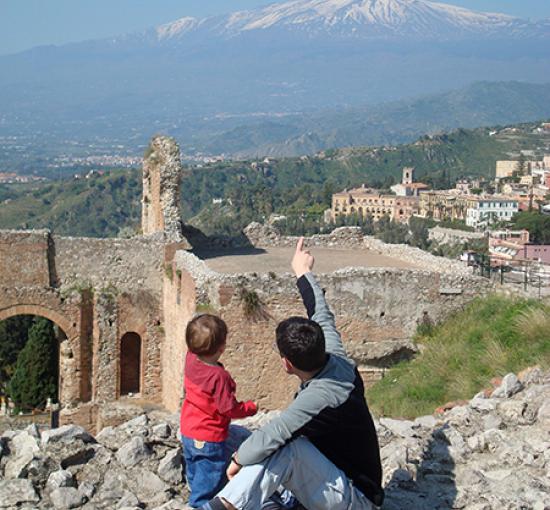
Professor Jonathan Prag is a leading scholar of ancient Sicily and Roman Republican history, holding dual roles as Tutor in Ancient History at Merton College and Professor of Ancient History at the University of Oxford. His research integrates classical epigraphy with digital humanities, focusing on the cultural and political dynamics of ancient Sicily under Roman rule. Education: MA (Oxon), PhD (London) Research Interests: His work explores Roman imperialism, epigraphic culture, and the application of computational methods to ancient texts. Key projects include the ERC-funded CROSSREADS initiative, the I.Sicily digital epigraphic corpus, and excavations at Halaesa (Sicily). He advocates for open-access scholarship and FAIR data practices in epigraphy. Articles Trends: Recent publications emphasize digital methodologies (e.g., AI-driven text restoration in Nature ), epigraphic analysis of Roman provincial governance, and re-evaluations of Hellenistic-Western Mediterranean cultural interactions. His work bridges archaeology, linguistics, and political history. Awards/Grants: ERC Advanced Grant (CROSSREADS, 2020–2026) AHRC-DFG FAIR Epigraphy co-directorship Leadership in international archaeological and epigraphic projects Grants & Labs: Manages the I.Sicily project and collaborates on the Halaesa excavations. His work involves interdisciplinary teams and digital infrastructure for epigraphic research. Labs/Teams: Collaborates with institutions like the University of Messina and CNRS on epigraphy, archaeology, and computational history.
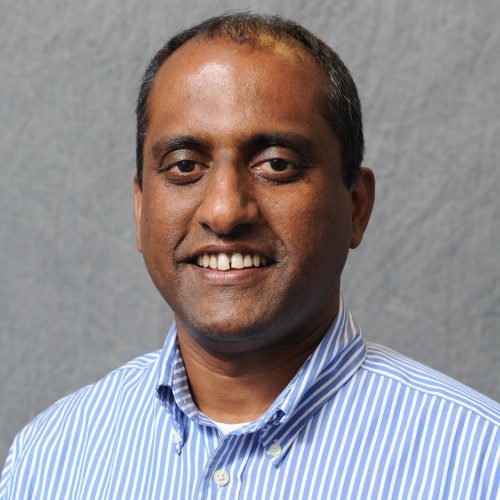
Sankar Arumugam is a Professor and University Faculty Scholar in the Department of Civil, Construction and Environmental Engineering at North Carolina State University (NC State), where he leads the Climate, Hydrology and Water Resources Modeling and Synthesis Group. His research focuses on integrating geospatial data and probabilistic climate information to improve decision-making in water and energy sectors, with expertise in hydroclimatology, spatio-temporal modeling, and large-scale nexus issues like food-water-energy systems. Education: Ph.D. in Water Resources Engineering (Tufts University), M.Sc. in Civil Engineering (IIT Madras), B.E. in Agricultural Engineering (Tamil Nadu Agricultural University). Research interests include: Multi-timescale streamflow forecasting Climate elasticity and hydrological modeling Remote sensing applications for flood prediction Reservoir operations optimization Urban heat island effects Publications highlight advancements in probabilistic hydrological forecasting, climate-water-energy nexus analysis, and reservoir storage optimization. He has pioneered frameworks like GRAPS and COREGS for multi-reservoir systems and seasonal water-power system co-optimization. His work bridges academia and practice through collaborations with institutions like the International Research Institute for Climate and Society (Columbia University) and the World Bank.
Peter A Troch is a Professor in the Department of Hydrology and Atmospheric Sciences at the University of Arizona's College of Science. He specializes in catchment hydrology, with research focusing on hydrological partitioning, remote sensing, and physically-based modeling. His work addresses questions about hydrological processes across scales, including climate-vegetation-soil interactions and landscape evolution. Teaches core courses like Hydrology and Water Resources (HWRS 519 and HWRS 630), emphasizing scientific approaches over engineering methods. Recipient of prestigious awards including the John Dalton Medal (EGU, 2022) and the Agnese Nelms Haury Chair (2014). Conducts research at the Landscape Evolution Observatory (LEO), studying water-rock-biota interactions and ecohydrological processes. His research integrates field experiments, numerical modeling, and data assimilation to improve understanding of water availability, catchment classification, and climate change impacts. Collaborations with interdisciplinary teams address topics like basalt weathering, CO2 sequestration, and soil formation.
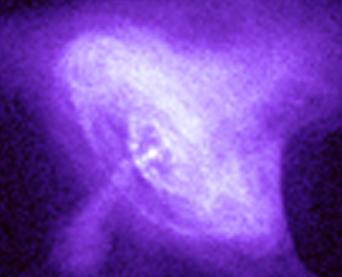
Andrew Melatos is a Professor in the School of Physics at the University of Melbourne, Australia. His research focuses on gravitational waves, neutron star astrophysics, superfluid dynamics, and interdisciplinary topics like econophysics and art-science collaboration. He has held senior roles in major collaborations such as OzGrav, LIGO, and the Texas Symposium Series. Melatos leads a dynamic research group producing cutting-edge work on pulsar glitches, magnetic mountains, and gravitational wave detection algorithms. His group has pioneered simulations of superfluid vortex avalanches and developed novel statistical methods for LIGO data analysis. Melatos has advised over 40 PhD and Master's students, many of whom now hold academic or industry leadership roles globally. His work bridges fundamental physics with applications in climate science, finance, and public outreach. Education: BSc (University Medal), University of Sydney (1988-1991) PhD in Physics, University of Sydney (1992-1995) Miller Fellow, UC Berkeley (1997-2000) Research Fellow, Caltech (1995-1997) Key Appointments: Chair, Texas Symposium Steering Committee (2006-2008) LIGO Scientific Collaboration Council (2014-present) Australia Telescope Time Assignment Committee (2002-2004) Research Themes: Melatos' work spans gravitational wave astrophysics, pulsar timing anomalies, superfluid turbulence in neutron stars, and interdisciplinary projects like econophysics modeling and art-science collaborations with visual artist Briony Barr. His group's recent breakthroughs include explaining pulsar glitch recovery via superfluid vortex dynamics and developing hidden Markov models for glitch detection. Publications & Impact: Over 15 key articles in areas like neutron star magnetospheres, LIGO signal processing, and econophysics. Notable collaborations include simulations of magnetic mountains and contributions to the historic 2017 gravitational wave-neutrino electromagnetic counterpart discovery.
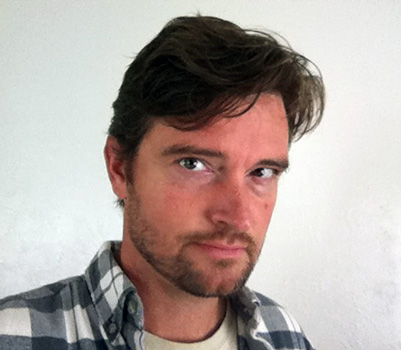
Sean Fleming is a Courtesy Professor at Oregon State University in the College of Earth, Ocean, and Atmospheric Sciences and the Water Resources Graduate Program. He also holds an adjunct position at the University of British Columbia. His work bridges academia, government, and industry, with a focus on data science applications in environmental science and hydrometeorology. B.Sc., Geophysics, University of British Columbia, 1994 M.S., Geophysics, Oregon State University, 1997 M.S., Geology (major), Civil Engineering (minor), Oregon State University, 1998 Ph.D., Geophysics, University of British Columbia, 2004 Sean Fleming's research centers on advancing data science, machine learning, and AI applications to environmental forecasting, particularly in hydrology and climate. He integrates process physics, remote sensing, and expert knowledge into predictive models. His work emphasizes operational implementation in real-world water management systems. His recent publications focus on AI-driven water supply forecasting, satellite remote sensing for snow monitoring, climate change impacts on glaciers and rivers, and complex systems theory in environmental dynamics. He has contributed to improving operational river forecast systems using explainable AI and ensemble modeling. Associate Editor, Water Resources Research World Meteorological Organization (WMO) Commission for Hydrology member Invited expert reviewer, IPCC reports Invited expert reviewer, US National Climate Assessment Fleming serves on graduate student supervisory committees at OSU and UBC, providing industry and policy perspectives to academic research. He has led significant projects such as the NASA Western Water Action Office, supporting the use of Earth observations in water management. His work often involves multi-institutional and international collaborations. He is actively involved in public outreach, having authored the book Where the River Runs , given lectures at the Smithsonian, and appeared in media outlets like NPR and Scientific American.
Lai-yung (Ruby) Leung is a Battelle Fellow at Pacific Northwest National Laboratory with a courtesy appointment at Oregon State University's College of Earth, Ocean, and Atmospheric Sciences. She serves as Chief Scientist of the Energy Exascale Earth System Model (E3SM) supported by the U.S. Department of Energy and has organized key workshops sponsored by major scientific agencies including DOE, NSF, NOAA, and NASA. Dr. Leung's research spans climate and hydrological cycle modeling, land-atmosphere interactions, orographic processes, monsoon climate, climate extremes, land surface processes, and aerosol-cloud interactions. Her work on climate change impacts has been featured in Science, Popular Science, Wall Street Journal, National Public Radio, and major newspapers worldwide. She has published over 500 peer-reviewed papers and serves as editor for the American Meteorological Society's Journal of Hydrometeorology. Her recent publications demonstrate expertise in high-resolution climate modeling, mesoscale convective systems, land-atmosphere feedbacks, and climate extremes. Her work increasingly incorporates machine learning approaches for climate prediction and model evaluation, while maintaining focus on fundamental physical processes in Earth system models. Elected Member, National Academy of Engineering Elected Member, Washington State Academy of Sciences Fellow, American Geophysical Union Fellow, American Meteorological Society Fellow, American Association for the Advancement of Science AMS Hydrologic Sciences Medal, 2022 U.S. Department of Energy Office of Science Distinguished Scientist Fellow, 2021 Reuter's Hot List of top 1,000 climate scientists, 2021 Dr. Leung serves on advisory panels and National Academies committees defining future priorities in Digital Twin, AI/ML, climate modeling, hydroclimate, and water cycle research. She has been invited to deliver numerous distinguished lectures globally, including the Snoeyink Distinguished Lecturer at University of Illinois and Inaugural Leaders in Discovery Lecture Series at University of Iowa.
Michael Hilfer is a Research Fellow at the Institute of Fluid Mechanics, Technische Universität Braunschweig. His work focuses on optical measurement techniques and data assimilation in fluid dynamics, spanning low-speed to hypersonic flows. Prior roles include developing Pressure- and Temperature-Sensitive Paint (PSP/TSP) methods at DLR's Institute of Aerodynamics and Flow Technology and leading electrified aviation R&D teams at DLR Cottbus. Research Interests: Optical measurement techniques (PSP, TSP, PIV, STB, EVB) Experimental techniques for highly unsteady flows Acoustics and flow separation/reattachment Data assimilation and post-processing Machine learning applications in fluid dynamics His publications highlight advancements in unsteady flow measurement, aeroacoustics, and turbomachinery cooling systems. Articles emphasize transonic and hypersonic flow analysis, sensor miniaturization, and experimental validation of fluidic systems. Laboratory & Collaborations: Institute of Fluid Mechanics (TU Braunschweig) DLR Institute of Aerodynamics and Flow Technology (Göttingen) DLR Institute of Electrified Aero Engines (Cottbus)
Dr. Xinyuan Wei is an Assistant Research Professor in Forest Ecosystem Modeling at the School of Forest Resources, University of Maine, having joined in July 2023. Previously, he conducted research at Oak Ridge National Laboratory. His educational background includes a PhD in Forest Resources from the University of Maine, an MS in Geography from the University at Buffalo, and a BE in Geographic Information System from Nanjing Forest University. His research integrates quantitative approaches to study forest ecosystems, with core interests in: Forest Biometrics : Statistical modeling of forest structure and growth. Carbon Cycle Dynamics : Quantifying carbon fluxes in terrestrial and aquatic systems. Ecosystem Simulation : Developing models to predict climate change impacts. Geospatial Technologies : Applying remote sensing and GIS for landscape analysis. His publications (2018-2024) demonstrate a consistent focus on carbon cycling, climate impacts on forests, and ecosystem modeling. Trends include watershed-scale dissolved organic carbon transport, climate-forest interactions, and carbon sequestration in wood products, leveraging interdisciplinary methods from biogeochemistry, remote sensing, and statistical modeling.
Alex Rybchuk serves as a Researcher III in Computational Science at the National Wind Technology Center (NWTC), part of the National Renewable Energy Laboratory (NREL). His work focuses on advancing understanding of the lower atmosphere with direct applications to wind energy systems, particularly through computational modeling and data-driven approaches. Education: Bachelor of Mechanical Engineering from Cooper Union for the Advancement of Science and Art Master of Science in Mechanical Engineering from University of Colorado Boulder PhD in Mechanical Engineering from University of Colorado Boulder Rybchuk's research integrates Computational Fluid Dynamics with Boundary Layer Meteorology to address wind energy challenges. His core expertise spans Data Assimilation techniques and Machine Learning applications for atmospheric modeling, with rigorous emphasis on Model Validation, Verification, and Uncertainty Quantification . Recent work targets offshore wind resource assessment in California and turbine inflow characterization using generative AI. His fingerprint reveals deep specialization in Wind Resources (100%), Offshore Wind (97%), and California-specific wind phenomena (73%), with significant contributions to Resource Assessment methodologies. Analysis of his 2024-2025 publications shows convergent themes: machine learning applications for hurricane modeling (2025), generative AI reconstruction of turbine inflow (2025), and mesoscale model validation for California wind corridors (2025). These works consistently address wind speed bias correction, atmospheric boundary layer dynamics, and offshore resource assessment - reflecting his focus on bridging observational data with high-fidelity simulations. Rybchuk actively collaborates through NREL's National Wind Technology Center on field campaigns like RAAW, where he develops machine learning frameworks to connect turbine inflow observations with simulations. His technical reports and peer-reviewed articles demonstrate sustained contributions to wind energy science without mention of formal advising roles or external grants in the provided materials.
Anthony Nouy is a Professor at the Department of Mathematics, Computer Science, and Biology (MIB) at École Centrale de Nantes. His research spans Mathematics, Computer Science, and Computational Biology, with a focus on approximation theory, tensor networks, and stochastic optimization. His work explores nonlinear manifold approximation dimension reduction in feature spaces stochastic gradient descent optimization moment methods for optimal transport and PDEs model reduction and tensor geometry Recent publications highlight trends in machine learning, numerical analysis, and computational mathematics, particularly through compositional polynomial networks, Poincaré inequality surrogates, and tree tensor formats. Collaborations include researchers like Alexandre Pasco, Philipp Trunschke, and Mazen Ali. He is affiliated with the Jean Leray Mathematics Laboratory and maintains a personal webpage for updates. Co-authors of recent publications include Antoine Bensalah, Joel Soffo, and Alexandre Pasco (2025) Robert Gruhlke, Philipp Trunschke (2024) Clément Cardoen, Swann Marx, Nicolas Seguin (2024) Mazen Ali, Antonio Falcó, Wolfgang Hackbusch (2023)
Prof. Dr. Alisdair Fernie serves as a Research Group Leader within the Department of Root Biology and Symbiosis at the Max Planck Institute of Molecular Plant Physiology in Potsdam, Germany. His position as a full Professor reflects his leadership in plant metabolic research, where he directs the Central Metabolism research group investigating fundamental biochemical processes in plants. His research spans Plant Metabolism, Metabolomics, Plant Stress Physiology, Molecular Plant Biology, Plant Biochemistry, and Photosynthesis. Fernie employs advanced omics technologies to dissect metabolic networks, particularly focusing on how plants reconfigure their biochemistry in response to environmental stresses and developmental cues. His work integrates systems biology approaches to understand metabolic fluxes and regulatory mechanisms across diverse plant species. Analysis of his 2024-2025 publications reveals dominant themes in plant metabolomics, stress adaptation mechanisms, and biotechnological applications for crop improvement. His research frequently utilizes model systems like Arabidopsis alongside economically important crops including tomato, rice, maize, and citrus, with particular emphasis on postharvest physiology, nutrient signaling, and the molecular basis of specialized metabolism. Prof. Fernie leads the Central Metabolism research group, which investigates core metabolic pathways and their regulation through innovative combinations of biochemical, genetic, and computational approaches. His team's work on organelle interactions, lipid metabolism, and stress-responsive metabolic reprogramming has positioned them at the forefront of plant systems biology research.
Arnold Heemink is a full professor of Applied Analysis at the Delft Institute of Applied Mathematics, part of the Faculty of Electrical Engineering, Mathematics and Computer Science at Delft University of Technology. He has maintained this position since 1993, having previously served as a part-time professor at the same institution from 1990-1993 while also working at Rijkswaterstaat where he was Head of the Mathematical Modeling section. His educational background includes a B.Sc. in Applied Mathematics (Systems Theory) from the University of Twente (1974-1978), followed by an M.Sc. in Applied Mathematics (Mathematical Physics) from the same institution (1978-1980), and finally a PhD in Applied Mathematics completed in 1986. 1974-1978: University of Twente, B.Sc. Applied Mathematics (Systems Theory) 1978-1980: University of Twente, M.Sc. Applied Mathematics (Mathematical Physics) 1980-1986: University of Twente, PhD in Applied Mathematics Professor Heemink's research focuses on large-scale systems, data assimilation, inverse problems, and numerical schemes for stochastic differential equations. His work bridges theoretical mathematics with practical environmental and physical applications, particularly in atmospheric and oceanic modeling. Recent publications demonstrate his expertise in applying advanced mathematical techniques to real-world problems including air quality monitoring, wave data assimilation, and magnetic state prediction. His publication record shows consistent output with multiple high-impact papers in 2023-2025, primarily focusing on environmental applications of data assimilation techniques. These works span diverse domains from atmospheric transport modeling to ocean wave prediction and magnetic field analysis, all united by his core expertise in mathematical modeling and data assimilation. While specific awards are not listed in the available information, Professor Heemink maintains an active research profile with collaborations spanning multiple countries and institutions, as evidenced by his international co-authorship patterns. His current work appears focused on advancing data assimilation methodologies for environmental monitoring systems, with particular attention to air quality networks, ocean wave prediction, and atmospheric modeling. He continues to supervise research activities within the Mathematical Physics section of the Delft Institute of Applied Mathematics.
Markus Casper is a full professor at the University of Trier , holding a position in Physical Geography within Faculty VI . His career spans from being a Junior Professor (2003-2009) to a Universitätsprofessor (W2) since 2009. He has been involved in significant roles such as member of the University of Trier Senate, the DFG-funded Modelbildung und Simulation working group, and leadership in the German Hydrological Society. Education: Diplom in Geoökologie (University of Karlsruhe, 1995), Dr.-Ing. (University of Karlsruhe, 2002). Research Interests: Dr. Casper’s work focuses on hydrological modeling , catchment classification , and climate change impacts on water balance . Key projects include: DFG-funded mesoscale hydrological modeling with remote sensing data assimilation (2019-2022) SOFI : Smart soil information for farmers (BMEL-funded, 2019-2022) Catchment regionalization with Self-Organizing Maps (SOM) (DFG, 2012-2017) His research integrates groundwater-surface water interactions , soil erosion , and remote sensing for process identification. Scientific Trends: His recent articles emphasize multi-criteria model evaluation , machine learning (SOM) in hydrology , and uncertainty quantification in water balance simulations. Themes include climate nonstationarity , pedotransfer functions , and soil-vegetation-atmosphere modeling . Advising: He has supervised numerous doctoral students, including Gayane Grigoryan (climate impacts on water balance), Philipp Reiter (hydrological modeling), and Hadis Mohajerani (hydrological processes). Completed works address flood prediction , SVAT modeling , and land use sustainability . Labs & Teams: He leads the Modelbildung und Simulation working group at the University of Trier and collaborates with institutions like the University of Leipzig, FH Trier, and LUWG Mainz. His team utilizes GIS pools , hydrological test basins , and field laboratories for runoff and erosion studies.
Guido Cervone is a Professor of Geography and Meteorology and Atmospheric Science at Pennsylvania State University, serving as Interim Director of the Institute for Computational and Data Sciences (ICDS). He holds an adjunct professorship at Columbia University's Lamont-Doherety Earth Observatory and has been an affiliated scientist with the National Center for Atmospheric Research since 2012. His research spans machine learning , remote sensing , and geospatial big data , focusing on environmental hazards, renewable energy systems, and climate modeling. Key areas include flood prediction , hurricane evacuation analytics , Arctic transport accessibility , and atmospheric correction algorithms . 2025 : Flood water level prediction with transfer learning 2024 : Urban heat islands, Arctic shipping trends 2023 : Greenland ice sheet downscaling, wind energy uncertainty 2022 : Continental solar energy datasets 2021 : Radiation mapping, temperature downscaling Cervone leads interdisciplinary collaborations across climate science, AI, and energy systems, with grants addressing urban heat hazards, contrail climate impacts, and renewable resource modeling. He co-chairs AGU's Natural Hazards committee and mentors researchers in computational methods.
Professor Raul Tempone is a distinguished faculty member at King Abdullah University of Science and Technology (KAUST), holding the position of Professor in the Department of Applied Mathematics and Computational Science within the Computer, Electrical and Mathematical Sciences and Engineering division. He serves as Principal Investigator of the Stochastic Numerics Research Group and has made significant contributions to numerical analysis and uncertainty quantification, aligning with KAUST's mission and Saudi Arabia's Vision 2030 goals through advancements in computational science that drive technological innovation and sustainability. Professor Tempone's academic foundation includes: Ph.D. in Numerical Analysis from the Royal Institute of Technology (KTH), Sweden (2002) M.S. in Engineering Mathematics from Universidad de la República, Uruguay (1999) B.S. in Industrial and Mechanical Engineering from Universidad de la República, Uruguay (1995) Professor Tempone's research focuses on the mathematical foundations of computational science and engineering, with particular emphasis on uncertainty quantification, stochastic differential equations, and numerical methods. His work bridges theoretical mathematics with practical applications across multiple domains including computational mechanics, quantitative finance, biological and chemical modeling, and wireless communications. He has pioneered advancements in adaptive algorithms, Bayesian inverse problems, and scientific machine learning, driving innovation in computational efficiency and accuracy for solving complex real-world problems. His recent publications demonstrate a strong trend toward integrating uncertainty quantification with machine learning approaches and addressing complex optimization problems under uncertainty. The research spans diverse applications from wireless network performance analysis to medical imaging and sustainable energy systems, reflecting his commitment to solving real-world challenges through advanced computational methods that combine theoretical rigor with practical applicability. Professor Tempone's scientific achievements have been recognized through numerous prestigious awards: Alexander von Humboldt professorship (2018-2025) ISI Highly Cited Researcher (2016) Elected Program Director of the SIAM Uncertainty Quantification Activity Group (2013-2014) Fellow of the Deutsche Forschungsgemeinschaft Priority Program (2014) First Dahlquist Fellowship at the Royal Institute of Technology, Sweden (2007-2008) As an academic advisor, Professor Tempone has successfully supervised ten PhD students to completion. His research has attracted significant funding, including the Alexander von Humboldt professorship grant worth up to 5 million euros. He has directed the KAUST Strategic Research Initiative in Uncertainty Quantification (2012-2016) and collaborated extensively with industry partners including Saudi Aramco. His research group has placed numerous members in academic positions worldwide and in leading companies such as Bain & Company, Baker Hughes, Enel Group, G-Research, Honeywell, McKinsey & Company, and Saudi Aramco. Professor Tempone leads the Stochastic Numerics Research Group at KAUST, which focuses on developing and analyzing numerical methods for stochastic and deterministic problems. The group's work encompasses a posteriori error approximation, data assimilation, hierarchical and sparse approximation, optimal control, and optimal experimental design. Through strategic collaborations and interdisciplinary approaches, the research group continues to push the boundaries of computational science and its applications to real-world challenges across engineering, finance, biology, and energy sectors.