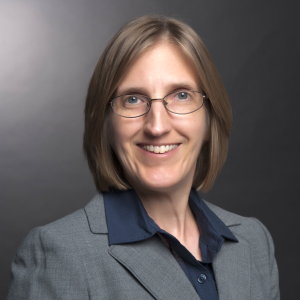
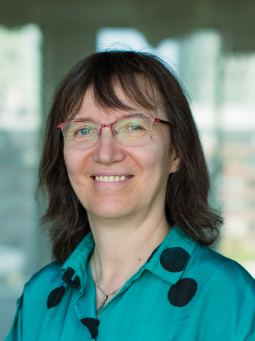
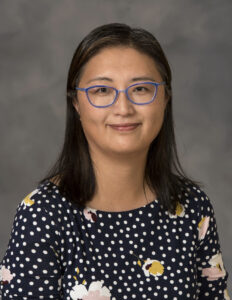
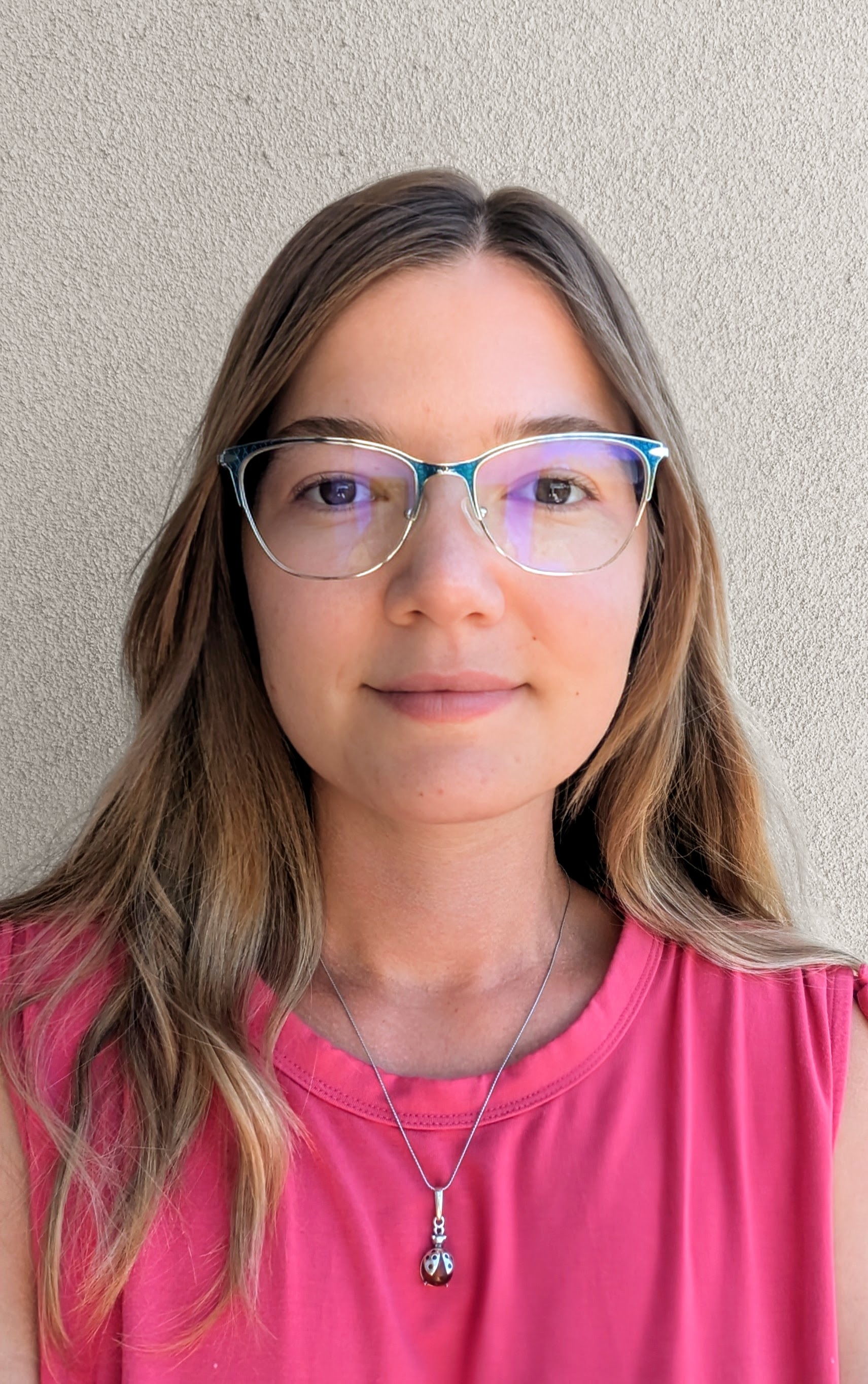
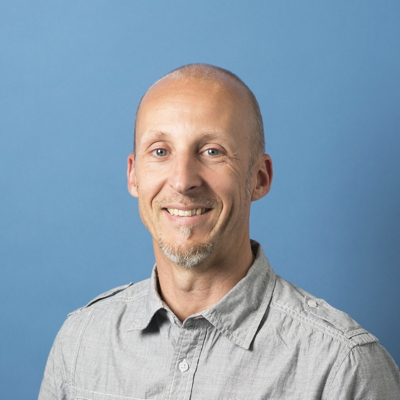
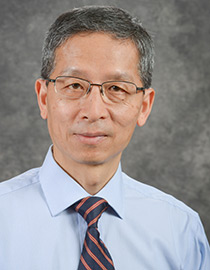
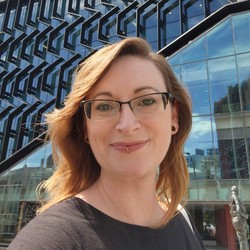
Christine Elsik is a Professor at the University of Missouri, affiliated with the Divisions of Animal Sciences and Plant Science & Technology within the College of Agriculture, Food and Natural Resources (CAFNR). Her research focuses on computational genomics and bioinformatics, with expertise in genome annotation and database development for livestock, aquaculture, Hymenopteran insects, and maize. Key projects include the Bovine Genome Database, Hymenoptera Genome Database, and AquaMine. Dr. Elsik holds a Ph.D. in Genetics from Texas A&M University. She teaches AN_SCI/PLNT_SCI 8430: Introduction to Bioinformatics Programming . Her work is supported by grants from the NSF, USDA, NIH, and the European Union, among others. Research highlights include telomere-to-telomere genome assemblies of livestock, FAANG data ecosystems, and tools like BovineMine and HymenopteraMine. The Elsik Lab collaborates globally to advance agricultural genomics, emphasizing data integration and functional annotation. Her contributions span genomic resources for cattle, honey bees, maize, and aquatic species, with a focus on translating genomic insights into practical applications for agriculture and animal health.
Prof. Maria Bielikova is a Full Professor and former Dean of the Faculty of Informatics and Information Technologies (FIIT STU), now leading research at the Kempelen Institute of Intelligent Technologies (KInIT). Her work focuses on AI ethics, user modeling, and combating disinformation. She has held leadership roles in EU initiatives like the High-Level Expert Group on AI and chairs Slovakia's Permanent Committee for AI Ethics. Education: BSc/PhD in Electronic Computers from Slovak University of Technology Over 30 years at STU, including 15 years as Full Professor and 5 years as Dean Research interests span personalized systems, trustworthy AI, and low-resource machine learning. Authored/co-authored over 280 publications with 4,500+ citations (h-index 30). Secured EU funding for projects like vera.ai and VIGILANT. Supervised 90+ bachelor, 70+ master, and numerous doctoral students. Recognized with national/international awards including Slovakia IT Personality 2016 and Ľudovít Štúr Order 2024. Key contributions include founding the Slovak.AI research center, establishing the PeWe research group, and leading the User eXperience and Interaction Research Centre. Her work bridges academia-industry collaboration through KInIT's international projects with 69+ global partners.
Dr. Shuling Yang is an Assistant Professor in the Department of Education at the University of Maryland, Baltimore County (UMBC). Her work bridges multicultural education, literacy studies, and teacher education through innovative research and pedagogical practices. She holds a Ph.D. from the University of Nebraska-Lincoln and has received prestigious awards including NCTE’s 2023 ELATE Research Award and the AERA Division C Equity Grant. Dr. Yang’s research emphasizes family literacy, AI integration in education, and racial literacies. She explores how culturally sustaining pedagogies can empower marginalized communities, particularly through studies of Asian American immigrant experiences and bilingual education. Her work often employs ethnographic methods and critical frameworks to examine identity negotiation in educational contexts. Her publications span journals like Bilingual Research Journal and Journal of Digital Learning in Teacher Education , addressing topics ranging from generative AI in lesson planning to the role of Mandopop lyrics in biliteracy development. She has held leadership roles including Chair of the Awards & Grants Committee at the International Literacy Association (2022-2024). Awards: 2024 Early Career Reviewer Award (Bilingual Research Journal), NCTE ELATE Award, and multiple grant recognitions. Grants: AERA Equity Grant, NCTE Research Foundation Grant, and others supporting literacy innovation. Professional Engagement: Editorial board member of Reading Horizons Journal and Journal of Literacy and Urban Schools . Dr. Yang’s teaching spans undergraduate and graduate literacy courses, emphasizing critical reflection and culturally responsive practices. Her recent work highlights AI’s transformative potential in teacher education while addressing equity concerns in technology adoption.
Mette Marianne Svenning is a Professor at the Department of Arctic and Marine Biology at UiT The Arctic University of Norway. Her research focuses on microbial communities in Arctic and high-latitude ecosystems, particularly methanotrophs and their roles in methane cycling, permafrost dynamics, and climate change feedbacks. She investigates microbial adaptations to extreme environments, including cold-adapted methanotrophs and their metabolic pathways. Her work integrates genomic, transcriptomic, and biogeochemical approaches to understand microbial contributions to global carbon cycles. Key research themes include methane oxidation mechanisms, microbial community responses to environmental changes, and symbiotic relationships in Arctic seep ecosystems. She has conducted extensive fieldwork in Svalbard and other Arctic regions, contributing to long-term ecological studies at Ny-Ålesund. Her research also explores applications in biotechnology, such as microbial consortia for methane conversion to industrial products. Dr. Svenning collaborates internationally on projects addressing permafrost thaw impacts, microbial biogeography, and the interplay between vegetation, herbivory, and soil microbiota. Her findings highlight the critical role of Arctic microorganisms in modulating greenhouse gas emissions under climate change scenarios.
Nathan C. Hulse, PhD, is an Adjunct Professor at the University of Utah's Department of Biomedical Informatics and Director of Clinical Knowledge Management at Intermountain Healthcare. He specializes in biomedical informatics, focusing on clinical decision support systems, family health history tools, and health information standards development. Education: PhD in Medical Informatics (University of Utah), BS in Computer Science (University of Utah) His research explores: Knowledge management strategies for EHR systems Consumer-facing health informatics tools for risk assessment Integration of genetic data into clinical workflows Standards-based interoperability (HL7, FHIR) Personalized health education delivery Analytics for clinical guideline adherence His publications emphasize: Electronic health record optimization Infobutton systems for point-of-care education XML-based clinical knowledge modeling Peer feedback mechanisms in medical knowledge bases Federated data sharing environments Visual analytics for clinical practice guidelines
Brian Davis is an Assistant Professor and Assistant Head for Teaching & Learning in DCU's School of Computing. As an SFI ADAPT Centre member, his research focuses on Natural Language Processing, including multilingual systems, bias detection, and cyberbullying identification. He leads projects on Irish language technology and ethical NLP applications. Recent work examines LLMs in content moderation and job market fairness.
Sanjay Mishra serves as Professor in the Department of Marketing and Business Law at the University of Kansas School of Business, where he integrates quantitative methodologies with consumer behavior research. His academic foundation includes a Ph.D. and MBA from Washington State University, an M.S. from Ohio State University, and a B.S. from the Indian Institute of Technology, establishing technical rigor across his career spanning four decades. Ph.D., Washington State University MBA, Washington State University M.S., Ohio State University B.S., Indian Institute of Technology Professor Mishra's research centers on consumer preference modeling, choice inconsistencies, advertising processing, and conjoint analysis applications, with significant contributions to new product development and innovation management. His work bridges theoretical marketing frameworks with practical business strategy, particularly examining cognitive processes in consumer decision-making and methodological validation in survey research. Recent expansions demonstrate interdisciplinary reach while maintaining core marketing science principles. Analysis of his 2022-2025 publications reveals strategic diversification into medical research (ophthalmology, immunology), environmental science (sustainable materials, biomimicry), and sociopolitical studies, yet consistently applies his expertise in choice architecture and quantitative modeling. Key trends include repulsion/attraction effect investigations, cross-cultural consumer behavior, and translational applications of marketing science to health and sustainability challenges. His scholarly impact is evidenced through publications in premier outlets including the Journal of Marketing Research, Journal of Business Research, and Marketing Letters, though specific awards remain unlisted in source materials. Professor Mishra's teaching portfolio spans Business in India, Marketing Management, New Product Development, Categorical Data Analysis, and multiple entrepreneurship courses, reflecting his commitment to bridging academic theory with real-world business applications. While student names and grant details are unspecified, his extensive publication record across marketing, engineering, and medical journals suggests active research mentorship and cross-disciplinary collaboration. Current work indicates growing engagement with health sciences and environmental sustainability through methodological innovations in consumer behavior analysis.
Oana Ignat is a Tenure-Track Assistant Professor in the Computer Science and Engineering (CSE) department at Santa Clara University (SCU), School of Engineering. She holds a Ph.D. in Computer Science from the University of Michigan (2022) and completed a postdoctoral fellowship there (2023–2024). Her research focuses on the intersection of Natural Language Processing (NLP) and Computer Vision (CV), emphasizing equitable AI models and social impact applications. She co-organizes workshops like NLP4PI (EMNLP 2024) and leads initiatives to improve diversity in CS through outreach programs such as ACL Mentorship. Research interests include AI for social good, inclusive language-vision models, and multicultural dataset development. Recent work addresses annotation cost optimization, cross-cultural inspiration detection, and socio-economic bias in AI systems. She advocates for ethical AI practices and collaborates with industry (Amazon, Meta) and academia. Her lab at SCU supports PhD students pursuing socially impactful projects. Education: Ph.D. Computer Science, University of Michigan (2022); Postdoc, University of Michigan (2023–2024); Undergraduate: Disparity image segmentation research at Robert Bosch (2015–2016).
Dr. Julie C. Dunning Hotopp is a Professor in the Department of Microbiology and Immunology at the University of Maryland School of Medicine. She is also a Member of the Institute for Genome Sciences and leads research on bacterial DNA integration into animal genomes, with implications for both evolutionary biology and human health. Primary Appointment : Microbiology and Immunology Additional Affiliation : Institute for Genome Sciences Research Overview : Dr. Dunning Hotopp's groundbreaking work focuses on lateral gene transfer (LGT) between bacteria and animals, notably documenting widespread LGT in invertebrates (Dunning Hotopp et al., 2007 Science ) and investigating bacterial DNA integration into human somatic genomes, particularly in cancer (2013 PLoS Comput Bio ). Her lab explores genomic interactions between pathogens like Wolbachia , Ehrlichia , Anaplasma , and Neisseria meningitidis and their hosts. Scientific Awards : 2010 NIH Director’s New Innovator Award 2010 Leading Women of Maryland (Maryland Daily Record) 2010 Genome Technology Young Investigator 2015 NIH Transformative Research Award Recent Publications examine bacterial integration in Drosophila ananassae , filarial nematodes, and human cancers, alongside developing bioinformatics tools for microbial comparative genomics. Labs & Teams : Her research group at the Institute for Genome Sciences investigates LGT mechanisms and pathogen-host genomics, with projects spanning computational genomics, transcriptomics, and public health implications.
Julia Salzman is an Associate Professor at Stanford University, affiliated with the School of Medicine in the Departments of Biomedical Data Science and Biochemistry , with courtesy appointments in Statistics and Biology . She serves as a member of interdisciplinary centers including Bio-X , Stanford Cancer Institute , and Sarafan ChEM-H . Salzman's research focuses on statistical computational biology , particularly RNA splicing , cancer genomics , and microbial systems . Her lab develops algorithms like SPLASH (Statistically Primary aLignment Agnostic Sequence Homing) and SICILIAN for precise splice junction detection, enabling reference-free analysis of genomic data across human , non-model organisms , and planetary health applications (e.g., oceanic systems , plants ). Her 15 most recent publications span 2024–2016, covering topics from cell-free RNA diagnostics to circular RNA in disease . Key methodologies include DEEPEST for gene fusion detection and SQUICH for logarithmic molecular sampling. These works highlight her contributions to cancer biology and viral pandemic response . Scientific Awards include Arc Ignite Investigator (2023) NSF CAREER AWARD (2016) Alfred P. Sloan Research Fellow (2014) Baxter Faculty Scholar Award (2014) Salzman's funding history includes NIH Pathway to Independence and NSF grants . She mentors PhD and Master’s students through courses like BIOMEDIN 290 and BIODS 228 , while leading the Salzman Lab in advancing computational genomics and biological modeling .
Prof. Dr. Renato Pajarola is the Head of the Visualization and MultiMedia Lab at the Department of Informatics, University of Zurich. His research focuses on computer graphics, scientific visualization, and geometric processing, with applications in 3D scanning, point cloud analysis, and real-time rendering. He leads a team developing advanced visualization techniques for high-dimensional data, parallel rendering frameworks, and interactive systems for complex datasets. Key research areas include: 3D reconstruction of indoor environments Tensor approximation for volume visualization Interactive ray tracing and point cloud processing Parallel rendering frameworks (e.g., Equalizer) Scientific computing and sensitivity analysis His recent publications emphasize: High-dimensional data exploration using tensor methods Efficient rendering techniques for large-scale point clouds Integration of citizen-reported weather data for environmental analysis Prof. Pajarola’s lab collaborates on projects like VIAN (visual annotation tool for film analysis) and Terrender (web-based terrain visualization). His Erdős number is 3, reflecting interdisciplinary research connections in mathematics and computer science.
Jyh-Charn 'Steve' Liu is a Professor in the Department of Computer Science & Engineering at Texas A&M University, affiliated with the College of Engineering. His research focuses on real-time distributed systems, cyber-physical security, and interdisciplinary applications such as mathematical expression analysis and GNSS spoofing mitigation. Education: Ph.D., Electrical & Computer Engineering, University of Michigan (1989) M.S., Electrical Engineering, National Cheng Kung University (1981) B.S., Electrical Engineering, National Cheng Kung University (1979) Research Interests: Real-time distributed computing systems Cyber-physical systems security Behavior modeling and simulation Mathematical expression analysis and tools for STEM education GNSS spoofing detection and mitigation Blockchain-based supply chain management Key Publications Trends: Recent work emphasizes AI-driven solutions for mathematical document processing (e.g., LaTeX conversion from images), cybersecurity in navigation systems, and interdisciplinary applications like STEM education tools. Early-career contributions include real-time scheduling algorithms and embedded systems design. Awards: Senior Member, IEEE Computer Society (2014) Nominated for ACM Eugene L. Lawler Award (2013) Conference leadership roles (RTAS 2006/2007) Lab & Collaborations: Leads the Real Time Distributed Systems Lab, exploring areas such as verifiable credentials, urban navigation systems, and medical image analysis. Collaborates on projects like DIME (mathematical expression tool) and MOP (mathematical PDF labeling).
Katherine Storrs is a Senior Lecturer in the School of Psychology at the University of Auckland, New Zealand. She leads the Computational Perception Lab, where she combines computational modeling and psychophysical experiments to study visual perception. Her research is supported by a Marsden Fast Start grant, and she is actively involved in teaching and academic service. She earned her PhD in Psychological Science from the University of Queensland in 2015 and has held postdoctoral positions at Justus-Liebig University (Germany) and the MRC Cognition and Brain Sciences Unit (Cambridge, UK). She also worked as a Data Scientist at Twitter in London. Dr. Storrs' research focuses on how the visual system interprets material properties such as gloss, shape, and reflectance. She uses unsupervised deep learning models to simulate and predict human perception, particularly in ambiguous or complex visual environments. Her work bridges cognitive science, neuroscience, and artificial intelligence. Her most recent publications explore topics such as gloss perception, mental rotation, face similarity, and the role of statistical learning in shape encoding. These works frequently appear in high-impact journals like Nature Human Behaviour , PNAS , and Current Biology , demonstrating a strong trend toward using computational models to explain perceptual phenomena. Marsden Fast Start Grant (2021) Humboldt Research Fellowship (2019) UK National Finalist, FameLab (2017) Editorial Board Member, Nature Communications Psychology (2023–) Editorial Board Member, OpenMind (2022–) Social Media Editor, Perception and i-Perception (2020–) She supervises graduate students and teaches courses including PSYCH 306 (Research Methods), PSYCH 775 (Visual Perception in Brains and Machines), and PSYCH 109. She also mentors students in honours, master's, and PhD programs. Her lab is actively involved in interdisciplinary collaborations, particularly with researchers in machine learning and computational neuroscience. The lab is funded by the Marsden Fund and supported by access to high-performance computing resources for training deep neural networks.
Dr. Thushari Atapattu is a Grant-Funded Researcher (A) and Post-doctoral Research Fellow in the School of Computer and Mathematical Sciences at the University of Adelaide . She leads the Learning Technology for Social Good (LT4SG) research group and contributes to the Computer Science Education Research Group . Her research focuses on text mining , natural language processing (NLP) , and discourse analysis , with applications in educational technology and social good initiatives. Her work addresses challenges such as combating cyberbullying via linguistic fingerprints, modeling mental health through social media data, and analyzing discourse patterns in Massive Open Online Courses (MOOCs). Key projects include: Developing computational models to improve communication processes in education and healthcare. Exploring teachers' academic discourse impact on MOOC video engagement. Creating emotion-annotated mental health corpora and frameworks for detecting learner confusion in online platforms. Dr. Atapattu is eligible to supervise Masters and PhD candidates, focusing on interdisciplinary topics at the intersection of NLP, education, and social impact. Her research group, LT4SG, emphasizes leveraging technology for community-driven solutions.
Werner Winiwarter is a Professor at the Faculty of Computer Science, affiliated with the Research Group Education, Didactics and Entertainment Computing. His work focuses on advancing language learning through computational tools and AI integration. Key contributions include the CLAVELL cognitive linguistic annotation system and RUVA web-based annotation framework. Recent research emphasizes AI-assisted formative assessment in coding education and visual representation of linguistic structures. Research interests span Computer Assisted Language Learning (CALL), educational technology design, and the application of dependency grammar models in e-learning platforms. He has presented at conferences like CSEDU and LREC-COLING, highlighting his work on tools like CLAVELL and RUVA. Collaborations involve international teams exploring language acquisition mechanisms through digital interfaces. His activities include organizing workshops and delivering talks on cognitive aspects of lexicography and visual ontology representation.