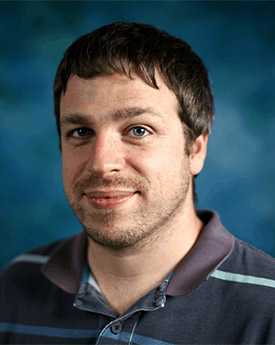
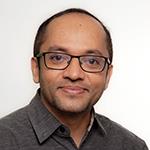
Silke Reineke is a researcher at the Leibniz Institute for the German Language , where she leads the program area 'Oral Corpora' and manages projects like 'Research and Teaching Corpus Spoken German (FOLK)' and 'Social Interaction with voice- and touch-controlled virtual assistants'. She holds a PhD in German Studies from the University of Mannheim (2014) and previously studied at the University of Waterloo, Canada (MA 2009). Her research spans interactional linguistics corpus construction epistemic markers in German conversational analysis Reineke's research focuses on social interactions with voice-controlled virtual assistants, using computational transcription systems like cGAT to analyze spoken German. She explores grammatical and lexical methods of knowledge attribution metadata usage in corpus analysis discourse markers like 'ja' and 'ich dachte' Her publications (2016–2024) emphasize troubleshooting in AI-human dialogue longitudinal user studies pragmatic functions of negation audiovisual documentation standards Scientific awards include the Peter Roschy Prize and Hugo Moser Prize from the IDS. She collaborates on projects like FOLK and cGAT and contributes to open-access linguistic resources.
Teri Schamp-Bjerede is an active doctoral candidate and researcher at Lund University's Centre for Languages and Literature within the Faculty of Humanities and Theology. She specializes in language didactics with a focus on English as a Foreign Language (EFL) writing and computer-generated feedback systems. Her research examines digital writing processes, pedagogical affordances of technology, and L2 acquisition strategies. Education: • Bachelor's in English (Blekinge Institute of Technology, 2004) • MSc in IT (University of Liverpool, 2009) Research Focus: Her work intersects digital pedagogy, linguistic analysis, and educational technology. Primary interests include: computer-assisted writing feedback, affective aspects of digital learning, sociolinguistics in online environments, and interdisciplinary methodologies merging computational linguistics with language education. Publication Trends: Schamp-Bjerede's recent articles demonstrate a strong focus on computational linguistics and digital pedagogy, particularly analyzing social media discourse, sentiment detection, and educational technology efficacy. Her work frequently employs interdisciplinary approaches combining linguistic theory with data visualization and machine learning techniques. Projects: Co-leads the interdisciplinary project Representation of war as autobiographical media: Walter MacKay Draycot, P.P.C.L.I. exploring digital remediation of historical texts. Previously developed the Walter Draycot Web Project, integrating academic standards with digital accessibility.
Stergios Christodoulidis is a researcher specializing in artificial intelligence and its applications in medical imaging and earth sciences. His work spans deep learning methodologies for image analysis, including multiple instance learning, dosiomics, and registration techniques. He contributes to interdisciplinary research in computational biology, digital pathology, and radiomics. Core research in AI-driven medical image analysis Contributions to earth sciences through remote sensing and satellite imagery Focus on low-data regimes and uncertainty quantification in AI models His recent publications highlight innovative approaches in: Visually grounded bias discovery in clinical AI Conformal prediction adaptation for vision-language models Self-supervised learning for histopathology and radiology applications Integration of biological constraints in machine learning workflows
Klaus Tochtermann serves as a Professor at the Institute of Human-Centred Computing within the Faculty of Computer Science at Graz University of Technology. His research spans multiple dimensions of web technologies and knowledge management systems, with particular focus on the Semantic Web and Linked Open Data ecosystems. His research interests center on Semantic Web technologies , Linked Open Data applications , and knowledge management systems . Tochtermann explores how semantic technologies can transform information retrieval, knowledge organization, and collaborative processes in digital environments. His work investigates the economic implications of data value chains within the Web of Data ecosystem and develops methodologies for harvesting and integrating distributed knowledge resources. Analysis of his publication trends reveals consistent contributions to Semantic Web standards, with increasing focus on practical applications of Linked Data in enterprise and academic contexts since 2008. His work bridges theoretical computer science with real-world implementation challenges in knowledge-intensive domains. Stipendiat der Max Kade Foundation (1996) Tochtermann has led numerous significant research projects including EU-funded initiatives like MATURE (Continuous social learning in knowledge networks), ICT_ENSURE (European ICT environmental sustainability research), and FIT-IT Lasso (Lookup & Alignment Service with Semantic Open data). His project portfolio demonstrates strong collaboration with European research institutions and industry partners, addressing critical challenges in knowledge networking and semantic technologies. He actively contributes to academic discourse through conference organization, including I-Know 2009, and maintains engagement with practical applications through press contributions such as 'Bibliotheksgespräche - Future Internet und die Bibliotheskwelt'.
Dr. Ravi Gokani is an Assistant Professor in the Department of Social Work at Lakehead University , Thunder Bay, Canada. His research focuses on the intersection of religion and social welfare , community-based research , and international social work , with particular attention to evangelical faith-based organizations, homelessness, and policy impacts like the Ontario Basic Income Pilot. Dr. Gokani holds a Ph.D. in Social Work (2018) , an M.A. in Community Psychology (2012) , and a B.A. in Philosophy and Social Psychology (2007) . He has received the Lakehead University Contribution to Teaching Award (2022) and teaches courses such as Introduction to Social Welfare . His research includes SSHRC-funded projects on faith and service provision in evangelical organizations and homelessness migration using machine learning. He collaborates with scholars in Health Sciences, Computer Science, and History. Scientific Awards Lakehead University Contribution to Teaching Award, 2022 Dr. Gokani has supervised graduate students on topics including religious beliefs and childhood trauma , Truth and Reconciliation Commission implementation , and substance use treatment in faith-based agencies . His work spans qualitative and quantitative methodologies, addressing social justice and systemic equity.
Dr. Tallulah Andrews is an Assistant Professor in the Department of Biochemistry at the University of Western Ontario. She leads the Andrews Computational Biology Lab, focusing on the integration of biological imaging and multiple -omics technologies to understand the structure of diseased tissues. Her laboratory develops computational tools and pipelines required to analyze and interpret data generated by single-cell and spatial transcriptomics technologies. Dr. Andrews earned her Ph.D. from the University of Oxford, UK, where she used systems biology approaches to identify biological pathways underlying rare genetic diseases. She completed post-doctoral training at University Health Network Research in Toronto and the Wellcome Trust Sanger Institute in the UK. She is a long-term member of the Human Cell Atlas initiative. Her research focuses on developing computational approaches for single-cell and spatial transcriptomics data analysis. Key areas include: Developing methods to distinguish differences between single-cell and single-nucleus RNA sequencing Creating tools for ambient RNA removal to improve data quality Inferring cell-cell interactions from high-throughput data Developing machine learning tools for joint analysis of molecular and imaging data Dr. Andrews' lab has active collaborations on several disease applications including Primary Sclerosing Cholangitis, Biliary Atresia, Atherosclerosis, Soft Tissue Sarcoma, and Alzheimer's disease. Her work bridges computational biology with clinical applications to better understand disease mechanisms. Her recent publications demonstrate a strong focus on methodological development for single-cell and spatial transcriptomics data analysis. She has contributed significantly to the field through both tool development (EmptyDrops, M3Drop) and comprehensive tutorials that guide researchers in proper computational analysis of these complex datasets. She currently mentors several students: Boris Tchatchoua Ngassam (PhD student in Machine Learning) Sunny Pang (MSc Biochemistry) Siraj Elzagallaai (MSc Bioinformatics) Jack Peplinski (4th year Software Engineering/Business) Bryan Lung (4th year HSP Medical Cell Biology) Her laboratory maintains active collaborations with several research groups including the MacParland Lab at UHN, the Taylor group at Northwestern University, the Boffa group at the Robarts Research Institute, and the Prado group at the Robarts Research Institute.
Vera Danilova is a Postdoctoral Research Fellow at Uppsala University's Department of History of Science and Ideas, specializing in computational approaches to historical text analysis. Her work bridges digital humanities and natural language processing, with a focus on extracting meaningful patterns from historical periodicals and archives. Her primary research interests include: Genre classification in historical magazines (1875-1990) Post-OCR correction using large language models Cross-genre transfer learning in dependency parsing Topic modeling for medical history periodicals Development of multilingual NLP resources Recent publications reveal a strong trajectory in applying machine learning to historical document analysis, particularly in genre identification and text restoration for German and Russian periodicals. Her work frequently addresses challenges in historical OCR output and develops specialized tools like UD-MULTIGENRE for linguistic annotation. No scientific awards were documented in the provided sources. Information regarding academic advising, grant funding, or laboratory affiliations was not present in the available materials.
Tulay Dixon is an Assistant Teaching Professor at Emory University, affiliated with the QTM & Linguistics departments. Her work bridges corpus linguistics , academic discourse , language attitudes , and technology in second language education . Key research areas include: Formality in academic writing (e.g., corpus studies on prescriptive rules). L2 spoken/written production (e.g., adverb placement, refusals). Educational technology (e.g., tools like Vocabulary List Generator, meta-analysis of digital gaming). Methodological rigor (e.g., coding protocols, reliability in corpus studies). She presents at conferences like AAAL, AACL, and CALICO, focusing on corpus-driven pedagogy and research transparency. Software projects include Vocabulary List Generator and Introduction to Research Methods App (IRMA) .
Dr. Catriona Anderson is an active researcher at Newcastle University specializing in membrane transport physiology and pharmacology. Her work focuses on proton-coupled amino acid transporters (particularly SLC36 family) and their roles in nutrient absorption, drug delivery, and symbiotic metabolic integration between aphids and Buchnera bacteria. Research Focus: Mechanisms of proton-dependent amino acid transport across biological membranes Structural and functional characterization of SLC transporters Metabolic interdependence in insect-bacteria symbiotic systems Pharmacological applications of nutrient transporters in drug absorption Database curation for the Concise Guide to Pharmacology Her publications demonstrate consistent focus on transporter biology, with recent work examining metabolic adaptations in symbiotic systems and structural modifications of amino acid transporters. She maintains long-term collaboration with Professor David Thwaites, contributing significantly to Newcastle's membrane transport research.
Mark M. Davis is the Burt and Marion Avery Family Professor of Immunology at Stanford University School of Medicine, where he serves as Professor of Microbiology and Immunology. He also holds prominent memberships in multiple Stanford institutes including Bio-X, the Cardiovascular Institute, the Maternal & Child Health Research Institute (MCHRI), the Stanford Cancer Institute, and the Wu Tsai Neurosciences Institute. Since 2004, he has directed the Stanford Institute for Immunity, Transplantation and Infection, and previously served as Chair of Microbiology and Immunology from 2002-2004. His educational background includes a Ph.D. in Molecular Biology from Caltech (1981) and a B.A. in Molecular Biology from The Johns Hopkins University (1974). Dr. Davis's research focuses on the molecular basis of T and B lymphocyte recognition and the control of differentiation and functional responses in these cells. His work spans from analyzing the inherent diversity of immune receptors and relating it to function and specificity to fundamental aspects of TCR biochemistry and cell biology. He pioneered the development of peptide-MHC tetramers, which have become essential tools for staining and isolating specific T cells in both basic science and clinical applications. His lab has also employed systems biology approaches to understand human immune responses to vaccines, twin studies examining environmental versus genetic influences on immunity, and T cell repertoire studies to understand self versus non-self recognition capabilities. His recent publications demonstrate a strong focus on immunological responses to SARS-CoV-2 and COVID-19, examining antibody responses, T cell immunity, and immune correlates of disease severity and vaccine efficacy. His work also extends to understanding immune mechanisms in coronary artery disease, autoimmune disorders, and liver cirrhosis, revealing how basic immunological principles translate to diverse clinical conditions. Dr. Davis has received numerous prestigious awards including election to both the National Academy of Sciences (1993) and National Academy of Medicine (2004), Foreign membership in The Royal Society (2017), the Paul Ehrlich Prize (2004), and the Gairdner Prize (1989), among many others. As an advisor, Dr. Davis mentors numerous doctoral students, postdoctoral fellows, and medical scholars across multiple graduate programs including Biophysics, Immunology, and Microbiology and Immunology. His research is supported by multiple clinical trials focused on influenza vaccination responses across different age groups and in twins to understand genetic versus environmental influences on immunity, including longitudinal studies examining immune function decline in the elderly. Dr. Davis leads a prominent immunology research laboratory at Stanford, where his team continues to develop innovative technologies that have become standard tools in immunology research. His leadership extends beyond his laboratory through directing the Stanford Institute for Immunity, Transplantation and Infection, which fosters interdisciplinary research across immunological sciences, connecting basic research with clinical applications.
Tilia Ellendorff is a researcher at the University of Zurich , affiliated with the Department of Computational Linguistics under the Faculty of Arts and Social Sciences . She contributes to the Text Crunching Center (TCC) by developing solutions for text analytics, information extraction, and natural language processing . Her work bridges computational methods with biomedical and health-related domains, as evidenced by her involvement in the Digital Society Initiative (DSI) Community Health. Fields of Interest: Natural Language Processing, Biomedical Informatics, Text Mining, Information Extraction, Computational Linguistics, Machine Learning Her research focuses on creating annotated corpora, optimizing language models for clinical and biomedical texts, and advancing text mining tools for tasks like entity recognition and causal network extraction. She has contributed to collaborative initiatives such as BioCreative V and SMM4H, emphasizing hybrid approaches and multi-task learning. Contact: ellendorff@cl.uzh.ch
Dr Alistair Baron is a Senior Lecturer at Lancaster University's School of Computing and Communications, with dual expertise in Natural Language Processing (NLP) and Cyber Security. He applies computational linguistics to counter online deception, focusing on fake profiles, social engineering, and forensic applications. His work bridges linguistic analysis with security solutions, including multi-lingual text processing, spelling variation normalisation, and crisis management decision-support systems. Ph.D. Computer Science (Lancaster University, UK) B.Sc. (Hons) Computer Science (Lancaster University, UK) Research interests span robust NLP tool development for cyber-security, with emphasis on: Deception detection in digital personas Spelling variation in historical and online texts Machine learning for forensic investigations Semantic tagging using historical thesauri GIS-Integrated textual analysis Online child protection systems His recent publications demonstrate interdisciplinary focus, combining NLP with security applications (2016-2023). Key projects include insider threat detection, semantic annotation of historical texts, and penetration testing standardisation research. Awards include the Faculty of Science and Technology Research Fellowship and FHEA teaching accreditation.
Melanie Ganz-Benjaminsen is an Associate Professor at the Department of Computer Science (University of Copenhagen) and a researcher at the Neurobiology Research Unit (Rigshospitalet, Copenhagen). With a background in physics and computer science, she focuses on applying medical image analysis , machine learning , and statistical learning to neuroimaging data (PET & MRI) for clinical applications. PhD in Medical Image Analysis (University of Copenhagen, 2011) MSc in Physics (Karlsruhe Institute of Technology, 2007) Current positions: Associate Professor & Researcher Methodological focus: preprocessing , segmentation , registration of medical images Advocates for Open Science and Brain Imaging Data Structure initiatives Recent publications (2025) address: MRI motion artifact correction (Magma Journal) Multiverse analysis frameworks for preprocessing pipelines (Imaging Neuroscience) Neurodevelopmental studies linking serotonin morphology to adolescent behavior (NeuroImage: Clinical) NeuroMark PET atlas construction (bioRxiv) Colon segmentation pipelines (arXiv) Scientific contributions span radiological evaluation validation , hippocampal volume tracking , and AI ethics in healthcare . She organized the 2022 Responsible ML for Healthcare conference and has been featured in media regarding non-sedation medical imaging (2020).
Simon Joel Lowater is a PhD student at the Department of Clinical Research , University of Southern Denmark , associated with the Research Unit of Ophthalmology (Odense) . His research focuses on diabetic eye disease , machine learning applications in ophthalmology, and simulation-based medical education . Education: Cand. Med. (Medical Degree) Research Interests include diabetic retinopathy, ocular sarcoidosis, clinical trials, and advanced imaging techniques like optical coherence tomography. His work explores AI-driven lesion annotation reliability and simulation tools for ophthalmology resident training. Recent Publications address retinal thickness in sarcoidosis, diabetic retinopathy annotation standards, slit lamp simulator validation, and ranibizumab delivery systems. His studies span cross-sectional designs, Delphi methodology, and narrative reviews. Collaborations involve institutions like Karolinska Institute (KI) and Odense University Hospital (OUH), with international co-authors. Media attention includes AI screening for diabetic retinopathy (2025).
Osman Gani is an Associate Professor in the Department of Pharmaceutical Biosciences at the University of Oslo's Faculty of Mathematics and Natural Sciences. His research is conducted from the Pharmacy Building (Farmasibygningen) at Sem Sælands vei 3 in Oslo, where he maintains his laboratory and office in the Physics Building (Fysikkbygningen), room Ø176. Dr. Gani's research focuses on computational medicinal chemistry and chemical biology , with particular expertise in structural bioinformatics, chemoinformatics, and the statistical understanding of computational methods in drug design. His work bridges theoretical computational approaches with practical applications in pharmaceutical sciences, particularly in protein kinase research, molecular modeling, and drug discovery methodologies. Analyzing his publication record spanning from 2007 to 2024 reveals a strong trajectory in computational drug design with increasing interdisciplinary collaboration. While his core expertise remains in computational approaches to medicinal chemistry, his recent work (2020-2024) shows expansion into diabetes research, genetic studies, and marine natural products. This evolution demonstrates his ability to apply computational methodologies across diverse biological and medical contexts while maintaining his foundational focus on molecular recognition and drug-target interactions. Dr. Gani has established productive collaborations both within the University of Oslo and internationally, as evidenced by his co-authorship on multi-institutional studies including work with diabetes registries across multiple countries and genetic studies involving large international consortia. His research demonstrates consistent productivity with publications in high-impact journals including The Lancet Diabetes and Endocrinology, Bioinformatics, and Scientific Reports.