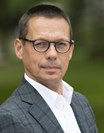
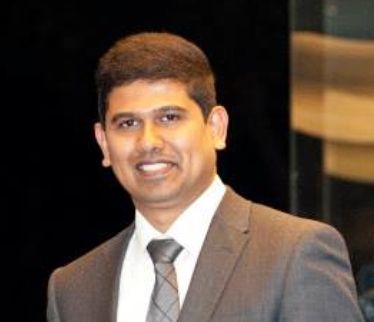
Haley Larson, Ph.D., serves as a Teaching Assistant Professor in Animal Health at Kansas State University's Olathe campus. Her career bridges academia and industry, with prior roles as a Senior Scientist at Cargill Animal Nutrition and Health where she developed the first fully automated dual-flow continuous culture system for cattle rumen simulation. Education: Ph.D. in Ruminant Nutrition from University of Minnesota (2019) B.S. in Animal Science from University of Minnesota (2014) Research Interests focus on ruminal fermentation patterns, in vitro culture systems, biological modeling, and on-farm rapid assays. She specializes in nutritional strategies to optimize cattle performance and reduce environmental impacts through feed additive evaluation and microbial analytics. Academic Contributions include designing graduate programs like the M.S. in Applied Biosciences and Regulatory Affairs in Animal Health Graduate Certificate. Her teaching spans topics such as product development research strategies, EPA regulatory affairs, and zoonotic pathogens in the food chain. Professional Affiliations include American Registry of Professional Animal Scientists, Plains Nutrition Council, American Society of Animal Science, and American Dairy Science Association.
Anthony SIMONOFSKI is an Associate Professor at the Department of Management Sciences within the Faculty of Economic, Social and Management Sciences at the University of Namur. He is actively involved in the Namur Digital Institute (NADI) and leads the Management of INformation and DIgital Transformation (MIND IT) research group. His academic background includes dual doctorates in Business Economics from KU Leuven and Computer Science from UNamur. His educational background demonstrates exceptional interdisciplinary training: Doctor in Business Economics, KU Leuven Doctor in Sciences (Computer Science), UNamur Master in Business Engineering - Information Management, UNamur Master in Handelsingenieur in de Beleidsinformatica, KU Leuven Bachelor in Business Engineering - Information Management, UNamur SIMONOFSKI's research focuses at the intersection of digital technology and public administration, with particular expertise in digital transformation, smart cities, and citizen participation. His work bridges information systems theory with practical governance challenges, developing frameworks for more responsive public services. His recent publications reveal a strong trend toward AI applications in citizen engagement, with increasing focus on ethical implementation and practical frameworks for public sector use. His scientific contributions have been recognized with several prestigious awards: Best Paper Award at the 19th IEEE Conference on Business Informatics (2017) Publica Award for Methodological Guidance of La Louvière (2019) Nomination for the De Woot Award for Master's Thesis (2018) As Principal Investigator, SIMONOFSKI leads seven major research projects with significant funding, including PARIS2 (2025-2029) on proactive digital public services and Di-Fic (2025-2030) on digital citizenship education. He has supervised numerous graduate students and contributes to the academic community through committee service, including serving on the Faculty Council of Economic, Social and Management Sciences. His work with the ALMEN Alumni Association Committee (as Member 2016-2017 and President 2017-2020) demonstrates his commitment to academic community building. He directs the MIND IT research group which focuses on practical applications of digital transformation in public administration, with particular emphasis on citizen-centered design and implementation challenges in real-world governance contexts.
Claudio Linhares is a Senior Lecturer at Linnaeus University within the Department of Computer Science and Media Technology , Faculty of Technology in Växjö, Sweden. His work bridges theoretical research with practical applications in visualization and human-computer interaction. Teaching: Masters courses in Computational Network Analysis, Information Visualization, and Data Analysis Projects; Bachelor thesis supervision; Industry-focused Visual Analytics training Research: Focuses on information/network visualization, visual analytics, and human-in-the-loop AI with cross-sector applications in forestry and healthcare Projects: Leads the Smart Dat initiative for industrial digitalization and collaborates with the Information and Software Visualization (ISOVIS) research group His recent publications demonstrate interdisciplinary applications of visualization techniques, including fairness-aware urban planning tools and temporal network analysis frameworks. Current work explores topological persistence methods and augmented reality training systems for manufacturing SMEs. Linhares contributes to academic collaboration through active involvement in research groups and industry partnerships, while maintaining a teaching-focused role in both undergraduate and graduate programs.
Frans de Roon is a Full Professor at TIAS School for Business and Society , part of Tilburg University. His expertise spans Finance , with a focus on Asset Pricing , Capital Markets , Corporate Finance , and Business Valuation . He has pioneered research on non-listed company valuation and contributed to empirical finance in commodities, emerging markets, and currency markets. PhD in Finance (Tilburg University, 1997) Teaches Finance courses at PhD, MBA, and executive levels Active in applied research and consultancy for Asset & Liability Management, Investments, and Valuation Regular consultant in court cases on investment management and valuation His research explores inflation risk dynamics, hedge fund payoff structures, and fintech’s impact on traditional finance. Recent publications analyze commodity returns, business valuation frameworks, and beta adjustment methodologies. He leads the Master in Finance (MiF) program and collaborates with SRA on SME valuation tools. His work bridges academic rigor with practical applications in financial decision-making.
Tanja Jadin is a Professor at the University of Applied Sciences Upper Austria, working at the Research Center Hagenberg within the School of Informatics, Communications and Media. She leads the Knowledge Media and Engineering department and specializes in digital transformation, educational technology, and knowledge media. Her work focuses on developing innovative educational approaches that integrate digital technologies with traditional teaching methodologies. Dr. Jadin's research interests center on Digital Education, Online Learning, Open Educational Resources (OER), Massive Open Online Courses (MOOCs), and the integration of Artificial Intelligence in educational contexts. She has developed numerous educational frameworks including hybrid learning paths, workplace-integrated learning systems for smart factories, and individualized learning environments. Her work bridges the gap between theoretical educational research and practical implementation in higher education institutions. Her publication trends reveal a consistent focus on the evolving relationship between technology and education, with recent work emphasizing AI applications in teaching and learning. The 2023-2025 publications show a clear trajectory toward integrating artificial intelligence into educational frameworks while maintaining a strong foundation in open educational resources and social innovation. Her work addresses both theoretical aspects of digital education and practical implementation challenges faced by institutions. Dr. Jadin has led multiple significant research projects including Intelligent Hybrid Learning (iHL), Hybrid Learning Path development, Empirical Social Research iMooX, ALeS (Workplace-Integrated Learning in Smart Factory), and chabaDoo (individual learning spaces). These projects demonstrate her commitment to developing practical, evidence-based educational solutions that address contemporary challenges in higher education. Her work extends to educational leadership through the development of certification frameworks for OER implementation in Austrian higher education institutions, showing her influence on educational policy and institutional change. She regularly presents her research findings at conferences and workshops, contributing to the broader educational technology community through knowledge sharing and collaborative development.
Ruşen ERDEM is a Lecturer at the Faculty of Dentistry , Atatürk University , specializing in Clinical Sciences Orthodontics . He holds a Doctorate in Orthodontics from Atatürk University (2019-2024) and a Bachelor's Degree in Dentistry from Istanbul University (2010-2015). Education Doctorate: Orthodontics, Atatürk University, Institute of Health Sciences (2019-2024) Bachelor's: Dentistry, Istanbul University, Faculty of Dentistry (2010-2015) His research focuses on bibliometric analysis of orthodontic and dental AI applications, TMJ disorders, and gummy smile treatments. Recent work includes evaluating AI implementation in dental implantology and cariology, as well as analyzing citation patterns in top orthodontic publications. Current projects involve biomechanical analysis of interradicular and infrazygomatic miniscrew anchorage systems (2022-2024). Collaborations span institutions like Bolu Abant İzzet Baysal University and Alanya Alaaddin Keykubat University.
Dr. Pushpitha Kalutara serves as Head of Course for Built Environment at Central Queensland University's School of Engineering and Technology, holding a PhD in Civil Engineering from RMIT University. With over 17 years of post-graduate experience spanning academia and industry, he maintains active roles as Principal Supervisor for multiple PhD candidates and reviewer for the Journal of Engineering, Construction and Architectural Management. Education: BEng (Civil Engineering) - University of Moratuwa, Sri Lanka PhD (Civil Engineering) - RMIT University, Melbourne, Australia His research focuses on integrating digital solutions with sustainable practices in construction, particularly advancing Building Information Modelling (BIM) for facility management, developing lean procurement frameworks, and pioneering suicide prevention through architectural design. Recent publications demonstrate a shift toward mental health applications in built environments, with significant work on social-spatial design interventions for suicide prevention alongside traditional expertise in asset management and structural health monitoring. Key research trends: Analysis of 15 most recent publications reveals dual trajectories - ongoing development of decision-making frameworks for sustainable community building management (using AHP and neuro-fuzzy systems), and emerging focus on mental health applications in construction (suicide prevention design, industry mental health interventions). His work consistently bridges Australian industry needs with academic research, particularly for councils and infrastructure operators. Awards: Post Graduate Research Award by Engineers Australia and National Asset Management Council (2013) Australian Postgraduate Award Industry (APAI) by ARC Industry Linkage Scheme (2010) Dr. Kalutara actively supervises multiple PhD candidates including projects on construction industry suicide prevention frameworks, AI impacts on road construction project management, and counterterrorism design for critical infrastructure. His industry collaborations span Victorian local councils, Municipal Association of Victoria, and major construction firms. Professional software expertise includes SAP, Revit, AutoCAD, and statistical tools like SPSS and MATLAB for construction analytics.
Andreas Papasalouros is an Associate Professor at the Department of Mathematics, University of the Aegean. He holds a Ph.D. in Engineering from NTUA (2004), a Diploma in Electrical and Computer Engineering (2000), and a BSc in Physics (1992). His research focuses on Educational Technology , Adaptive Hypermedia , and Ontology Engineering . Education Ph.D. in Mechanics, School of Electrical and Computer Engineering, NTUA (2004) Diploma in Electrical and Computer Engineering, NTUA (2000) BSc in Physics, National and Kapodistrian University of Athens (1992) Research Interests Papasalouros's work centers on leveraging UML and Ontologies for designing Educational Software . He explores Automated Assessment systems, Accessibility solutions (e.g., TeX-to-Braille), and Mobile Learning applications. His studies often intersect with Collaborative Learning and Semantic Web technologies. Key Contributions His publications span Adaptive Hypermedia , Ontology-Driven Learning , and Accessibility Tools . Notable works include Ob-AHEM (2002), Grid4All Ontology (2008), and TeX-to-Braille Transcribing (2017). Recent trends emphasize Game-Based Learning and Query Log Analysis for ontology creation. Courses Taught New Technologies in Education (3rd semester) Introduction to Computer Science (2nd semester) Advanced Programming Languages (6th semester) Postgraduate Course in New Technologies in Education
Radmila Suzić is a Professor at Singidunum University, specializing in Applied Linguistics, English Language Teaching, and Digital Education Tools. She holds a PhD in Teaching Methodology from the University of Novi Sad's Faculty of Philosophy (2016) and has published extensively on language anxiety, curriculum development, and technology integration in education. Fields of Interest: Applied Linguistics, Language Anxiety, English Language Teaching, Curriculum Development, Translation Studies, Digital Education Tools Email: rsuzic@singidunum.ac.rs Key Collaborations: Co-authored works with M. Nedeljkovic, A. Puška, T. Dabić, and B. Radić-Bojanić Notable Publications: 'Evolving Methodologies' (2024), studies on multi-criteria analysis in agricultural selection, and research on digital tools in language teaching Her recent articles focus on agricultural decision-making models, digital transformation in education, and cross-cultural language studies. She actively participates in international conferences like SINTEZA and CILRAID.
Dana Mukamel is a Professor of Medicine at the University of California, Irvine, with an affiliation in the Department of Population Health & Disease Prevention within the School of Public Health. Her research focuses on healthcare policy, geriatrics, mental health, and chronic disease management, particularly advanced chronic kidney disease (CKD) and cancer care. She explores topics such as Medicare Part D cost disparities, nursing home staffing and quality, digital mental health interventions, and rural-urban healthcare gaps. Dana's recent publications highlight trends in digital health adoption during the pandemic, staffing instability in nursing homes, and CKD treatment outcomes. Her work often intersects with health equity, examining disparities in rural and minority populations, and innovates through technology-driven care coordination models for seniors. She contributes to policy evaluations, including the Medicare Prescription Payment Plan, Certificate of Need regulations, and Medicaid waiver programs. Her projects frequently involve multi-site collaborations and stakeholder engagement, especially with peer perspectives in mental health interventions and county-level healthcare systems.
Kuldeep Kumar is a Professor at Bond University's Centre for Data Analytics and Bond Business School, where he has taught since 1993 following positions at the Indian Institute of Management and National University of Singapore. He holds a PhD in Statistics from the University of Kent (1986) and maintains prestigious credentials as a Chartered Statistician, Chartered Scientist, and Fellow of the Royal Statistical Society. His research focuses on applied statistical modeling with emphasis on: Time series forecasting and recursive partitioning techniques Financial applications including bankruptcy prediction and fraud detection Healthcare analytics for breast cancer detection and trauma care Forensic accounting using Benford's Law Ethics in higher education Recent publications (2023-2025) demonstrate strong interdisciplinary focus, with 60% in healthcare informatics (ICU mortality prediction, TBI management) and 40% in economic criminology/education. This reflects his dual specialization in medical analytics and financial forensics. Awards and Honors: Teaching Excellence Awards (1998, 2002) Commonwealth Scholarship & Bond-Oxford Fellowship Chartered Scientist designation (Science Council) Excellence in Research Award (2006) International Statistical Institute's Young Statistician Award Supervision includes 6 PhD completions in recent years, with current students working on financial fraud detection and surf hazard modeling. He maintains international collaborations as Visiting Professor at Taiwan's AI-Econ Centre and Affiliate Professor at CENTRUM Católica Peru.
Luke Mathieson is a Senior Lecturer and Deputy Head of School (Teaching and Learning) in the School of Computer Science at the University of Technology Sydney. His academic career spans theoretical computer science with a focus on computational complexity and its applications. Dr. Mathieson's educational background includes a PhD in Theoretical Computer Science from Durham University, a Masters and Postgraduate Diploma in Higher Education from Macquarie University, and dual Bachelor's degrees in Computer Science (Honors) and Science (Chemistry) from the University of Newcastle Australia. His research interests are centered on parameterized complexity and its applications, extending to various areas of complexity theory, algorithmics, quantum computing, graph theory, and related mathematics. A major theme of his research is the complexity of graph editing problems, a topic in which he specializes. His recent work bridges theoretical complexity with practical applications in AI education, network science, and quantum computing. Dr. Mathieson has taught an extensive range of computer science subjects, particularly focusing on the theory of computation, computational complexity, and algorithmics. At UTS, he teaches or has taught subjects including Data Structures and Algorithms, Applications Programming, Computing Science Studio, Theory of Computing Science, Programming, and Advanced Algorithms. He serves as the Course Director for the Bachelor of Science in Information Technology suite of degree programs and the Course Coordinator for the IT Core. Senior Lecturer, University of Technology Sydney, School of Computer Science (2022-present) Lecturer, University of Technology Sydney, School of Computer Science (2021-2022) Scholarly Teaching Fellow, University of Technology Sydney, School of Computer Science (2017-2021) Research Associate, University of Newcastle Australia, Centre for Information Based Medicine (2014-2017) Adjunct Lecturer, Macquarie University, Department of Computer Science (2014) Postdoctoral Fellow, Macquarie University, Department of Computer Science (2011-2013) Research Associate, University of Newcastle Australia, School of Electrical Engineering and Computer Science (2010-2011) His research demonstrates consistent productivity across theoretical computer science with notable contributions to parameterized complexity and network controllability. Recent publications show an expanding scope incorporating quantum computing applications and educational technology innovations. The QB-suite: a framework for quantum algorithm design and benchmarking (2024-2027) National Industry PhD Program: Improving biosecurity through livestock history recording (2024-2028) Random Number Generation and Analytics for Client Understanding (2018-2019) He maintains active research collaborations across multiple institutions and is affiliated with the Faculty Centre for Quantum Software and Information (QSI) at UTS, reflecting his growing involvement in quantum computing research.
Ryan Tsuchida, MD is an Assistant Professor in the Department of Emergency Medicine at the University of Wisconsin–Madison School of Medicine and Public Health. He serves as Assistant Dean for Multicultural Affairs for Health Professions Learners, advancing diversity, equity, and inclusion (DEI) across five health professions degree programs and residency/fellowship programs under UW Health. Education: Undergraduate from University of California, Los Angeles; Medical degree from University of Michigan Medical School; Emergency Medicine residency at University of Michigan Medical Center (Chief Resident). Leadership: President-Elect of the Academy for Diversity and Inclusion in Emergency Medicine (ADIEM); former Chair of the Equity, Diversity, and Inclusion (EDI) Committee at UW. Research & Advocacy: Focus on DEI curricula, health equity dashboards, cultural humility, and systemic bias mitigation in emergency medicine. His work bridges clinical practice and institutional reform. Honors: Wisconsin’s Most Influential Asian American Leaders (2024), BerbeeWalsh Faculty Award for Excellence in Leadership and Service (2022-23), Outstanding Future Academician Award (2021), Dr. Arno Kumagai Award (2021).
Vitali Retšnoi is an Associate Professor at the Centre for Sciences, TTK University of Applied Sciences , with a career spanning over 15 years. His academic journey includes a Doctorate (2012) and Master’s (2003) from the University of Tartu, supervised by Maido Rahula. Education : PhD (Mathematics, University of Tartu, 2012); MSc (Mathematics, University of Tartu, 2003) Career : Lecturer (2010–2013), Associate Professor (2013–2020, 2020–present) at TTK University of Applied Sciences His research bridges pure mathematics and educational innovation, with recent publications focusing on hybrid learning models and generative AI in education. Earlier work includes Lie group representations, tensor fields, and commutative diagrams. He has contributed to environmental science via studies on heavy metal impacts on wastewater treatment. Key Trends in Recent Publications : Generative AI in higher education HyFlex and blended learning environments Self-regulation and academic performance Mathematics assessment and statistical methods Labor market adaptation in vocational training While no specific awards are listed, his collaborative research and interdisciplinary approach highlight his role in advancing both mathematical theory and educational practice. He has supervised no listed students but remains active in co-authoring studies with educational institutions across Europe.
Dr. Assad "Sid" Iqbal is a Visiting Assistant Professor at Purdue University's School of Engineering Education, focusing on democratizing engineering education and enhancing student learning experiences. He holds a Ph.D. in Engineering Education from Utah State University (2022), an MS in Engineering Management (2011), and a BS in Computer Information System Engineering (2005). His research emphasizes broadening participation in engineering, formative assessment strategies, and student well-being, with notable contributions to NSF-funded initiatives like e4usa and e4usa +FIRST . Research Interests: Dr. Iqbal's work bridges educational equity and pedagogical innovation. He explores how formative assessments improve learning outcomes, investigates institutional roles in student mental health, and designs curricula to make engineering accessible to underrepresented groups. Recent projects include robotics integration in K-12 education and analyzing self-regulation in problem-solving contexts. Awards & Recognition: He received the IEEE ASEE Frontiers in Education (FIE) New Faculty Fellow Award (2023), recognizing his early-career contributions to engineering education research. Grants & Leadership: As co-PI on the NSF-funded e4usa +FIRST project, he collaborates to scale robotics curricula nationwide. His work frequently addresses pandemic-era challenges like emergency remote teaching, emphasizing student affective responses and digital adaptation. Labs & Teams: Engaged in Purdue's School of Engineering Education initiatives, focusing on large-scale educational partnerships and data-driven pedagogy.