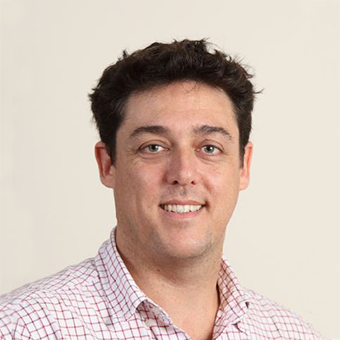
Associate Professor Sam Kirshner is a faculty member at the University of New South Wales within the School of Information Systems and Technology Management . His research focuses on behavioral decision making , algorithmic impact on operations , and artificial intelligence applications in business contexts. PhD in Management Science from Queen’s University, Canada Teaching expertise in data visualization, predictive analytics, and AI ethics Co-author of Business Analytics: A Management Approach Member of the Ethical AI Advisory His research explores how psychological distance and construal level theory influence decisions in supply chains, technology management, and consumer behavior. Recent work examines ChatGPT's decision biases , algorithm aversion , and sustainable operations under financial constraints. Key publication trends show focus areas: AI ethics and human-AI collaboration Behavioral supply chain analysis Temporal/spatial psychological distance effects CO2 forecasting with sparse data Consumer behavior in digital platforms Virtual reality and cognitive processing Supervision roles include mentoring 2 PhD students and 6 honors students, contributing to the next generation of scholars in business analytics and technology management.
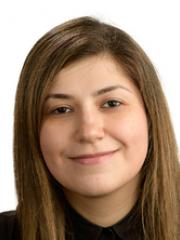
Kerry Taylor is an Associate Professor (Data Science) at the School of Computing, Australian National University (ANU). She holds visiting roles at the University of Surrey (UK) and University of Melbourne. Her career spans 20 years at CSIRO, UN big data projects with ABS, and interdisciplinary research in data management, IoT, and semantic technologies. She lectures in data mining and convenes ANU's postgraduate applied data analytics programs. Education includes a BSc (Hons 1) in Computer Science from UNSW (1983) and a PhD in Computer Science and Technology from ANU (1996). She co-chaired the W3C/OGC Spatial Data on the Web working group (2015-2017) and serves on editorial boards for Knowledge-Based Systems and International Journal of Distributed Sensor Networks . Research focuses on ontologies, semantic web, machine learning in IoT, and spatial data systems. Active projects include government information frameworks, distributed IoT facilities, and sensor data integration. Her work emphasizes interdisciplinary applications of logic-based and semantic approaches to data challenges.
Buyung Kosasih is a Professor in the School of Mechanical, Materials, Mechatronic and Biomedical Engineering at the University of Wollongong. He has held this position since 2000 and focuses on teaching and research in mechanical engineering, including Machine Dynamics, Finite Element Methods, and Renewable Energy Technology. His research spans fluid dynamics in industrial processes, renewable energy systems, and aqueous lubrication. Key projects include 3D-printed surfboard fin optimization and steel coating dynamics. Research interests emphasize experimental and computational fluid dynamics, particularly in renewable energy turbines and tribological systems. Notable awards include the 2013 Outstanding Contribution to Teaching and Learning Award. He has supervised numerous students and led over 20 funded projects, including ARC grants for steel innovation and renewable energy. Collaborative work includes the Steel Research Hub and HVAC/cool roof efficiency studies.
Dr. Amir Ghanbaripour is a Discipline Lead in Planning, Property, and Project Management at Bond University's Faculty of Society & Design, with a PhD in Construction Project Management (2020). He teaches postgraduate courses and leads the Project Management program. His expertise spans project management methodologies, systems thinking, organizational maturity, and gender equality in projects. He is an active member of the Project Management Institute (PMI) as Associate Director for Academic Outreach. Education: PhD in Construction Project Management (Bond University, 2020), MSc in Civil Engineering (Iran University of Science and Technology, 2012), BSc in Civil Engineering (Amirkabir University of Technology, 2009). Research focuses on project success models, agile methodologies, and technology integration in construction education. He leads research projects on megaprojects, sustainable practices, and gender diversity in the industry. Grants include the 2023 FSD Research Project Grant (focusing on construction project strategies) and the 2023 FSD Deans Award (exploring robotics in manufacturing). He supervises PhD candidates and collaborates with national/international organizations on project management innovation.
Dr. Azadeh Ghari-Neiat is a Senior Lecturer in Software Engineering at the University of Queensland's School of Electrical Engineering and Computer Science. She completed her PhD in Computer Science from RMIT University in 2018. Prior to joining UQ, she held academic positions at Deakin University as a Senior Lecturer and at the University of Sydney as a postdoctoral research fellow. Her research focuses on the intersection of Internet of Things (IoT), Mobile Computing, Crowdsourcing, and Cybersecurity. She develops innovative solutions for enhancing connectivity and security in modern computing environments through crowdsourced approaches. Key areas include service composition in sensor clouds, trust management frameworks, and optimization of drone-as-a-service systems. Her publications demonstrate consistent focus on IoT service ecosystems, with recent work exploring blockchain applications and machine learning techniques for dynamic systems. The research trends show evolution from fundamental service composition to AI-driven optimization in distributed environments. Dr. Ghari-Neiat leads projects involving energy service crowdsourcing and secure architectures for cyber-physical systems. Her work maintains strong emphasis on practical applications in delivery systems, UAV networks, and IoT marketplaces.
Professor George Siemens is a leading academic in the field of learning analytics and AI-driven education, serving as Professor and Director of the Centre for Change and Complexity in Learning at UniSA Education Futures, University of South Australia. His work focuses on advancing educational practices through data analytics, artificial intelligence, and understanding online learning dynamics. His research spans MOOCs, social and emotional learning analytics, and the ethical integration of AI in education. Notable contributions include the development of frameworks like the MOOC Replication Framework (MORF) and the DAIR infrastructure for educational AI research. Key publications include studies on student agency in AI environments, practicum effectiveness in teacher education, and synthetic data fairness in learning analytics. He collaborates internationally, with affiliations previously including the University of Texas Arlington. As a Research Degree Supervisor, he guides students in transformative educational technology research. His work emphasizes actionable intelligence for educators and scalable solutions for lifelong learning in the digital age.
Hsei Di Law is a Research Fellow at the National Centre for Epidemiology and Population Health (NCEPH), part of the Australian National University (ANU). She is concurrently pursuing an MSc in Computational Data Analytics at the Georgia Institute of Technology . Her work focuses on data linkage, machine learning, and epidemiological study design using whole-of-population linked datasets. Research Affiliations National Centre for Epidemiology and Population Health (ANU) Centre of Epidemiology for Policy and Practice Linked Data for Better Health group Health Experience and Health Services Research collaborator Research Interests : Hsei Di Law's work centers on large-scale linked administrative datasets and longitudinal data analysis , with applications in environmental contamination (PFAS, asbestos), healthcare economics (out-of-pocket costs), and epidemiology of diseases. She specializes in integrating machine learning techniques with epidemiological study design to address policy-relevant questions. Publication Trends : Her recent publications (2025–2023) analyze healthcare affordability in Australia, PFAS environmental health impacts , and data linkage methodologies . Over 2022–2015, she studied cardiovascular risk under-treatment , COVID-19 healthcare outcomes , and immune system disorders using mouse models. Projects Led : She is involved in multiple projects, including the ACT Asbestos Health Study II , PFAS Health Study , and Whole-of-population linked data project . These projects examine the health effects of asbestos and PFAS contamination , healthcare utilization, and epidemiological modeling . Contact : Email: hsei-di.law@anu.edu.au Phone: +61 2 6125 0547 Location: Building 62A, Room 2.56, ANU
Professor Vinayak Dixit serves as the IAG Chair of Risk in Smart Cities and Director of the Research Centre for Integrated Transport Innovation (rCITI) at the University of New South Wales (UNSW), within the School of Civil and Environmental Engineering. With a distinguished career spanning academia and research leadership, Professor Dixit has established himself as a leading expert in transportation risk analysis and smart city infrastructure. Professor Dixit's research focuses on studying risk in transportation infrastructure systems, with particular emphasis on highway safety, travel time uncertainty, and resilience against natural and man-made disasters. His work integrates cutting-edge approaches including quantum computing applications for transportation network optimization, analysis of connected and automated vehicles, and development of models for transportation resilience. His research interests span multiple disciplines, bridging civil engineering, transportation science, risk analysis, and computational methods. Professor Dixit has secured significant research funding from prestigious organizations including the United States National Science Foundation, Federal Highway Administration, and the Strategic Highway Research Program of the Transportation Research Board. His leadership extends to directing the Research Centre for Integrated Transport Innovation (rCITI), where he oversees a comprehensive research program addressing critical transportation challenges in smart cities through multiple focus areas including Connected Mobility Services, Deep Data and Digitization, Engineering Smart Cities & Logistics, Human-Centred And Automated Systems Design, and Integrated Infrastructure Strategic Planning. Professor Dixit previously served as the Associate Director of Research for the Gulf Coast Centre for Evacuation and Transportation Resiliency at Louisiana State University, where he founded the Driving Simulator Laboratory in collaboration with other faculty members. This demonstrates his longstanding commitment to innovative research infrastructure development and interdisciplinary collaboration across engineering, economics, computer science, and urban planning to address complex transportation challenges in the 21st century.
Professor Stuart James Khan is an Adjunct Professor in the School of Civil & Environmental Engineering at the University of New South Wales (UNSW). He previously served as Director of the Australian Graduate School of Engineering (AGSE). His research focuses on sustainable urban water management, water treatment processes, and chemical contaminant analysis. Khan holds a PhD in Environmental Engineering from UNSW (2003) and a BSc (Hons 1 in Organic Chemistry) from the University of Sydney (1995). His research interests include water recycling, desalination, disinfection byproduct formation, and the safe management of chemical contaminants. He has advised over 15 PhD students on topics ranging from advanced treatment technologies to risk assessment frameworks. Khan has published extensively, with over 200 journal articles and 18 book chapters, emphasizing interdisciplinary approaches to water quality challenges. Key contributions include advancing membrane bioreactor performance, optimizing water recycling systems, and assessing risks associated with emerging contaminants. His work bridges fundamental science and practical engineering solutions, addressing global water security challenges. Current projects explore wastewater-based epidemiology, PFAS remediation, and climate-resilient water infrastructure. Khan collaborates internationally on water reuse strategies and has contributed to policy frameworks for safe water management. His teaching spans courses like Water & Wastewater Treatment and Environmental Risk Analysis, reflecting his commitment to educating future engineers in sustainable practices.
Dr. Thilina Halloluwa is a Teaching Focused Lecturer in the Department of Human-Centred Computing at The University of Queensland (UQ). He holds a PhD in Human-Computer Interaction from Queensland University of Technology (2019) and a Computer Science undergraduate degree from the Sri Lanka Institute of Information Technology. With over 15 years of academic and industry experience, his research emphasizes real-world impact in education technology, financial inclusion, smart agriculture, and HCI. Educational Background: PhD in Human-Computer Interaction, Queensland University of Technology (2019) Bachelor of Computer Science, Sri Lanka Institute of Information Technology Research Interests: Education for All: Leveraging technology to enhance collaborative learning and social experiences in education. Human Money Interaction: Designing ethical AI solutions for financial services, particularly for underserved communities. Smart Agro: Developing AI-driven tools for crop disease detection, yield optimization, and precision agriculture. Software Project Estimation: Improving effort estimation accuracy through explainable AI (Metrix project). Key Contributions: Developed UrbanAgro (tomato disease detection) and BellCrop (bell pepper disease datasets). Pioneered Dhana Labha , a financial management tool for rural Sri Lankan communities. Advanced online exam proctoring systems for low-resource settings. Previous Roles: Lecturer at University of Sydney (2023) Senior Lecturer at University of Colombo (2013–2023) Lab/Team Affiliations: Smart Agro Project: AI-driven agricultural solutions Metrix Initiative: Software project estimation frameworks
George Athanasopoulos is Professor and Head of the Department of Econometrics and Business Statistics at Monash University, a position he has held since 2022. He was appointed Professor in 2019 and has established himself as an internationally recognized expert in forecasting, time series analysis, and applied econometrics. He serves as Past President (since 2024) and former Director (2014-2024) of the International Institute of Forecasters, and is Associate Editor of the International Journal of Forecasting since 2014. His research focuses on hierarchical and grouped time series forecasting, where he has pioneered methods for forecast reconciliation and cross-temporal coherence. His work has significantly influenced forecasting practices across diverse fields including national statistics offices, energy markets, and public health. He is particularly renowned for his contributions to tourism forecasting and macroeconomic modeling in big data environments. Awarded the Australian Awards for University Teaching in 2022 for outstanding contributions to student learning, Professor Athanasopoulos has also received multiple Dean's Awards from Monash Business School for research excellence, teaching innovation, and publication quality. His research output includes over 49 publications and leadership of six major research projects, including the ARC-funded 'Macroeconomic forecasting in a Big Data world' and the RACE for 2030 CRC project on clean energy forecasting. His work contributes to UN Sustainable Development Goals through applications in economic forecasting, energy modeling, and sustainable tourism development. He has supervised numerous research students and collaborated extensively with institutions including Australian National University, Griffith University, and international partners across multiple continents.
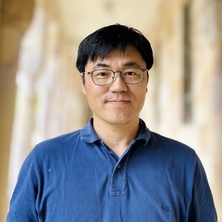
Associate Professor Dan Dongseong Kim is Deputy Director of UQ Cybersecurity and an Associate Professor at The University of Queensland (UQ), Australia. Previously, he held permanent academic positions at The University of Canterbury (UC), New Zealand (2011-2018) as a Senior Lecturer and Lecturer. His research focuses on Cybersecurity and Dependability for AI, IoT, Autonomous Vehicles, Cloud Computing, and Moving Target Defenses (MTD). Doctor of Philosophy in Computer Engineering from Korea Aerospace University Postdoctoral Research at Duke University (2008-2011) Visiting Scholar at University of Maryland (2007) Dan's work explores Graphical Security Models , Moving Target Defense for proactive resilience, and AI-Driven Cybersecurity with emphasis on adversarial robustness and interpretable models. His recent publications (2024-2025) span journals like IEEE Transactions on Dependable and Secure Computing and conferences such as DSN , addressing automated defense, evolving attacks, and hardware-aware security frameworks. He has advised 15 Ph.D. graduates, including researchers now at institutions like RMIT University, La Trobe University, and CSIRO's Data61. Current supervision includes projects on Automated Penetration Testing , AI-Based Intrusion Response , and Moving Target Defense . Dan's research is funded by agencies including the Republic of Korea's Agency for Defence Development and US Army Research Lab . His professional roles include Associate Editor for IEEE Communications Surveys and Tutorials and Steering Committee Chair for IEEE PRDC .
Associate Professor Ernest Ekpo is affiliated with the University of Sydney's Sydney School of Health Sciences, within the Discipline of Medical Imaging Sciences. He holds academic roles as a Scholarly Teaching Fellow and Co-Director of the Medical Image Optimisation and Perception Group (MIOPeG). He is also an Associate Editor of the Journal of Medical Imaging and Radiation Sciences and a member of the Sydney Southeast Asia Centre and Cancer Research Network. Education: Earned BSc (Hons) in Radiography/Sonography from the University of Calabar, Nigeria, and a PhD from the University of Sydney. His research focuses on breast density, cancer biomarkers, medical image perception, radiation dose optimization, and radiology education. He explores applications in low-resource settings and emerging technologies like AI for diagnostic accuracy. Research interests include breast cancer treatment outcomes, image-based phenotypes, and improving imaging pathways for acute abdominal pain. Key themes are Cancer and Medical Imaging, with an emphasis on Women's Health and Chronic Disease. His work combines clinical practice, public health strategies, and technological advancements to enhance diagnostic efficacy and reduce unnecessary procedures. Articles from 2021–2024 highlight his contributions in mammography optimization, radiographer training, and AI-driven diagnostic tools. Recent grants include a 2024 project on CT examination education and a 2023 initiative to streamline breast cancer screening pathways. His awards recognize peer review excellence, early-career teaching, and research leadership. He supervises multiple students investigating breast density biomarkers, imaging modalities for dense breasts, and radiation dose management. His educational efforts aim to improve radiographers' capabilities in identifying urgent findings across CT and X-ray modalities, leveraging blended learning approaches.
Yong-Bin Kang is a Senior Data Science Research Fellow at the ARC Centre of Excellence for Automated Decision Making and Society (ADM+S) at Swinburne University of Technology, affiliated with the School of Social Sciences, Media, Film and Education. He holds a PhD in AI from Monash University and leads numerous transdisciplinary research projects applying artificial intelligence to address complex societal challenges. Education: PhD in Faculty of IT, Monash University, Australia Dr. Kang's research focuses on Responsible AI and Society, with specific interests in developing Societal-AI platforms that integrate social data with ethical principles. His work spans healthcare, humanitech, education, financial planning, environmental health, and justice domains. He investigates how AI can enhance decision-making processes while promoting societal well-being, with particular attention to ethical implementation and human-centered approaches. His expertise encompasses AI, natural language processing, machine learning, and decision-making optimization. Analysis of Dr. Kang's recent publications reveals a strong trajectory toward socially responsible AI applications across diverse domains. His work consistently bridges technical AI capabilities with social implications, particularly focusing on ethical frameworks, community-centered design, and addressing societal inequalities through technology. The publications demonstrate increasing collaboration across disciplines including criminology, environmental science, mental health, and education. Dr. Kang is actively involved in significant research funding initiatives, with multiple ongoing projects that address critical societal challenges through AI. His supervision availability includes Doctorate (PhD) candidates, indicating his commitment to mentoring the next generation of researchers in AI and data science fields. Current Flagship Areas: Digital Capability Innovative Society Manufacturing Futures Sustainable Development Goals: Good Health and Well Being (SDG 3) Industry, Innovation and Infrastructure (SDG 9) Affordable and Clean Energy (SDG 7)
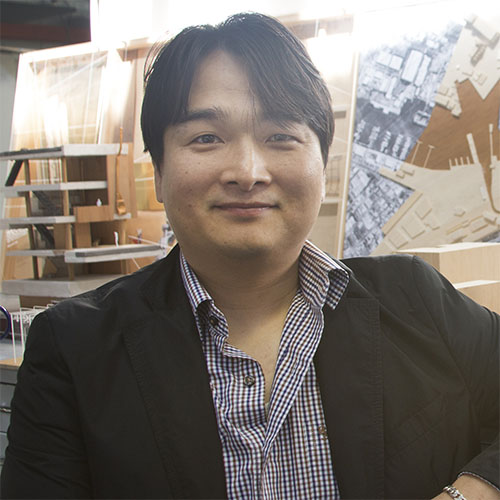
JuHyun Lee is an Associate Professor of Architecture and Computational Design in the School of Built Environment at the Faculty of Arts, Design and Architecture (ADA), University of New South Wales (UNSW) Sydney, where they also hold the prestigious title of Scientia Academic. With a professional background in architecture and construction (1998-2002), they have held academic positions across Australia including a five-year post-doctoral fellowship at the University of Newcastle (2012-2017) and a senior research fellowship at the University of South Australia (2018), following earlier research and teaching roles in South Korea (2003-2011). Lee specializes in architectural design computing, design cognition, and urban complexity, integrating computational methods, cognitive science, and architectural theory to advance architectural intelligence and human-centered design. Their research spans architectural visualization, analysis and design methods, algorithm/protocol design, and data visualization with computational approaches. They have established a strong research program examining the intersection of language, culture, and design cognition, particularly focusing on cross-cultural design communication between Australia and Korea. Lee's recent publications demonstrate a clear trajectory toward increasingly sophisticated integration of computational methods with architectural design theory, particularly in the areas of shape grammar, space syntax, and machine learning applications. Their work shows consistent focus on practical applications of computational design methods to real-world architectural problems, with growing emphasis on cross-cultural collaboration and intelligent design systems. The research portfolio reveals a deepening engagement with AI and machine learning techniques applied to architectural design assessment and generation. Scientia Academic at UNSW Sydney Associate Fellow of the Higher Education Academy (AFHEA, 2020) As an educator, Lee develops cutting-edge courses in computational design and Building Information Modeling (BIM), integrating experiential learning and industry engagement. They have secured over $11 million in research funding, including multiple ARC Discovery Projects and an Australia-Korea Foundation grant. Lee co-directs the Advanced Architectural Analytics Laboratory (A 3 LAB), leading interdisciplinary research on design automation, spatial analysis, and machine learning applications in architecture, while also leading cross-cultural initiatives like the Australia-Korea Architects' Network (AKAN). Lee supervises multiple HDR students working on culturally sustainable urban design, socio-spatial patterns in public housing, and computational layout generation. Their research has significant implications for improving design communication across cultural boundaries and developing more coherent, clear, and accessible built environments through computational design approaches.