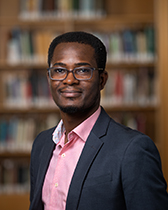
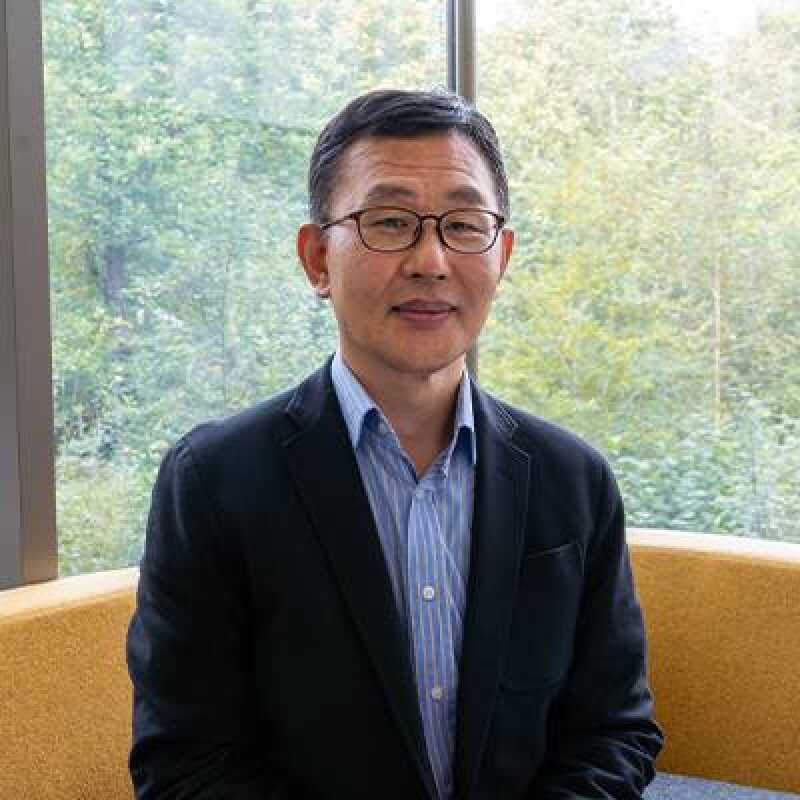
Dotun Ayobade is an Assistant Professor of Performance Studies and Black Studies at Northwestern University. His research focuses on how embodied popular culture shapes community, justice, and activism in postcolonial West Africa, particularly examining the interplay of aesthetics and social performance in Nigeria. He holds a joint appointment across disciplines and has taught at the University of Texas at Austin and Brown University prior to Northwestern. His academic interests include African/Black Performance Theory, African Popular Culture, and the intersection of performance with postcolonial politics. He is currently completing a book on Nigeria’s Afrobeat Queens, analyzing their role in Fela Kuti’s music subculture, under contract with Indiana University Press. This work has earned him prestigious awards, including the University of Texas Continuing Fellowship and Brown University’s Salomon Award. His scholarly contributions span peer-reviewed journals like Dance Research Journal and Journal of African Cultural Studies , with articles exploring topics such as sonic embodiment in Nigerian music and the spatial poetics of protest. He also engages with public discourse through platforms like Africa is a Country , addressing issues like neoliberalism and cultural netizenship. Ayobade’s work bridges performance ethnography, gender studies, and postcolonial theory, emphasizing the agency of marginalized voices in shaping cultural narratives. His research integrates interdisciplinary methods to unpack how performance mediates between individual creativity and collective socio-political realities in Africa and its diasporas.
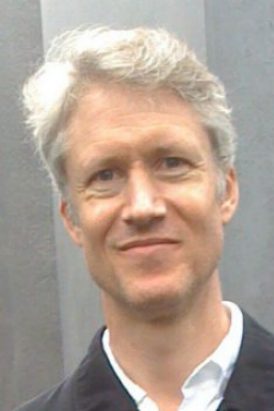
Christopher L. Hill is Professor of Modern Japanese Studies in the Department of Asian Languages and Cultures at the University of Michigan. His scholarly work bridges Japanese studies, comparative literature, and intellectual history with a focus on transnational literary and intellectual currents from the nineteenth century to the present. Research Interests: Hill's research centers on the global circulation of literary forms and intellectual concepts. He investigates how genres like the novel travel across borders and how concepts such as 'civilization' and 'culture' become universalized. His work spans Japanese, French, and American contexts while emphasizing intra-Asian connections among Japan, Korea, mainland China, and Taiwan. Hill is particularly fascinated by the 'flow of ideas and literary forms around the world in the modern age,' examining nationalist thought, Japanese intellectuals' views of Asia in the post-imperial postwar era, and the 'Bandung moment' of the 1950s-1960s when decolonizing countries sought to form political and cultural relations outside European and North American frameworks. Publication Trends: Hill's scholarship consistently explores transnational literary history, particularly the movement and transformation of naturalist fiction across global contexts. His work challenges conventional diffusion models by demonstrating the complex, multi-directional pathways through which literary forms travel and transform. Rather than focusing on origination and reception, Hill emphasizes the 'conditions of travel' that enable unexpected transformations of literary forms as they cross cultural boundaries. His recent work has increasingly focused on Japan's relationship with the Global South and anti-colonial movements. Current Projects: "Facing South: Japanese Writers in the Bandung Moment" - examining Japanese writers' responses to decolonization in Africa and Asia during the 1950s-1970s Research on Japanese writers' participation in the Afro-Asian Writers Association and literary conferences following the 1955 Bandung Conference Studies on the reception of Frantz Fanon in Japan during the 1960s Teaching: Hill teaches undergraduate courses on the modern Japanese novel, cultural history of postwar Japan, modernism, samurai representations, and contemporary Japanese social issues. His graduate seminars cover modern Japanese fiction, literature and social theory, cultural history, and the novel in global context. His courses frequently incorporate film, anime, visual art, and philosophy alongside literary texts.
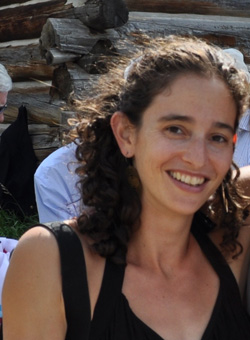
Adrienne Cohen is an Associate Professor in the Department of Anthropology and Geography at Colorado State University, affiliated with the College of Liberal Arts. Her research focuses on the intersections of aesthetics, politics, and urban life in Africa, particularly through ethnographic studies of dance and performance in Guinea. She currently explores rock climbing as a lens for understanding environmental knowledges and kinesthetic practices, supported by the Wenner-Gren Foundation. Education: Ph.D. (2016), M.Phil (2013) in Sociocultural Anthropology from Yale University; M.S.Ed. (2005) in TESOL from Long Island University; B.A. (2001) in International Studies from Pitzer College. Research Interests: Aesthetics and politics, African studies, urban theory, embodiment, environmental knowledges, qualitative methods. Notable works include Infinite Repertoire (2021), analyzing dance in postsocialist Guinea, and recent articles on rock climbing ethnography and feminist testimony. Teaching: Courses span cultural anthropology foundations, African urban studies, ethnographic writing, and contemporary theory. She advises graduate students in cultural anthropology focusing on embodiment, performance, environmental studies, and the Anthropocene. Advising & Grants: Actively mentoring MA/PhD students; her current project on rock climbers has received Wenner-Gren Foundation support. She emphasizes collaborative, fieldwork-driven research. Labs/Teams: Engages in transnational ethnographic collaborations, particularly in Guinea and climbing communities. Her work bridges urban African studies with emerging environmental anthropology frameworks.
Assoc Prof Jacki Job is an acclaimed artist-scholar at the University of Cape Town with over 30 years of international experience in dance, choreography, and theatre-making. As a pioneer of Butoh in Africa and a leading practitioner in decolonial performance strategies, her work bridges artistic innovation and scholarly inquiry. PhD in Dance & Performance Studies (2022) MA in Dance Studies (2014) BA Hons (First Class) in Dance Research (2013) Her research focuses on Non-Western choreographic principles and Indigenous Methodologies, Embodied Decoloniality, Dance as Philosophy, and the Liminal Body. She explores animism, animal-human embodiment, and transformation in performance. Her publications and creative works (2019–2025) examine decolonial aesthetics, relational body theories, and third-space choreography. Notable projects include Daai za Lady (1995–present) and And Then… (2018–2024), which earned UCT Creative Works Prizes and Naledi Award nominations. Scientific awards include: UCT Meritorious Creative Works Prize (2022, 2024) NRF Thuthuka Grant (2019, 2023) David & Elaine Potter Fellowship (2016) Japan Foundation International Performance Grant (2011)
State University of New York at BuffaloUnited States
Colter Harper is a Research Assistant Professor in the Department of Anthropology at the University at Buffalo's College of Arts and Sciences, specializing in ethnomusicology with dual expertise as a performing guitarist. His work bridges academic research and musical practice, focusing on West African traditions and African American jazz history through interdisciplinary anthropological frameworks. His educational credentials include: PhD in Music (Ethnomusicology) from the University of Pittsburgh (2011) BA from Duquesne University Harper's research investigates the socio-cultural dimensions of music across Ghana and Pittsburgh, examining jazz historiography, Highlife evolution, traditional Seperewa performance, and proverb-based analytical frameworks. His fieldwork at the University of Ghana explored contemporary music production within audio archiving contexts, while Pittsburgh research analyzes Black musical labor and neighborhood narratives through jazz's social history. Current projects address pitch cognition in African instruments, cultural sustainability of music archives, and intellectual legacies of scholars like J.H. Kwabena Nketia. Publication trends reveal consistent thematic focus across 15+ years: West African music studies (40%), Pittsburgh jazz historiography (30%), and theoretical frameworks for ethnomusicological analysis (30%). Key subfields include oral tradition transmission, cultural labor dynamics, and decolonial approaches to music archiving, with recent work expanding into cognitive analysis of traditional instruments. Scientific recognition includes: Fulbright Scholar award (2020) for research at the University of Ghana's Department of Music
Dr. Katrien Pype is an Associate Professor at the Department of Social and Cultural Anthropology at KU Leuven University and an Honorary Research Fellow at the Department of African Studies and Anthropology at the University of Birmingham. Her work bridges anthropology, media studies, and African studies with a particular focus on urban Kinshasa in the Democratic Republic of Congo. She has established herself as a leading scholar in the anthropology of communication technologies, Pentecostalism, and urban social dynamics in Central Africa. Dr. Pype received her academic training at KU Leuven, earning an MA in Literature (German literature), an MA in Social and Cultural Anthropology, and an Advanced Masters in Social and Cultural Anthropology, before completing her PhD in Anthropology in 2008. Her doctoral research examined the production of evangelizing TV drama in Kinshasa. Following her PhD, she held prestigious postdoctoral positions including a Newton International Fellowship at the University of Birmingham (2009-2011) and a Marie Curie Fellowship at MIT and KU Leuven (2011-2013). Dr. Pype's research centers on the social and cultural contours of communication in urban Africa, particularly examining how people make sense of communication technologies in their daily lives and how these technologies impact urban lifeworlds. Her work spans multiple interconnected themes: the anthropology of Pentecostal media and religious expression, digital cultures and social media in African urban contexts, intergenerational dynamics and aging in relation to technology, and the politics of urban space and state-citizen relations. She approaches these topics through long-term ethnographic fieldwork in Kinshasa, employing participant observation and in-depth interviews to understand communication practices and their broader social implications. Her extensive publication record reveals a scholar deeply engaged with theoretical developments in media anthropology while maintaining empirical grounding in Central African contexts. Over time, her work has evolved from studying television media to examining mobile phone cultures, digital technologies, and their implications for social relations, political expression, and religious practice. A consistent thread throughout her scholarship is attention to how communication technologies mediate social relations, power dynamics, and cultural transformations in urban African settings. Newton International Fellowship (2009-2011) Marie Curie Fellowship (FP7-2009) (2011-2013) Odysseus grant (FWO G.A005.14N) FWO-ERC-Runner Up Budget (FWO G.0.E65.14N) Dr. Pype actively mentors students interested in popular culture, technology and society interactions, gender, and aging. She leads a research team working on technology cultures in urban DR Congo and beyond (1960-present), which includes five doctoral and postdoctoral scholars. This project, funded by an Odysseus grant and an FWO-ERC-Runner Up Budget, produces ethnographies of medical, energy, and communication cultures in Kinshasa, Kikwit, and Nakuru. Additionally, she is involved in a comparative research program on New Media Practices in a Changing Africa, funded by the Norwegian Research Council. Beyond her formal mentorship, she fosters academic community through the Congo Research Network, which she founded in 2009 to connect scholars working on the Democratic Republic of Congo. Dr. Pype directs the Congo Research Network, which brings together humanities scholars studying the Democratic Republic of Congo. Her current research team investigates technology cultures across urban Africa, examining how digital technologies intersect with medical practices, energy systems, and communication patterns. This work positions her at the forefront of scholarship on digital transformations in African urban contexts, while maintaining deep connections to historical trajectories and local cultural practices.
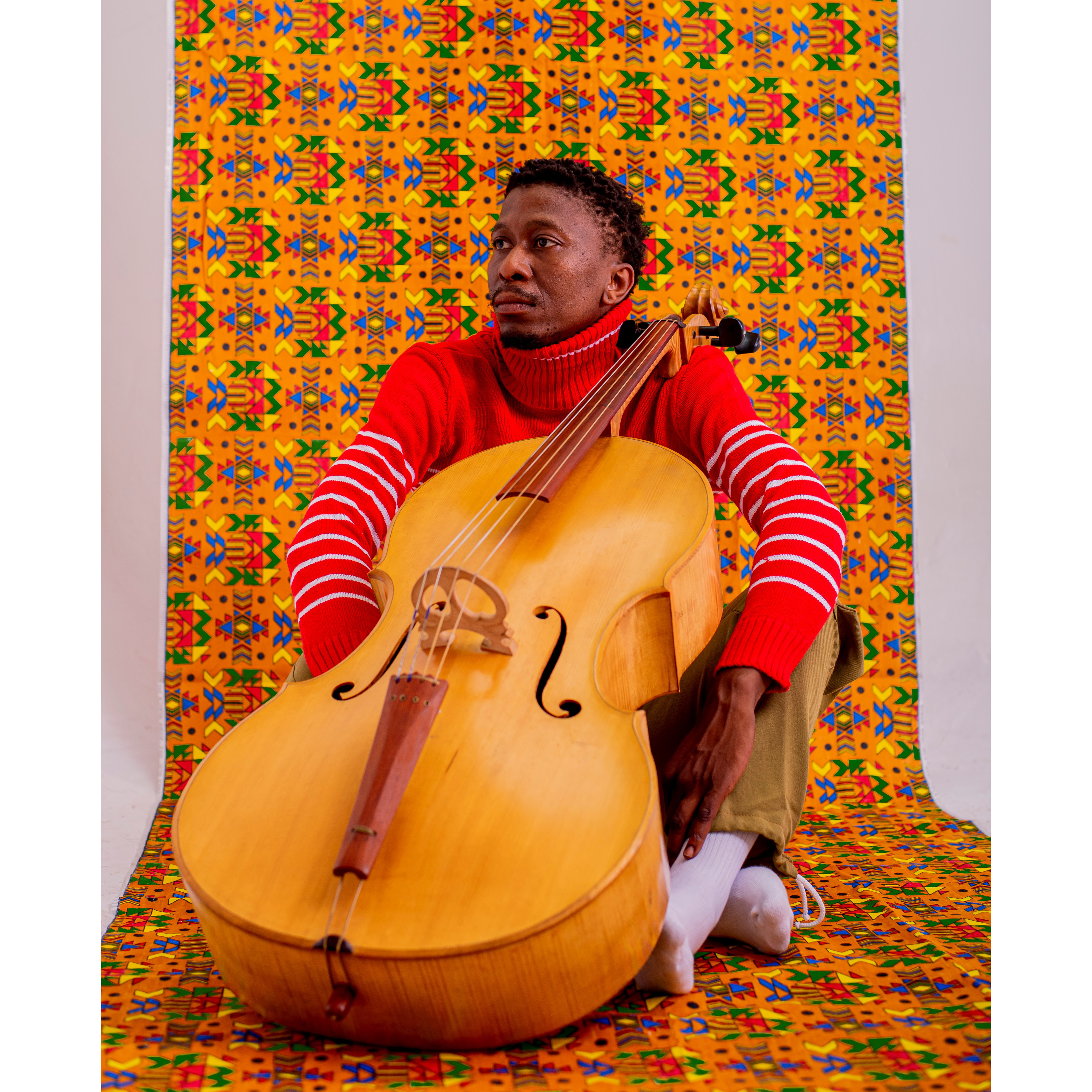
Dr. Thokozani Mhlambi is a creative musician, composer, and interdisciplinary artist affiliated with the University of Bayreuth through its Bayreuth Academy. His work bridges African philosophies, historical narratives, and experimental music, using baroque cello, vocals, and reed ensembles to reimagine cultural legacies such as the Zulu capital Umgungundlovu. He has performed globally at institutions like MoMA (New York), Zeitz MOCAA (Cape Town), and Savvy Contemporary (Berlin), while engaging in cross-cultural collaborations with artists like Angel Bat Dawid and Douglas R Ewart. PhD in Music from University of Cape Town Visiting lecturer at universities in Finland, Brazil, and USA His research integrates ethnomusicology , sound art , and interdisciplinary practice , focusing on reinterpreting African history through avant-garde techniques and non-traditional rhythms. Projects like Playing with Tape and Umgungundlovu Suite highlight his exploration of sonic storytelling and creative methods. Recent article trends reveal a consistent focus on historical reclamation , experimental composition , and African sonic identity , often blending Western classical instruments with African narratives. Scientific Awards Artist-in-Residence at Cite International Des Arts (Paris, 2020), supported by the Institut Français Invited contributor to the Dutch Art Institute’s Roaming Academy (2019) As a lecturer, Mhlambi has mentored in international academic settings, though specific advisees are not listed. His practice also intersects with grants from cultural institutions supporting artistic research and residencies. Labs & Collaborative Platforms He collaborates with the Africa Multiple Cluster of Excellence (Bayreuth), University of Cape Town, and the Association for the Advancement of Creative Musicians (Chicago), engaging in sound-based reimaginings of historical sites and cultural identities.
Madison Mainwaring serves as Assistant Professor of French and Francophone Studies at the University of Notre Dame, specializing in nineteenth-century literature and cultural history across France and North Africa through the lens of performance studies and feminist theory. Education: Ph.D., Yale University M.F.A., Warren Wilson College M.A., École des Hautes Études en Sciences Sociales B.A., Middlebury College Her research interrogates how minority groups appropriate performance for self-representation, challenging cultural hierarchies and methodological orthodoxies. Current projects include Reclaiming the Silences of Dance: Women and Ballet in Nineteenth-Century France , which analyzes female experiences at the Paris Opera through administrative archives and performance artifacts, and Choreographing Empire: Dance and the Maghreb , a transnational study of gender, race, and citizenship in the Afro-European diaspora. Her work consistently centers women's agency in artistic expression and historical narrative construction. Recent publications (2022-2024) reveal thematic continuity in ballet history, gender representation, and transnational cultural exchange, spanning from 19th-century France to contemporary hip-hop. These works demonstrate methodological innovation through interdisciplinary archive analysis and bridge academic scholarship with public discourse via contributions to major media outlets. Scientific Awards: Naomi Schor Award from Nineteenth-Century French Studies Larry Schehr Memorial Award from Nineteenth-Century French Studies MacDowell Fellowship Mary Isabel Sibley Fellowship of Phi Beta Kappa Chateaubriand Fellowship of the French Embassy Marguerite Peyre Prize from Yale University Her research has been supported by prestigious fellowships including the Chateaubriand and MacDowell programs, while her public scholarship in The Atlantic , The New York Times , and France 24 extends academic insights to broader audiences through analyses of figures like Britney Spears and Catherine Deneuve. A collective biography of French New Wave actresses is currently under contract with Public Affairs and Bloomsbury Continuum. No information regarding laboratory facilities, research teams, or student advising was documented in the provided sources.
Professor Soo Hee Lee is a full Professor of Organisation Studies at Kent Business School, University of Kent, where he has taught and researched since July 2012. He previously held faculty positions at Birkbeck, University of London, Cass Business School and the University of Sheffield, and has been a visiting scholar at USTC, KAIST, Sungkyunkwan University, ESSEC and TiasNimbas. Education & affiliations: While explicit degrees are not listed, his long-standing faculty roles and editorial board memberships ( Technological Forecasting & Social Change , Global Transitions ) confirm senior academic standing. Research interests: Lee interrogates the institutional and behavioural foundations of strategy, innovation, knowledge, trust and power. Early work centred on emerging-economy MNCs; recent projects examine digital convergence and creativity across architecture, fashion, food, museums and dance. Publication trends: Across 60+ outputs the corpus blends organisation theory with creative-industry empirics, tracing how platforms, museums and art fairs legitimise new actors, how blockchain reconfigures inter-organisational trust, and how policy shapes innovation in small economies. Doctoral supervision: He has supervised twelve PhD researchers to completion or in progress, exploring ethical leadership in Vietnamese MNCs, hybrid logics in UK/French art museums, branding of visual artists, social capital of expatriates, and radical innovation in coordinated market economies. Teaching & service: Modules taught include Creativity & Innovation in Organisations, Leadership & Management, Research Methods for HRM, and Generating Theory & Presenting Research. He serves on the scientific committee of the International Conference on Social Theory, Politics & the Arts.
Lisa Wilson is an Associate Professor at the University of Cape Town’s Centre for Theatre, Dance and Performance Studies, specializing in dance education and critical dance studies. Her work intersects decolonial African feminism, performance studies, and embodied pedagogies to explore empowerment, agency, and liberation for women of color and students through dance. PhD candidate, University of Exeter MA Creative Arts in Education, University of Exeter BCA Dance, Wesley Institute, Australia BSc Management and Economics, University of the West Indies, Jamaica Wilson’s research focuses on decolonizing dance education, cultural heritage preservation, and social activism through embodied pedagogies. Her creative practice addresses racism, climate change, and women’s healing in global collaborations with organizations like daCi, ICDF, and Wildflower Africa Dance Project. She co-founded the UCT Youth Dance Program (2014) with New World Dance Theatre and has presented internationally across six continents. Her publications in journals like Research in Dance Education and Journal of Dance Education emphasize culturally responsive pedagogy, intercultural dance projects, and the integration of African diaspora traditions in contemporary education. Recent work includes cross-border initiatives like Women of Consequence and the Red Apples-Green Apples collaboration with Denmark. Lisa Wilson actively engages in socially conscious dance projects, linking movement to global issues like climate change and systemic racism. She has collaborated with artists such as Lynnette Young-Overby and Maxwell Xolani Rani, with creative works presented in South Africa, India, Australia, and the United States.
Leila Tayeb is an Assistant Professor in Residence at Northwestern University in Qatar, with a joint appointment in the Communication Program and Liberal Arts Program. She holds a PhD in Performance Studies from Northwestern University, an MA in Performance Studies from NYU, and an MA in International Affairs from The New School. Prior to her current role, she held postdoctoral positions at NYU Abu Dhabi and Cornell University. Her research focuses on performance and politics, sound and militarism, dance studies, Islam and the state, and state-sponsored performance, with a regional emphasis on Libya and broader MENA and Africana studies. She teaches courses such as Introduction to Performance Studies , blending interdisciplinary approaches to cultural and political analysis. Her publications explore topics including Libyan cultural politics, digital intimacy in conflict zones, and the intersections of sound, memory, and revolution. While no specific awards or grants are listed, her work reflects a deep engagement with post-Qaddafi Libya’s sociocultural dynamics. Leila Tayeb’s academic contributions span theoretical and applied research, bridging academic rigor with contemporary socio-political issues in North Africa and the Middle East.
Anders Hagberg is a Professor of Musical Performance/Improvisation at the University of Gothenburg's Department of Music, School of Music, Performing Arts and Theatre. His work bridges multiple disciplines, emphasizing improvisation, cross-cultural collaboration, and spatial acoustics. Hagberg has performed globally, collaborating with artists from India, Japan, South Korea, the U.S., West Africa, and Brazil. His research explores modal harmony, musical presence, and acoustics in performance, fostering international projects and educational tools to enhance musicians' creativity. Key collaborations include projects with Scandinavian, Middle Eastern, Indian, and Korean artists, as well as boundary-pushing performances at venues like the Show of Hands Festival (Istanbul) and the National Flute Association Convention (San Antonio). His work integrates dance, visual arts, and interdisciplinary practices, with recent highlights including the 2024 European Low Flutes Festival and solo concerts in Washington DC. Notable publications include works on Mussorgsky adaptations and spatial composition, reflecting his dedication to expanding musical boundaries. Hagberg's performances and workshops emphasize innovative pedagogy and global artistic exchange, positioning him as a leading figure in contemporary musical performance.
Neelima Shukla-Bhatt serves as Professor of Religious Studies at Wellesley College, where she teaches courses on South Asian religions, art, literature, and cinema. Her interdisciplinary scholarship bridges religious studies, history, and cultural analysis with a regional focus on South Asia, particularly Gujarat. Her educational background includes: B.A. from Maharaja Sayajirao University of Baroda M.A. from Maharaja Sayajirao University of Baroda M.Div. from Harvard University Ph.D. from Harvard University Shukla-Bhatt's research investigates cultural expressions of cosmology through poetry, music, dance, and digital media in South Asian religious history. Key emphases include Hindu Bhakti traditions , the divine feminine in goddess worship, Gandhian satyagraha as cultural resistance, and gendered agency within patriarchal frameworks. Her work consistently connects historical religious practices to contemporary social movements, notably analyzing parallels between Indian Bhakti poetry and the US civil rights movement. Analysis of her recent publications reveals three dominant trajectories: (1) reinvention of Hindu deities in modern political contexts, (2) media-technology intersections with religious authority (especially diaspora television), and (3) revival of regional Bhakti poetry as tools for moral education. Her scholarship demonstrates increasing engagement with contemporary challenges like religious pluralism and 21st-century feminism while maintaining deep roots in Gujarati literary traditions. Professionally, she has expanded her impact through HarvardX's online course World Religions through its Scriptures and teaching at Ashoka University in Delhi. Her approach emphasizes transforming religious literacy into practical pluralism, evidenced by global student engagement in her digital courses. Outside academia, she practices Indian classical music ( riyaz ), embodying her research on embodied religious expression.
Professor Sarahleigh Castelyn is an educator, researcher, performer, and choreographer specializing in dance, currently serving as a Professor and Postgraduate Research Degree Leader in the Department of Music, Writing & Performance within the School of Arts and Creative Industries at the University of East London. Born in Pietermaritzburg, South Africa in the 1970s, she has developed an international career bridging the United Kingdom and South Africa, with deep expertise in South African contemporary dance practices and their political dimensions. Her research interests focus on the intersection of dance with critical social issues including race, gender, sexuality, nation, and politics in apartheid and post-apartheid South Africa. She explores the politics of hybridity and the use of practice as research methodology, with particular attention to marginalized dance practices from the Global South. Recent work has examined the representation of women and madness in performance, as well as the toyi-toyi as a powerful political dance motif in South African protest culture. Castelyn's scholarly output demonstrates consistent engagement with contemporary South African dance, examining how dancing bodies become sites of political resistance and identity formation. Her publications reveal evolving interests from early work on HIV/AIDS representation in dance (2008-2010) to more recent explorations of xenophobia, disability, and decolonial approaches to Western dance forms. Her 2022 monograph Contemporary Dance in South Africa: The Toyi-Toying Body represents a significant contribution to the field. She actively serves on numerous editorial and organizational boards including the South African Dance Journal, HOTFOOT, Research in Dance Education, and the African Theatre Association. Her commitment to mentoring is evident through her supervision of PhD students and leadership of the JOMBA! KHULUMA writing residency project that connects students from UEL with those from the University of KwaZulu-Natal. Castelyn has secured substantial research funding from multiple sources including UEL's ACI Research Support Fund, UEL Undergraduate Research Intern Scheme, and previously the UK's Arts and Humanities Research Council for her doctoral work. Her ongoing projects include research on representations of women and madness, feminist theatre collaborations, and an edited collection on contemporary dance in Africa.
Northern School of Contemporary DanceUnited Kingdom
Bradley Shelver is an internationally recognized dancer, choreographer, and educator. He serves as the Artistic Director of The Brooklyn Dance Festival Company and holds faculty positions at institutions worldwide, including ABT/JKO School, Limón Institute, and the Royal Danish and Swedish Ballet Schools. He is a principal dancer with The Metropolitan Opera Ballet and founder of Bradley Shelver Contemporary Dance Theater. Shelver trained at the National School of the Arts (Johannesburg) and The Ailey School (New York). His choreographic works have been performed by companies in the USA, Israel, Sweden, Denmark, South Africa, and Italy. He has also curated festivals such as REVERBdance (2010–2016) and directed STEPS Repertory Ensemble (2013–2016). As an educator, he emphasizes technical precision and artistic expression, contributing to Dance Spirit Magazine and authoring a seminal text on Lester Horton’s dance technique. His teaching spans ballet, contemporary, and choreographic practices across global institutions.