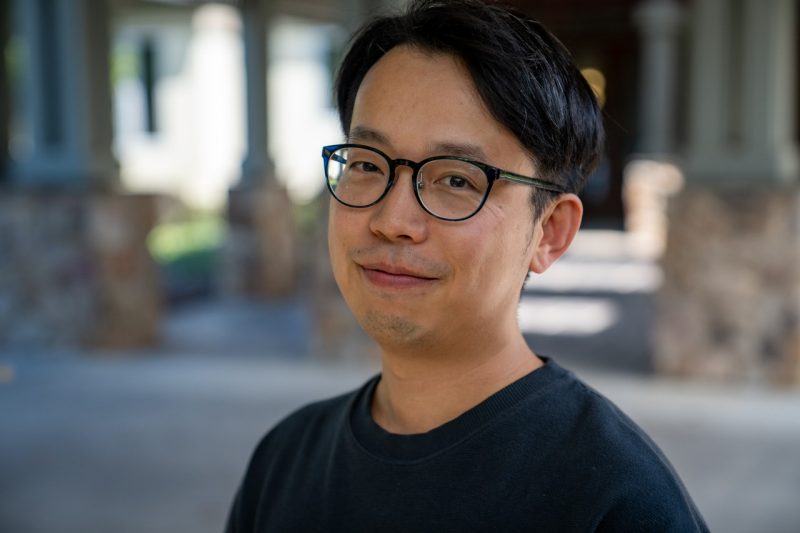
Tijay Chung is an Associate Professor at the College of Engineering , Virginia Tech , specializing in Internet Security and Internet Measurement . His work bridges theoretical and applied aspects of cybersecurity, focusing on secure communication protocols and infrastructure. Education Ph.D., Computer Science and Engineering, Seoul National University (2015) B.S., Computer Science and Engineering, Pohang University of Science and Technology (2009) Research Interests Chung's research centers on improving certificate revocation mechanisms, DNSSEC, and TLS security. He explores vulnerabilities in web encryption, develops decentralized cryptographic solutions, and analyzes internet governance protocols like BGP and RPKI. His work also extends to privacy in contact-tracing technologies and understanding content distribution dynamics in peer-to-peer systems. Recent publications highlight trends in : Enhancing TLS and DNSSEC operational security Decentralized cryptographic accumulators for revocation Longitudinal studies of PKI and certificate ecosystems Privacy guarantees in Bluetooth Low Energy (BLE) systems Advising No student names were explicitly listed in the provided materials.
Florina Almenares Mendoza is an Associate Professor at the Telematics Engineering Department of Carlos III University of Madrid , where she also serves as the Director of the University Master's Degree in Cybersecurity. Her research focuses on addressing security challenges in emerging technologies such as IoT, post-quantum cryptography, and privacy-preserving systems. Email: florina.almenares@uc3m.es Contact: 916246234 Location: 4.0.F06 - Quevedo Towers (Leganés) Research Interests Florina's work spans cybersecurity , Internet of Things (IoT) , and post-quantum cryptography , with a focus on scalable authentication, quantum-resistant protocols, and privacy. She explores machine learning applications for security, federated identity management , and smart grid security frameworks. Recent Publications Her recent research includes papers on DNSSEC soft delegation, hybrid quantum security for TLS/IPsec, PUF-based authentication in IoT, and blockchain-enabled auditability. These studies emphasize IoT security , quantum-resistant algorithms , and privacy-enhancing technologies .
Douglas Stebila is an Associate Professor in the Department of Combinatorics and Optimization at the University of Waterloo, Faculty of Mathematics. His research focuses on cryptographic protocols, with an emphasis on post-quantum cryptography, TLS protocol security, and key exchange mechanisms. He has contributed to the design and analysis of cryptographic systems resilient to quantum computing threats, including work on hybrid key exchange methods and post-quantum TLS implementations. Stebila is involved in standards projects such as the Open Quantum Safe initiative, aiming to transition existing infrastructure to quantum-resistant algorithms. His recent work addresses security models for cryptographic protocols, including formal verification of key establishment schemes and analysis of real-world protocols like Signal and TLS. His research spans theoretical cryptography, applied protocol analysis, and implementation security. Key contributions include studies on obfuscated key exchange, verifiable decapsulation of post-quantum KEMs, and optimization of TLS handshake efficiency (e.g., TurboTLS). He also explores challenges in cryptographic protocol design, such as preventing double authentication and ensuring resistance against side-channel attacks. His work frequently bridges academic research with practical applications, emphasizing the transition of cryptographic innovations into real-world systems. Stebila collaborates with industry and academic partners on projects like the Open Quantum Safe initiative, which develops libraries for post-quantum cryptography integration. His publications often address security analyses of emerging protocols and their vulnerability to both classical and quantum adversaries. He has co-authored conference proceedings for major venues like CRYPTO and SAC, and contributed to standards documentation for protocols such as TLS and SSH.
Cristian E.W. Hesselman is a Full Professor at the University of Twente’s Department of Computer Science, specializing in the Design and Analysis of Communication Systems. His research focuses on cybersecurity, network security, and distributed systems, particularly in areas like DDoS mitigation, quantum-safe cryptography, and critical infrastructure protection. He has contributed to over 50 peer-reviewed publications since 1999 and actively collaborates internationally on security-related projects. Research interests include securing network protocols (e.g., DNSSEC, NTP), evaluating infrastructure vulnerabilities, and developing collaborative defense strategies against cyber threats. His work aligns with UN Sustainable Development Goals related to resilient infrastructure and innovation. Recent research highlights include studies on DDoS-resilient digital societies, NTP pool analysis, and quantum-safe cryptography testbeds. He has presented at conferences such as ANRW 2024 and delivered keynotes on middleware for secure media streaming. Dr. Hesselman has supervised 2 academic works and participates in activities like the Cyber Security Next Generation Workshop.
Anja Feldmann is Director at the Max Planck Institute for Informatics in Saarbrücken and Professor of Internet Network Architectures at Technische Universität Berlin (since 2006). Previously she held a full professorship at Technische Universität München (2002–2006) and conducted research at AT&T Labs Research , Saarland University , and Carnegie Mellon University , where she earned her Ph.D. in 1995. Education Ph.D. in Computer Science, Carnegie Mellon University, 1995 M.Sc. in Computer Science, Carnegie Mellon University, 1991 Diplom in Computer Science, Universität Paderborn, 1990 Research Interests Anja Feldmann’s research centers on measurement-driven understanding of the Internet. She tackles challenges such as software-defined networking , cloud-network interactions , performance debugging , and traffic characterization . A growing focus is the privacy and security of networked systems, evidenced by recent studies on online tracking, DNS security, and disinformation ecosystems. Her group designs scalable measurement platforms that combine passive and active monitoring , programmable data planes , and machine-learning analytics to dissect phenomena ranging from terabit-scale traffic to covert tracking on illegal streaming sites. Recent Publication Themes The 2021-2025 publications reveal a methodological evolution toward large-scale, longitudinal measurement . Topics include: Impact of global events (COVID-19, CrowdStrike outage) on Internet traffic Cross-country tracking ecosystems and privacy leaks DNS root and routing plane stability and security ML-driven real-time monitoring at terabit speeds Disinformation campaigns on encrypted messaging platforms Scientific Awards Gottfried Wilhelm Leibniz Prize (2011) – Germany’s highest research honor Berliner Wissenschaftspreis (2011) Elected Member of the German National Academy of Sciences Leopoldina (2009) Advising & Grants While individual student names are not listed, Prof. Feldmann leads a vibrant team at MPI-INF’s Internet Architecture department. She has supervised numerous doctoral candidates and post-doctoral researchers whose work is reflected in the co-authored papers. Funding sources include the German Research Foundation (DFG) via the Leibniz Prize and EU Horizon projects, although explicit grant numbers are not provided in the source material. Labs & Teams She heads the Internet Architecture department at MPI-INF, located at the Saarland Informatics Campus . The department operates state-of-the-art measurement infrastructure—including programmable switches, honeynets, and global vantage points—to support empirical network science.
Taejoong Chung is an Associate Professor in the Computer Science department at Virginia Tech. He received his PhD in Computer Science and Engineering from Seoul National University in 2015. His research focuses on Internet security protocols including DNS, TLS/HTTPS, routing (BGP/RPKI), and email security, with an emphasis on protocol deployment challenges and internet measurements. His work has earned recognition including an NSF CAREER Award (2024), Outstanding New Assistant Professor award from Virginia Tech's College of Engineering (2024), ACM CCS Best Paper Honorable Mention (2022), IRTF Applied Networking Research Prize (2019), ACM IMC Distinguished Paper Award (2019), and USENIX Security Distinguished Paper Award (2017). Dr. Chung leads research on practical security improvements, developing systems like RoVista for measuring route origin validation and mmTLS for optimizing encrypted traffic inspection. His group actively contributes to internet standards through IETF involvement. He mentors PhD students working on security protocols and maintains collaborations with industry partners including Meta, Verisign, and Cloudflare. Research Areas: Internet routing security (RPKI, BGP) DNS ecosystem (DNSSEC, TTL violations) TLS certificate ecosystem evolution Email security protocols (DMARC, DANE, MTA-STS) Certificate revocation mechanisms Recent Grants: NSF CAREER Award (2024), NSF CRII Award (2019)
Fiona M. Alexander holds dual appointments at American University as Distinguished Policy Strategist in Residence within the School of International Service and Distinguished Fellow at the Internet Governance Lab, where she also serves as inaugural Chair of the Alumni Expert Council. With nearly two decades of federal service as Associate Administrator for International Affairs at the National Telecommunications and Information Administration (NTIA), she shaped U.S. policy on internet governance, cyber affairs, and telecommunications regulation at the highest levels of government. Education: Master’s Degree in International Relations, American University, Washington, D.C. Her research spans critical digital policy domains including internet governance frameworks, cybersecurity protocols, telecommunications regulation, and AI policy development. She pioneered U.S. engagement in international forums to establish norms for commercial data privacy, online copyright protection, and the global free flow of information, directly influencing landmark agreements like the OECD AI Principles and DNSSEC implementation at the root level of the internet. Scientific Awards: Presidential Rank Award for leadership in privatizing the Internet’s domain name system Professional Service: Ms. Alexander advises the United Nations International Narcotics Control Board, serves as Non-resident Senior Fellow with CEPA’s Digital Innovation Initiative, participates in the Freedom Online Coalition Advisory Network, and mentors through the ITU Woman in Cyber Mentorship Program. She co-founded Salt Point Strategies to provide strategic guidance for clients navigating high-tech policy landscapes. Laboratory Affiliation: She leads the Alumni Expert Council for American University’s Internet Governance Lab, leveraging her extensive network to connect academic research with real-world policy implementation through structured alumni engagement.
Dr. Anna Sperotto is an Associate Professor in Proactive Network Security at the University of Twente's Design and Analysis of Communication Systems (DACS) group. She holds a PhD in Computer Science (2010) and MSc/BSc degrees from Ca' Foscari University. Research Focus: Internet security, network measurements, DDoS attacks, DNS infrastructure vulnerabilities Projects: MASCOT (2019), MADDVIPR (NWO-DHS), TIDE (SIDNfonds), H2020 CONCORDIA Her recent publications examine DNS reflection attacks, DDoS mitigation, and network security through active measurement systems. Key trends include DNSSEC security analysis, domain hijacking prevention, and cryptographic efficiency in network protocols. Scientific Awards: Best Paper at IMC 2020 and EUNICE 2009 IRTF Applied Networking Research Prizes (2015, 2013) Academic Service: General Co-Chair, IMC 2019 TPC Co-Chair, PAM 2020 Steering Committee: TMA, AIMS Editorial roles in ACM SIGCOMM CCR, IJNM, JNSM Current PhD Students: Matteo Liberato Sousan Tarahomi Etienne Khan Ramin Yazdani Raffaele Sommese
Amar Kumar Seeam is a Lecturer at the Mauritius Campus of Middlesex University. He holds a PhD in Building Simulation and Predictive Control from the University of Edinburgh (2015). His research spans cybersecurity, IoT, smart cities, eHealth systems, and public administration innovations. He has led projects on blockchain-based healthcare systems, augmented reality control platforms, and cyber deception frameworks for IoT-edge networks. Notably, he contributed to pandemic response initiatives like ventilator prototyping during the 2020-21 crisis and developed disinfection technologies using visible light. He co-founded the Centre for African Smart Public Value Governance (C4SP), focusing on policy innovation in African urban development. His work integrates interdisciplinary approaches, combining technical systems with societal impact analysis. Education: PhD in Building Simulation (University of Edinburgh, 2015) Key Projects: MRIC/IEEE-funded multi-purpose light disinfection chamber Smart tourism chatbot for Mauritius Cybersecurity frameworks for IoT and SCADA systems Research Interests: Cyber-physical security, AI in education, blockchain healthcare systems, and sustainable energy management. His work emphasizes practical applications in developing regions, such as Mauritius and Africa, focusing on scalable solutions for public infrastructure and digital governance. Recent articles highlight trends in AI-driven education tools, cultural governance in multicultural projects, and IoT security protocols. His contributions span conferences like IEEE, ACM, and Edward Elgar Publishing, addressing both technical and policy-oriented challenges in emerging technologies.
Visham Ramsurrun is a Senior Lecturer and Programme Coordinator of the MSc Cyber Security programme at Middlesex University Mauritius. He holds a Ph.D. and B.Sc. in Computer Science & Engineering from the University of Mauritius, and a Postgraduate Certificate in Higher Education from Middlesex University (UK). His research focuses on cybersecurity, IoT, network design, machine learning, and smart agriculture. Education: Ph.D. in Computer Science & Engineering (2007-2010), University of Mauritius Postgraduate Certificate in Higher Education (2017-2018), Middlesex University (UK) BSc (Hons) Computer Science & Engineering (2000-2003), University of Mauritius Research interests include: Cybersecurity frameworks for IoT and autonomous systems Blockchain applications in healthcare and data management Network defense mechanisms (e.g., SDN-based moving target defense) Energy-efficient sensor networks and transmission optimization Smart agriculture systems and environmental monitoring Recent publications emphasize cybersecurity in autonomous vehicles, IoT-enabled healthcare systems, and sensor-based home security solutions. He has secured grants from the Mauritius Research and Innovation Council (MRIC) and collaborates with industry partners on innovation projects. His work includes developing augmented reality control platforms and low-cost air quality monitoring systems. As a member of the IPv6 Forum Mauritius, he advocates for network architecture advancements. His research spans academic collaborations across disciplines, with a focus on underserved regions' technological challenges.
Michael Waidner is Professor of Computer Science at Technische Universität Darmstadt and Director of the Fraunhofer Institute for Secure Information Technology (SIT). He founded and directs the National Research Center for Applied Cybersecurity ATHENE. His research focuses on practical cybersecurity challenges including internet infrastructure security, cloud vulnerabilities, and cryptographic protocols. Research highlights: Internet infrastructure security (RPKI, DNSSEC) Cloud platform vulnerabilities Cryptographic protocol analysis Network attack mitigation Industrial control system security Recent work addresses vulnerabilities in resource public key infrastructure (RPKI), cloud resource management, and cross-layer network attacks. His publications demonstrate a strong focus on identifying and mitigating practical security weaknesses in critical internet infrastructure and emerging technologies.
Daniel Díaz Sánchez is an Associate Professor at the Telematics Engineering Department of Carlos III University of Madrid , where he serves as Deputy Director of Laboratories . His research focuses on IoT security , Post-Quantum Cryptography , and network protocols . Email: daniel.diaz@uc3m.es Office: 4.0.F04 - Quevedo Towers (Leganés) His recent work explores DNSSEC soft delegation for microservices, quantum random number generators , and machine learning applications in cybersecurity. Key publication themes include IoT credential management , secure communication protocols , and control system optimization .
Douglas E. Comer is a Distinguished Professor of Computer Science at Purdue University, where he has made significant contributions to the fields of computer networking, operating systems, and distributed computing. He is renowned for his foundational work on TCP/IP protocols and for authoring influential textbooks that have shaped academic and professional understanding of computer science concepts. Comer's research interests focus on networking fundamentals, operating system design (particularly the XINU OS), and cloud computing architectures. His professional activities include consulting for industries, delivering seminars on TCP/IP, DNSSEC, and network processor design, and advising on large-scale web systems. He has authored over 20 books translated into multiple languages, including Computer Networks and Internets , Internetworking with TCP/IP , and Operating System Design . His work emphasizes practical education through experimental projects and lab guides, such as Hands-on Networking with Internet Applications . He is also known for his guidance on Ph.D. programs and academic careers in computer science, advocating for rigorous research and mastery of domain knowledge. Comer's contributions extend to open-source software implementations, including protocol stacks and educational tools. His consulting practice focuses on network security, distributed systems design, and emerging technologies like edge computing and software-defined networking.
Eric B is a part-time faculty member at George Mason University in the Department of Russian and Eurasian Studies. He is an accomplished academic with expertise in international relations, political psychology, and cross-cultural studies, as well as cybersecurity and network protocols. Ph.D. from St. Petersburg University; post-doctoral work at UCLA Co-author of 19 books and numerous publications Founder of the CARP research lab (2018) Recipient of recognition for Handbook on Character Assassination and Reputation Management (2019) His research spans political science and technical domains, focusing on: Identity and cultural influences in international relations Cybersecurity frameworks (DNSSEC, TLS, PKI) Defensive strategies against DDoS attacks and domain misuse Interdisciplinary approaches to character assassination in politics Notable publications include works on cybersecurity trends, network infrastructure, and political psychology, reflecting his dual expertise in humanities and technology. His recent technical articles (2025–2019) highlight advancements in DNS security, cryptographic protocols, and resilient communication systems. Eric B also contributes to policy briefs and media commentary, bridging academic research with real-world applications.
Taejoong (Tijay) Chung is an Associate Professor at the Computer Science Department, Virginia Tech, and Adjunct Professor at POSTECH. He previously served as Assistant Professor at RIT (2018-2020) and Postdoctoral Researcher at Northeastern University (2015-2018). Ph.D. in Computer Science and Engineering, Seoul National University (2015) His research focuses on Internet security protocols for DNS, TLS, Routing, and Email, with emphasis on Public Key Infrastructure (PKI), DNSSEC, RPKI, and Email Security. He develops scalable measurement frameworks (e.g., RoVista) and security enhancements (e.g., RevDNS, AccuRevoke) for global internet infrastructure. Recent publications (2023-2026) address RPKI validation risks , DNSSEC operational challenges , email authentication protocols , and scalable TLS monitoring . He explores post-quantum DNSSEC transitions and decentralized revocation mechanisms. Scientific awards include: NSF CAREER Award (2024) Outstanding New Assistant Professor, Virginia Tech (2024) IRTF Applied Networking Research Prize (2019) ACM CCS Best Paper Honorable Mention (2022) He mentors Ph.D. and Master’s students in cybersecurity, with former advisees securing positions at Meta, Cloudflare, and UVA. His research receives grants like the IRTF travel grant for IETF meetings (2025).