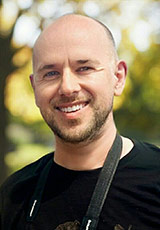
Brian B. Laird is Professor and Department Chair of Chemistry at the University of Kansas. He earned dual B.S. degrees in Chemistry and Mathematics from the University of Texas at Austin (1982) and a Ph.D. in Theoretical Chemistry from UC Berkeley (1987). His career includes postdoctoral positions at Columbia University, Forschungszentrum Jülich (NATO Fellowship), University of Utah, University of Sydney, and University of Wisconsin, with visiting appointments at the University of Mainz, University of Leicester, and UC Davis. Research focuses on applying statistical mechanics and molecular simulation to materials science, with three primary areas: (1) structure and thermodynamics of condensed-phase interfaces, (2) phase coexistence under nanoscale confinement, and (3) advanced molecular dynamics algorithms. His publications demonstrate strong emphasis on surface thermodynamics, nanomaterial interactions, and ecological applications of computational methods. Honors include the NSF CAREER Award. Professor Laird directs an active research group mentoring 19+ graduate students/postdocs. The Laird Lab frequently collaborates internationally with institutions in China, Germany, and the UK.
Matthew Campbell is a Research Fellow at Curtin University's School of Molecular and Life Sciences (MLS), part of the Faculty of Science and Engineering. He is affiliated with the Curtin Medical Research Institute (Curtin MRI) and holds office in Room 201 at Curtin Perth campus. His research focuses on environmental DNA (eDNA), ancient DNA (aDNA), microbial ecology, and hypersaline/extreme environment studies. Key projects include investigating coastal-marine ecosystems through sedimentary aDNA, groundwater keystone ecosystems, and microbial community responses to environmental stressors like salinity and cyclones. Research emphasizes integrative approaches combining eDNA metabarcoding with traditional ecological methods, particularly in hypersaline lakes (e.g., Rottnest Island), arid zone calcretes, and anchialine sinkholes. His work bridges microbiology, geochemistry, and conservation biology, addressing topics like threatened species detection (e.g., Pilbara olive python), climate change impacts on microbial communities, and ecosystem function in extreme environments. Campbell collaborates extensively with international teams on projects ranging from Australian coastal systems to Indonesian Lake Towuti. Publications reflect a strong focus on method development for eDNA sampling (e.g., spider webs as novel matrices) and interdisciplinary applications of DNA-based techniques to understand ecosystem dynamics. His work contributes to both fundamental ecological understanding and applied conservation strategies. No major scientific awards are explicitly mentioned in the provided texts.
Dr. Jan Gogarten is a researcher at the University of Greifswald within the Applied Zoology and Nature Conservation department. Their work focuses on primate-associated organism communities, including bacterial microbiomes, eukaryotic parasites, and pathogen-carrying flies, investigating how these communities shape primate health and conservation. Key collaborations with Helmholtz Institute for One Health , Robert Koch Institute , and Max Planck Institute for Evolutionary Anthropology Research spans zoonotic pathogen detection , molecular method development for genomic data generation, and climate change impacts on primate populations . Methodologies include longitudinal studies in Taï National Park and Kibale National Park, fly-derived DNA for biodiversity monitoring, and comparative datasets on sociality costs/benefits.
David Andow is Professor and Department Head of the Department of Applied Ecology at North Carolina State University's College of Agriculture and Life Sciences. He previously served as Distinguished McKnight University Professor in Entomology at the University of Minnesota for 38 years and conducted extensive research in Brazil with Embrapa. His work focuses on insect population ecology , ecological risk assessment , and science policy related to genetically engineered organisms. PhD in Ecology from Cornell University BSc in Biology (magna cum laude) from Brown University Postdoctoral work at Cornell University and Japan's National Institute of Agro-environmental Sciences His research has tracked insect resistance management across decades, showing consistent interest in Bt crops and transgenic plant risks . Recent work emphasizes molecular gut content analysis for understanding predator-prey relationships and insect dispersal patterns in agricultural ecosystems. Major awards include: OECD Fellow McMaster Fellow (Australia) JSPS Fellow (Japan), twice Rockefeller Foundation Fellow Entomological Society of America Fellow With over 250 invited presentations and extensive publications, Dr. Andow remains a leading voice in genetic engineering risk assessment and ecological policy .
Monika Quinones Winder is a Professor of Marine Ecology at the Department of Ecology, Environment and Plant Sciences, Stockholm University. She leads the Winder Lab, which focuses on understanding the drivers of food web interactions and how they respond to environmental change in aquatic ecosystems. Dr. Winder received her PhD in Natural Sciences from ETH Zurich, Switzerland, followed by postdoctoral research at the University of Washington, Seattle, and the University of California, Davis. Her academic journey has positioned her as a leading researcher in marine ecology and plankton dynamics. Her research program explores aquatic food web interactions and their responses to environmental changes, with particular emphasis on planktonic organisms in both freshwater and marine systems. She investigates how species composition and biotic interactions regulate populations, trophic energy transfer, and ecosystem function. Dr. Winder employs a multifaceted approach, combining descriptive field studies, long-term ecological monitoring, experimental research, and advanced molecular techniques such as selective metabarcoding to understand the impacts of external pressures on species and ecosystem dynamics. Analysis of Dr. Winder's recent publications reveals a strong focus on climate change impacts on plankton communities, particularly in the Baltic Sea ecosystem. Her work examines phenological shifts in plankton blooms, the effects of warming and acidification on plankton recruitment from sediments, and the role of microbial communities in zooplankton gut function. She also maintains active research programs on fish larvae ecology in coastal East Africa and invasive species impacts in the Bolivian Amazon. Dr. Winder has received recognition for her contributions to marine ecology, though specific awards are not detailed in the available information. Her research has been supported by various funding sources that enable her comprehensive investigations of aquatic ecosystems across different geographical regions. As a dedicated mentor, Dr. Winder supervises students and postdoctoral researchers in her lab, fostering the next generation of marine ecologists. Her collaborative approach is evident in the extensive list of co-authored publications spanning multiple international research teams. The Winder Lab maintains an active research agenda with several ongoing projects including studies on plankton species interaction networks, protist parasites in plankton food webs, larval fish production in coastal East Africa, sustainable management of water and soil resources in Bolivia, and plankton-fish interactions in Baltic Sea food webs.
Dr. Michael Raupach is the Head of Section Hemiptera at the Zoological State Collection Munich (ZSM) within the Bavarian State Natural Science Collections (SNSB) . His research integrates molecular techniques with traditional taxonomy to address systematics, biodiversity assessment, and phylogenetic relationships in Hemiptera and other arthropod groups. Key affiliations: ZSM, SNSB, German Research Foundation (DFG) projects Primary roles: Section Head, Researcher, Scientific Editor Dr. Raupach specializes in DNA barcoding and phylogenetic analysis of marine and terrestrial invertebrates, particularly Carabidae beetles , Isopoda crustaceans , and Hemiptera bugs . His work reveals cryptic species , glacial refugia , and deep-sea colonization patterns . His publications demonstrate expertise in mitogenome phylogeny , species delineation , and bioinformatic approaches to biodiversity. Collaborations span Antarctic marine ecology , German freshwater arthropods , and global crustacean systematics . Scientific Awards Recipient of the Order of Merit of the Federal Republic of Germany Leadership in national DNA barcoding initiatives Dr. Raupach actively contributes to peer-reviewed journals , scientific conferences , and public biodiversity education . His work bridges morphological taxonomy with next-generation sequencing to resolve long-standing classification challenges.
Luigimaria Borruso is a Tenured Professor at the Faculty of Agricultural, Environmental and Food Sciences at the Free University of Bolzano. Their research focuses on soil and molecular ecology, microbial communities in agro-ecosystems, and environmental DNA (eDNA) applications for biodiversity conservation. University: Free University of Bolzano School: Faculty of Agricultural, Environmental and Food Sciences Email: luigimaria.borruso@unibz.it Research Interests: Soil and molecular ecology Plant-fungal/bacterial-soil interactions (Agro)-ecological networks in apple orchards and vineyards Soil quality indicators Agroecology Environmental DNA (eDNA) in soil biodiversity conservation Science education for soil literacy Recent Publications Trends: Recent works explore microplastics in soil systems, biochar-microbe partnerships for crop growth, microbial dynamics in extreme environments (volcanoes, Antarctica), and applications of metabarcoding in conservation biology (lemurs, bats). They also investigate sustainable agricultural practices, including living labs and soil enzyme analysis via machine learning. Courses Taught: General Chemistry and Biochemistry at the bachelor's level, and advanced topics like Soil Ecology, Statistical Methods for Agricultural Research, and Soil Protection in master's programs.
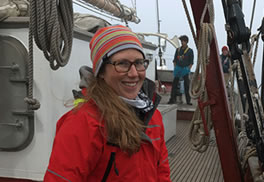
Kerry Whittaker serves as Associate Professor of Coastal and Marine Environmental Science within the Ocean Studies Department at Maine Maritime Academy's Corning School of Ocean Studies. Since joining MMA in 2020, she has developed the new Coastal and Marine Environmental Science (CMES) program, teaching courses including Introduction to Oceanography, Coastal Resource Management, and Land Margin Ecosystems. Prior to MMA, she held positions as Assistant Professor of Oceanography at Sea Education Association (sailing as Chief Scientist on tall ships in Pacific/Atlantic Oceans) and Faculty Chair of Coastal Studies for Girls. Her educational credentials include a B.A. in English and Environmental Science from Colby College (2008) and a Ph.D. in Oceanography from the University of Rhode Island's Graduate School of Oceanography (2014). Dr. Whittaker's research centers on ecological, physical, and evolutionary processes generating oceanic diversity, with emphasis on marine microbes. She employs molecular ecology and population genetics across taxa and ecosystems—from diatoms to dragonfish, polar regions to mesopelagic zones—with phytoplankton (especially diatoms) as her primary focus. Her work bridges field-based oceanography with molecular techniques to address conservation challenges, including endangered species policy under the U.S. Endangered Species Act. Her recent publications reveal interdisciplinary trends spanning microbial colonization of volcanic islands, Sargasso Sea bacterioplankton dynamics, phytoplankton microbiome structures, and genetic divergence in pelagic Sargassum, demonstrating consistent integration of molecular biology, oceanography, and conservation policy across marine ecosystems. Her scientific recognition includes the Sea Grant Knauss Fellowship (2014), during which she advanced endangered species listings at NOAA Fisheries' Office of Protected Resources. As an educator, Dr. Whittaker passionately merges oceanographic research with undergraduate experiential learning. She has extensive at-sea teaching experience aboard research vessels worldwide and advocates for scientific inquiry through sea-going field work, believing it provides profound perspective on human impacts on marine environments. Her media appearances include NASA Earth Expeditions, WCAI Living Lab Radio, and Maine Public Radio.
Weihan Jia is a PhD Candidate in the Polar Terrestrial Environmental Systems department at the Alfred Wegener Institute (AWI) in Potsdam, Germany. His research focuses on ancient DNA (aDNA) and environmental DNA (eDNA) preserved in lake sediments, with a particular emphasis on reconstructing past vegetation dynamics and paleoclimatic conditions. His work spans regions including the Qinghai-Tibetan Plateau, Siberia, and Alaska, addressing questions related to biodiversity change, climate variability, and ecosystem resilience. Key research interests include the application of metabarcoding and metagenomics to analyze sedimentary DNA, assessing the preservation of genetic material in lake sediments, and linking these findings to environmental drivers such as land use changes and temperature shifts. Dr. Jia's studies contribute to understanding how high-latitude and high-altitude ecosystems respond to climatic fluctuations, providing insights into future environmental changes. His publications highlight innovations in combining sedimentary DNA with traditional proxies like pollen analysis to improve vegetation reconstruction accuracy. Recent work has explored the sensitivity of vegetation and glacial systems to summer warming in cold regions, as well as monsoon dynamics linked to ENSO activity. Collaborative efforts include projects on the Tibetan Plateau and Siberian lakes, emphasizing interdisciplinary approaches to paleoenvironmental research. While currently focused on his doctoral research, Jia actively engages in data-driven projects through platforms like PANGAEA and Google Scholar, advancing open science and environmental monitoring initiatives.
Massimo Delledonne is a Full Professor in the Department of Biotechnology at the University of Verona. His research focuses on clinical genomics, functional genomics, structural genomics, and metagenomics. He teaches modules such as Genetics and Human Genomics across undergraduate and graduate programs, including Molecular and Medical Biotechnology and Medical Bioinformatics. Affiliations: Department of Biotechnology, University of Verona Committees: Faculty Board of PhD in Biotechnology, Biotechnology Teaching Committee Spin-offs: EDIVITE s.r.l., Microbion S.r.l., Enerzyme s.r.l. (among others) His research interests include genome assembly, single nucleotide variant analysis, and applications of next-generation sequencing technologies. Projects span plant and human genomics, with a focus on crop improvement, disease diagnostics, and microbial interactions. Recent work includes studies on lupin diversity, common bean evolution, and grapevine genetics. Key projects include IBEARAD (Bioinformatics for Agricultural Resilience) and SYMPHONY (Phaseolus vulgaris genome analysis). He leads interdisciplinary efforts in genomic medicine, plant genomics, and environmental genomics.
John Pinnegar serves as an Honorary Professor in the School of Environmental Sciences at the University of East Anglia (UEA) and holds significant positions at the Centre for Environment, Fisheries & Aquaculture Science (Cefas), where he is Principal Scientist and Lead Advisor for climate change. He directs the International Marine Climate Change Centre (iMC 3 ) at Cefas and the Collaborative Centre for Sustainable Use of the Seas (CCSUS), a joint UEA-Cefas initiative. Pinnegar is an active member of ClimateUEA and serves as the UK representative on the Science Committee of ICES (International Council for the Exploration of the Seas) since April 2013. His research focuses on climate change impacts on marine ecosystems, with particular expertise in climate impacts on Small Island Developing States (SIDs), climate risk and vulnerability assessment techniques, ecosystem and multispecies fisheries modelling, and marine food-webs. His work spans future scenarios (both climate and socio-political), bio-economic modelling, integrated ecosystem assessments, and marine protected areas. Pinnegar has 25 years of experience working in marine and freshwater ecosystems worldwide, with special emphasis on time-series analysis, historical data reconstruction, and marine mammal and fish biology. Pinnegar's recent publications demonstrate strong focus on climate risk assessment in vulnerable marine systems, particularly in small island contexts. His work bridges scientific research with policy implementation, as evidenced by his leadership roles in major international assessments. The articles reflect interdisciplinary approaches combining ecological, social, and economic dimensions of climate change impacts on marine resources. Scientific Awards and Recognition: ICES Service Award (2009) Lead Author for the UN Intergovernmental Panel on Climate Change (IPCC) 6th Assessment Report, 'small islands' chapter Pinnegar has received significant recognition for his contributions to marine climate science, particularly through his IPCC work and service to international scientific bodies. He serves as Trustee of the Buckland Foundation (since January 2020) and was previously Honorary Secretary of the Fisheries Society of the British Isles (2013-2018). His research has attracted substantial policy attention, with multiple publications referenced in policy documents and cited across various platforms. Pinnegar directs the Collaborative Centre for Sustainable Use of the Seas (CCSUS), which combines UEA's academic expertise with Cefas's practical marine science capabilities. He previously co-chaired the ICES/PICES Strategic Initiative on Climate Change in Marine Ecosystems (2016-2019), coordinating research across the North Atlantic and North Pacific oceans. His work has informed national climate change risk assessments for the UK and contributed to international frameworks through the UN FAO and other bodies.
Dr. Dorota Porazinska is an Assistant Professor in the Department of Entomology and Nematology at the University of Florida, Gainesville. Her research focuses on soil biodiversity, plant-soil interactions, and microbial ecology, with emphasis on nematodes and extreme environments. She holds a PhD from the University of Florida (1998) and has held research positions at institutions like the University of Colorado and CSIRO Australia. Her work combines classical ecological methods with cutting-edge molecular tools, including metagenomics and mitochondrial metagenomics. Education: PhD, Entomology and Nematology, University of Florida (1994–1998) MS, Ecology, University of Georgia (1992–1994) BS/MS, Biology and Earth Sciences, Nicolaus Copernicus University (1987–1991) Research Interests: Soil microbiomes, nematode ecology, climate change impacts, biosecurity diagnostics, and biodiversity conservation. She investigates microbial community assembly in extreme environments (e.g., Antarctica, high alpine regions) and agricultural systems, leveraging molecular tools for species identification and ecosystem function studies. Key Awards: Science Ambassador, Science Discovery (2015) Distinguished Visiting Scientist, CSIRO (2012) STAMPS Fellowship, Marine Biological Laboratory (2011) Grants & Teaching: Secured over $2M in research funding from NSF, USDA, and others. Active in developing innovative curricula, including digital nematode slide collections and online education tools. Served as Chair of the ENY Seminar Series and Editor of the Journal of Nematology . Labs & Teams: Leads the WORMS ET AL. research group, focusing on soil biodiversity and molecular diagnostics. Collaborates with interdisciplinary teams on projects like the Antarctic cryoconite hole microbiome and nematode gut microbiome assembly.
Michelle Jungbluth is an Adjunct Professor of Biology at San Francisco State University (SFSU), specializing in Biological Oceanography and Molecular Biology. She leads the Jungbluth Lab at the Estuary & Ocean Science Center, focusing on marine ecosystems, microbial diversity, and the application of advanced molecular techniques like environmental DNA (eDNA) and genomics. Her work integrates interdisciplinary collaborations, including studies on deep-sea exploration, microbial extremophiles, and AI-driven environmental solutions. Her research emphasizes food web dynamics, wetland restoration, and biodiversity assessment in marine and estuarine environments. Key projects include collaborations with Dr. Wim Kimmerer on zooplankton studies, Dr. Karen Crow on manta ray distribution via eDNA, and UC Davis on sevengill shark diets. She also develops data standards for genomic and environmental research through initiatives like the MIEM guidelines and FAIR-aligned data frameworks. Research interests span astrobiology, deep biosphere exploration, and synthetic biology applications for environmental challenges. The lab supports M.S. students in Integrative Biology or Computer Science, and volunteers in field and lab settings. Funding sources include grants from agencies like NSF and NOAA, supporting projects on microbial ecology, deep-sea biodiversity, and AI in environmental science. Notable achievements include pioneering eDNA methodologies, characterizing abyssal larval communities, and advancing genomic standards. Her lab’s work contributes to both fundamental understanding of marine systems and applied solutions for ecosystem resilience and conservation.
Michelle Gaither is an Associate Professor at the University of Central Florida in the Department of Biological Sciences within the College of Sciences . Her research focuses on marine evolutionary ecology, particularly the formation of species through geographic isolation, ecological differentiation, and selection in deep-sea and coral reef fish lineages. Research Areas : Marine biodiversity, ichthyology, genomics, population genetics, eDNA applications Key Techniques : Genome sequencing, RADSeq, field-based studies, biogeographic modeling The Gaither Lab investigates how species form in marine environments, with projects on deep-sea grenadiers , hawkfishes , and surgeonfishes . They also pioneer eDNA as a biogeographic tool to assess biodiversity patterns and anthropogenic impacts on marine ecosystems. Recent publications highlight her lab’s work on: Environmental DNA optimization for invasive species detection (2025) Larval dispersal dynamics in South Pacific archipelagos (2025) Biogeographic barriers in tropical marine fish genetics (2024) Metadata curation challenges in global genetic diversity surveillance (2023) Her lab was recognized in UCF’s 2024 Founders’ Day Faculty Honors , and her students have received accolades like the Outstanding Student Presentation Award at the Indian River Lagoon Symposium (2024). Collaborative projects span global locations including the Arabian Peninsula , Chagos Archipelago , and Hawaiian Archipelago . Lab members include doctoral candidate Ashley Reaume (bioassessment toolkit), graduate students Samuel Greaves and Michelle Shaffer, and undergraduates Hillary Quach and Nadia Barsis. They employ interdisciplinary methods such as phylogenetics , coalescent modeling , and stable isotope analysis to address evolutionary questions.
Dr. Donald Baird is a Visiting Research Professor in Biology at the University of New Brunswick and Senior Research Scientist at Environment and Climate Change Canada. As a Fellow of the Canadian Rivers Institute, his research focuses on ecological risk assessment and developing innovative methods for biodiversity observation in freshwater ecosystems using ecogenomics approaches. He leads a national initiative applying DNA-based techniques for monitoring Canada's threatened ecosystems, particularly river floodplains and boreal wetlands. His work addresses the complex stressor regimes affecting aquatic ecosystems in the Anthropocene through integrated assessment approaches that combine traditional ecology with molecular tools. With over 150 publications and 4 books, Dr. Baird has conducted research across five continents and serves as a science advisor for international organizations including WHO-Water, Ramsar, and WWF-Canada.