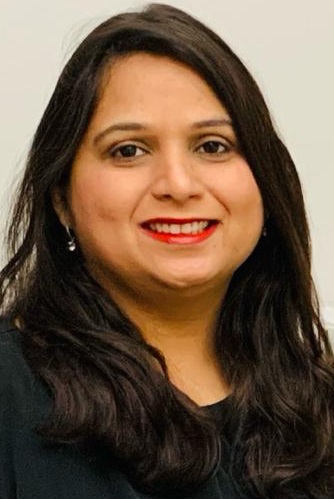
Shalini Saggu is an Assistant Professor at the Medical College of Georgia, affiliated with the Department of Neuroscience and Regenerative Medicine. She holds a Ph.D. in Toxicology (2007) and an MS in Toxicology (2003) from Jamia Hamdard, and a BS in Chemistry (2001) from the University of Delhi. Education: Ph.D., Toxicology, Jamia Hamdard (2007) MS, Toxicology, Jamia Hamdard (2003) BS, Chemistry, University of Delhi (2001) Her research focuses on neurotoxicology, Alzheimer's disease mechanisms, and environmental health impacts, particularly exploring how neurotoxicants, hormonal therapies, and plant-derived compounds affect neurodegenerative processes. She has contributed to understanding oxidative stress, neuroinflammation, and synaptic dysfunction in Alzheimer's. Research Themes: Neurotoxicology of environmental pollutants Neuroinflammation in Alzheimer's Plant-based neuroprotective agents Neuropharmacology of adrenergic drugs Mechanisms of memory consolidation She has taught advanced courses in biochemistry and molecular biology, including BCMB 8201: Current Topics & Techniques in Molecular Biology .
Maria Alguero-Muniz is a Researcher at the University of Glasgow , affiliated with the School of Biodiversity, One Health & Veterinary Medicine . Her work focuses on ocean acidification impacts , plankton community dynamics , and marine ecosystem responses to environmental stressors. Her research spans plankton physiology , trophic interactions , and climate change adaptation in marine systems. Recent projects include eDNA metabarcoding for aquaculture monitoring and upwelling simulations to study carbon cycling. Maria's publications (2012–2025) reveal a thematic focus on marine biogeochemistry , zooplankton ecology , and novel species taxonomy . Key collaborations include institutions studying pelagic food webs and CO2-driven ecological shifts . Scientific awards include funding from The Royal Society of Edinburgh (2021–2022) for planktonic threat monitoring in salmon aquaculture. Her work has been published in Nature Climate Change , Global Biogeochemical Cycles , and Frontiers in Marine Science .
Prof. Chao Dong ZHU is a leading researcher in ecology and biodiversity conservation, affiliated with the Chinese Academy of Sciences. He serves as Principal Investigator for multiple projects including MultiTroph (2022-2026), analyzing biodiversity mechanisms across trophic levels. His work focuses on plant-insect interactions, phylogenetic signals in ecological communities, and the impacts of tree diversity on herbivore-parasitoid networks. Key projects include SP09c1 Phylogenetic signals in plant-insect interactions and P4C: Associational effects mediated by parasitoids , examining how tree diversity influences herbivore communities and parasitoid dynamics. He has contributed to large-scale biodiversity experiments in subtropical forests, such as BEF-China, investigating species coexistence and turnover patterns. Education: Not explicitly stated in provided texts Research Themes: Trophic interactions, biodiversity gradients, DNA barcoding applications, spatial ecology Publications emphasize data-driven analyses of herbivore community structure, leveraging phylogenetic and functional trait approaches. His work bridges observational ecology with experimental design, contributing to understanding ecosystem resilience under biodiversity loss scenarios.
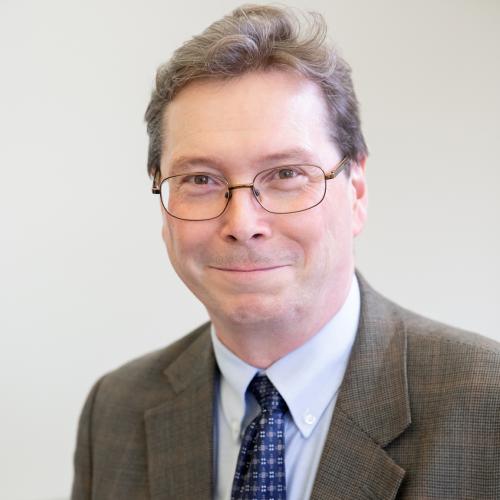
J. Stephen Downie is a Professor and Interim Executive Associate Dean at the School of Information Sciences, University of Illinois. He also serves as the Associate Dean for Research and Co-Director of the HathiTrust Research Center. His academic roles include leadership in digital libraries, digital humanities, and music information retrieval (MIREX). He holds a PhD in Library and Information Science from the University of Western Ontario. Research interests focus on information retrieval systems, multimedia MIR, political economy of communication networks, and database/web technologies. He co-founded ISMIR and directs the annual MIREX evaluation initiative. His work bridges computational analysis, cultural heritage preservation, and digital tool development. Recent scholarly output includes studies on plant systematics (Apiaceae family) and cultural heritage technologies. His projects involve collaborative research on digital libraries, data capsules, and federated repository systems. Notable organizational roles include leadership in HathiTrust and academic service in the National Center for Supercomputing Applications. Teaching responsibilities include doctoral seminars and independent studies. Active projects span computational text mining, structural analysis of music information, and accessibility initiatives for academic content.
John H. Reif is a Professor of Computer Science at Duke University, with secondary appointments in the Thomas Lord Department of Mechanical Engineering and Materials Science (since 2024) and the Department of Electrical and Computer Engineering (since 2016). His research spans DNA computing , molecular assembly , robot motion planning , and quantum computation , focusing on programmable biomolecular systems and parallel algorithms. Education: Ph.D. in Applied Mathematics, Harvard University (1977) M.S. in Applied Mathematics, Harvard University (1975) B.S. in Applied Mathematics and Computer Science, Tufts University (1973) His recent publications emphasize DNA strand displacement , molecular-scale learning systems , and 3D DNA nanostructures , with applications in diagnostics, data storage, and nanofabrication. Articles highlight innovations in error-resilient DNA circuits, programmable self-assembly, and algorithmic modeling of molecular processes. Scientific Awards: Fellow of the American Association for the Advancement of Science (AAAS) Fellow of the Association for Computing Machinery (ACM) Fellow of the Institute of Electrical and Electronics Engineers (IEEE) He has supervised numerous Ph.D. students and postdoctoral researchers , including Rajiv Nagipogu (adaptive molecular systems) and Xin Song ( Daniel Fu , DNA computation on cell membranes). His work is funded by grants from the Defense Advanced Research Projects Agency (DARPA) and the National Science Foundation (NSF) , with recent focus on molecular-scale AI and DNA polymerase reaction networks. Reif co-founded Domus Diagnostics , developing affordable infectious disease testing solutions. He served as General CoChairman of FNANO24 and contributes to teaching courses like Computational Complexity and Molecular Assembly and Computation .
Alfredo Vizzini is an Associate Professor at the University of Turin , affiliated with the Department of Life Sciences and Systems Biology . His work spans systematic botany, fungal taxonomy, and molecular phylogenetics, with a focus on Agaricales and Boletaceae families. He teaches courses such as Systematic Botany and Mycology , contributing to both academic and applied research. Research Interests : Vizzini specializes in fungal biodiversity, particularly ectomycorrhizal and saprotrophic species. His studies integrate morphological and molecular data (e.g., ITS-LSU sequences) to resolve phylogenetic relationships and describe novel taxa. Key areas include Basidiomycota systematics, adaptation to extreme environments, and invasive fungal species' impact on native ecosystems. Article Trends : His publications (2008–2017) emphasize fungal taxonomy, phylogenetics, and ecological interactions. Notable themes include the discovery of Alpova komoviana , revisions in Leucopaxillus , and investigations into mycobiomes using 454 pyrosequencing. Collaborative projects like DEFINE and CAVELAB highlight his interdisciplinary approach. Labs and Teams : Vizzini collaborates on projects such as DEFINE (exotic pathogens), CAVELAB (cave ecosystems), and DISCOVERING MARINE MYCOBIOTA (marine fungi), working with international teams in Europe and beyond. His lab focuses on fungal interactions in forests, seagrass, and extreme environments.
Huanhuan CUI is a Research Associate Professor in the Department of Biology within the School of Life Sciences at Southern University of Science and Technology (SUSTech) in Shenzhen, China. She joined SUSTech in December 2018 and serves as a master's supervisor, contributing to both research and graduate education in molecular biology and genetics. Educational Background: PhD in Biology, Free University of Berlin (2011.09-2016.04) MS in Animal Genetics, Northwest A&F University (2008.09-2010.06) BE in Bioengineering, Northwest A&F University (2004.09-2008.06) Dr. CUI's research focuses on the mechanisms and method development of gene transcription and epigenetic regulation, with particular emphasis on RNA translation control. Her work spans multiple biological systems including cancer biology, developmental biology, and cardiovascular research, demonstrating a strong interdisciplinary approach that integrates molecular biology, genomics, and bioinformatics techniques. She has made significant contributions to understanding chromatin remodeling, transcriptional regulation, and RNA processing mechanisms. Dr. CUI's publication record shows a consistent trajectory of high-impact research, with publications in prestigious journals including Nature Communications, Nucleic Acids Research, and Cellular & Molecular Immunology. Her work demonstrates expertise in CRISPR-based technologies, epigenetic regulation, and multi-omics approaches to studying complex biological processes. Before joining SUSTech, Dr. CUI held positions as a Clinical Research Manager at BGI Genomics (2017.09-2018.11), a PostDoc at Charite Universitaetsmedizin Berlin (2016.05-2017.06), and a Research Assistant at Humboldt University of Berlin (2010.09-2011.08), building a diverse research background that bridges basic science and clinical applications.
Chun-Biu Li is an Associate Professor at the Department of Mathematics , Stockholm University , specializing in computational mathematics and statistical physics of biophysical systems. His research bridges information theory, machine learning, and nonequilibrium statistical mechanics to understand complex biological processes. Education: PhD in mathematical & statistical physics from the University of Texas at Austin (supervised by Ilya Prigogine), M.S. in mathematical physics from the University of Utah. Academic Experience: Associate Professor (2016–present) at Stockholm University, Associate Professor (2008–2016) at Hokkaido University, and JST/CREST Researcher (2005–2008) at Kobe University. Research Interests focus on data-driven statistical analyses, nonequilibrium biophysical systems, AI explainability, and fluctuation theorems. His work applies these methods to plant morphogenesis, molecular motor dynamics, and machine learning applications in life sciences. Teaching includes advanced courses on deep learning, reinforcement learning, and statistical methods for life science applications. His Supervision has guided over 30 students in topics ranging from protein mutation modeling to causal inference algorithms. Scientific Awards: Professional Development Award, University of Texas at Austin (2003) Summer Research Fellowship, University of Texas at Austin (2001) National Dean's List for Outstanding College Students (1997) Publications (110+) highlight his contributions to plant morphogenesis, single-molecule analysis, and statistical methods. Recent works examine DNA barcode clustering, rotary motor protein dynamics, and shape-aware data visualization techniques.
Dr. Michael Raupach is the Head of Section Hemiptera at the Zoological State Collection Munich (ZSM) within the Bavarian State Natural Science Collections (SNSB) . His research integrates molecular techniques with traditional taxonomy to address systematics, biodiversity assessment, and phylogenetic relationships in Hemiptera and other arthropod groups. Key affiliations: ZSM, SNSB, German Research Foundation (DFG) projects Primary roles: Section Head, Researcher, Scientific Editor Dr. Raupach specializes in DNA barcoding and phylogenetic analysis of marine and terrestrial invertebrates, particularly Carabidae beetles , Isopoda crustaceans , and Hemiptera bugs . His work reveals cryptic species , glacial refugia , and deep-sea colonization patterns . His publications demonstrate expertise in mitogenome phylogeny , species delineation , and bioinformatic approaches to biodiversity. Collaborations span Antarctic marine ecology , German freshwater arthropods , and global crustacean systematics . Scientific Awards Recipient of the Order of Merit of the Federal Republic of Germany Leadership in national DNA barcoding initiatives Dr. Raupach actively contributes to peer-reviewed journals , scientific conferences , and public biodiversity education . His work bridges morphological taxonomy with next-generation sequencing to resolve long-standing classification challenges.
Christopher Kucha is an Assistant Professor in the Department of Food Science & Technology at the University of Georgia's College of Agricultural and Environmental Sciences. His work focuses on integrating engineering principles with digital technologies to address challenges in agri-food production. Dr. Kucha's research centers on the development and application of sensing technologies, data analytics, and systems modeling to improve food quality, safety, and processing efficiency. His lab, the Precision Food Process Engineering Lab, aims to reduce food waste, conserve resources, and enhance sustainability in the food system through innovations such as machine vision, artificial intelligence, and non-destructive assessment techniques. Key research areas include machine vision systems for food analysis, AI and chemometrics for food safety, process analytical technologies, intelligent food design, and big data applications in food processing. He teaches courses such as Introduction to Food Science and Technology (FDST 3000) and Introduction to Artificial Intelligence in Food Systems (FDST 2001). His recent publications (2020-2025) demonstrate a strong focus on hyperspectral imaging and machine learning for food quality and safety assessment, with applications across meat, fruits, nuts, and protein products. The work emphasizes non-destructive, real-time monitoring and the integration of digital technologies like augmented reality and digital twins.
Alexey Solodovnikov is an Associate Professor and Curator at the Natural History Museum Denmark, University of Copenhagen. Since 2022, he has led the museum's Zoology research section. His academic work focuses on systematic entomology with special emphasis on rove beetles (Insecta: Coleoptera: Staphylinidae), the largest family of living organisms. Dr. Solodovnikov's educational background includes graduating from university in Krasnodar in 1993, followed by obtaining his PhD from St. Petersburg State University in 1997. He conducted post-doctoral work at the Field Museum of Natural History in Chicago under renowned experts Alfred Newton and Margaret Thayer. His primary research interests encompass systematic entomology, phylogenetics, taxonomy, and biodiversity patterns of rove beetles. As a systematic entomologist, he discovers new species, develops phylogeny-based classifications, and studies evolutionary, biogeographic and macroecological patterns of biodiversity. His work involves extensive study of institutional entomological collections and leading insect collecting expeditions globally. Dr. Solodovnikov has published 137 research outputs, including 129 journal articles. His recent publications demonstrate strong trends in phylogenomics, integrative taxonomy combining morphological and molecular data, citizen science applications in entomology, and studies of specialized ecological relationships like beetle-mammal mutualisms. His work appears in prestigious journals including Systematic Entomology, Systematic Biology, and Journal of Natural History. His scientific contributions are significant in advancing our understanding of insect biodiversity, particularly through methodological innovations that bridge traditional taxonomy with modern computational approaches. Dr. Solodovnikov is actively involved in academic instruction and mentorship. At UCPH, he teaches Entomology and Terrestrial Zoology courses, previously taught in the Basal Arctic Biology course, and currently instructs the Communicating Science module in the UCPH-SCIENCE "Fundamentals" PhD course. He trains the next generation of zoological taxonomists through Master's, PhD, and post-doctoral level mentorship, focusing on developing sustainable expertise to identify, study and protect insect species, many of which remain undiscovered. His research laboratory operates within the Natural History Museum Denmark, with international collaborations spanning multiple continents. The team combines traditional taxonomic approaches with cutting-edge techniques including phylogenomics, deep learning for morphological analysis, and citizen science initiatives to advance systematic entomology and biodiversity research.
Brett Gonzalez is a Research Fellow at the School of Biological Sciences , University of Western Australia, affiliated with the Minderoo-UWA Deep-Sea Research Centre . He holds a PhD in Biology (University of Copenhagen, 2017), an MSc in Wildlife and Fisheries Sciences (Texas A&M University, 2010), and a BSc in Marine Biology (Texas A&M University at Galveston, 2005). His research focuses on enhancing understanding of rare and unique taxa in underexplored environments like the deep-sea, subterranean caves, pelagic zones, and interstitial habitats . He integrates traditional taxonomy with modern techniques such as high-throughput sequencing, 3D-reconstruction, and advanced microscopy. Key research areas include evolutionary processes shaping biodiversity , adaptation mechanisms in extreme environments, and biogeographic distributions of marine organisms. Recent work includes studies on scale worm diversity in hadal zones, cryptic species in subterranean estuaries , and molecular delimitation of leech species . Active Research Projects: Characterisation of high-resolution tubular eyes in Acoetidae scale worms (2025) - Chief Investigator at University of Western Australia. External Affiliations: Research Associate, Smithsonian National Museum of Natural History (2023–). Former Postdoctoral Researcher (2018–2023), Smithsonian National Museum of Natural History.
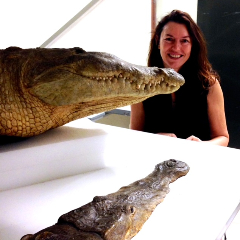
Evon Hekkala is a Professor and Chair of Biological Sciences at Fordham University, leading the Hekkala Lab. Her research focuses on conservation genetics, paleogenomics, and integrating indigenous knowledge into biodiversity studies. She specializes in crocodilian evolution, museum collections analysis, and ecological conservation. Her work includes NSF-funded projects such as the STS grant examining ancestral taxonomies and the RAPID grant to recover fossils in Madagascar. She collaborates with institutions like the American Museum of Natural History and the Wildlife Conservation Society. Notable achievements include discovering cryptic crocodile species and developing methods using leech-derived DNA for biodiversity surveys. She advises numerous graduate and undergraduate students, mentoring them in fieldwork, lab techniques, and interdisciplinary research. Her lab emphasizes DEI initiatives and ethical science practices.
Massimo Delledonne is a Full Professor in the Department of Biotechnology at the University of Verona. His research focuses on clinical genomics, functional genomics, structural genomics, and metagenomics. He teaches modules such as Genetics and Human Genomics across undergraduate and graduate programs, including Molecular and Medical Biotechnology and Medical Bioinformatics. Affiliations: Department of Biotechnology, University of Verona Committees: Faculty Board of PhD in Biotechnology, Biotechnology Teaching Committee Spin-offs: EDIVITE s.r.l., Microbion S.r.l., Enerzyme s.r.l. (among others) His research interests include genome assembly, single nucleotide variant analysis, and applications of next-generation sequencing technologies. Projects span plant and human genomics, with a focus on crop improvement, disease diagnostics, and microbial interactions. Recent work includes studies on lupin diversity, common bean evolution, and grapevine genetics. Key projects include IBEARAD (Bioinformatics for Agricultural Resilience) and SYMPHONY (Phaseolus vulgaris genome analysis). He leads interdisciplinary efforts in genomic medicine, plant genomics, and environmental genomics.
Dr. Dorota Porazinska is an Assistant Professor in the Department of Entomology and Nematology at the University of Florida, Gainesville. Her research focuses on soil biodiversity, plant-soil interactions, and microbial ecology, with emphasis on nematodes and extreme environments. She holds a PhD from the University of Florida (1998) and has held research positions at institutions like the University of Colorado and CSIRO Australia. Her work combines classical ecological methods with cutting-edge molecular tools, including metagenomics and mitochondrial metagenomics. Education: PhD, Entomology and Nematology, University of Florida (1994–1998) MS, Ecology, University of Georgia (1992–1994) BS/MS, Biology and Earth Sciences, Nicolaus Copernicus University (1987–1991) Research Interests: Soil microbiomes, nematode ecology, climate change impacts, biosecurity diagnostics, and biodiversity conservation. She investigates microbial community assembly in extreme environments (e.g., Antarctica, high alpine regions) and agricultural systems, leveraging molecular tools for species identification and ecosystem function studies. Key Awards: Science Ambassador, Science Discovery (2015) Distinguished Visiting Scientist, CSIRO (2012) STAMPS Fellowship, Marine Biological Laboratory (2011) Grants & Teaching: Secured over $2M in research funding from NSF, USDA, and others. Active in developing innovative curricula, including digital nematode slide collections and online education tools. Served as Chair of the ENY Seminar Series and Editor of the Journal of Nematology . Labs & Teams: Leads the WORMS ET AL. research group, focusing on soil biodiversity and molecular diagnostics. Collaborates with interdisciplinary teams on projects like the Antarctic cryoconite hole microbiome and nematode gut microbiome assembly.