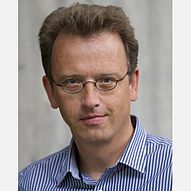
Beate Paulus is a Professor for Theoretical Chemistry at the Freie Universität Berlin , affiliated with the Chemistry and Biochemistry college and the Chemistry department. Her research focuses on advanced quantum chemical methodologies and applications to 2D materials, spintronics, and catalysis. Current affiliation: Freie Universität Berlin Key research areas: Quantum Chemistry, Density Functional Theory, 2D Materials, Spintronics, Electrocatalysis Her work spans computational modeling of electronic structures, magnetic properties, and chemical reactions using Density Functional Theory (DFT) with specialized corrections. She investigates systems like MoS2 , graphene heterostructures , and transition metal complexes , aiming to understand and optimize properties for energy applications, biosensors, and nanoelectronics. Recent publications highlight her contributions to quantum mechanical fluorine tunnelling , spin-selective transport in doped nanoribbons , and surface functionalization strategies for 2D materials. Her group also explores mechanically interlocked molecules and redox-responsive polymers with potential biomedical applications. Beate Paulus leads the Paulus Group , which actively publishes in high-impact journals and collaborates on interdisciplinary projects involving experimental and theoretical approaches.
Prof. Dr. Stefan Huber is a Full Professor (W3) at the Faculty of Chemistry and Biochemistry , Ruhr-Universität Bochum , Germany. His research focuses on non-covalent interactions in organocatalysis , particularly halogen bonding , chalcogen bonding , and cyclopropenium derivatives for applications in molecular recognition , crystal engineering , and radical stabilization . Full Professor since 01/2022 Associate Professor (W2) 2014-2021 Independent Researcher at TU Munich 2009-2013 Research Interests include: Design of halogen/chalcogen bond donors for catalysis Supramolecular chemistry in solution and solid phases Quantum chemical modeling of transition states and binding strengths His work bridges experimental synthesis (NMR, X-ray, ITC) with computational methods , supported by the ERC Starting Grant (2015-2020) and collaborations within the RESOLV Cluster . Scientific Awards : Hoechst Dozentenpreis (2016) Robert-Sauer-Preis (2014) Hans-Fischer-Gedächtnispreis (2013) Ernst-Otto-Fischer-Lehrpreis (2012) Thieme Chemistry Journals Award (2010) Students : Over 20 Ph.D. and Master’s students, including Dominik Reinhard, Tim Steinke, Raffaella Papagna, and Julian Stoesser. The group maintains modern synthesis labs and collaborates with institutions like the University of Geneva and TU Munich .
Souvik Paul is an Assistant Professor in the School of Physics at Indian Institute of Science Education and Research Thiruvananthapuram, where he leads the Computational Materials Science (CMS) Laboratory established in 2023. His research employs advanced computational techniques to investigate fundamental properties of magnetic materials and topological phenomena. Education: Ph.D. (2015), Indian Institute of Technology Guwahati, India M.Sc. (2008), Presidency College, Kolkata, India B.Sc. (2006), University of Calcutta, India Dr. Paul's research focuses on computational materials science with particular emphasis on magnetism in two and three dimensions, topological magnetic quasiparticles like skyrmions, surface physics, strongly correlated systems, and multifunctional materials including Heusler alloys. His work primarily utilizes Density Functional Theory (DFT) to predict and explain material properties at the atomic scale, bridging computational predictions with experimental observations through international collaborations. His publication record reveals a consistent trajectory in magnetic skyrmions research, transition metal systems, and Heusler alloys, with significant contributions to understanding spin interactions, stability mechanisms, and electronic properties. His work frequently appears in high-impact journals including Physical Review Letters, Nature Communications, and npj Computational Materials, demonstrating both theoretical depth and practical relevance to materials design. Scientific Awards: Prime Minister Early Career Research Grant (2025) from Anusandhan National Research Foundation Departmental Postdoctoral Fellowship (2015), Uppsala University Doctoral fellowship (2009), IIT Guwahati Graduate Aptitude Test in Engineering (GATE) (2009), MHRD, India Dr. Paul actively mentors graduate students including Moinak Ghosh and Bipin Babu. Through the International PhD Program, he has established formal collaborations with Prof. Stefan Heinze at CAU Kiel, Germany, providing students with international research opportunities, access to high-performance computing facilities, and extended research stays at partner institutions. His recently awarded Prime Minister Early Career Research Grant supports innovative work on antiferromagnetic skyrmions. The Computational Materials Science Laboratory employs Density Functional Theory to investigate structural, electronic, magnetic, and optical properties of materials at the atomic level. The lab maintains strong international collaborations with research groups at CAU Kiel and Forschungszentrum Jülich in Germany, focusing on discovering novel materials, explaining fundamental material behaviors, and developing predictive materials theory with applications in electronics and energy technologies.
Nick Mosey is an Associate Professor in the Department of Chemistry and Associate Dean (Research) in the Faculty of Arts & Science at Queen’s University. He holds a PhD from the University of Western Ontario and completed postdoctoral research at Princeton University. His research focuses on computational and theoretical chemistry, particularly in developing simulation methods to study chemical reactions under mechanical stress and tribological conditions. Key areas include molecular dynamics, exact exchange calculations in periodic systems, and the design of electrocatalysts for fuel cells. His work integrates method development (e.g., contracted planewave basis functions, temporal QM/MM) with applied studies in tribology (e.g., friction modifiers, lubricants) and electrocatalysis (nickel-based materials for alkaline fuel cells). He has led interdisciplinary projects involving collaborations across chemistry, materials science, and engineering. Awards include the NSERC Doctoral Prize (2007), Early Researcher Award (2009-2014), and leadership in securing funding from NSERC and Ontario government programs. Mosey teaches courses in quantum mechanics and computational chemistry, with a focus on bridging theory and practical applications. His group has produced over 70 peer-reviewed publications and trained numerous graduate students and postdoctoral researchers. Current research emphasizes extending simulation time-scales for reactive systems and exploring novel materials for energy applications.
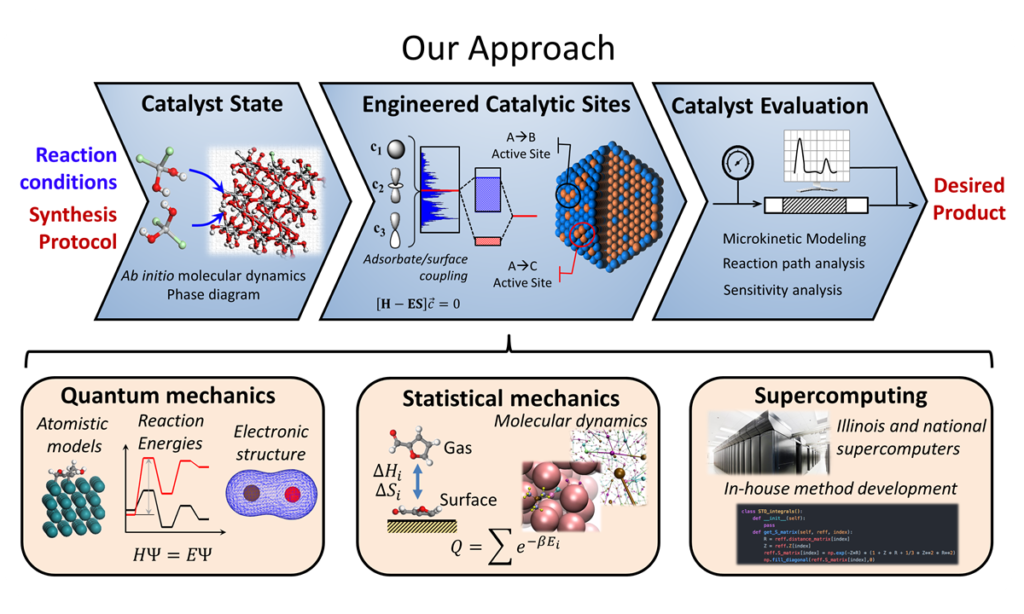
Dr. Alex Mironenko is an Assistant Professor in the Department of Chemical and Biomolecular Engineering at the University of Illinois at Urbana-Champaign. His research focuses on developing quantum mechanical methods to predict catalytic behaviors for renewable energy and chemical production. He leads the Mironenko Lab, which emphasizes computational models for heterogeneous catalysis, reactive force fields, and nanozyme design. Education: PhD in Chemical Engineering, University of Delaware (2018) Kadanoff-Rice Postdoctoral Scholar, University of Chicago (2018-2020) MS in Chemical Engineering, University of Kansas (2012) Diploma of Engineer, Omsk F.M. Dostoevsky State University, Russia (2009) Research Interests: Computational heterogeneous catalysis Reactive force fields derived from first principles Low-dimensional metal oxide catalysts Nanozymes and biomimetic catalysis Selective C-C coupling for CO₂ valorization Improving density functional theory accuracy Awards: ACS Petroleum Research Fund Doctoral Investigator Award (2021) Allan P. Colburn Outstanding Dissertation Prize (2019) Kadanoff-Rice Postdoctoral Fellowship (2018-2020) Advising and Grants: Advised PhD student Neil Tran (publication on methanol carbonylation mechanisms) Funded by NSF, ACS, and industry partnerships Labs/Teams: Mironenko Virtual Catalysis and Quantum Chemistry Lab Collaborations with institutions like University of Chicago and industry partners
Prof. Jay A. Gupta is a Professor and Vice Chair for Graduate Studies and Postdoctoral Affairs in the Department of Physics at The Ohio State University. His research focuses on atomic-scale studies of novel materials using scanning tunneling microscopy (STM) to address challenges in energy conversion and advanced computing. Key areas include magnetic skyrmions in chiral systems, semiconductor defects, 2D materials, and spintronics. He leads a laboratory equipped with four advanced STM systems and collaborates on NSF NeXUS, an ultrafast science facility. Education: B.S. Chemistry/Physics (UIUC), Ph.D. Physics (UCSB) Lab Locations: Physics Research Building (labs 0101/0105/0178) Key Projects: Spin-polarized STM of MnGe, defect-mediated surface chemistry in semiconductors, ultrafast laser-material interactions His group has trained over 30 graduate/undergraduate students and postdocs, many now in academia and industry. Research is supported by NSF, Department of Energy, and industrial partnerships.
Ben Goddard is a Professor in the School of Mathematics at the University of Edinburgh. His work bridges applied mathematics with real-world scientific challenges, emphasizing interdisciplinary collaboration across engineering, biology, chemistry, and physics. He earned his PhD at the University of Warwick, later completing his final year at TU Munich following his advisor. His research focuses on mathematical modeling, numerical methods, and asymptotic analysis applied to problems such as quantum chemistry, fluid dynamics, and biological systems. Education: Bachelor’s degree in Mathematics (undergraduate details unspecified) PhD in Mathematical Quantum Chemistry (University of Warwick/TU Munich) Research interests include: Dynamic density functional theory (DFT) for complex fluids and nanoparticles Interfacial phenomena and contact line dynamics Numerical optimization and pseudospectral methods Biological systems modeling (e.g., RNA transcription mechanics) Recent work explores applications like ouzo phase behavior, aerosol droplet stability, and opinion dynamics in social networks. His collaborations span diverse fields, including experimental biology at the Welcome Centre for Cell Biology. He advocates for mathematicians’ role in interdisciplinary problem-solving, emphasizing clear communication and adaptability. Advising and grants: While specific grant details are not listed, his projects reflect significant funding and team-based research. He actively promotes STEM engagement through activities like designing math-themed escape rooms with his spouse, a statistician. Labs/Teams: Collaborates extensively with Edinburgh’s Schools of Engineering, Biology, and Informatics, though no specific lab names are mentioned.
Dr. Laurent Piccolo is a permanent senior researcher (DR CNRS) at the Institute on Catalysis and Environment of Lyon (IRCELYON) , France, since 2022. He specializes in surface science and heterogeneous catalysis , with a focus on CO2 valorization , single-atom catalysis , and hydrogenation reactions . His work bridges fundamental studies of metal-support interactions and applied catalyst design for energy transition. Habilitation à diriger des recherches (University of Lyon, 2007) PhD in Materials Science (Aix-Marseille University, 1999) Master in Materials Science/Surfaces and Interfaces (Aix-Marseille University, 1996) Research Interests: His work investigates metal ultradispersion and single-atom catalysis for reactions like CO2 hydrogenation and CO oxidation. He explores how ceria , MXenes , and intermetallic compounds influence catalytic activity and stability, particularly under hydrogenation and oxidative environments . Scientific Contributions: He leads the ANR ISAC project (2022-2025) on single-atom catalysts and co-leads ANR DuCaCO2 (2021-2025) for CO2 capture and conversion . His 100+ peer-reviewed articles (4300+ citations, H-index 40) cover nanoparticle synthesis , operando characterization , and catalyst degradation mechanisms . Expertise: He employs ultrahigh vacuum techniques , surface analysis (XPS, STM, FTIR), and bulk characterization (XRD, TEM, XAS) to study catalysts. His skills include GCxGC-MS for product analysis and DFT modeling of reaction pathways. Awards & Recognition: ANR project leadership 4300+ citations 3 book chapters 260+ conference communications
Yang Yang is an Assistant Professor of Chemistry at the University of Wisconsin-Madison , focusing on electronic structure theory and nuclear quantum effects in molecular systems. He leads the Yang Group , a theoretical and computational team specializing in the Constrained Nuclear-Electronic Orbital (CNEO) framework for accurate quantum simulations. B.S. in Chemistry and Physics, Peking University (2011) Ph.D., Duke University (2016) Postdoctoral Associate, University of Illinois at Urbana-Champaign and Yale University (2016–2019) His research spans method development in multicomponent quantum theory , excited states theory , and practical quantum chemistry calculations . Recent work includes landmark papers in Journal of Chemical Theory and Computation on CNEO-based reaction rate calculations and quantum computation applications. The Yang Group has secured NSF funding (2024) for CNEO integration into computational software. Publications emphasize nuclear quantum delocalization effects , vibrational spectra modeling , and nonadiabatic dynamics . NSF Grant (2024) for CNEO software integration Awards at 2024 ACS Fall Meeting Current advisees include graduate students Haoran Chen , Lin Han , Zhe Liu , Yiwen Wang , and Yuzhe Zhang . The group also collaborates with postdoctoral researchers like Zehua Chen and Tanner Culpitt .
Irith Pomeranz is the Cadence Professor of Electrical and Computer Engineering at Purdue University's College of Engineering. Her research focuses on advanced testing methodologies for VLSI circuits, including functional test compaction, fault diagnosis, and built-in self-test (BIST) techniques. She is affiliated with the Department of Electrical and Computer Engineering and has contributed extensively to improving test efficiency and fault coverage in digital circuits. Her work addresses challenges such as aging effects, transition faults, and path delay faults, with a particular emphasis on practical implementations for industrial applications. Key areas of interest include modular test sequences, configuration-based compaction, and dynamic testing strategies for in-field environments. She has developed algorithms for dual-target diagnostic testing and synchronization mechanisms for online fault detection in logic blocks. Research Trends in her publications emphasize innovations like storage-based BIST schemes, adaptive test scheduling, and shared test data architectures. These advancements aim to reduce test data volume, improve fault coverage, and enhance reliability in modern integrated circuits. Her work often bridges theoretical foundations and practical hardware implementations. Grants & Advising : While specific grants or student advisees are not listed, her prolific publication record indicates active involvement in research projects and graduate supervision within Purdue's ECE department. Labs & Teams : Her contributions are likely tied to Purdue's VLSI and testing research groups, though specific lab affiliations are not detailed in the provided text.
Prof. Dr. Ferdinand Evers is a Chair of Computational Condensed Matter Theory at the Institute of Theoretical Physics , University of Regensburg. His research spans quantum transport , spintronics , molecular electronics , and many-body localization , with a focus on ab initio and DFT-based modeling of nanostructures and low-dimensional systems . Key Research Areas: Quantum transport in molecular junctions Spin-orbit coupling and chiral effects Multifractality at quantum phase transitions Electronic structure of topological materials Ultrafast laser-driven electron dynamics Anderson localization and disorder Recent Article Trends (2021–2024): High-harmonic generation in topological insulators Spin-selective transport in chiral systems Mechanical torque in molecular rotors Self-consistent GW methods for molecular electronics Quantum interference in graphene nanoribbons Teaching: Lecturer for Theoretical Physics I-IV , Advanced Quantum Mechanics , and Scientific Perspectives courses at the University of Regensburg Focus on statistical mechanics , quantum transport , and computational nanoscience
Dr. Tuquabo Tesfamichael is a Senior Lecturer at the School of Mechanical, Medical and Process Engineering (MMPE), Faculty of Engineering at Queensland University of Technology (QUT). He obtained his Ph.D. from Uppsala University (Sweden) in 2000 followed by a 2-year postdoctoral fellowship at QUT. Dr. Tesfamichael serves as the Subject Area Coordinator for undergraduate Mechanical Engineering (EN01) and Course Coordinator for postgraduate Advanced Materials (EN54). Dr. Tesfamichael's research spans multiple cutting-edge areas in materials science and engineering. His primary interests include thin film technology, nanostructured materials and nanotechnology, metal oxide thin film gas sensors, perovskite solar cells, and nanostuctured metallic glasses thin films for biomedical applications. His work bridges fundamental materials science with practical applications in energy, sensing, and biomedical fields. Analysis of his recent publications reveals a strong focus on thermoelectric materials, metallic glasses for biomedical applications, and advanced sensor technologies. His research consistently explores the intersection of nanotechnology, materials engineering, and practical applications, with significant contributions to flexible electronics, energy harvesting, and biomedical device development. The work demonstrates a progression toward increasingly sophisticated material systems with multifunctional properties. Dr. Tesfamichael has secured over $1.3 million in research grants and awards from prestigious sources including Defense Science Technology, ARC Discovery Grants, and Japanese Society for Promotion of Science Fellowships. His research collaborations span international institutions including Hokkaido University in Japan and Uppsala University in Sweden. Defense Science Technology - DST (2021-22) National and International Research Alliances Program (2010-12) AINSE Research Grants (2003-2013) ARC Discovery Grant (2006-08) Japanese Society for Promotion of Science Fellowships (2007, 2013) With over 70 journal articles, more than 3000 citations, and an h-index of 31, Dr. Tesfamichael has established himself as a significant contributor to materials science. He has supervised 13 PhD students to completion in the last decade and currently mentors 5 additional PhD candidates. His research leadership extends to membership on the Board of Directors for the UNI Doctoral Program in Sciences and active participation in the Centre for Materials Science and Centre for Biomedical Technologies at QUT.
Zhixin Yu is a Professor of Natural Gas Technology at the Department of Energy and Petroleum Technology, Faculty of Science and Technology, University of Southeastern Norway. His research is centered on advanced energy technologies with a strong focus on CO 2 utilization, hydrogen production, electrocatalysis, and next-generation battery systems. He actively collaborates with a broad network of researchers in materials science and chemical engineering. His research interests span CO 2 capture and conversion , green hydrogen production via electrocatalysis and photocatalysis , design of single-atom and nanostructured catalysts (including MOFs, carbon-based materials) , and advanced energy storage systems such as lithium-ion, lithium-sulfur, and lithium-ion capacitors . His work integrates experimental synthesis with theoretical modeling, particularly density functional theory (DFT), to understand and optimize catalytic and electrochemical processes. The recent publications (2021–2025) reveal a strong thematic trend toward electrocatalytic CO 2 reduction to value-added chemicals , hydrogenation reactions using sustainable catalysts , and interface engineering in battery materials to improve stability and performance . The keywords consistently include catalysis, energy materials, CO 2 utilization, and electrochemistry, highlighting his role at the forefront of sustainable energy technology development. Scientific Awards: No scientific awards mentioned in the provided text. Advising and Grants: While specific students or grant details are not listed, Professor Yu appears to lead or significantly contribute to a research group focused on energy materials. His extensive co-authorship with early-career researchers (e.g., Song Lu, Obinna Egwu Eleri, Frederik Thorbjørn Huld) suggests active mentorship and advising. The volume and quality of publications indicate successful acquisition of research funding, likely from national and international sources supporting sustainable energy and materials science. Labs and Teams: No specific lab or research team name is provided. However, his frequent collaboration with colleagues such as Fengliu Lou, Song Lu, and Kun Guo indicates a well-integrated research group within the Department of Energy and Petroleum Technology, likely focused on catalytic materials and energy storage devices.
Dr Matthew J Palframan is a Lecturer in Pharmaceutical Chemistry at the School of Pharmacy, University of Wolverhampton, United Kingdom. He joined the institution in September 2019 and holds a PhD in Organic Chemistry from the University of York (2010), following an MChem degree from Oxford University (2006). His research focuses on synthetic organic chemistry, particularly the synthesis of natural products and development of new chemical reactions involving reactive intermediates such as radicals, carbenes, and arynes, with applications in photochemistry, photoredox, and electrochemistry. Education: MChem, University of Oxford (2002-2006) PhD, University of York (2010) His recent publications span topics like biomimetic cycloadditions, pheromone chemistry, and marine natural product synthesis. He is an Associate Fellow of the Higher Education Academy and a member of the Royal Society of Chemistry. Palframan teaches courses including Organic Chemistry and Drug Development at both undergraduate and postgraduate levels, with a focus on medicinal chemistry. Scientific Awards: Associate Fellowship of the Higher Education Academy (2019) Member of the Royal Society of Chemistry (2015)
Dr. Andrew Logsdail is a Reader in Catalytic and Computational Chemistry at Cardiff University’s School of Chemistry, part of the Cardiff Catalysis Institute (CCI). He holds a PhD in Chemistry (University of Birmingham), an MRes in Materials and Nanochemistry, and a BSc in Natural Sciences. His research focuses on computational modeling of catalytic materials, software development (e.g., ChemShell), and heterogeneous catalysis with applications in energy and sustainability. He is a Fellow of the Higher Education Authority and a Chartered Chemist with the Royal Society of Chemistry. Key roles include UKRI Future Leaders Fellow (2020–2024) and leadership in international organizations like the IUPAC Division II. His work is funded by UKRI, EPSRC, and industry partners like BP and Johnson Matthey. Research interests span computational catalysis, nanomaterials, and data-driven materials discovery. Notable projects include QM/MM simulations for catalytic systems, development of the ChemShell software, and studies on zeolites, palladium catalysts, and CO₂ reduction. He supervises PhD students and contributes to teaching at undergraduate and postgraduate levels. Dr. Logsdail’s achievements include over 100 peer-reviewed publications and significant contributions to software development in computational chemistry. His awards include the UKRI Future Leaders Fellowship and leadership roles in national and international scientific committees. He actively engages in outreach, promoting chemistry education and catalysis research.