Maria J. MolinaView profile
Assistant Professor
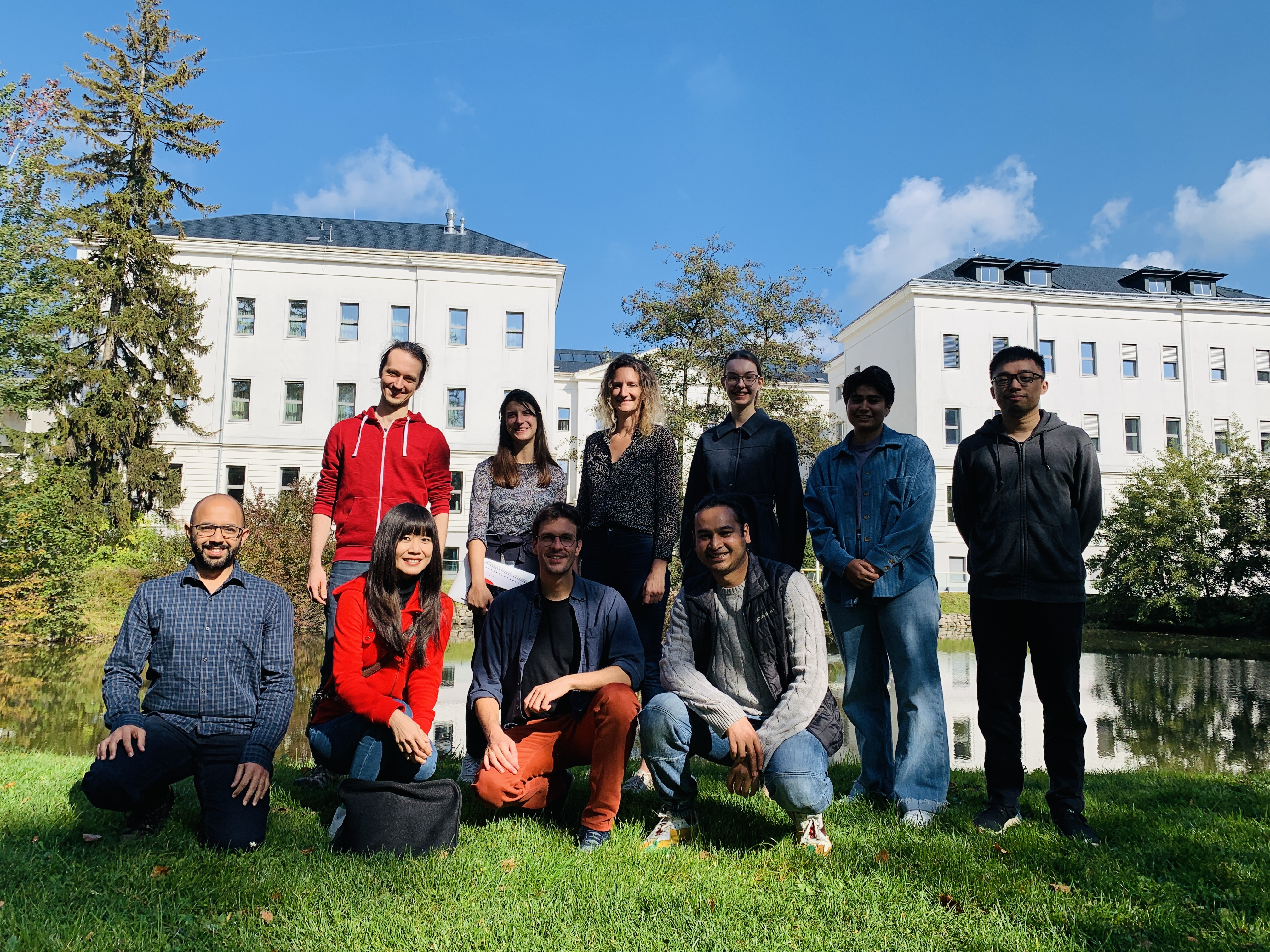
Maria J. Molina is an Assistant Professor within the Department of Atmospheric and Oceanic Science at the University of Maryland and an Affiliate Faculty with the University of Maryland Institute for Advanced Computer Studies (UMIACS). She is also affiliated with the NSF National Center for Atmospheric Research (NCAR) and serves as an Adjunct Assistant Professor within the Department of Marine, Earth, and Atmospheric Sciences at North Carolina State University. Dr. Molina holds leadership positions including Vice-Chair of the AMS STAC Committee on Artificial Intelligence Applications to Environmental Science, member of the WCRP Scientific Steering Group for the Earth System Modelling and Observations (ESMO) Core Project, and member of the AMS Board on Representation, Accessibility, Inclusion, and Diversity (BRAID). Dr. Molina's research focuses on the application of machine learning tools (e.g., neural networks) and numerical modeling systems (e.g., CESM) to answer pressing questions in the domains of climate and extremes. Her PARETO (Predictability and Applied Research for the Earth-system with Training and Optimization) research group tackles problems including extending Earth system prediction, understanding genesis of extremes, and uncovering multi-scale patterns in the climate system. Her work emphasizes open-source software, accessible communication, and multi-disciplinary collaboration, particularly with computer science. Current research directions involve applying AI/ML methods to explore Earth system dynamics, parameterizing subgrid scale processes, and investigating causal patterns in the climate system. NSF Graduate Research Fellowship Program (GRFP) Award for students she advises (Jonathan Starfeldt, Dean Calhoun) Dr. Molina advises numerous graduate students including PhD candidates and MS students working on diverse topics from ENSO dynamics to urban heat extremes. Her group maintains active collaborations with NCAR, NASA, and other institutions. Current research projects include deep learning applications for convection prediction (deep-conus), machine learning for mesoscale convective systems detection (ML-extremes-mcs), climate signal processing (climatico), subseasonal bias correction (s2sml), and neural networks for physical sciences education (UMDAOSC650). Her research group maintains strong connections with the broader scientific community through GitHub repositories, active participation in WCRP-CMIP initiatives, and collaborations across multiple institutions. The PARETO group emphasizes open science practices and interdisciplinary approaches to tackle complex Earth system challenges.