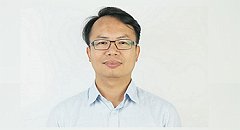
Hoa Khanh Dam is Professor and Deputy Head of School (Research) & Head of Postgraduate Studies in the School of Computing and Information Technology at the University of Wollongong, Australia. He serves as Co-Director of the Decision System Lab where he leads research at the intersection of Software Engineering and Artificial Intelligence. His research focuses on developing AI-driven solutions for software quality, cybersecurity, and productivity enhancement. Key interest areas include: AI/IoT autonomous and cyber resilient systems Software Analytics and Mining Software Repositories Large Language Models for software engineering tasks Defect prediction and vulnerability analysis Agile project management optimization Analysis of Dam's 12 publications from 2018-2025 reveals consistent application of machine learning to software engineering challenges. His work shows progressive evolution from traditional ML techniques toward LLM-based frameworks, with major contributions in defect prediction (DeepJIT), vulnerability analysis, microservice recommendation, and agile effort estimation. The research demonstrates strong industry relevance through practical implementations in code review, component prediction, and security systems. Dam co-leads the Decision System Lab at UOW, which develops intelligent decision support systems using AI and data analytics. The lab's work bridges theoretical AI advancements with real-world software engineering applications, particularly in cybersecurity and autonomous systems development.
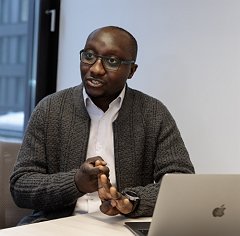
Taha Mansouri is a Lecturer in Artificial Intelligence at the University of Salford's School of Science, Engineering & Environment. He leads the High Performance Computing facilities within the school and chairs the Salford AI Club, an inclusive community focused on AI applications in Higher Education. Mansouri holds dual PhDs - one in Artificial Intelligence and Deep Learning from the University of Salford and another in Information Technology Management from Allameh Tabataba'i University in Iran. His research interests span multiple critical areas in modern AI development, with particular emphasis on ethical considerations in AI systems. Mansouri actively investigates fairness, explainability, and transparency in AI algorithms, with specific focus on computer vision systems and large language models. His work addresses bias in facial emotion detection across age, gender, ethnicity, and cultural backgrounds, highlighting important concerns about equity in automated systems. Mansouri's recent publications demonstrate a strong trend toward practical applications of AI for social good, including detecting mold in social housing, ethical compliance in legal AI systems, and developing AI-resilient assessment tools for education. His research bridges theoretical AI development with real-world implementation challenges across healthcare, education, and industrial applications. Fellowship of the Higher Education Academy Senior Fellowship of the Higher Education Academy Mansouri actively supervises multiple PhD students working on diverse AI applications and leads significant research projects including the £500,000 Innovate UK Smart Grant-funded Expert Legal Intelligence (ELI) project. He serves on prestigious review panels including the EPSRC Peer Review College, the EDI Hub+ Flexible Fund Peer Review College, and the British Council's International Science Partnerships Fund Review College. His grant portfolio includes projects on ethical ASR models (£30,000 collaboration), WATCH-AI benchmarking tools, and inclusive AI emotion recognition systems. As leader of the High Performance Computing facilities, Mansouri supports interdisciplinary research across the university. He also chairs the Salford AI Club, fostering collaboration among individuals from diverse backgrounds interested in AI applications, particularly in Higher Education.
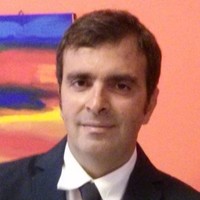
Professor Yuan Miao is a distinguished academic at Victoria University (VU), serving as Professor in the College of Arts, Business, Law, Education & IT and Head of the Information Technology Program. With a PhD from Tsinghua University's Automation Department, his academic journey spans prestigious institutions including the University of Melbourne and Nanyang Technological University in Singapore before settling at VU where he has been Professor since January 2010, following his Associate Professorship from August 2004 to December 2009. Education: BSc, Shandong University, China MEng, Tsinghua University, China PhD, Tsinghua University, Automation Department, China Professor Miao's research centers on Large Language Models (LLMs) and Generative AI, where he has identified critical barriers in practical applications including limited memory length in systems like ChatGPT and Gemini, contradictory explanations, lack of local knowledge integration, and significant errors in text-data hybrid reasoning (up to 38%). His innovative solutions involve cognitive map graphs and rational intelligence models to create customized AI systems. His work spans diverse application areas including human knowledge modeling, multimodal interaction, healthcare analytics (particularly dementia detection), cybersecurity, and robotics powered by rational intelligence. Analysis of Professor Miao's recent publications reveals a strong focus on integrating LLMs with specialized knowledge domains across healthcare, cybersecurity, and social media analysis. His research consistently addresses practical limitations of current AI systems while developing novel frameworks for more reliable and context-aware applications. The interdisciplinary nature of his work is evident in publications spanning medical informatics, cybersecurity analytics, and educational technology. Scientific Recognition: Two articles in fuzzy cognitive map modeling ranked among top 10 most cited works since 2000 (Google Scholar 2000-2016) Development of adversarial dataset based on SQuAD 2.0 that reduced BERT and ELECTRA accuracy from ~90% to ORCID identifier 0000-0002-6712-3465 with 138 peer-reviewed publications Professor Miao actively supervises PhD and Master's students across diverse research topics including access control systems, healthcare analytics, cybersecurity, and social behavior analysis. His research has secured substantial funding from both industry giants (Microsoft, Amazon, Oracle, Google) and government bodies (Australia Research Council, Data61, Singapore's NRF), with recent projects including Digital Transformation for Construction Industry ($1.258 million), Western Health SharePoint Development ($68,000), and Big Data Analysis for Domestic Violence Research (US$100,000). His current grant portfolio demonstrates strong industry-academia collaboration addressing real-world challenges. Professor Miao leads research teams focused on rational intelligence systems that overcome current LLM limitations, with particular emphasis on creating practical AI solutions for healthcare, cybersecurity, and smart city applications. His work with Maribyrnong City Council on the Smart City at Footscray Park project ($850,000) exemplifies his commitment to applying advanced AI research to community-level challenges.
Prof. Tegawendé F. Bissyandé is a Chief Scientist in the Professor category at the Interdisciplinary Centre for Security, Reliability and Trust (SnT) at the University of Luxembourg. He holds the prestigious position of ERC Fellow and serves as Principal Investigator of the NATURAL project focused on Artificial Intelligence for Program Repair. His research spans software engineering, cybersecurity, and artificial intelligence, with particular emphasis on applying machine learning techniques to software development and security challenges. Dr. Bissyandé's research interests include: Software Debugging (especially bug localization and program repair) Software Security (especially malware detection and analysis) Code Search (both free-form and semantic code-to-code) Machine Learning and Natural Language Processing for software engineering Cyber-security applications in mobile and cloud environments His recent work demonstrates a strong focus on leveraging Large Language Models (LLMs) for various software engineering tasks. Analysis of his 15 most recent publications reveals several key trends: extensive application of LLMs to program repair and code generation; innovative approaches to Android security and malware detection; development of novel techniques for code search and understanding; and exploration of the intersection between natural language processing and software engineering. His research increasingly bridges theoretical software engineering with practical applications in mobile security and developer productivity tools, with a significant portion of his work focusing on Android ecosystem security and program repair technologies. Dr. Bissyandé has received numerous prestigious awards throughout his career: APSEC Best ERA Paper Award (2018) for 'LSRepair: Live Search of Fix Ingredients for Automated Program Repair' IPSJ SIG SE Excellent Research Award (2018) for 'FaCOY: a Code-to-Code Search Engine' FOSS Impact Paper Award (2018) for 'Characterizing Deprecated Android APIs' SANER Best ERA Paper Award (2016) for 'Parameter Values of Android APIs: A Preliminary Study on 100,000 Apps' ASE Best Paper Award (2012) for 'Diagnosys: automatic generation of a debugging interface to the Linux kernel' As an active member of the software engineering research community, Dr. Bissyandé serves on program committees for major conferences including ICSE, ASE, and ISSTA, and has been an Area Chair for ICSE 2024. His industry partnerships include significant collaborations with BGL BNP Paribas (since January 2019), Luxembourg Stock Exchange (since January 2018), and Paul Wurth (January 2015 to 2018), demonstrating the practical impact of his research. He leads the SerVAL lab at SnT, which focuses on software validation and analysis, with particular expertise in mobile security and program repair technologies, and actively mentors PhD candidates through FNR research grants.
Peter Mayer is an Assistant Professor at the University of Southern Denmark's Department of Mathematics and Computer Science. His research focuses on end-user viable security and privacy solutions, emphasizing usability for diverse audiences, including laypersons, administrators, and developers. He coordinates the Human and Societal Factors research group within the Helmholtz Association's Engineering Secure Systems initiative at Karlsruhe Institute of Technology (KIT), where he is a KASTEL Fellow. Research Areas: User-Centred Security Email and Password Security Security Awareness and Training Cybersecurity in SMEs Phishing Detection and Prevention Key Projects: Cybersecurity and Business Continuity in Danish SMEs (Industriensfond-funded) INSPECTION: Website Hacks in Fake Shops Mapping the Cybersecurity Landscape in Danish SMEs His work bridges technical security mechanisms with human-centric design, addressing challenges like phishing mitigation, password manager adoption, and cross-cultural privacy awareness. He collaborates internationally and publishes extensively in top venues like CHI and CCS.
Tomas Gustavsson is an Assistant Professor of Information Systems and Project Management Research at Karlstad University. His work focuses on Agile methodologies, large-scale software development coordination, and technical debt management. He completed his PhD in 2020 with a thesis on scaling Agile practices in organizational contexts. Research Interests: Agile Software Development Process Debt and Non-Technical Debt Team Coordination Mechanisms Large-Scale Agile Transformations Secure Software Development Organizational Impact of Agile Practices His recent work emphasizes measuring process debt impacts on developer satisfaction and exploring interdependencies between technical/social debts. Over 60 publications span empirical studies, literature reviews, and framework evaluations. Key contributions include measurement instruments for process debt and analysis of pandemic-era software development adaptations. Professional Contributions: Authored/edited 12 textbooks on Agile methodologies Core contributor to SAFe implementation studies Active in both academic and practitioner communities
Marc Alier Forment is an Associate Professor at the Universitat Politècnica de Catalunya (UPC), affiliated with the Department of Services and Information Systems Engineering within the Faculty of Informatics of Barcelona (FIB). He is also associated with the Institut de Ciències de l'Educació and serves as Coordinator of the Doctoral Program in Engineering, Science, and Technology Education. His research is conducted through the UPC EduSTEAM - STEAM University Learning Research Group. His research interests span Educational Technology , Artificial Intelligence in Education , Learning Management Systems , Open Source in Education , Ethics in Computing , Sustainability in Education , Mobile Learning , Learning Analytics , and Privacy in EdTech . He emphasizes ethical, secure, and sustainable applications of technology in higher education, particularly in engineering contexts. The recent scholarly output highlights a strong focus on the integration of AI in education (especially through the LAMB framework), ethical implications of generative AI, privacy in learning analytics using edge and fog computing, and innovative pedagogical methods in computer science education. His work increasingly bridges technical computing with humanistic concerns such as ethics, privacy, and social responsibility. Best Paper Award TEEM'22 Premis de Programari lliure 2005 de l'AGAUR VI Premi Davyd Luque a la innovació en les TIC Best interoperability innovation: Moodle simple learning tools for interoperability consumer – Spain Marc Alier Forment has led and participated in numerous educational innovation and R&D+i projects, particularly focused on Moodle/LMS integration, mobile learning, open-source educational tools, and the development of ethical and privacy-preserving technologies. He has mentored and collaborated extensively with colleagues on curriculum development, particularly in embedding sustainability and ethics into computing education. His work is central to UPC’s digital education strategy, especially through the Atenea platform. He leads and contributes to the UPC EduSTEAM research group and has been instrumental in developing STEAM-based lecturer training programs. His projects often involve interdisciplinary collaboration across computing, education, and social sciences, aiming to create holistic, responsible technological solutions for learning.
Klaas-Jan Stol is a Senior Lecturer at the School of Computer Science and Information Technology, University College Cork. His research focuses on software development methods, open source practices, and improving research methodologies in software engineering. He leads projects funded by Science Foundation Ireland (SFI) and industry, with grants totaling over €1.5 million. Notable roles include SFI Principal Investigator on open source and agile projects. Education: PhD (Computer Science, University of Limerick), MSc (University of Groningen), B.ICT (Hanzehogeschool Groningen). Former Research Fellow at Lero - Irish Software Research Centre. Research interests span open source adoption, inner source frameworks, crowdsourcing, and theory development. Key publications include Adopting InnerSource: Principles and Case Studies (2018) and Scaling a Software Business (2017). Awards include the Lero Director’s Research Excellence Award (2019). Grant leadership includes SODAW (€464k), HUSRAI (€353k), and Security-Centered Developers (€91k). Guides PhD/postdoc researchers in areas like secure coding and open source ecosystems. Editorial roles: Empirical Software Engineering, Journal of Systems and Software. Labs/Teams: Active in Lero as a Funded Investigator, contributing to industry-academia collaborations.
Massimo Orazio Spata is a Research Fellow in Computer Science at the University of Catania's Department of Mathematics and Computer Sciences, specializing in deep learning applications for biomedical, audio, and biometric systems. He has held roles at STMicroelectronics since 1999, focusing on system integration, image processing, and biomedical device R&D. He teaches courses such as Mobile Programming and Computer Architecture at secondary schools and has advised numerous students on grid computing and middleware projects. Education: PhD in Computer Science (University of Catania, 2008), MSc in Computer Science (University of Catania, 2013), and a teaching certification in Computer Science (University of Catania, 1998). Research interests include deep learning algorithms, biomedical device development, grid scheduling, and cybersecurity. He has authored patents on lab-on-chip systems, bio-computer analysis, and scheduling methods, and his work has been recognized with STMicroelectronics Innovation Awards (2016–2014) and a Cisco CCNA certification. Key collaborations include projects with Google (Mediapipe Objectron for robotics), Huawei (video deblurring), and involvement in the PNRR Horizon HiCONNECTS project (2024–present). He serves on conference committees (e.g., ICAETA 2023) and has developed e-learning systems and CAD tools for STMicroelectronics.
René Röpke is an Assistant Professor at TU Wien since August 2024. Previously, he conducted his PhD and postdoctoral research within the Learning Technologies Research Group at RWTH Aachen University, focusing on personalized game-based learning for cybersecurity education. His academic journey includes a Bachelor's and Master's from Technical University of Darmstadt and a study semester at Simon Fraser University in Canada. His research interests span Learning Technologies, AI-driven Education, Game-based Learning, and Open Educational Resources (OER). Notable projects include the AIStudyBuddy initiative for AI-powered study planning and the development of serious games for phishing education. He has contributed to tools like WebWriter for interactive content creation and BuddyAnalytics for educational data visualization. Röpke’s recent publications emphasize leveraging AI and process mining for personalized learning solutions, study path optimization, and collaborative learning analytics. His work bridges theoretical educational frameworks with practical digital tool development, aiming to enhance individualized and equitable access to education. He has actively participated in conferences like LAK (Learning Analytics & Knowledge) and DELFI, advocating for open science practices and transparency in educational technology. His contributions highlight a strong focus on human-centered design principles in educational technologies.
Yang Yuxiang is an Assistant Professor at the University of Hong Kong's School of Computing and Data Science. His research focuses on software security, adversarial machine learning, and AI safety, with a particular emphasis on formal methods and large language models. He holds a PhD from Hong Kong. Research interests include: Automated program repair using LLMs Cybersecurity in open-source ecosystems Adversarial attacks on vision-language models Formal verification of theorem provers Ethical implications of AI systems Recent publications explore cutting-edge topics such as causality-aware safety testing for autonomous systems , smart contract vulnerability detection , and large model safety at scale . His work bridges theoretical foundations with practical applications in secure software development and AI ethics.
Soon Lay Ki is an Associate Professor at the School of Information Technology, Monash University Malaysia, where she also serves as Associate Head (Graduate Research) since November 2018. Her academic journey began with roles at Multimedia University (MMU), where she was a Senior Lecturer and Deputy Dean (Research and Innovation) from 2016 to 2018. PhD in Web Engineering, Soongsil University, Korea Master of Science in Database, Universiti Putra Malaysia Bachelor of Computer Science, Universiti Putra Malaysia Her research centers on applied natural language processing and data management , with a focus on analyzing domain-specific and social media content. Her work spans aspect-based sentiment analysis , cyberbullying detection , misinformation detection , and relation extraction from conversational texts. Recently, her research has expanded into digital health , particularly emotion-aware mental health chatbots and emotion detection via video data. The most recent articles highlight a strong trend in AI for social good , including legal reasoning, mental health, accessibility, and public health. Her publications appear in high-impact journals and conferences such as Artificial Intelligence and Law , IEEE Transactions on Dependable and Secure Computing , and ACL-affiliated workshops. She has received notable scientific awards, including: ITEX'24 Silver Award for 'MOBOT' mental health chatbot (2024) Silver Medal at Malaysia Technology Expo 2023 for the same innovation The Incubator Grant: Bolster Category (2023) Dr. Soon has graduated seven PhD and three Master’s students, one of whom received the MMU Best Master Thesis Award in 2015. She leads multiple research grants, including FRGS-funded projects and industry collaborations with Telekom Malaysia and Intel . She is currently a Chief Investigator or Primary Chief Investigator on six active projects, including WHinc, WAge, and Epsilon, often in collaboration with Monash Australia and SEACO. She is part of key research teams such as the Action Lab at Monash University Australia and the South East Asia Community Observatory (SEACO) , contributing to inclusive research infrastructure and public health data access initiatives.
Torunn Gjester is an Assistant Professor at the Department of Computer Science , Faculty of Technology, Art and Design , Oslo Metropolitan University. Her research focuses on Cloud Computing , Cybersecurity , and Software Engineering . Visiting Address: Pilestredet 35, 0166 Oslo, Office PS335 Contact: Mobile +47 924 07 828 | Office +47 672 38 659 Email: torunn.gjester@oslomet.no Her academic work aligns with the department's emphasis on modern computational challenges, including distributed systems, secure software architectures, and agile development methodologies. OsloMet's employee portal provides resources for administrative support, research funding, and educational tools like Canvas integration.
Adrien Pommellet is an Associate Professor at EPITA , affiliated with the Laboratoire de Recherche en Informatique (LRE) automata team. His research focuses on formal methods, automata theory, and program synthesis. Education: PhD in Computer Science from Université Paris-Diderot (2018), Parisian Master of Research in Computer Science (2012) His research interests include active and passive learning of automata , model-checking algorithms for Büchi automata, and program synthesis . He actively contributes to the development of the Spot formal verification tool. Recent publications emphasize synthesis algorithms , automata reduction techniques , and LTL verification . He has also explored type systems and formal verification of concurrent programs. Teaching roles include courses in computer science (AAA, COMP, CPXA) and formal logic (FOLO, LOFO). Formerly taught ALGO, LOGI, and PING. He worked as a research engineer at CS Communications & Systèmes before joining EPITA's LRDE (now LRE) verification team in 2019.
Michael Soltys is an Adjunct Professor in the Department of Computing and Software at McMaster University. His work bridges theoretical computer science, algorithms, and practical applications in cybersecurity and education. Research interests include logic, circuit complexity, and pairwise comparisons. Publications span 2002–2021, with recent focus on cloud computing education, digital forensics, and graph theory. Active in academic service through editorial contributions (e.g., Foreword for Franco-Canadian workshop proceedings). His scholarly activity maps to subdisciplines such as Computer Systems Theory, Logic, Discrete Applied Mathematics, and Operations Research. Dr. Soltys' work on pairwise comparisons and clique covers provides foundational insights for decision systems and graph optimization. He has also contributed to cloud curriculum development and malware analysis frameworks. As an educator, he co-authored An Introduction to the Analysis of Algorithms (2018, 2012, 2009), a textbook exploring algorithmic foundations. Current affiliations include the McMaster Experts database, with collaborations across theoretical computer science and applied cybersecurity research.