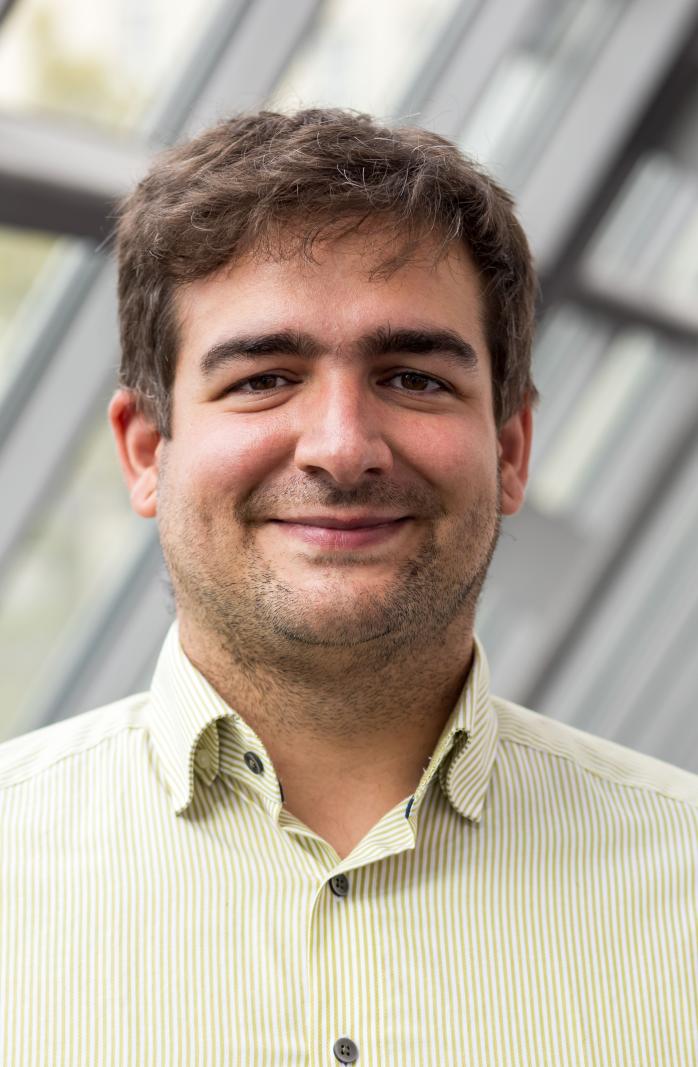
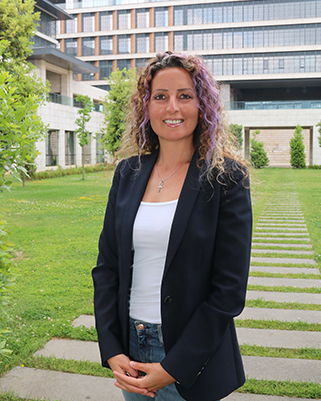
Tudor Dumitras is an Affiliate Associate Professor at the University of Maryland, College Park, holding appointments in the Department of Electrical and Computer Engineering (ECE) and the Department of Computer Science (CS). He is affiliated with The Maryland Cyber Security Center (MC2), where he leads research initiatives in cybersecurity and cryptography. His work focuses on malware detection, system security, and analyzing real-world vulnerabilities like the Heartbleed bug. Dumitras has collaborated with institutions such as Northeastern and Stanford Universities on critical security challenges, including SSL certificate reissuance and revocation strategies. His research interests span machine learning applications in cybersecurity, network security protocols, and adversarial attack mitigation. Notable contributions include developing automated tools for vulnerability exploitation prediction (SCAVY) and investigating the robustness of machine learning models against adversarial examples. Dumitras advises PhD students Simge Tekin and Kamala Varma, focusing on advancing cybersecurity through data-driven approaches. Key projects include analyzing software adoption patterns, studying zero-day attacks, and improving PKI security. His work often bridges academic research with industry practices, leveraging big data from sources like Symantec's WINE system. Dumitras has published extensively on topics ranging from malware behavior analysis to hardware fault attacks on neural networks.
Professor Dollas Apostolos serves as a Professor in the School of Electrical and Computer Engineering at the Technical University of Crete (TUC), where he has held leadership roles such as Department Chairman. He directs the Microprocessor and Hardware Laboratory, focusing on reconfigurable computing, embedded systems, and high-performance digital systems. His work emphasizes rapid prototyping and real-world implementation of computational solutions. Education: Ph.D., Computer Science, University of Illinois at Urbana-Champaign (1987) M.Sc., Computer Science, University of Illinois at Urbana-Champaign (1984) B.Sc., Computer Science, University of Illinois at Urbana-Champaign (1982) Research Interests: Reconfigurable computing architectures FPGA-based acceleration for bioinformatics and genomics Embedded systems and real-time processing Hardware-software co-design for high-performance computing His research bridges theoretical innovation with practical applications, such as FPGA implementations for genome assembly and aquaculture monitoring systems. Publications: Recent work highlights FPGA-based solutions for bioinformatics (e.g., genome assembly acceleration), real-time embedded systems (e.g., fish cage net monitoring), and scalable data processing frameworks. His articles often explore the intersection of FPGA technology with computational biology, embedded vision, and distributed systems. Awards and Affiliations: Senior Member, IEEE and IEEE Computer Society Recipient of IEEE Computer Society Golden Core and Meritorious Service Awards Twice honored with the University of Illinois Teaching Excellence Award He is a co-founder of IEEE conferences like FCCM and RSP, reflecting his leadership in the reconfigurable computing community. Teaching and Labs: Teaches courses on computer architecture, logic design, and VLSI design. The Microprocessor and Hardware Lab under his direction drives advancements in FPGA-based systems, with projects ranging from bioinformatics hardware accelerators to embedded vision systems.
Timothy A. Walton is a Senior Fellow at the Hudson Institute, affiliated with the Center for Defense Concepts and Technology. His research focuses on force development, air and missile defense, long-range missiles, and Indo-Pacific security dynamics. He previously worked at the Center for Strategic and Budgetary Assessments (CSBA) and consultancies like Alios Consulting Group. Walton holds a BS and MA from Georgetown University and a Chinese language certificate from Nanjing University. Education: Bachelor of Science in International Politics (Georgetown University) Master of Arts in Security Studies (Georgetown University) CIEE Intensive Chinese Language and Culture Certificate (Nanjing University) Research Interests: Future warfare trends Asia-Pacific security dynamics Unmanned systems and defense technology Articles & Events: His recent work addresses air base hardening, undersea warfare, and US-China strategic competition. He frequently speaks at conferences and has co-authored reports on missile defense and naval strategy.
Dr Lounis Chermak is a Lecturer in Computer Vision and Autonomous Systems at the Centre for Electronic Warfare, Information and Cyber, part of Cranfield Defence and Security at Cranfield University, UK. He leads the Joint Autonomy Lab and is actively involved in research and education in autonomous systems with applications in defence and space. Research Interests: His work focuses on situational awareness in autonomous platforms, with core expertise in computer vision, sensor fusion, artificial intelligence, robotics, and navigation. He investigates perception, decision-making, and mobility across aerial, ground, maritime, and space systems, developing robust solutions for challenging environments including low visibility and extreme illumination. The recent publications reflect a strong trend in autonomous navigation, particularly for space and defence applications, using advanced computer vision techniques such as thermal stereo odometry, HDR imaging, stixel-based scene understanding, and lightweight 3D descriptors. Research also extends to cybersecurity of autonomous systems, including impersonation attack detection and optical countermeasures. Scientific Awards: No scientific awards mentioned in the provided text. Advising and Grants: Dr Chermak leads research activities supported by postdoctoral researchers, PhD, and MSc students. His work is funded and applied in collaboration with major clients including aerospace organizations (ESA, UK Space Agency, Thales Alenia Space), defence agencies (MoD, DSTL, BAE Systems, MBDA), and technology companies (Samsung, Astroscale). He supervises research students in robotics and autonomous systems across civilian and defence domains. Labs and Teams: He leads the Joint Autonomy Laboratory, a 200 m² indoor facility equipped with drone netting, motion capture systems, virtual reality test benches, UAV and ground robot fleets, electric vehicles, and multiple sensors for vision, ranging, and motion. This lab supports both educational and cutting-edge research in autonomous systems.
Prof. Dr. Matteo Große-Kampmann is a faculty member at Hochschule Rhein-Waal, serving as Professor of Distributed Systems within the Faculty of Communication and Environment. His research and teaching are centered on building secure, resilient, and reliable digital systems, with a strong emphasis on integrating information security from the earliest stages of system design. He is based at the Kamp-Lintfort Campus and actively leads research in the Cloud Resilience Lab. His research interests span a wide range of cybersecurity domains, including information security awareness, healthcare IT security, mobile and 5G/6G network security, threat modeling, and privacy in smart devices. He advocates for a proactive, design-first approach to security, particularly in increasingly interconnected environments. His work combines technical depth with human factors, examining both system-level vulnerabilities and user behavior in cyber risk contexts. The recent publications reflect a strong focus on applied cybersecurity research, with trends in mobile network penetration testing, privacy in wearables, governmental cybersecurity communication, and security in healthcare and childcare technologies. His work frequently appears in top-tier venues such as DSN, PETS, ESORICS, and ACSAC, often in collaboration with students and international researchers. His scientific contributions have been recognized with awards including an Honorable Mention Award at the International Conference on Mobile and Ubiquitous Multimedia (2024) and a Best Paper Candidate at the ACM Web Conference 2022. He also contributes to the academic community as a reviewer and technical program committee member for major security conferences including NDSS, PETS, ESORICS, and ACSAC. Prof. Große-Kampmann actively supervises bachelor's and master's theses, encouraging students to explore topics such as post-Darknet marketplaces, AI in cybersecurity education, and flood of information challenges. He emphasizes ownership, preparedness, and learning through failure, fostering independent research skills. He collaborates with students and industry partners on practical projects, particularly in the areas of penetration testing and security analysis. He is involved in several research initiatives, most notably the Cloud Resilience Lab , where he and his team investigate real-world security and privacy issues in modern digital systems. His work bridges academic research with practical applications, often receiving media attention, such as coverage in Wired , EFF , and Die Zeit for his study on childcare app security.
Jonathan White serves as a Senior Lecturer in Cyber Security within the College of Arts, Technology and Environment at the University of the West of England (UWE). With over 23 years of prior industry experience in telecommunications critical infrastructure systems, he joined UWE in January 2020 after transitioning from roles as software developer, product specialist, and management leader in real-time embedded systems. His educational background includes an M.Sc. in Cyber Security (with Distinction) and B.Sc. in Computing for Real-time Systems, both from UWE, where he is currently pursuing a PhD focused on Federated Learning security tradeoffs. White's research centers on Federated Learning applications for IoT security, container security analysis, and machine learning-driven threat detection in home networks. Analysis of his publication record reveals a strong focus on practical security implementations, particularly in containerized environments (Docker security analysis, cyber ranges) and Federated Learning security frameworks. His work consistently bridges theoretical machine learning concepts with tangible security applications for IoT and edge devices, emphasizing privacy-performance tradeoffs in distributed systems. Scientific Recognition: Fellow of the Higher Education Academy (FHEA) White actively contributes to cyber security education through innovative teaching methods including the 'Cyber Funfair' immersive learning platform and Scalextric-based physical system hacking demonstrations. His industry background in telecommunications critical infrastructure informs his practical approach to security education and research, particularly regarding real-time system vulnerabilities and high-availability network security requirements. His technical expertise spans C and Python programming, network security protocols, and specialized knowledge in securing containerized environments and IoT ecosystems. Current research includes longitudinal analysis of container image vulnerabilities and development of modular cyber range infrastructure for security training.
Beatrice Orlando is an Associate Professor at the Department of Economics and Management at the University of Ferrara. She holds a Ph.D. in Business Management and Corporate Finance from Sapienza University of Rome and has extensive experience in both academic and professional settings. Her current research focuses on Open Innovation, Corporate Strategy, and Entrepreneurship, with numerous publications in high-impact journals. Her educational background includes a Ph.D. in Business Management and Corporate Finance (Sapienza University of Rome, 2010), a Master in Finance (Sapienza University of Rome, 2007), and a Graduate Degree in Economics and Accounting (Sapienza University of Rome, 2004). Professor Orlando's research interests span multiple domains including Open Innovation, Corporate Strategy, Entrepreneurship, Knowledge Management, Sustainability, and Organizational Slack. Her work particularly emphasizes how digital platforms, organizational slack, and decision-making under uncertainty influence innovation adoption and corporate performance. She has developed theoretical frameworks connecting prospect theory, sunk costs, and risk behavior in innovation contexts. Her recent publications reveal a strong trend toward interdisciplinary research combining innovation management with sustainability, digital transformation, and knowledge sharing. The articles demonstrate a methodological diversity ranging from systematic literature reviews to quantitative empirical studies across multiple countries and sectors, with particular focus on green innovation, knowledge management, and the impact of organizational structures on innovation performance. National qualification as Associate Professor (2017) Chartered Accountant certification (2016) Ranked first in PhD competition Grant for research project 'Design driven innovation' (2016) Grant for research project 'On the long-run performance effect' (2015) Professor Orlando has supervised numerous doctoral students and serves as a reviewer for multiple prestigious journals including Journal of Technological Forecasting and Social Change, Production Planning and Control, and Technology Analysis and Strategic Management. She has received multiple research grants supporting her work on innovation management and corporate strategy. She serves as Co-Editor-in-Chief of the Journal of Corporate and Business Strategy Review and as Regional Editor for the Journal of Knowledge Management. She directs the 'Innovation Management' area at EMRBI KMIRC (Knowledge Management International Research Centre) at the University of Nicosia and is a Research Associate at MADEINIT Research Center in Rome. Her research centers focus on open innovation, digital platforms, and the intersection of knowledge management with entrepreneurial initiatives.
Gian Pietro Picco is a Full Professor at the Department of Information Engineering and Computer Science (DISI) at the University of Trento, Italy. His research focuses on wireless networks, particularly ultra-wideband (UWB) technology, wireless sensor networks, and cyber-physical systems. He teaches courses including Distributed Systems, Low-power wireless networking for the Internet of Things, and Programming 2. Professor Picco's research interests span several interconnected domains in pervasive computing and networking: Ultra-wideband (UWB) technology for precise localization and communication Wireless sensor networks and Internet of Things (IoT) systems Cyber-physical systems and networked control Energy-efficient networking protocols Distributed systems and middleware Software engineering approaches for networked embedded systems His recent publications demonstrate a strong focus on ultra-wideband technology applications, particularly in localization, ranging, and concurrent transmissions. His work bridges theoretical foundations with practical implementations, often addressing real-world challenges in human-robot interaction, contact tracing, and infrastructure monitoring. A notable trend is the increasing application of UWB technology for precise positioning in complex environments, with significant contributions to understanding and mitigating human occlusion effects on ranging accuracy. Professor Picco has received numerous prestigious awards for his research contributions: Best Paper Award at IPSN'23 for "Network On or Off? Instant Global Binary Decisions over UWB with Flick" Best Paper Award at IPIN 2019 for "TALLA: Large-scale TDoA Localization with Ultra-wideband Radios" Best Paper Award at EWSN 2018 for "Concurrent Ranging in Ultra-wideband Radios" Best Paper Award at IPSN 2015 for "Geo-referenced Proximity Detection of Wildlife" Best Paper Award at IPSN 2011 for "Wireless Sensor Networks for Adaptive Lighting in Road Tunnels" Best Paper Award at IPSN 2009 for "Monitoring Heritage Buildings with Wireless Sensor Networks" Mark Weiser Best Paper Award at PerCom 2012 Professor Picco actively advises numerous PhD and Master's students, with several of his advisees becoming prominent researchers in wireless networking. His laboratory has secured significant funding for research projects in wireless sensor networks, IoT systems, and cyber-physical systems. His work has practical applications in heritage building monitoring, wildlife tracking, road tunnel lighting systems, and pandemic contact tracing. His research group maintains the Cloves large-scale ultra-wideband testbed and has developed several middleware systems for wireless sensor networks, including Lime and TeenyLIME. The group collaborates extensively with international research institutions and has made significant contributions to standardization efforts in IoT networking protocols.
Marco Aurélio Gerosa is a Professor at Northern Arizona University and was previously an Associate Professor at the University of São Paulo (USP), Brazil . He is affiliated with the School of Informatics, Computing, and Cyber Systems (SICCS) at NAU and the Department of Computer Science at USP. His research focuses on the Human Aspects of Software Engineering , including Software Engineering Education , Computer Supported Cooperative Work (CSCW) , and AI-Assisted Software Engineering . He has published extensively on topics such as Open Source Software development, Bots and Chatbots in software engineering, and Mining Software Repositories techniques. His recent work explores Using Large Language Models (LLMs) for educational purposes in programming, data science, and software engineering Developing chatbots to facilitate newcomer onboarding to OSS projects Investigating the evolution of Integrated Development Environments (IDEs) Assessing the impact of software bots on projects Understanding how to design effective chatbot languages Dr. Gerosa has received numerous scientific awards, including ACM SIGSOFT Distinguished Paper Award Best paper awards at ICSE and International Symposium on Open Collaboration IEEE Computer Society TCSE Distinguished Paper and Service Awards Productivity grants from CNPq (Brazilian Council for Scientific and Technological Development) He has graduated numerous PhD students who are now researchers in top institutions worldwide and has been a mentor to many more at various levels. His research projects have secured over USD 1 million in funding. Dr. Gerosa is also involved in the development of tools and environments for software engineering, including MetricMiner for repository analysis and various gamification platforms to enhance developer engagement. He brings over 25 years of teaching experience across multiple universities, teaching courses ranging from Introduction to Programming to Advanced Topics on Web Development and Collaborative Systems Development.
Assoc. Prof. Nesrin DUMAN is a faculty member at 29 Mayis University , holding the position of Associate Professor. Her academic journey includes undergraduate, graduate, and doctoral degrees from İstanbul Üniversitesi, completed in 2005, 2009, and 2018, respectively. Her research focuses on Psychology , particularly exploring intersections with music therapy, social media behavior, child development, and forensic psychology. Key areas include analyzing the role of music in identity formation, the psychological impact of social media trends like ASMR and ghosting, and addressing issues such as stalking, child abuse recognition, and trauma recovery. Her recent work highlights studies on musical identity development , the transformative power of music on cognition, and typologies of stalking behaviors. Notable projects also investigate the effects of cartoons on childhood experiences and the relationship between lovebombing/ghosting experiences and self-efficacy in romantic relationships. Dr. DUMAN has contributed to understanding psychological resilience in university students , mental well-being during the pandemic, and sociocultural factors influencing food consumption habits among women. She has published extensively on topics ranging from cyberbullying victimization to cultural perspectives on child marriages and pedophilia recognition. Her scholarly contributions emphasize interdisciplinary approaches, blending psychology with sociology, education, and music studies. While no specific awards are listed, her prolific publication record reflects dedication to advancing psychological research and its societal applications.
Dr. Kinga Smoleń is a Senior Lecturer at the Department of International Political Relations within the Faculty of Political Science and Journalism at Maria Curie-Skłodowska University in Poland. Her work focuses on international relations, with particular emphasis on Turkish geopolitical positioning, Middle Eastern security dynamics, and cyber dimensions in statecraft. Member, Polish Society for International Studies Secretary, Lublin Branch of Polish Geopolitical Society Organizer of international conferences on cyber security and Middle East politics Research Focus: Kinga's research spans Turkey's evolving geopolitical role, Middle Eastern security complexes, and the strategic implications of cyberspace in international relations. She has led studies on Turkish cyber security challenges, Middle Eastern hybrid warfare, and energy diplomacy through projects like the Turkish Stream pipeline analysis. Scientific Recognition: Recipient of multiple UMCS Rector's Awards (2019-2024) and National Science Center grants , including her early work on Turkey's post-Cold War geostrategic position. Her 2020 monograph on Turkey's 21st-century geopolitical position remains a key reference. Academic Contributions: Co-promotor of three doctoral dissertations and editor of academic journals including TEKA of Political Science and International Relations . She has taught courses ranging from International Political Relations to Cyberspace and Information Security , shaping the next generation of IR scholars.
Hongxin Hu is a Professor and Associate Chair in the Department of Computer Science and Engineering at the University at Buffalo, State University of New York (SUNY). His research spans security, networking, and machine learning, with publications across top conferences including security (S&P, CCS, USENIX Security, and NDSS), networking (SIGCOMM and NSDI), machine learning (NeurIPS, ICML, and EMNLP), and human-computer interaction (CHI and CSCW). His work has been funded by NSF (SaTC, CNS, IIS, OAC, SOC), USDOT, VMware, Amazon, Google, and Dell. Dr. Hu earned his PhD in Computer Science and Engineering from Arizona State University in 2012. His academic journey has led him to become a prominent researcher in cybersecurity with a strong publication record and significant research impact. Dr. Hu's research interests encompass a wide range of topics at the intersection of security, networking, and artificial intelligence. His work focuses on Emerging Network Technologies and Security (5G/Future-G, NFV, SDN, Edge computing), Machine Learning for Security and Privacy , Security and Privacy in IoT and Cyber-Physical Systems , and AI for Social Good (addressing online abuse, unsafe children's games, and cyberbullying). His interdisciplinary approach has enabled him to tackle complex security challenges through innovative solutions that combine networking expertise with machine learning techniques. His recent publications demonstrate a strong trend toward applying large language models and advanced machine learning techniques to security challenges, particularly in content moderation, vulnerability detection, and privacy protection. The research spans multiple domains including voice assistant security, IoT security, network security, and social media safety, showing a consistent pattern of addressing real-world security problems with cutting-edge technical approaches. IEEE Big Data Security Senior Research Award (2025) ACM SACMAT Test-of-Time Award (2024) NSF CAREER Award (2019) Multiple Best Paper Awards from ACM ASIACCS (2022), ACSAC (2020), IEEE ICC (2020), and ACM SIGCSE (2018) Amazon Faculty Research Award (2022) First Place Award in ACM SIGCOMM 2018 Student Research Competition Dr. Hu has successfully advised multiple PhD students, including Nishant Vishwamitra who joined UT San Antonio as a tenure-track Assistant Professor. His research has been generously funded by major agencies and industry partners. As an active member of the academic community, he serves as Associate Editor for IEEE Transactions on Dependable and Secure Computing and Computers & Security, and has held numerous leadership roles in major security conferences including TPC Co-Chair for ASONAM 2025 and IWSPA 2024/2025. Dr. Hu leads a vibrant research group that has produced significant contributions in network security function virtualization, intrusion detection systems, and privacy-preserving technologies. Current projects include developing LLM-assisted vulnerability detection systems, defenses against jailbreak attacks on large language models, and security mechanisms for emerging networking technologies. His team's work on IoT security, voice assistant applications, and online content moderation has received wide recognition and press coverage.
Mesut Hakkı Caşın is a distinguished Professor at Yeditepe University's Faculty of Law, Department of Public Law and Department of International Law. He also holds positions at Istinye University's Faculty of Economics, Administrative and Social Sciences, Department of International Relations, and Özyeğin University's Faculty of Law. With a career spanning over three decades, Professor Caşın has established himself as a leading expert in international relations, international law, Turkish foreign policy, and security studies. Professor Caşın received his education at prestigious Turkish institutions: PhD (1988-1994) from Istanbul University, Institute of Social Sciences, with a thesis on "International security strategies and disarmament in the contemporary world" Master's Degree (1983-1986) from Gazi University, Faculty of Law, Department of Public Law, with a thesis on "Approach to Expropriation Law in the light of new regulations in the legislation" Undergraduate degree (1977-1983) from Istanbul University, Faculty of Law Professor Caşın's research focuses on the complex intersections of international relations, law, and security. His work spans historical analyses of global conflicts, contemporary geopolitical challenges, and forward-looking assessments of emerging security threats. He has made significant contributions to understanding Turkish foreign policy, Russian politics, energy security, and the evolving nature of warfare in the 21st century. His research is characterized by its interdisciplinary approach, combining historical perspective with policy-relevant analysis. His recent publications reveal a keen interest in contemporary security challenges, including the Russia-Ukraine war, nuclear proliferation, artificial intelligence in warfare, space militarization, and hybrid warfare tactics. Professor Caşın has also maintained a strong focus on regional issues, particularly concerning the Mediterranean, Black Sea, and Middle Eastern security dynamics. His work often bridges historical analysis with current policy challenges, providing valuable context for understanding today's geopolitical landscape. Professor Caşın has supervised over 60 master's theses and 8 doctoral dissertations on topics ranging from Turkish foreign policy to Russian geopolitical strategies, energy security, and international law. His students have pursued research on diverse subjects including NATO's evolution, Chinese foreign policy, Middle Eastern conflicts, and maritime security issues. He has also been involved in NATO Advanced Research projects on critical energy infrastructure protection and strategic military partnerships.
Radu Grosu is a Professor at Technische Universität Wien (TU Wien), leading the Forschungsbereich Cyber-Physical Systems . His research focuses on Cyber-Physical Systems (CPS), Machine Learning, and autonomous robotics, with notable contributions to neural network architectures like Liquid Time-Constant Networks (LTC) and their applications in robotics and medical imaging. He is affiliated with the Network Lab and has supervised numerous PhD and Master's students, including Sebastian Michael Bittner, Daniel Scheuchenstuhl, and Sophie Neubauer. His work spans topics such as reinforcement learning, autonomous driving, and IoT ecosystems. Recent projects include developing robust AI systems for healthcare and robotics, such as tumor delineation using PET imaging and neuromorphic IoT architectures for smart villages. Grosu has published extensively on CPS, with over 146 contributions across peer-reviewed journals and conferences. His research emphasizes bridging theory and practice, addressing challenges in safety, scalability, and real-time control in autonomous systems. Key research interests include robotic perception, neural network robustness, and CPS/IoT integration. He has pioneered methods like DeepSTL for translating temporal logic requirements into neural network training objectives and developed frameworks like NimbleAI for neuromorphic sensing-processing systems. His team also explores distributed control algorithms for multi-agent systems, such as flocking drones and formation control using relative distance measurements. Recent work examines the generalization properties of deep filters in CNNs and quantum-classical reinforcement learning models for game AI. Grosu has advised over 20 students on topics ranging from deep learning in wafer defect analysis to bio-inspired neural circuits for auditable autonomy. His lab collaborates on interdisciplinary projects, such as applying AI to battery health estimation and prostate cancer diagnostics. He actively contributes to academic communities, editing special issues on AI in healthcare and CPS resilience, and has organized summer schools on CPS and IoT systems.
Chigo Okonkwo is Full Professor and Chair of Secured Ultra High Capacity Transmission at the Department of Electrical Engineering , Eindhoven University of Technology. He leads the high-capacity optical transmission laboratory at the Institute for Photonics Integration and contributes to the Center for Quantum Materials and Technology Eindhoven (QT/e) . Academic Qualifications: MSc in Telecommunications and Information Systems, University of Essex (2002) PhD in Optical Signal Processing, University of Essex (2010) Research Interests: Professor Okonkwo focuses on: Maximizing capacity of single-mode fiber systems through advanced-coded modulation and Probabilistic/Geometrically shaped signals Developing Space Division Multiplexing (SDM) systems for Petabit/s transmission using multi-mode/multi-core fibers Quantum secure communications and cryptographic protocol development Optical vector network analyzer (OVNA) technology for SDM fiber characterization Free-space optical link deployment in urban environments Low-complexity digital signal processing algorithms Recent Publications Trends: His 15 most recent articles (2023-2025) demonstrate active research in: Quantum-classical network integration Extreme capacity fiber transmission (Petabit/s systems) Machine learning for optical diagnostics SDM fiber measurement technologies Hybrid QKD-PQC security frameworks Free-space optical urban communication Scientific Awards: Asia Communications and Photonics Conference (ACP) 2018 Best Paper Award European Conference on Optical Communications (ECOC) 2018 Student Paper Award Optica Student Paper Awards (2022) Corning Outstanding Student Paper Competition Finalist (2025) Advisory & Collaborations: Advisor to 8+ researchers including Menno van den Hout, Vincent van Vliet, and Thomas Bradley Technical Program Committee Member, European Conference on Optical Communications (ECOC) since 2014 Sub Committee Chair for Digital Signal Processing track at ECOC 2018 General Chair for OSA Advanced Photonics Congress on Signal Processing for Photonics Collaborates with EU projects (HOMTech, PhotonDelta) and industrial partners Co-founder and Chief Technology Officer of CUbIQ Technologies Laboratory & Infrastructure: Maintains the world-class High Capacity Optical Transmission Lab at TU/e, featuring: Advanced SDM fiber testing equipment Quantum communication research infrastructure Free-space optical link experimental setups Multi-core fiber amplification systems Coherent transmission testbeds Machine learning-enabled diagnostic tools