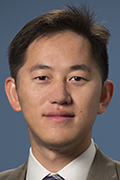
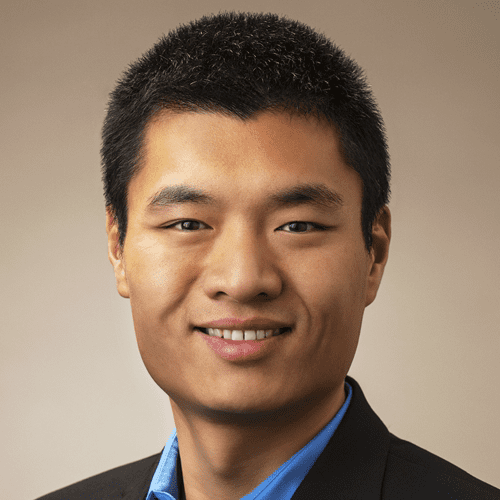
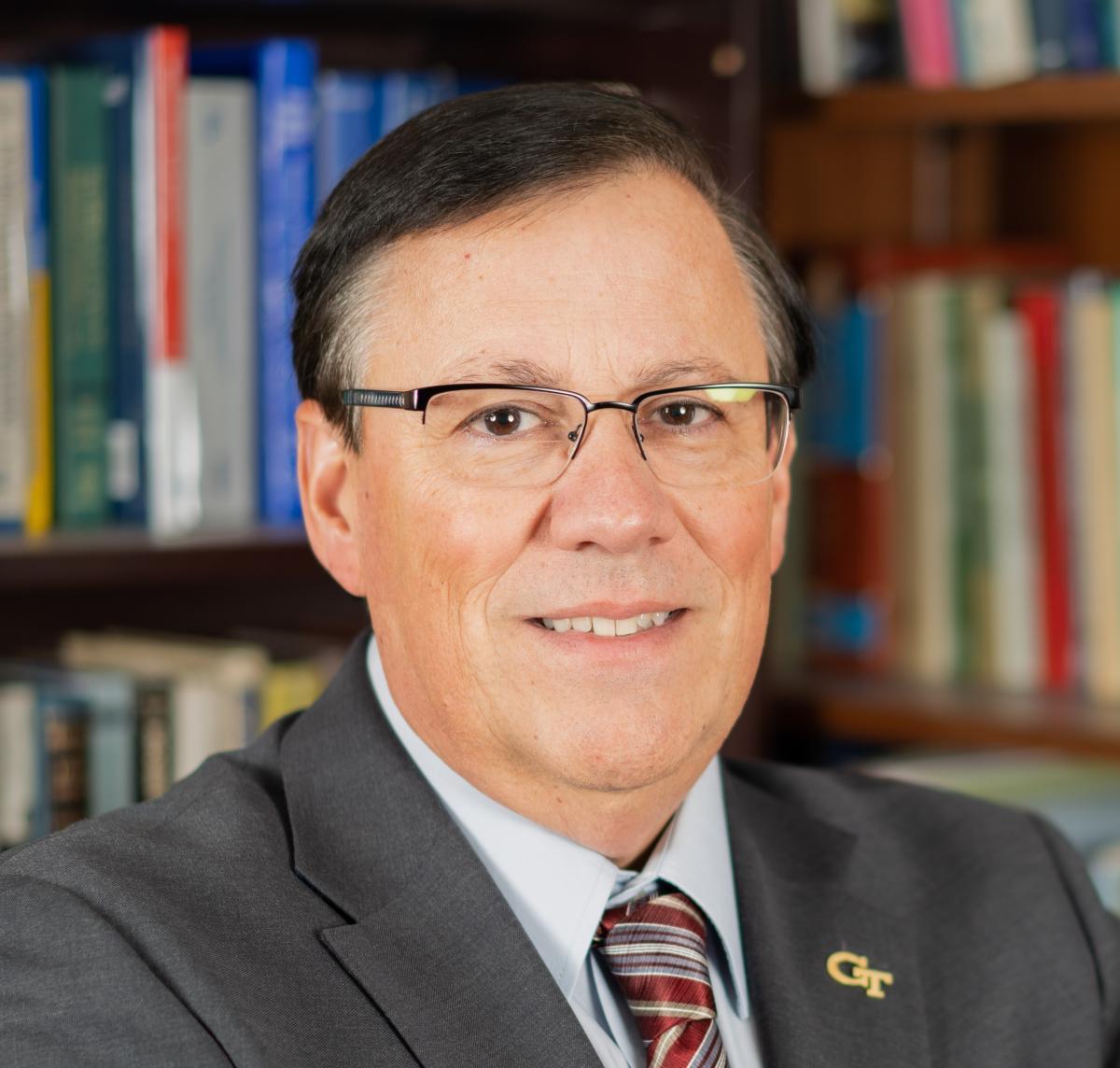
Dr. Nanpeng Yu is a Full Professor at the University of California, Riverside , serving as Vice Chair and Graduate Advisor in the Department of Electrical and Computer Engineering . He maintains cooperative faculty affiliations with the Department of Computer Science and Department of Statistics , and directs the Energy, Economics, and Environment Research Center at UCR. Education : B.S. in Electrical Engineering from Tsinghua University (2006), M.S. in Electrical Engineering and Economics, and Ph.D. from Iowa State University (2010) Prior Industry Experience : Senior Power System Planner and Project Manager at Southern California Edison (2011-2014) Dr. Yu’s research bridges smart grid technologies , data-driven optimization , and machine learning for energy systems. Key areas include voltage control , renewable energy integration , transportation electrification , and grid resilience . His recent work focuses on physics-informed graph learning for unit commitment problems and adversarial purification in power system classifiers. The AI-Energy Nexus Laboratory under Dr. Yu has produced impactful publications in Applied Energy , IEEE Transactions on Power Systems , and Transportation Research series, covering topics like heavy-duty EV charging infrastructure and dynamic distribution network reconfiguration . Lab members have won the American-Made Digitizing Utilities Grand Prize ($300,000) from the U.S. DOE. Leadership Roles : Chair, IEEE Power and Energy Society Distribution System Operation and Planning Subcommittee Chair, IEEE Power and Energy Society Working Group on Data-Driven Modeling for Power Distribution Networks Associate Editor, IEEE Transactions on Smart Grid and IEEE Power Engineering Letters Scientific Awards : Regents Faculty Fellowship Regents Faculty Development Award Multiple IEEE Best Paper Awards
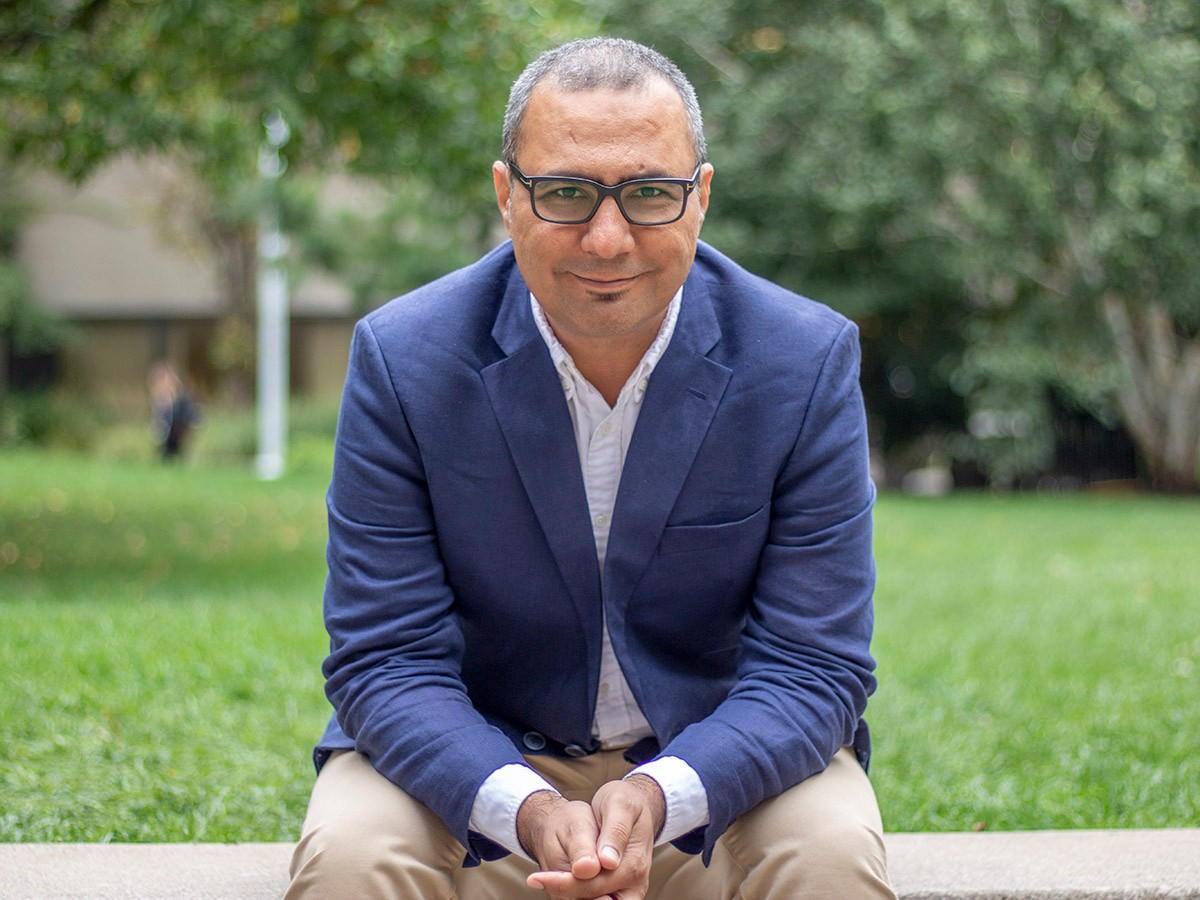
Bilal Farooq is an Associate Professor and Program Director for the Master of Engineering in Interdisciplinary Engineering (MEIE) at Toronto Metropolitan University, holding the Canada Research Chair in Disruptive Transportation Technologies and Services within the Department of Civil Engineering. His educational background includes a PhD from the University of Toronto (2011), MASc from Lahore University of Management Sciences (2004), and BSc from the University of Engineering and Technology (2001). Dr. Farooq's research pioneers disruptive transportation solutions through cyber-physical systems, AI/machine learning applications, behavioral modeling, and optimization techniques. His work specifically targets on-demand multimodal systems, sustainable urban transportation, urban air mobility, automated vehicles, and extended reality applications, addressing critical urban mobility challenges with human-centered approaches. Analysis of his recent publications reveals a strong trend toward quantum-enhanced computational methods, privacy-preserving federated learning frameworks, and sustainability-focused decarbonization strategies across transportation domains, with increasing emphasis on human factors and real-world implementation. Notable scientific awards include: Ontario Early Researcher Award (2018) Canada Research Chair (2017) MassMotion Academic Pedestrian Modelling Project of the Year (2016) Québec Early Researcher Award (2014) Dr. Farooq actively supervises graduate students and secures significant research funding through his Canada Research Chair position and Early Researcher Awards. He directs the Laboratory of Innovations in Transportation (LiTrans), which develops interdisciplinary solutions integrating mathematics, engineering, computer science, and economics to address emerging transportation challenges. LiTrans focuses on disruptive transportation technologies, complete streets design, cyber-physical systems, pedestrian dynamics, resilience, and climate change impacts, collaborating with industry and government partners to translate research into practical urban mobility innovations for smart cities worldwide.
Chee-Wooi Ten is a tenured Professor in the Department of Electrical and Computer Engineering at Michigan Technological University, where he has served since 2010 and achieved tenure in 2016. He concurrently holds an Affiliated Professor appointment in Applied Computing and directs both the PSERC Site and ICC CPS Center. His institutional roles emphasize cyber-physical security integration within power infrastructure. His educational background includes: PhD in Electrical Engineering from University College Dublin (2009) MSc in Electrical Engineering from Iowa State University (2001) BSc in Electrical Engineering from Iowa State University (1999) Ten's research pioneers cyber-informed security engineering strategies for bulk power systems, focusing on quantifying rare events through system risk models and data science. His work bridges power grid interactions with robotics and transportation systems to advance decarbonization and electrification. Key methodologies include validating cyber-physical security frameworks against steady-state and dynamic grid approaches, with emphasis on attack/defense combinatorics and smart home technologies. This transdisciplinary approach supports the fourth industrial revolution's resilience requirements. His publication trends reveal strong focus on risk-aggregated substation testbeds using generative adversarial networks, cyber insurance models for power systems, and cascading failure analysis from switching attacks. Recent works increasingly integrate machine learning with physics-based modeling to address cybersecurity threats in inverter-based resource integration and distribution emergency operations. Ten has secured over $6.5M in active funding including: $2M DOE grant (MTU portion $105,000) for CyDERMS Center on DERs/Microgrids cybersecurity $704,409 CyManII award for secure digitalization in smart manufacturing $1.05M DOE ARPA-E grant for decarbonized freight transportation modeling NSF CyberCorps Scholarship for Service program ($3.38M) His grants consistently address risk management through data-driven and physics-based modeling, with industry partnerships through PSERC and utility collaborations. As ICC CPS Center Director, he leads research on cyber-physical security testbeds and coordinates the PSERC Summer Transformation School. His team develops validation frameworks for NERC CIP compliance while addressing practical pain points in OT cybersecurity for grid operators.
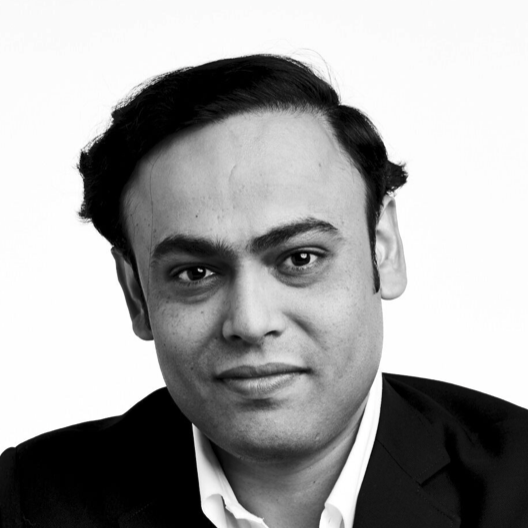
Saurabh Amin is a Professor in the Department of Civil and Environmental Engineering at the Massachusetts Institute of Technology (MIT), where he also serves as the Edmund K. Turner Professor and Undergraduate Officer. He is a Principal Investigator at the Laboratory of Information and Decision Systems and holds affiliations with the Operations Research Center and the Center for Computational Science and Engineering. His educational background includes: B.Tech. 2002, Indian Institute of Technology (IIT) Roorkee M.S. 2004, University of Texas (UT) Austin Ph.D. 2011, University of California (UC) Berkeley Saurabh Amin's research focuses on the design and control of infrastructure systems using game theory and optimization in networks. His work spans three main areas: resilient network control, information systems and incentive design, and optimal resource allocation in large-scale infrastructure systems. By concentrating on critical infrastructure domains including highway transportation, electric power distribution, and urban water networks, his research develops innovative theory and tools to enhance system performance against both stochastic and adversarial disruptions. His approach involves modeling cyber-physical interactions in infrastructures to assess vulnerabilities, developing detection and response tools for failures at various scales, and designing economic incentive schemes that improve aggregate public good while accounting for dependencies and private information among strategic entities. Amin's work bridges mathematical systems theory with practical civil engineering applications, creating a rigorous theoretical foundation for infrastructure resilience that addresses diverse failure mechanisms from natural disasters to deliberate malicious actions. His recent publications demonstrate a strong focus on decarbonization of energy systems, resilient infrastructure planning under climate uncertainty, optimization methods for complex networked systems, and game-theoretic approaches to sustainable infrastructure management. His work increasingly integrates artificial intelligence and machine learning techniques with traditional control theory to address contemporary challenges in infrastructure resilience and sustainability. The research shows a clear trajectory toward addressing climate change impacts on infrastructure systems while maintaining economic efficiency and operational reliability. Professor Amin has received numerous prestigious awards and honors: Common Ground Excellence in Teaching Award, 2025 HSCC Test-of-Time Award, 2024 MIT CEE, Distinguished Service and Leadership Award, 2023 Samuel M. Seegal Prize (SoE) – inspiring students in pursuing and achieving excellence, 2022 Earll M. Murman for Excellence in Undergraduate Advising, 2022 C3.ai Digital Transformation Institute Research Award, 2020 MIT, Ole Madsen Mentoring Award, 2020 MIT, Energy Initiative Research Award, 2020 National Academy of Engineering, China-America Frontiers of Engineering Symposium speaker, 2019 MIT, Robert N. Noyce Career Development Professor, 2015-2018 Google Faculty Research Award, 2015 National Science Foundation CAREER Award, 2015 Siebel Energy Institute Research Award, 2015 MIT, Solomon Buchsbaum AT&T Research Fund Award, 2012 Professor Amin has been actively involved in significant research projects including the C3.ai DTI project on Causal Reasoning for Real-Time Attack Identification in Cyber-Physical Systems and another on Learning in Routing Games for Sustainable Electromobility. He serves as the chief scientist on multi-institutional NSF grants, including the $9 million Foundations of Resilient Cyber-Physical Systems (CPS) project. His teaching portfolio includes courses such as 1.008 Engineering for a Sustainable World, 1.104 Sensing and Intelligent Systems, 1.020 Engineering Sustainability: Analysis and Design, and 1.208 Resilient Networks. As Undergraduate Officer, he plays a key role in shaping the educational experience for civil and environmental engineering students at MIT. Professor Amin leads the Resilient Infrastructure Networks Lab at MIT, where his team develops theoretical foundations and practical tools for infrastructure resilience. The lab focuses on the intersection of control theory, game theory, and optimization applied to cyber-physical infrastructure systems. Current research directions include pandemic-resilient urban mobility and hurricane-resilient smart grid operations, reflecting the lab's commitment to addressing pressing societal challenges through rigorous systems engineering approaches.
Rajesh Karki is a Professor in the Department of Electrical and Computer Engineering at the University of Saskatchewan’s College of Engineering. He holds a B.E., M.Sc., and Ph.D. in related fields. His research focuses on power system reliability, renewable energy integration, and microgrid resilience, with particular emphasis on addressing challenges posed by extreme weather, cyber threats, and decarbonization targets. Dr. Karki’s work spans theoretical modeling, probabilistic analysis, and practical implementation strategies for smart grids, energy storage systems, and distributed generation. His educational background includes advanced degrees in electrical engineering, complemented by professional engineering licensure (P.Eng.). His research has explored diverse topics such as wind energy curtailment mitigation, energy storage optimization, and demand response mechanisms in developing economies like Nepal. He has authored numerous peer-reviewed publications on grid resilience, reliability economics, and cyber-physical system security. Key themes in his work include: (1) quantifying the reliability value of energy storage in active distribution systems, (2) modeling cyber-physical threats to microgrids, and (3) developing frameworks for extreme weather-resilient infrastructure. Despite the volume of his publications (over 50 articles), no specific awards or grants are explicitly listed in the provided materials. His research often intersects technical, economic, and policy dimensions of sustainable energy systems.
Fengqi You is the Roxanne E. and Michael J. Zak Professor in Energy Systems Engineering at Cornell University. He holds affiliations with multiple departments and graduate fields, including Chemical Engineering, Computer Science, and Sustainability. His research focuses on systems engineering, artificial intelligence, and their applications in energy systems, digital agriculture, and sustainability. You serves as Chair of Ph.D. Studies in Systems Engineering and leads initiatives like the Cornell AI for Sustainability Initiative (CAISI) and the Cornell Institute for Digital Agriculture (CIDA). Education: B.Eng. from Tsinghua University (2005), Ph.D. from Carnegie Mellon University (2009). Before Cornell, he worked at Argonne National Laboratory and Northwestern University. Research Interests Decarbonization of energy systems (e.g., photovoltaics, battery tech) Material informatics and computer-aided molecular design AI-driven solutions for agriculture and climate resilience Supply chain optimization and smart manufacturing Awards & Recognition Fellow of AAAS, AIChE, and Royal Society of Chemistry Over 25 major awards including NSF CAREER (2016), AIChE Research Excellence (2017), and the 2024 Cecil Award Grants & Leadership Recipient of NSF NRT Award for AI in Sustainability Sciences Amazon Research Award for LCA transparency using LLMs Labs & Initiatives Cornell AI for Science Institute (CUAISci) Cornell Institute for Digital Agriculture (CIDA)
R. Michael Alvarez , Flintridge Foundation Professor of Political and Computational Social Science at Caltech, is a leading scholar in election technology, political methodology, and machine learning applications in social science. Affiliated with the Caltech/MIT Voting Technology Project , the Social and Decision Neuroscience Program , and the Resnick Sustainability Institute , his work bridges technology and democracy. Education: B.A. from Carleton College, Ph.D. from Duke University Academic Career: Caltech faculty since 1992 His research spans: Election Integrity : Monitoring election security, fraud detection, and ballot systems Computational Social Science : Applying machine learning to voter behavior and policy analysis Climate Policy : Examining public attitudes and behavioral interventions for sustainability Online Behavior : Analyzing toxicity in gaming and social media dynamics Key article trends show focus on election forensics (2025 Nature Climate Change study), game toxicity analysis (2025 CHI Play paper), and LLM applications in social science. His students include Jacob Morrier, Mitchell Linegar, and teams of postdocs and undergraduates in Caltech's SURF program. Scientific recognition includes: Google Cloud Research Innovators Class of 2022 Co-editor of multiple academic series including Cambridge Elements in Quantitative Methods
Nicola Paltrinieri is a Professor of Risk Assessment at the Department of Mechanical and Industrial Engineering, NTNU (Norway), and an Adjunct Professor at the University of Bologna (Italy). His expertise spans risk assessment, hydrogen technologies, process safety, and data-driven safety management. He holds Chartered Engineer and Chartered Scientist certifications and has served on editorial boards for journals like Safety Science and Journal of Risk Research . Education: PhD in Environmental, Safety and Chemical Engineering (University of Bologna, 2012) Master’s in Chemical and Process Engineering (University of Bologna, 2008) Research Interests: Focuses on hydrogen infrastructure safety, Natech accident analysis, risk-based inspection strategies, and AI integration in safety systems. His work emphasizes sustainable energy transitions and mitigating risks in emerging technologies like hydrogen. Key Projects (2022-2026): H2Glass : Decarbonizing glass and aluminum sectors via hydrogen HyInHeat : Hydrogen technologies for industrial heating HYDROGENi : Norwegian research center for hydrogen/ammonia Awards: Onsager Fellowship (2016–2021) Frank Lees Medal (2012) for safety-related publications Grants & Leadership: Head of NTNU Energy Team Hydrogen, coordinator for EU-funded projects like SUSHy , and active in international risk committees (e.g., EFCE, ESRA). His work bridges academia and industry, with over 8 PhD examinations supervised. Labs/Teams: Leads the NTNU Energy Team Hydrogen and collaborates on initiatives like SH2IFT-2 for safe hydrogen fuel handling. His research group focuses on AI-driven risk analysis and hydrogen infrastructure resilience.
Navid Bayati is an Associate Professor at the University of Southern Denmark, affiliated with the Institute of Mechanical and Electrical Engineering and the Centre for Industrial Electronics. He leads the Control and Protection of Smart Grids (CAP-SG) group and focuses on renewable/hybrid power systems, microgrid protection, and grid code compliance. Education: Ph.D. in Power Systems & Microgrid Protection (2020, Aalborg University); M.Sc. in Power Systems (2017, Amirkabir University of Technology) His research spans renewable energy integration , transient analysis , grid interconnection , and digital twin applications . Recent work includes machine learning for carbon emission prediction, fault localization in DC microgrids, and supercapacitor resilience in hybrid systems. Collaborations include projects like IEA Wind Task 50 and RePoSys , addressing grid renovation, life cycle assessment, and digital twin resilience. His teaching portfolio covers power electronics , energy management , and microgrid control .
Maria Sharmina is a Professor in Energy and Sustainability at The University of Manchester’s School of Engineering, affiliated with the Tyndall Centre for Climate Change Research and Policy@Manchester. She holds roles including Co-Director of Policy@Manchester, UKRI Digital Security & Resilience Theme advisor, and Sustainable Robotics Committee member at BSI. Her work focuses on low-carbon business models, circular economy, and climate policy, with leadership in projects like the £6M UKRI BuildZero programme. Education: PhD in the Tyndall Centre, background in economics and statistics. She advises governments (e.g., UK Government Office for Science, BEIS) and has served on University Senate and Departmental Research Leadership roles. Research Interests: Energy systems transformation, food-energy-water nexus, emission scenarios, and policy design. She emphasizes sustainable innovation, net-zero housing, and plastics circularity. Key projects include analyzing hydrogen’s role in decarbonization, SME compliance with plastics policies, and financing smart local energy systems. Awards: 2024 Social Responsibility Medal and Making A Difference Award for contributions to social/environmental impact via entrepreneurship. Her work bridges academia and policy, with outputs including 79 research publications and 16 projects. Grants/Consultancy: Principal Investigator on BuildZero (UKRI £6M), funded studies on community energy finance, and consultancy with Oxfam, Manchester City Council, and the Co-operative Group. Labs/Teams: Lead researcher at Tyndall Manchester, collaborates across disciplines (e.g., Digital Futures Institute) to address sustainability challenges through systemic approaches.
Shivam Saxena is an Assistant Professor in the Department of Electrical and Computer Engineering at the University of New Brunswick, located in Head Hall D65, Fredericton. His research focuses on smart grid technologies, including distributed energy resource integration, blockchain applications for energy trading, electric vehicle-grid interactions, and resilient microgrid design. This work addresses decarbonization challenges through technological and market innovations. Publications demonstrate a strong emphasis on real-world implementation, with field-tested solutions for V2X integration, blockchain-based transactive energy, and distributed control systems. Recent work explores novel applications in agricultural energy management and trust mechanisms for decentralized systems.
Dr. Muhammad Azmat is a Lecturer and researcher at Aston University's School of Engineering and Applied Science, specializing in Engineering Systems & Supply Chain Management. He holds a PhD from Vienna University of Economics and Business, an MBA from Iqra University, and completed leadership programs at Oxford. His research focuses on disruptive technologies like autonomous vehicles, IoT, and their applications in supply chains and mobility. He has collaborated with organizations such as the Federal Procurement Agency of Austria and the Kühne Foundation, addressing challenges in logistics, urban mobility, and humanitarian aid. Education: PhD in Transport, Logistics & Supply Chain Management (Vienna University of Economics and Business, 2019) MSc in Supply Chain Management (Vienna University of Economics and Business, 2015) MBA in Supply Chain Management (Iqra University, 2013) Research Interests: Dr. Azmat explores innovation in mobility (autonomous/connected vehicles, shared platforms), logistics 4.0, and humanitarian supply chains. He examines how technologies like IoT and big data can enhance efficiency while addressing ethical and operational challenges. Recent work includes drone applications for disaster relief and blockchain for supply chain transparency. Publications Trends: His work spans urban logistics optimization, technological adoption barriers in SMEs, and cross-border humanitarian coordination. A common theme is leveraging emerging tech to solve real-world logistical and infrastructural problems. Awards: Best paper in Health and Environment (2019) PhD Distinction Award (2019) PhD Supervision & Collaboration: Actively supervises PhD candidates in mobility innovation and supply chain resilience. Leads industry-academia projects with highway authorities and tech firms, focusing on pilot testing autonomous vehicle infrastructure and IoT-based logistics solutions. Labs/Teams: Collaborates with Aston's Logistics Research Group and external networks like the Kühne Foundation to advance sustainable logistics systems and smart mobility frameworks.
Stephen Lee is an Assistant Professor in the Department of Computer Science at the University of Pittsburgh, affiliated with Pitt Cyber. His research focuses on distributed systems, cyber-physical systems, and sustainability, emphasizing energy efficiency and cost optimization. Dr. Lee holds a PhD from the University of Massachusetts Amherst, a Master’s from Chennai Mathematical Institute, and a Bachelor’s from St. Stephen’s College, Delhi. He actively seeks students for his research group. Education: PhD, Computer Science, University of Massachusetts Amherst Master’s, Chennai Mathematical Institute Bachelor’s, St. Stephen’s College, Delhi Research Interests: Dr. Lee’s work integrates distributed systems, machine learning, and optimization to enhance sustainability. Key areas include IoT-enabled energy systems, emission-aware computing, and privacy-preserving frameworks. He leads projects like GreenWhisk (serverless emission reduction) and Sat2map (3D building modeling from satellite imagery). Recent Achievements: Best Paper Award in IEEE TPS 2024 DOE-funded Cyber Energy Center (2024) MCSI Seed Grant for Pitt building sustainability (2024) NSF Grant on sustainable distributed infrastructures (2023) Grants & Advising: Secured over $2M in grants, including NSF and DOE funding. Advises on energy-efficient systems and IoT security. Teaches CS 2510 (Operating Systems) and CS 1699 (Systems & Sustainability). Labs & Teams: Directs the Sustainable Systems Research Group, focusing on decarbonizing IT and optimizing renewable energy systems. Collaborates with industry partners on smart grid solutions and edge-cloud systems.
Dimitri Mavris is a Professor at the School of Aerospace Engineering , Georgia Institute of Technology, holding distinguished titles including Boeing Chair in Advanced Aerospace Systems Analysis and S.P. Langley Distinguished Professor . He directs the Aerospace Systems Design Laboratory (ASDL) and serves as Executive Director of the Professional Master’s in Applied Systems Engineering (PMASE) . Education B.S., Aerospace Engineering, Georgia Institute of Technology (1984) M.S., Aerospace Engineering, Georgia Institute of Technology (1985) Ph.D., Aerospace Engineering, Georgia Institute of Technology (1988) Dr. Mavris specializes in advanced design methods , aircraft preliminary design , and non-deterministic design theory , focusing on multi-disciplinary optimization and system of systems architecting . His work spans propulsion systems, space exploration, and sustainable aviation technologies. Recent research trends include machine learning for aerospace safety , hybrid-electric propulsion analysis , and digital twin applications in energy systems. His lab produces 100+ annual publications, reflecting leadership in MBSE , UAS certification , and lunar operations modeling . Scientific Awards Class of 1934 Distinguished Professor Award (2024) NSF CAREER Award (1997) Fellow of AIAA (2009-present) NASA Blue Marble Award (2017) SGA Faculty of the Year (2012-2013) As an advisor to Georgia Tech's AIAA student chapter, Dr. Mavris mentors 1,484 alumni (300 Ph.D., 1,184 M.S.) and leads industry partnerships with FAA , Airbus , and Siemens . His labs include the Vertical Lift Research Center and Strategic Energy Institute , with global initiatives like the ICAS presidency (2023-2024).
Zhanhao Zhang is a Postdoc researcher at the Department of Applied Mathematics and Computer Science (DTU Compute) of the Technical University of Denmark, affiliated with the Scientific Computing Center for Energy Resources Engineering. His work centers on developing advanced control strategies for industrial processes with emphasis on sustainability and computational efficiency in energy-intensive sectors. His research specializes in Model Predictive Control (MPC) for time-delay systems, numerical discretization methods, and real-time implementation of cyber-physical control systems. Key application domains include zero-emission industrial processes, cement production blending operations, and oil/gas zero-discharge systems, where he bridges theoretical control algorithms with practical industrial constraints through close industry collaboration. Analysis of his 2022-2024 publications reveals consistent innovation in extending MPC methodologies to handle complex industrial realities like time delays and discontinuities while targeting environmental sustainability. His work demonstrates strong integration of computational mathematics with process engineering to solve critical challenges in carbon-intensive industries. Zhang completed his PhD project "Model Predictive Control for Zero Emission Industrial Processes" (2021-2024) under Professor John Bagterp Jørgensen at DTU, resulting in his doctoral thesis and multiple high-impact publications. This industry-collaborative project focused on developing control frameworks for decarbonizing industrial operations. As an active member of DTU's Scientific Computing Center for Energy Resources Engineering, he contributes to interdisciplinary research that applies high-performance computing and mathematical modeling to optimize energy resource extraction, processing, and utilization while reducing environmental impact.