Suzie Dunn is an Assistant Professor at Dalhousie University's Schulich School of Law and Acting Director of the Law & Technology Institute. She teaches Contracts, Judicial Decision-Making, Law and Technology, Intellectual Property, and Legal Ethics. Her research focuses on the intersection of gender, equality, technology, and law, particularly technology-facilitated violence, deepfakes, and digital privacy. Education: PhD candidate at the University of Ottawa Faculty of Law, with JD, LLM, and BA degrees. She previously served as a part-time professor at the University of Ottawa, where she taught Contracts and Law of Images, earning a 2021 teaching excellence award. Awards include the Joseph-Armand Bombardier Scholarship for PhD research and the Greenberg Prize for Feminist Research. Professional roles include advising the G7 and UN on gender-based violence in digital contexts, contributing to CIPPIC interventions in landmark Supreme Court cases (R v Jarvis, R v Downes), and serving on advisory boards for organizations like the Women’s Legal Education and Action Fund. She is a Senior Fellow at CIGI, working on global projects against online gender-based violence, and co-authored a UN resolution on digital violence prevention. Her work extends to tech safety toolkits for domestic violence shelters, policy development, and international collaborations. She was called to the Ontario bar in 2016 and actively engages in public discourse on AI ethics and digital rights.
Profile Roles and Affiliations: Michael Smets is a Professor of Management at the Saïd Business School, University of Oxford. He is also a Research Fellow at Green Templeton College and a member of the Centre for Professional Service Firms. His academic contributions span institutional theory, practice theory, and strategic management. Education: Bachelor’s equivalent in Business and Economics, Cologne University, Germany MSc in Management Research, Saïd Business School DPhil in Management, Saïd Business School Postdoctoral Researcher at Saïd Business School and University of Alberta’s School of Management Research Interests: Michael’s work examines professional service firms (PSFs) through three core lenses: Global Operations: Internationalisation challenges in law, consulting, and reinsurance firms, with a focus on institutional complexity and regulatory systems. Innovation & Career Systems: How evolving career structures in PSFs can simultaneously drive innovation and address work-life balance demands. Recent studies highlight ambidextrous career paths and their strategic leverage. Methodological Innovation: Pioneering video- and team-ethnography to capture micro-level organisational practices. His ‘fly on the wall’ study at Lloyd’s of London is a landmark in this domain. Academic & Industry Impact: His research has been translated into industry-relevant outputs, including reports for the reinsurance sector and handbooks for legal firms. The 2013 ESRC Award for Outstanding Impact in Business recognises this translational work. Academically, he has received the 2012 Academy of Management Journal Best Article Award and multiple best paper awards. Teaching & Executive Education: Michael teaches strategic management, innovation, and business development in executive programmes for Commerzbank, Deloitte, and other global firms. He is Programme Director for the Oxford Leading Professional Service Firms Programme, emphasizing interactive, case-study driven pedagogy. His teaching philosophy prioritises critical thinking over rigid models, as he states: ‘It is critical to understand under which circumstances which models work, and which ones don’t.’ Labs & Collaborations: Affiliated with the Centre for Professional Service Firms and the Oxford Initiative on Rethinking Performance. He collaborates with institutions like Cass Business School and Aston Business School on ethnographic studies. His work also intersects with the Insurance Institute of London and the International Bar Association for practitioner-focused outputs.
David Lillis is an Associate Professor in the School of Computer Science at University College Dublin (UCD). His research focuses on Natural Language Processing (NLP), Artificial Intelligence (AI), and their applications in legal and forensic contexts. He leads projects like CeADAR (Ireland’s Applied AI Center) and the Transpire project, collaborating with organizations such as Corlytics and the Department of Enterprise, Trade and Employment. He holds adjunct roles as a Guest Professor at Beijing University of Technology’s Data Mining and Security Lab and has been a Fulbright Scholar at the University of New Haven’s Cyber Forensics Research and Education Group. Education: B.A. (Hons) in Law and Accounting, University of Limerick Higher Diploma in Computer Science, UCD M.Sc., Ph.D. in Computer Science, UCD Professional Certificate in University Teaching & Learning, UCD Research Interests: Legal AI, digital forensics, machine learning, multi-agent systems, and information retrieval. Recent work includes NLP for regulatory analysis, crop yield prediction via neural networks, and AR-driven decision support systems. Grants & Projects: Principal Investigator: Transpire (AI Platform for Regulation) SFI Funded Investigator: CONSUS (Crop Optimization) PI: CeADAR Technology Centre Teaching roles include Deputy Programme Director for Software Engineering at Beijing-Dublin International College (BDIC) since 2014. Labs & Groups: UCD Forensics and Security Research Group, ML-Labs (SFI Centre for ML Training), and the Data Mining and Security Lab (BJUT).
Joshua Fairfield is the William Donald Bain Family Professor of Law and Director of Artificial Intelligence Legal Innovation Strategy at Washington and Lee University's School of Law. His expertise spans digital property, data privacy, cryptocurrencies, and virtual worlds regulation. He holds a BA from Swarthmore College and a JD from the University of Chicago. Professor Fairfield's research focuses on the intersection of law and technology, particularly in digital ownership, privacy rights, and emerging technologies like IoT and blockchain. He has authored influential books, including Owned: Property, Privacy and the New Digital Serfdom (2017) and Runaway Technology: Can Law Keep Up? (2021). His work critiques corporate control over digital devices and advocates for consumer rights in the digital age. Education: BA, Swarthmore College; JD, University of Chicago Key Achievements: Fulbright Grant (2012–2013), American Law Institute Member (2013) Consulting: Advises U.S. agencies like the White House Office of Technology and Homeland Security Privacy Office His recent articles address topics such as environmental AI ethics, NFT regulation, and smart contract governance. Fairfield emphasizes the need for updated legal frameworks to protect digital rights and ensure democratic control over technology. He directs the AI Legal Innovation Strategy initiative, focusing on integrating AI into legal systems while addressing ethical and regulatory challenges.
Prof. Jose Such is a Professor of Computer Science at King's College London (KCL), affiliated with the KCL Cybersecurity Centre and the Informatics Security Hub. His research focuses on cybersecurity, AI ethics, privacy engineering, and conversational systems. He leads major projects such as REPHRAIN (Phase I & II) and SAIS, funded by EPSRC, addressing privacy, adversarial influence, and secure AI assistants. His work contributes to UN Sustainable Development Goals related to privacy and digital security. Key research areas include large language models (LLMs), smart home security, multi-user privacy conflicts, and ethical AI governance. Prof. Such has published over 80 peer-reviewed papers, with recent emphasis on mitigating privacy risks in conversational AI and developing safety benchmarks for LLMs. He oversees research projects involving multi-disciplinary teams, integrating technical solutions with legal and ethical frameworks. Notable outputs include the MalProtect malware defense system and the CASE-Bench evaluation framework for AI safety. His datasets and tools, such as SkillVet and ELVIRA, address privacy risks in voice assistants and cloud services. Prof. Such collaborates globally, with recent work exploring cross-cultural privacy practices in smart homes and the security challenges faced by marginalized groups. His research bridges technical innovation with societal impact, advocating for transparent and accountable AI systems.
Bruce Schneier is a Lecturer in Public Policy at the Harvard Kennedy School and a Fellow at the Berkman-Klein Center for Internet and Society at Harvard University. His work focuses on cybersecurity, privacy, and the societal implications of technology. Schneier holds adjunct roles at Inrupt, Inc., and serves on the boards of the Electronic Frontier Foundation and AccessNow. He is a leading voice on AI ethics, data protection, and government surveillance. Education and professional background are not explicitly detailed in the text, though his academic and industry roles indicate extensive expertise in security and public policy. Research interests include the balance between security and privacy, AI governance, and the impact of technology on democracy. His influential writings, including 14 books and hundreds of articles, explore topics like encryption, AI risks, and cyber threats. Recent work emphasizes AI’s societal challenges, such as job displacement, legislative drafting, and election integrity. He has testified before Congress and advised on federal cybersecurity policies. Awards include his fellowship at the Berkman-Klein Center. Schneier collaborates frequently with Nathan Sanders and others on AI-related projects, advocating for transparent and accountable technological development. His advocacy spans academic, corporate, and governmental sectors, emphasizing the need for ethical frameworks in emerging technologies.
Dr. Jack McDonald is a Senior Lecturer in War Studies at King’s College London’s Department of War Studies, and Director of the Centre for Science & Security Studies. He holds affiliations with the Environmental Security research group, Military Innovation Network (MIN), and the Leverhulme Centre for Research on Slavery in War. His research examines the intersection of ethics, law, technology, and warfare, focusing on issues like targeted killings, autonomous weapons, and the legal frameworks governing modern conflict. Education details are not explicitly stated, but his academic output demonstrates expertise in international law, military strategy, and technology’s role in warfare. He has authored two major books and contributed to peer-reviewed journals and policy papers for entities including Chatham House and the UN Mine Action Service. Recent publications emphasize digital technology’s impact on warfare ethics, including works on data privacy in conflict zones and the legitimacy of remote warfare tactics. His research also addresses emerging challenges like climate change’s role in conflict dynamics and the slavery-war nexus. Dr. McDonald supervises PhD students in his specialist areas and teaches courses such as Dirty Wars and War, Technology, and Innovation . He regularly participates in international conferences and public discussions on modern warfare trends, including panels on drones, cyber warfare, and the Ukraine conflict’s strategic implications.
Professor Noam Lubell is a leading academic in International Law of Armed Conflict at the University of Essex, where he also serves as Director of the Essex Armed Conflict and Crisis Hub (since 2017). He previously held the Swiss Chair of International Humanitarian Law at The Geneva Academy (2013–2019) and was Head of the Law School at Essex (2014–2017). His roles include Rapporteur of the International Law Association's Committee on the Use of Force (2010–2018) and Senior Research Fellow at Johns Hopkins University Applied Physics Laboratory (US), focusing on legal aspects of new military technologies. Lubell has collaborated with the ICRC on IHL investigations and works extensively with governments, UN bodies, and NGOs on issues like occupation law, self-defense, and autonomous weapons systems. Education: Ph.D. in Law LL.M. B.A. in Philosophy Research Interests: International Humanitarian Law (IHL) Human Rights Law in Armed Conflict Legal Frameworks for Use of Force Cyber Warfare and Emerging Technologies Occupation Law and Transnational Conflicts Accountability Mechanisms for Violations of IHL His work analyzes modern warfare challenges, including the application of proportionality, fragmented conflicts, and the impact of AI and cyber capabilities on legal boundaries. He advocates for ethical and lawful military practices while engaging with interdisciplinary topics like neuroscience in warfare. Publications highlight trends in cyber warfare, autonomous systems, and IHL's evolving role in contemporary conflicts. His research bridges traditional legal principles with modern technological and strategic realities, emphasizing accountability and human rights protections. Scientific Awards: None explicitly listed, though his work has received widespread academic and professional recognition. Advising & Grants: Principal Investigator on a project addressing cumulative civilian harm and proportionality (2024–present) Co-led ICRC partnership producing IHL investigation guidelines (2013–2019) Consultancies with military, governments, and media organizations Member of expert groups on occupation law, autonomous weapons, and battlefield scope No formal advisees (PhD/Master’s students) are listed in the provided texts. Labs & Teams: Essex Armed Conflict and Crisis Hub Johns Hopkins University Applied Physics Laboratory (Senior Research Fellow) International Law Amicus Curiae Clinic (Co-Director at Concord Research Centre)
Jacques deLisle is the Stephen A. Cozen Professor of Law and Professor of Political Science at the University of Pennsylvania. He serves as Director of the Center for the Study of Contemporary China, co-director of the Center for Asian Law, and director of the Asia Program at the Foreign Policy Research Institute. His expertise centers on contemporary Chinese law, politics, and U.S.-China relations, with a focus on legal reform, cross-strait relations, and Taiwan's international status. DeLisle’s research explores the interplay between law, governance, and international dynamics in China. His notable works analyze China’s engagement with international law, Taiwan’s diplomatic strategies, and the implications of U.S. policy toward the region. Recent publications include studies on China-India territorial disputes, political warfare tactics by authoritarian regimes, and the evolving role of the Chinese Communist Party. His work frequently addresses geopolitical issues such as the South China Sea disputes, the impact of the pandemic on U.S.-China relations, and the legal frameworks governing cross-strait interactions. DeLisle has advised on legal reform initiatives in China and frequently engages in policy discussions, including as an expert witness on Chinese law and a consultant for development programs.
Özlem Gürses is Professor of Commercial Law at The Dickson Poon School of Law, King's College London. She previously taught at Norwich and Southampton Law Schools and holds law degrees from the University of Istanbul, an LLM in Maritime Law (with distinction) from the University of Southampton, and a PhD in Law from the same institution. She is a leading scholar in insurance and reinsurance law, with a focus on marine, compulsory, and emerging risk insurance. Her research interests include: Insurance and reinsurance law Marine and non-marine insurance Compulsory motor vehicle insurance Insurance of offshore installations and commercial risks Artificial intelligence in insurance contracts Her recent publications analyze business interruption insurance during the pandemic, public-private partnerships in reinsurance, subrogation immunity, and the legal treatment of emerging risks. She is the sole author of key texts such as The Law of Compulsory Motor Vehicle Insurance (2019), Marine Insurance Law (3rd ed, 2023), and Reinsuring Clauses (2nd ed, 2025), and has edited major reference works including the Edward Elgar Research Handbook on Marine Insurance Law (2024). She is actively involved in the legal academic community: Member of the Presidential Council, International Insurance Law Association (AIDA) Chair, Reinsurance Working Party of AIDA Vice-Chair, British Insurance Law Association Committee Professor Gürses teaches insurance law at both undergraduate and postgraduate levels and currently supervises four PhD students. She also lectures internationally in Germany, Singapore, China, Greece, and Italy. She has organized academic conferences and participates in research on the intersection of law, technology, and sustainability.
Prof. Dr. iur. Dipl.-Soz. Marion Albers holds the Chair for Public Law, Information and Communication Law, Health Law and Legal Theory at the Faculty of Law, University of Hamburg. She has been a Full Professor at Hamburg University since October 2009 and serves as Managing Director of multiple research institutions including the Cyber Law Clinic and the Hamburg Center for Bio-Governance. Her academic career spans prestigious positions at the University of Augsburg, Humboldt-University Berlin, and international collaborations with institutions in Brazil, Japan, and the United States. Education: Studies of Law, Sociology, Political Sciences and Economy at the Free University of Berlin and University of Bielefeld State Exam in Law and Diploma in Sociology Doctorate of Law in Crime Prevention and Provisions for Prosecution at University of Bielefeld Habilitation in Informational Self-Determination at Humboldt-University Berlin Professor Albers' research focuses on the intersection of law, technology, and human rights, with particular expertise in data protection law, digital constitutionalism, bioethics, and health law. Her work examines how traditional legal frameworks adapt to emerging technological challenges, especially regarding informational self-determination in the digital age. She has pioneered research on the horizontal effect of fundamental rights, the legal implications of biotechnologies, and the balance between security measures and privacy protections. Her scholarship consistently bridges theoretical legal concepts with practical applications in rapidly evolving technological contexts. Analysis of her recent publications reveals a strong trajectory toward digital constitutionalism, with increasing focus on data subject rights within digital governance frameworks. Her work demonstrates sophisticated engagement with EU data protection regulations while simultaneously exploring comparative approaches across jurisdictions including Japan and Brazil. A consistent thread throughout her scholarship is the exploration of how constitutional principles apply in digital environments, particularly regarding the protection of personal data as a fundamental right. Scientific Awards and Fellowships: Scientific award of the Claussen-Simon-Foundation (2015) Opus Magnum-Fellowship of the Volkswagen Foundation (2015-2016) Fellow at Alfried Krupp Wissenschaftskolleg Greifswald (2014) Fellow at the Institute for Advanced Study Berlin (2017/2018) Professor Albers has secured significant research funding including the Volkswagen Foundation's Opus Magnum Fellowship and has served as Principal Investigator for the German/Brazilian DAAD/CAPES PROBRAL Research Project "Internet regulation and internet rights" (2015/2018). She has supervised numerous doctoral candidates and established productive international research collaborations, particularly with Brazilian institutions. Her advisory work extends to governmental bodies including service as an expert in the German Council for Scientific Information Infrastructures (RfII) since 2018 and previous membership on the Bundestag's Advisory Committee "Ethics and Law of Modern Medicine" (2003-2005). She directs the Hamburg Center for Bio-Governance (since 2013) and the Cyber Law Clinic at the Faculty of Law (since 2012), creating interdisciplinary research environments that bridge legal scholarship with practical applications in bioethics, health law, and digital governance. Her leadership extends to editorial roles including the book series "Schriften zum Bio-, Gesundheits- und Medizinrecht" and numerous edited volumes on data protection and constitutional law.
Dr Bela Bonita Chatterjee is a Senior Lecturer in Law at Lancaster University School of Law , with a focus on teaching and scholarship since 2020. Her work bridges cyberlaw , artificial intelligence , robotics , and gender/sexuality in legal contexts. She has received multiple teaching accolades, including the 2023 Blue Plaque Award and the 2018 FASS Dean’s Senior Teaching Award . Dr Chatterjee’s research interrogates the interdisciplinary intersections of law and technology , particularly cybercrime , AI and criminal law , and widening participation in legal education . Her recent scholarship explores robotics in criminal law and business attire/fashion as legal subjects. 2025 : 'The Speakeasy' conference paper 2023 : Invited discussant on child sex dolls/robots 2022 : Workshops on assessment design and audio-visual feedback 2020 : Decolonizing the curriculum and digital teaching practices 2019 : Robotics in family law, child protection, and Lex Robotica 2018 : Robotics and sexual violence Scientific Awards: 2023 Blue Plaque Award 2022 Highly Commended Award 2018 FASS Dean’s Senior Teaching Award 2006 Sir Alistair Pilkington Prize Nominee/Shortlisted for HEA NTFS and OUP Law Teacher of the Year Awards Dr Chatterjee has supervised and examined numerous PhD and LLM dissertations , served on editorial boards of journals like Frontiers of Legal Research , and co-organized conferences such as the British Association for Canadian Studies Legal Studies Group Annual Conference . She contributes to committees including the CREST Security Research Ethics Committee and EPSRC Fellowship Advisory Board .
Dr. Peter Stasinopoulos is a Senior Lecturer in the School of Engineering at RMIT University, Australia. His research focuses on Intelligent Transport Systems, Cybersecurity of Automated Vehicles, and Sustainable Supply Chain Management. He is a member of RMIT's Intelligent Transport Systems research group and a research fellow at The Natural Edge Project. Research Interests: Civil Engineering, Materials Engineering, Automotive Engineering, Transportation Logistics, and System Dynamics. His work spans cybersecurity challenges in automated vehicles, cold supply chain optimization for food waste reduction, and policy frameworks for emerging technologies. Recent Articles: Dr. Stasinopoulos's recent publications emphasize cybersecurity of connected vehicles, automated vehicle adoption models, and biomass supply chain resilience. Key themes include cross-country cyber-risk analysis, public acceptance of autonomous systems, and metaheuristic optimization techniques. Advising & Grants: Supervises research projects on automated vehicles, food waste reduction, and sustainable logistics. Collaborates with industry partners on cybersecurity readiness and cold chain logistics innovations. Laboratories & Teams: Active in RMIT's Intelligent Transport Systems group, contributing to interdisciplinary projects on urban mobility and frontier technologies in humanitarian contexts.
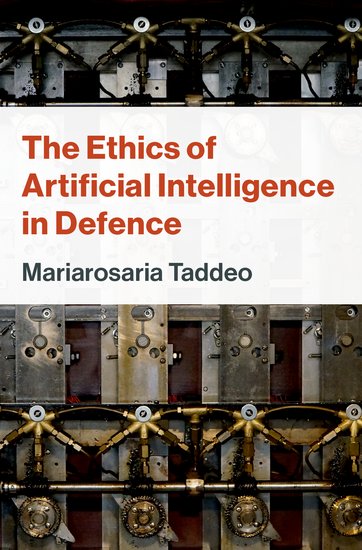
Mariarosaria Taddeo is Professor of Digital Ethics and Defence Technologies at the Oxford Internet Institute (University of Oxford) , where she also serves as DPhil Programme Director for Information, Communication and the Social Sciences. She is a Senior Research Fellow at the Alan Turing Institute and holds advisory roles at institutions including the Ministry of Defence (UK) Ethics Advisory Panel , the BRAID Programme , and the Leonardo Foundation . Education PhD (Doctor Europeus) in Philosophy from University of Padua Mariarosaria Taddeo’s research spans Digital Ethics, Philosophy of Technology, Cybersecurity Ethics, and AI Governance , with a focus on national defence applications. Her work addresses trust in AI , cyber conflict regulation , and ethical frameworks for autonomous weapons . She has published extensively in journals like Nature , Science , and Minds and Machines , including studies on data philanthropy , digital well-being , and quantum technology ethics . Scientific Awards 2010 Simon Award for Outstanding Research in Computing and Philosophy 2016 World Technology Award for Ethics 2018 InspiringFifty: Top 50 Italian women in technology ORBIT listings (2018, 2020) of top 100 women in AI Ethics 2020 Women’s Forum for Economy and Society: Outstanding Rising Talents ComputerWeekly Top 100 Influential Women in UK Technology (2020, 2023) Her projects include the UK MOD-funded AI Ethics Principles initiative, the NATO Cooperative Cyber Defence Centre of Excellence ethical guidance project, and contributions to the PETRAS IoT Research Hub . She advocates for ethical AI implementation in defence and digital governance, influencing EU policy through the CEPS Task Force on AI and Cybersecurity .
Jonathan McCarthy is a Professor and Director of the LLM Business Law Programme at University College Cork (UCC), serving as Deputy Director for Graduate Research in the School of Law. He holds a BCL and LLM from UCC and earned his PhD there in 2018. His research focuses on financial law and corporate governance, particularly regulatory frameworks for FinTech and SME support. He has taught at UCC since 2015 and previously at University of Limerick. Education: BCL (University College Cork) LLM (University College Cork) PhD (University College Cork, 2018) Research interests emphasize EU financial regulation, digital finance innovation, and corporate rescue mechanisms for SMEs. His work explores the efficacy of legal processes for start-ups and the adaptation of traditional frameworks to emerging technologies like blockchain and distributed ledger systems. He frequently reviews submissions for journals and publishers in his field. Teaching spans courses such as Company Law, Digital Finance Regulation, and Corporate Law at both undergraduate and postgraduate levels. He also serves as an external examiner for the Dublin Business School's LLB program. Professional development includes certifications in research integrity, universal design for learning, and connected curriculum strategies. Grants and funding include an Irish Research Council Government of Ireland Postgraduate Scholarship and the Ronan Daly Jermyn Scholarship during his doctoral research on SME rescue procedures in Ireland. His work combines qualitative analysis with policy advocacy for improved legal frameworks. Labs/Teams: Active in cross-disciplinary research within UCC's School of Law, collaborating on projects related to FinTech regulation and EU policy implementation.