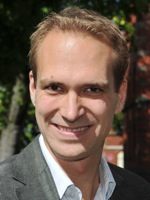
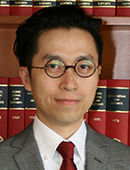
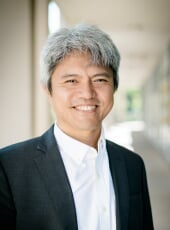
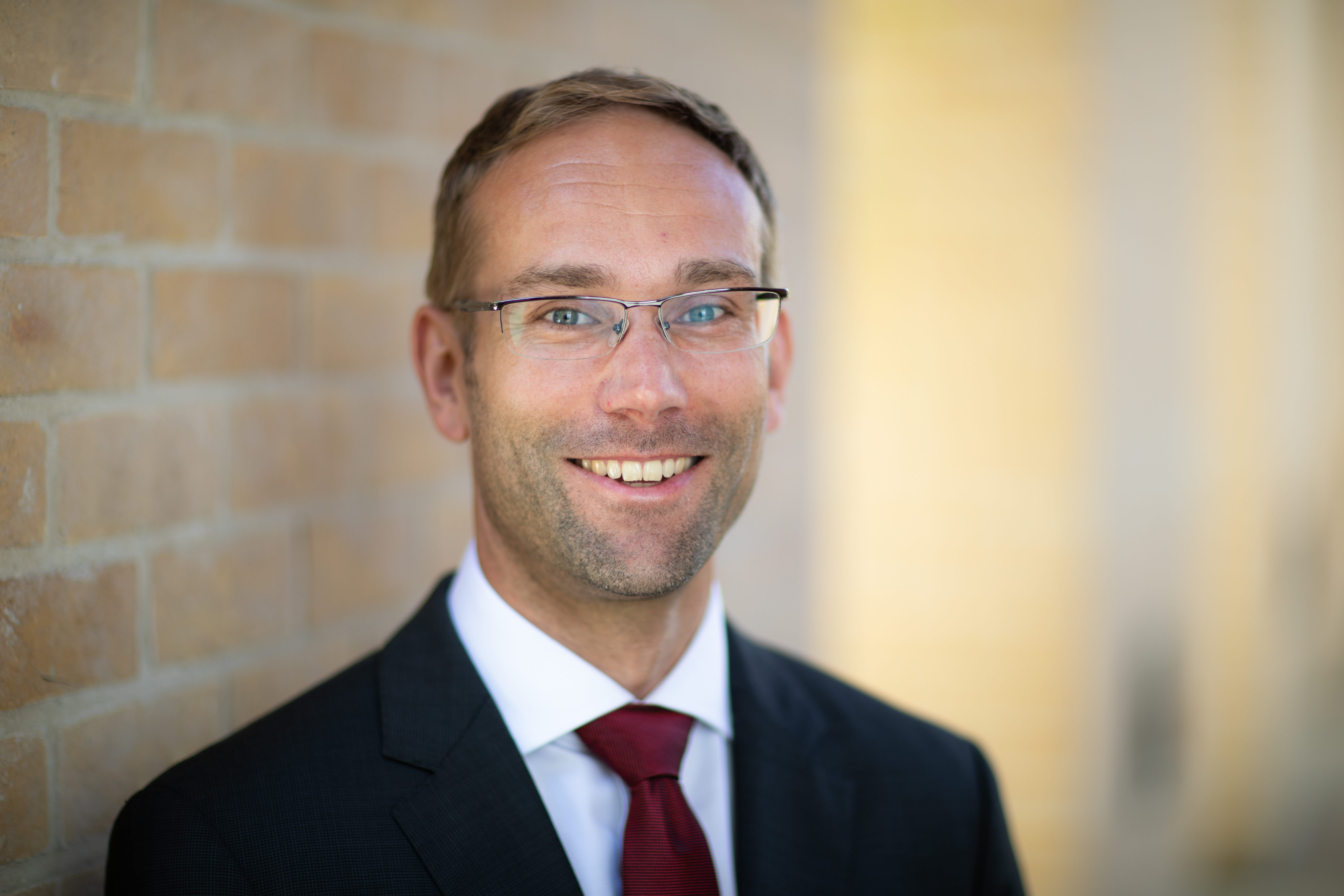
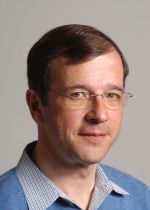
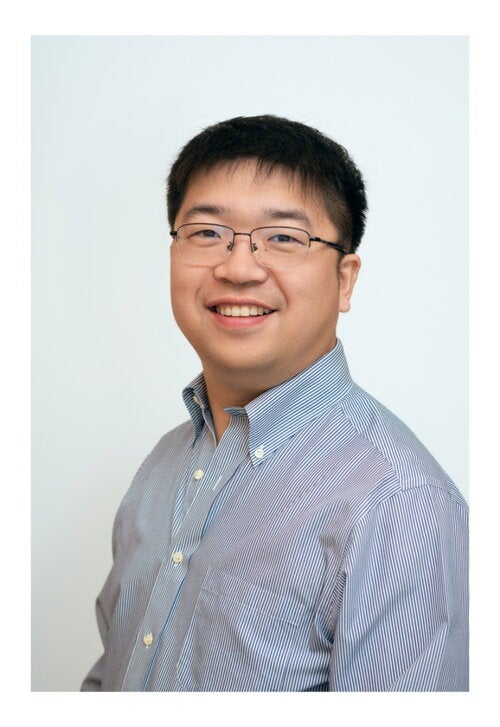
Yuri Bobbert is a Professor of Information System Science at Antwerp Management School (AMS), part of the University of Antwerp. He holds dual PhDs from Radboud University and the University of Antwerp, focusing on IT performance measurement. His career includes roles as Global Group CSO of NN Group and UWV (Government), leading cybersecurity integrations during mergers like NN Group and Delta Lloyds. As CEO of B-ABLE (IT consultancy), he developed cybersecurity frameworks. Currently, he advises on NIS2 compliance and Zero Trust strategies. His research spans cybersecurity ROI, regulatory frameworks (e.g., NIS2), and leadership in digital security. Education PhD in Information Systems (Radboud University) PhD in Cybersecurity (University of Antwerp) Research Interests Cybersecurity governance and compliance ROSI (Return on Security Investment) CISO leadership and board communication Zero Trust architecture Risk quantification in digital ecosystems Publications & Books Authored books: Strategic Approaches to Digital Platform Security Assurance , Cybersecurity in 60 Minutes , and Digital Security Leadership Over 100 peer-reviewed publications on cybersecurity performance and governance Grants & Awards Recipient of NIS2 implementation research grants Contributor to EU cybersecurity policy discussions Labs & Teams Leads AMS cybersecurity education programs and collaborates with ON2IT on global cybersecurity strategies.
Professor Rainer Böhme is a prominent academic in the field of IT security and privacy at the University of Münster's School of Business and Economics, Department of Information Systems. He also holds a professorship for Security and Privacy at the University of Innsbruck's Institute of Computer Science. His research spans multiple dimensions of digital security, with particular expertise in steganography, digital forensics, privacy-enhancing technologies, and the economic aspects of cybersecurity. Dr. Böhme earned his Doctoral Degree from TU Dresden's Faculty of Computer Science in 2008, following studies in Communications, Economics and Computer Science at Technische Universität Dresden and Université Paris XII. His academic journey includes positions as Assistant Professor at the University of Münster (2010-2015), Postdoctoral Fellow at the International Computer Science Institute in Berkeley (2009-2010), and Scientific Staff at TU Dresden's Chair of Privacy and Data Security. His research interests focus on steganography and steganalysis, digital forensics, privacy-enhancing technologies, security and usability, economic and behavioral aspects of information privacy, virtual currencies, and the economics of information security. His work bridges technical security mechanisms with economic and behavioral considerations, creating a unique interdisciplinary approach to cybersecurity challenges. Analysis of his recent publications reveals a strong trend toward the economics of security, particularly regarding blockchain technologies, cryptocurrency, and privacy valuation. His work increasingly examines the intersection of technical security mechanisms with market dynamics, regulatory frameworks, and user behavior. The research spans theoretical game-theoretic models, empirical studies of user behavior, and practical applications in digital forensics and privacy protection. Program Co-Chair, Financial Cryptography and Data Security (2015) Program Co-Chair, New Security Paradigms Workshop (NSPW) (2015) General Chair, 8th International Conference on IT Security Incident Management & IT Forensics (2014) Organizer and Program Co-Chair, 1st Workshop on Bitcoin Research (2014) Associate Editor, Electronic Commerce Research (since 2013) Associate Editor, EURASIP Journal on Information Security (since 2013) Professor Böhme has supervised multiple Master's theses in Information Systems, including work on static code analysis for smart contracts, remote maintenance protocol security, and application protection requirements in retail banking. His research is supported by significant grants from the German Federal Ministry of Research, Technology and Space, the DFG, and the EU FP7 program, with projects focusing on digital forensics, privacy-enhancing technologies, and cryptocurrency crime prevention. He leads the IT Security Research Group at the University of Münster, which investigates theoretical and applied aspects of information security with particular emphasis on the economic dimensions of security decisions.
Christopher S. Tang is a UCLA Distinguished Professor and Edward W. Carter Chair in Business Administration at the Anderson School of Management , where he researches global supply chain management with a focus on social innovation in developing countries . He also serves as Senior Associate Dean for Global Initiatives and Faculty Director of the Center for Global Management . Education: Ph.D. in Management Science (1985, Yale University) M.Phil. in Administrative Science (1983, Yale University) M.A. in Statistics (1983, Yale University) B.Sc. in Mathematics (First Class Honors, 1981, King’s College, University of London) His research explores the intersection of corporate responsibility and supply chain innovation , addressing topics like microfinancing , mobile platforms for developing economies , direct agricultural procurement , and disaster response logistics . He emphasizes visibility, integrity, and agility in uncertain environments. Recent work highlights AI adoption benefits for supply chains , strategies to reduce forced labor risks , and policy impacts on ride-sharing platforms . His research bridges operations management and social justice , advocating for environmental stewardship alongside business growth. Scientific Awards: Salzberg Medallion (2017) Lifetime Fellow, INFORMS (2011) Responsible Research in Management Award (2017) Teaching Excellence Award (multiple years, UCLA-NUS) Dean’s Excellent Service Award (2014) As an influential adviser and consultant , Tang has worked with Amazon, HP, IBM, Nestlé, GKN , and Accenture . He has taught at Stanford University, UC Berkeley, Hong Kong University of Science and Technology , and served as visiting professor at Cambridge University and the Institute of Advanced Study at HKUST .
Dr. Dicky Tsang is an Associate Professor at the Faculty of Law , The Chinese University of Hong Kong. He holds degrees from Georgetown University (S.J.D.), Columbia University (LL.M., J.D.), University College London (LL.M.), and the University of Hong Kong (LL.B., PCLL). His practice experience includes corporate finance law at Linklaters and Shearman & Sterling across New York, London, Hong Kong, Beijing, and Shanghai. Admitted to practice in New York, England & Wales, and Hong Kong Research Interests : Dr. Tsang specializes in Private International Law and Company Law , focusing on cross-border corporate liability, veil-piercing, arbitration agreements, and FRAND litigation. His work bridges empirical legal analysis with comparative law frameworks. Publication Trends : His recent scholarship examines jurisdictional conflicts, enforcement of foreign judgments, and regulatory challenges in global corporate law. Publications span journals like Virginia Journal of International Law and Journal of Private International Law . Scientific Awards : Outstanding Research Impact Award 2022-23 CUHK Research Excellence Award 2019-2020 CUHK Teaching Excellence Award 2016-2017 Grants : He has led multiple RGC-funded projects, including empirical studies on China’s choice-of-law regime and foreign judgment enforcement. Collaborative grants explore corporate governance and legal education in Asia.
Chee-Wooi Ten is a tenured Professor in the Department of Electrical and Computer Engineering at Michigan Technological University, where he has served since 2010 and achieved tenure in 2016. He concurrently holds an Affiliated Professor appointment in Applied Computing and directs both the PSERC Site and ICC CPS Center. His institutional roles emphasize cyber-physical security integration within power infrastructure. His educational background includes: PhD in Electrical Engineering from University College Dublin (2009) MSc in Electrical Engineering from Iowa State University (2001) BSc in Electrical Engineering from Iowa State University (1999) Ten's research pioneers cyber-informed security engineering strategies for bulk power systems, focusing on quantifying rare events through system risk models and data science. His work bridges power grid interactions with robotics and transportation systems to advance decarbonization and electrification. Key methodologies include validating cyber-physical security frameworks against steady-state and dynamic grid approaches, with emphasis on attack/defense combinatorics and smart home technologies. This transdisciplinary approach supports the fourth industrial revolution's resilience requirements. His publication trends reveal strong focus on risk-aggregated substation testbeds using generative adversarial networks, cyber insurance models for power systems, and cascading failure analysis from switching attacks. Recent works increasingly integrate machine learning with physics-based modeling to address cybersecurity threats in inverter-based resource integration and distribution emergency operations. Ten has secured over $6.5M in active funding including: $2M DOE grant (MTU portion $105,000) for CyDERMS Center on DERs/Microgrids cybersecurity $704,409 CyManII award for secure digitalization in smart manufacturing $1.05M DOE ARPA-E grant for decarbonized freight transportation modeling NSF CyberCorps Scholarship for Service program ($3.38M) His grants consistently address risk management through data-driven and physics-based modeling, with industry partnerships through PSERC and utility collaborations. As ICC CPS Center Director, he leads research on cyber-physical security testbeds and coordinates the PSERC Summer Transformation School. His team develops validation frameworks for NERC CIP compliance while addressing practical pain points in OT cybersecurity for grid operators.
Profile Roles and Affiliations: Michael Smets is a Professor of Management at the Saïd Business School, University of Oxford. He is also a Research Fellow at Green Templeton College and a member of the Centre for Professional Service Firms. His academic contributions span institutional theory, practice theory, and strategic management. Education: Bachelor’s equivalent in Business and Economics, Cologne University, Germany MSc in Management Research, Saïd Business School DPhil in Management, Saïd Business School Postdoctoral Researcher at Saïd Business School and University of Alberta’s School of Management Research Interests: Michael’s work examines professional service firms (PSFs) through three core lenses: Global Operations: Internationalisation challenges in law, consulting, and reinsurance firms, with a focus on institutional complexity and regulatory systems. Innovation & Career Systems: How evolving career structures in PSFs can simultaneously drive innovation and address work-life balance demands. Recent studies highlight ambidextrous career paths and their strategic leverage. Methodological Innovation: Pioneering video- and team-ethnography to capture micro-level organisational practices. His ‘fly on the wall’ study at Lloyd’s of London is a landmark in this domain. Academic & Industry Impact: His research has been translated into industry-relevant outputs, including reports for the reinsurance sector and handbooks for legal firms. The 2013 ESRC Award for Outstanding Impact in Business recognises this translational work. Academically, he has received the 2012 Academy of Management Journal Best Article Award and multiple best paper awards. Teaching & Executive Education: Michael teaches strategic management, innovation, and business development in executive programmes for Commerzbank, Deloitte, and other global firms. He is Programme Director for the Oxford Leading Professional Service Firms Programme, emphasizing interactive, case-study driven pedagogy. His teaching philosophy prioritises critical thinking over rigid models, as he states: ‘It is critical to understand under which circumstances which models work, and which ones don’t.’ Labs & Collaborations: Affiliated with the Centre for Professional Service Firms and the Oxford Initiative on Rethinking Performance. He collaborates with institutions like Cass Business School and Aston Business School on ethnographic studies. His work also intersects with the Insurance Institute of London and the International Bar Association for practitioner-focused outputs.
Dr. Alfred Chong is an Associate Professor in the Department of Actuarial Mathematics and Statistics at Heriot-Watt University (HWU). Previously, he served as an Assistant Professor at the University of Illinois at Urbana-Champaign (UIUC) and co-founded the Illinois Risk Lab. His research focuses on Actuarial Science, Financial Mathematics, and Quantitative Risk Management, addressing emerging risks like cyber, pandemic, and climate risks, leveraging machine learning, optimization, and stochastic control. He holds a PhD from The University of Hong Kong and King's College London, and is an Associate of the Society of Actuaries. Chong actively contributes to academic governance, including roles in the EPSRC Mathematical Sciences Early Career Forum and the Maxwell Institute's Data and Decisions research theme. Education: PhD in Actuarial Science, University of Hong Kong & King's College London Research Interests: Chong explores risk sharing mechanisms, forward preferences in insurance, and mitigation strategies for large-scale risks. His work integrates data analytics and machine learning to solve decision-making challenges, such as cybersecurity risk assessment, pandemic resource allocation, and climate risk modeling. Recent projects include incident-specific cyber insurance design and delegated investment strategies for retirement savings. Awards: Michael V. Colla Prize for Mathematics Related to Medicine (2022) Best of 2020 in the Annual Meeting of the Casualty Actuarial Society (2021) Advising & Grants: Chong supervises PhD students in holistic risk management, forward preferences, and reinforcement learning applications. He has secured grants supporting interdisciplinary research in risk modeling and insurance innovation. Labs & Teams: Co-founder of the Illinois Risk Lab (UIUC), now leading research at HWU's Actuarial Mathematics & Statistics department. Engaged with the International Centre for Mathematical Sciences for knowledge exchange initiatives.
Özlem Gürses is Professor of Commercial Law at The Dickson Poon School of Law, King's College London. She previously taught at Norwich and Southampton Law Schools and holds law degrees from the University of Istanbul, an LLM in Maritime Law (with distinction) from the University of Southampton, and a PhD in Law from the same institution. She is a leading scholar in insurance and reinsurance law, with a focus on marine, compulsory, and emerging risk insurance. Her research interests include: Insurance and reinsurance law Marine and non-marine insurance Compulsory motor vehicle insurance Insurance of offshore installations and commercial risks Artificial intelligence in insurance contracts Her recent publications analyze business interruption insurance during the pandemic, public-private partnerships in reinsurance, subrogation immunity, and the legal treatment of emerging risks. She is the sole author of key texts such as The Law of Compulsory Motor Vehicle Insurance (2019), Marine Insurance Law (3rd ed, 2023), and Reinsuring Clauses (2nd ed, 2025), and has edited major reference works including the Edward Elgar Research Handbook on Marine Insurance Law (2024). She is actively involved in the legal academic community: Member of the Presidential Council, International Insurance Law Association (AIDA) Chair, Reinsurance Working Party of AIDA Vice-Chair, British Insurance Law Association Committee Professor Gürses teaches insurance law at both undergraduate and postgraduate levels and currently supervises four PhD students. She also lectures internationally in Germany, Singapore, China, Greece, and Italy. She has organized academic conferences and participates in research on the intersection of law, technology, and sustainability.
Dr. Yongchao Huang is a Lecturer (Assistant Professor) in the School of Natural and Computing Sciences at the University of Aberdeen, where he has been employed since August 2023. He also holds affiliations with the University of Oxford and the University of Cambridge through past postdoctoral and collaborative roles. He is actively involved in research, teaching, and academic service, and is currently accepting PhD students. His educational background includes: DPhil in Engineering Science, University of Oxford (2013–2017) Additional training in Machine Learning at Oxford (2015–2019) Dr. Huang's research focuses on fundamental and physics-informed machine learning, with core interests in Bayesian inference, variational methods, generative modeling (especially score-based), reinforcement learning, and interdisciplinary AI applications in mechanics, biology, energy, climate, and finance. A central theme of his work is the inference and sampling of probability densities, particularly through innovative particle-based and physics-inspired computational frameworks. He founded the Computational and Physical Learning (CPL) lab at Aberdeen in 2023. His recent publications (2020–2025) reflect a strong trend in probabilistic machine learning, with increasing focus on physics-based inference methods such as electrostatics, fluid dynamics, and material point methods. These works bridge machine learning with applied mathematics and physical simulation, demonstrating a unique interdisciplinary approach. Topics span Bayesian neural networks, acoustic wave propagation, mortality modeling, and adversarial cybersecurity. Dr. Huang has received academic recognition through invitations to serve on program committees and editorial roles: Program Committee Member, ECAI 2024 Organizing Committee, Bioinference 2024 Guest Editor, Journal of Theoretical Biology Senior Scientific Advisor to a UK firm He has supervised 57 MSc theses independently and currently supervises one PhD student. He has secured research engagement through collaborations with institutions including Oxford, Cambridge, and industry partners. His teaching includes courses such as Introduction to Software Engineering , Software Process and Management , and Computational Intelligence at Aberdeen, as well as practicals in inference at Cambridge. Dr. Huang leads the Computational and Physical Learning (CPL) lab at the University of Aberdeen, a curiosity-driven research group focused on foundational advances in machine intelligence. Though currently a solo researcher due to limited resources, the lab emphasizes end-to-end research and open collaboration. He encourages student mobility and interdisciplinary exploration.
Hayretdin Bahsi is an Assistant Professor at the School of Informatics, Computing, and Cyber Systems at Northern Arizona University . His research focuses on cybersecurity, with expertise in malware detection, IoT security, and machine learning applications in defense mechanisms. He collaborates internationally on maritime cybersecurity, healthcare systems, and critical infrastructure protection. Research Interests include Android malware analysis, botnet detection, explainable AI in intrusion detection, and threat modeling for AI-driven systems. His work addresses challenges like concept drift in malware detection and privacy-preserving techniques for IoT networks. Publications span 66 scholarly works since 2009, emphasizing cybersecurity trends in AI, IoT, and healthcare. Recent contributions explore large language model (LLM) applications in vulnerability detection and cyber threat modeling for healthcare systems. Collaborations include projects on maritime cyber-insurance, cyber incident management in low-income countries, and datasets like MedBIoT for IoT botnet analysis. His work bridges theory and practice, addressing real-world cybersecurity challenges.
Jean Walrand is a Professor in the Department of Electrical Engineering and Computer Sciences (EECS) at the University of California, Berkeley. His research focuses on communication networks, performance evaluation, game theory, and stochastic networks. He has authored several influential books, including Communication Networks: A Concise Introduction and Probability in Electrical Engineering and Computer Science , and holds numerous patents in network resource management. Ph.D. in EECS from UC Berkeley IEEE Fellow and recipient of the Stephen O. Rice Prize INFORMS Lanchester Prize for operations research contributions His research interests span communication networks, queueing theory, congestion control, wireless network scheduling, and economic models for network resource allocation. Walrand's work has significantly impacted network design and optimization, particularly in distributed algorithms and game-theoretic approaches. His recent publications emphasize network architecture, delay variability reduction, and distributed optimization algorithms. Walrand has mentored over 20 Ph.D. students, including notable contributors to wireless networks and network economics. IEEE Koji Kobayashi Award (2012) ACM Sigmetrics Achievement Award (2013) INFORMS Lanchester Prize for Communication Networks book As advisor to students like Libin Jiang and Hoi-Sheung Wilson So, Walrand has shaped research in wireless MAC protocols, bandwidth trading, and network security. His technical reports and patents address practical challenges in switch fabric design, bandwidth allocation, and power management.
Ebru Turanoglu Bekar is a Senior Lecturer at the Department of Industrial and Materials Science, Chalmers University of Technology, specializing in Smart Maintenance and Production Systems. She contributes to the Production Service Systems & Maintenance research group. Research Interests: Total Productive Maintenance (TPM), Artificial Intelligence applications in manufacturing, Multi-Criteria Decision Making, Performance Measurement systems Recent Focus: Development of data-driven algorithms for predictive maintenance, integration of digital twins in industrial contexts Key Projects: Factory SensAI (2025–2028) - Data integration for AI in manufacturing Trustworthy Predictive Maintenance TPdM (2022–2025)
Dr. Mohammed Mazumder is a faculty member at Newcastle Business School, Northumbria University, where he has been contributing since January 2020. He leads the MSc Forensic Accounting programme and serves as the Departmental Research Ethics Lead. He teaches Management Accounting and Analytics at the undergraduate level and Financial Planning and Control at the postgraduate level. His educational background includes a PhD from Tohoku University and an MBA in Accounting from the University of Dhaka, where he also taught for over ten years. He is a Fellow of the Cost and Management Accountant (FCMA) and a Fellow of the Higher Education Academy (FHEA), reflecting his dual expertise in professional accounting and academic teaching. Dr. Mazumder’s research focuses on corporate reporting, sustainability accounting, CSR, corporate governance, and forensic accounting , with empirical studies centered on Bangladesh and Japan. His work explores board composition, gender diversity, cybersecurity disclosures, anti-corruption reporting, and SDG disclosures in emerging economies. The research employs discourse analysis, impression management theory, and quantitative methods to assess disclosure quality and governance effectiveness. His recent publications (2021–2025) reveal a strong trend toward ethical, environmental, and governance-related disclosures in banking and insurance sectors of developing economies. Topics include climate change rhetoric, post-cyber heist disclosures, and SDG reporting, indicating a growing emphasis on transparency and accountability in corporate narratives. His scholarly contributions have appeared in reputable journals such as Asian Review of Accounting , International Journal of Disclosure and Governance , Journal of Accounting in Emerging Economies , and Business Ethics: A European Review . While no specific awards are mentioned, his publication record in CABS/ABDC-ranked journals reflects significant academic recognition. Dr. Mazumder actively contributes to academic governance as Research Ethics Lead and programme director. Though no current students are listed, his leadership roles suggest involvement in postgraduate supervision and curriculum development. He has not indicated part-time status and appears to be a full-time, active academic with no signs of retirement or former staff status. He is associated with no named research labs or teams, but his work is highly interdisciplinary, bridging accounting, ethics, sustainability, and governance. Future research directions likely include expanding comparative studies between Japan and South Asia, deepening analysis of SDG disclosures, and exploring digital risk reporting in financial institutions.
Professor Christian Biener is a faculty member at the University of St. Gallen, affiliated with the School of Economics and Political Science and the Department of Economics. His research focuses on insurance economics, behavioral economics, and risk management, with particular emphasis on topics like cyber risk, microinsurance, health insurance design, and the societal impacts of emerging technologies such as chatbots and telematics. He holds a prominent role in academic and industry discourse through his extensive publication record and contributions to policy-relevant research. Biener’s work bridges theoretical economic analysis with practical applications, addressing challenges in global insurance markets, pandemic response strategies, and the interplay between technological innovation and human behavior. His research has explored how factors like microbiome composition influence economic decision-making, the ethical implications of contact-tracing apps, and the design of effective reinsurance strategies. He actively engages with industry trends, advising on future skills requirements in reinsurance and the balance between privacy and risk hedging in digital environments. His scholarly output spans over a decade, with recent trends emphasizing behavioral aspects of insurance decisions, the impact of global events on healthcare costs, and the transformational role of technology in insurance products. Biener’s articles consistently analyze both micro-level individual decision-making and macro-level market dynamics, offering insights that inform both academic theory and policy formation. While no formal awards are explicitly mentioned, his prolific publication record and institutional affiliation suggest significant recognition within the field. Biener’s work often incorporates experimental methodologies, such as randomized controlled trials, to empirically validate theoretical models. He collaborates across disciplines, integrating insights from psychology, computer science, and public health into his economic analyses. Biener’s current research agenda includes investigating the insurability of novel risks (e.g., cyber threats), optimizing microinsurance programs in emerging markets, and analyzing non-cognitive skills’ role in post-crisis economic recovery. He leads projects at the Institute for Economics (IVW) at HSG, contributing to both academic and applied research initiatives.
Zhiyu (Frank) Quan is an Assistant Professor at the University of Illinois at Urbana-Champaign (UIUC), holding positions in the Department of Mathematics, Department of Statistics, and National Center for Supercomputing Applications (NCSA). He is also an affiliate faculty member at Discovery Partners Institute as InsurTech Lead and serves as an ORMI Faculty Fellow in Finance. His research focuses on data science applications in actuarial science, including tree-based models, natural language processing, and deep learning for insurance risk modeling, predictive analytics, and InsurTech innovation. Education: Ph.D. in Actuarial Science (University of Connecticut, 2019), MS in Applied Statistics (Michigan State University, 2014), and BS in Mathematics and Applied Mathematics (Xiamen University, 2012). Research interests include computational statistics, insurance analytics, and leveraging machine learning for actuarial challenges such as claim prediction, rate-making, and cyber risk modeling. He leads the Illinois Risk Lab, bridging academic research with industry needs, and has pioneered hybrid tree-based models to address imbalanced data in insurance. Notable achievements include the Arnold O. Beckman Research Award and Society of Actuaries Research Institute recognition. He advises two doctoral students and teaches advanced predictive analytics courses, emphasizing practical applications in actuarial science and data ethics. Key collaborations involve InsurTech companies and NCSA, focusing on NLP-driven academic paper repositories (CyLit) and federated learning for privacy-preserving insurance data sharing. His work addresses real-world challenges in cyber insurance and automated machine learning systems.