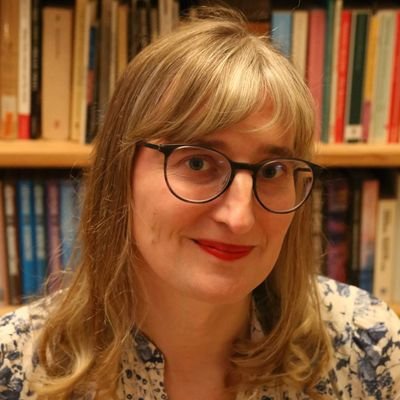
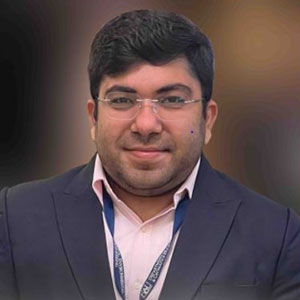
Dr. Peter Cruickshank is an Associate Professor at the School of Computing Engineering and the Built Environment at Edinburgh Napier University . His work focuses on digital engagement in hyperlocal governance , information literacy for democratic representation , and smart city technologies . He leads the Social Informatics research group and collaborates with institutions in Scotland and Brazil .
David Gil Méndez is a Full Professor in Computer Architecture and Technology at the Department of Information Technology and Computing, University of Alicante. He earned his Doctorate in Computer Engineering from the University of Alicante in 2008 and has supervised 5 PhD theses to date. Member of European Network of Scientific Excellence in AI (ELLIS) Coordinator of 3 European COST Action projects (2021-2027) Published 50+ JCR journal articles His research focuses on Big Data applications, Machine Learning, Data Mining, IoT, and Human Activity Recognition, with particular emphasis on healthcare AI and clinical data analysis. He has developed frameworks for decentralized IoMT environments and conducted extensive work on explainability in medical machine learning models. Recent publications address metastasis prediction in rare tumors (2025), photovoltaic energy forecasting (2022), and blockchain voting systems (2020). His work spans both theoretical and applied domains, including educational data mining and cyber-physical systems. As teaching experience, he has delivered courses in Operating Systems (14 times), Computational Modeling (5 times), Data Mining (5 times), and Big Data Technologies (5 times) at University of Alicante across multiple engineering disciplines. He leads research projects funded by: European Commission (3 active COST Actions) Valencian Government (2020-2021) Spanish Ministry of Education (2009-2010)
Christine Storr is a Lecturer and Doctoral Candidate in Law & Informatics at the Department of Law, Stockholm University. She has been affiliated with the department since 2001, following a law degree from Austria and an LL.M. in Law and Information Technology from Stockholm University. Research Focus: Christine specializes in IT law, with expertise in privacy, e-commerce, marketing law, and freedom of expression. She is the editor and main author of Cyber Law in Sweden , part of Kluwer’s International Encyclopaedia for Cyber Law. Her doctoral project examines legal information retrieval, the concept of legal information within the doctrine of legal sources, and lawyers' information-seeking behavior. Teaching Roles: She teaches undergraduate courses in Legal Information Retrieval, European Law, and Family Law. She is Course Director for Media Law, Introduction to Administrative Law for Public Employees, and Marknadsjuridiska perspektiv at Stockholm Business School. Notable Publications: Her work includes analyses of IoT legal challenges, GDPR implementation in Sweden, and innovative virtual law cases for pedagogy. She collaborates with legal experts like Pam Storr, Per Nordenson, and Henrik Nilsson. Project Highlights: Christine’s research on Legal Information as a Tool (2001–2025) explores intersections between legal doctrine, technology, and user behavior. Her publications address ambiguities in language, algorithmic bias, and systemic information anxiety among legal professionals.
Michele Loreti is Full Professor in Computer Science at the University of Camerino within the School of Science and Technology and serves as Director of the School of Advanced Studies. His career includes roles as Research Associate at University of Firenze (2002-2017) and Visiting Professor at IMT Institute for Advanced Studies (2012-2016). He holds a PhD in Mathematical Logic and Theoretical Computer Science from University of Siena (2001) and a Computer Science degree from University of Rome 'La Sapienza' (1997). Research interests: Formal tools for concurrent/distributed systems Quantitative analysis of collective adaptive systems Spatio-temporal model checking Process calculi and modal logics Programming languages for network-aware applications Runtime verification and dynamic system adaptation Article trends: His work focuses on formal verification of cyber-physical systems, spatio-temporal properties, stochastic process calculi, attribute-based communication, and tools like CARMA and muG for collective system analysis. Editorial roles: Assistant editor for Elsevier Journal on Logical and Algebraic Methods in Programming and member of the Reproducibility Board for ACM Transactions on Modelling and Computer Simulation.
Marius Krüger is a researcher at the Chair of Automation and Information Systems at the Technical University of Munich . His work focuses on human-machine interaction, data-driven process optimization, and AI integration in industrial contexts. Specializes in cyber-physical production systems and digital twin technologies Contributes to embedded systems performance analysis and low-code programming assistance Active in construction machinery data transmission and forming process monitoring His publications highlight expertise in: Execution time optimization for adaptive controllers Synthetic data generation for civil engineering machines Regularization techniques in linear regression for quality prediction OPC UA integration for construction machine communication He collaborates on projects like KI.Fabrik , MiProcess2Twin , and CausAIITI , with recent work addressing Industry 4.0 and 5.0 challenges.
Dr. Asef Nazari is a Senior Lecturer in Mathematics at Deakin University's School of Information Technology, Faculty of Science Engineering and Built Environment. With over two decades of experience, his work spans mathematical modeling, optimization, and AI applications in energy systems, supply chains, and cybersecurity. Education : PhD (University of Ballarat), MSc (Amirkabir University of Technology), BSc (University of Tabriz), Graduate Certificate in Higher Education Teaching (Deakin University) Research : Focuses on Electricity network planning with renewables Optimization techniques (non-smooth, integer programming) AI/ML for cryptocurrency markets and causal inference Community battery systems for EV charging Soft happy coloring in network analysis Supply chain and project scheduling optimization Grants : Leads industry collaborations like the REACH Scholarship (2025–2028) and has secured funding from Monash University/ClimateWorks and The Ian Potter Foundation. Teaching : Developed the 'Mathematics for AI' master's unit, emphasizing real-world problem-solving in optimization, operations research, and data analysis. Supervision : Currently guides 8 PhD students in topics like AI-driven authentication security and land-use modeling. Awards : Recognized as a Fellow of the Higher Education Academy (FHEA)
Professor Chris Hankin is a Professor of Computing at Imperial College London’s Faculty of Engineering, with affiliations to the Institute for Security Science and Technology, Engineering Secure Software Systems, Grantham Institute, Space Lab, Urban Systems Lab, and Programming Languages research groups. He has held leadership roles including Deputy Principal of the Faculty of Engineering (2006–2008), Pro Rector (Research) (2004–2006), and Dean of City and Guilds College (2000–2003). His research focuses on cyber security, data analytics, and semantics-based program analysis, with emphasis on cyber-physical systems and decision support for security investments. His work includes leading the NCSC/EPSRC Research Institute in Trustworthy Inter-connected Cyber-Physical Systems (RITICS) and chairing ACM Europe committees. Key research areas span attack graph modeling, adversarial machine learning, healthcare cyber security, and industrial control systems resilience. He has contributed to policy through roles like Chair of the Government Office of Science’s Future Identities Foresight report. Prof. Hankin’s recent publications emphasize scalable cyber-physical security solutions, adversarial defense mechanisms, and interdisciplinary approaches to enhancing system resilience. His awards include Fellowship at the Institute for Security Science and Technology. He advises on automated decision-making ethics and has authored works on program analysis, cybersecurity economics, and formal methods.
René Quiniou is a Researcher at INRIA, affiliated with the DREAM team within the IRISA laboratory in Rennes, France. His work focuses on Online Monitoring , Change Detection , Machine Learning , and Data Mining , with applications in agriculture, environmental science, and healthcare. He leads research on extracting temporal patterns from sequences and developing adaptive learning algorithms for dynamic environments. Key research areas include incremental learning, anomaly detection in cybersecurity, and health monitoring systems. His publications span topics like multimedia data analysis, bovine disease detection, and intrusion detection in unlabeled data streams. He collaborates extensively with teams in computer science and applied mathematics, contributing to projects such as flood event clustering and cardiac surveillance systems. Articles emphasize practical applications of machine learning and data mining, such as symbolic time series representation (1d-SAX) and hierarchical skyline queries for database optimization. His work bridges theoretical advancements with real-world challenges in agriculture, healthcare, and cybersecurity.
John P. Buerck, Ph.D., serves as Director of Computer Information Systems and Director of Brewing Science and Operations at the School for Professional Studies, Saint Louis University. He holds a Ph.D. in Computer Education from Saint Louis University. His research focuses on Virtual Computing Environments for Education, Learning Analytics, Adaptive Learning Environments, Ethical Issues in Computing, and Healthcare Informatics. He has authored numerous publications in journals like Journal of Learning Analytics and presented at conferences such as Frontiers in Education. Dr. Buerck has received multiple accolades, including the 2012 Saint Louis University Faculty Excellence Award and the 2003 Teacher of the Year Award. His work integrates technology and ethical considerations into educational practices, with a particular emphasis on online learning and non-traditional student outcomes. Education: Ph.D. in Computer Education, Saint Louis University Affiliations: Director roles in two departments at School for Professional Studies Research Highlights: Development of virtual environments, learning analytics, and ethical computing
Katherine Wyers is a Doctoral Research Fellow at the University of Oslo, affiliated with the Faculty of Mathematics and Natural Sciences and the Department of Information Systems. Her research focuses on transgender health equity, LGBTQ+ rights in technology, and data privacy implications of anti-LGBTQ+ legislation. She contributes to the Information Systems research group at the university. Her research interests include Health Informatics, Digital Equity, and Technology Policy, with a particular emphasis on how information systems impact marginalized communities. Recent work includes exploring Health ICTs' role in transgender health equity and the safeguarding of personal data amid restrictive legislation. Publications highlight interdisciplinary approaches to ICT4D and LGBTQ+ inclusion, addressing global development challenges and digital identity management. While no scientific awards are listed, her work emphasizes applied research with societal impact. Wyers is part of the Information Systems (IS) research group at the university, contributing to academic discussions on technology's role in social equity and privacy.
Harshal Sanghvi, Ph.D., currently serves as a postdoctoral fellow in the Charles E. Schmidt College of Medicine and holds an adjunct professor role in the College of Business at Florida Atlantic University. He earned his doctorate in computer engineering from FAU. His professional roles include program chair for the Institute for Certified Computing Professionals and vice chair for the Health-Tech and Life Sciences committee at South Florida Tech Hub. Sanghvi chairs the department of technology and clinical trials at Advanced Research. His research focuses on medical imaging, computer vision, augmented reality, artificial intelligence, business intelligence, and embedded systems. He has contributed extensively to peer-reviewed journals and conferences, with recent work emphasizing AI-driven healthcare solutions, cybersecurity, and interdisciplinary applications of technology. Key themes in his publications include AI in ophthalmic diagnostics, IoT in healthcare, digital twin models for ophthalmology, and novel algorithms for medical imaging analysis. His cybersecurity research addresses threats in smart cities and IT systems, while his engineering work explores actuator design and material reinforcement. No scientific awards or grants are explicitly mentioned in the provided texts. His advisory and collaborative efforts span clinical trials, medical device development, and tech policy initiatives in South Florida's innovation ecosystem. Sanghvi’s work bridges clinical medicine and business strategy through technology, exemplified by his roles in healthcare tech hubs and academic leadership in interdisciplinary research areas.
Gulzar Alam is a Researcher at the School of Computing, Engineering and Intelligent Systems (CEIS) at Ulster University, affiliated with the AICC (Advanced Innovation and Collaborative Centre). His work focuses on interdisciplinary research at the intersection of artificial intelligence, cybersecurity, and data-driven decision-making. Key areas include ontology development for healthcare data, secure software testing methodologies, and smart city applications. Research interests span AI-driven solutions for environmental challenges (e.g., waste management, water treatment optimization), healthcare informatics (predictive analytics and explainable AI), and cybersecurity frameworks for remote work environments. He explores human activity recognition (HAR) through sensor data analysis and develops tools for dataset quality assessment in AI research. Recent publications highlight trends in AI applications across multiple domains, including real-time traffic crash prediction systems and energy-efficient cloud resource management. His cybersecurity work addresses evolving social engineering threats and industrial control system vulnerabilities. Alam collaborates with industry partners to translate research into practical tools such as the CAT (Cybersecurity Awareness Training) framework. While no formal student advisees or grant details are disclosed, his research emphasizes open data utilization and ethical AI practices. He is based at the Belfast campus in room BC-04-315, contributing to the university’s strategic focus on innovation-driven education and industry collaboration.
Christian Skalka is a Professor and Chair in the Department of Computer Science at the University of Vermont (UVM), part of the College of Engineering and Mathematical Sciences. He joined UVM in 2002 and holds a Ph.D. from Johns Hopkins University, an M.S. from Carnegie Mellon University, and a B.S. from Saint John's College. His research focuses on programming languages, cybersecurity, and computational methods in environmental science. He teaches courses such as Programming Languages, Computer Networks, and Mobile Apps & Embedded Devices. Skalka’s work spans secure multi-party computation, intrusion detection using deep learning, and healthcare systems integration. Notable contributions include developing SMT-boosted security types for MPC, frameworks for secure network code verification, and cyber-physical systems for rehabilitation monitoring. His research often bridges theory and practice, with applications in healthcare, environmental science, and distributed systems. Publications highlight interdisciplinary collaboration, including work on federated learning privacy, snowpack modeling via machine learning, and audit logging formalization. His projects emphasize practical security solutions for real-world challenges in healthcare, environmental monitoring, and networked systems.
Professor Gary Olson is a leading scholar in collaborative technologies and distributed teamwork at the University of California, Irvine. As part of the Department of Informatics within the Donald Bren School of Information and Computer Sciences, his research focuses on improving collaboration across distances, leveraging technologies like teleconferencing and collaborative writing platforms. He co-leads the Climate CoLab project at MIT, promoting citizen science approaches to climate policy. His work with companies like Google explores cultural dimensions of teamwork in globalized workplaces. Alongside his wife and colleague Judy Olson, he received the Lifetime Achievement Award from the Special Interest Group in Computer-Human Interaction. His research emphasizes practical solutions for remote collaboration challenges, including coordination theory, virtual team management, and the impact of distance on productivity. Key contributions include foundational studies on distributed teams and innovative uses of telepresence robotics in education. Recent work investigates collaborative writing tools and the adaptation of videoconferencing during the pandemic. Core areas: Distributed collaboration, citizen science, telepresence, climate policy Notable projects: Climate CoLab, Google collaboration studies, telepresence education initiatives Awards: Lifetime Achievement Award (CHI), ACM-W Athena Lecture (via Judy Olson)
Dr. Harsha Kumara Moraliyage is a Lecturer in Business Information Systems at La Trobe University, specializing in AI and machine learning applications. He holds a PhD in Artificial Intelligence and Data Science from La Trobe and has over a decade of software development experience. His research focuses on AI-driven solutions for energy systems optimization, cybersecurity, healthcare informatics, and sustainable development. He leads the award-winning La Trobe Energy Analytics Platform (LEAP), contributing to the university's net-zero emissions target by 2029. Education: PhD in Artificial Intelligence and Data Science (La Trobe University), certifications in Deep Learning, TensorFlow, and AI from Coursera. Research Interests: Adversarial machine learning, natural language processing, time series forecasting, energy analytics, MLOps, AutoML, and AI ethics. Current projects include developing smart energy platforms, cybersecurity frameworks for energy systems, and empathetic AI tools for healthcare. Teaching: Teaches Master of Business Analytics courses such as Data Wrangling (BUS5DWR), Principles of Business Analytics (BUS5PB), and Artificial Intelligence and Hyperautomation (BUS5PR1). Focuses on designing curriculum to enhance AI literacy. Grants & Labs: Leads the LEAP project, a smart energy analytics platform, and collaborates on AI-driven solutions for net-zero carbon emissions. Active in interdisciplinary teams involving energy infrastructure, robotics, and telehealth. Future Work: Expanding research in generative AI for sustainable cities, explainable AI frameworks, and ethical AI integration in education and healthcare sectors.