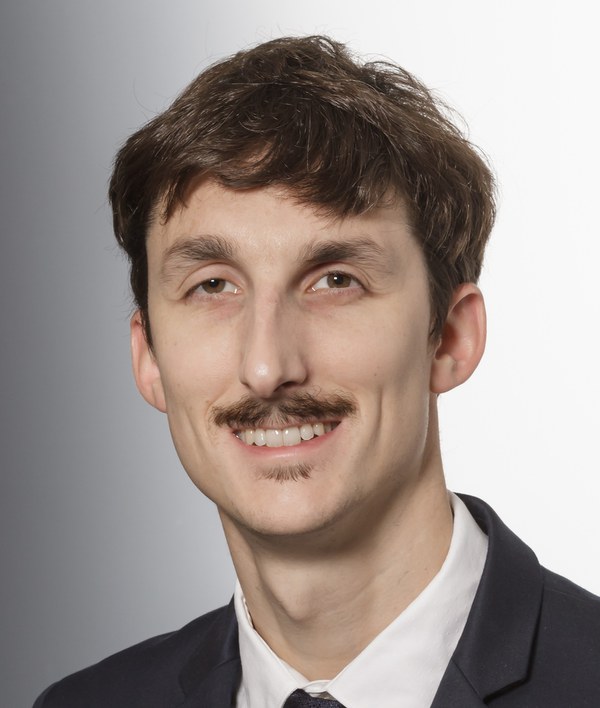
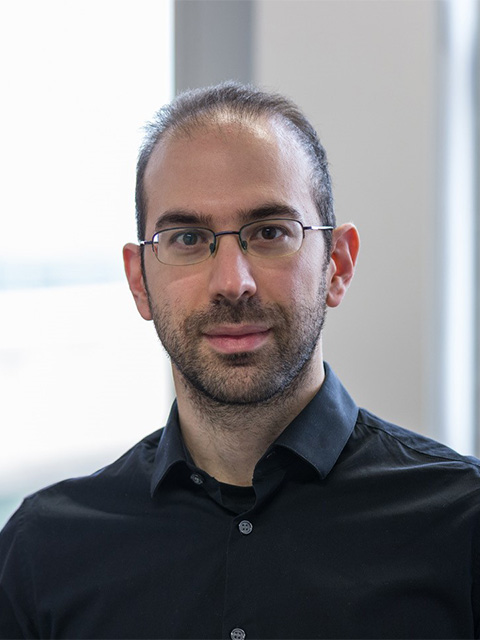
Stefan Alexander Schupp is a researcher affiliated with the Department of Cyber-Physical Systems at Technische Universität Wien (TU Wien). His work focuses on formal verification, hybrid systems, and controller synthesis for cyber-physical systems. Department: Cyber-Physical Systems (E191-01) Research Affiliation: TU Wien Network Lab Research interests include: Hybrid and stochastic system verification Controller synthesis for real-time systems Formal methods in software engineering Design and analysis of safety-critical systems Automated model checking techniques Flowpipe construction for reachability analysis Recent publications highlight collaborations with researchers from multiple institutions, covering topics such as: Hyperproperty verification in distributed systems Metric Temporal Logic (MTL) controller synthesis Adaptive simplex architectures for bounded-liveness properties Stochastic hybrid automata analysis tools HyPro verification tool developments Probabilistic reachability optimization
Brian J. Lunday is a Professor of Operations Research at the Air Force Institute of Technology (AFIT) , specifically within the Department of Operational Sciences. His career spans over two decades, with a focus on applications of mathematical programming to cooperative and non-cooperative game-theoretic interactions, network design, optimization, interdiction, and resource allocation in military contexts. Education: Ph.D. in Industrial and Systems Engineering, Virginia Tech (2010) M.S. in Industrial Engineering, University of Arizona (2001) B.S. in Mechanical Engineering (Aerospace Systems), United States Military Academy (1992) Lunday’s research interests are broad and interdisciplinary, centering on operations research with military applications. His work includes network interdiction, resource location and allocation, game theory, and optimization under uncertainty. He has contributed to areas such as missile defense, vaccine pricing, medical evacuation logistics, and social network analysis. His methodological approaches often involve bilevel programming, stochastic and dynamic programming, and metaheuristics. The trends in his publications reflect a deep engagement with military logistics, game theory, and network optimization. Notable topics include the weapon-target assignment problem, robust location modeling, approximate dynamic programming for medical evacuations, and social network analysis using multilayer frameworks. His work frequently integrates mathematical rigor with real-world defense challenges, such as asymmetric satellite constellation design, truck platooning cost optimization, and intruder detection. Scientific Awards: 2024 Richard H. Barchi Prize (MORS) 2023 Outstanding Science and Engineering Educator (USAF) 2020 Dean’s Distinguished Teaching Award (AFIT) 2018 Lessons Learned Senior Civilian Professional of the Year (USAF) 2016 Outstanding Young Member OR/MS Award (INFORMS) 2014 Professor of the Year (ASAM Master’s Program) 2013 Dr. Leslie M. Norton Teaching Excellence Award Lunday has advised numerous students across his publications, including researchers working on military applications (e.g., C. G. Long, S. D. Donnel, M. J. Robbins) and optimization challenges (e.g., P. R. Jenkins, W. M. Caballero). His collaborative research extends to projects involving cyber readiness, missile defense, and healthcare logistics.
Stefan Hallerstede is an Associate Professor at the Department of Electrical and Computer Engineering, Aarhus University. His research focuses on formal methods, software engineering, and cyber-physical systems, with a particular emphasis on component-based systems and code generation. He has contributed to over 61 research outputs and participated in 23 peer-review activities.
Mauricio ITURRALDE serves as a Teacher-researcher at CESI La Rochelle Campus, France, within the Engineering and Digital Tools Research Team. His expertise bridges telecommunications engineering and cybersecurity, with significant contributions to mobile network optimization and security protocols. His academic credentials include: Doctorate in Networks, Telecom, Systems and Architecture from National Polytechnic Institute of Toulouse and ENSEEIHT (2012) Master's Degree in Computer Systems Security from Télécom SudParis and Paris EST University (2009) ITURRALDE's research centers on 5G/LTE networks, quality of service optimization, digital twin implementation for Industry 5.0, and cyber security solutions. His work addresses critical challenges in resource allocation using game theory, energy-efficient network design, and security mechanisms for mobile communications and transportation systems. Analysis of his 15 publications (2011-2020) reveals a consistent focus on mobile network performance, with evolving emphasis from LTE resource allocation (2011-2013) to 5G sleep strategies (2019) and transportation applications (2020). His methodologies frequently integrate machine learning and game theory to solve real-world network optimization problems. No scientific awards are documented in the provided materials. Information regarding student advising and research grants is unavailable in the source text. He actively contributes to the Engineering and Digital Tools Research Team at CESI La Rochelle, which develops digital innovation solutions for engineering contexts with particular focus on network technologies and security applications.
Dr.-Ing. Edoardo De Din is a researcher at Forschungszentrum Jülich GmbH, affiliated with the Institute of Climate and Energy Systems (ICE) and its Energy System Technology (ICE-1) department. His work focuses on developing control solutions for multi-modal energy systems, emphasizing real-time operation, voltage control, distributed control, and cyber-physical systems. He specializes in validating these solutions through hardware-in-the-loop (HIL) testing under realistic conditions. Research Highlights: His research addresses the challenges of implementing control methods in field environments, integrating cyber-physical systems with energy infrastructure. The work is aligned with energy system modernization and real-time control optimization. Contact: Forschungszentrum Jülich GmbH, Wilhelm-Johnen-Straße, 52428 Jülich, Germany. Phone: +49 2461/61-96095. Office location: Building 10.21, Room 4009.
Keivan Navaie is a Professor of Intelligent Networks at Lancaster University’s School of Computing and Communications. He serves as a member of the Independent Scientific Advisory Committee at the Alan Turing Institute, overseeing the £100 million BridgeAI programme, and previously as Principal AI Technology Advisor to the UK Information Commissioner’s Office (ICO). He is recognized with Fellowships from the Institution of Engineering and Technology (IET), Chartered Engineer status in the UK, Senior Fellowship of the Higher Education Academy (HEA), and the IEEE Young Investigator Award. Research Focus: Wireless communications, mathematics, artificial intelligence, 6G networks, blockchain technology, edge computing, cognitive radio networks, and non-orthogonal multiple access (NOMA). Supervision: Actively supervises PhD students in areas like wireless communications and mathematical modeling. Projects: Involved in distributed learning, blockchain integration, 6G research, and spectrum sharing systems. Awards: IEEE Young Investigator Award, Fellow of IET, Chartered Engineer, Senior Fellow of HEA.
Audun Jøsang is a Professor of Cybersecurity at the University of Oslo and holds a Visiting Professor position at Queensland University of Technology (QUT) . His work focuses on trust and reputation systems in digital environments, with notable contributions to subjective logic —a mathematical framework for reasoning under uncertainty. Education : MSc in Information Security from Royal Holloway, University of London , MSc and PhD in Telecommunications from Norwegian University of Science and Technology (NTNU) Books : Subjective Logic: A Formalism for Reasoning Under Uncertainty (2016), Cybersecurity: Technology and Governance (2011) His research spans cybersecurity , artificial intelligence , and risk assessment , with applications in online marketplaces , social media , and decision-making under uncertainty . He has developed mathematical models for uncertainty-aware influence propagation and competitive information spread using subjective logic. Audun Jøsang’s work bridges theoretical foundations and industrial applications of computational trust and security analytics . His recent publications explore ethical AI , fair federated learning , and dynamic intelligence assessment for artificial general intelligence development.
Yijun Li is an Assistant Professor of Accounting at the Erasmus School of Economics, Erasmus University Rotterdam. His research focuses on taxation, executive influence, financial reporting, and disclosure. Ph.D. - University of Kansas Master of Accountancy - George Washington University Bachelor's Degree - Shanghai University His research explores intersections between taxation and corporate governance, the impact of executive experiences on financial reporting, and the role of information technology in firm innovation. Recent work examines cybersecurity breaches affecting trade secrets and international tax policies. His publications span top-tier journals such as Information Systems Research , The Accounting Review , and Journal of Accounting and Public Policy , reflecting a focus on technological integration, tax compliance, and managerial behavior. Yijun Li holds a Certified Public Accountant (CPA) license in Massachusetts (U.S.A.).
Xiaoyin Wang is an Associate Professor in the Department of Computer Science at the University of Texas at San Antonio, with affiliations to the College of AI, Cyber and Computing. She previously held a PostDoc position at UC Berkeley's Department of Electrical Engineering and Computer Science. Ph.D. in Computer Science, Peking University (2012) B.Eng. in Computer Science, Harbin Institute of Technology Her research focuses on Natural Language Processing , Program Analysis , Software Engineering , and Software Security . Key sub-areas include: Software migration and compatibility Build system automation Testing and debugging methodologies Privacy policy enforcement in mobile apps Deep learning for software analysis Augmented/Virtual Reality testing Recent publications (2022-2024) emphasize automated oracle prediction for AR/VR testing, data-sensitive analysis, and DevOps toolchain optimization. Trends include: Adaptation of program analysis to immersive environments Privacy-preserving software engineering Empirical studies on testing frameworks Academic accolades include: NSF CAREER Award (2019) President's Research Achievement Award (UTSA, 2019) Multiple best paper awards at ICSE, TOSEM She has advised 7 graduate students, including: Current: Rodney Rodriguez, Xueling Zhang, Sunzhou Huang Graduated: Xue Qin (Villanova), Foyzul Hassan (UM-Dearborn), Shaikh Mostafa (Amazon/Microsoft) Laboratory work involves tools like: TranStrL: Software internationalization Hima: API mapping for framework evolution NetworkProfiler: Android app fingerprinting DOVAR: AR/VR visualization for education Uniloc: CI failure diagnosis
Prof. Michael Koch is a Professor at Technische Hochschule Nürnberg, specializing in interdisciplinary research at the intersection of robotics, materials science, and industrial engineering. His work focuses on advancing additive manufacturing, robotics integration, and computational simulation in manufacturing processes. He holds a Dr.-Ing. and Dipl.-Wirt.-Ing., reflecting his expertise in engineering and applied sciences. Research interests include 3D printing optimization, cyber-physical systems, and safety analysis of materials under mechanical stress. He has contributed to innovations in robotics programming via augmented reality and developed frameworks for automated manufacturing processes. His studies on biomedical applications, such as ovarian cancer modeling, demonstrate a cross-disciplinary approach. Key projects involve robot-guided CT scanning for automotive industry 4.0, part orientation evaluation for additive manufacturing (Poeam), and safety protocols for explosives (PBX). His work emphasizes integrating real-world geometry data into simulations to improve accuracy and efficiency. Prof. Koch’s publications span over three decades, with a focus on manufacturing, robotics, and materials science. He has pioneered methods for energy-efficient CO2 capture systems and explored microstructural changes in materials under dynamic loading.
Paul Conway is a Professor of Manufacturing Processes and Dean of School at Loughborough University. He holds leadership roles such as Director of the EPSRC Centre for Doctoral Training in Embedded Intelligence. Conway earned his BEng (Hons) from the University of Ulster (1988) and MSc from Loughborough University (1989). His expertise spans electronics manufacturing, multifunctional materials, and Industrial IoT, with contributions to projects funded by EPSRC, EU frameworks, and industry. He is a Fellow of The Royal Academy of Engineering (2021) and has received prestigious awards including the 2003 IEEE/CPMT/SEMI Best Paper Award and 2012 Loughborough Innovation Italy Sustainability Award. His research addresses challenges in additive manufacturing, materials processing, and cyber-physical systems, with notable work on through-silicon vias (TSVs), biomedical scaffolds, and Industry 4.0 applications. Conway has led initiatives like the EPSRC IeMRC and contributed to strategic advisory roles in UK manufacturing research. His work emphasizes sustainable manufacturing practices and technological innovation across academia and industry. Education: BEng (Hons), University of Ulster, 1988 MSc, Loughborough University, 1989 Awards: Fellow of The Royal Academy of Engineering (2021) IEEE/CPMT/SEMI Best Paper Award (2003) Loughborough Innovation Italy Sustainability QUID Award (2012) Conway’s publications span advanced materials, manufacturing processes, and smart systems, reflecting his interdisciplinary approach. His current focus includes integrating cyber-physical systems for sustainable production and training future engineers through innovative frameworks.
Kyoung-Don (KD) Kang is a Professor in the School of Computing at Binghamton University, State University of New York. He specializes in real-time embedded systems, cyber-physical systems, and IoT security. His research focuses on enhancing real-time data services' timeliness and power efficiency, supported by NSF grants and industry collaborations. Education: BS, MS (Kyungpook National University); MS, PhD (University of Virginia). Research Interests: Real-time embedded systems, cyber-physical systems, IoT, security, edge computing, and wireless sensor networks. His work emphasizes control-theoretic approaches, feedback mechanisms, and adaptive algorithms for real-time systems. Grants & Projects: NSF-funded projects include 'Enhancing Timeliness of Real-Time Data Services' and 'QoS-Aware Data Management.' He leads the Real-Time Embedded Systems Laboratory, developing frameworks like Chronos and RTMR. Awards: Best Paper nominations (DCOSS'19), NSF grants, and patents in surveillance systems. Over 16 MS students and 9 PhD students have graduated under his mentorship, many joining top tech firms. Labs & Teams: Director of the Real-Time Embedded Systems Lab, focusing on edge computing, real-time stream processing, and secure IoT applications. Collaborates with industry partners like Samsung and Intel.
Dr. Konstantinos Kyriakopoulos is a Senior Lecturer in Cyber Intelligence, specializing in cybersecurity challenges and AI-driven solutions for converged Information and Operational Technology infrastructures. His work integrates machine learning with cyber-physical systems to enhance decision-making under uncertainty, with a focus on resilient AI algorithms and autonomous defense mechanisms. He has contributed to projects funded by Dstl, Innovate UK, and industry partners, addressing Industry 4.0 security, smart vehicles, electromagnetic attacks, and smart buildings. His research interests include adversarial machine learning, evidence theory for uncertainty modeling in ML, and autonomous cyber defense systems. He has developed novel approaches using reinforcement learning, hidden Markov models, and Bayesian optimization. His work emphasizes creating ML algorithms resistant to adversarial attacks while improving cybersecurity resilience in dynamic environments. Dr. Kyriakopoulos has also explored applications of AI in educational technology, such as automated assessment of spoken English proficiency. His recent publications focus on federated learning security, causal reinforcement learning, and anomaly detection techniques. He has experience in translating research into practical solutions, including business model pitches to investors in Canary Wharf for threat modeling tools. His contributions span over 40 peer-reviewed articles, with notable work in network intrusion detection, attack prediction via HMMs, and wavelet-based compression for network measurements. His expertise bridges academia and industry, addressing both theoretical advancements and real-world implementation challenges.
Nicolas Louveton is an Associate Professor at the University of Poitiers, affiliated with the Center for Research on Cognition and Learning (CeRCA) within the School of Humanities and Social Sciences. His work bridges cognitive science and practical interface design across automotive, cybersecurity, and industrial contexts. His research focuses on Human-Computer Interaction , Cognitive Ergonomics , and Virtual Reality , with specific expertise in visual attention, multitasking performance, and driver behavior. Current projects include the RESISTECC initiative for cyber crisis management training, industrial VR maintenance scenarios (INTEROPS project), and autonomous vehicle trust studies (CMI project). Louveton's recent publications reveal a strong trend toward applied VR solutions for high-stakes environments, particularly in cybersecurity training effectiveness and driver-AI interaction. His work consistently applies cognitive ergonomics principles to measure mental workload, situational awareness, and usability in complex systems. As an educator, he leads the UX/UI Ergonomics Master's program and teaches courses on interface usability, visual perception, and UX research methodology. He also serves as Carnot Cognition correspondent for CeRCA laboratory. Supervises PhD candidates Marine Desvergnes and Deslande Liboutchi Pepe Formerly co-supervised Clarisse Lawson-Guidigbe (now Head of Web Editorial) Member of CNU 16 (Psychology and Ergonomics) 2019-2023 Co-head of Digital Interactive Games and Media Master's program 2018-2022
Dr. Sebastian Saniuk is a Professor at the University of Zielona Góra, serving as Director of the Institute of Management and Quality Sciences and Head of the Department of Management Engineering and Logistic Systems. His expertise spans Industry 4.0/5.0, logistics optimization, and sustainable manufacturing systems. He holds a habilitated engineering doctorate and leads research on human-centric production systems, SME digitalization, and policy impacts on economic sectors. Education & Professional Background: No formal education details provided, but his academic roles indicate advanced qualifications in engineering and management sciences. His career has focused on industrial systems, logistics, and innovation management. Research Focus: Dr. Saniuk’s work centers on advancing Industry 5.0 frameworks through human-centric approaches, analyzing economic policy effects on emissions, and optimizing SME competitiveness via cyber-physical networks. Key themes include sustainable production, workforce competencies in Industry 4.0, and personalized manufacturing. Recent Work Trends: Recent articles emphasize Industry 5.0’s societal integration, economic policy analysis, and pandemic-era workforce dynamics. He frequently collaborates on international studies involving Malaysia, Indonesia, and China, reflecting a global research perspective. Grants & Advising: While specific grants aren’t listed, his leadership roles suggest involvement in institutional research programs. No advisee names are provided in the source texts. Labs & Teams: Leads the Department of Management Engineering and Logistic Systems, overseeing projects on production networks, logistics systems, and Industry 4.0 implementation strategies. Collaborates with SME clusters and participates in EU-funded initiatives (implied via research themes).