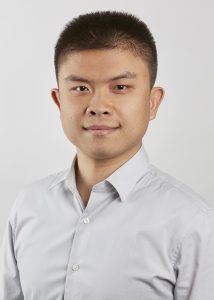
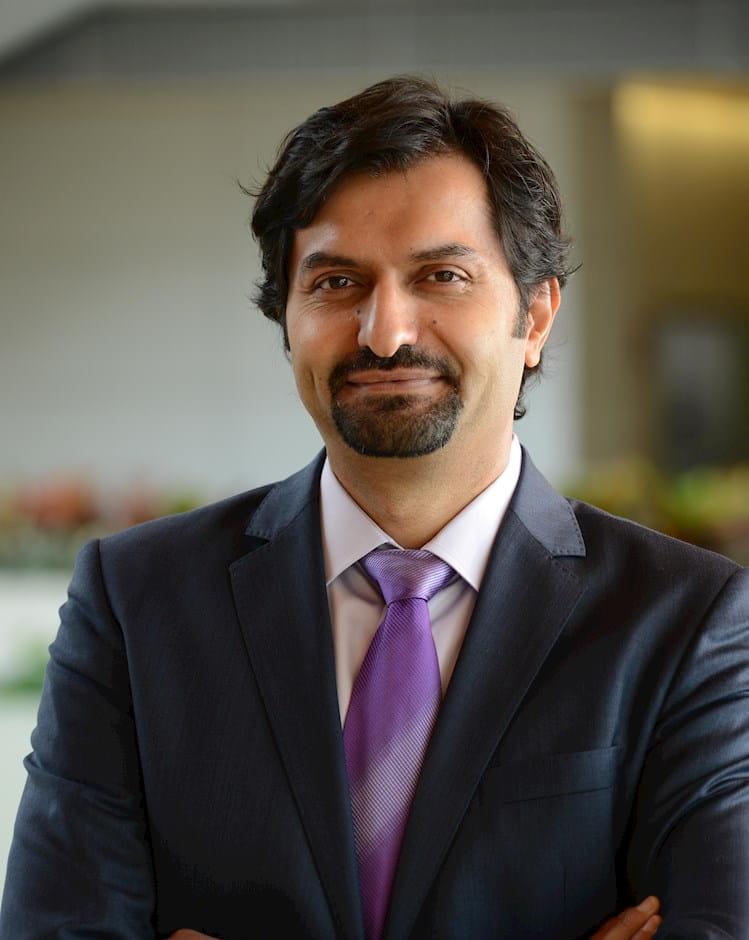
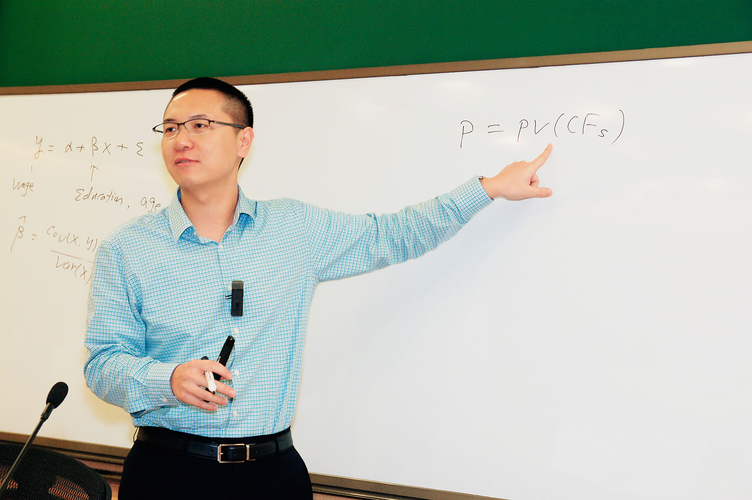
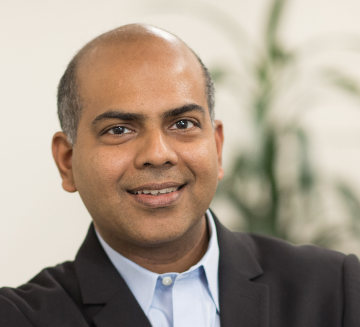
Zhe Liu is an Assistant Professor in the Analytics & Operations group at Imperial College Business School, where he also serves as PhD Director. He holds a PhD in Operations Management from Columbia Business School and a BS in Industrial Engineering from Tsinghua University. His research focuses on revenue management and supply chain optimization, with specialized interests in sharing economy platforms and multi-sourcing strategies. Liu's work examines operational challenges in modern business environments through mathematical modeling, including queueing systems, pricing optimization, and risk management in volatile supply chains. His publications demonstrate consistent themes in platform operations, stochastic optimization, and behavioral interactions within multi-agent systems. Recognized with numerous honors, Liu received the 1st Place Service Science Best Cluster Paper Award (2024), 2nd Place CSAMSE Best Paper Award (2024), and was a finalist in the George Nicholson Student Paper Competition. He actively mentors PhD students and serves as judge for international paper competitions and conference program committees.
Yini Chen is an Assistant Professor in the Department of Apparel, Merchandising, Design and Textiles at Washington State University (WSU), part of the College of Agricultural, Human, and Natural Resource Sciences (CAHNRS). Their work focuses on retail innovation, consumer behavior, and sustainable practices in the fashion industry. Education: PhD in Individual Interdisciplinary Doctoral Program, WSU MS in Apparel, Merchandising, Design, and Textiles (AMDT), WSU MA in Organizational Leadership, Gonzaga University BS in Business Administration (B.B.A.), International Business, University of Technology Sydney, Australia AS in Business Administration and Management, Shanghai University, China Research Interests: Chen’s research explores omnichannel retail strategies, lifestyle retailing in emerging markets, consumer responses to sustainability initiatives, and the impact of technology (e.g., AR, social media) on shopping behavior. Key themes include: Omni-channel integration and consumer decision-making Environmental stimuli in luxury retail environments Sustainability in apparel recycling and material innovation Millennial consumer behavior in fashion consumption Publications: Chen’s recent work highlights trends in sustainable materials (e.g., regenerated cellulose fibers), post-pandemic retail shifts, and omnichannel strategies. Over 15 peer-reviewed articles and book chapters since 2017 reflect a focus on empirical studies of consumer behavior and retail innovation. Awards & Honors: 2nd Place, 2022 GPSA Research Expo Poster Competition CAHNRS 2021 Graduate Student Leadership Award 2022 GPSA Excellence Awards Graduate Student Instructor Awardee WSU 2020 President’s Award for Leadership Grants & Advising: PI on a $2,000 CAHNRS-funded 2023 study exploring metaverse shopping experiences. Teaches courses in retailing, sustainability, and leadership, emphasizing practical applications of research findings. Labs/Teams: Engaged in cross-disciplinary collaborations within CAHNRS and WSU’s School of Food Science to address retail and supply chain challenges in the apparel industry.
Christoph Frei is a Professor and Chair of the Department of Mathematical and Statistical Sciences at the University of Alberta. He holds a PhD in mathematical finance from ETH Zurich and previously worked as a researcher at École Polytechnique in Paris. His research focuses on quantitative finance, risk management, and mathematical economics, with applications to algorithmic trading, credit risk, and digital currencies. Education: PhD in Mathematical Finance, ETH Zurich Postdoctoral Researcher, École Polytechnique (Paris) Bachelor/Master in Mathematics, ETH Zurich His work bridges academia and industry through collaborations with institutions like ATB Financial, Canadian Western Bank, and the Federal Reserve System. Key research interests include over-the-counter markets, financial regulation, and machine learning applications in risk prediction. Frei has received notable recognition, including the Best Paper in Asset Pricing Award (2019). Current industry partnerships include AI-driven customer risk prediction projects with ATB Financial and credit risk analysis with Canadian Western Bank. He actively contributes to professional organizations like PRMIA Edmonton and advises on financial technology innovation. Research grants come from NSERC, SSHRC, and Mitacs. His consulting roles have spanned risk modeling at UBS and Credit Suisse, emphasizing practical applications of theoretical frameworks.
Zoran Kalinic serves as an Assistant Professor at the Faculty of Economics, University of Kragujevac, where he teaches Electronic Business since October 2012. Previously, he worked at the Faculty of Mechanical Engineering in Kragujevac from 1996 to 2005, and joined the Faculty of Economics in February 2005 as an assistant in Information Systems, later teaching Information Technology and Electronic Business from 2009 onward. Doctorate (2012): Faculty of Engineering, University of Kragujevac, specializing in information systems development and mobile communications Postgraduate studies: Faculty of Mechanical Engineering in Kragujevac (completed with average grade of 10) Bachelor's degree: Faculty of Mechanical Engineering in Kragujevac (1996, average grade 9.43) Professor Kalinic's research focuses on digital transformation and its economic implications, with particular expertise in mobile commerce, electronic business systems, digital payment technologies, and consumer behavior in online environments. His work frequently employs advanced analytical methods including artificial neural networks, structural equation modeling, and hybrid analytical approaches to investigate technology adoption patterns and digital marketplace dynamics. He has conducted extensive research on Serbian digital markets, including studies on mobile payment systems, e-commerce development barriers, and real estate price prediction using AI techniques. His publication record demonstrates a clear progression from foundational technology acceptance research toward more complex analyses of digital ecosystems, with recent work examining influencer marketing effects on TikTok, biometric payment systems, and gig economy measurement in Serbia. The integration of artificial intelligence methodologies with traditional consumer behavior theories represents a distinctive feature of his scholarly approach. Professor Kalinic maintains active international academic engagement through short study visits to institutions including the University of Udine, Vienna University of Economics, University of Maribor, Krakow University of Economics, Coventry University, Polytechnic of Turin, and Comenius University in Bratislava. He spent six weeks at the University of Maribor in 2007 through a Tempus IMG grant and served as a visiting lecturer at the Krakow University of Economics in 2012. Author/co-author of over 60 papers in international and domestic journals and conferences Participant in multiple scientific research and professional projects Recipient of academic awards during studies from University, Faculty, Ministry of Science and Technology of Serbia, Embassy of Norway, WUS-Austria, Zastava-Yugo Automobiles, and Kragujevac City Assembly His professional development includes a month-long visit to the Faculty of Informatics at the University of the Basque Country in San Sebastian (2004) and ongoing collaboration with regional and European academic institutions. Professor Kalinic's research bridges theoretical frameworks with practical applications in the Serbian and Western Balkan digital economy context.
Baris Ata is the Sigmund E. Edelstone Distinguished Service Professor of Operations Management at the University of Chicago Booth School of Business. His work bridges theoretical operations management with practical applications, focusing on dynamic decision-making under uncertainty. Research Interests Ata’s research spans stochastic networks, manufacturing/service operations, healthcare delivery, and social sector innovation. Recent projects address high-dimensional stochastic control, xenotransplantation candidate selection, criminal justice logistics, and last-mile delivery challenges in Africa. Scientific Awards Best Paper in Service Science Award, INFORMS (2009) William Pierskalla Best Paper Award, INFORMS (2015) Wickham Skinner Best Paper Award, POMS (2019) Manufacturing and Service Operations Management Young Scholar Prize, INFORMS (2015) Emory Williams MBA Teaching Award (2021) Recent Publications Ata’s recent work includes topics in dynamic pricing, stochastic control, and healthcare logistics. His papers examine congestion-based pricing strategies, equilibrium analysis in queues, and policy design for organ transplantation. Broad disciplines include operations management, stochastic modeling, and healthcare analytics.
Xuan Tian is the JD Capital Chair Professor of Finance at PBC School of Finance, Tsinghua University, where he has been actively contributing to academic research and teaching since at least 2014. His institutional affiliation is evident through his university email address (tianx@pbcsf.tsinghua.edu.cn) and his extensive publication record representing Tsinghua University as his primary academic institution. Professor Tian's research interests center on theoretical and empirical corporate finance and entrepreneurial finance, with primary focus areas including Venture Capital, Corporate Innovation, Mergers and Acquisitions, Labor Economics, and Payout Policy. His scholarly work demonstrates a consistent trajectory exploring how financial markets, institutions, and policies influence corporate innovation and entrepreneurial activities, with particular attention to Chinese market dynamics and global comparative perspectives. Analysis of his recent publication trends reveals a growing emphasis on the intersection of technology, information, and finance, with increasing attention to patent systems, innovation ecosystems, and the impact of digital transformation on traditional financial markets. His work frequently examines how market participants process information and how institutional arrangements affect innovation outcomes. Jensen Prize (2nd prize) of Journal of Financial Economics Jensen Prize (1st prize) of Journal of Financial Economics Professor Tian has presented his research at numerous prestigious conferences including the American Finance Association (AFA), Western Finance Association (WFA), and National Bureau of Economic Research (NBER) programs. His teaching portfolio includes Corporate Finance for Master's students and Ph.D. Seminars on Advanced Topics in Finance, demonstrating his commitment to both research and academic mentorship. His publications have been featured in prominent outlets including the Harvard Law School Forum on Corporate Governance and Financial Regulation, indicating significant impact on both academic and practitioner communities.
Florian Zettelmeyer is the Nancy L. Ertle Professor of Marketing at Northwestern University's Kellogg School of Management and Faculty Director of the Program on Data Analytics at Kellogg. He also serves as a senior science leader at Amazon, leading the Advertising Economics organization. His research focuses on marketing analytics, digital advertising, and the economic implications of artificial intelligence in business. PhD in Management Science from MIT (1996) Vordiplom in Business Engineering from University of Karlsruhe (1992) MS in Economics from University of Warwick (1991) Professor Zettelmeyer specializes in analyzing how analytics and AI transform firms, with notable work on advertising measurement, pricing strategies, and consumer decision-making in automotive markets. His publications span journals like Marketing Science, Management Science, and American Economic Review, emphasizing empirical validation through field experiments. He has received prestigious awards including the John D.C. Little Award (twice), Sales SIG Excellence in Research Award, and multiple teaching honors such as the Sidney J. Levy Teaching Award and L. G. Lavengood Outstanding Professor of the Year Award. His research frequently appears in top-tier journals and working paper series.
Tridas Mukhopadhyay is the Deloitte Consulting Professor of e-Business at Carnegie Mellon University's Tepper School of Business, where he has served on the faculty since 1986. His academic journey at CMU progressed from Instructor of Information Systems (1986-1987) to Assistant Professor (1987-1993), Associate Professor (1993-1997), Professor (1998-present), and Deloitte Consulting Professor of e-Business (2000-present). He also served as Director of the MS in Electronic Commerce program from 1999-2004. Ph.D. in Computer and Information Systems, University of Michigan–Ann Arbor, 1987 M.B.A. in Computer and Information Systems, Indian Institute of Management Calcutta, 1981 B. Tech. in Electrical Engineering, Indian Institute of Technology Kharagpur, 1978 Professor Mukhopadhyay's research spans multiple critical areas in information systems and technology management. His work on strategic IT use examines how organizations derive business value from information technology investments. He has conducted extensive research on business-to-business commerce, particularly focusing on e-procurement systems, web-based marketplaces, and electronic intermediation models. His cybersecurity research investigates the economic aspects of cyber security, including liability mechanisms and patch release strategies. In software engineering, he has studied productivity, quality metrics, and offshore software development contracts. His most recent publications reveal several key trends in his research trajectory. There's a growing focus on digital platform economics, examining advertising models, virtual currency systems in gaming, and sharing economy dynamics. His work increasingly incorporates behavioral aspects, studying how users respond to personalized content and how backers exert control in crowdfunded projects. Methodologically, his research employs sophisticated analytical approaches including hierarchical Bayesian models, structural equation modeling, and natural experiment designs. CART Research Frontier Award, Carnegie Mellon, 2005 Distinguished Ph.D. Alum, Michigan Business School, 2004 Best Paper, International Conference on Information Systems, 2001 Best Paper, MIS Quarterly, 1995 Xerox Research Chair, Tepper School of Business, 1988-1989 Information Systems Society Distinguished Fellow, 2012 Professor Mukhopadhyay has served on numerous editorial boards including Information Systems Research (1994-2003), Management Science (1999-2003), and MIS Quarterly (1997-1999), demonstrating his significant contributions to the field. His consulting work with major organizations including Alcoa, Chrysler, Ford, General Motors, IBM, and governmental agencies like the United States Post Office and Pennsylvania Turnpike has provided practical insights that inform his academic research. He has been actively involved in university governance through committee service including the Business Technology Faculty Search Committee and the CMU Faculty Senate. His research has been supported through various industry partnerships and academic grants, though specific grant details aren't provided in the source material. His teaching focuses on Business Computing and Strategic IT courses, reflecting his expertise in both foundational information systems concepts and strategic applications of technology in business contexts.
Henri Servaes is a Professor of Finance at London Business School , holding the Richard Brealey Professorship of Corporate Governance. His research focuses on corporate finance, governance, corporate social responsibility, and mutual funds, with publications in top-tier journals like the Journal of Finance and Review of Financial Studies. BSc and BBA from European University MSIA and PhD from Purdue University His work explores the financial implications of ESG (Environmental, Social, and Governance) and CSR (Corporate Social Responsibility), including how social capital and trust affect corporate performance and debt markets. He has contributed to understanding performance fees in mutual funds, credit ratings in acquisitions, and the role of public relations in M&A strategies. Henri’s research highlights include ESG’s influence on consumer behavior (2024), the bond market benefits of ESG performance (2023), and the long-term impact of CSR during the 2008 financial crisis. He has received prestigious awards, including the Journal of Financial Economics All Star Paper and Journal of Finance Distinguished Paper Brattle Prize. Scientific Awards Journal of Financial Economics All Star Paper Journal of Finance Distinguished Paper Brattle Prize He has taught corporate finance and mergers & acquisitions at London Business School and previously held faculty roles at the University of Chicago, Katholieke Universiteit Leuven, Duke University, and the University of North Carolina at Chapel Hill. His work has been presented at over 100 universities and major finance conferences globally.
Praveen K. Kopalle is the Signal Companies' Professor of Management, professor of marketing, and area chair at the Tuck School of Business, Dartmouth College. He served as associate dean for the MBA program (2015–18) and chairs the marketing area (2012–15, 2022–present). He teaches courses in retail pricing analytics, marketing concepts, and new product development. Education: PhD in Marketing (Columbia University, 1992), MBA (Indian Institute of Management, 1988), BE in Mechanical & Product Engineering (Osmania University, 1986) His research focuses on marketing , machine learning , artificial intelligence , pricing strategy , retail analytics , and new product innovation . Recent work addresses digital customer orientation, loyalty programs in the big data era, and predictive analytics in retailing. He has published in top journals like Journal of Consumer Research , Management Science , and Marketing Science . Praveen serves as departmental editor for Production and Operations Management and associate editor for multiple journals. He has held leadership roles in the INFORMS Society for Marketing Science and contributed to editorial boards of 10+ journals. Scientific Awards: 2018 Lifetime Achievement Award (American Marketing Association’s Retailing and Pricing Special Interest Group) 2015 Core Teaching Excellence Award (Tuck School) 2011 Distinguished Alumni Award (IIM Bangalore) Multiple John Little and Davidson Awards 2022 Distinguished Alumnus Award (Osmania University) His teaching spans MBA core courses ( Marketing , Statistics for Managers ) and electives ( Retail Pricing Strategy , Marketing New Products ). He also leads executive education programs and the Tuck Integrative Experiential Learning (TuckINTEL) initiative.
Hamed Jalali is a Full Professor in Supply Chain Management at NEOMA Business School since September 2024, having joined the institution in September 2017. He holds a Master's degree in Statistics and a PhD in Business Economics from KU Leuven, Belgium. His research emphasizes simulation-based optimization, particularly Kriging-based algorithms, and explores intersections between marketing and operations management, as well as sustainable supply chain practices using game-theoretic models. His work has been published in journals like IIE Transactions , European Journal of Operational Research , and International Journal of Production Economics . Dr. Jalali has received numerous teaching awards at NEOMA Business School and collaborates with industries such as IMEC and EuroGijbels on projects like inventory management and rationing strategies. His research spans inventory dynamics, product portfolio management, blockchain applications in supply chains, and coopetition models in closed-loop systems. Education: PhD in Business Economics, KU Leuven, Belgium Master's degree in Statistics, KU Leuven, Belgium His recent articles highlight contributions to sustainable supply chain traceability, bullwhip effect mitigation through product portfolio adjustments, and multiobjective optimization algorithms. He actively reviews for top-tier journals and presents at international conferences. Key Awards: Multiple teaching excellence awards at NEOMA Business School. Industrial Projects: Collaboration with IMEC and EuroGijbels on inventory management and supply chain sustainability initiatives. His research integrates technical simulation methods with real-world supply chain challenges, emphasizing both operational efficiency and environmental sustainability.
Associate Professor Lucy Chen is a faculty member at the NUS Business School , National University of Singapore, specializing in the Department of Analytics & Operations. With over 15 years at NUS, she bridges operations management and business analytics in her teaching and research. PhD and MSc in Operations Management from Cornell University Her research explores inventory management , supply chain dynamics , and the intersection of operations-marketing . Recent work investigates corporate behavior around quarterly targets, including publications like Supply Chain Performance with Target-Oriented Firms . She employs immersive teaching methods such as supply chain simulations and role-playing games to engage students. Lucy's Google Scholar profile reveals 15 years of contributions spanning: Strategic inventory optimization Behavioral aspects of supply chain decision-making Co-opetition models in service clusters Impact of financial turbulence on operations Cultural influences on inventory behavior Architectural innovations in balanced ordering systems In 2022, her research on target-oriented firms demonstrated how operational adjustments benefit trading partners more than focal companies. She actively mentors students in operations/supply chain management , emphasizing skill transferability to sectors like banking analytics and logistics consulting.
Vesa Pursiainen is an Associate Professor at the School of Business and Economics , University of St. Gallen (SBF-HSG). His research focuses on corporate finance, fintech, environmental economics, crowdfunding, and behavioral finance, with a particular emphasis on how technology, social dynamics, and crises impact financial decisions and market behavior.
Ram Bala is an Associate Professor of AI & Analytics at Santa Clara University’s Leavey School of Business. He holds a Ph.D. in Operations Research from UCLA Anderson School of Management and a Mechanical Engineering degree from IIT Bombay. His research focuses on pricing strategies, marketplace design, supply chain dynamics, and the integration of AI into business operations. He leads the Prometheus Lab on AI and Business and is Co-founder/Chief AI Scientist of Samvid, a generative AI startup for logistics. Additionally, he co-founded the MS-SCMA program and holds leadership roles in academic governance committees. Education: Ph.D. in Operations Research, UCLA Anderson School of Management Bachelor's in Mechanical Engineering, Indian Institute of Technology Bombay Research Interests: Ram’s work bridges optimization, game theory, and machine learning to address dynamic market challenges. He explores the transformative adoption of AI-driven autonomous systems in organizations, particularly in supply chains and healthcare logistics. His recent projects include pandemic response platforms for PPE distribution and AI tools for humanitarian aid via Project Stanley. Leadership & Ventures: Founder & President of Project Stanley (non-profit applying data science to humanitarian issues) Co-founder and Director of MS-SCMA program Past roles: Chief Data Scientist at GrandCanals (acquired by C.H. Robinson) and leadership at Andela Labs & Teams: Co-leads Prometheus Lab on AI and Business at Leavey School, focusing on enterprise AI adoption and generative AI applications in supply chain management.
Professor Chu (Ivy) Dang is an Assistant Professor of Marketing at the Business School of The University of Hong Kong, where she has been teaching since 2020. Her research focuses on the economics of information in quantitative marketing, examining how consumers search for information, how this information influences their choices, and the information provision strategies of firms in digital environments. Business School, The University of Hong Kong Assistant Professor of Marketing Specializes in consumer behavior in digital contexts Professor Dang received her Ph.D. in Marketing from The Chinese University of Hong Kong, where she also earned an M.S. in Economics. Her undergraduate degree is a B.S. in Applied Physics from Beijing Jiaotong University. Prior to her business studies, she spent two years conducting research in quantum information at RB Liu Lab as a Hong Kong PhD Fellowship Scheme (HKPFS) candidate in physics. Her research spans multiple dimensions of consumer behavior in digital environments, with particular emphasis on consumer search behavior and information economics. She investigates how consumers acquire and process information in online contexts, with applications to social media marketing where she examines the effects of Marketer-Generated Content (MGC), User-Generated Content (UGC), and increasingly, AI-Generated Content (AIGC). Her work on emerging trends in live-commerce and influencer marketing has provided new insights into how these formats reshape consumer decision processes. Analysis of her publications reveals a consistent focus on empirical methods to study information economics, with increasing attention to social media dynamics and emerging e-commerce formats. Professor Dang has secured significant research funding as Principal Investigator, including a General Research Fund grant (#17506824) and an Early Career Scheme grant (#27504221) from the Hong Kong Research Grants Council. She also leads projects funded by the HKU Business School Shenzhen Research Institutes and the HKU Seed Fund for Research. She recently co-organized the 14th Consumer Search and Switching Costs Workshop in Hong Kong in June 2025, demonstrating her leadership in this specialized research area. Her research has been published in top-tier journals including Journal of Marketing Research, Information Systems Research, and Marketing Science. Her teaching portfolio includes Social Media Marketing at both undergraduate and Master's levels, where she brings her cutting-edge research insights into the classroom to prepare students for the rapidly evolving digital marketing landscape. In her personal time, Professor Dang enjoys running, hiking, and spending time with her family.