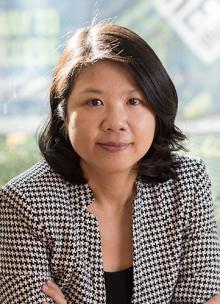
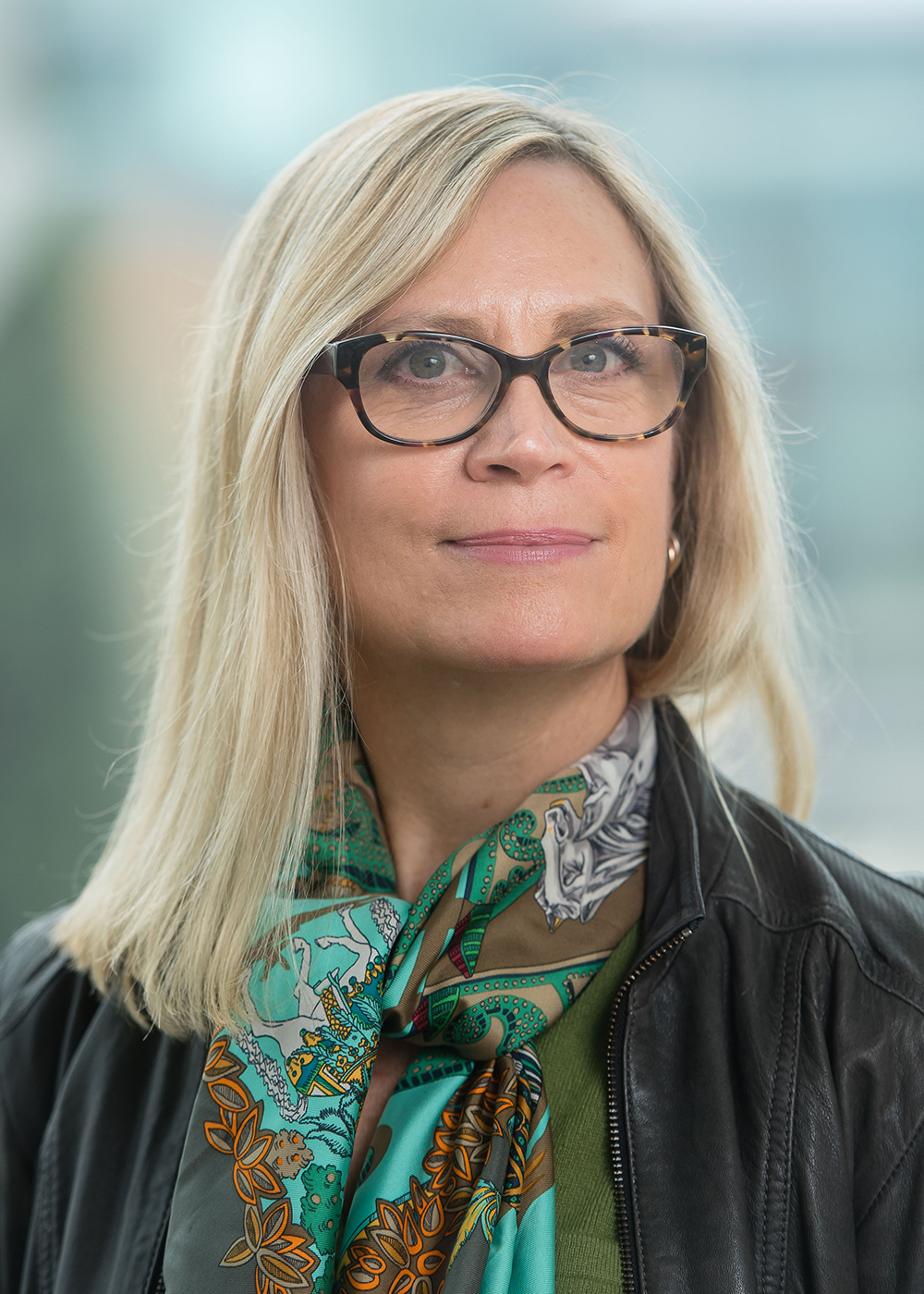
Cate Almon is an Associate Professor in the Department of English at Temple University's College of Liberal Arts , where she has taught since 2014. She also serves as the Associate Director of the First Year Writing Program. Her research focuses on student retention , plagiarism , and language assessment for English Language Learners (ELLs). Expertise : First Year Writing, Plagiarism, Retention, Linguistics Contact : calmon@temple.edu Her work explores intersections of academic integrity, linguistic diversity, and institutional support systems. Notably, she has published on topics like textual borrowing ethics, ELL college persistence, and linguistic factors in academic engagement, with presentations at conferences such as the Symposium on Second Language Writing and Interactions and Interfaces Linguistics Conference.
Florent Pouponneau is a Professor at Toulouse Capitole University, affiliated with the Institute of Space, Territorial, Cultural and Communication Law (IDETCOM). His research centers on political science, particularly focusing on French foreign policy, nuclear non-proliferation, bureaucratic dynamics in international interventions, and European security frameworks. 2015 : Published research on French nuclear non-proliferation policy. 2022 : Co-edited a book analyzing the French intervention in Mali through bureaucratic and political lenses. Repeated Collaborations : Frequently works with scholars like Johanna Siméant-Germanos and Grégory Daho on diplomatic and military policy topics. His publications highlight the intersection of domestic bureaucratic struggles and international policy outcomes, with a focus on France's role in nuclear diplomacy and military interventions. His methodological approach often integrates fieldwork and sociological analysis of institutions. Key themes across his work include: Nuclear non-proliferation and export policy French diplomatic practices in conflict zones Bureaucratic constraints on foreign policy decisions European Union security governance International intervention dynamics
Dr. Douglas Crawford serves as an Associate Professor of Management and International Business at Oral Roberts University (ORU), where he is also an alumnus. His teaching philosophy integrates compassionate instruction, academic rigor, and spiritual guidance to transform student lives within ORU's mission-driven environment. His academic credentials include: PhD in Organizational Leadership from Regent University MS in Industrial and Labor Relations from West Virginia University Bachelor's degree from Oral Roberts University Executive Leadership Coaching certification from Georgetown University Organizational Development training from Columbia University Dr. Crawford's research centers on leadership decision-making effectiveness and change leadership dynamics , drawing from 15+ years of multinational corporate experience. His work examines cross-cultural leadership behaviors that drive organizational success or failure, with emphasis on global branding strategies and human resource development in international markets. Industry insights from executive roles inform his exploration of how spiritual principles intersect with modern business leadership. As an active faculty member, he mentors students in management and international business programs. His pre-academic career included strategic leadership positions across three multinational corporations and entrepreneurial operation of a successful farm business, providing practical context for classroom instruction.
Olga Kokshagina serves as an Associate Professor in Innovation & Entrepreneurship at The University of Sydney, with adjunct research appointments at Monash University's Emerging Technology Lab and the UNU Hub - Learning Planet Institute. She is also an active member of the French Digital Council. Her research program investigates technology-mediated collaboration in complex innovation systems, focusing on healthcare transformation, deep tech commercialization, and co-design methodologies. Kokshagina has led high-impact projects with global institutions including the World Health Organization, OECD, STMicroelectronics, Vall d’Hebron Hospital, and Roche, demonstrating strong translational research capabilities. Her scholarly work centers on value-based healthcare innovation, digital platform governance, and AI-enhanced collaborative systems. She examines how organizational capabilities evolve during technological transitions, particularly in healthcare ecosystems, and investigates regulatory frameworks for algorithmic control in digital markets. Kokshagina's research bridges theoretical innovation management with practical applications, evidenced by her co-founding of Ninti—an initiative advancing women's health in workplace environments—and her Open Covid-19 crowdsourcing campaign that mobilized global expertise during the pandemic. Analysis of her 2021-2025 publications reveals a cohesive trajectory examining innovation in socio-technical systems. Key themes include value digitalization in healthcare, mission-oriented interdisciplinary collaboration, and the impact of big data on technology management. Her work consistently addresses grand challenges through mixed-methods approaches, spanning conceptual frameworks in journals like Research Policy to applied studies in Technovation and R&D Management, with increasing focus on quantum readiness and AI-augmented learning systems. No scientific awards are documented in the provided materials. Kokshagina currently holds a 2025 research grant for "Co-designing societal readiness and scenario building for quantum" through the University of Sydney Nano Institute/Catalyst program. While no student supervision activities are mentioned, her collaborative projects involve multi-institutional teams across industry, government, and academic sectors. Kokshagina maintains active roles within the University of Sydney Nano Institute and contributes to international policy discourse through the French Digital Council. Her Ninti initiative exemplifies her commitment to human-centered innovation, while ongoing collaborations with healthcare providers like Roche and Vall d’Hebron Hospital demonstrate sustained engagement with real-world implementation challenges in value-based care systems.
Naomi Rogers, Ph.D. (She/Her) is Professor of the History of Medicine in the Section of the History of Medicine and the Program in the History of Science and Medicine at Yale University. She holds courtesy appointments in the History Department and the Women's, Gender and Sexuality Studies Program, and serves on Yale's Dean's Advisory Council for LGBTQI Affairs. Professor Rogers teaches undergraduate, graduate, and medical students, regularly lecturing on the history of AIDS, reproduction, health economics, eugenics, nutrition, disability, and health activism. Professor Rogers' educational background includes: PhD in History from University of Pennsylvania (1986) MA from University of Pennsylvania (1986) BA in Music from Melbourne University (1980) BA with Honors from Melbourne University (1979) Her research focuses on 20th and 21st century history of medicine with emphasis on health inequities and social justice. Professor Rogers' historical interests span gender and health, disease and public health, disability studies, feminism, alternative medicine, health policy, and health activism. Her work critically examines the intersection of medical practices with social movements, particularly how marginalized communities have challenged medical orthodoxy throughout American history. She has published extensively in journals such as American Journal of Public Health, Bulletin of the History of Medicine, Journal of Medical Humanities, Radical History Review, Social History of Medicine, and Women and Health. Professor Rogers' recent scholarship demonstrates a consistent focus on the historical dimensions of contemporary health issues, particularly vaccine politics, abortion history, and community health activism. Her publications reveal patterns of resistance to medical authority, the role of race and gender in shaping health outcomes, and the historical roots of current health justice movements. Her work bridges academic history with public engagement, as evidenced by her frequent media commentary on COVID-19 and other health issues in outlets including BBC Radio, CNN, Huffington Post, National Public Radio, New York Times, Wall Street Journal, and Washington Post. Among her notable recognitions: AAHN's Lavinia L. Dock Award for Exemplary Historical Research for 'Polio Wars: Sister Kenny and the Golden Age of American Medicine' (2014) Presenter of the AAHM's Garrison Lecture: 'Radical Visions of American Medicine: Politics and Activism in the History of Medicine' (2017) Professor Rogers has been actively involved in academic leadership and mentoring. She has served as Director of Graduate Studies for the 2022-23 academic year, Chair of the Women's Faculty Forum, and Liaison to the Committee on Status of Women in Medicine. Her service extends to editorial boards including the Journal of the History of Medicine and Allied Sciences since 2018. She has also contributed to public understanding of medicine through consultations for documentaries including 'The Polio Crusade' (PBS), 'On the Basis of Sex' (Focus Features), and 'War on Science' (in process). Currently, Professor Rogers serves on the Medical School's OBGYN 'Dobbs' Sessions Planning Committee, which has organized webinars for the Yale community, and was co-organizer of the history-themed session 'Rooted in History: Abortion, Law and American Health Care.' She is working on her book project 'Health Radicalism and the Humanization of American Medicine' (under contract with Oxford), examining critics of medical orthodoxy since 1945 including civil rights, consumer, and feminist activists. She also conducts ongoing research on antisemitism in American medicine in the decades before and after World War II.
Ziad Majed serves as Associate Professor and Program Coordinator for Middle East Pluralities within the Department of History and Politics, holding the Elliott E. Burdette Professorship of Middle Eastern Studies. His academic focus centers on Lebanese, Syrian, and broader Arab political affairs, with sustained engagement in civil society reform campaigns since 1994. His educational foundation includes: PhD in Political Sciences from IEP - Sciences-Po, Paris DEA in Political Sciences from IEP - Sciences-Po, Paris MA in Arabic Literature from the American University of Beirut BA in Economics from the American University of Beirut Majed's research critically examines political transitions, civil society dynamics, and democratization challenges across the Arab world. His work demonstrates deep expertise in Lebanese consociationalism, Syrian revolutionary movements, and the interplay between foreign occupation and local authoritarianism, consistently addressing themes of state failure and resistance. Analysis of his 15 most recent publications reveals a clear trajectory from Arab Spring studies toward contemporary analysis of counter-revolutionary processes, Russian and American geopolitical interventions, and the fragmentation of state authority in Syria and Lebanon. The corpus maintains rigorous focus on occupation politics, sectarian governance crises, and regional power rivalries. Professor Majed actively contributes to public discourse as Coordinator of The Arab Network for the Study of Democracy and opinion writer for Al-Quds Al-Arabi, while serving on boards of Lebanese, Syrian, and French cultural institutions and lecturing internationally at major festivals and conferences.
Ying-Yi Chih is a Professor of Project Management at the Research School of Management, Australian National University (ANU) , and serves as the Associate Dean (Students and Industry Experience) for the College of Business and Economics. Her research focuses on project management, public-private partnerships (PPPs), value co-creation in projects, and employee well-being in project-based environments like the construction industry. She has published extensively in journals such as International Journal of Project Management and Journal of Construction Engineering and Management , with funding from government and industry sources. Education: PhD in Project Management Research Interests include: Infrastructure Project Planning and Management Public-Private Partnerships (PPPs) Value Co-Creation in Professional Services Employee Psychological Well-being and Performance Management Recent Publications highlight trends in green innovation, crisis resilience, leadership dynamics, and technology adoption in construction and project management. Her work bridges theoretical frameworks with practical applications in the AEC (Architecture, Engineering, Construction) industry and public sector projects. Editorial Roles: Associate Editor for Journal of Management in Engineering and Editorial Board member for Journal of Vocational Behavior . Research Projects have explored value co-creation, international development projects, and performance management in multi-project environments, with collaborations across Australia, Taiwan, Vietnam, and the Philippines.
Olivier Lortholary is Professor of Medicine at Paris Descartes University and holds multiple significant positions in the field of medical mycology and infectious diseases. He serves as Deputy Director of the French National Reference Center for Invasive Mycoses and Antifungals, and is Head of the Necker-Pasteur Center for Infectious Diseases and Tropical Medicine at Necker Hospital in Paris. His work is closely associated with the Institut Pasteur in Paris, France, where he is actively involved in research and teaching initiatives. Dr. Lortholary's educational background includes an M.D. from the Paris 6 School of Medicine and a Ph.D. from Paris 7 University. His extensive academic career has positioned him as a leading expert in medical mycology, with particular focus on fungal infections in immunocompromised patients. His research primarily centers on translational aspects of medical mycology, with special emphasis on Cryptococcus neoformans and cryptococcal meningitis, which represents the leading opportunistic fungal infection in advanced HIV-infected patients. He also investigates new immune deficiencies that predispose individuals to invasive fungal infections, develops diagnostic and therapeutic innovations for these conditions, and conducts clinical and microbiological studies of central nervous system infections and emerging infectious diseases. Dr. Lortholary has made substantial contributions to the field, with over 590 published papers, including more than 12 invited contributions to prestigious journals such as Clinical Infectious Diseases and Lancet Infectious Diseases. His research spans epidemiology of fungal infections, antifungal susceptibility testing, and clinical management approaches across various patient populations. He plays a significant role in shaping clinical guidelines as a member of various international expert panels, including the Infectious Diseases Society of America (for cryptococcosis management), the American Society of Transplantation (for donor-derived fungal infections), and ESCMID (for Candida and other fungal infections). Additionally, he serves as the French representative on the EUCAST Antifungal Susceptibility Testing Committee. As an educator, Dr. Lortholary co-directs the Medical Mycology course at the Pasteur Institute and has developed a MOOC (Massive Open Online Course) on Medical Mycology available through FUN-MOOC, reaching a global audience of healthcare professionals and researchers.
Dr. Zhiying Ma is an Assistant Professor at the University of Chicago Crown Family School of Social Work, Policy, and Practice , with faculty affiliations at the Center for East Asian Studies, Center for the Study of Gender and Sexuality, and Global Studies Program. She holds a joint PhD in Comparative Human Development and Anthropology from the University of Chicago and bachelor's degrees in Psychology and Philosophy from Peking University. Research Focus: Examines biopolitical paternalism in China's mental health governance Develops peer support systems for persons with serious mental illnesses Investigates intersections of disability rights, care ethics, and welfare systems Conducts ethnographic fieldwork in psychiatric hospitals and community teams Key Projects: Led a CBPR pilot project (2019-2021) to create peer support manuals in Guangzhou, and currently scales services in Guangzhou/Yunnan with Cyrus Tang Foundation support. Collaborated with the WHO on community mental health models. Scientific Recognition: 2021 Ford Global Fellow Published in SSM-Mental Health , Cultural Anthropology , and Disability Studies Quarterly Advocacy & Impact: Combines scholarship and activism , consulting for NGOs on disability livelihoods and gender equality. Collaborates with China's community mental health teams to improve service fidelity and client satisfaction.
Dr. Ronald P. Strauss serves as the Adams Distinguished Professor at the University of North Carolina at Chapel Hill in the Adams School of Dentistry, with additional appointments as Professor of Social Medicine in the School of Medicine and Clinical Professor of Epidemiology in the Gillings School of Global Public Health. He concurrently holds the position of Chief Global Officer for the Adams School of Dentistry and is an active member of the UNC Craniofacial Center Team. His academic credentials include: BA in Biology from Queens College New York DMD from the University of Pennsylvania PhD in Sociology from the University of Pennsylvania Dr. Strauss's research examines the social dimensions of chronic health conditions, with specialized focus on craniofacial differences and HIV/AIDS. His interdisciplinary approach integrates clinical practice, sociological theory, ethical frameworks, and health policy analysis to address stigma, healthcare access barriers, prenatal diagnosis implications, and community engagement strategies. Methodologically, he employs qualitative ethnography and survey research to investigate psychosocial impacts. His scholarly output demonstrates consistent thematic focus across decades, with recent publications revealing intensified examination of structural determinants of health, intersectional disparities in craniofacial care, and innovative community-based HIV/AIDS interventions. Key patterns include transdisciplinary collaboration, emphasis on patient-centered outcomes, and critical analysis of systemic inequities in healthcare delivery. Dr. Strauss directs the campus-wide HIV/AIDS Course annually since 1987 and teaches Social and Health Systems to medical students. As Faculty Director of the CFAR Office of Community Engagement and lead of the Thorp Faculty Engaged Scholars Program, he mentors faculty in community-engaged scholarship while maintaining active clinical and research supervision. He maintains leadership within the UNC Craniofacial Center Team and has conducted international fieldwork across five countries, reflecting his commitment to global health equity through partnerships in Brazil, Israel, Thailand, Moldova, and China.
Guofang Li is a Professor in the Department of Language and Literacy Education at the Faculty of Education, affiliated with the Centre for Early Childhood Education & Research (CECER). Her work centers on bilingual development and literacy education within multicultural contexts, particularly focusing on Chinese-Canadian communities. Her research interests include: Early bilingual development Family literacy practices Early literacy instruction methodologies Early education for minority learners Teacher education for multilingual classrooms Analysis of her 2021-2025 publications reveals a concentrated focus on Chinese-Canadian children's bilingual development, examining home literacy environments, digital technology impacts, and pandemic-related disruptions. She consistently advocates for equity-focused approaches in superdiverse educational settings, emphasizing translanguaging practices and critical perspectives on linguistic justice. Scientific Awards: No awards explicitly mentioned in source materials Advising and Grants: No specific student names or grant information provided in source materials Labs and Teams: Centre for Early Childhood Education & Research (CECER): An interdisciplinary hub facilitating collaborative research between academics, educators, and community partners focused on advancing evidence-based early childhood education practices through longitudinal studies and community-engaged projects.
Victoria Lemieux is a Professor at the University of British Columbia (UBC) Faculty of Arts, School of Information, and Cluster Lead for Blockchain@UBC, Canada’s largest research cluster focused on blockchain technology. Her research centers on risks to trustworthy records in blockchain systems and their impact on transparency, financial stability, and human rights. She has pioneered Canada’s first research-oriented graduate blockchain training program and organized multiple interdisciplinary summer institutes. Education: Ph.D. in Archival Studies from University College London (2002), Certified Information Systems Security Professional (CISSP, 2005). Affiliated with UBC’s Peter Wall Institute for Advanced Studies, Sauder School of Business, and Institute for Computers, Information and Cognitive Systems (ICICS). Research interests span blockchain technology , trustworthy records , risk management , information governance , and visual analytics , with recent work addressing healthcare data frameworks, Web3 AI integration, and socio-cultural dynamics of decentralized systems. She has published extensively on blockchain applications in archives, land transactions, and privacy-preserving technologies. Scientific Awards : 2015 Emmett Leahy Award 2015 World Bank Big Data Innovation Award 2016 Emerald Literati Award 2016 Emerald Literati Outstanding Paper Award Supervision: Currently accepts doctoral students in Computational Archival Science and blockchain-related archival research. Affiliated with the Blockchain@UBC cluster and multidisciplinary research teams exploring decentralized systems for social good.
Claire Robins serves as Professor of Museology and Art at University College London's Institute of Education, leading the Art, Design & Museology Academic Group and acting as Department Graduate Tutor for the Department of Culture, Communication and Media. Her work critically bridges art practice, museum studies, and educational theory to advance democratic engagement in cultural institutions. Education: PhD in Museum Education, University of London (2009) Master's degree in Gallery/Museum Education, University of London Bachelor's degree in Fine Art, St Martins School of Art (now University of the Arts London) Research Focus: Robins investigates the intersection of artists' practices with critical pedagogy, emphasizing progressive education and avant-gardist strategies in twentieth-century knowledge production. Her scholarship examines how contextual forces shape learning definitions in museums, with particular attention to materialities, pedagogic forms, and democratic potential within institutional frameworks. This work consistently challenges conventional museum narratives through artist-led interventions. Publication Trends: Her 15 most recent publications (2012-2025) reveal sustained exploration of museology-art education synergies, highlighting pedagogic innovation through artists' interventions, critical assessment frameworks, and democratic museum practices. Key thematic threads include narrative disruption in galleries, sustainability in art education assessment, and the transformative role of fiction in reimagining museum epistemologies. Advising & Leadership: Robins has supervised PhD/EdD students since 2010 and directed the MA Art Education, Culture and Practice program (2011-2023). She currently teaches MA modules in Museums and Galleries in Education and leads the Education and Curation component, while mentoring MA dissertations. Her leadership extends to developing gallery-based short courses with Engage. Professional Engagement: As editorial board member for Arts & Communication and Engage , and active participant in ICOM and NSEAD, Robins shapes global discourse through international keynotes (e.g., Korean Society for Education in the Arts, 2019) and curated seminars like Soft Subjects: Material Practice in Gallery Education (2024). Her review work for Routledge and Intellect Books further demonstrates scholarly stewardship.
Anindita Banerjee is an Associate Professor in the Department of Comparative Literature at Cornell University's College of Arts and Sciences, with cross-appointments in the Environment & Sustainability Program, History of Art and Visual Studies, Literatures in English, and Romance Studies. She serves as SAP Core Faculty for the South Asia Program and has been instrumental in establishing Cornell's Environmental and Sustainability Program, where she built and chaired the environmental humanities concentration for four years. Her research explores the relationship between imagining and making futures across diverse contexts, focusing on the evolving interfaces between science, technology, and culture; natural and built environments; media and information systems; and the migration of people, things, ideas, and images. Spanning Eastern Europe, Central Asia, the Indian subcontinent, and Latin and African Americas, her work examines networks of exchange, innovation, production, and consumption that emerge outside conventional coordinates of the modern world. Her scholarship has been featured in BBC Culture, Radio Free Europe, Medium, and Meduza. She has authored multiple books including the award-winning We Modern People: Science Fiction and the Making of Russian Modernity (2013), which won the Science Fiction and Technoculture Studies book prize, and is currently working on Reactionary Worldbuilding (MIT Press, 2026) and Border Environments (Cornell, 2026). Her research demonstrates consistent engagement with science fiction as a critical lens for examining global environmental, technological, and social transformations. Science Fiction and Technoculture Studies book prize Ivy+ Mellon Leadership Fellow (2024-25) Academic Venture Fund grant from Cornell Atkinson Center for Sustainability Social Sciences and Humanities Research Fellowship Banerjee serves as a faculty fellow of the Cornell Atkinson Center for Sustainability and is a participating member of cross-college programs in Biology and Society, Media Studies, and Visual Studies. She co-led a workshop series and engaged-learning course on border spaces and environmental justice supported by a grant from the Mario Einaudi Center for International Studies. As an Ivy+ Mellon Leadership Fellow, she serves as Special Assistant to the Dean of the Cornell School of Continuing Education, focusing on academic leadership and governance with an emphasis on diversity and inclusion.
Przemysław Kordos is a Professor at the University of Warsaw , affiliated with the Faculty of Liberal Arts , where he serves as Coordinator for the Development of the Modern Greek Philology Program . He holds two PhDs in Humanities (2007, 2019) and was awarded the Loukis Papaphilippou Seat of Advancement in Modern Greek scholarship. Education: MA in Ethnology and Cultural Anthropology (University of Warsaw, 2001) MS in Sociology (University of Warsaw, 2002) PhD in Humanities (University of Warsaw, 2007) Second PhD in Humanities (University of Warsaw, 2019) His research interests span: Contemporary Modern Greek and Cypriot literature Polish-Greek cultural relations (philhellenism) Social and ethnographic issues in Greece and Cyprus Travel literature analysis Fantasy literature's cultural implications His scientific work reveals a focus on linguistic assimilation in foreign language learning (via fMRI studies), historical parallels between Polish and Greek independence movements, and critical analyses of Cypriot folk culture's politicization. Key scientific awards include: Loukis Papaphilippou Seat (University of Warsaw) Internships at EKPA and IKY (Greece) Scholarships at IMXA (Greece) and MUNI (Czech Republic) His academic contributions include cataloging 60+ Polish travel accounts to Greece, analyzing the shift from travel literature to tourism discourse, and examining the Hellene-Romios dichotomy's role in modern Greek identity construction.