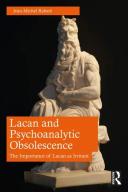
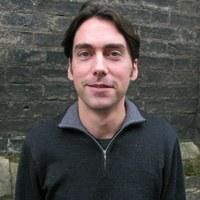
Jean-Michel Rabaté is a Professor of English and Comparative Literature at the University of Pennsylvania , where he has taught since 1992. He is affiliated with the School of Arts & Sciences and the Department of English, with a focus on modernist literature, psychoanalysis, and critical theory. Co-founder and Senior Curator, Slought Foundation Managing Editor, Journal of Modern Literature His research spans 20th-century modernism, Joyce studies, Lacanian and Freudian psychoanalysis, and intersections between literature and philosophy. Recent publications explore Lacan's role as an 'irritant' in psychoanalysis, knots in post-Lacanian theory, and laughter's philosophical significance. Scientific Awards include: 2011 Lindback Award for Distinguished Teaching 2004 Alan Filreis Teaching Award 2003 CGS and LPS Awards for Distinguished Teaching Rabaté has advised numerous doctoral students on topics ranging from modernist utopias to biotopias. He has served as past president of the Samuel Beckett Society and as a Fellow of the American Academy of Arts and Sciences since 2008.
Jesper Fels Birkelund is a Tenure Track Assistant Professor at the Department of Sociology, University of Copenhagen. His research focuses on education systems, ethnic inequalities, and social mobility, leveraging advanced statistical methods on register and survey data. He teaches courses such as Basic Statistics, Sociology in Danish Society, and Advanced Welfare, Inequality, and Mobility. His work has been published in journals like Social Forces and European Sociological Review . His research on education examines how schooling impacts cognitive and social-psychological skills, influencing long-term labor market outcomes. He has shown vocational training enhances conscientiousness, yielding earnings comparable to academic tracks. In ethnic inequality studies, he analyzes high aspirations among immigrant students despite poor academic performance, proposing counterfactual models to assess systemic challenges for minority students. In social mobility research, he explores how parental resources (human, cultural, social, economic capital) shape children’s career trajectories, particularly when parents and children share the same field of study. He uses firm linkage data to study mechanisms like parental networks and inherited family businesses. Awards: 2022 ECSR Prize for Best PhD Thesis Teaching: Basic Statistics (BA), Sociology in Danish Society (BA), Education and Social Inequality (BA/MA), Advanced Welfare, Inequality, and Mobility (MA) His work integrates micro-class approaches with intergenerational transmission theories, contributing to debates on educational policy and labor market equity. Office hours for Spring 2025: Monday 15:00–16:00 in room 16.0.57.
Tim Lewens is Professor of Philosophy of Science and Head of the Department of History and Philosophy of Science at the University of Cambridge, currently on leave for the 2024/25 academic year. His career bridges philosophy, biology, and bioethics with significant institutional roles including Deputy Director of CRASSH (2014-2017) and Council Member of the Nuffield Council on Bioethics (2009-2015). His research focuses on philosophy of biology, evolutionary theory, and bioethics, with particular expertise in human nature debates, extended evolutionary synthesis, and medical ethics. Key contributions include critical analyses of mitochondrial replacement therapy ethics, genome editing implications, and conceptual challenges in cultural evolution. His work consistently addresses interdisciplinary tensions between biological determinism and social constructivism. Analysis of his 15 most recent publications reveals dominant themes in evolutionary philosophy (40%), bioethics (35%), and conceptual foundations of science (25%). Notable trends include re-examining Paleyan design arguments in modern biology, ethical frameworks for emerging biotechnologies, and interdisciplinary approaches to human nature that challenge essentialist perspectives. Lewens has secured major research funding including an ERC grant for 'A Science of Human Nature?' (2011-2016) and Templeton Foundation funding for 'Putting the Extended Evolutionary Synthesis to the Test' (2016-2019). His policy impact is evident through contributions to Nuffield Council reports on mitochondrial DNA disorders (2012) and human body donation (2011), demonstrating applied philosophical engagement with contemporary medical ethics.
Susan Hopkins is a Senior Lecturer in Education (Curriculum and Pedagogy) and Associate Dean (Learning and Teaching) at the School of Education and Tertiary Access , University of the Sunshine Coast , Queensland, Australia. She earned her PhD from Queensland University of Technology and has also served as a Lecturer in Communication at the University of Southern Queensland. Institution: University of the Sunshine Coast School: School of Education and Tertiary Access Rank: Senior Lecturer Leadership Role: Associate Dean (Learning and Teaching) Her research centers on curriculum and pedagogy , with strong interdisciplinary interests in gender studies, media, cultural studies, and feminist theory . She critically examines representations of women, motherhood, sexuality, and power in film and television, often linking popular narratives to broader social and ethical issues such as animal welfare, digital abuse, and environmentalism. Her work frequently appears in public-facing platforms like The Conversation , where she bridges academic insight with accessible commentary. The trends in her recent articles reflect a consistent focus on popular culture as a site of ideological struggle , particularly how gender, power, and identity are constructed and challenged in media. She analyzes genres ranging from horror and documentary to romantic comedy and animated features, often highlighting feminist and postfeminist themes. Her writing reveals a deep engagement with cinematic history, celebrity culture, and the emotional dimensions of storytelling. Susan Hopkins has not been publicly recognized with scientific awards based on available information. She is actively involved in research supervision, consulting, speaking engagements, and media collaborations . Her institutional roles suggest leadership in academic program development and pedagogical innovation. Though no formal lab or research team is mentioned, her public scholarship indicates an influential voice in education and cultural critique.
Robert Glenn Howard is a Professor of Communication, Religious Studies, and Folklore at the University of Wisconsin–Madison , directing the Digital Studies program and DesignLab . He holds affiliations with the Information School, School of Journalism and Mass Communication, Religious Studies Program, and Folklore Program. His research explores empowerment through digital expression, focusing on vernacular authority, communication technologies, and firearms discourse. Recent work emphasizes how everyday people use technology to shape identities and challenge institutional authority. Education: Ph.D. in Communication, University of Oregon, 2001 M.A. in Communication, UCLA, 1996 B.A. in Communication, UC Berkeley, 1993 Research Interests: Howard investigates participatory performance, rhetorical theory, and digital ethnography. He examines how vernacular forms of authority interact with institutional frameworks, particularly in discourses around firearms and internet communities. Recent projects include 'GunTalk: Everyday Discourse and Weaponized Expertise.' Publications Overview: His work spans books like Gunlore: American Traditions about Firearms (2024) and Digital Jesus (2011), alongside over 20 peer-reviewed articles analyzing digital networks, vernacular authority, and gun culture. His writing bridges folklore studies, communication theory, and digital humanities. Labs & Initiatives: He leads the Digital Studies Program , fostering interdisciplinary research in digital culture, and oversees DesignLab , which explores human-centered design for communication challenges.
Mustafa Aksu is a Professor at Istanbul University's Faculty of Law, Department of Civil Law. His research spans Civil Law , Intellectual Property Law , Information Law , and EU Legal Harmonization . He has advised 26 theses and published extensively on digital rights, family law, and obligations law. Research Interests: Focus on AI and law, copyright exhaustion in digital markets, EU-Turkey legal alignment, domain name regulation, and protection of computer programs. Publications: Recent works include AI's legal frameworks (2023), medical informatics law (2021), and digital exhaustion doctrine (2016). His research emphasizes cross-border IP enforcement and EU court precedents. Contact: Email aksum@istanbul.edu.tr | Office: Hukuk Fakültesi Binası, İkinci Kat, Oda No: 38, Beyazıt, Istanbul, Turkey.
Dr. Yuichi Tsukada is an Associate Professor of English Literature at Waseda University , Japan, with a focus on Shakespearean studies and early modern cultural politics. He holds a PhD from King’s College London , an MA from The University of Tokyo , and a BA in British Area Studies from the same institution. His research interrogates the interplay between Shakespearean drama , Elizabethan nostalgia , and political identity in Jacobean England . His scholarly output spans analyses of Macbeth 's prophecies, Coriolanus ' gendered military allegory, and Antony and Cleopatra 's negotiation of Elizabethan legacy. He has held grants from the Japan Society for the Promotion of Science (JSPS) and the Suntory Foundation , and serves as Director-General of the Kanto Branch of the English Literary Society of Japan. Key publications include the monograph Shakespeare and the Politics of Nostalgia (Arden Shakespeare, 2019), which recontextualizes Shakespeare’s late plays within Jacobean debates about Elizabeth I. His work has been recognized with the University of Tokyo President’s Grand Award and the Young Scholar Award of Special Merit from the English Literary Society of Japan. Scientific Awards: Suntory Foundation Grant for Groundbreaking Young Researchers Fukuhara Award (English and American Literature) Award of Special Merit, English Literary Society of Japan The University of Tokyo President’s Grand Award Ichiko Memorial Award Valedictorian, The University of Tokyo His teaching portfolio includes courses on Shakespeare and Film , Literary Theory , and History of English Literature , reflecting his interdisciplinary approach to pedagogy.
Prof. Dr. Eva Ehninger is a leading academic at the Institute for Art and Visual History at Humboldt University of Berlin , holding the Professorship for Modern Art History . Her research bridges photography theory, modernism, postcolonial studies, and transcultural methodologies , with a focus on visual media’s role in constructing social order. Education: Heidelberg, University of Michigan, Frankfurt/Main Doctoral thesis: Vom Farbfeld zur Land Art (2011, Benvenuto-Cellini Prize) Her research explores how photography, media, and art mediate social, political, and cultural dynamics. Current projects include the Käte Hamburger Kolleg inherit-heritage in transformation and Art Education Between Heritage Making and Critical Transregionality , analyzing entanglements between South Asian and European art education histories. Publications like The Modern Dream of Order (2025) and Ed Ruscha’s Streets of Los Angeles contributions examine Los Angeles as a site of visual critique and urban documentation. Her scholarly output spans 15 recent works addressing topics such as Victorian photography’s social imagination , biological metaphors in Smithson’s art , and dialogue in Nauman’s practice , reflecting interdisciplinary intersections of art history, media theory, and critical studies . She has received prestigious support from institutions like the Getty Research Institute and Terra Foundation for American Art . Scientific awards: Benvenuto-Cellini Prize (for dissertation) Grants: Studienstiftung des deutschen Volkes, Fulbright Commission, BMBF Ehninger supervises 10 ongoing PhD projects and co-edits journals like kritische berichte and Zeitschrift für Kunstgeschichte . She is a Vertrauensdozentin (Trusted Academic Advisor) for the Studienstiftung des deutschen Volkes, demonstrating her commitment to academic mentorship.
Erin Stiles, Professor of Anthropology at the University of Nevada, Reno, specializes in the intersections of religion, law, and gender. Her ethnographic work in Zanzibar, Tanzania, Ghana, South Africa, and Utah examines Islamic family law, legal pluralism, and Mormon spiritual experiences. Ph.D., Washington University in St. Louis M.A., University of Colorado, Boulder A.B., Duke University Stiles' research explores: Islamic legal reasoning in marital disputes and inheritance law Gender dynamics in LDS fundamentalist and Irish Traveller communities Spirit-world encounters in Utah Mormonism Comparative legal practices across sub-Saharan Africa and the Indian Ocean Her recent publications focus on global Islamic divorce mechanisms, LDS spiritual ethics, and postcolonial legal adaptations in East Africa. She teaches courses ranging from introductory cultural anthropology to specialized topics in African studies and Islamic law. Stiles actively mentors graduate students working on: Healing practices among LDS fundamentalists Marriage customs in Irish Traveller communities Islam and migration in Japan LGBTQ+ affirming Protestant groups
Prof. Dr. Fatih BOZKURT serves as an Associate Professor in the Department of History at Sakarya University's Faculty of Humanities and Social Sciences. With academic appointments dating back to 2012, he has established himself as a prominent scholar specializing in Ottoman socio-economic history, material culture, and estate records research. His academic journey reflects deep engagement with Ottoman institutional structures and daily life patterns. Doctorate (2005-2011): Sakarya University, Institute of Social Sciences/History (Thesis: Estate books and change in Ottoman material culture (1785-1875 Istanbul example)) MA (2000-2003): Celal Bayar University, Institute of Social Sciences/Modern Age History (Thesis: Social and economic situation of Gördes district according to the Ministry of Finance Dividend Books) Licence (1996-2000): Istanbul University, Faculty of Literature/Department of History Professor BOZKURT's research primarily focuses on Ottoman socio-economic structures, particularly through the lens of estate records (tereke defterleri). His work examines material culture transformations, tradesmen organization, and daily life patterns in Ottoman society. He has made significant contributions to understanding Ottoman urban economies, inheritance practices, and cultural changes, especially during the 18th and 19th centuries. His methodological approach combines archival research with social history frameworks to reconstruct Ottoman economic and social realities. His extensive publication record reveals consistent thematic focus on Ottoman economic history, with particular attention to estate records as historical sources. The research demonstrates evolving sophistication in using these records to explore wealth distribution, consumption patterns, and social structures. His work bridges economic history with cultural studies, examining how material culture reflected and influenced social relations in Ottoman society. Certificate of Appreciation from the DIRECTORATE OF RELIGIOUS AFFAIRS (2015) Certificate of Appreciation from OSARK (International Ottoman Research Congress) (2015) Professor BOZKURT has supervised numerous graduate theses focusing on Ottoman institutions and civilization, guiding research on topics ranging from estate records to daily life practices. His current research includes a TÜBİTAK-1001 project titled 'Osmanlı İstanbul'unun Servet ve Demografik Yapısı (1650-1810)' which continues his longstanding interest in Ottoman economic and demographic structures. He has also participated in various TÜBA (Turkish Academy of Sciences) projects related to Turkish-Islamic scientific and cultural heritage. As an active academic administrator, he has served as Deputy Director of the Social Sciences Institute (2019) and History Department Deputy Chair (2023-2024). He has organized and participated in multiple International Ottoman Research Congresses (OSARK), contributing significantly to the institutional framework of Ottoman studies in Turkey.
Prof. Dr. Kenny R. Cupers is Professor of Architectural History and Urban Studies at the University of Basel , affiliated with the Department of Social Sciences in the Faculty of Humanities and Social Sciences . He co-founded and leads the Urban Studies division, focusing on the intersections of architecture, urbanism, colonialism, and planetary design in African and European contexts. PhD, Harvard University (2010) M.Sc. and B.Sc. in Architecture, Catholic University of Leuven Studies in Visual Culture and Urban Theory, Goldsmiths College, London His research centers on architectural modernism, housing, infrastructure, and decolonization . Key themes include the planetary politics of design, coloniality of infrastructure, and the role of architecture in state transformation. He is currently working on two book projects in Kenya: one on unmaking the plantation system through arts and architecture, and another on post-independence Nairobi’s urban history. Recent publications include The Earth that Modernism Built: Empire and the Rise of Planetary Design (2024) and The Social Project: Housing Postwar France (2014). He leads the Sinergia project Governing through Design (2020–2025) and previously directed the SNF-funded How Infrastructure Shaped Territory in Africa (2018–2022). His work appears in journals such as e-flux Architecture , Antipode , and Architectural Theory Review . Scientific Awards: No specific awards listed in the provided text. As an educator, Cupers promotes engaged pedagogy and collaborative research, co-editing What is Critical Urbanism: Urban Research as Pedagogy (2022). His public research projects include Swiss Corporate Coloniality and Lamu Futures . He has advised multiple PhD and Master’s students, though specific names are not listed. He is part of a vibrant research team including Dr. Ernest Sewordor, Dr. Laura Nkula-Wenz, and Dr. Prita Meier. Laboratories and Research Teams: Urban Studies, University of Basel Critical Urbanisms Program Sinergia Project: Governing through Design How Infrastructure Shaped Territory in Africa (completed) Infrastructure Space and the Future of Migration Management (completed)
Anna Singer is a Professor of Civil Law, specializing in Family Law , at the Department of Law , Uppsala University . She serves as Dean of the Faculty of Law and contributes extensively to research on children's rights , inheritance law , and legal challenges in reproductive technology . Contact: Anna.Singer@jur.uu.se | Phone: 018-471 20 35 | Address: Trädgårdsgatan 1, Uppsala. Education: Juris Doctor (JD), Doctor of Juridical Science (doc) Research Interests: Cultural tensions in family law, Nordic inheritance systems, children's legal status, DNA technology in parenthood, international family law comparisons, and postmodern legal reforms. Publication Trends: Recent works emphasize Nordic legal harmonization , children's autonomy , and ethical dilemmas in reproductive law , with a focus on Scandinavia and cross-cultural analysis. Advising & Grants: No explicit student advising details. Collaborated on EU family law reports and Nordic cohabitation law projects.
Cassidy Ellis is an Assistant Professor at the University of Cincinnati, specializing in critical cultural communication, media studies, and rhetorical criticism. Her academic work intersects with grassroots activism in reproductive justice, particularly in the Deep South, West, and Southwest regions of the U.S. PhD in Cultural Studies, Media Studies, Rhetorical Criticism (University of New Mexico, 2023) M.A. in Communication - Identity & Difference (University of Alabama, 2016) B.A. in History (University of Alabama, 2013) Her research focuses on unpacking ideologies in social debates, settler colonialism, and the material histories shaping contemporary discourses. She critically examines anti-abortion rhetorics, particularly how race and personhood are discursively constructed within the social imaginary. Her methodological approach includes autoethnography, qualitative research, and intersectional frameworks. Her recent publications in journals like The Journal of Autoethnography and Fat Studies Journal , as well as chapters in edited collections, emphasize praxis-based scholarship, queer futurities, and critical resistance to colonial narratives. Her work bridges academic inquiry with community organizing, informed by her co-founding of the Yellowhammer Fund and other reproductive justice initiatives. Graduate Student Activist Award, NCA Activism and Social Justice Division Top Student Paper, Southern States Communication Association Gender Studies Division Doctoral Fellowship for Inclusive Engagement, University of Denver Ellis has served editorial and professional roles, including peer reviewing for international journals and organizing within the Southern States Communication Association. Her community service spans abortion funds, doula projects, and patient advocacy, reflecting her commitment to material change.
Karen Barad is Distinguished Professor of History of Consciousness at the University of California, Santa Cruz, with joint appointments in Philosophy and Feminist Studies. She holds a Ph.D. in theoretical particle physics from SUNY Stony Brook and previously held a tenured position in a physics department before transitioning to interdisciplinary work. At UCSC, she is affiliated with the Humanities Division and serves as faculty in the History of Consciousness Department and Philosophy Department. Barad earned her Ph.D. in Physics from SUNY Stony Brook, building a foundation in theoretical particle physics before moving toward more interdisciplinary work. Her unique trajectory from physics to philosophy and feminist studies has shaped her distinctive approach to questions of matter, meaning, and ethics. Barad's research spans multiple disciplines including science studies, multispecies studies, physics, nuclear studies, continental philosophy, epistemology, ontology, ethics, politics, and philosophy of physics. Her theoretical framework of "agential realism" has significantly influenced feminist theory, science studies, and philosophy. She approaches questions of matter, meaning, and ethics through the lens of quantum physics, developing concepts like intra-action, diffraction, and entanglement as philosophical tools. Her work challenges traditional boundaries between subject/object, nature/culture, and human/non-human. Her publications over the last two decades reveal a consistent engagement with the intersections of science, philosophy, and ethics, particularly focusing on how material-discursive practices shape reality. Barad's work increasingly addresses ecological concerns, nuclear legacies, and questions of justice, demonstrating how scientific concepts can inform ethical and political thought. Her writing moves fluidly between theoretical physics, feminist theory, and philosophical inquiry, creating new pathways for understanding the entanglement of matter and meaning. honorary doctorate from Gothenburg University Fulbright fellowship Kresge College Teaching Award Barad has received significant recognition for her scholarship and her research has been generously supported by major funding organizations including the National Science Foundation, the Ford Foundation, the Hughes Foundation, the Irvine Foundation, the Mellon Foundation, and the National Endowment for the Humanities. As Co-Director of the Science & Justice Graduate Training Program at UCSC, Barad has mentored numerous graduate students and shaped interdisciplinary research connecting scientific inquiry with questions of social justice. Her collaborative work with scholars like Jenny Reardon has helped establish science & justice as a vital field of inquiry. Barad's approach to mentoring emphasizes the ethical responsibilities inherent in scientific and philosophical practices. Through her leadership in the Science & Justice Research Center, which she helped found, Barad has fostered innovative collaborations across disciplines, creating spaces where scientists, humanists, and social scientists can work together on pressing contemporary issues. Her work continues to influence multiple fields, with ongoing projects exploring nuclear colonialism, ecological ethics, and the material consequences of scientific practices.
Eva-Maria Knoll is a senior researcher at the Austrian Academy of Sciences , affiliated with the Institute for Social Anthropology . Her work bridges medical anthropology, health equity, and island studies, focusing on the Indian Ocean World, particularly the Maldives. Education : Socio-Cultural Anthropology, PhD (2011), University of Vienna Research Interests : She explores the biosocial impact of inherited blood disorders (thalassaemias, sickle cell disease), health landscapes in island cultures, and mobility patterns in health-related contexts. Her comparative ethnographic approach integrates collaboration with local clinics and patient advocacy groups. Publications Trends : Her recent articles examine genetic responsibility, health equity in remote regions, and the intersection of mobility, disease, and cultural identity in the Indian Ocean World. Themes include medical anthropology, island studies, and global health challenges. Projects : Leader: Genetic Responsibility & Remoteness Transition in Rare Diseases Collaborator: Health and Environmental Challenges in Indian Ocean Islands and Shoreline Countries Co-Edited Books : She has co-edited five books, including Disease Dispersion and Impact in the Indian Ocean World and Camels in Asia and North Africa .