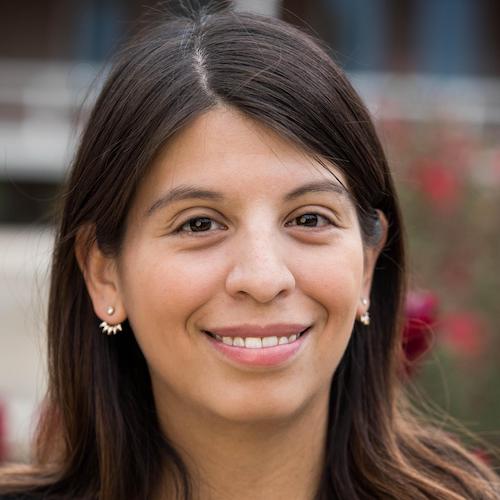
Jorge Cañizares-Esguerra is a Professor and Alice Drysdale Sheffield Professor of History at the University of Texas at Austin's College of Liberal Arts. His work fundamentally recontextualizes Latin America's role in shaping Western modernity through historical analysis of science, abolitionism, and democratic thought. Education: PhD from University of Wisconsin His research interrogates historiographical categories like the Enlightenment, Scientific Revolution, and Atlantic Age of Revolutions that have obscured Latin America's contributions to modernity. He demonstrates how manuscript petitions, not print culture, drove knowledge production and how colonial scribal practices created alternative cosmopolitanisms. Recent publications include Categories as Prisons (University Pennsylvania Press) challenging Atlantic historiography, and The Radical Spanish Empire (Harvard University Press) co-authored with Adrian Masters, which reclaims Spanish America's role in anti-slavery movements and systematic skepticism. His work appears in Cambridge Companion to Latin American Independence and New World Objects of Knowledge series. Teaching includes courses on Colonial Latin America (LAS 366), Atlantic History (HIS 383M), and Urban Slavery (HIS 347N). He has extensive editorial experience co-editing Princeton Handbook of Atlantic History and Jesuit-Protestant Encounters series.
Tyler Custis serves as an Associate Professor at the University of South Dakota's Beacom School of Business, specializing in Business Law and the Legal Environment. His academic appointments reflect deep engagement with contemporary legal challenges in sports, finance, and corporate governance. His educational background includes: JD from University of South Dakota (2013) MBA from University of South Dakota (2012) BS from Texas A&M University (2007) Custis' research focuses on high-impact legal intersections, particularly NCAA regulations, corporate fraud mechanisms, and healthcare compliance failures. His work bridges theoretical legal frameworks with real-world economic consequences, examining how regulatory gaps enable systemic misconduct in sports leagues and financial institutions. Key themes include Title IX implications for athlete compensation, internal control failures in banking scandals, and antitrust considerations in collegiate athletics. His publication portfolio reveals strong emphasis on sports law evolution (2016-2025), corporate ethics case studies (2018-2022), and financial regulation analysis (2019-2024). The research demonstrates methodological diversity spanning empirical analysis of NCAA labor models, forensic accounting of banking fraud, and policy evaluation of legislative responses to corporate misconduct. Award recognition includes: Beacom School of Business Faculty Excellence Teaching Award (2023) Excellence in Teaching Award Nominee (2023) Best Paper Award at ICTO International Conference (2019) Custis actively disseminates research through scholarly presentations at venues including ASHE Annual Conferences, Academy of Legal Studies meetings, and Beacom Scholar Series. His work engages directly with policymakers on NCAA reform and corporate compliance frameworks, demonstrating applied impact beyond academic circles.
Dr. Olga Oleinikova is an Associate Professor and Director of the Social Impact Technologies and Democracy Research Hub (SITADHub) within the School of Communication at the University of Technology Sydney (UTS), Australia. Internationally recognized for her contributions to research and social impact, she has been named among Forbes Top 40 Global Ukrainians and Forbes 30 Under 30 Asia. She was also a finalist for the Australian Council of Humanities, Arts and Social Sciences (CHASS) Future Leader Award. Her educational background includes a PhD in Sociology from the University of Sydney (2016), with prestigious research fellowships at Oxford University's European Studies Centre (2018-2019), Charles University in Prague (2023-2024), and the WZB Berlin Social Science Center (2015). Dr. Oleinikova's research focuses on migration studies (particularly Eastern European migration to Australia), democracy studies, diaspora politics, and social impact technologies. Her work examines life strategies of migrants navigating displacement, democratic performance in Ukraine and Europe, and the intersection of technology and democracy. She has developed a theoretical framework distinguishing between 'achievement life strategies' and 'survival life strategies' among migrants from crisis regimes. Her publication portfolio includes several acclaimed works, with her most recent book 'New Eastern European Migration to Australia: From Ukraine, Czech Republic and Hungary' (Palgrave, 2023) examining new migration patterns. Her research demonstrates consistent focus on Eastern European migration, diaspora politics, and democratic development, with increasing attention to technology's role in democratic processes. Forbes Top 40 Global Ukrainians Forbes 30 Under 30 Asia CHASS Future Leader Award Finalist Visa People's Choice Award Anthill 30 Under 30 Winner Dr. Oleinikova has secured over $3 million in funding for social and commercial initiatives. She serves on several nonprofit boards, acts as an advisor to the Australia-Ukraine Chamber of Commerce, and mentors through the 1991 Open Data Incubator and Future Schools Australia. She founded the SITAD Visiting Fellowship Program, supporting Ukrainian early-career researchers and postgraduate students. Her media reach is substantial, with expert commentary featured in BBC News, Bloomberg, ABC News, CNA, The Conversation, Politico, SBS, and KyivPost, reaching an estimated 9.1 million people. She has delivered more than 30 keynote and invited talks at leading institutions worldwide. SITADHub, which she founded and directs, is a dynamic networked research center with 170 associates across 16 countries actively researching democracy, human-computer interaction, and global mobility, with a focus on Ukraine and broader Eastern Europe. The hub conducts unique research and maintains university partnerships throughout Europe and the Asia Pacific, including with WZB Berlin Social Science Research Centre, University of Oxford, and University of Sydney.
Dr. Gomaa Agag serves as Associate Professor of Marketing at Nottingham Business School, Nottingham Trent University, bringing over a decade of academic experience across Egypt, UAE, and UK institutions. His leadership in digital marketing research and pedagogical excellence has established him as a key contributor to contemporary marketing scholarship. His academic credentials include: PhD in Marketing, University of Plymouth MPhil in Marketing PGCE (Postgraduate Certificate in Education) PGCHE (Postgraduate Certificate in Higher Education) BA (Hons) in Marketing Agag's research program centers on digital transformation in consumer behavior, with emphases on e-commerce ethics, AI-driven tourism marketing, and cross-cultural social commerce dynamics. His methodology integrates structural equation modeling (AMOS/WARPPLS) and fsQCA to analyze complex consumer decision pathways, particularly examining how technological adoption intersects with cultural variables in online retail environments. Recent work investigates pandemic-induced behavioral shifts and sustainability-driven consumption patterns. His publication trajectory reveals evolving focus from foundational e-commerce trust studies toward contemporary AI applications in tourism marketing and circular economy models. The 15 most recent articles demonstrate consistent output in premier journals like Journal of Retailing and Consumer Services and Tourism Management , with increasing emphasis on longitudinal methodologies and cross-national comparative frameworks addressing digital marketing agility, green consumption, and post-pandemic recovery. Research recognition includes: Teaching Honour Roll (multiple inclusions) Best Teaching Award (2016) Best Teaching Award (2017) Agag actively shapes scholarly discourse as Associate Editor of the International Journal of Customer Relationship Marketing and Management while mentoring doctoral candidates through NTU's graduate programs. His external collaborations with industry partners like Booking.com and academic networks across 12 institutions demonstrate translational research impact. Current initiatives focus on AI optimization in hospitality performance metrics and cross-cultural analysis of sustainable consumption drivers, positioning him at the forefront of digital marketing evolution. His collaborative projects with international researchers and industry partners form dynamic research collectives examining digital marketing ethics and tourism technology adoption, though no dedicated physical laboratory is specified in available documentation.
Matthias Künzler serves as Professor of Communication Policy and Media Economics at the Institute of Journalism and Communication Studies within Freie Universität Berlin's Department of Political and Social Sciences. His academic career spans Swiss and German institutions including FH Graubünden (2014-2021), Universität Zürich (2002-2013), and guest professorships at Universität Basel, Universität Zürich, Universität Fribourg, and Universität Salzburg. Current research focuses on Local Journalism and Municipal Communication in the Digital Transformation. Freie Universität Berlin (2021-present) FH Graubünden (2014-2021) Universität Zürich (2002-2013) His research examines comparative media systems with emphasis on German and Swiss contexts, local journalism sustainability, public service media transformation, and broadcast regulation. Methodologically grounded in qualitative approaches and organizational theory, his work addresses news deserts, media convergence, and the societal role of local media infrastructure. Recent projects analyze Swiss local media business models, youth engagement with public service content, and municipal communication in digital environments. Analysis of his 15 most recent publications reveals concentrated focus on local media crises (7 articles), public service media challenges (4 articles), and Swiss-German media system comparisons (12 articles). Key emerging themes include news desert mitigation strategies, innovative funding models for local journalism, and public value frameworks for entertainment programming in public service contexts. Künzler serves as decentralized ombudsperson for scientific integrity at Freie Universität Berlin (since 2022) and previously chaired the Swiss Communication Science Association (2016-2022). He co-edits the "Medienstrukturen" book series (13 volumes published since 2012) and participates in editorial boards including Publizistik and M&K Medien & Kommunikationswissenschaft. His teaching covers German media systems, local communication, public service media innovations, and communication policy colloquia. Current doctoral supervision focuses on digital transformation impacts on local journalism and municipal communication. Leadership roles include advisory positions for Berlin's general career preparation program and research committees at FH Graubünden. Research infrastructure includes the ongoing "Lokalmedien in der Schweiz und Liechtenstein" dataset series tracking Swiss local media (2022-2025), developed with Burger and Autenrieth. The "Local Journalism and Municipal Communication" project examines digital transformation impacts through comparative Swiss-German analysis.
Dr. Lei-Shih Chen is a Professor in the Department of Health Behavior at the School of Public Health, Texas A&M University. With over 20 years of research experience, her work focuses on public health genomics, health disparities, disabilities, autism spectrum disorder, and cancer prevention and control, securing approximately $13 million in research funding from NIH, NSF, and Texas agencies. Her educational background includes: PhD in Health Education from Texas A&M University (2007) MS in Occupational Medicine and Industrial Hygiene from National Taiwan University (2001) BS in Physical Therapy from National Taiwan University (1999) Dr. Chen's research employs community-based participatory methods to address health inequities through culturally tailored interventions. She specializes in genetic education for underserved populations, particularly Chinese Americans and Latinas, with emphasis on autism spectrum disorder and cancer prevention. Her work bridges genomic science with practical public health applications to reduce disparities. Recent publications (2022-2025) reveal consistent focus on community health worker interventions, genetic testing education, and culturally specific cancer prevention strategies. These studies predominantly target vulnerable groups using mixed-methods approaches to develop accessible health solutions while examining BMI, nutrition, and physical activity impacts on health outcomes. Dr. Chen's scientific recognition includes: Pathway Award (2024) ASHG Education Award (2023) Faculty Research Excellence Award (2023) Association of Former Students Distinguished Achievement Award for Teaching (2022) Public Health Diversity, Equity, and Inclusion Award (2022) Outstanding Research Award (2019, 2022) Armstrong Scholar Award (2021) Young Professional Award (2018) She has chaired 39 graduate students (29 graduated), mentored 10 post-doctoral associates, and advised approximately 300 undergraduates. Her $13 million research portfolio includes major grants from NIH, NSF, Texas Council for Developmental Disabilities, and the Cancer Prevention and Research Institute of Texas for community-based genomic and cancer prevention initiatives. Dr. Chen leads community-engaged research teams developing culturally competent health worker certification programs and family history-based interventions for Chinese American and Latino communities across Texas.
Lucy Arendt serves as Professor of Business Administration – Management and Co-Director of the Center for Exceptional Leadership at St. Norbert College's Schneider Business School, where she teaches organizational behavior, leadership, and strategic management at undergraduate and graduate levels. Her global teaching initiatives include leading student cohorts to Europe for leadership studies and Mexico for international business immersion since joining the institution in 2016 after 26 years at UW-Green Bay. Her educational credentials include a B.S. and M.S. from the University of Wisconsin-Green Bay and a Ph.D. from the University of Wisconsin-Milwaukee. B.S., University of Wisconsin-Green Bay M.S., University of Wisconsin-Green Bay Ph.D., University of Wisconsin-Milwaukee Dr. Arendt's research centers on decision-making dynamics within disaster contexts, spanning mitigation through recovery phases. Her fieldwork across 15+ disaster zones—from New Orleans post-Katrina to Nepal's earthquake aftermath—examines how formal and informal leaders drive organizational and community resilience. This interdisciplinary work bridges business strategy with emergency management, emphasizing leadership's role in crisis navigation and long-term recovery. Her publication trajectory reveals evolving focus from early humor studies in organizational behavior toward comprehensive disaster resilience frameworks. Recent works analyze transformational leadership failures (2024), tornado recovery systems (2023), and engineered resilience metrics like the PEOPLES framework (2016), demonstrating consistent integration of organizational theory with real-world disaster response challenges across healthcare, infrastructure, and community systems. Notable recognition includes the UW-Green Bay Founders Association Award for Excellence in Teaching (2008-09) and a University Award for Collaborative Achievement (2013-14) for innovative international education programming. UW-Green Bay Founders Association Award for Excellence in Teaching (2008-09) UW-Green Bay Teaching Award for Experienced Teacher (2010) University Award for Excellence in Collaborative Achievement (2013-14) Her advisory impact extends through FEMA and NIST consultations, federal earthquake hazards committee leadership, and the Housner Fellows Leadership Development Program. She has directed disaster-reconnaissance teams for EERI across four continents, translating field insights into policy recommendations for governmental and nonprofit entities including Procter & Gamble and the U.S. Chamber of Commerce. As EERI board secretary/treasurer and federal Advisory Committee chair, she drives cross-sector collaboration on seismic safety standards. Her Center for Exceptional Leadership initiatives foster student development through experiential learning, while ongoing research partnerships with international agencies advance community resilience metrics for global disaster-prone regions.
Vesa Haapala serves as a University Lecturer in Finnish Literature at the University of Helsinki's Faculty of Arts, Department of Finnish, Finno-Ugrian and Scandinavian Studies. His academic career spans over two decades with consistent scholarly output and creative writing. Haapala completed his Doctorate (FT) in 2005 with a dissertation on Edith Södergran's poetry collection 'Dikter,' followed by a Licentiate degree (FL) in 2000 and Master's degree (FM) in 1996, all from the University of Helsinki. His research interests focus on Finnish poetry analysis, particularly the works of Edith Södergran and Aleksis Kivi, contemporary Finnish literature, literary avant-garde movements, and ecocriticism. Haapala has made significant contributions to understanding poetic collections as cohesive wholes (runoteos kokonaisuus), examining how series and sequences function within literary works from Petrarch to contemporary authors. His publication record reveals a consistent pattern of scholarly articles in leading journals like 'Joutsen' and 'Avain,' alongside creative output including poetry collections ('Vantaa' 2007, 'Termini' 2009, 'Kela' 2013) and the novel 'Karhunkivi' (2016). His recent work includes the 2021 textbook 'Särmä: Suomen kieli ja kirjallisuus: Tietokirja' and the poetry collection 'Hämärä ei tanssi enää' (2019), demonstrating his dual commitment to academic scholarship and creative expression. Kalevi Jäntin palkinto (2007) Kirjastoapuraha from Taiteen keskustoimikunta (2010-2014) Otavan Kirjasäätiön apuraha (2008-2015) WSOY:n Kirjallisuussäätiön apuraha (2011-2012) Haapala has supervised multiple doctoral and Master's students including Matias Koriseva, Tuula Rautio, Sanna Rämö, Daniela Silén, Anna Tomi, and Denise Ziegler. He has also served as an opponent for doctoral dissertations and participated in national research programs including the National Doctoral Program in Literature Studies. His current project 'Lintukoto' (2021) continues his exploration of Finnish literary traditions while his role in developing educational materials like the 'Särmä' textbook series demonstrates his commitment to teaching and knowledge dissemination.
Lianne Lefsrud serves as Associate Professor and Risk, Innovation, and Sustainability Chair (RISC) in the Department of Chemical and Materials Engineering at the University of Alberta's Faculty of Engineering. Her interdisciplinary research bridges engineering, social sciences, and policy to transform risk management practices across energy, mining, construction, and railroading industries, directly influencing regulations, building codes, and industry operations for sustainable development. Her academic credentials include: BSc in Civil Engineering (Cooperative Program), University of Alberta (1994) MSc in Interdisciplinary Civil & Environmental Engineering and Sociology, University of Alberta (1996) PhD in Strategic Management and Organization, Alberta School of Business (2014) Dr. Lefsrud's research centers on risk management frameworks for sustainability challenges. She examines hazard identification, social license to operate, and technology adoption drivers in high-hazard industries, with emphasis on prospective risk assessment (e.g., hydrogen infrastructure design) and retrospective analysis (e.g., microplastic pollution impacts). Her work integrates circular economy principles into energy systems while addressing unintended consequences across UN Sustainable Development Goals. Recent publications (2024-2025) demonstrate heavy focus on machine learning applications for rail and construction safety, hydrogen infrastructure risk analysis, and science denial mitigation. Key patterns show cross-industry adaptation of AI for incident prediction, regulatory gap analysis for emerging energy systems, and socio-technical approaches to reconcile sustainability goals with operational realities. Scientific recognition includes: Erb Post-Doctoral Fellowship (University of Michigan) Dow Sustainability Research Fellowship (Ross School of Business) Dr. Lefsrud mentors graduate students through industry-integrated projects like her Sustainable Design course where teams generated patents and city solutions. Her research secures Alberta Innovates funding with 1:4 industrial-to-federal matching, collaborating with Suncor, Transport Canada, and Canadian Standards Association. Grants target practical implementations including railcar inspection systems and hydrogen safety protocols. She co-founded Insight Risk Systems and leads the Lefsrud Lab, prioritizing inclusive teams with under-represented groups (women, Indigenous, LGBTQ2S+, neurodiverse) to tackle 'wicked problems' in sustainability. The lab leverages interdisciplinary partnerships across engineering, computer science, psychology, and environmental sociology for real-world risk management solutions.
Dr. Lincoln Gill is a Senior Lecturer in Technology and Applied Studies within the School of Education at Charles Sturt University, based on the Wagga Wagga campus. He also serves as the TAS Discipline Lead, providing leadership and support for this key learning area. With extensive experience in educational design and academic development, Dr. Gill focuses on curriculum design, pedagogy, professional learning, and the integration of educational technologies across various educational contexts. Dr. Gill's educational background includes: B Ed (TAS) with IT major from Charles Sturt University (2001) Graduate Certificate in Multimedia and Online Learning from Charles Sturt University Master of Education (IT) from Charles Sturt University PhD from Charles Sturt University Dr. Gill's research primarily centers on technology education and educational technology, with a particular emphasis on how pre-service teachers integrate Information and Communication Technologies (ICTs) into their teaching practices. His work explores the application of Cultural Historical Activity Theory (CHAT) to understand teacher development within university and school activity systems. More recently, he has expanded his scholarship to include the evaluation and development of psychomotor capabilities in technology education, addressing the hands-on, practical aspects of teaching design and technology subjects. Analysis of Dr. Gill's publication record from 2008-2026 reveals consistent focus on technology integration in teacher education, with evolving emphasis from basic ICT use to more sophisticated frameworks like TPACK (Technological Pedagogical Content Knowledge). His recent work shows expansion into practical assessment methods for creative technologies and the philosophical foundations of technology education. The publications demonstrate a clear trajectory from examining pre-service teacher preparedness to developing comprehensive frameworks for technology education pedagogy and assessment. Dr. Gill is currently leading research funded by the NSW Department of Education Screen Use and Addiction Research Fund, titled 'Best practice in screen use for education: Empowering students, teachers and school communities for digital learning,' conducted in collaboration with the Australian Technology Teacher Educator Network (ATTEN). Dr. Gill contributes to professional communities through the Institute of Technology Education (iTE) and the Australian Technology Teacher Educator Network (ATTEN), where he collaborates on research initiatives and professional development for technology educators.
Eleanor Goerss serves as a Research Fellow at the Institute of Art History within the Faculty of Humanities at the University of Tübingen, working since 2023 on the DFG-funded project 'History as a Visual Concept: Peter of Poitiers’ Compendium historiae' under Prof. Andrea Worm’s direction. Her position involves reconstructing medieval visual epistemology through manuscript analysis and digital editing methodologies. Her academic foundation includes a PhD in History of Art and Architecture from Harvard University (2016–2023) and a dual BA in Art History and Mathematics from Columbia University (2012–2016). This quantitative-humanistic training informs her analytical approach to medieval diagrammatic systems. Goerss specializes in the visual representation of knowledge in 13th–14th century Europe, with particular focus on Lullian art, genealogical diagrams, and manuscript transmission networks. Her research interrogates how medieval thinkers encoded theological and philosophical concepts through recursive visual structures, examining the interplay between mathematical logic and religious epistemology in diagrammatic forms. This work bridges art history, cognitive science, and medieval studies through rigorous paleographic analysis. Her 2024 publications reveal a cohesive trajectory exploring recursive structures in Lullian figures, manuscript adaptation of dialogue forms, and Peter of Poitiers’ historiographical diagrams. Collectively, these works demonstrate how medieval visual systems functioned as cognitive tools for knowledge organization, with particular attention to the materiality of manuscripts and cross-institutional transmission patterns across European intellectual centers. Her scientific recognition includes: Kress Institutional Fellowship at Institut national d’histoire de l’art, Paris (2021–2023) DAAD Research Grant at University of Freiburg (2019–2020) Frederick Sheldon Traveling Scholar Grant from Harvard University (2019–2020) Certificate of Distinction in Teaching, Harvard University (2018–2019) Art History Senior Thesis Prize, Columbia University (2016) As lead researcher on the DFG project, Goerss directs manuscript digitization efforts and develops analytical frameworks for reconstructing Peter of Poitiers’ genealogical systems. Her grant portfolio demonstrates consistent success in securing competitive funding from German, French, and American institutions, reflecting the international significance of her work. Though no current advisees are documented, her Harvard teaching award indicates pedagogical excellence in undergraduate instruction. She operates within the DFG project team at Tübingen’s Institute of Art History, collaborating with Prof. Andrea Worm on the scholarly edition of Peter of Poitiers’ Compendium. This interdisciplinary team integrates codicology, digital humanities, and historical theology to produce critical editions and visual reconstructions of medieval knowledge systems.
Christina J. Diaz is an Associate Professor in the Department of Sociology at Rice University, specializing in social demography, immigration, and family formation. Her research focuses on the health and well-being of Latin American immigrants and the cultural, social, and economic impacts of immigration on U.S. society. Prior to joining Rice in 2021, she was an Assistant Professor at the University of Arizona's School of Sociology. Education: Ph.D. in Sociology (demography/ecology), University of Wisconsin-Madison, 2015 M.S. and M.A. in Sociology, University of Wisconsin-Madison and DePaul University B.A. in Sociology, DePaul University, 2007 Research Interests: Dr. Diaz’s work examines immigration’s role in shaping cultural dynamics, educational outcomes, and demographic trends. She investigates how immigrant-origin populations influence U.S. societal structures, including cuisine, language curricula, and family formation patterns. Her research bridges historical and contemporary perspectives, emphasizing the intersection of immigration with health, education, and inequality. Recent Work Trends: Her publications analyze topics like segmented assimilation, educational mobility, and the socioeconomic implications of immigration. Recent work emphasizes methodological rigor (e.g., IV estimates for sibship size) and interdisciplinary approaches, such as linking cultural studies to demographic shifts. Honors & Awards: Reuben Hill Award (National Council on Family Relations, 2017) Student Paper Award (ASA Sociology of Population Section, 2015) Best Poster Award (Population Association of America, 2014) CTE Faculty Fellow (2024–27) Advisory & Teaching Roles: She advises the Hermes Telehealth Committee (2022) and teaches courses on family sociology, immigration, and advanced quantitative methods. Her teaching emphasizes practical skills like statistical modeling (Linear Models, STaRT workshops).
Prof. Maarten Prak is a renowned historian specializing in Economic and Social History at Utrecht University. His research focuses on medieval and early modern European urban societies, with particular emphasis on citizenship, guilds, and the Dutch Golden Age. He has held significant academic roles, including chair of the Humanities Board at NWO (2014–2016) and membership in the Royal Netherlands Academy of Arts and Sciences (KNAW, 2016–2020). Currently, he contributes to ALLEA (All European Academies). Prak's expertise spans citizenship dynamics, guild structures, and the 'polder model' of Dutch governance. His work bridges economic, social, and political history, examining institutions' role in shaping early modern societies. He has been a visiting scholar at institutions like Cambridge University and the École des Hautes Études en Sciences Sociales in Paris. His teaching covers programs such as Ancient, Medieval and Renaissance Studies (RMA), History (BA), and History of Politics and Society (MA). Research interests include the lives of urban dwellers in medieval and early modern Europe, with notable contributions to understanding guilds' socio-economic roles and citizenship evolution. His recent publications analyze pre-modern citizenship, apprenticeship systems, and the Dutch Republic's economic foundations. Advising includes supervision of PhD candidates like Piet Groot (2018–2023). Prak remains active in academic governance and public engagement, contributing to documentaries on the Golden Age and historical analysis for broader audiences.
Jessica Borelli is a Professor of Psychological Science at the University of California, Irvine. Her research focuses on developmental psychopathology, examining links between close relationships, emotions, health, and development, particularly anxiety and depression. She specializes in harnessing relationship science to develop interventions for mental health improvement. Her work emphasizes culturally adapted interventions for low-income and ethnic minority communities, often collaborating with community agencies. Education: B.A., UC Berkeley Ph.D., Yale University (Clinical Psychology) Clinical Internship: UCLA Semel Institute NIC Postdoctoral Fellowship: University of Arizona Research Interests: Dr. Borelli’s work spans clinical, developmental, and health psychology. Key areas include attachment theory, emotion regulation, maternal mental health, and interventions targeting psychopathology. She is renowned for her research on relational savoring—a technique to strengthen therapeutic relationships—and its application in diverse communities. Her lab, the THRIVE Lab at UCI, focuses on health, relationships, and intervention strategies. Labs/Teams: Director of the THRIVE Laboratory, dedicated to studying health, relationships, and interventions. Collaborates with community partners to design accessible mental health programs for underserved populations.
Yong Cai is an Associate Professor in the Department of Sociology at the University of North Carolina at Chapel Hill. His research focuses on social demography, sociology of health, Chinese society, comparative historical sociology, and research methodology. He holds a Ph.D. from the University of Washington (2005). Dr. Cai’s work examines population dynamics in China, including fertility trends, aging, policy impacts, and socioeconomic transformations. His recent studies address challenges such as China’s aging population, low birth rates, and the legacy of the one-child policy. He also explores global fertility changes and the interplay between public policies and demographic outcomes. His research frequently integrates historical, comparative, and methodological approaches to analyze issues like family planning policies, health disparities, and public transfer systems. While no academic awards are explicitly listed, his contributions to demographic studies are evident through his prolific publication record and engagement with critical sociopolitical questions in China and beyond. In advising and grants, no specific details are provided in the text. His professional activities include maintaining a Google Scholar profile, a departmental website, and a curriculum vitae accessible via his faculty page. Dr. Cai’s work often intersects with interdisciplinary themes, such as the fiscal challenges posed by aging populations, healthcare accessibility, and the sociocultural dimensions of policy implementation.