Tina Düren is Professor and Head of Chemical Engineering at University of Bath, directing the Centre for Integrated Materials, Processes & Structures. Her research develops molecular simulation methods to design porous materials for carbon capture, hydrogen purification, drug delivery, and catalysis. Research integrates computational modeling with experimental validation to predict adsorption properties and diffusion behavior in metal-organic frameworks, zeolites, and mesoporous oxides. Current projects examine adsorption-induced flexibility, open metal site engineering, and process-scale integration of porous materials. Key investigations include controlled release of bioactive molecules (NO), solvent activation pathways, and dynamic responses in MOFs. Funded by EPSRC and Leverhulme Trust, her work advances sustainable separation technologies through atomistic modeling.
Hongbo Zhao is an Assistant Professor jointly appointed in the Department of Physics and Department of Chemistry & Biochemistry at the University of California, San Diego (UCSD), effective September 2024. His research bridges biophysics, soft matter, active matter, physical chemistry, and applied mathematics, focusing on uncovering fundamental principles of soft and living matter through interdisciplinary approaches. Prior to UCSD, he was a Princeton Bioengineering Initiative (PBI2) Distinguished Postdoctoral Fellow at Princeton University, working with Andrej Košmrlj, Clifford P. Brangwynne, and Sujit Datta. He earned his Ph.D. in Chemical Engineering from MIT under Martin Z. Bazant, focusing on energy materials and data-driven discovery in chemical physics. Key research interests include biological phase separation and phase transitions, physics of soft and active matter, and data-driven discovery from image-based datasets. His work explores how biomolecular condensates organize cellular components, the interplay between nonequilibrium activities and phase separation, and emergent phenomena in active matter systems. He develops computational tools and statistical mechanics frameworks to analyze complex systems across scales. Zhao's recent publications highlight contributions to understanding condensate-driven DNA repositioning, chemotactic motility-induced phase separation, and learning reaction kinetics from X-ray imaging. His research has been supported by grants including the PBI2 Fellowship and collaborations with institutions like Stanford University and the SLAC National Accelerator Laboratory. He leads the Zhao Research Group at UCSD, fostering an interdisciplinary environment for graduate and undergraduate students in theoretical and computational biophysics.
Dr. Henry C Margolis is a Clinical Professor at the University of Pittsburgh School of Dental Medicine, affiliated with the Department of Periodontics and Preventive Dentistry and the Department of Oral and Craniofacial Sciences. He also holds a faculty position in the Center for Craniofacial Regeneration. Dr. Margolis' research focuses on biomineralization, particularly the mechanisms underlying dental enamel formation and the role of protein phosphorylation in regulating mineralization processes. His work integrates interdisciplinary approaches, including in vitro and in vivo studies using mouse models, to explore enamel matrix protein dynamics and their influence on crystal structure and organization. Education: BS in Chemistry from Worcester Polytechnic Institute (1972), PhD in Chemistry from University of Vermont (1976) Postdoctoral Research: University of Chicago (Chemistry) and Michael Reese Hospital (Renal Medicine) Professional Roles: Former Senior Member of Staff and Head of the Department of Biomineralization at The Forsyth Institute (1994–2017), Associate Professor of Developmental Biology at Harvard School of Dental Medicine (until 2017) His research highlights the critical role of amelogenin phosphorylation in stabilizing amorphous calcium phosphate and controlling enamel crystallography. Key findings include the necessity of phosphorylation for proper enamel rod formation and the pathological consequences of defects in this process. Collaborations with researchers like Elia Beniash and Xiaofang Wang have advanced understanding of enamel biomineralization pathways and potential applications in bio-inspired materials.
Salah Bedair is a Distinguished Professor in the Department of Electrical and Computer Engineering at North Carolina State University. His research focuses on semiconductor materials and devices, including atomic layer epitaxy, laser-assisted deposition, and chemical vapor deposition. He leads investigations into optical and microwave devices such as detectors, solar cells, and light-emitting diodes (LEDs). Bedair holds a Ph.D. in Engineering Science from the University of California, Berkeley, and has authored over 200 publications. His work emphasizes optimizing InGaN templates to overcome challenges in LED efficiency and spectral range extension. Bedair’s awards include the Alexander Quarles Holladay Medal for Excellence (2015), NC State Alumni Distinguished Graduate Professorship (1998), and IEEE Fellow (1992). His research has been highlighted in media for innovations in high-efficiency solar cells and LED technologies. Recent projects involve developing tunnel junctions with negative differential resistance and improving quantum well structures for broader applications in optoelectronics.
Dr. Vivek Verma is a UCC Futures Pharmaceuticals Lecturer in the Process and Chemical Engineering Department at the School of Engineering and Architecture, University College Cork. He specializes in pharmaceutical nucleation and crystallization, with notable contributions to templated crystallization of oligonucleotide drugs and sustainable purification processes. Previously, he held postdoctoral positions at Imperial College London (Marie Sklodowska Curie Fellow) and the University of Limerick. His research interests include peptide self-assembly, engineered surfaces, and lipid nanoparticles for drug delivery. Education: Integrated BS-MS (Chemistry) from IISER Pune (2014) and PhD in Pharmaceutical Science from the University of Limerick (2018). Awards include the Marie Sklodowska Curie Fellowship (2021), SFI-IRC Pathways Fellowship (2024), and Best Presentation at Imperial College London's Post-doc Symposium (2024). Research focuses on developing sustainable pharmaceutical purification platforms and exploring secondary processing techniques. He has published in high-impact journals like Chemical Engineering Journal and Crystal Growth & Design , with two cover features. A US patent (US20230111202A1) for nanoparticle technology is among his innovations. Funded projects include €564k SFI-IRC grant for oligonucleotide crystallization and €224k EU Marie Curie Fellowship. He mentors early-career researchers and organizes academic conferences, such as the 2018 British Crystal Growth Student Day.
Anna Dominika Rogowitz is an Assistant Professor in the Department of Geology at the University of Innsbruck (since 2024). Her research focuses on structural geology, tectonics, and fluid-rock interaction, particularly in high-pressure metamorphic environments. She holds a PhD from the University of Vienna (2015) and MSc/BSc degrees from Ruhr-University Bochum (2009–2011). Her work investigates deformation mechanisms in eclogites, element mobility in minerals, and the interplay of chemical/physical processes in metamorphic rocks. Education: PhD: Department for Geodynamics and Sedimentology, University of Vienna, Austria (2012–2015) MSc/BSc: Institute of Geology, Ruhr-University Bochum, Germany (2005–2011) Research Interests: Rheological behavior of the lithosphere and strain localization Tectono-metamorphic evolution of the Eastern Alps Crystal plasticity effects on element mobility Fluid-rock interaction in eclogites and granulites Publications: Her recent work emphasizes high-pressure metamorphic processes, deformation mechanisms in pyrite/garnet, and fluid dynamics. Key themes include eclogite deformation, mineral dendrite formation, and atom probe tomography applications. Awards: 2022: Standalone Project FWF Grant 2018: Otto-Ampferer Award (Austrian Geological Society) Multiple Woman in Science Awards (2017, 2019, 2022) Teaching: She instructs structural geology courses, field mapping, and advanced microstructure analysis at the University of Innsbruck. Labs/Teams: A key member of the Innsbruck Tectonics Research Group, focusing on tectonic processes and metamorphic rock deformation.
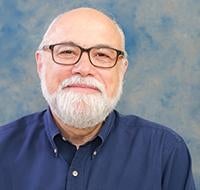
John Bowers is the Fred Kavli Distinguished Professor at the University of California, Santa Barbara, holding joint appointments in Technology Management, Materials, and Electrical and Computer Engineering. He leads the Institute for Energy Efficiency and is affiliated with the Technology Management program. His research focuses on energy-efficient optoelectronics, silicon photonics, and integrated quantum devices, with a strong emphasis on bridging academic research and industrial applications. Bowers has founded multiple companies, including Terabit Technology, Aerius Photonics, and Aurrion, demonstrating significant entrepreneurial impact in the photonics sector. Education and Background: Prior to UCSB (1987), he worked at AT&T Bell Laboratories on semiconductor lasers and photodetectors. His academic credentials include a PhD in Technology Management, though specific degree details are not explicitly stated in the provided texts. Research Interests: Bowers' work spans silicon photonic integrated circuits, quantum dot lasers, high-speed optical networks, and nonlinear optics. His recent advancements include soliton microcombs, wafer-scale III-V photonics, and radiation-resilient laser technologies. He actively explores applications in quantum networking, low-power data centers, and sensor systems. Awards and Recognition: The Fred Kavli Distinguished Professor title highlights his scholarly contributions. His work has been recognized through industry partnerships with Intel, NIST, and other leading institutions. Grants and Advising: As a leader in energy efficiency and photonic integration, Bowers has secured extensive funding for his research. His advisement includes guiding interdisciplinary teams across multiple departments, though specific student names are not listed in the provided data. He collaborates with global partners in foundries and national labs to advance manufacturing processes for photonics. Labs and Teams: Directs the Institute for Energy Efficiency and coordinates with the Technology Management program. His research group works closely with industry to develop scalable photonic solutions, emphasizing practical deployment alongside theoretical innovation.
Nitin Samarth is the Verne M. Willaman Professor of Physics and Professor of Materials Science/Engineering at the Pennsylvania State University, part of the Eberly College of Science. He holds a Ph.D. from Purdue University (1986) and an M.S. from IIT Bombay (1980). His research focuses on condensed matter physics, quantum information, and spintronics, with expertise in synthesizing quantum materials like topological insulators and exploring their electronic and magnetic properties. His honors include the David Adler Lectureship Award (APS, 2024), Fellowships from the AAAS and APS, and awards for teaching excellence. He leads NSF-funded projects on quantum materials, including the Center for Nanoscale Science and the 2D Crystal Consortium. His group studies phenomena such as quantum spin dynamics, superconductivity at interfaces, and topological spintronics. Dr. Samarth has advised over 40 graduate students and postdocs, many of whom hold academic and industry positions globally. His research group emphasizes inclusivity and cutting-edge synthesis techniques like molecular beam epitaxy (MBE). Current projects explore van der Waals heterostructures, quantum anomalous Hall insulators, and spin-charge interconversion in Dirac semimetals.
Distinguished Professor Dmitri Golberg is a faculty member in the School of Chemistry & Physics at Queensland University of Technology (QUT). He holds a PhD from the Moscow Institute for Ferrous Metallurgy and has extensive international research experience, including leadership roles at the National Institute for Materials Science (NIMS) in Japan and visiting professorships at institutions such as the National University of Science and Technology (MISIS) in Moscow. His research focuses on nanomaterials synthesis, characterization via transmission electron microscopy (TEM), and applications in energy storage, optoelectronics, and nanotechnology. Prof. Golberg's career includes pioneering work on boron nitride nanotubes, high-temperature shape memory alloys, and nanostructured composites. He has secured major awards such as the Australian Laureate Fellowship (2016), Tsukuba Prize (2005), and Thomson Reuters Research Front Award (2012). He is a member of the Japan Microscopy Society, Materials Research Society, and Australian Microscopy Society. His research interests span nanotube-filled metals, in-situ TEM analysis, and functional nanomaterials for batteries, solar cells, and biomedical applications. He leads the Centre for Materials Science at QUT and actively supervises postgraduate students in topics like sustainable nanocatalysis and battery electrolyte safety. His work emphasizes nanoarchitectonics and interdisciplinary approaches to materials innovation.
Diana Qiu is an Assistant Professor of Mechanical Engineering at Yale University, affiliated with the WC Energy Sciences Center. Her research focuses on quantum materials, particularly the control of excitations and macroscopic properties through light-matter interactions and many-electron correlations. She develops first-principles quantum physics methods leveraging high-performance computing to predict material behaviors in optoelectronics, quantum information, and energy research. Key research interests include exciton transport, time-dependent phenomena, heterojunctions, and defects in 2D materials. Her work addresses fundamental processes such as exciton thermalization, coherence, and ultrafast optical responses. Projects involve designing novel materials for tunable excitonic properties and exploring phenomena like moiré-tunable band alignment in heterobilayers. Her computational approaches include Bethe-Salpeter equation formalisms, time-dependent GW methods, and machine learning integration for many-body interactions. Notable grants include the NSF CAREER Award for real-time first-principles studies of high-harmonic generation in solids. She collaborates on scalable synthesis of monolayer materials and investigates nuclear quantum effects in liquid water using advanced DFT techniques. Recent publications highlight advancements in exciton-polaritons, defect interactions, and scalable simulation frameworks like MBFormer. Her work bridges theoretical predictions with experimental validation, emphasizing practical applications in energy storage and quantum technologies.
Prof. Dr. Daniel Loss is a Full Professor of Theoretical Physics at the University of Basel, affiliated with the Philosophisch-Naturwissenschaftliche Fakultät and the Department of Physics. He leads the FG Loss research group, focusing on quantum computing, spintronics, and topological quantum matter. His work bridges theory and experiment, with notable contributions to spin qubits and quantum coherence in semiconductor nanostructures. Loss holds leadership roles as Director of the Basel QC2 Center and Co-Director of the Swiss Nanoscience Institute (SNI). He earned his Diploma and PhD from the University of Zürich (1983, 1985), followed by postdoctoral positions at IBM Research and Simon Fraser University. Since 1996, he has been at the University of Basel. His research interests include quantum dots, spin dynamics, topological insulators, and Majorana fermions. He has pioneered theories for quantum computing with spin qubits, influencing global experimental programs. Loss has received prestigious awards, including the Marcel Benoist Prize (Switzerland's top science honor), the King Faisal Prize, and fellowships from the American Physical Society. His work spans theoretical advancements in superconductivity, magnons, and cavity-coupled systems. Key grants include leadership in the NCCR SPIN initiative and collaborations on quantum materials. His lab explores hybrid superconducting-semiconducting systems and domain-wall qubits. Recent projects address noise mitigation in spin qubits and topological magnonic devices.
Christine Joy McKenzie is a Professor in the Department of Physics, Chemistry and Pharmacy at the University of Southern Denmark (SDU), where she conducts cutting-edge research in inorganic, bioinorganic, and supramolecular chemistry. She is affiliated with the SDU Climate Cluster, reflecting her contributions to sustainability and green chemistry. Her research focuses on the synthesis of novel ligands and metal complexes that mimic the active sites of metalloenzymes, with applications in catalysis, artificial photosynthesis, and environmental remediation. Her research interests include biocoordination chemistry, biomimetic recognition of substrates like water and dioxygen, and the development of homogeneous catalysts for energy conversion and green chemical processes. She designs molecular oxo- and hydroxo-bridged metal clusters and multimetal-templated macrocycles, aiming to achieve controlled self-assembly and functional activity. Her work bridges fundamental chemistry with real-world applications in water purification and sustainable energy. Recent publications highlight her leadership in developing biomimetic FeTAML catalysts for suppressing harmful disinfection byproducts in drinking water, synthesizing water-soluble iron porphyrins, and exploring Sb(III) complexes with stereochemically active lone pairs. These works span environmental chemistry, medicinal applications, and fundamental coordination chemistry, demonstrating a multidisciplinary approach. She has received multiple scientific awards, including: Bjerrum-Brønsted-Lang Prize (2017) Carlsberg Chemistry Prize (2009) Fyens Stiftstidende Researcher of the Year (2008) Christine McKenzie actively supervises PhD students and teaches courses such as Inorganic Chemistry A and Bioinorganic Chemistry ('Metals in Medicine'). She is a project participant in several externally funded research initiatives, including those from the Danish Research Council, Carlsberg Foundation, and industrial partners like Chr. Olesen Synthesis A/S. She also serves as Chairman of the 46th International Conference on Coordination Chemistry (2026), underscoring her international recognition and leadership in the field. She leads a dynamic research group involved in projects related to O 2 and C–H activation, iron flow batteries, and Power-to-X conversion technologies, working with collaborators across academia and industry.
Ralph Gonzales, MD, MSPH , is Associate Dean for Clinical Innovation and Chief Innovation Officer for UCSF Health at the University of California, San Francisco (UCSF) School of Medicine. He is a leading figure in implementation science, health care value, and antimicrobial stewardship, with a research program that spans clinical informatics, care coordination, and health system redesign. Education: MD (1991) and Residency (1995) from UCSF; MSPH in Preventive Medicine & Biometrics (1997) from University of Colorado Health Sciences Center; completed Diversity, Equity, and Inclusion Champion Training (2019) at UCSF. His research focuses on translating evidence into practice through innovative interventions in antibiotic prescribing, eConsults, telehealth, and care pathway implementation. He has led multiple NIH-funded studies, including the Improving Antibiotic Use in Acute Care Settings and UCSF Learning Health System K12 Career Development Program . His work emphasizes the triple aim of improving quality, outcomes, and reducing costs. Dr. Gonzales’s recent publications (2020–2025) reflect a strong trend in digital health innovation, including EHR-integrated tools for pandemic response, eConsults in genetics and deprescribing, pediatric clinical pathways, and remote monitoring. These works span disciplines such as medical informatics, pediatrics, internal medicine, epidemiology, and health services research , with subfields including clinical decision support, care coordination, antimicrobial stewardship, and health equity. Scientific Awards and Recognition: Principal Investigator on multiple NIH grants, including R01 and K12 awards. Leader in national efforts to combat antimicrobial resistance. Recognized for contributions to implementation science and health system innovation. Advising and Grants: Dr. Gonzales mentors early-career researchers through training programs in implementation science and learning health systems. He has led multidisciplinary teams in community-based trials and health system interventions. His funding history includes significant NIH support for projects focused on antibiotic stewardship, care coordination, and digital health tools. Labs and Teams: He is affiliated with the Center for Health Care Value , UCSF Continuous Process Improvement Site , and the Caring Wisely Initiative . He leads project teams focused on eReferrals, team-based specialty care, and clinical pathway implementation.
Nikhil Karanjgaokar is an Associate Professor of Aerospace Engineering at Worcester Polytechnic Institute (WPI), where he has been since August 2015. His research focuses on experimental and computational mechanics of novel materials and structures, particularly in granular media dynamics, nanostructured materials, and optical measurement techniques. He leads the Structures and Materials Laboratory (HL 028) , equipped with advanced tools such as Digital Image Correlation (DIC), high-speed imaging systems, and laser Doppler vibrometers. Education: B.Tech. in Mechanical Engineering, National Institute of Technology Calicut, India (2006) M.S. in Mechanical Engineering, Carnegie Mellon University (2007) Ph.D. in Mechanical Engineering, University of Illinois at Urbana-Champaign (2013) Research Interests: Micro/nano-scale experimental mechanics Temperature and strain rate effects on nanostructured materials Dynamic response of granular media and inhomogeneous materials Optical measurement techniques for material characterization His lab investigates granular systems under impact, adaptive metamaterials, and thin-film mechanics. Notable projects include developing bulletproof vests with self-optimizing materials and exploring interfacial adhesion in polymer-based composites. His work has been featured in media such as WBUR and the Worcester Business Journal .
Prof. Dr. Stephen Schrettl holds a professorship in the TUM School of Life Sciences at Technische Universität München , focusing on functional materials for food packaging . His research emphasizes mechanochromic materials, polymer chemistry, and supramolecular systems. Key areas include strain-sensing polymers, self-healing materials, and adaptive nanocomposites. His work spans interdisciplinary topics like mechanoresponsive polymers , smart coatings , and nanomaterial fabrication . Recent studies highlight advancements in mechanochromic inclusions, reversible crosslinking mechanisms, and microphase-separated metallosupramolecular polymers. He has contributed to applications in automotive materials, biomedical devices, and environmental sensors. Publications from 2024–2020 showcase innovations in straining-induced fluorescence , liquid crystal-driven nanoparticle assembly , and platinum nanocomposite synthesis . His research bridges fundamental polymer science with industrial applications, particularly in materials that integrate mechanical and optical functionalities.