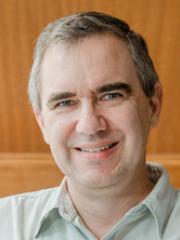
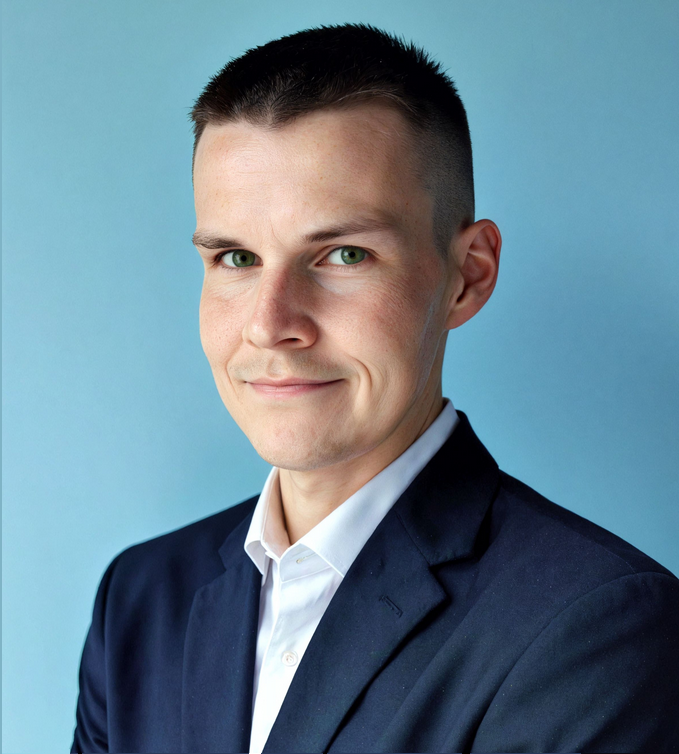
Dr. Gowri Sankar Ramachandran is a Senior Lecturer in the School of Information Systems at Queensland University of Technology (QUT), specializing in cybersecurity and distributed systems. She holds a PhD from KU Leuven (Belgium) and a postdoctoral position at the University of Southern California (USC). Her research focuses on open-source software security, runtime threat detection, blockchain applications, and IoT vulnerabilities. Notable contributions include the FUSE tool for detecting malicious packages and the discovery of hyperlink hijacking vulnerabilities affecting millions of domains. Research interests span software supply chain security, metadata-based risk analysis, and generative AI for cyber risk modeling. Awards include Best Paper Awards at ACM CBSE (2016), Mobiquitous (2017), and BigMM (2019). Collaborations include projects with CSIRO, the City of Los Angeles, and the University of São Paulo. She teaches courses on cybersecurity, database management, and network security, and actively supervises PhD students in cybersecurity and blockchain domains. Recent publications address blockchain-based data governance, quantum-resilient IoT protocols, and decentralized identity systems. Her work bridges academic research with real-world impact, addressing critical challenges in digital systems security and privacy.
Rasheed Hussain is an Associate Professor of Intelligent Network Security at the Smart Internet Lab and Bristol Digital Futures Institute (BDFI), School of Electrical, Electronic and Mechanical Engineering at the University of Bristol, UK. Previously, he served as a Senior Lecturer at the same institution from December 2021 to July 2025. He has held academic positions at Innopolis University, Russia, where he served as Associate Professor and Director of the Institute of Information Security and Cyber-Physical Systems, and as a guest researcher at the University of Amsterdam, Netherlands. His educational background includes a PhD in Computer Engineering from Hanyang University, South Korea (2011-2015), an MS in Computer Engineering from the same institution (2008-2010), and a B.Sc in Computer Software Engineering from the University of Engineering and Technology, Peshawar, Pakistan (2003-2007). Hussain's research focuses on network and cybersecurity, particularly future network security including 6G, the role of Digital Twins in future networks and systems security, and Responsible AI including fairness, trustworthiness, and explainability. His work spans information security, privacy, applied cryptography, vehicular networks, Internet of Things, Content-Centric Networking, cloud computing, API security, and blockchain applications. Senior member of IEEE Member of ACM ACM Distinguished Speaker Editorial board member for IEEE Communications Surveys & Tutorials, IEEE Access, and other journals His recent publications demonstrate a strong focus on the intersection of AI, networking, and security, with particular emphasis on Digital Twins, blockchain applications, federated learning, and 6G security. His research shows a clear trajectory toward addressing security challenges in emerging network architectures while incorporating responsible AI principles. Scientific Recognition: ACM Distinguished Speaker Netherlands University Teaching Qualification (Basis Kwalificatie Onderwijs, BKO) Hussain serves as a reviewer for major IEEE transactions, Springer and Elsevier journals, and participates in technical program committees for conferences including IEEE VTC, IEEE VNC, IEEE Globecom, and IEEE ICC. He is also certified as a trainer for the Instructional Skills Workshop (ISW) and contributes to the ESRC Centre for Sociodigital Futures (CenSoF) at the University of Bristol. His laboratory work centers around the Networks and Blockchain Lab, which focuses on security solutions for next-generation networks, with particular emphasis on Digital Twins security, blockchain applications, and AI-driven network security solutions. His current projects involve developing secure frameworks for future networks, trustworthy AI models, and privacy-preserving federated learning approaches.
Ron Steinfeld is an Associate Professor at the Cybersecurity Lab of the Faculty of Information Technology , Monash University . His research focuses on lattice-based cryptography , post-quantum cryptographic protocols , and privacy-preserving technologies . He has contributed to advancements in secure multiparty computation , digital signatures , and blockchain confidentiality . Key areas: Lattice-Based Cryptography, Zero-Knowledge Proofs, Blockchain Security Recent work trends: Quantum-safe protocols, Efficient sampling algorithms, Scalable blockchain solutions Scientific Awards : BEST PAPER AWARD (ASIACRYPT 2015) He has served on program committees for major conferences including CRYPTO , EUROCRYPT , and ASIACRYPT . Ron is a member of the Discrete Mathematics Research Group and has collaborated with institutions like Macquarie University in the past.
Professor Vallipuram Muthukkumarasamy is an Associate Professor at the School of Information and Communication Technology at Griffith University, where he has pioneered Network Security teaching and research since joining in 2001. He leads the Networking & Security and Blockchain Research Group at the Institute for Integrated and Intelligent Systems. Muthu holds a Ph.D. from Cambridge University and a B.Sc. Eng. with 1st Class Honors from the University of Peradeniya, Sri Lanka. His extensive academic appointments include Group Leader of Network Security and Blockchain Research (2008-present), Program Director for the Graduate Certificate in Blockchain Technology (2022-present), HDR Convenor (2022-present), Member of the University Council (2020-2021), and Deputy Head of School for Learning and Teaching (2013-2016). Muthu's research expertise spans Cyber Security, Blockchain Technology (DLT), and Wireless Sensor Networking. He has secured national and international funding for interdisciplinary research, published over 150 articles in international journals and conferences, and supervised more than 30 research Masters and PhD students to completion. He pioneered the Network Security teaching at Griffith and successfully proposed and led the development of Queensland's first Master of Cyber Security Program, creating a truly interdisciplinary curriculum with Law, Business, and Criminology Schools. His recent publications reveal a strong research trajectory in blockchain applications, security visualization techniques, and wireless sensor networks. His work explores DeFi user behavior analysis, NFT privacy risks in the metaverse, blockchain transaction visualization, and the integration of blockchain with AI for credit scoring systems. His wireless sensor network research focuses on energy-efficient routing protocols and network lifetime modeling. Muthu has received multiple best teacher awards from students and peers, and during his tenure as Deputy Head of School, the Griffith IT program was ranked #1 in Australia for overall student satisfaction. He successfully proposed and developed Cisco-related courses at undergraduate and postgraduate levels and instrumental in creating industry-sought-after networking and security courses across all academic levels. His funded research includes significant projects such as Increasing the South East Queensland Cyber Security Workforce, Linking Digital Payments to Crime Using Big Data Machine Learning Tools, Improving Water Markets through Digital Technologies, and developing Indo-Australian partnerships for digital transformation through blockchain. He is actively involved in community and charity activities and has been instrumental in internationalization efforts for Griffith University.
Associate Professor Peter Sutton is an academic at the University of Queensland (UQ), holding roles as Deputy Head of School (Teaching and Learning) and Associate Professor in the School of Electrical Engineering and Computer Science. His research focuses on Engineering Education, Embedded Systems, Reconfigurable Computing, and Electronic Design Automation. He has contributed to curriculum design, remote lab management during the pandemic, and hardware-software co-design for embedded systems. Sutton completed his undergraduate studies at UQ and earned advanced degrees at Carnegie Mellon University, with over three decades of experience in computer systems research and education. Education Bachelor of Science, University of Queensland Bachelor (Honours) of Engineering, University of Queensland Masters of Science (Coursework), Carnegie Mellon University Doctor of Philosophy, Carnegie Mellon University Research Interests Sutton’s work spans engineering pedagogy, embedded system design, and reconfigurable computing. Recent projects include adapting hands-on labs for remote learning during the pandemic and optimizing FPGA-based architectures for data compression and encryption. His contributions to cache optimization and multiprocessor systems highlight his expertise in hardware-software integration. Publications His 50+ publications cover topics like FPGA implementations of neural networks, code compression techniques for VLIW processors, and embedded system design tools. Notable contributions include frameworks for reconfigurable system-on-chip development and methods to enhance debugging practices in post-novice students. Labs & Teams He collaborates within UQ’s School of Electrical Engineering and Computer Science, contributing to research groups focused on embedded systems and engineering education innovation.
Muhammed Esgin is a Lecturer in the Department of Software Systems & Cybersecurity at Monash University's Faculty of Information Technology (FIT). He holds a PhD in Cybersecurity from Monash University (2020) and has extensive postdoctoral experience at Monash and CSIRO's Data61, alongside an IBM Research internship in Zurich. His research focuses on quantum-resistant cryptography, privacy-enhancing technologies, and blockchain protocols, with applications in cybersecurity and social good. Education: Doctor of Philosophy (Cybersecurity), Monash University, 2020 Research Internship, IBM Research - Zurich (hosted by Vadim Lyubashevsky) Research Interests: Post-quantum cryptography (lattice-based schemes) Privacy-preserving protocols (e.g., zero-knowledge proofs) Secure blockchain technologies (confidential transactions, ring signatures) Cryptographic primitives for decentralized systems Recent Projects: Securing Privacy-Preserving Cloud Computation Against Active Attacks (2025–2028) More Efficient Post-Quantum Multi-Signatures (2024–2025) Quantum Information Technology: Industry Readiness & Applications (2023–2027) Teaching Roles: Lecturer for FIT units: Network Security, Introduction to Computer Architecture, Advanced Security Topics Tutor/Admin Tutor for multiple cybersecurity courses
Professor Ron Van der Meyden is a faculty member at the School of Computer Science and Engineering at the University of New South Wales, Sydney. His work focuses on the intersection of logic, security, and distributed systems, with particular expertise in blockchain technology and smart contracts. He leads the UNSW Interest Group in Blockchain, Smart Contracts and Cryptocurrency and organizes related seminar series. Professor Van der Meyden's research spans formal methods, computer security, and distributed systems. His work on epistemic logic has been influential in understanding knowledge-based systems and security protocols. He has made significant contributions to the formal verification of blockchain protocols and smart contracts, bringing rigorous mathematical approaches to these emerging technologies. His recent work explores the application of knowledge-based reasoning to consensus protocols and intersection management in autonomous systems. ACM Distinguished Scientist, 2009 As an advisor, Professor Van der Meyden has mentored numerous PhD and Masters students who have gone on to successful careers in academia and industry. His research is supported by grants including Australia's Economic Accelerator Grant for developing a commercial version of a software model checker and an AFOSR/DST Australia grant for verification and synthesis of fault-tolerant autonomous systems. He has received multiple ARC Discovery and Linkage grants over the years. Professor Van der Meyden leads the UNSW Interest Group in Blockchain, Smart Contracts and Cryptocurrency, fostering interdisciplinary research in this area. He has played key roles in major research centers including Smart Internet CRC and National ICT Australia (NICTA), where he established and led the Formal Methods program. His work on the formal verification of the seL4 microkernel and the Goanna static analysis tool has had significant practical impact.
Dr. Joonsang Baek is an Associate Professor at the School of Computing and Information Technology, University of Wollongong (since 2021). His research focuses on Cybersecurity , Cryptography , and Network Security , with notable contributions to digital signature revocation, attribute-based encryption, and privacy-preserving protocols. Member, Institute of Cybersecurity and Cryptology (since 2017) Supervision interests: Cybersecurity, Applied Cryptography, Network Security Research Highlights: Innovations in withdrawable signatures, secure cloud data sharing, and 5G authentication protocols. His work combines theoretical cryptography with practical applications in edge computing and AI-driven security systems. Grants: Led projects on ransomware datasets, dynamic access control, and TLS optimization. Collaborated with Data61, Discovery Projects, and industry partners on cybersecurity resilience initiatives. Collaborations: Frequent co-author with researchers like Willy Susilo, Cao Cao, and Xinyu Liu. Active in ACM Asia CCS, IEEE Transactions, and LNCS publications.
Dr. Bharanidharan Shanmugam is an Associate Professor in Information Technology at Charles Darwin University's Faculty of Science and Technology. He specializes in cybersecurity, IoT security, and cyber risk management in microgrids. His research focuses on addressing real-world challenges in IoT, smart grids, and medical devices to enhance community impact. **Research Interests:** - IoT Security - Cyber Risk Assessment in Microgrids - Network and Information Security - Applied Cybersecurity Solutions - Blockchain and Privacy-Preserving Technologies **Key Projects (2019–2025):** - Cyber Territory Skills Hub (2023–2025) - Renewable Energy Microgrid Hub (2021–2024) - Blockchain-Based Digital Identity (2019–2020) **Publications:** Focuses on IoT security frameworks, intrusion detection systems, and AI-driven cybersecurity solutions. Recent works include studies on smart grid load forecasting, medical IoT threat detection, and water leakage detection using machine learning. **Grants & Supervision:** Principal Investigator on multiple ARC-funded projects. Supervises PhD students in DevSecOps and IoT security. Active in organizing workshops on digital awareness for indigenous communities.
Dr. Daniel Tubbenhauer is an ARC Future Fellow at the University of Sydney's School of Mathematics and Statistics, specializing in categorical representation theory, 2-representation theory, and their applications to topology, cryptography, and machine learning. His research bridges algebra, category theory, and low-dimensional topology, with a focus on modular representation theory and diagrammatic algebra. Education: PhD in Mathematics (2013), supported by extensive postdoctoral research globally. Research Interests: He explores categorical structures in representation theory, including categorification of quantum groups, link homologies, and applications in cryptography. His work emphasizes diagrammatic methods and computational approaches to algebraic problems. Publications: Over 30 peer-reviewed articles, including foundational work on web categories, Soergel bimodules, and applications of representation theory to machine learning. Recent projects analyze growth rates in tensor powers and fractal behavior in algebraic structures. Awards: Australian Research Council Future Fellowship (2023), supporting his research on categorical representation theory. Teaching & Supervision: Taught courses on quantum topology, category theory, and representation theory. Current student: Daniel Collison (PhD). Advises on projects linking representation theory to AI and cryptography. Labs/Teams: Collaborates with global networks in algebraic topology and categorification, including projects at the Sydney Mathematical Research Institute. Maintains an active YouTube channel ( VisualMath ) for outreach.
Professor Carsten Rudolph serves as Deputy Dean at Monash University's Faculty of Information Technology and directs the Oceania Cyber Security Centre (OCSC). He holds a PhD in Information Security from Queensland University of Technology (2002) and a Diplom in Computer Science from Goethe University Frankfurt (1997). His interdisciplinary research focuses on cybersecurity foundations, including cryptographic protocols, AI-driven security, human factors, and national cybersecurity policy. Key areas include securing smart grids, digital health systems, and transnational energy networks. Notable contributions include establishing the OCSC, leading Pacific region cybersecurity maturity reviews with Oxford University, and advancing frameworks for firmware security in virtual power plants. He chairs major projects like RAI4IoE (Responsible AI for Energy) and Post-Quantum Cryptography initiatives. Teaching responsibilities include cybersecurity modules like FIT3173 and FIT3168. Rudolph's research outputs (137+ publications) emphasize phishing detection via AI, blockchain-based energy trading, and resilient smart grid systems. He collaborates internationally on policy development and has advised 12 major research projects funded by agencies like the U.S. Bureau of East Asia and Pacific Affairs.
Zhe Hou is a Senior Lecturer at the School of Information and Communication Technology , Griffith University, Australia. His academic journey includes a PhD in automated reasoning for separation logic from the Australian National University (2015) and prior research roles at Nanyang Technological University, Singapore (2015-2017). He joined Griffith University in 2017 and became permanent faculty in late 2019. Research Interests : Formal methods for software verification Automated reasoning with logical frameworks Blockchain technology and security Quantum computing verification Integration of LLMs with rigorous reasoning Sports analytics via model checking Recent Publications demonstrate expertise in neural-symbolic reasoning, blockchain security, quantum SAT solvers, and runtime verification frameworks. His work combines formal logic with machine learning for applications in cybersecurity and AI trustworthiness. Scientific Awards : ACM SIGSOFT Distinguished Paper Award (2025) Supervision Roles : Principal/Associate Supervisor for 6+ doctoral projects in blockchain security, AI verification, and network security. Professional Activities : Editor for Springer-Nature and Formal Aspects of Computing special issues, conference chair for ICFEM, ICECCS, and ISACE symposia.
Associate Professor Mahyar Shirvanimoghaddam is a distinguished academic at The University of Sydney's School of Electrical & Computer Engineering, specializing in IoT, Telecommunications, and Coding Theory. His research focuses on 6G communication strategies, ultra-reliable low-latency systems, and machine learning integration in wireless networks. He holds a PhD from The University of Sydney and has received multiple accolades, including the World Economic Forum's Young Scientist award (2018) and the Australian Award for University Teaching (2020). Education: B.Sc. (1st Class Honors) in Electrical Engineering, University of Tehran (2008) M.Sc. (1st Class Honors) in Electrical Engineering, Sharif University of Technology (2010) PhD in Electrical Engineering (Telecommunications), The University of Sydney (2015) Research Interests: IoT Communication Protocols, Rateless Coding, Non-Orthogonal Multiple Access (NOMA), 5G/6G Technologies, and Federated Learning in Wireless Networks. His work on channel coding for massive IoT and URLLC has been funded by ARC Discovery Projects and European Research Council grants. He pioneered the 'Idea Factory' interdisciplinary teaching project, blending engineering and business education. Key projects include designing 6G communication strategies (ARC 2022-2024) and robust coding for mission-critical communications (ARC 2019-2021). Awards: Over 20 awards, including teaching excellence (Vice-Chancellor's Awards 2019, 2022), research recognition (IEEE Best Paper Awards), and leadership roles in IEEE and the Higher Education Academy. He supervises 1 PhD student (Tyseer BASHIR) and actively engages in editorial roles for IEEE Transactions and other journals. His team's innovations aim to bridge technological and societal challenges in IoT and smart infrastructure.
Professor Akram Hourani is a Discipline Leader and Professor in the Department of Electrical & Electronic Engineering at RMIT University's School of Engineering. He holds roles as Program Manager for the Master of Engineering (Telecom & Network Eng.) and Deputy Director of the Centre for Opto-electronic Materials and Sensors (COMAS). Prior to academia, he was an ICT Program Manager in the telecommunications industry, leading projects in satellite and telecommunications infrastructure. His research focuses on advanced signal processing, satellite communications, radar systems (including SAR), neuromorphic hardware, and IoT. He has secured grants from ARC, CRC, government departments, and DSTG, with over 130 publications. His work aligns with UN Sustainable Development Goals 9 (Industry, Innovation & Infrastructure), 11 (Sustainable Cities), and 10 (Reduced Inequalities). Education: PhD in Electronics & Telecommunications (2016, RMIT University) Non-academic roles: R&D Engineering Program Manager at Inteltec Emirates (2006–2013) Key research themes include interference mitigation, 5G/6G networks, neuromorphic sensing, and AI-driven satellite IoT. He is listed in Stanford's top 2% scientists for career-long and single-year impact. His teaching includes courses on satellite communications and wireless sensor networks. Grants & Funding: ARC, CRC, DSTG, and government-funded projects since 2017 Collaborations: CSIRO, industry partners in telecommunications and aerospace His lab focuses on next-generation communication systems, with active projects in mega satellite networks, neuromorphic hardware, and AI for IoT sensing. He supervises PhD/Masters research in areas like satellite connectivity and machine learning applications.
Professor Jinho Choi is a Chair and Professor in Radio Frequency at the School of Electrical and Mechanical Engineering, University of Adelaide, Australia. He holds a B.E. (magna cum laude) from Sogang University, and M.S.E. and Ph.D. degrees from KAIST. His research focuses on advancing wireless communication and sensing technologies, particularly in IoT, 5G/6G, non-terrestrial networks, and cognitive satellite systems. He authored three books and has been recognized with the 1999 EURASIP Best Paper Award, IEEE Fellowship, and inclusion in Stanford's Top 2% Scientists list since 2020. He currently serves as a Senior Editor of IEEE Wireless Communications Letters and editorial roles in multiple journals. Education: B.E. (Electronics Engineering) - Sogang University, Seoul (1989) M.S.E. (Electrical Engineering) - KAIST (1991) Ph.D. (Electrical Engineering) - KAIST (1994) Research Interests: Professor Choi's work addresses connectivity challenges in non-terrestrial networks, leveraging statistical signal processing and machine learning. Current projects include UAV-assisted LEO satellite technologies, cognitive satellite radios, and semantic communication protocols. His research aims to enhance global connectivity and efficiency in terrestrial and satellite networks. Publications: His recent work spans semantic communication, satellite quantum key distribution, federated learning optimization, and coverage diversity in mega constellations. These studies reflect trends in 6G-ready technologies, AI-driven communication systems, and hybrid satellite-terrestrial networks. Awards: 1999 Best Paper Award for Signal Processing (EURASIP) IEEE Fellow (Leadership in technical excellence) World’s Top 2% Scientists (Stanford University, 2020–present) Grants & Supervision: As a senior academic, he oversees grants in wireless innovation and has advised numerous students on advanced communication systems. His lab focuses on next-generation networks, integrating theoretical insights with practical implementations. Labs/Teams: Active in interdisciplinary teams at the University of Adelaide, collaborating on projects funded by industry and government to bridge gaps between academic research and real-world applications.