Hannah Keller is a researcher in the field of cryptography and privacy-preserving technologies. Her work focuses on secure multi-party computation (MPC), differential privacy, and post-quantum cryptography. She has collaborated with institutions on topics such as privacy-preserving aggregation, secure noise sampling, and cryptographic protocols. Notable contributions include research on lattice-based cryptography in PQCrypto 2025 and differential privacy in distributed systems. Her publications address challenges in balancing privacy with computational efficiency in machine learning and data analysis.
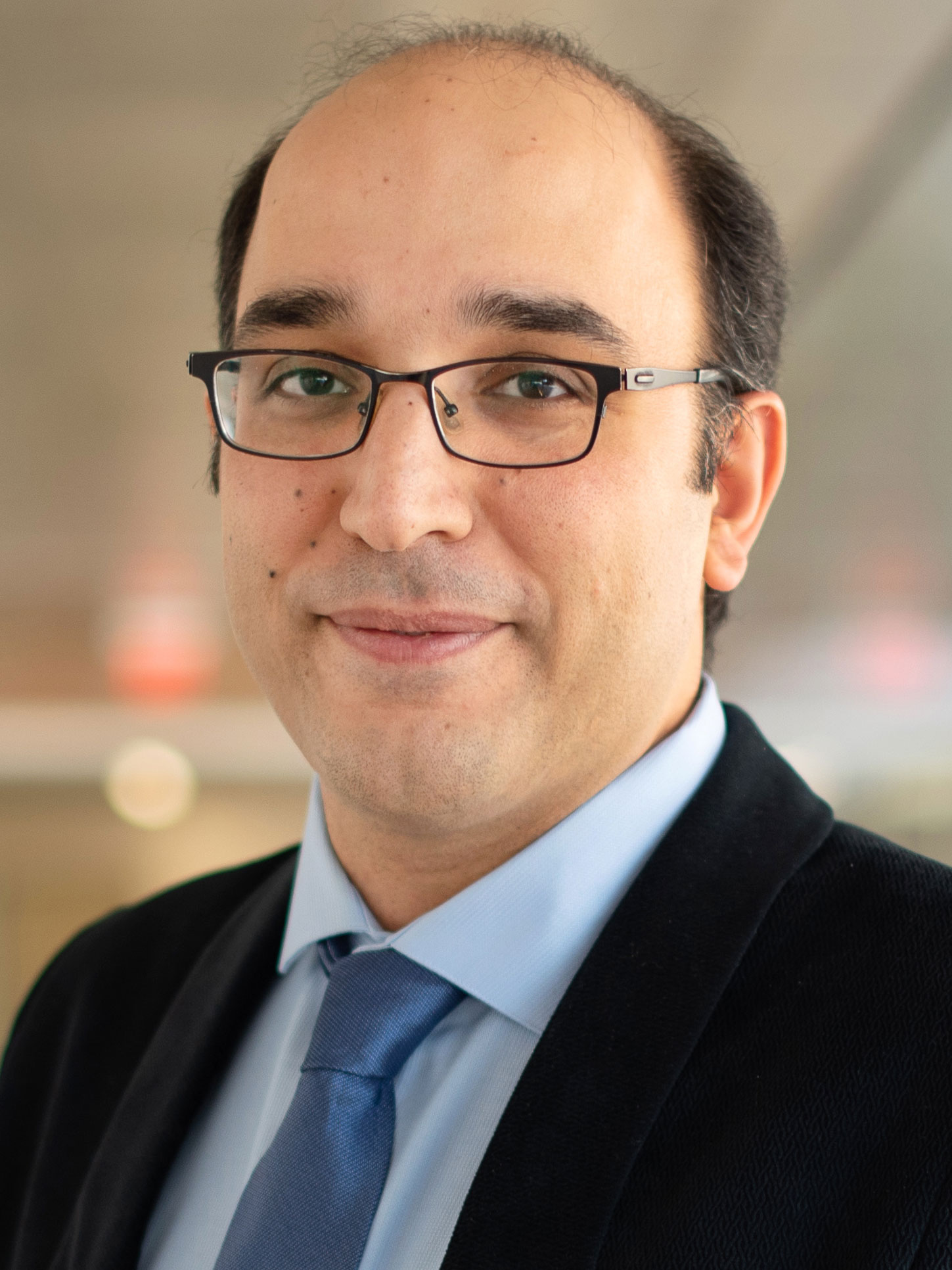
Vasileios Tsoukas is a Ph.D. candidate and researcher at the University of Thessaly, actively contributing to the Intelligent Systems Research Laboratory (iSL) in Lamia. His work focuses on FPGA acceleration architectures and algorithms for machine learning applications in healthcare, logistics, and environmental monitoring. BSc in Computer Engineering, Technological Educational Institute of the Peloponnese MSc in Informatics with Security Applications, Big Data and Simulation, University of Thessaly His research bridges hardware acceleration (FPGA) and TinyML to address computational power constraints in portable devices. Applications include medical diagnostics, robotics, bioinformatics, and fraud detection, targeting real-world challenges in telemedicine, smart agriculture, and supply chain security. Recent publications highlight his expertise in TinyML for implantable neurostimulation systems, telemedicine governance, gas leakage detection, and blockchain integration in food supply chains. His work emphasizes low-power, high-accuracy solutions for constrained environments. Vasileios is affiliated with the Intelligent Systems Research Laboratory (iSL), where he develops edge computing systems and contributes to interdisciplinary projects in healthcare and logistics.
Robbert van Renesse is a Professor in the Department of Computer Science at Cornell University, Ithaca, NY. He is a member of the Systems and Networking group. His research focuses on distributed systems, particularly fault tolerance and scalability. He co-authored Chain Replication and contributed to projects like Harmony (a model checker for concurrent systems) and EGOS (a minimalist operating system). He has held roles such as Chair of ACM SIGOPS and Editor-in-Chief for ACM Transactions on Computing Systems. His work spans academic contributions, industry collaborations (e.g., Exotanium, Inc.), and over 30 conference/workshop papers annually since the 1990s. Education: M.Sc. (1985) and Ph.D. (1989) in Mathematics/Computer Science from Vrije Universiteit Amsterdam under Andrew Tanenbaum. Professional experience includes roles at AT&T Bell Labs, Cornell since 1991, and co-founding companies like Reliable Network Solutions and D.A.G. Labs. Research interests include blockchain technology (e.g., Bitcoin-NG for scalability), consensus protocols (BFT and Turtle consensus), and system frameworks like Ovid and Escher. His publications emphasize distributed algorithms, replication, and security. He advises over 30 Ph.D. students and co-founded Exotanium, Inc. in 2018. Notable contributions: Chain Replication (OSDI 2004), Horus toolkit (commercialized as Sphinx), and foundational work in Amoeba OS. His recent work explores metastable failures and programmable memory segments.
Robert Rand is an Assistant Professor of Computer Science at the University of Chicago, affiliated with the Programming Languages Research Group and the Chicago Quantum Exchange . His research bridges programming languages, formal verification, and quantum computation. Dr. Rand focuses on Quantum Computing , Formal Verification , and Quantum Programming . He develops tools like QWIRE for quantum circuit representation and VOQC for verified quantum compilers. Current work includes a textbook on verified quantum programming. His publications span quantum compiler verification, algebraic quantum languages, and formal methods in quantum computing. Recent projects involve error-correction, type systems, and quantum-classical interoperability through Qunity . Scientific Awards 2023 AFOSR Young Investigator Research Program Award France and Chicago Collaborating in the Sciences Award 2022 Keynote Speaker, Compiler Construction Distinguished paper awards: PLDI 2021, POPL 2019 Victor Basili Postdoctoral Fellowship (UMD) Dr. Rand actively collaborates on NSF-funded EPiQC (Enabling Practical-Scale Quantum Computing) and teaches advanced topics in quantum programming languages. He is currently working on a textbook on verified quantum programming and maintains active research groups in both Programming Languages and Quantum Computing.
Juan Carlos Merlano Duncan is a researcher at the University of Luxembourg, affiliated with the Interdisciplinary Centre for Security, Reliability and Trust (SnT). His work focuses on satellite communications, signal processing, and synchronization techniques for distributed systems.
Rachel Newton is a Reader (Associate Professor) in Number Theory at King’s College London’s Department of Mathematics, part of the Faculty of Natural, Mathematical & Engineering Sciences. She holds a Future Leaders Fellowship from UKRI. Her research focuses on rational points on algebraic varieties, local-global principles, Brauer groups, and arithmetic statistics. Education: PhD in Mathematics from the University of Cambridge (2012 under Tim Dokchitser), followed by postdoctoral positions at Universiteit Leiden, Max Planck Institute for Mathematics (MPIM Bonn), and IHÉS. Previously, she held roles at the University of Reading. Research interests include: Brauer-Manin obstructions and transcendental Brauer groups Genus numbers of abelian fields Prescribed norms in number fields Applications of machine learning to modular multiplication Grants: Active projects include a UKRI Future Leaders Fellowship (2021-2025) and EPSRC funding (2021-2022). Her work bridges arithmetic statistics with cohomological methods. Labs/Teams: Collaborates internationally on Diophantine equations and local-global principles. Her research contributes to King’s strong number theory tradition.
Noemi Glaeser is a researcher in applied cryptography with a focus on blockchain security and privacy-preserving protocols. She holds a PhD in Computer Science from the University of Maryland and the Max Planck Institute for Security & Privacy, advised by Jonathan Katz and Giulio Malavolta. Her work bridges theoretical cryptography with practical applications in decentralized systems. Education: PhD, Computer Science (2024) - University of Maryland & Max Planck Institute M.S., Computer Science (2021) - University of Maryland B.S., Mathematics & Computer Science (2019) - University of South Carolina Research interests include cryptographic protocol design for blockchains, privacy-enhancing technologies, and scalable decentralized systems. Notable contributions include Naysayer proofs (2024), the Cicada framework for on-chain voting/auctions (2024), and foundational work on coin mixing services (2022). Scientific Awards: NSF Graduate Research Fellowship Professional Experience: Research Intern - a16z crypto (Summer 2023) Research Intern - NTT Research (Summer 2022) She currently seeks industry roles in applied cryptography and blockchain research.
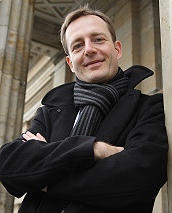
Volker Roth is a Professor in Computer Science at Freie Universität Berlin, heading the Secure Identity Research Group since 2009. He has held positions as Senior Researcher at FXPAL (Palo Alto), Visiting Professor at the Peter Kiewit Institute (University of Nebraska at Omaha), CTO of OGM Laboratories (Omaha), Senior Researcher and Deputy Department Head at Fraunhofer Gesellschaft, and Postdoc at ICSI (Berkeley). He earned his Dr.-Ing. and Dipl.-Inform. from Technische Hochschule Darmstadt. Education: Dr.-Ing. (PhD), Dipl.-Inform. (M.Sc.) in Computer Science from TU Darmstadt His research focuses on privacy and security in information systems , emphasizing the psychological acceptability of security mechanisms . Key themes include applied cryptography , human-computer authentication , and usable security . He designs security mechanisms that are simple but effective and function without a common root of trust. His recent work analyzes email encryption adoption over 27 years (81M+ emails) and explores cryptocurrency wallet usability , touch authentication , and shoulder surfing defenses . He has developed privacy-preserving data collection pipelines and contributed to standards in key management, email security, and mobile authentication. Scientific awards include: Best Paper at MobileHCI 2016 Honorary Mention at CHI 2021 INI-GraphicsNet Best System Paper Award 2006 Best Student Paper at NSDI 2004 Volker Roth teaches computer science and leads research in secure identity systems. His consultation hours are Tuesdays at 18h via Webex, with contact details available on his personal page .
Ram Murty is the A. V. Douglas Distinguished University Professor and Queen's Research Chair at Queen's University , cross-appointed to the Departments of Mathematics and Philosophy . His research spans number theory , mathematical logic , and Indian philosophy . He earned his Ph.D. from MIT in 1980 under the supervision of Harold Stark. His research focuses on zeta and L-functions , prime number distribution , modular forms , elliptic curves , and cryptography . He has made significant contributions to Artin's conjecture , the Langlands program , and Selberg's conjectures . Prof. Murty has authored over 20 books and 200 research papers . His notable works include Introduction to the Circle Method (2023), Indian Philosophy: An Introduction (2013), and The Mathematical Legacy of Srinivasa Ramanujan (2012). His publications span a wide range of topics in pure and applied mathematics. He has received numerous accolades, including: CRM-Fields-PIMS Prize (2024) Fellow of the Royal Society of Canada (1990) Fellow of the American Mathematical Society (2012) Simons Fellowship (2013–2014) Queen's Research Chair (2002) Killam Research Fellowship (1998–2000) Jeffery-Williams Prize (2003) He has supervised over 40 Ph.D. and M.Sc. students , including notable alumni like David Clark , Francesco Pappalardi , Chantal David , and Kaneenika Sinha . He currently mentors Nicolo Fellini and Becca Carter as doctoral students. Prof. Murty is also actively involved in graduate education and mentorship , having received the Award for Excellence in Graduate Student Supervision (2018) . He holds adjunct professorships at institutions such as McGill University, TIFR Mumbai, and IIT Mumbai.
Ramachandran Gowri is a researcher specializing in blockchain technology, IoT security, and distributed systems. Her work focuses on advancing blockchain applications for social good, optimizing energy efficiency in mining, and enhancing cybersecurity in decentralized systems. She collaborates with institutions such as Queensland University of Technology (QUT) and has published extensively in top-tier conferences and journals like IEEE and Springer. Her research bridges theoretical frameworks with practical implementations, addressing challenges in smart contracts, data storage optimization, and supply chain management. Key research areas include privacy-preserving blockchain architectures, decentralized identity systems, and edge computing integration. She has contributed to frameworks like the 'Reference Architecture for Blockchain-based Social Good Applications' and developed protocols such as nPPoS for blockchain storage efficiency. Her work on cryptocurrency mining strategies and quantum-resilient IoT protocols showcases her interdisciplinary approach. Recent publications highlight her focus on mitigating cybersecurity threats in software supply chains and optimizing energy consumption in blockchain networks. Collaborations with experts in computer science and engineering underscore her role in advancing real-world applications of distributed ledger technologies.
Monika di Angelo is an Assistant Professor at Vienna University of Technology's Faculty of Informatics, Department of Automation and Control Systems. Working at 50% capacity, she focuses on Information Systems Engineering and Visual Computing and Human-Centered Technology. Her research spans blockchain technology, smart contracts, Ethereum security, vulnerability detection, cultural heritage applications, and educational informatics. Dr. di Angelo's research interests center around blockchain technology and smart contract security, with particular expertise in Ethereum. Her work explores vulnerability detection in smart contracts, compiler analysis, token standards, and wallet implementations. She also maintains research interests in cultural heritage applications through digital visualization and simulation, extending from earlier work on architectural heritage and pedestrian behavior modeling. Her educational research focuses on didactics in computer science education, particularly for secondary schools and vocational training. Her publication record shows a clear evolution from early work in educational technology and architectural visualization toward blockchain and smart contract research starting around 2018. Recent publications demonstrate deep expertise in Ethereum security analysis, vulnerability detection frameworks, and comparative analysis of smart contract platforms. Her work combines theoretical analysis with practical tool development for blockchain security. Mobilitätsstipendium der TU Wien für hervorragende Dissertation Lions-Förderpreis (1989) Dr. di Angelo has supervised over 50 diploma and master's theses since 2008, with recent supervision focusing primarily on blockchain security, smart contract analysis, and Ethereum vulnerability detection. Her students' work reflects her research trajectory, moving from educational technology topics toward blockchain security in recent years. She has secured research funding from the Austrian Research Promotion Agency (FFG) for projects evaluating educational concepts for MINT promotion. Her DIVS project (2010-2020) represented a long-term research commitment to visualization and simulation of pedestrian behavior at train stations and architectural heritage applications. Her research extends across multiple domains including the SmartBugs framework for smart contract analysis, Ethereum security research, and applications of blockchain technology in various domains. She maintains active collaborations with researchers in blockchain security and has contributed to the development of tools and methodologies for smart contract analysis.
Gregor Weihs is Vice-Rector for Research at the University of Innsbruck, holding a full professorship in Photonics at the Institute for Experimental Physics. He directs the Cluster of Excellence Quantum Science Austria and previously served as Austrian Science Fund (FWF) Vice-President and interim President. His academic journey includes roles at Stanford University, the University of Tokyo, and the University of Waterloo, where he held a Canada Research Chair in Quantum Photonics. Education: MSc (1994, University of Innsbruck), PhD (2000, University of Vienna) awarded 'sub auspiciis praesidentis.' He completed habilitation in Experimental Physics in 2005 at the University of Vienna. Research focuses on quantum photonics, semiconductor optics, and foundational quantum mechanics. Key projects include entangled photon pair generation from nonlinear waveguides, quantum dots, and semiconductor microcavities. He explores quantum communication, many-body interference, and hypercomplex quantum mechanics testing. Awards: Wilhelm Exner Medal, ERC Starting Grant, Canada Research Chair Leadership: Department Head of Experimental Physics (2013–2021), Faculty Council Chair, IQOQI Events Director His work bridges theory and experiment, with contributions to integrated quantum devices and precision tests of quantum foundations.
Hessam Mahdavifar is an Associate Professor in the Department of Electrical and Computer Engineering at Northeastern University's College of Engineering. His research focuses on coding theory, wireless communications, data privacy, and privacy-preserving computing. He holds a PhD from the University of California San Diego (2012), an MS from UCSD (2009), and a BS from Sharif University of Technology (2007). Key research areas include analog subspace coding for non-coherent networks, polar coding for low-capacity channels, and privacy-preserving protocols for distributed learning. His work bridges information theory with practical applications in secure communication and federated learning systems. Notable contributions include analog secret sharing frameworks and coded computing techniques for resilient distributed algorithms. Awards: NSF CAREER Award (2020), Qualcomm Innovation Fellowship (2020), IEEE RFID Best Paper (2015), and International Mathematical Olympiad Silver Medal (2002/2003) Grants: NSF CAREER grant for coding subspace research, collaborative projects on polar coding and coded computing Labs/Teams: Active in Northeastern's Information Theory and Communications group, leading research on secure machine learning and wireless security His recent work emphasizes federated learning security (e.g., LightVeriFL protocols), privacy-preserving distributed algorithms, and code design for emerging communication paradigms like millimeter-wave covert systems.
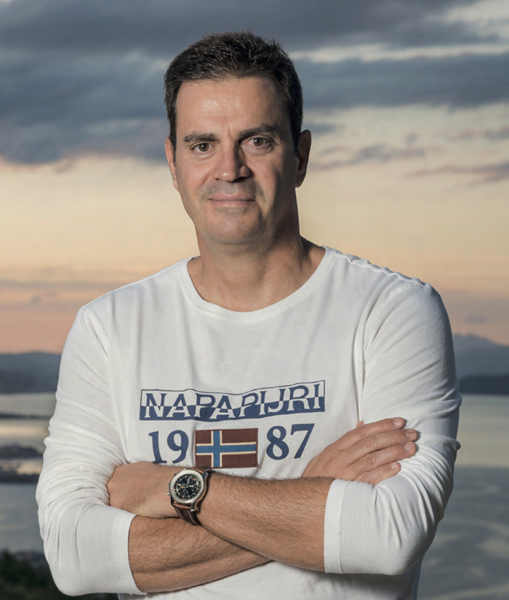
Minos Garofalakis is a Professor at the School of Electrical and Computer Engineering , Technical University of Crete, and serves as Director of the Information Management Systems Institute at the Athena Research & Innovation Center in Athens. He has held senior research roles at Bell Labs, Intel Research, Yahoo! Research, and academic positions at UC Berkeley as an Adjunct Associate Professor. Currently, he is a Senior Research Consultant at Huawei Edinburgh Research Center and co-founder of Agora Labs , focusing on medical data privacy. Research Interests His work centers on Big Data Analytics , encompassing private data analytics , machine learning , federated analytics , and blockchain systems . He has pioneered advancements in data stream management , query optimization , and approximation algorithms , with applications in distributed systems and privacy-preserving technologies. Scientific Awards ACM Fellow (2018) IEEE Fellow (2017) Excellence in Research Award, Technical University of Crete (2015) FP7 Marie-Curie International Reintegration Fellowship (2010-2014) Bell Labs President’s Gold Award (2004) Central Bell Labs Teamwork Award (2003) Patents and Citations Garofalakis holds 29 issued US patents (36 filed) with applications in data management and analytics. His research has garnered over 16,000 citations on Google Scholar and an h-index of 69.
Granville Andrew is a distinguished Professor of Mathematics at University College London (since 2015) and holds the Canada Research Chair at the University of Montreal (since 2002). He has held academic roles including Chair of Mathematics at the University of Georgia (1995–2002) and visiting positions at institutions such as Trinity College Cambridge and the Institute for Advanced Study. His research focuses on combinatorics, analytic number theory, and arithmetic geometry, with notable contributions to sieve methods, multiplicative functions, and prime distribution theories. Andrew has supervised 27 PhD students and advised 32 postdoctoral researchers, delivering over 100 plenary lectures globally. He is an elected member of the Royal Society and a Fellow of the American and Royal Societies of Canada. Key awards include the CRM-Fields-PIMS Prize (2021) and the Chauvenet Prize (2008). His work bridges pure mathematics with applications in cryptography and computational number theory. Education: PhD in Mathematics, Queen's University (1987), advised by Paulo Ribenboim MSc in Mathematics, Trinity College Cambridge (1984) Research Interests: Exploring the interface between combinatorics and number theory, particularly probabilistic combinatorics applied to additive number theory Study of multiplicative functions and their spectral properties Analysis of prime distribution and limitations in equidistribution patterns Investigations into abc conjecture implications and Siegel zeros Applications of dynamical systems in arithmetic geometry Academic Impact: Proved infinitude of Carmichael numbers, resolving a longstanding conjecture Pioneered 'pretentious' approach to analytic number theory Contributed foundational work on character sums and L-functions Grants & Advising: Recipient of Canadian Research Chair funding since 2002 Presidential Faculty Fellowship (1994–1999) from President Bill Clinton Supervised 27 PhD students and advised 32 postdoctoral researchers across his career