Sjouke Mauw is a full professor in "Security and Trust of Software Systems" at the University of Luxembourg , leading the Department of Computer Science and the SaToSS research group. His work bridges formal methods with real-world security and trust challenges. Current affiliation: University of Luxembourg (Faculty of Science, Technology and Communication) Previous roles: Associate Professor at Eindhoven University of Technology, Senior Researcher at CWI Research Focus Security protocols and their formal verification Attack trees and defense trees for structured threat analysis Privacy in voting systems and digital exchange Trust management frameworks and risk assessment RFID and e-voting security Cyber-physical socio-technical systems Recent Article Trends (2023-2025) include applications of deep learning to privacy risks, formal verification of distance-bounding protocols, and anomaly detection in resource-constrained environments like cubesats. These works span machine learning, cryptography, and aerospace engineering. Academic Contributions include over 50 refereed publications, supervision of 15+ PhD students, and leadership in European research projects (e.g., Meteor, Concur). He has developed formal methods for security protocols, attack-defense trees, and GNSS signal integrity frameworks.
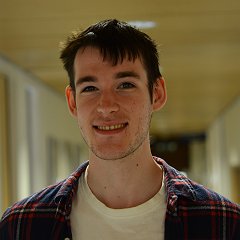
Conrad Watt is an Assistant Professor at Nanyang Technological University in Singapore. His research focuses on the formal verification and mechanisation of WebAssembly, particularly its concurrency and security features. He previously held a Research Fellow position at Peterhouse, University of Cambridge. His work bridges theoretical formal methods with practical systems implementation, contributing to standards proposals for WebAssembly's evolution. He co-chairs the W3C WebAssembly Community Group and has served on program committees for POPL, PLDI, and SPLASH. Education: PhD in Computer Science (University of Cambridge, 2021), supervised by Peter Sewell Research interests include mechanisation of programming language specifications, relaxed-memory concurrency, and domain-specific languages for formal semantics. His projects like SpecTec aim to unify WebAssembly's specification across documentation, implementations, and mechanisations. Selected contributions to WebAssembly include: Designing its initial concurrency specification Developing WasmRef-Isabelle as a verified interpreter and fuzzing oracle Creating Iris-Wasm for modular program verification Scientific recognition includes: ACM Doctoral Dissertation Award Honorable Mention EAPLS Best Dissertation Award He advises PhD students in WebAssembly-related topics and leads collaborations with industrial partners like Wasmtime. Current research explores irreducible control flow in WebAssembly, richer concurrency models, and performance optimization through mechanised specifications.
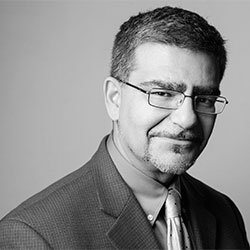
Babak D. Beheshti, Ph.D., is Professor and Dean of the College of Engineering and Computing Sciences at New York Institute of Technology, where he has served since 1986. His 35-year tenure includes roles as faculty member, Academic Senate President, Associate Dean, and Dean. Under his leadership, the college introduced its first PhD programs (Computer Science and Engineering), new bachelor's/master's degrees, and climbed to #49 in U.S. News undergraduate engineering rankings. He established industry partnerships with NASA, IBM, and cybersecurity firms, and launched a co-op program for computer science/IT students. His research focuses on: Wireless sensor networks and IoT security Cryptographic frameworks for resource-constrained devices Cybersecurity penetration testing methodologies Adaptive algorithms for anomaly detection Honors include: IEEE MGA Leadership Award (2014) IEEE Millennium Medal IEEE LI Educator Award (2013) IEEE Region 1 Technical Innovation Award (2008) Ellis College Teaching Excellence Award (2007) He drives experiential learning through industry co-ops and serves on boards for IEEE, LISTnet, and manufacturing/transportation consortia.
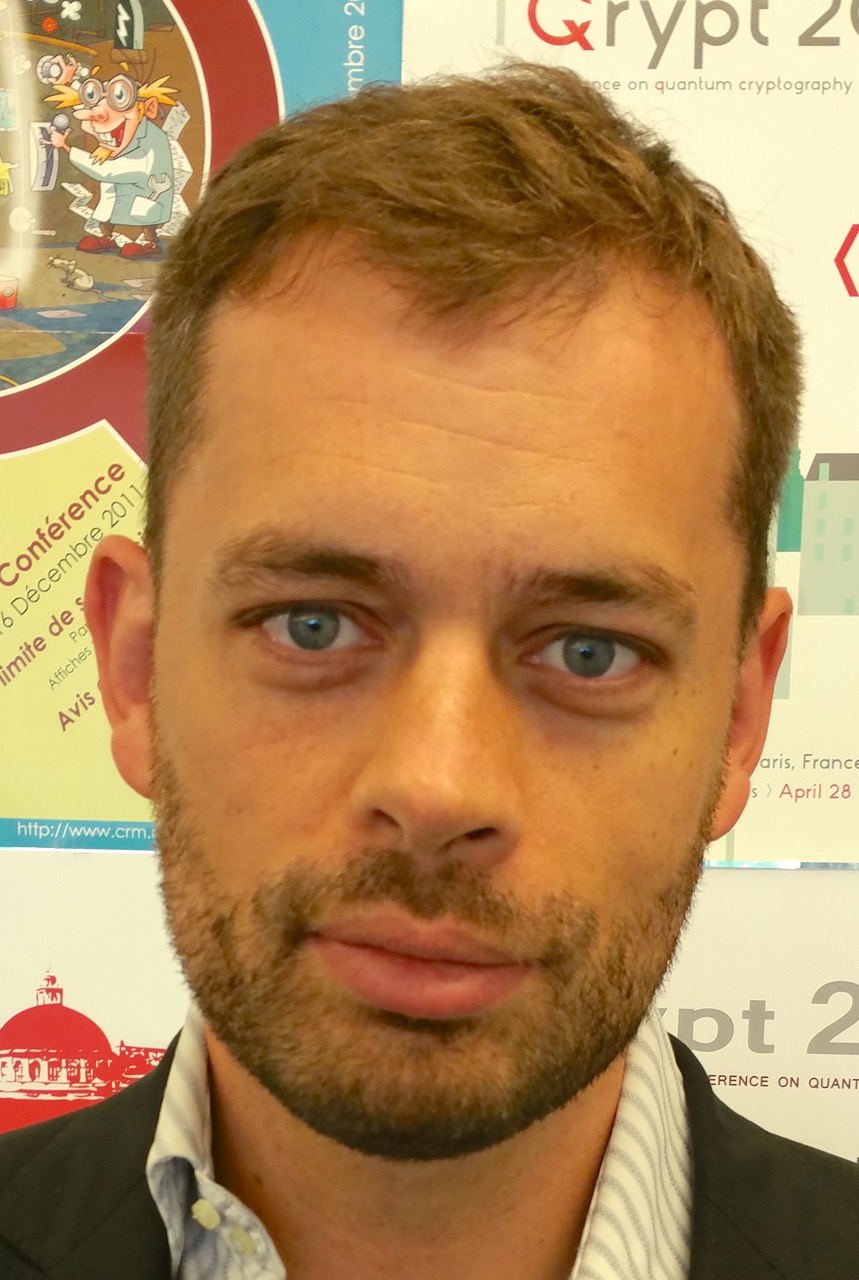
Professor Romain Alléaume is a faculty member at Télécom Paris - Institut Polytechnique de Paris within the Networks and Computer Science Department, leading the Quantum Information and Applications Group. His work bridges theoretical quantum information science with practical quantum communication systems development. His academic foundation includes graduation from ENS Paris followed by a 2004 PhD at University Paris VI and ENS Cachan, where his experimental quantum cryptography research earned the prestigious La Recherche Scientific Prize. Research focuses on quantum cryptography and quantum key distribution (QKD) with four interconnected pillars: Quantum coherent optical communications : Advancing continuous-variable QKD systems and optical networking integration Quantum Hardware Security : Developing evaluation frameworks for commercial QKD products Hybrid security models : Creating protocols combining quantum and computational security Multimode photonic processing : Leveraging telecom components for high-dimensional quantum states His scientific recognition includes the La Recherche Scientific Prize (2004) and multiple patents for quantum cryptographic methods. La Recherche Scientific Prize (2004) Professor Alléaume actively mentors students, currently supervising four PhD candidates while maintaining strong research funding through projects including ParisRegionQCI (2021-2024), CiViQ (Quantum Flagship, 2018-2022), and OPENQKD (2019-2023), demonstrating sustained support for quantum communication infrastructure development. He directs the Quantum Information and Applications Group , which maintains close ties with industry through ETSI standardization and SeQureNet commercialization efforts, positioning the lab at the forefront of quantum technology translation from research to real-world deployment.
Eugene Howard Spafford (known as Spaf) is a Professor of Computer Science at Purdue University's College of Science. He is a renowned computer security expert who founded and served as the first director of the Center for Education and Research in Information Assurance and Security (CERIAS) at Purdue University in 1998. Professor Spafford advises U.S. government agencies and corporations on security matters and has testified before Congress on cybersecurity issues. His educational background includes a PhD and Masters in Information and Computer Science from Georgia Tech and a Bachelors in Mathematics and Computer Science from SUNY Brockport. Professor Spafford's research spans computer security, intrusion detection, digital forensics, and software vulnerability analysis, with recent focus on deception techniques in security defense. Analysis of his publication record shows a consistent focus on practical security solutions, beginning with early work on the Internet Worm of 1988 and evolving to modern concerns about password security, deception techniques, and the balance between privacy and surveillance. His highly cited work on Tripwire established foundational approaches to file integrity checking that remain relevant today. Ranked #408 in Computer Science worldwide according to AcademicInfluence.com Ranked #230 in USA for Computer Science Ranked #1452 in Database worldwide Professor Spafford has supervised numerous students and researchers through CERIAS, contributing to the development of the next generation of security professionals. His work on security education has helped shape curriculum standards in the field. The Center for Education and Research in Information Assurance and Security (CERIAS) continues to be a major hub for interdisciplinary security research under his foundational influence. His laboratory, CERIAS, maintains an active research agenda in information security and can be accessed at http://www.cerias.purdue.edu/.
Karol Życzkowski is a Professor of Physics at the Atomic Physics Department, Institute of Theoretical Physics, Jagiellonian University in Cracow, Poland. He also holds a position at the Center for Theoretical Physics of the Polish Academy of Sciences in Warsaw. Since January 2023, he has served as President of the Cracow Branch of the Polish Academy of Sciences (PAN). Previously, from 2019 to 2023, he was Director of the Quantum Information Center in Gdańsk (KCIK). In 2024, he was awarded an ERC Advanced Grant for his project 'Typical and Atypical Structures in Quantum Theory'. Życzkowski earned his Ph.D. in theoretical physics from Jagiellonian University in 1987 under the supervision of Prof. Jan Mostowski. He completed his habilitation in physical sciences at the same institution in 1994. His academic journey includes prestigious fellowships: Humboldt Fellowship at Essen University (1989-90) and Senior Fulbright Fellowship at the University of Maryland (1997-98). He became a full Professor of Physics in Poland in 2005 and has held positions at both Jagiellonian University and the Polish Academy of Sciences. His research spans multiple areas of theoretical physics and mathematics, with a primary focus on quantum information theory. He has made significant contributions to understanding quantum entanglement, quantum chaos, random matrices, and the geometry of quantum states. His influential book 'Geometry of Quantum States: An Introduction to Quantum Entanglement,' co-authored with Ingemar Bengtsson, has become a standard reference in the field. Beyond quantum physics, he has conducted important work in voting theory, developing the 'Jagiellonian Compromise' for the Council of the European Union based on the Penrose Square Root Law. Analysis of his publication record reveals a consistent focus on the mathematical foundations of quantum information, with increasing interdisciplinary work connecting quantum physics to other fields like game theory and financial mathematics. His research has evolved from foundational quantum mechanics to practical applications in quantum computing and information processing, while maintaining strong mathematical rigor. ERC Advanced Grant (2024) for 'Typical and Atypical Structures in Quantum Theory' NCN Grant Maestro-7 (2016) Award of Rector of Jagiellonian University for monograph 'Geometry of Quantum States' (2007) Award of Rector of Jagiellonian University for series of papers on mathematical foundations of quantum information theory (2013) Prime Minister Award for outstanding habilitation thesis (1995) Senior Fulbright Fellowship (1997) Humboldt Fellowship (1989) Życzkowski has supervised 16 Master's theses and 5 Ph.D. theses, with 3 additional Ph.D. projects in progress. He has coordinated 9 research grants and participated in 10 others, including leading the Polish node of a German SFB-Transregio project. His editorial service includes positions on the boards of Open Systems & Information Dynamics (since 2003), Journal of Physica A (2004-2006, 2007-2010), Quantum (2016-2021), and Acta Physica Polonica B (since 2021). He has served on panels evaluating ERC Advanced Grants three times. At Jagiellonian University, Życzkowski leads the Jagiellonian Quantum Information Team (JQIT) and organizes the weekly 'Quantum Information & Chaos' seminar. He has been instrumental in establishing quantum information research in Poland, co-organizing the European Research Network Krzyżowa Initiative for Quantum Information and the Polish Research Network LFPPI (Laboratory of Physical Foundation of Information Processing).
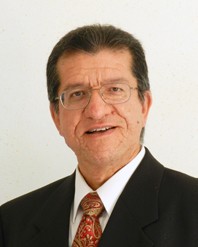
Fereydoun Daneshgaran is a Professor and Chairman of the Electrical & Computer Engineering Department at California State University, Los Angeles, where he has served since 2006. He also directs the fiber and nonlinear optics research laboratory and has held various academic leadership positions including chairman of the Communications group and acting chairman of the ECE Department. Dr. Daneshgaran's educational background includes: Ph.D. in Communications, VLSI, and Optimization from UCLA (1992) M.S. (Magna Cum Laude) in Communications, Solid State Electronics, and Control Systems from Cal State LA (1985) B.S. (Magna Cum Laude) in Electrical and Mechanical Engineering from Cal State LA (1983) Dr. Daneshgaran's primary research interests focus on wireless communications, digital communications, and information theory. His work spans multiple specialized areas including coding theory (particularly Turbo Codes and LDPC codes), quantum key distribution, cognitive radio, and network localization. His research has significant applications in wireless networking protocols, particularly IEEE 802.11 standards, with numerous publications analyzing throughput performance under various network conditions. He has also made substantial contributions to optical communications and signal processing techniques. Dr. Daneshgaran's publication record shows a progression from foundational work in Viterbi decoding and turbo codes to more recent applications in quantum communications and advanced wireless network protocols. His research consistently bridges theoretical communications theory with practical implementations, as evidenced by both his extensive journal publications and industry experience. His scientific achievements include: Best Paper Award at First International Conference on Advances in Satellite and Space Communications (SPACOMM 2009) U.S. Patent No. US 2007/0079223 A1 for "A method and system for Information processing" Dr. Daneshgaran has supervised numerous Ph.D. students and visiting scholars, primarily from Politecnico University of Turin (POLITO), Italy, fostering international research collaborations. His academic leadership extends to developing and teaching the entire graduate sequence in digital communications at Cal State LA, along with specialized courses in wireless communications, cognitive radio, and optical communication systems. He has also maintained industry connections through various consulting roles and entrepreneurial ventures in communications technology. As director of the fiber and nonlinear optics research laboratory from 1994 to 2015, Dr. Daneshgaran led research in optical communications and related technologies. His work has bridged theoretical communications research with practical implementations, as evidenced by both his academic publications and industry experience founding companies like EuroConcepts S.r.l. and Quantum Bit Communications, LLC.