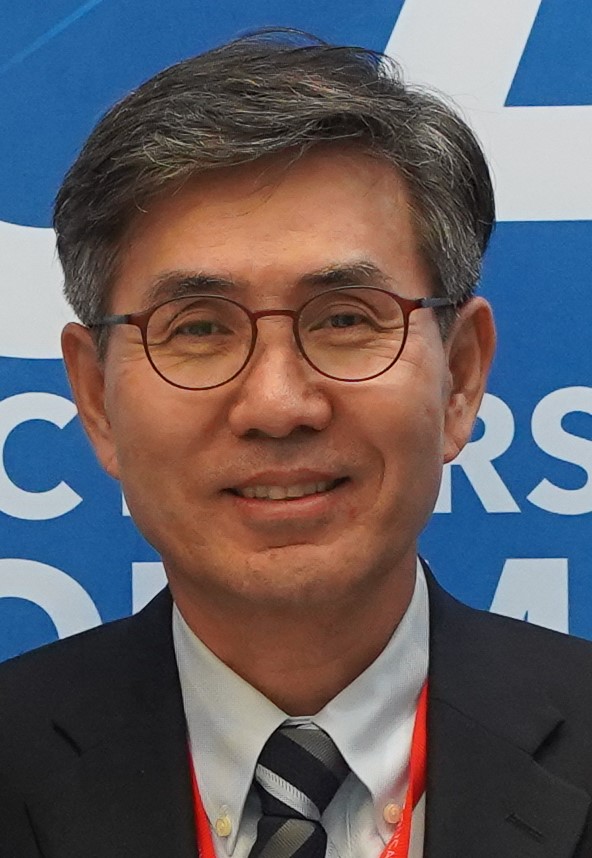
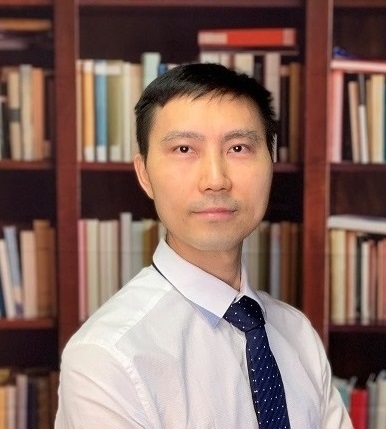
Dr. Pan Zhang is a Researcher at the Department of Mechanical Engineering, Imperial College London, specializing in materials modeling and micro-mechanics. His work focuses on crystal plasticity modeling, particularly the generation of microstructures for polycrystalline materials to support finite element analysis. He holds a BSc and MSc in Control Engineering and a PhD in Mechanical Engineering. Research interests include Voronoi tessellation applications, optimization using evolutionary algorithms, and material behavior under extreme conditions. His contributions span computational geometry, composite materials, and supply chain environmental impact analysis. Publications highlight advancements in grain structure simulation, cryptographic integration in embedded systems, and cloud-based privacy-preserving techniques. Collaborations include projects with Professors Liliang Wang and Daniel Balint, though he is not directly listed as a supervisor for the mentioned PhD studentships. No scientific awards are explicitly stated, but his work demonstrates expertise in interdisciplinary engineering and computational methods.
Amer Qouneh serves as an Associate Professor in the Department of Electrical and Computer Engineering at Western New England University, where his research centers on computer architecture, high-performance computing, data centers, Internet of Things (IoT), and embedded systems with emphasis on energy efficiency and practical implementations. Education: Ph.D. in Computer Engineering, University of Florida, 2014 M.S. in Computer Engineering, University of Florida, 2010 M.S. in Computer Science, University of Wisconsin-Milwaukee, 2007 M.S. in Electrical Engineering, Fairleigh Dickinson University, 1988 B.S. in Electrical Engineering, Fairleigh Dickinson University, 1985 Dr. Qouneh's research integrates theoretical innovation with real-world applications across multiple domains. His computer architecture work addresses thermal resilience in photonic networks and processing-in-memory systems, while his data center research focuses on renewable energy integration, resource allocation, and containerization. In IoT and embedded systems, he develops practical solutions like solar array trackers and edge-based machine learning deployments, demonstrating a commitment to sustainable and accessible technology education. Publication analysis from 2009-2022 reveals a strategic evolution from foundational work in transactional memory and containerization toward advanced energy-efficient architectures. His recent output emphasizes IoT educational integration and embedded AI applications, maintaining consistent contributions to top venues like IEEE Transactions on Parallel and Distributed Systems while adapting to emerging computational challenges in green computing and edge intelligence. Dr. Qouneh actively mentors undergraduate researchers, evidenced by multiple co-authored conference papers on IoT implementations and curriculum development. His scholarly impact spans both technical innovation in data center optimization and educational leadership in modernizing engineering curricula for emerging technologies.
Dr. Md Morshedul Islam serves as an Assistant Professor in the Department of Mathematics & Information Technology within the Faculty of Science at Concordia University of Edmonton (CUE), Canada. His expertise bridges theoretical cybersecurity frameworks and practical implementations in data privacy and behavioral analytics. His academic foundation includes: Ph.D. in Computer Science from the University of Calgary, Alberta, Canada M.Sc. from Bangladesh University of Engineering and Technology (BUET), Dhaka, Bangladesh Islam's research pioneers behavioral authentication systems with emphases on privacy-preserving machine learning and responsible AI. His work addresses critical vulnerabilities like model inversion attacks while developing scalable solutions for real-world security challenges. Current projects explore the intersection of cryptography and behavioral biometrics, particularly through fuzzy vault implementations and information-theoretic security metrics. His publication trajectory reveals deepening specialization in behavioral authentication systems since 2016, with recent work (2020-2023) increasingly focused on privacy-preserving ML techniques and scalability challenges. The research consistently targets high-impact venues like IEEE Access and ACM CCS, demonstrating both theoretical rigor and practical applicability in mobile and networked environments. Recognized for impactful contributions to campus research culture: Best Poster Award, CARIC 2024 (Undergraduate & Graduate categories) Best Poster Award, CARIC 2025 (Undergraduate & Graduate categories) He actively mentors students while securing substantial research funding through competitive internal grants. His leadership extends to academic service on scholarship committees and faculty search panels. Research Grants: CUE Seed Grant (2023-2024, 2025-2026) Research Support: Teaching Reduction Awards (2024-2025, 2025-2026) Conference Support: FPS 2024 Travel Award Student Development: CUE Student Project Grant (Spring 2025), Alberta Graduate Excellence Scholarship (2024) Though not leading a named lab, Islam maintains active industry partnerships initiated during his University of Calgary postdoctoral fellowship, focusing on applied machine learning solutions for security challenges. His collaborative approach extends to international research networks in privacy-enhancing technologies.
Ke Yi is a Professor in the Department of Computer Science and Engineering at the Hong Kong University of Science and Technology (HKUST), where he also serves as Director of the MSc Program in Big Data Technology. His research spans database theory and systems, query processing, data security and privacy, parallel and distributed algorithms, and computational geometry, with a focus on bridging theoretical guarantees with practical implementations. Dr. Yi earned his B.Eng. in Computer Science and Technology from Tsinghua University (1997-2001) and his Ph.D. in Computer Science from Duke University (2001-2006), advised by Professors Pankaj K. Agarwal and Lars Arge. Before joining HKUST in 2007, he was a Research Specialist at AT&T Labs-Research (2006-2007). His research interests center on database theory and systems with particular emphasis on query processing techniques, data security and privacy mechanisms, and efficient algorithms for big data. Yi's work consistently demonstrates the rich interdependence between theoretical foundations and practical implementations, favoring simple algorithms with elegant analyses that provide valuable insights for real-world applications. His research group has developed several notable system prototypes including Quorion (query optimization), DPSQL (differentially private SQL), SparkSQL+ (next-generation query planning), SecYan (secure query processing), CROWN/Cquirrel (continuous query processing), and XDB (online aggregation). Yi's publication record shows a clear evolution toward privacy-preserving database technologies, particularly differential privacy, with an increasing focus on practical implementations that maintain theoretical guarantees. His recent work has centered on query processing under differential privacy, secure multi-party computation for databases, and efficient algorithms for big data analytics, demonstrating consistent contributions to both theoretical foundations and practical systems. ACM SIGMOD Best Paper Award (2016, 2022) ACM PODS Test-of-Time Award (2022) ACM Distinguished Member (2021) Multiple ACM SIGMOD Best Paper Honorable Mentions Google Faculty Research Award (2010) HKUST School of Engineering Young Investigator Research Award (2012) Professor Yi has supervised numerous Ph.D. and MPhil students, many of whom have gone on to prestigious academic and industry positions at institutions including Nanyang Technological University, University of Waterloo, EPFL, Alibaba Cloud, and Google. His research has been generously supported by Hong Kong RGC, Alibaba, Huawei, ByteDance, Microsoft, and Google. In addition to his research leadership, Yi has made significant contributions to the academic community through editorial roles (ACM TODS, IEEE TKDE), program committee chairs (PODS 2026, ICDT 2021), and numerous service roles in top database conferences. His laboratory, the HKUST Database Lab (hkustDB), has become a leading center for database research in Asia, developing innovative prototypes that bridge theoretical database research with practical implementations. The lab maintains active GitHub repositories for their open-source projects and collaborates extensively with both academic and industry partners worldwide.
Ilkyeun Ra serves as Associate Professor in the Department of Computer Science and Engineering at the University of Colorado Denver, where he has taught since 2001. His instructional responsibilities span undergraduate and graduate courses including Operating Systems, Computer Networks, and Cloud Computing. His educational background comprises: Ph.D. in Computer and Information Science, Syracuse University (2001) M.S. in Computer Science, University of Colorado Boulder B.S. and M.S. in Computer Science, Sogang University Dr. Ra's research concentrates on adaptive distributed systems and high-speed communication networks for high-performance computing. Current investigations focus on microservice autoscaling in cloud environments, multimedia streaming protocols over named data networks, and social media-driven disaster management systems. His methodology integrates reinforcement learning, blockchain, and real-time analytics to address scalability and reliability challenges in distributed architectures. Analysis of his 2018-2024 publications reveals dominant themes in cloud-native systems (46%), disaster informatics (23%), and network protocol innovation (31%). Key methodological trends include reinforcement learning applications for resource optimization (3 articles), blockchain implementations for privacy preservation (2 articles), and social media analytics for crisis response (3 articles). Scientific recognition includes: Outstanding paper award at IEEE The 26th International Conference on Advanced Communications Technologies (2024) Dr. Ra actively recruits Ph.D. students for distributed systems research. His funded projects include NIH support for the Hospital Computerized Disaster Information Management System (1G08LM009710-01, 2008-2011) and ETRI (South Korea) collaboration on parallel data processing frameworks. Current grants focus on cloud-based disaster management and edge network optimization. He directs the Distributed Computing and Networking Research Lab, which operates three specialized teams: the Cloud Microservices Group developing reinforcement learning autoscalers, the Multimedia Streaming Team designing NDN protocols, and the Disaster Informatics Unit analyzing social media for real-time crisis response.
Professor Robert Malaney is a faculty member in the School of Engineering, Department of Electrical Engineering and Telecommunications at the University of New South Wales (UNSW), Sydney, Australia. He has held previous academic positions at the California Institute of Technology (USA), the University of California (USA), the University of Toronto (Canada), and the CSIRO (Australia). Professor Malaney specializes in quantum communications, quantum sensing, wireless communications, optical communications, satellite communications, quantum physics, and astrophysics. His research focuses on developing practical quantum communication systems with particular emphasis on satellite-based applications. He has made significant contributions to quantum key distribution (QKD), quantum networking, and the integration of quantum and classical communication systems. His work addresses critical challenges in quantum communications including atmospheric turbulence compensation, phase estimation, error mitigation, and spatial diversity exploitation. Analysis of Professor Malaney's recent publications (2023-2025) reveals an intensive focus on advancing satellite-to-earth quantum communications. His work demonstrates leadership in developing quantum routing protocols, machine learning applications for quantum systems, and hybrid quantum-classical communication techniques. These publications highlight his commitment to solving practical implementation challenges for global quantum networks, with particular attention to real-world constraints like atmospheric interference and signal degradation in space-to-ground links. Professor Malaney has maintained an extensive collaborative network across multiple institutions and research domains. His work bridges theoretical quantum information science with practical engineering applications, positioning him as a key contributor to the emerging field of quantum communications infrastructure.
Assistant Professor at the Polytechnic University of Catalonia 's Barcelona School of Informatics , specializing in Computer Architecture and Genomic Data Security . Research focuses on: Secure genomic information representation (MPEG-G, FAIR principles) Medical device cybersecurity (MedSecurance project) Privacy-preserving health data systems (HIPAMS, GIPAMS) Digital rights management for multimedia and health content Watermarking techniques for data leak detection Recent publications address cybersecurity challenges in interconnected medical devices, reversible fingerprinting for genomic data, and compliance with international standards like ISO/IEC 23092. Key collaborators include researchers from health informatics and multimedia standardization fields.
Jonathan Webster is a Professor in the Department of Mathematical Sciences at Butler University. He holds a Ph.D. from the University of Calgary and has a dual background in Mathematics and Computer Engineering from Rose-Hulman Institute of Technology, along with a Master's in Mathematics from the University of Illinois at Urbana-Champaign. His academic work bridges mathematics and computer science with a strong emphasis on undergraduate research mentorship. Education Ph.D., University of Calgary, 2010 M.S. in Mathematics, University of Illinois at Urbana-Champaign, 2004 B.S. in Mathematics, Rose-Hulman Institute of Technology, 2001 B.S. in Computer Engineering, Rose-Hulman Institute of Technology, 2001 Jonathan Webster's research focuses on algorithmic and computational number theory , particularly in areas such as Carmichael numbers, pseudoprimes, Legendre's conjecture, and the multiplication table problem. He develops and implements algorithms to explore deep number-theoretic questions, often pushing computational limits. His work is highly collaborative, frequently involving undergraduate students and established researchers like Andrew Shallue and Jonathan Sorenson. His recent publications (2024–2025) highlight a consistent trend in computational number theory, with several papers accepted to the prestigious Algorithmic Number Theory Symposium (ANTS) and journals like INTEGERS and Mathematics of Computation . These works involve extensive data generation, algorithm design, and verification, often accompanied by publicly released source code and datasets. In parallel, he contributes to mathematics education, particularly in designing and promoting undergraduate research experiences. His scientific contributions include: Tabulation of all Carmichael numbers below 10^22 Verification of Legendre’s conjecture up to 7·10^13 Advancing the understanding of absolute Lucas pseudoprimes Developing efficient algorithms for the multiplication table problem Historical research on inessential discriminant divisors with Fernando Gouvêa Webster actively mentors undergraduate researchers, with students like Chloe Helmreich, Nick Sorenson, and David Purdum co-authoring peer-reviewed publications. He has secured research support through collaborative grants and institutional funding, enabling student participation in conferences and computational projects. His pedagogical work, including publications in MAA Focus and PRIMUS , emphasizes creating accessible research opportunities for undergraduates. While not explicitly mentioning a lab, his research group functions as a computational number theory team, producing open-source tools and large-scale datasets. Future work likely includes extending computational bounds, exploring new pseudoprime families, and expanding undergraduate research models.
Cesare Tinelli is the F. Wendell Miller Professor of Computer Science at the University of Iowa within the College of Liberal Arts and Sciences. He is a co-director of the Computational Logic Center and leads the development of critical tools like the CVC4 and cvc5 SMT solvers, as well as the Kind model checker. His academic credentials include: Ph.D. in Computer Science (1999), University of Illinois at Urbana-Champaign M.S. in Computer Science (1995), University of Illinois at Urbana-Champaign Laurea in Scienze dell'Informazione (1990), University of Bari Research Interests : Tinelli specializes in Automated Reasoning , particularly Satisfiability Modulo Theories (SMT) , Model Checking , Software Verification , and Formal Methods . His recent work explores Inductive Reasoning in SMT , Proof-Certificate Generation , and Logical Frameworks for Proof Systems . His methodologies bridge theoretical advancements with practical implementations, impacting both academia and industry. Scientific Contributions : Tinelli's research drives innovation in SMT solving, model checking, and automated theorem proving. His 15 most recent publications span topics from stateful protocol testing ( Saecred ) to proof certification ( IsaRare ) and generalized optimization ( Generalized OMT ). Awards and Recognition : NSF CAREER Award (2003) Haifa Verification Conference Award (2010) CAV Award (2021) Advising and Collaborations : His former students and postdocs hold positions at leading institutions like NASA, Intel, MIT, and EPFL. He collaborates with organizations such as Amazon, Facebook, General Electric, and Microsoft.
Michele Bugliesi is a Full Professor of Computer Science at Ca' Foscari University of Venice, where he is affiliated with the Department of Environmental Sciences, Computer Science and Statistics. His research spans theoretical computer science with a strong emphasis on practical security applications in web technologies and distributed systems. Professor Bugliesi's primary research interests focus on computer security, particularly web security, formal methods for security analysis, programming languages, and blockchain technologies. His work combines theoretical foundations with practical implementations, addressing critical security challenges in modern computing environments. He has made significant contributions to understanding and preventing session hijacking attacks, developing content security policies, and analyzing smart contract security. Analysis of Professor Bugliesi's recent publications (2016-2025) reveals a clear evolution in his research focus. Initially centered on web security and formal verification methods, his work has expanded to include blockchain technologies, smart contracts, and more recently, the security implications of large language models. His publications consistently appear in top-tier computer security conferences and journals, demonstrating the high quality and impact of his research. Professor Bugliesi maintains an active research group and collaborates extensively with colleagues including Stefano Calzavara, Alvise Rabitti, and Sabina Rossi. His research has practical implications for improving the security of web applications, blockchain systems, and emerging AI technologies.
Fabio Pareschi is an Associate Professor at the Department of Electronics and Telecommunications (DET), Politecnico di Torino, where he conducts research in circuit architectures, embedded systems, and signal processing with applications in security, AI, and power electronics. He is affiliated with the VLSILAB research group and leads multiple high-impact research projects. Research Interests: Chaos theory and true random number generation for cryptographic applications Compressed sensing for secure and efficient signal acquisition EMI reduction techniques in DC-DC power converters Tiny machine learning and low-power embedded systems Circuit design for IoT and biomedical applications The recent articles highlight a strong trend in integrating compressed sensing with encryption, leveraging chaos-based randomness for security, and optimizing power electronics for EMI reduction. His work bridges theoretical foundations with practical hardware implementations in microelectronics and embedded systems. Scientific Awards: Best Student Paper Award (IEEE, 2005) Best Paper Award (IEEE, 2005) IEEE PRIME Gold Leaf Certificate (2019) BioCAS Transactions Best Paper Award (2019) Best Student Paper Award at EMCCompo (IEEE, 2019) Advising and Grants: He supervises multiple PhD students in the Electrical, Electronics, and Communications Engineering program. He is the Scientific Director of the CESOIA project (Non-EU International Research, 2025–2028) on low-complexity AI models, and leads the ECS4DRES project (EU-funded, 2024–2027) on resilient energy systems. He also heads a commercial research project on high-performance DC-DC converters (2022–2025). His editorial roles include Associate Editor for IEEE Transactions on Circuits and Systems and guest editorships in multiple IEEE journals. Labs and Teams: He is a key member of the VLSILAB Group (DET), which focuses on VLSI systems, embedded signal processing, and secure hardware design.
Trinabh Gupta is an Associate Professor in the Department of Computer Science at the University of California, Santa Barbara (UCSB). Previously, he was a postdoctoral researcher at Microsoft Research Redmond. He holds a PhD from The University of Texas at Austin and a BTech from IIT Delhi. His research focuses on secure systems, privacy-preserving technologies, and applying cryptographic techniques to real-world systems. Education: PhD in Computer Science (UT Austin, 2017); BTech in Computer Science and Engineering (IIT Delhi, 2009). Research Interests: Building systems with strong security and privacy guarantees, including private information retrieval, federated learning, and cryptographic protocols. He emphasizes practical implementations, such as systems for secure media delivery and email privacy. Teaching: Courses include CS170 (Operating Systems), CS178 (Cryptography), and CS293G (Advanced Topics in Computing on Encrypted Data). Courses emphasize hands-on labs and critical analysis of cryptographic systems. Key Contributions: Developed systems like HADES, Coeus, and Addra, which apply theoretical constructs to real-world privacy challenges. His work spans secure distributed systems, federated learning, and oblivious data retrieval.
Roles & Affiliations : Associate Professor (2018–present) in the Department of Combinatorics & Optimization at the University of Waterloo. Scientific Advisor to SandboxAQ (2022–present). Former roles include Senior Lecturer at Queensland University of Technology (2013–2016) and Assistant Professor at McMaster University (2016–2018). Education : PhD in Combinatorics & Optimization (2004–2009), University of Waterloo. MSc in Mathematics (2003–2004), University of Oxford. Bachelor's degree (not specified), University of Waterloo (undergraduate research assistant, 2001–2003). Research Interests : Focuses on applied cryptography, including post-quantum key exchange, elliptic curve cryptography, and internet security protocols (TLS, SSH, Tor). Specializes in transitioning quantum-resistant cryptography into real-world standards. His work emphasizes practical implementations and performance optimization for secure communication systems. Grants & Funding : NSERC Alliance Consortia Quantum Grant ($4.15M, 2023–2027). NSERC Discovery Grant ($240K, 2022–2027). NSERC Alliance Grant ($400K, 2021–2022) for quantum-safe networking. Conference Roles : Served as Program Committee Co-Chair for Crypto 2024 and General Chair for Real World Cryptography 2024. Active on editorial boards of IACR Communications in Cryptography and Designs, Codes and Cryptography. Co-founder of Ontario Cryptography Day. Software Contributions : Co-founder of the Open Quantum Safe project. Contributed to OpenSSL and NSS toolkits during his tenure at Sun Microsystems (2001–2003).
Thomas Tie Luo is a tenured Associate Professor in the Department of Electrical and Computer Engineering and a courtesy joint appointee in the Department of Computer Science at the University of Kentucky, within the Stanley and Karen Pigman College of Engineering. Previously, he served as an Associate Professor at Missouri University of Science and Technology. He holds a Ph.D. in Electrical and Computer Engineering from the National University of Singapore. Ph.D., Electrical and Computer Engineering, National University of Singapore His research focuses on Trustworthy Artificial Intelligence, particularly in healthcare, medicine, and the Internet of Things (IoT). Key areas include explainable AI (XAI), adversarial and robust machine learning, security and privacy in federated learning, and time series analysis. He develops both theoretical models and real-world systems, such as federated satellite learning frameworks and anomaly detection platforms for edge computing. His work bridges deep learning with practical applications in medical imaging, dementia detection, and secure IoT environments. The recent publications (2023–2025) demonstrate a strong trend in advancing federated learning for satellite and edge networks, enhancing model interpretability in healthcare, and improving adversarial robustness in deep learning. These works appear in top-tier venues like AAAI, PAKDD, IEEE JSAC, and PerCom, often receiving recognition through best paper awards. His research integrates computer vision, signal processing, and secure distributed learning, reflecting a multidisciplinary approach to trustworthy AI. His scientific achievements have been recognized with multiple awards, including: Best Paper Award at PAKDD'25 workshop Best Paper Runner-Up at PAKDD'24 Best Paper Runner-Up at PerCom'24 Best Student Paper Award at AAIM'18 Best Paper Award at ICTC'12 Best Paper Finalist at INFOCOM'15 Dr. Luo advises PhD students in computer science, electrical engineering, and computer engineering. He has successfully mentored several doctoral graduates now in academic and industry roles, including Assistant Professors and Research Scientists at institutions like Washington State University and ByteDance. He has served as a grant panelist for the NSF, U.S. Department of Energy, and Euregio Science Fund, and as an external evaluator for faculty promotion at the University of Washington. His editorial roles include Area Editor for Pervasive and Mobile Computing and Ad Hoc Networks , and Associate Editor for several journals. He leads research efforts involving real testbeds and system implementations, such as federated learning frameworks for LEO satellite networks and lightweight object detection systems like YOGA. His lab emphasizes not only algorithmic innovation but also practical validation through deployed systems in edge computing, IoT, and mobile crowdsensing.
Angelina Njegus is a Full Professor at Singidunum University , where she has worked since 2005. She holds a Ph.D. in Business Studies and has extensive experience in both academia and industry, including consulting for IBM. Her research focuses on machine learning algorithms , deep learning , and Big Data Analytics , with applications in pattern recognition , tourism technology , and blockchain systems . Bachelor's: Faculty of Organizational Sciences, Information Systems (1994) Master's: Faculty of Organizational Sciences, Industrial Engineering (1999) Doctoral: Faculty of Business Studies (2003) Her recent publications (2023-2025) demonstrate expertise in metaheuristic optimization for machine learning, audio-visual emotion recognition , and cryptocurrency applications in tourism . She pioneered the Virtual University platform (MTVU) and contributes to agile methodologies in software development. Collaborations include projects with researchers from IEEE, Springer, and international institutions. Research interests span AI ethics in human resources , IoT integration in tourism , and security risks in cloud computing . Her work appears in journals like Complex & Intelligent Systems and conferences including ICPR and FG 2017 . She has authored books on software design patterns and information systems in tourism .