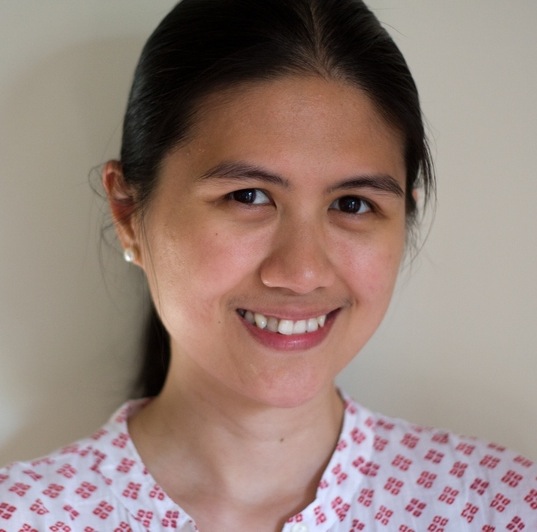
Dr. Maggie Liu is a Lecturer in Cybersecurity and Software Systems at RMIT University's School of Computing Technologies. Her research focuses on secure multi-party computation and its applications in privacy-preserving machine learning (PPML), with specific emphasis on practical deployments for medical diagnostics and mobile image classification. Key research areas include: Designing lightweight cryptographic protocols Secure computation techniques Machine learning systems security Interdisciplinary privacy-preserving solutions Her recent work involves PPML for medical services, mobile-edge computing, and collaborative learning systems. Notable projects include MediSC, CryptMed, OblivGNN, Sonic, EncSIM, and Leia. Maggie Liu earned her Ph.D. in Computer Science from RMIT University.
Michael Brand is an Adjunct Professor at RMIT University's School of Computing Technologies. His research focuses on cryptography, privacy-preserving technologies, machine learning, and algorithm design. Key areas include zero-knowledge proofs, secure financial systems like FinTracer, and computational theory. His work bridges theoretical foundations with practical applications in data security and real-time processing systems. Research interests span advanced cryptographic protocols, privacy-enhancing machine learning techniques, and distributed computing paradigms. Notable contributions include innovations in blockchain tracing mechanisms and foundational work in statistical estimation theory. He actively publishes in top-tier venues, addressing challenges in secure computation, network analysis, and database systems. Collaborations emphasize interdisciplinary solutions to modern computational and security challenges.
Dr. Geetika Verma is a Lecturer in Mathematics and Cybersecurity at the School of Science, RMIT University STEM College. Her research spans applied and pure mathematics, focusing on numerical techniques, industrial applications of mathematics and statistics, and cybersecurity algorithms such as cryptography. She actively engages in work-integrated learning (WIL) initiatives, coordinating internships and research projects for mathematics, statistics, and cybersecurity courses. Dr. Verma has been recognized with multiple teaching and outreach awards for her industry-linked pedagogical approaches. Her research interests include fractal geometry, functional and harmonic analysis, evolutionary population dynamics, and cybersecurity. She has contributed to over 17 peer-reviewed publications since 2014, addressing topics from fractal convolutions to elliptic curve key generation. Dr. Verma serves on the B H Neumann Prize committee and coordinates the Mathematical Sciences Seminar. She is open to supervising Masters and PhD students in fractal-related research.
Kam-Fung (Henry) Cheung is a Lecturer at the School of Information Systems and Technology Management (ISTM), UNSW Business School. He holds a PhD in Transport and Logistics Studies from the University of Sydney (2021) and dual bachelor's degrees in Information Engineering (with a Computer Science minor) and Mathematics from the Chinese University of Hong Kong (2013–2014). His research focuses on cybersecurity, transport logistics, operations research, and network vulnerability analysis. Prior to academia, he worked as a Senior Consultant (Cybersecurity) at Ernst & Young (2021–2022) and served as a Research Assistant at institutions including the Institute of Transport and Logistics Studies (ITLS) and the Chinese University of Hong Kong's Department of Systems Engineering. Henry has secured over $280k in research funding from Australian organizations such as the Digital Grid Futures Institute and Woodside Energy. His awards include the 2024 Rising Star Award finalist (Australian Logistics Council), multiple teaching excellence awards (University of Sydney), and scholarships spanning his academic career. He has contributed over 20 peer-reviewed publications, focusing on cybersecurity frameworks, network analysis, and supply chain resilience. Research Interests: Cybersecurity in logistics, network vulnerability mitigation, attacker-defender models, and system dynamics in transport networks Teaching: Courses include Networking & Cyber Security (INFS3617), Programming for Data Analytics (INFS2822), and Managing Cloud Security (INFS5917) Key Projects: Developed decision support systems for transport companies, analyzed global shipping network connectivity, and pioneered algebraic methods for compromised network recovery
Chong Guo and Bei Gong are collaborative researchers at Edith Cowan University's School of Engineering specializing in security solutions for Internet of Things ecosystems. Their work addresses critical challenges in cryptographic efficiency for resource-constrained devices. Research interests include: Lightweight cryptographic protocols eliminating pairing operations Multi-authority attribute-based encryption/signcryption frameworks Privacy-preserving keyword search for cloud IoT systems Cross-domain authentication using threshold signatures Verifiable outsourced decryption mechanisms Recent publications demonstrate a cohesive research trajectory focused on optimizing security protocols for IoT environments, with particular emphasis on reducing computational overhead while maintaining robust security properties. Their work bridges theoretical cryptography with practical implementation considerations for real-world deployment. Research is supported by significant funding including Major Science and Technology Projects in Yunnan Province (202202AD080013), National Key Research and Development Project of China (2019YFB2102303), National Natural Science Foundation of China (61971014), and King Khalid University (RGP.2/373/45), indicating strong institutional backing and international collaboration. As active researchers, they maintain productive partnerships across multiple institutions, with publications appearing in reputable venues like Sensors, demonstrating consistent contribution to advancing IoT security frameworks.
Leonie Simpson is an Associate Professor in the School of Computer Science at Queensland University of Technology (QUT), Faculty of Science. Her research and teaching are centered on cryptography and information security, with a strong focus on symmetric encryption, key management, and secure communications. Her research interests include: Symmetric encryption algorithms for real-time communications Authenticated encryption and security-efficiency trade-offs Boolean functions in cipher design for cyber attack resistance Information security management and threat information sharing IoT and vehicular communication security Leonie has published over 80 articles and three book chapters on symmetric ciphers. Her recent publications emphasize lightweight cryptography for connected vehicles, anomaly detection in key management via metadata, and secure frameworks for post-quantum migration. These works reflect a consistent trend toward practical, efficient, and resilient cryptographic solutions for emerging technologies. She has supervised 12 PhD and 1 Master’s student to completion and currently mentors 5 research students. Her grants include leadership in the Cyber Security CRC and an ARC project on secure stream ciphers. She also serves on the editorial board of the journal Cryptography and has chaired major conferences like ACISP 2013 and 2023. Notable professional roles include: Theme Leader, Resilient Systems, Cyber Security CRC Editorial Board Member, Cryptography journal Program Co-chair, ACISP 2013 and 2023 Referee for top journals and conferences in cryptography She has led industry security analyses and served as an expert witness in a Federal Court case on cryptographic telecommunications. Her teaching includes unit coordination for Cyber Security and previous development of multiple information security and cryptography units at QUT.
Associate Professor Jacqui Romero is an expert in experimental quantum information science at the University of Queensland (UQ), leading the Qudits@UQ research group. She holds a PhD from the University of Glasgow and has held prestigious fellowships including the ARC DECRA (2016) and Westpac Research Fellowship (2019). Her research focuses on high-dimensional quantum systems (qudits), exploring their applications in quantum technologies such as communication, computation, and error correction. She is affiliated with the ARC Centre of Excellence for Engineered Quantum Systems (EQUS) and teaches quantum technologies at UQ. Education: Bachelor of Applied Physics (magna cum laude), University of the Philippines Diliman Master of Science in Physics, University of the Philippines Diliman Doctor of Philosophy, University of Glasgow Research Interests: Dr. Romero’s work emphasizes generating and characterizing high-dimensional quantum states, designing quantum devices via inverse optimization, and testing indefinite causal order phenomena. Her team explores quantum error correction, quantum imaging, and the advantages of high-dimensional entanglement in robust quantum communication. Awards: L’Oréal-UNESCO For Women In Science Award (2017) Ruby Payne-Scott Medal (2018) L’Oréal-UNESCO International Rising Talent Award (2019) Grants & Funding: ARC Training Centre in Current and Emergent Quantum Technologies UQ Major Equipment Grant for a multimode optical waveguide facility Labs & Teams: Qudits@UQ, a dedicated experimental group advancing quantum technologies through photonics-based high-dimensional systems research.
Associate Professor Kee Siong Ng is affiliated with the School of Computing at the Australian National University (ANU). His research focuses on privacy-preserving technologies, reinforcement learning, distributed systems, and blockchain applications. He has contributed extensively to areas such as privacy-preserving machine learning, federated learning, entity resolution, and scalable database systems. His work emphasizes balancing computational efficiency with privacy guarantees in data-driven environments. Key research contributions include methodologies for secure data processing in federated learning frameworks, privacy-preserving reinforcement learning for population-level systems, and blockchain-based digital identity solutions. He has led projects like Integrated Graph Analytics and contributed to initiatives involving the Australian Medicare dataset. His research often intersects theoretical foundations with practical implementations, addressing challenges in scalability and real-world applicability. Ng has published over 24 peer-reviewed articles, with notable works appearing in venues like IEEE Transactions on Parallel and Distributed Systems and Transactions on Machine Learning Research . His articles frequently explore cutting-edge topics such as differential privacy, approximation algorithms, and multi-agent systems. Collaborations include industry partnerships and interdisciplinary efforts involving health informatics and financial intelligence. His projects include Integrated Graph Analytics (2018–2021): Focused on scalable graph-based data analysis. Translational Fellowship (2018–2022): Bridging theoretical research with practical applications. Research on Data Sets for Health and Pharmaceutical Schemes (2020): Analyzing Medicare and pharmaceutical data with privacy safeguards. Ng's work prioritizes ethical AI and privacy-by-design principles, with a focus on real-world deployment challenges in distributed and federated systems.
Professor Michael Martin holds a position at the Australian National University (ANU) within the Research School of Finance, Actuarial Studies & Statistics. He earned a BSc from the University of Queensland and a PhD from ANU, and is a Fellow of the Higher Education Academy (PFHEA). His research focuses on advanced statistical methodologies including bootstrapping, model selection, and time series analysis, with applications in health economics, actuarial science, and environmental studies. Notable projects include developing robust statistical frameworks for financial markets and assessing air pollution impacts using modern model selection techniques. Education: BSc (Queensland University), PhD (ANU) Research interests span statistical theory and its practical implementations in interdisciplinary fields. Recent work addresses researcher safety protocols, maternal healthcare cost analysis, and pain trajectory studies in osteoarthritis. Collaborative projects include blockchain valuation mechanisms and retirement savings behavior modeling. Scientific contributions include over 30 peer-reviewed publications and 8 funded research projects. Awards include PFHEA recognition for educational excellence. Supervises research students and actively participates in grant-funded initiatives such as the 'Valuation of cryptographic assets' project (2019-2021). Engages in interdisciplinary teams addressing financial, environmental, and health sector challenges through statistical innovation.
Dr. Fahim Ullah serves as Senior Lecturer in Construction Project Management at the School of Surveying and Built Environment , University of Southern Queensland (UniSQ), Springfield Campus, Australia. Recognized as a top 2% global researcher by Elsevier/Stanford (2024), he leads construction programs and acts as HDR Coordinator since 2024. Research Interests: Digital Construction Construction Technologies Automation & Robotics Smart Cities Industry 4.0/5.0 Building Information Modelling (BIM) Disaster Management With over 100 high-quality publications , Dr. Ullah explores technology adoption in construction, smart cities, and AI applications. He edits Q1 journals like "Management, Procurement and Law" and "Frontiers in Built Environment". As Publication Chair for CAHEM 2024 and CONVR2024 conferences, he shapes academic discourse on construction innovation. Scientific Awards: Editor's Choice Awards (Drones, Sustainability journals) Best Conference Paper (Curtin University Singapore) Chairman's Joint Best Paper (NED University) Feature Paper Recognition (Sustainability, Applied Sciences) His grant portfolio includes UniSQ Early Career Researcher Seed Grant (2023) and Intra-Faculty Collaboration Grant (2021) . He supervises 13 active research students while maintaining 10 years of tertiary teaching experience across Australia and Pakistan.
Dan Bogdanov is a Scientist at CDL-Estonia and Chief Scientific Officer at Cybernetica AS, where he leads the Department of Privacy Technologies. His work focuses on cryptographic solutions for privacy challenges, including the invention of Sharemind, a secure multi-party computation system for private data processing. Research Interests Privacy-preserving data analysis Cryptographic protocols Information security architecture ISO standardization for data privacy Applications in genomic, tax, education, and financial data Projects & Leadership Lead researcher for DARPA, EU FP7, and Horizon 2020 privacy technology initiatives Co-led development of ISO/IEC 29101 and ISO/IEC 19592 standards Central role in e-Estonia's data security and integrity frameworks Labs & Teams Department of Privacy Technologies at Cybernetica AS
Professor Zhengfeng Ji is an Adjunct Professor at the Centre for Quantum Software and Information within the Faculty of Engineering and Information Technology at the University of Technology Sydney. His research focuses on quantum computation, quantum information theory, and quantum communication. Quantum complexity theory Quantum algorithms Quantum network optimization Entanglement characterization Recent publications highlight advancements in quantum network routing frameworks and quantum proof systems. He has secured multiple grants including the Sydney Quantum Academy Postdoctoral Fellowship and ARC Discovery Projects. Quantum Exponential Time Hypothesis Quantum PCP Conjecture Post-quantum Cryptographic Protocols Scientific awards include: SQA Scholarship Sydney Quantum Academy Postdoctoral Fellowship SUSTech Scholarship
Central Queensland University (CQUniversity Australia)Australia
Associate Professor Biplob Ray serves as Head of Course for Postgraduate ICT Courses at the School of Engineering and Technology, Central Queensland University. With over 15 years of academic experience, he has progressed from ICT Lecturer (2015-2019) to Senior Lecturer (2020-2022) and currently holds the position of Associate Professor (2023-Present). His research is centered at the Centre for Intelligent Systems within the Institute for Future Farming Systems, where he leads multidisciplinary projects with significant industry and government funding. Dr. Ray holds a PhD from Deakin University (2015), Master of Information Technology from University of Ballarat (2008), and Graduate Certificate in Education Tertiary Teaching (2013). His academic journey began with a BSEng in Computer Engineering, followed by professional experience as Analyst Programmer at Telstra and Systems Programmer in the Philippines. His research focuses on the intersection of Artificial Intelligence, Internet of Things, and Cybersecurity, with practical applications spanning smart farming, environmental monitoring, and energy systems. His multidisciplinary approach has secured over $3 million in research funding from Australian federal government and industry sources since 2016, including significant projects like the $1.28 million 'Intelligent, Adaptable, and User-Friendly Weed Management system' and the $513,268 'AI-SSPCAS' project with CSIRO Data61. Dr. Ray's publication record shows consistent high-quality output with approximately 15-20 papers annually, primarily in IEEE and Elsevier journals. His work demonstrates strong translational impact, with multiple projects featured in media outlets including ABC News, Channel 7, and Australian Tree Crop magazine. His research has directly contributed to practical implementations such as smart irrigation systems for Cairns Regional Council and cybersecurity solutions for small businesses. 2025 Australian Awards for University Teaching (AAUT) 2024 Vice-Chancellor's Award of Commendation for Outstanding Researcher (Mid-Career) 2023 Vice-Chancellor's Award for Exemplary Practice in Learning and Teaching 2021 Vice-Chancellor's Award for Exemplary Practice in Learning and Teaching (Tier 1) 2019 Vice-Chancellor's Award for Exemplary Practice in Learning and Teaching 2016 'RISING STAR of 2016' award from CQUniversity Dr. Ray currently supervises fifteen research students across PhD and Master's programs, with active grants supporting multiple research positions. His leadership extends to professional service as Vice-Chair of IEEE Victorian Section (2024-2025), former Chair of IEEE Victoria IoT Community, and member of the Engineering Institute of Technology Course Advisory Committee. The Centre for Intelligent Systems fosters interdisciplinary collaboration with regular seminars, industry partnerships, and international research connections, providing students with rich opportunities for professional development.