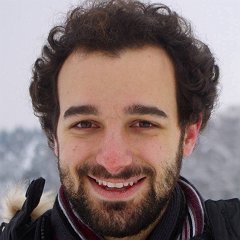
Berry Schoenmakers is an Associate Professor at the Department of Mathematics and Computer Science, Eindhoven University of Technology (TU/e). He specializes in Cryptography and Secure Computation, with a focus on cryptographic protocols, secure multiparty computation, and algorithm design. His research integrates theoretical foundations with practical implementations, particularly in secure arithmetic operations and numerical methods. He teaches courses including Set theory and algebra , Programming and modelling , Basic linear algebra , and Cryptographic Protocols . His recent work emphasizes advancements in threshold cryptography, fixed-point arithmetic for secure computation, and efficient GCD algorithms. Collaborations include co-authorship with researchers like Stan Korzilius and Toon Segers on topics ranging from secure group protocols to trigonometric function implementations in cryptographic contexts. No ancillary activities or scientific awards are listed in the provided information.
Amy Corman is a Lecturer in Mathematics - Cybersecurity at the School of Science, RMIT University, based at the City Campus in Australia. Her academic work bridges theoretical mathematics with practical cybersecurity applications, focusing on privacy-preserving technologies and cryptographic protocols. Dr. Corman's research spans several critical areas in modern cybersecurity: Privacy-preserving technologies for healthcare data Post-quantum cryptography and homomorphic encryption Secure protocols for distributed and peer-to-peer systems Gender diversity issues in the cybersecurity workforce Public understanding of data privacy mechanisms Her publication history reveals an evolution from foundational work on peer-to-peer security protocols (2006-2007) to contemporary research on healthcare data privacy and post-quantum cryptography (2021-2025). Recent publications demonstrate increasing focus on making complex privacy technologies accessible and usable, particularly in healthcare contexts where differential privacy and homomorphic encryption can protect sensitive information while enabling research. Her 2025 work on code-based alternatives to lattice-based post-quantum homomorphic encryption represents cutting-edge research preparing cryptographic systems for the quantum computing era. Dr. Corman maintains active research supervision with projects focused on: Privacy Preserving Technologies for Securing Healthcare Data (2025) Enhancing Zero-Knowledge Server Functionality (2023) Her research on women's attrition in cybersecurity (2024) combines literature review with interview analysis to address workforce diversity challenges in the field. This multi-faceted research program demonstrates both technical depth in cryptographic methods and awareness of broader social implications of security technologies.
Dr. Jan Henrik Ziegeldorf is a researcher at RWTH Aachen University, affiliated with the Institute for Energy Efficient Buildings and Indoor Climate at the EON Energy Research Center (EONERC) and the Communication Systems Group (COMSYS) within the Department of Computer Science. He holds a PhD in Computer Science from RWTH Aachen, earned in 2018, and has been contributing to research in data security and privacy since 2017, initially part-time and then full-time. His research focuses on data security, privacy-preserving technologies, and cryptographic protocols , with applications in blockchain, IoT, cloud computing, and genomics. He has made significant contributions to secure multi-party computation, differential privacy, anonymization, and homomorphic encryption. His work bridges theoretical cryptography with practical system implementations, particularly in constrained environments and decentralized architectures. The recent publications reflect a strong trend in privacy-preserving machine learning, secure blockchain systems, and genomic data protection . These works demonstrate expertise in designing frameworks (e.g., SHIELD, BLOOM) that enable secure computation while maintaining performance, especially in outsourced and distributed settings. His research often targets real-world privacy threats in cloud storage, mobile apps, and decentralized networks. Univention Graduate Award (3rd place) for the best thesis in 2016 FOLKS Award for the best Master's thesis in 2015 Dr. Ziegeldorf has actively advised numerous Master’s and Bachelor’s students on topics ranging from secure localization to blockchain privacy and differential privacy. His service includes program committee roles for IEEE Blockchain conferences and peer review for top-tier journals such as IEEE, ACM, and Elsevier publications. He is involved in collaborative research within the COMSYS group and contributes to interdisciplinary projects linking energy systems, networking, and privacy. He is part of the COMSYS research team at RWTH Aachen, which focuses on communication systems, security, and privacy in networked environments. The group works on both foundational and applied aspects of secure and efficient digital systems, with strong industry and academic collaborations.
Frank Kagan Gürkaynak is Director of the Microelectronics Design Center (DZ) and a Researcher at ETH Zurich's Department of Information Technology and Electrical Engineering (D-ITET). He leads the PULP open-source hardware project and works closely with Prof. Luca Benini in the Integrated Systems Laboratory (IIS). His academic journey includes BSc/MSc from Istanbul Technical University and a PhD from ETH Zurich. Roles: Microelectronics Design Center Director, Senior Scientist in IIS, VLSI course lecturer Research focuses on energy-efficient digital circuits, cryptographic hardware security, and open-source processor architectures. Key projects include EU-funded initiatives like European Processor Initiative (EPI), Convolve, and NeuroSoC, along with SNSF grants Tiny Trainer and PEDESITE. Active in teaching VLSI design, embedded systems, and essential engineering skills. Publications emphasize secure cryptographic accelerators, low-power processor clusters, and GALS system design methodologies. Contributions include energy-efficient ASICs for IoT to HPC domains and pioneering work in side-channel attack-resistant hardware.
Nesrine KAANICHE is a Lecturer at Telecom SudParis, affiliated with the SAMOVAR research center. Her work focuses on cybersecurity, privacy-preserving technologies, and cloud computing security. She has contributed to numerous publications addressing topics such as federated learning fairness, 6G network security, blockchain-based auditing, and IoT privacy. Her research emphasizes practical solutions for data protection and secure communication in distributed systems. Education : Ph.D. in Cryptography and Security from the National Institute of Telecommunications (2014), with a thesis titled Cloud data storage security based on cryptographic mechanisms . Key Research Themes : Federated Learning : Developing frameworks like FADE to ensure fairness and privacy in decentralized machine learning. 6G Networks : Proposing zero-trust architectures and secure protocols for next-generation communication systems. Blockchain Applications : Designing BDUA and other systems for transparent data usage auditing. Privacy-Preserving Protocols : Innovations like PIMA and SPOT for identity management and e-healthcare systems. Recent Contributions : Over 30 peer-reviewed articles since 2013, including work on intrusion detection systems, homomorphic proofs for data integrity, and secure cloud storage mechanisms. Her 2025 papers address cutting-edge challenges in federated learning fairness and AI-driven anomaly detection.
Ruben De Smet is a postdoctoral researcher at the Vrije Universiteit Brussel (VUB), specializing in cryptography and zero-knowledge proofs with a focus on data privacy. He holds an MSc in Engineering from VUB (2018) and a PhD in Engineering (2024) focused on privacy-enhancing technologies. His research explores secure peer-to-peer architectures for social networking, emphasizing user consent and data ownership. Education: MSc in Engineering, VUB (2018) PhD in Engineering, VUB (2024) – Thesis: Rapid Prototyping and Deployment of Privacy-Enhancing Technologies His research interests include cryptography optimization for embedded systems (e.g., ARM processors), zero-knowledge proof applications, and privacy-preserving permission management systems. Key contributions include work on secure communication protocols and decentralized architectures. Awards: IACR RWC'21 Cryptohackathon 2nd Prize (2021) Repair Café for Digital Rights - BXL (2020) Professional Activities: Organized workshops on Rust programming for embedded systems (2024) Speaker on zero-knowledge proofs and cryptographic systems (2025) Active in Belgium Rust User Group and Wireless Community initiatives His work bridges theoretical cryptography with practical implementations, aiming to redefine social networking security paradigms.
Professor Craig Costello is a leading cryptographer at the Queensland University of Technology (QUT) , affiliated with the Faculty of Science and the School of Computer Science . His work focuses on post-quantum cryptography , particularly isogeny-based and lattice-based cryptographic constructions , contributing to global efforts in securing digital infrastructure against quantum computing threats. Notable research trends include: Advancements in supersingular isogeny key exchange (SIKE/SIDH) Exploration of pairing-friendly abelian varieties for cryptographic cycles Efficient genus 2 isogeny algorithms and Kummer surface optimizations Development of twin smooth integer detection for cryptanalysis His publications emphasize quantum-resistant protocols , mathematical foundations , and practical cryptographic implementations . Contact: craig.costello@qut.edu.au
Professor Danilo Gligoroski is affiliated with the Norwegian University of Science and Technology (NTNU) under the Department of Information Security and Communication Technology. His work bridges cryptography, blockchain technology, and 5G network security, with a focus on decentralized systems and privacy-preserving protocols. Key research trends in his recent publications include blockchain applications in healthcare and reseller markets, verifiable delay functions for consensus mechanisms, and cryptographic frameworks for chat-based systems. He explores data integrity, network coding, and scalable storage solutions for blockchain ecosystems. Major collaborations include co-authors like Mayank Raikwar, Katina Kralevska, and Anton Karl Oskar Hasselgren. His work often intersects with GDPR compliance, network slice isolation, and secure service implementation in modern telecommunications.
Yevgeniy Dodis is a Professor at the Courant Institute of Mathematical Sciences , part of New York University , where he leads the Cryptography Group . He is an IACR Fellow (2020) and specializes in Cryptography, particularly focusing on leakage-resilient systems, random number generation, and secure messaging protocols. His research also extends to theoretical computer science areas like algorithms and complexity. He has advised over 14 PhD students and 8 postdoctoral researchers, with current students including Peter Fenteany and Eli Goldin. His professional activities include editing the Journal of Cryptology , organizing conferences like TCC and CRYPTO, and contributing to cryptographic standards like the Signal Protocol implementations. Notable awards include the 2021 IACR Test of Time Award for work on verifiable random functions and the 2019 Test of Time Award for fuzzy extractors. His research has been highlighted in media such as Science Goes to the Movies and DIGITALAX Magazine .
Mohit Pal is a Postdoctoral Fellow at the Department of Informatics, University of Bergen, Norway. He is affiliated with the Faculty of Mathematics and Natural Sciences and conducts research under the mentorship of Prof. Lilya Budaghyan. He holds a Ph.D. in Mathematics from the Indian Institute of Technology Jammu, where he was supervised by Dr. Sartaj Ul Hasan. Education: B.Sc. in Mathematics, University of Allahabad (2011–2014) M.Sc. in Mathematics, Indian Institute of Technology Kharagpur (2014–2016) Ph.D. in Mathematics, Indian Institute of Technology Jammu (2018–2021) Visiting Student, Indian Institute of Technology Delhi (2018–2019) Visiting Student, Indian Statistical Institute Delhi (2022) His research lies at the intersection of cryptography and finite fields, focusing on boomerang uniformity, differential uniformity, APN and PN functions, permutation polynomials, and arithmetization-oriented cryptographic primitives . His work contributes to the theoretical foundations of symmetric cryptography and algebraic design of secure functions. He has published in leading journals such as Designs, Codes and Cryptography , IEEE Transactions on Information Theory , and Advances in Mathematics of Communications . His recent publications explore connections between generalized differential properties and cryptographic robustness, particularly in odd characteristic fields. Scientific Awards and Recognition: Reviewer for top-tier journals including IEEE Transactions on Information Theory , Designs, Codes and Cryptography , and Applicable Algebra in Engineering, Communication and Computing . Active participant in major international workshops such as Asiacrypt, Boolean Functions and Their Applications (BFA), and SETA. Erdős Number: 3 (via Sartaj Ul Hasan and Pantelimon Stănică). He has advised no students to date but has contributed to research mentoring through collaboration. He taught INF-143A: Applied Cryptography at the University of Bergen in 2024, instructing 84 students at undergraduate and master’s levels. His research has been supported through postdoctoral funding at the University of Bergen and prior project fellowships at IIT Jammu and Harish-Chandra Research Institute. He is currently engaged in advancing the theory of arithmetization-friendly cryptographic functions, with implications for zero-knowledge proofs and secure computation. Laboratories and Research Teams: Mohit Pal is part of the cryptography research group at the Department of Informatics, University of Bergen, collaborating closely with Prof. Lilya Budaghyan and Dr. Chunlei Li. His work integrates into broader efforts on algebraic methods in modern cryptography, particularly in the context of post-quantum and efficient cryptographic design.
Randal Burns is a Professor and Chair of the Department of Computer Science at Johns Hopkins University, where he leads the Hopkins Storage Systems Laboratory. He is also affiliated with the Kavli Neuroscience Discovery Institute, the Institute for Data-Intensive Science, and the Science of Learning Institute, reflecting his interdisciplinary research in data systems and neuroscience. His research focuses on building scalable data systems for big data exploration and analysis. Key areas include storage system performance, delta compression, distributed file systems, and data-intensive computing. He has made significant contributions to reliable storage, file access prediction, caching strategies, and in-place data reconstruction. The analysis of his recent publications shows a strong trend in optimizing large-scale storage systems, with emphasis on efficiency, scalability, and reliability. His work bridges theoretical algorithm design with practical system implementation in mass storage, distributed environments, and web-scale infrastructures. Dr. Burns has not been listed with any specific scientific awards in the provided text. He advises students and leads research projects through the Hopkins Storage Systems Laboratory, where he mentors advisees in storage systems and data-intensive computing. While no specific grants are mentioned, his lab leadership and publication record suggest active external funding and collaborative research. He directs the Hopkins Storage Systems Laboratory, a research group focused on advancing the design and performance of storage systems for modern data challenges, including big data, neuroscience applications, and distributed environments.
Michael Pehl is an Associate Professor at the Chair of Security in Information Technology at Technische Universität München (TUM), where he leads the Hardware-Intrinsic Security research group. His work focuses on Physical Unclonable Functions (PUFs), side-channel analysis, and secure hardware design. His primary research interests include Physical Unclonable Functions, Hardware Security, Side-Channel Analysis, Fault Injection Attacks, Post-Quantum Cryptography, Secure Hardware Design, and Trusted Electronics. Pehl has developed significant expertise in PUF security mechanisms, with particular emphasis on countermeasures against side-channel attacks and entropy optimization in security primitives. His recent publications demonstrate strong trends in hardware security, particularly in PUF architectures (oscillator-based, resistor-based, memristor-based), side-channel countermeasures, and entropy analysis. The research spans both theoretical foundations and practical implementations for secure embedded systems. Kurt-Fischer Prize (2013) Outstanding Reviewer Award at ICASSP 2022 Outstanding Reviewer Award at DATE 2024 Pehl has secured substantial research funding through multiple high-profile projects including STAMPS-PLUS (DFG), Edu4Chip (EU), APRIORI (BMBF), and VE-FIDES (BMBF). He serves as an Associated Editor for IEEE Transactions on Information Forensics & Security and has held leadership roles in major conferences including Program Co-Chair of COSADE 2023. His research group actively collaborates with industry partners and contributes to TUM's Center of Competence for Design of Electronic Circuits and Systems (DECS). Pehl's laboratory focuses on Hardware-Intrinsic Security research, with specialized facilities for PUF evaluation, side-channel analysis, and fault injection testing. The team develops innovative security primitives for embedded systems and IoT devices, with particular emphasis on post-quantum security solutions.
Marco Vassena is an Assistant Professor in the Department of Information and Computing Sciences at Utrecht University, Netherlands. His research bridges Programming Languages and Security, developing principled methods to build systems with reliable security guarantees through language-based techniques. Previously, he served as a visiting assistant professor at Stanford University and as a postdoctoral researcher at CISPA Helmholtz Center for Information Security, where he co-founded the CISPA-Stanford Center for Cybersecurity. Education PhD in Computer Science, Chalmers University of Technology (supervised by Alejandro Russo) Dr. Vassena specializes in language-based security, with core expertise in memory safety (particularly for WebAssembly via his MSWasm framework), constant-time programming for cryptographic code, information flow control, and defenses against microarchitectural attacks like Spectre. His work applies type systems, compilers, program analysis, and formal verification to create practical security solutions for real-world systems, often targeting low-level vulnerabilities in hardware and software interactions. Analysis of his 15 most recent publications reveals a clear evolution: starting with foundational work on information flow control for concurrent and lazy programs (2016-2019), progressing to memory safety for WebAssembly (2019-2023), and culminating in robust constant-time cryptography (2021-2025). A consistent theme is addressing hardware-level vulnerabilities through compiler and language techniques, with increasing focus on practical implementations for WebAssembly and cryptographic systems. Scientific Awards Veni grant (2023) - Prestigious Dutch Research Council award for early-career researchers Dr. Vassena actively mentors future researchers through Utrecht University's PhD program, currently advertising open positions for candidates interested in applying compilers and program analysis to security challenges. His Veni grant funds these efforts while supporting his research on verified security techniques. He contributes extensively to the academic community as program committee member for POPL, PLDI, and PriSC conferences, and has organized workshops including PLMW@PLDI and PriSC sessions. His collaborations span institutions like CISPA Helmholtz Center and Stanford University, often focusing on WebAssembly security and microarchitectural attack defenses.
Jean-Pierre Hubaux is a Professor at the École polytechnique fédérale de Lausanne (EPFL) , serving as Academic Director of the EPFL Center for Digital Trust . His research focuses on cryptography, data privacy, and secure computation with applications in genomics, machine learning, and federated analytics. Developed SF-GWAS and SF-PCA for secure, federated genomic and data science workflows Created Lattigo and Helium libraries for homomorphic encryption and multiparty computation Proposed VERITAS and CRISP frameworks to secure homomorphic encryption pipelines against malicious adversaries His work bridges theoretical cryptography with practical implementations, enabling real-world privacy-preserving analytics across domains like healthcare and finance. He actively contributes to open science initiatives and educational platforms at EPFL.
Kjetil Haslum is a researcher specializing in Cloud Computing , Network Security , and Cryptography at SINTEF AS's Software Engineering, Safety and Security group. His work focuses on real-time security mechanisms, cryptographic implementations, and cloud infrastructure scalability. Research Highlights: Developed real-time intrusion prevention systems for network security Contributed to cryptographic implementations using Hesse curves Created benchmarking frameworks for cloud computing scalability