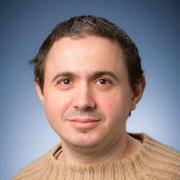
Thomas Peyrin is a Full Professor at Nanyang Technological University (NTU) in Singapore, leading the Symmetric Key and Lightweight Cryptography Lab (SyLLab) since 2012. He co-founded TT-logic.ai, focusing on cryptographic innovations. His academic journey includes a Ph.D. in Cryptology from Orange Labs and University of Versailles (2008), a Master in Computer Science from MPRI (2005), and engineering training at CPE Lyon (2004). Education : Ph.D. (2008), MPRI Master (2005), EPFL Exchange (2003-2004), CPE Lyon (1999-2004) Career : Full Professor at NTU (2022-present), Associate Professor (2017-2022), Nanyang Assistant Professor and NRF Fellow (2012-2017), Research Fellow at NTU (2010-2012), Cryptography Expert at Ingenico (2008-2010) Thomas specializes in symmetric cryptography, cryptanalysis of hash functions and block ciphers, and machine learning applications to security. His work includes groundbreaking research on SHA-1 collisions, lightweight cryptographic primitives (e.g., GIFT, PHOTON), and automated cryptanalysis frameworks. Recent projects explore integrating AI with cryptographic verification and fault attack resistance. His publications span top conferences like CRYPTO, EUROCRYPT, and CHES, with awards including the FSE Test of Time Award (2025), FSE Best Paper (2023), and NRF Investigatorship (2022). He has advised numerous students in cryptographic research and co-founded SyLLab, a leading lab for symmetric cryptography innovation. Scientific Awards : Test of Time Award at FSE 2025 Best Paper Award at FSE 2023/ToSC NRF Investigatorship (2022) Lee Kuan Yew Postdoctoral Fellowship Best Paper Awards at FSE 2012 and ASIACRYPT 2007
David Basin is a Full Professor at the Department of Computer Science, ETH Zurich, and heads the Information Security Group. He has held academic positions since 2003, including roles at the University of Freiburg (1997–2002) and the Max-Planck-Institut für Informatik (1992–1997). His research focuses on Information Security, including methods and tools for secure systems, formal verification, and cryptographic protocols. He is Editor-in-Chief of the ACM Transactions on Privacy and Security and Springer's Information Security and Cryptography book series. Basin founded the Zurich Information Security Center (ZISC) in 2003 and led it until 2011. Education: B.Sc. in Mathematics (Reed College, 1984), Ph.D. (Cornell University, 1989), and Habilitation (University of Saarbrücken, 1996). Research interests span formal methods for security protocol verification, privacy-preserving systems, and cryptographic implementations. He has contributed to foundational work on security protocols, including the Tamarin verification framework. His work addresses real-world systems like payment protocols (EMV), DNS security, and database isolation guarantees. Awards: ACM Fellow (2018) for contributions to Information Security and Formal Methods, IEEE Fellow. He has organized numerous conferences, including IEEE S&P, Euro S&P, and ACM CCS. Labs/Teams: Leads the Information Security Group at ETH Zurich and co-founded Anapaya Systems, a startup focused on network security solutions. His team develops tools like VeriMon (formally verified monitoring) and Tamarin for protocol analysis.
Ying Cai is an Associate Professor in the Department of Computer Science at Iowa State University, joining in 2003 after earning his Ph.D. in Computer Science from the University of Central Florida (2002). His research focuses on AI, machine learning, data science, cybersecurity, privacy protection, and database systems. He leads projects funded by the Air Force Research Laboratory, including work on authentication data structures for rank-aware queries, requiring U.S. citizenship and expertise in linear algebra/cryptography. Dr. Cai’s work spans cybersecurity (e.g., adversarial example defense, secure secret sharing), spatio-temporal systems (e.g., traffic risk prediction, check-in time modeling), and healthcare AI (e.g., cervical spine diagnosis with transformers). His publications emphasize practical applications of ML in privacy, security, and distributed systems. Professional roles include Associate Editor for Multimedia Tools and Applications (since 2009), Co-chair for COMPSAC TAIN/NCIW symposium (2014–2017), and TPC Chair for Mobilware 2010. His service includes contributions to INFOCOM, ICDCS, and MDM conferences. Current research opportunities exist for graduate students with strong programming/math skills, particularly in cryptography and linear algebra. He emphasizes interdisciplinary work, such as bridging AI with social sciences via large language models.
Roberto Tamassia is the James A. and Julie N. Brown Professor of Computer Science and Chair of the Computer Science Department at Brown University. He is also Director of Brown's Center for Geometric Computing. His research focuses on information security, cryptography, algorithms, graph drawing, and computational geometry. He has authored six textbooks and over 250 publications, and his work has been funded by ARO, DARPA, NATO, NSF, and industry sponsors. Education: PhD in Electrical and Computer Engineering from the University of Illinois at Urbana-Champaign. Research Interests: Cryptography and Secure Systems Algorithm Design and Optimization Graph Drawing and Geometric Computing Encrypted Database Security Awards and Honors: IEEE Fellow Technical Achievement Award from IEEE Computer Society Listed among the 360 most cited computer science authors by ISI Grants and Funding: His research has been supported by major agencies and organizations including ARO, DARPA, and NSF, as well as industry partnerships. Labs and Affiliations: Directs Brown's Center for Geometric Computing, a hub for interdisciplinary research in computational geometry and graph algorithms.
Carlisle-Martin is an Associate Department Head and Professor of Practice in the Department of Computer Science & Engineering at Texas A&M University. They also serve as Director of the United States Air Force Academy Center for Cyberspace Research. Their research focuses on computer security, programming languages, and innovative computer science education techniques. Education: Ph.D., Computer Science, Princeton University (1996) B.S., Mathematics and Computer Science, University of Delaware (1991) Research Interests: Malware analysis and detection Cybersecurity frameworks for DNS and network protocols Visual programming tools like RAPTOR for education Ada language modernization and integration Cybersecurity education through CTF competitions Awards: 2016: Meritorious Civilian Service Award (USAF) 2014: SANS Institute Security Award 2009: ACM Distinguished Educator 2008: Colorado Professor of the Year 2007: Arthur S. Flemming Award Advising & Grants: Known for mentoring through cybersecurity initiatives and leading the USAF Academy's cyberspace research programs. No specific grant details listed, but their work aligns with defense and education funding priorities. Labs/Teams: Directs the USAF Academy's Center for Cyberspace Research, focusing on applied cybersecurity solutions and educational outreach.
Mehrdad Nojoumian is an Associate Professor at Florida Atlantic University's College of Engineering and Computer Science, specializing in Security, Privacy, Trust, and Human-Autonomy Interaction. His research bridges computer science with FinTech and autonomous systems, focusing on cryptographic protocols, blockchain, and IoT security. PhD, University of Waterloo (Computer Science, 2012) MSc, University of Ottawa (Computer Science, 2007) BSc, Islamic Azad University (Computer Engineering, 2002) His research explores privacy-preserving mechanisms in autonomous systems, trust modeling in blockchain, and cross-disciplinary applications of cryptography. Recent work includes patents on adaptive driving modes and ongoing studies on IoT vulnerabilities and autonomous coordination. Notable awards include the Excellence and Innovation in Undergraduate Teaching Award (2023), NAI Induction (2022), and multiple Best Paper Awards . His publications span journals like Information and Computation and conferences such as GameSec and IEEE Blockchain . He mentors graduate students in cybersecurity bootcamps, high school outreach programs, and collaborative research projects funded by NSF , ARO-AFOSR , and AFRL . His lab emphasizes diversity and inclusion, particularly supporting underrepresented groups in STEM.
Mustafa A. Mustafa is a Senior Lecturer (Associate Professor) in the Department of Computer Science at The University of Manchester, where he leads the Trusted Digital Systems Cluster as part of the university-wide Centre for Digital Trust and Society. His academic journey spans prestigious institutions including The University of Manchester, where he completed his PhD, and KU Leuven in Belgium, where he served as a post-doctoral research fellow. Dr. Mustafa earned his educational qualifications through an impressive academic path: a B.Sc. in communications from the Technical University of Varna, Bulgaria (2007), an M.Sc. in communications and signal processing from Newcastle University, UK (2010), and a Ph.D. in computer science from The University of Manchester, UK (2015). His doctoral research focused on "Smart Grid Security: Protecting Users' Privacy in Smart Grid Applications," laying the foundation for his subsequent research career. Dr. Mustafa's research expertise centers on information security, data privacy, and applied cryptography with particular focus on smart grid systems, smart city applications, e-health, and IoT. His work addresses critical challenges in securing peer-to-peer electricity trading markets, smart metering infrastructure, electric vehicle charging systems, and health data management. He has developed innovative solutions for keyless car sharing systems, frictionless authentication mechanisms, and privacy-preserving protocols for data collection and distribution. His scholarly contributions demonstrate a consistent trajectory toward increasingly sophisticated privacy-preserving techniques applied across multiple domains. Recent work shows a growing integration of artificial intelligence and machine learning approaches with traditional cryptographic methods, particularly in federated learning systems and large language model verification. His research bridges theoretical cryptography with practical implementations in energy systems and healthcare applications. Dr. Mustafa's scientific achievements have been recognized with several prestigious awards: Winner of the Student Video Competition at IEEE SmartGridComm 2017 for "Secure and Privacy-friendly Local Electricity Trading" Best Paper Award at SECURWARE 2017 Distinguished Achievement Award as Postgraduate Research Student of the Year nominee by the School of Computer Science of The University of Manchester (2015) Dame Kathleen Ollerenshaw Research Fellowship (2018-2023) As an academic supervisor, Dr. Mustafa has mentored numerous graduate students through their PhD and Master's research, with a particular focus on privacy and security challenges in emerging technologies. His current supervision portfolio includes research on privacy-friendly multi-agent systems for smart grids, security for IoT in e-health, vulnerability detection in IoT cryptography, and bot detection systems. He has secured significant research funding through multiple competitive grants including EnnCore: End-to-End Conceptual Guarding of Neural Architectures (EPSRC, 2020-2024), SCorCH: Secure Code for Capability Hardware (EPSRC, 2019-2023), and SNIPPET: Secure and Privacy-friendly Peer-to-peer Electricity Trading (FWO-SBO project, 2019-2023). Dr. Mustafa leads the Trusted Digital Systems Cluster within the Centre for Digital Trust and Society at The University of Manchester. His research group comprises PhD students, postdoctoral researchers, and collaborators working on cutting-edge security and privacy solutions. The team maintains strong international collaborations, particularly with KU Leuven in Belgium, and contributes to standards development as evidenced by Dr. Mustafa's role as an expert in the IEC/SYC/WG 3 "IEC Smart Energy Roadmap."
Dr. Tatsuya Mori is a Professor at the Department of Computer Science and Communication Engineering , Faculty of Science and Engineering, Waseda University . He also holds visiting researcher positions at RIKEN Center for Advanced Intelligence Project (since 2018) and National Institute of Information and Communications Technology (since 2019). Education: Ph.D. in Information Science (2005), Waseda University Research Interests: Spanning information security and privacy across emerging technologies like autonomous driving , AI , 3D sensing , VR , biometric measurement , and Web3 . His work focuses on offensive security and interdisciplinary research , including physical-layer attacks on sensors and behavioral studies on phishing detection. Scientific Awards: Recipient of multiple prestigious awards, including the Distinguished Paper Award Runners-Up at IEEE EuroS&P 2024 , IPSJ Outstanding Paper Award 2024 , and CSS2024 Concept Research Prize . His research has been recognized in top conferences like USENIX Security , NDSS , and ACM CCS . Professional Leadership: Active in academic governance as Chief Investigator for NISC Working Groups and Committee Member for JST Research Areas . He serves on program committees for NDSS , IMC , and ACM CCS .
Assoc Prof Wu Hongjun is an Associate Professor at the Division of Mathematical Sciences, School of Physical & Mathematical Sciences, Nanyang Technological University (NTU). His research focuses on cryptography and information security, with notable contributions to lightweight authenticated encryption algorithms like TinyJAMBU and ACORN, as well as cryptanalysis of stream ciphers (e.g., ZUC, HC-128) and hash functions (e.g., JH, SHA-3 candidates). His academic career includes over 15 years of contributions to cryptographic standards, IoT security frameworks, and secure cloud data management. Key areas of expertise encompass symmetric-key cryptography, algorithm design for resource-constrained devices, and vulnerability analysis of cryptographic primitives. Prof Wu has authored influential papers on authenticated encryption modes (AEGIS, MORUS), lightweight cipher optimizations (ACORN), and cryptanalysis techniques applied to Feistel networks and stream ciphers. His work bridges theoretical cryptography with practical implementations across telecommunications, IoT, and cloud computing domains.
Prof. Dr. Christian Rossow is a faculty member at CISPA – Helmholtz Center for Information Security in Dortmund, Germany. He also serves as a professor at Saarland University and an honorary professor at TU Dortmund. His research focuses on network security , system/software security , and cyber attacks and countermeasures . His recent publications include work on CSS exploitation for browser fingerprinting, Spectre mitigations on ARM, DDoS attack analysis, and hardware-assisted security extensions. Christian Rossow regularly serves as a PC member and track chair for top cybersecurity conferences like ACM CCS and USENIX Security . He advises multiple PhD students and leads a research group exploring foundational and practical security solutions.
Paul Grubbs is an Assistant Professor in the Department of Electrical Engineering and Computer Science at the University of Michigan. His research focuses on applied cryptography, security, and systems, particularly at the intersection of cryptographic protocols and real-world deployments. Education: PhD in Computer Science (Cornell University), BS in Mathematics and Computer Science (Indiana University) His work explores vulnerabilities in cryptographic systems, the design of secure key-value stores, and the societal implications of information security. Recent publications highlight advancements in zero-knowledge proofs, post-quantum cryptography, and encrypted database analysis. Key trends in his publications include: 1) Zero-Knowledge Proofs and Post-Quantum Security; 2) Privacy in Encrypted Systems; 3) Cryptographic Protocol Vulnerabilities; 4) Interdisciplinary approaches at the intersection of technology and societal impact. Scientific awards: IEEE Symposium on Security and Privacy 2023 Distinguished Paper Award USENIX Security 2020 Distinguished Paper Award Cornell Computer Science Dissertation Award Students include current advisees like Jiwon Kim, Anna Pui Yung Woo, and Chad Sharp (co-advised with Chris Peikert), plus former students Yang Du (MSc 2024), Quang Dao (MMath 2022), and Pengxiang Wang (BSE 2023). Grants include DARPA SIEVE (2021), Meta Privacy-Enhancing Technologies (2022), and NSF CAREER (2023). He has served on program committees for CRYPTO, IEEE S&P, and other leading conferences.
Professor Steven J. Murdoch is a leading figure in cybersecurity and privacy-enhancing technologies at the Department of Computer Science , University College London . His work bridges computer science and law, focusing on payment system security, electronic evidence reliability, and dispute resolution mechanisms. Head of Information Security Research Group at UCL (2022–present) Director at Open Rights Group (2022–present) Research spans payment security , privacy protocols , and legal implications of computer evidence . Key contributions include analyzing EMV protocol flaws, designing secure authentication mechanisms, and improving Tor's anonymity. Publications cover privacy-preserving federated learning , time-lock puzzles , and malware ecosystem analysis Awards include Fellowships from the Institution of Engineering & Technology and British Computer Society , and a Royal Society University Research Fellowship . Teaches COMP0055 Computer Security II and COMP0061 Privacy Enhancing Technologies at UCL
Nicola Nicolici is a Professor in the Department of Electrical and Computer Engineering at McMaster University. His research focuses on methods and algorithms for the design of digital integrated circuits and systems, with significant contributions in manufacturing test, post-silicon validation and debug. His work has expanded to include embedded systems, low-energy computing, and custom hardware-accelerated computing systems. Professor Nicolici's research interests span multiple areas of digital system design and validation. His early work focused on manufacturing test methodologies and power-aware testing strategies for integrated circuits. More recently, he has made significant contributions to post-silicon validation techniques, including constrained-random stimuli generation, trace signal selection, and bit-flip detection. His research has evolved to address emerging challenges in embedded computing systems, low-energy design, and specialized hardware acceleration for various applications including deep neural networks and signal processing. His recent publications reveal a strong trend toward hardware acceleration for specialized computing tasks. The research spans matrix multiplication algorithms (Strassen and Karatsuba), memory system optimization (DDR5 calibration), FPGA-based radar processing, and neural network acceleration. His work consistently bridges theoretical algorithm development with practical hardware implementation considerations, particularly focusing on precision analysis, fault tolerance, and energy efficiency. The research demonstrates a clear progression from traditional digital circuit testing to more complex system-level validation and acceleration techniques. Professor Nicolici has been actively involved in teaching courses related to system-on-chip design and test, digital systems, and embedded systems. His teaching portfolio includes advanced courses such as System-on-Chip (SOC) Design and Test and Digital Systems Design , reflecting his expertise in the field. While specific grant information isn't detailed in the provided text, his extensive publication record suggests ongoing research funding support. His research has contributed significantly to the fields of digital circuit testing, post-silicon validation, and hardware acceleration. The work has practical applications in semiconductor manufacturing, embedded systems design, and specialized computing architectures. His recent focus on neural network acceleration and memory system optimization reflects the evolving landscape of computer architecture research.
Dr. Krishnendu Guha is an Assistant Professor and CONNECT Funded Investigator at the School of Computer Science and Information Technology, University College Cork. His research bridges embedded systems, cybersecurity, and quantum-safe hardware design with AI and bio-inspired strategies. PhD: University of Calcutta (Department of Science and Technology, Government of India) Postdoctoral: University of Florida Past Roles: Research Fellow at Intel India, Visiting Scientist at Indian Statistical Institute, Temporary Assistant Professor at NIT Jamshedpur His research focuses on embedded systems security , real-time security mechanisms , and quantum-safe hardware . He integrates AI (e.g., neural networks) and bio-inspired strategies (e.g., gecko crypsis behavior) into security frameworks for FPGAs and edge platforms. Recent publications highlight trends in blockchain for supply chains , quantum machine learning , secure FPGA architectures , and distributed AI systems . His work addresses energy efficiency, fault detection, and decentralized security in hardware. As a CONNECT Centre member, Dr. Guha contributes to advanced research in reconfigurable systems and cybersecurity. Grants and collaborations span quantum-safe design, cloud FPGA security, and hardware trojan mitigation.
Emin Gün Sirer is an Associate Professor at the Department of Computer Science , College of Engineering , Cornell University . He co-directs the Initiative for Cryptocurrencies and Smart Contracts and leads the Meridian and HyperDex projects. Research in operating systems, networking, and distributed systems Focus on secure operating systems, high-performance cloud infrastructure, and peer-to-peer networks Developed systems like Nexus (secure OS), OpenReplica (Paxos implementation), and Trickles (stateless network protocol) Prominent Projects : Meridian - Lightweight network location service without virtual coordinates Cubit - Decentralized peer-to-peer search Kimera - Network-centric Java verification SPIN - Extensible microkernel for application-specific services Scientific Contributions : Leading work in blockchain security and peer-to-peer systems Patents in executable content rewriting and distributed virtual machines Advising & Collaborations : Advises projects in network positioning and content distribution Collaborates with institutions like Usenix , SIGCOMM , and NSDI Personal Background : Ph.D. and M.S. in Computer Science from the University of Washington B.S.E. in Computer Science from Princeton University High school at Robert College