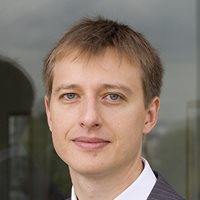
Leonardo Iania is a Professor of Finance at the Université catholique de Louvain, Belgium. His research focuses on macro-finance modeling, particularly the interactions between the yield curve and macroeconomic variables. He holds a Ph.D. from KU Leuven, Belgium. Education: Ph.D. in Finance, KU Leuven, Belgium Research Interests: Macroeconomic drivers of financial markets, including inflation risk, bond risk premia, and stock returns Climate change economics and energy-related forecasting (e.g., CO₂ emissions, oil prices) Monetary policy analysis and its implications for financial stability Cryptocurrency and commodity market dynamics Recent Research Trends: His work bridges macroeconomic theory with financial markets, emphasizing cross-country analysis (e.g., emerging markets like Brazil and China) and post-COVID economic recovery scenarios. Recent studies also explore wine price forecasting and the impact of uncertainty on financial assets. Awards & Grants: No specific awards or grants listed in the provided text. Labs/Teams: Not explicitly mentioned in the text.
Igor Makarov is Associate Professor of Finance at LSE, researching cryptocurrency markets, decentralized finance, and arbitrage strategies. His influential work includes empirical analyses of Bitcoin markets and theoretical models of price formation in DeFi systems. Makarov's current projects examine informational asymmetries in cryptocurrency markets and feedback mechanisms in asset bubbles. He serves on program committees for major finance conferences including WFA, EFA, and SFS while teaching Asset Markets courses. Q Group Research Award Inquire Europe Research Award Smith-Breeden Prize Nominee
Dr. Ilia Kolochenko is an Adjunct Professor of Cybersecurity and Cyber Law at Capitol Technology University, where he serves as a Dissertation Chair for doctoral students. He is also the CEO and Chief Architect of ImmuniWeb, a global cybersecurity firm, and a Partner and Cybersecurity Practice Lead at Platt Law LLP in Washington, D.C. His roles include advising on privacy law, data breaches, and cybercrime investigations. Kolochenko holds a PhD in Computer Science from Capitol Tech, alongside four master’s degrees in cybersecurity, criminal justice, IT law, and national security law. He pursues a second doctorate in Forensic Sciences at Oklahoma State University. Educations: BS in Computer Science (Webster University), MLS (Washington University), MSc in Cybersecurity/Cybercrime (Boston University), two LLMs (Edinburgh and George Mason), and a PhD (Capitol Tech). Current DFS (Oklahoma State). Research interests focus on AI-driven cybersecurity solutions, incident response, cyber law compliance, and cryptocurrency crime investigations. He has authored over 60 articles for CSO Online, Dark Reading, SC Media, and Forbes, emphasizing practical applications of AI and legal frameworks. His 2025 Globee Award recognizes his thought leadership in cybersecurity. Awards include the 2025 Cybersecurity Thought Leadership Globee, 2024 Outstanding Cyber Security Professional (OSPAs), and 2017 SC Media Thought Leadership Award. He chairs the ABA’s Information Security Committee and participates in Europol’s EDEN and INTERPOL’s DFEG. Grants and advisory roles include: GIAC Advisory Board, SANS CISO Network, IAPP Appeals Board, and Boston University’s CIC Center. ImmuniWeb’s AI platform won Frost & Sullivan’s European pentesting award in 2014. He teaches “Cybersecurity for Lawyers” CLE courses through the D.C. Bar. Labs/Teams: Leads ImmuniWeb’s R&D team developing AI-based security tools and collaborates with academic institutions like Boston University’s Cybercrime Investigation Center.
Rachel Phang is an Assistant Professor of Law at the Yong Pung How School of Law, Singapore Management University (SMU), serving since July 2024. Previously, she held roles as Lecturer of Law (FDS) at SMU (2023–2024) and Research Associate at the National University of Singapore’s Centre for Banking & Finance Law (2022–2023). Her education includes an LLM from UC Berkeley (2021) and an LLB from NUS (2016), complemented by legal practice as an Associate at Rajah & Tann Singapore LLP (2017–2020). Current Appointments: Full-Time Faculty, SMU Law School Professional Affiliations: Advocate and Solicitor (Singapore) Her research focuses on Financial Law & Regulation , Fintech , Contract Law , and Tort Law . Notable work includes analysis of ESG disclosure practices across Asian financial hubs, regulatory frameworks for stablecoins, cryptocurrency derivatives, and land law policy in Singapore. She teaches Contract Law and Law of Torts . Her recent articles emphasize comparative legal analysis and regulatory innovation, particularly in digital finance and property law. She has contributed to debates on sustainable finance transparency, cryptocurrency governance, and equitable land policy. No scientific awards explicitly mentioned. Grants and advising details not provided, though her research positions suggest engagement with institutional funding. She is affiliated with SMU’s strategic priorities in legal education and research.
Dr. Daniel Rabetti is an Assistant Professor of Accounting and Finance at the National University of Singapore (NUS) Business School, holding the S. Dhanabalan Chair in Quantitative Studies since 2023. He concurrently serves as a visiting scholar at Harvard Business School and holds courtesy appointments in Finance at NUS. His research focuses on financial economics, blockchain innovation, and regulatory challenges in decentralized finance (DeFi), with particular emphasis on cryptocurrency markets, tax policy, and cybercrime prevention. Rabetti advises fintech ventures and contributes to policy discussions through engagements with institutions like the IMF and SEC. Education: Ph.D. in Business (Tel Aviv University, 2023); M.A. in Financial Economics (Interdisciplinary Center Herzliya, 2017); B.A. in Business Administration-Finance (Interdisciplinary Center Herzliya, 2014). Research Interests: Rabetti explores blockchain's transformative impact on financial systems, including DeFi protocols, crypto-enabled cybercrimes, and tax compliance strategies. His work bridges academic rigor with practical policy implications, addressing issues like audit quality in decentralized systems and regulatory frameworks for digital assets. Key Contributions: His paper on crypto-enabled cybercrimes was awarded the Best Conference Paper and featured in major media outlets. He has presented at prestigious venues like the Western Finance Association and the Securities and Exchange Commission. His research informs global regulatory bodies and underpins tax policy recommendations for digital asset taxation. Awards: Recognized for impactful scholarship in fintech and blockchain governance. Advising & Grants: Rabetti advises fintech startups and leads research initiatives at NUS Fintech Lab and the Asian Institute of Digital Finance (AIDF). His work is supported by grants from Ripple UBRI, Israel Science Foundation, and Cornell FinTech Initiative. Labs & Teams: Active in DEFT Labs, Cornell Fintech Initiative, and the Nanyang Blockchain Conference organizing committee.
Prof Jussi Samuli Keppo is the Head of the Department of Analytics & Operations (DAO) at the National University of Singapore (NUS) Business School and Research Director of the Institute of Operations Research and Analytics (IORA) at NUS. He holds a PhD in Engineering from Aalto University and has held prior appointments at the University of Michigan. His research focuses on banking regulation, risk management, stochastic control, and decision-making under uncertainty. He serves on editorial boards of Management Science, Operations Research, and Journal of Risk. Educations: Doctor of Science (Technology), Aalto University (Finland) Master of Applied Mathematics, Aalto University (Finland) Research Interests: Methodological: Stochastic control, statistical analysis of stochastic processes, optimization Applications: Risk management, banking regulation, information economics, strategic incentives Recent Research Trends: His work spans cross-chain stablecoin design, data-sharing strategies in innovation, and AI-driven video generation. Collaborations include startups, Fortune 100 firms, and financial institutions. Grants & Consulting: Supported by NSF and Singapore agencies. Advises on executive education programs and consults globally. Leads IORA and DAO strategic initiatives. Labs/Teams: Directs analytics research at IORA and oversees DAO's academic programs. Active in cross-disciplinary projects blending finance, operations, and computer science.
Jelena Dinić is a researcher at Singidunum University, specializing in national security, urban resilience, and environmental policy. She holds a PhD in Security Studies from the Faculty of Security, University of Belgrade (2024), following a Master's in Criminalistics (2011) and a Bachelor's in International Relations (2007). Her work bridges legal frameworks, technological innovation, and socio-environmental dynamics to address global security challenges. Education: Bachelor's in International Relations, Faculty of Political Sciences, University of Belgrade (2007) Master's in Criminalistics, Criminal-Police Academy (2011) PhD in Security Studies, Faculty of Security, University of Belgrade (2024) Research interests focus on urban disaster resilience, AI applications in crisis management, environmental security, and counter-terrorism financing. Recent work emphasizes Serbia's national interests in neutrality policies and integrating AI into urban resilience strategies. She has contributed to collaborative projects like the "Guide for Peace and Security" (2024) and authored books on anti-money laundering systems. Her publications explore legal frameworks for hazard mitigation, wildfire resilience in Novi Pazar, and socio-cultural memory in urban governance. Her 2022 paper on local governance during crises highlights institutional adaptation to uncertainty. No scientific awards are listed, though her work is widely cited in Balkan security studies. She participates in multi-university initiatives, including Singidunum's postgraduate programs and the Hellenic Republic's climate risk studies. She maintains active collaborations with Belgrade University's Technical Faculty and Greek environmental organizations.
Dr. Weihao Han is an Assistant Professor (Lecturer) in Finance at the University of Aberdeen Business School, joining in 2023. He holds a Ph.D. in Finance from the University of Bath (awarded with a £120k scholarship), an M.Sc. in Financial Forecasting from the University of Glasgow (awarded the Adam Smith Scholar Award), and a B.A. in Economics from Yonsei University. His research focuses on climate finance, FinTech, machine learning applications in finance, and cryptocurrency asset pricing. He is a member of the Scotland Beyond Net Zero initiative, contributing to climate action. His recent work examines cryptocurrency portfolio diversification benefits and stochastic dominance implications, published in journals like European Financial Management and Review of Quantitative Finance and Accounting . Awards include the 2021 China Finance Review International Conference Best Paper Award. He serves as Departmental Student Experience Lead and teaches courses in finance and machine learning applications. His research bridges empirical asset pricing theory with practical financial market analysis, emphasizing post-pandemic market dynamics and sustainable finance.
Prabal Shrestha is a Lecturer at the Université catholique de Louvain, affiliated with the Louvain School of Management (LSM) and its subsidiary units: the Louvain Institute of Data Analysis and Modeling in economics and statistics (LIDAM) and Louvain Finance (LFIN). His research focuses on intersections of entrepreneurship, blockchain technology, crowdfunding, and energy economics, with a strong emphasis on sustainable finance and digital innovation in business models. Affiliations : Louvain School of Management (LSM), Louvain Institute of Data Analysis and Modeling (LIDAM), Louvain Finance (LFIN) His recent publications analyze energy entrepreneurship trends, investor behavior in ICOs, crowdfunding risk disclosures, and blockchain applications in energy markets and ESG reporting. He employs advanced data analysis techniques like topic modeling to decode financial and technological ecosystems. Prabal contributes to contemporary discussions on entrepreneurial financing, regulatory frameworks for digital currencies, and sustainable business practices. His work bridges theoretical modeling with practical applications in open energy markets and digital finance. Labs/Teams : Louvain Finance (LFIN), Louvain Institute of Data Analysis and Modeling (LIDAM)
Egor ERMOLAEV is a Doctoral Researcher at the Interdisciplinary Centre for Security, Reliability and Trust (SnT) within the University of Luxembourg , affiliated with the FINATRAX research group. His work focuses on data privacy across domains like e-commerce, reporting systems, and blockchains. Egor actively contributes to international projects such as the EBSILUX initiative under the European Blockchain Services Infrastructure (EBSI), collaborating with Luxembourg’s Ministry for Digitization to implement blockchain-based digital diploma solutions. Education & Scholarships: 2016: Georgius Agricola Scholarship for Distributed Systems Engineering at TU Dresden (Germany) 2018: Master Research Scholarship (MaRS) at University of Lugano (Switzerland) 2018: Diploma with Honors in 'Information-analytical security systems' from Omsk State Transport University (Russia) Research Interests: Egor’s work spans privacy-preserving technologies , blockchain scalability , and smart contract applications . He explores how design science can mitigate privacy risks in e-commerce transactions and blockchain infrastructure. His recent projects emphasize governmental digitalization efforts and ethical blockchain adoption. Key Achievements: Winner of the Infrachain Hackathon (2021, 2022) and finalist in the W3B Hackathon (2024). Prior to his PhD, he worked as a Software Engineer for crypto/e-commerce startups. Labs & Collaborations: Active member of SnT’s FINATRAX group, collaborating with governmental and private sector entities on blockchain implementations. His research bridges theoretical frameworks with real-world applications in digital trust systems.
Ranik Raaen Wahlstrøm is an Associate Professor of Business Analytics at NTNU Business School, Norwegian University of Science and Technology. His work bridges data science, machine learning, and quantitative finance to address challenges in bankruptcy prediction, FinTech, and accounting. Affiliation: NTNU Business School, Faculty of Economics and Management His research focuses on financial data science, leveraging AI to interpret complex financial datasets and improve risk assessment models. Recent work includes integrating non-financial information into credit risk evaluations for SMEs and analyzing geopolitical impacts on cryptocurrency markets. He teaches advanced courses in data science, FinTech, blockchain, and statistics for business. His academic contributions align with his prior experience in the IT sector as CFO, advisor, and certified public accountant. Scientific Affiliations: Centre for Banking and Finance, EU COST Action – Fintech and Artificial Intelligence in Finance His GitHub repositories showcase practical applications of financial data analysis, including bankruptcy prediction algorithms and datasets for Norwegian companies.
Yao Zeng is an Assistant Professor of Finance at The Wharton School, University of Pennsylvania, and a Faculty Research Fellow at the National Bureau of Economic Research (NBER) in Asset Pricing. His research examines how technologies and non-bank institutions reshape financial intermediation, with focus areas including liquidity provision mechanisms, fintech innovations, and systemic risk in modern banking and payment systems. He holds the Cynthia and Bennett Golub Faculty Scholar distinction (2023-25). Zeng's research program investigates the transformation of money, banking, and payments through technological disruption. Key interests include: Liquidity dynamics in mutual funds and ETFs Stablecoin design and financial stability Fintech lending and cashless payment systems Corporate bond market structure Systemic risk in non-bank financial intermediation His work blends theoretical modeling with empirical analysis to address regulatory challenges in evolving financial markets. His publications demonstrate consistent focus on financial innovation consequences, with recent work examining stablecoin vulnerabilities, ETF arbitrage constraints, and deposit responsiveness to payment technologies. Research consistently informs regulatory discussions at the SEC, Federal Reserve, and IMF. Major scientific recognitions include: Cynthia and Bennett Golub Faculty Scholar (2023-25) Arthur Warga Award for Best Paper in Fixed Income ECB Research Prize Finalist Trefftzs Award for Best Student Paper Cubist Systematic Strategies Ph.D. Candidate Award Zeng teaches core and advanced finance courses including Corporate Finance (FNCE6110), Financial Economics Under Imperfect Information (FNCE9230), and Independent Study. His research has been supported through affiliations with Wharton's Initiative on Financial Policy and Regulation and NBER.
Sam Howison is a Professor at the Mathematical Institute, University of Oxford , with an academic rank of Associate Professor. His research spans applied mathematics and financial engineering, focusing on differential equations, free and moving boundary problems, stochastic processes, and network modeling. Research Interests: His work in applied mathematics addresses fluid dynamics, shallow water flows, and non-classical PDEs, while in financial mathematics, he specializes in derivatives pricing, energy markets, volatility modeling, and market microstructure. Recent projects include network-based analysis of cryptocurrency markets and community detection in temporal multilayer networks. Publication Trends: Over the past decade, his research has bridged fluid mechanics with financial modeling, emphasizing asymptotic methods, stochastic games, and network theory. Key themes include limit order books, non-Markovian biological systems, and environmental market pricing. Scientific Awards: SIGEST Paper Award for Risk-Neutral Pricing of Financial Instruments in Emission Markets Advising and Collaborative Work: He has co-authored over 80 publications with colleagues like Mason Porter and Michael Boulton, contributing to interdisciplinary projects in mathematical finance and industrial applications. He co-founded the Oxford Centre for Industrial and Applied Mathematics and served as Head of the Mathematical Institute (2011-2015).
Basel Katt is a Professor and Head of the Department of Information Security and Communication Technology at the Faculty of Information Technology and Electrical Engineering, Norwegian University of Science and Technology (NTNU), Gjøvik campus. His leadership spans cybersecurity research and education with emphasis on practical security frameworks and training infrastructure. His research portfolio includes: Security Assurance methodologies Software Security validation Cyber Range development Model-Driven Security approaches Access/Usage Control systems Privacy Protection mechanisms Security Education innovations Analysis of his 2023-2025 publications reveals accelerating integration of AI in security assurance, with growing focus on quantitative evaluation models, IoT security challenges, and cyber range automation. His work increasingly leverages kill chain models for incident response and explores LLM applications for security exercise generation. No scientific awards were documented in the source materials. Student advising relationships and grant funding details were not specified in the provided information. Katt's cyber range research demonstrates through publications like 'Hybrid IoT Cyber Range' and 'Use of cyber attack and defense agents in cyber ranges', establishing him as a contributor to advanced cybersecurity training infrastructure development.
Lorne N. Switzer serves as Full Professor of Finance and Van Berkom Endowed Chair in Small Cap Equities at Concordia University's John Molson School of Business. He has held significant leadership roles including Associate Dean of Research, Associate Director of the Institute for Governance of Public and Private Organizations, Finance Department Chair, and Director of MSc/PhD Programs. His academic credentials include a PhD from the University of Pennsylvania (1982) and Wharton School education. PhD, University of Pennsylvania (1982) Graduate of the Wharton School, University of Pennsylvania Dr. Switzer's research spans investments, corporate governance, and small-cap equities with deep expertise in portfolio management, fintech, international finance, capital markets, and market microstructure. His work consistently addresses regulatory impacts on market efficiency and risk dynamics across global contexts, particularly examining small-cap premium behaviors and governance mechanisms affecting firm performance. Recent publications reveal strong empirical focus on corporate governance effects in Chinese firms, options market regulation, and small-cap equity dynamics across business cycles. His collaborative international research frequently examines emerging markets, regulatory interventions, and market anomalies with direct implications for financial practice and policy. His scholarly contributions have earned significant recognition: Best Paper Award at the McMaster World Congress of Corporate Governance Bank of Canada Prize for Best Paper in Canadian Financial Markets Research (Northern Finance Association) Best Paper in Canadian Journal of Administrative Sciences (2021) As an educator, Dr. Switzer directs graduate programs and serves on editorial boards for European Financial Management, La Review Financier, and Risk and Decision Analysis. His extensive consulting portfolio includes Bourse de Montréal, Caisse de Dépot et Placement du Québec, and Canadian government agencies. He maintains active international engagement through lectures at universities in New Zealand, Israel, China, and India. His research is anchored by the Van Berkom Endowed Chair in Small-Cap Equities, facilitating ongoing collaborative work with global finance scholars and practitioners on market structure, governance, and small-cap investment strategies.